Waste in abundance

How much food will you throw away today? Will you even notice it?

The Natural Resources Defense Council, in a new report, estimates that we throw away 40% of our food supply in America every year. Food is wasted at every step in the supply chain, starting at the farm and ending in our kitchens and trash cans. Food now represents the biggest part of the solid waste in our landfills.

Last night, I was congratulating myself on the nice meal I made from ingredients I happened to have on hand – some leftover tomato, farro and onions from my pantry, basil from my garden, and a chunk of Parmigiano that I bought a couple of weeks ago. No waste!

But today I took stock of the food in my refrigerator that I will have to throw away. There is the cantaloupe I bought because my son has recently discovered he likes it – but then he didn’t eat it. There’s the fennel I bought because I needed some of the fronds for a recipe – but I didn’t have a use for the rest of it. There’s the apple someone bought and no one ate – because the summer fruits like peaches and berries are so much better!
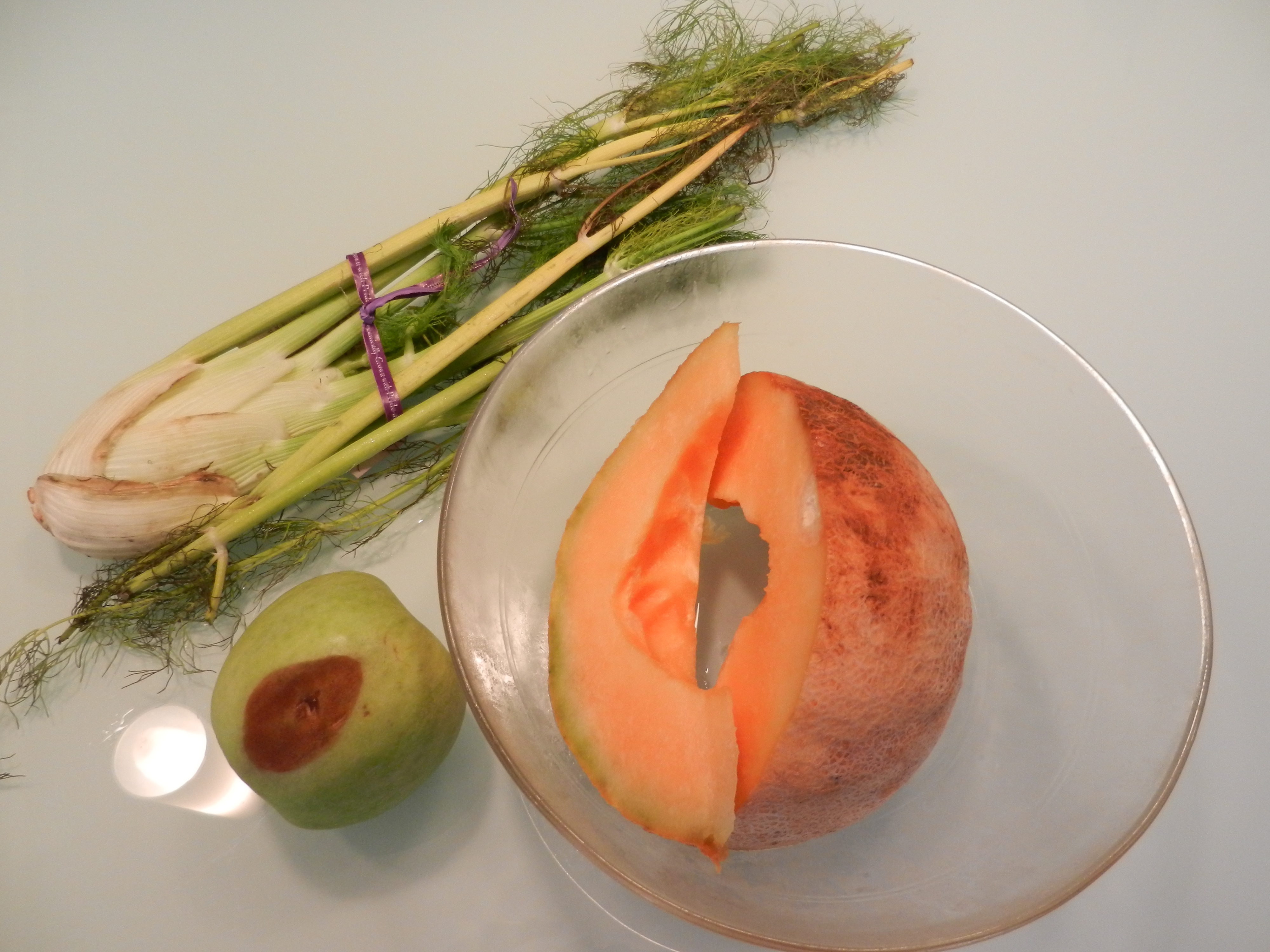
As it turns out, fresh produce is the worst food group for waste.

When we personally throw away food, we may only think about the money that we wasted on it. But in reality, the waste is much broader. The NRDC is concerned with the other resources wasted, such as the water and energy to grow and transport it and the pollution caused by its production. They calculate that just a 15% reduction in waste could feed 25 million people a year.

While the issue of food waste is a big one that will require big solutions by government, the agriculture industry, food manufacturers, retailers and restaurants, there are steps that we as individuals can take to reduce our waste.

  • Don’t buy more food than you realistically will eat. People have a tendency to load up their shopping carts because of the bargains offered at warehouse stores, the relatively low cost of food in the U.S., and the convenience of shopping less frequently. But we may have to re-think our ways of shopping to reduce our waste.
  • Don’t bite off more than you can chew. As portion sizes have increased in recent years, so has food waste (a 50% increase since the 1970s). Ordering smaller restaurant portions or taking home the leftovers will reduce waste there. Then don’t forget to eat the leftovers so they don’t end up in the trash at home!
  • Consider composting if you have a yard. At my house, all of our fruit and vegetable scraps go into our compost bin (along with leaves and grass). Although our county frowns on this because they say the food attracts animals, it is not a problem as long as you don’t put any animal products in the compost. We benefit by reducing our trash volume, and by having rich compost to add to our garden.
  • Get involved with a gleaning group. To glean means going in after a crop has been harvested and gathering the small amounts of fruit or vegetables that remain. Farmers will often invite charitable groups to come in for gleaning after the profitable part of the harvest is over. The produce is then donated to groups that feed the needy.
  • The next time you look in the refrigerator and say “There’s nothing to eat”, challenge yourself to make a meal using what you have on hand, instead of going out to buy more that might just be thrown away.

Finally, eat with mindfulness and appreciation. Thich Nhat Hanh has written, “When we sit down to dinner and look at our plate filled with fragrant and appetizing food, we can nourish our awareness of the bitter pain of people who suffer from hunger…Doing so will help us maintain mindfulness of our good fortune, and perhaps one day we will find ways to do something to help change the system of injustice that exists in the world.”

Cicada vs chain saw

Sounds I hear while meditating:

Cicadas

The hum of something – traffic? A lawnmower?

Yipping of a small dog

A hammer

A chain saw

My breath

There’s something incredibly comforting about the sounds I hear on an average day in my neighborhood: the insects, the birds, construction on a neighbor’s house, the sound of children playing. Like a baby who becomes accustomed to its mother’s voice while in her womb, these are the sounds that tell me everything is “normal”, life goes on.

But when I sit down to meditate, these sounds can also serve as a focal point. Following the breath in mindfulness meditation is very popular, but sometimes I find it difficult to stay focused on the breath. So what I like to do is to just sit and experience the sounds in my environment, especially in the spring and summer. If the windows are open, I can hear a lot of sounds from outdoors, both natural and manmade. Today, with the windows closed and the air conditioning on, most of the sounds were distant and muffled. My house was silent; I couldn’t hear appliances, air conditioning or computers from where I was sitting. So I became very aware of what was happening outside.

Most of the time, we don’t focus on the sounds around us, unless they are exceptionally pleasant or irritating. Sound just becomes a background for whatever we are thinking or doing at the moment. But when I stop and listen to each sound separately, it’s easier to find the quiet spaces between them. Deepak Chopra has said that, “Meditation is not a way of making your mind quiet. It’s a way of entering into the quiet that’s already there.” Although it seems counterintuitive, paying attention to sound helps me find silence.

While there aren’t many rules for meditating, having a passive attitude (nonjudging) is recommended. One way to achieve this is by becoming the observer rather than the thinker: I am not my thoughts, so I can note them and watch them pass with a sense of detachment. Observing the sounds around me helps with this, because they seem so remote and apart from me. The sound of the chain saw is no worse or better than the sound of the cicada; they both merely exist.

Heightening my awareness of sound, and observing it passively, can lead, I hope, to becoming a less judgmental observer of myself and others. Can I apply that kind of awareness to my own emotions and attitudes, learning to see and identify them before I act on them? The Dalai Lama says that “It is really a matter of habit…the more habituated you are to this awareness of the rising of emotion, the awareness in itself creates a separation between you and the emotion…”

So I listen to the sounds of my neighborhood, and hope to create a habit.

Stories we tell

Every family has stories – usually a mix of the good, the bad and the ugly. Some stories are told over and over, and others get hidden away like skeletons in the closet. But all the stories shape us and our life stories.

Sometimes I stare at the old photos of my great-grandparents, or my dad with his army buddies, and try to figure out who they were. Were their lives mostly hard work and disappointment, or did they experience joy and possibility? How does the answer to that question explain who I am? Did I just inherit my blue eyes and brown hair from them, or does their legacy also include patterns of behavior and ways of looking at the world?

Carl Jung wrote that, “The more intensively the family has stamped its character upon the child, the more it will tend to feel and see its earlier miniature world again in the bigger world of adult life.” In other words, our perspective can be profoundly shaped by our early experience.

People in my family have been farmers, miners, autoworkers, soldiers, teachers and cooks. One was a blacksmith, one a postmaster, and another a mayor. One person has a library named for him, while others lived and died in anonymity. Their stories include poverty, abandonment, infidelity and suicide, as well as pioneering spirit, public service, loyalty and courage.

While I want to embrace many of the values I inherited from them, such as a strong work ethic and sense of responsibility, I sometimes find myself stuck with some of the others, such as a tendency to think small and play it safe – characteristics that probably result from generations who always had to struggle. Can we change our lives enough as adults to establish a broader legacy for our own children? Is it possible to get past the negative self-talk, the family dysfunction, and the habitual patterns of behavior to grow into a more satisfying life while still building on the positive aspects of the past?

Just tuning in and becoming aware of our thoughts and feelings, then being able to label them, are good first steps. In their book Emotional Intelligence 2.0, Travis Bradberry and Jean Greaves define emotional intelligence as “your ability to recognize and understand emotions in yourself and others, and your ability to use this awareness to manage your behavior and relationships.”

Understanding emotions and managing behavior require us to pay attention to them. Sometimes we are so caught up in daily life that we act and react without thought. Keeping a journal (or writing a blog) can help focus the attention on what we are doing and feeling.  Formally practicing mindfulness can also help develop the ability to slow down and pay more attention to our emotional lives. A mindfulness practice can be as simple as sitting quietly and observing the breath for a little while each day. In his book, Peace is Every Step, Thich Nhat Hanh writes about mindfulness that it “enables us to be in touch with life, which is wonderful in the present moment.”

So perhaps that is the legacy I can give my children: a consciousness of my actions, a smile shared in joy, an awareness of how awesome life is right now. If I can do that for myself, and for them, what stories will they tell?


Juggling Act

“Balance doesn’t mean things stop moving,” Kathryn Budig says in her “Aim True” yoga practice video. She goes on to say that what balance really means is that you are able to handle the wobbling and the moving better. How does this relate to time and energy management?

The concept of life “balance” is complicated; we think of it in terms of choices, in having to give up some of one thing to have more of another. It’s certainly true that we have to make trade-offs in life, and that we sometimes have to consciously choose to devote time to something. Otherwise, it would be just too easy to say, “I don’t have time.” But no matter how good we are at setting priorities and saying no to things that aren’t important, we often end up with a lot on our plates. In those times, how do we handle all the moving pieces with grace and balance?

Having to do my taxes this week is a good example. Yes, I started working on them last month, but I stopped when things got busy, and now only a few days remain before the deadline. Sometimes I think I might be what’s called an “arousal procrastinator”, someone who gets a thrill from doing things at the last minute. Yesterday, when I sat down to work on the taxes for a couple of hours, I felt a little undercurrent of excitement; I was energized to get it done.

Was I truly getting a burst of energy from the sense of “crisis” (essentially a stress response), or was I simply aware that I was moving the pieces of my life productively? Is there a difference, and would I be able to tell?

I like to think that I am not as much of a crisis-maker as I used to be, that I’ve learned to live my life with more equanimity and calm. I plan better now; I don’t do crazy things like decide on Monday to make a dress for a party on Friday; I let other people help me even if I know I can do the job better; I just let more things go.

Gil Fronsdal, a teacher of Buddhist meditation, describes equanimity as a translation of the Pali word, upekkha, which means “to see without being caught up by what we see”, or to see with a somewhat detached understanding and patience. Another Pali word that translates to equanimity is one that means being able to remain centered even while in the midst of everything that is happening around us.

Would I like to stay centered while doing my taxes? Yes! For one thing, I think it will lead to fewer mistakes. When we’re overly stressed, the quality of our work usually goes down. So what I’m trying to do is take plenty of short breaks from the work – getting up to stretch, walk around and look out the window – while not stopping for so long that I lose the flow.

I’m also trying to stay present with what I’m doing. In other words, while I work on the taxes, it’s just the taxes. When I’m finished with that for the day, I’ll turn my attention and focus to the next thing that needs to be done today, instead of worrying about it while I’m working on the tax return. That’s not easy for me – sometimes I feel like my mind is all over the place – but I’m getting better at it. As Fronsdal says, “As mindfulness becomes stronger, so does our equanimity.”

Keeping balanced doesn’t necessarily mean we have less to do. It’s more about finding that sweet spot where all our best qualities – attention, joy, wisdom, humor – come together to help us appreciate the wobbly ride of life.

Handle with care

I watched a video on YouTube yesterday called “A Wild Year”. It depicts the activity at just one spot in Banff National Park in a time lapse taken over a 12-month period. The video reveals all the different seasons and the various creatures that crossed the path in that spot, including people, bears, deer, moose, goats, and what looks like a mountain lion. What’s fascinating to me is that each species is at the spot at a different time, and it makes me wonder how much awareness each had of the others.

We all know that animals use more of their senses than people do. Humans rely overwhelmingly on vision most of the time, and hearing second. Would paying more attention and cultivating our other senses allow us to become aware of others in a way that we usually miss? Watching the Banff video raises the question of how we fit into the bigger world. How does what we do affect others? Who can tell that we were here?

The question applies to environmental issues, bringing to mind the American Indian ethos of “tread lightly on the earth” and the Boy Scouts’ philosophy of “leave the world a little better than you found it. “  We can broaden the concept, though. Bringing mindfulness to all of the micro-interactions we personally have every day might change the stamp that we leave on the world.

There is a mindfulness practice I sometimes assign my students, called “Letting Go”. It was created by Gregg Krech of the ToDo Institute.  It involves paying close attention for one full day to how you let go of things: a doorknob, a pen, a dish, someone’s hand. Are you letting go with a sense of intention, or in a careless way? Can you be more deliberate about how you let go, noticing the movement and how it feels? Does the texture, shape or weight of an object determine how you let go of it? At the end of the day, what were the consequences of paying attention to the act of letting go? How did things change?

Most of my students who have tried this practice say that it heightened their awareness of their actions, and of the physical world around them. They became more conscious of their sense of touch. Slowing down their actions also helped calm them, by avoiding unnecessary abruptness and noise.

If we bring more sensory awareness to our everyday acts, maybe our presence can leave things, people and places just a little bit better than how we found them.

Food for thought

The latest report on obesity rates across the nation was issued last week, and it is pretty sobering. Sixteen states saw their obesity rates go up over the past year, and none went down. In 12 states, more than 30% of the population is obese, and Colorado is the only state with an obesity rate below 20%.

Obesity rates are also higher in racial and ethnic minorities, those with less education, and those with lower incomes.

Why is this happening, and what can we do about it? It is a complex problem with no easy answers. Certainly environmental factors play a big role. Think about the societal changes during the past generation – 24/7 availability of food, acceptability of eating and drinking almost anywhere, huge increases in the number of meals eaten away from home, significant increases in portion sizes, and the difficulty in obtaining fresh fruits and vegetables in certain neighborhoods.

But we also have to consider our susceptibility to becoming “addicted” to the high fat, high sugar diets that are so prevalent. In his 2009 book, The End of Overeating, David Kessler (former head of the Food and Drug Administration) cites research that shows that these “highly palatable foods” actually are addictive for some people. When we eat them, and eventually when we even see or think about them, dopamine is released in the brain. Dopamine is a neurotransmitter associated with pleasurable experiences. In addiction, dopamine actually changes the brain, sending the message to repeat the action that leads to pleasure.

Eating should be a pleasurable sensory experience. But why do some people become unable to stop themselves from indulging in the high fat/high sugar/high salt foods, while others (about 15% of the population, according to Kessler) can just say “no”?

Gabor Mate, a Canadian physician who has treated addiction and written about it, believes that all of us are on the addiction spectrum somewhere (not necessarily just with drugs or alcohol). Everyone wants that endorphin rush. Identified addicts are just further along the spectrum because (he believes) they have suffered more, usually from abuse in childhood.

I’m not suggesting that everyone who overeats was abused as a child; but I do think we have to consider the emotional reasons that people become “addicted” to food. After all, the term “comfort food” came from somewhere! What are we lacking? Soren Gordamer says, in Wisdom 2.0, that “Our relationship to eating is often less about nourishing our body or how the food tastes and more about satisfying our desire system…What we crave is not the food, but the satisfaction of getting what we want, of having our desires filled.”

Gordamer suggests mindful eating practices to bring more consciousness to our eating. Kessler says that it is necessary to create a different reward system for yourself, and to structure your environment in order to avoid the cues that lead to overeating. Dr. Mate believes that it is never too late to get the nurturing and compassion that we need in order to change the conditioning of our brains.

So where do we go from here?

    • We need to hold food manufacturers and restaurants responsible for giving us the information we need to make good decisions about the food we eat. Some have a history of combining sugar, fat and salt in calculated ways that are designed to keep people coming back for more.
    • Our society must change perceptions around food and eating. Dr. Kessler says we need a cognitive shift about unhealthy food like the one we had one about smoking. It used to be viewed as sexy, and now mostly it is thought to be nasty and unhealthy.
    • Have some structure around meals. Sit down at the table with family or friends. When you eat, just eat.
    • What are your triggers for unhealthy eating? How can you avoid them? Maybe it means giving up some TV so you don’t see the commercials; or changing your route to work so you don’t see a certain restaurant.
    • Surround yourself with people who support you and make you feel good about yourself. Avoid situations that might trigger negative emotions, something Buddhists refer to as “guarding the gateway of the senses”.
    • Practice self-compassion. Change starts with acceptance of who you are now.