Let the sun shine

I’m smiling at the news that the health benefits of sunshine may outweigh the risk of getting skin cancer from its rays.

Just in time for summer, new research has shown that exposing our skin to sunshine can lower blood pressure, cut our risk of heart attack and stroke, and perhaps help us live longer. High blood pressure is such a common condition (68 million Americans have it) that it leads to 80 times more deaths than skin cancer does. Now it turns out that when our skin gets sun exposure, a compound is released in the blood that actually lowers blood pressure. This effect is separate from the previously known benefits of Vitamin D from the sun.

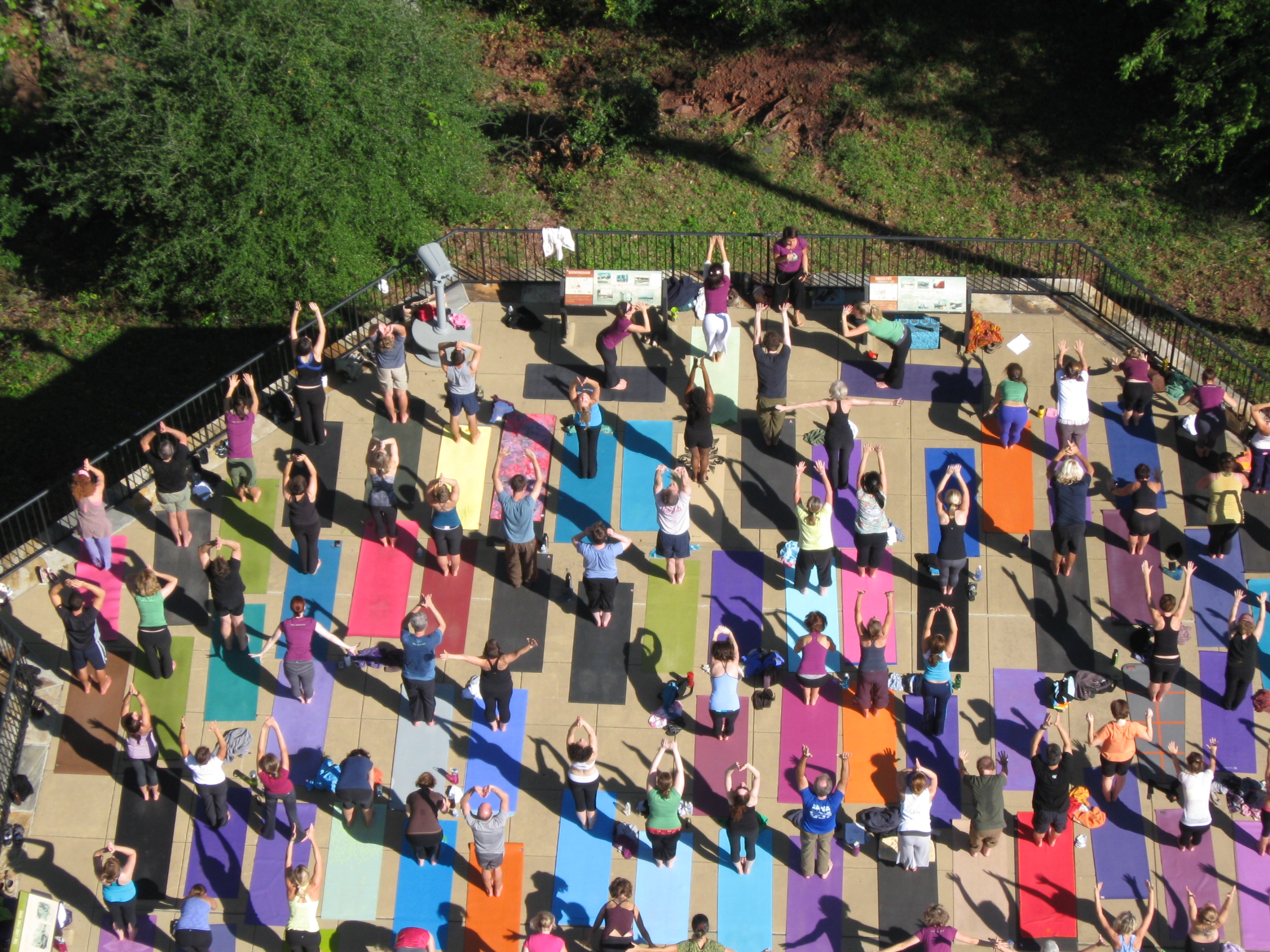
Today we use the term “sun worship” to describe people who like to sit out in the sun and tan. But ritual worship of sun gods and goddesses goes back for millennia. People have long known and appreciated the life-giving force of the sun. It is the source of all energy and life on earth, through the process of photosynthesis and from the warmth it provides our planet. Sunrise and sunset are magical times of the day, when colors blaze across the sky. In yoga, we do sun salutations to open our practice by welcoming the sun.IMG_2347

So today I salute the sun for these life-giving blessings:

  • Sunlight helps improve mood, and lessens the effects of seasonal depression. As Wilma Rudolph said, “When the sun is shining I can do anything; no mountain is too high, no trouble too difficult to overcome.
  • The sun provides Vitamin D, which helps us absorb calcium (keeping bones strong), and may protect against certain types of cancer, diabetes, rheumatoid arthritis and other conditions.
  • The sun powers our hot water heaters, homes, watches, and maybe someday, our cars.
  • The sun gives order to our days, orienting us to time and space.
  • Sunny days get us outdoors, so we get more exercise.
  • The sun stimulates the production of melatonin, which helps us get a good night’s sleep.
  • The sun gives us rainbows.
  • The sun ripens and sweetens the fruit we eat. In the words of Galileo, “The sun, with all those planets revolving around it and dependent on it, can still ripen a bunch of grapes as if it had nothing else in the universe to do.”IMG_03521

And isn’t true that when the sun is shining, we feel as if it shines just for us? We bend toward the sun like flowers do, waiting to be opened up, growing just a little bit taller in its light.

Spring recharge

We take for granted that our phones and other devices have to be recharged every day or every week. If we don’t do it, we lose the ability to communicate or do our work. The same is true of our minds and bodies, but because we don’t totally shut down, we don’t sense the same urgency to recharge.

April is coming to a close and it’s starting to feel like spring. What can we do to refresh ourselves? The weather teases us, with a few warm days followed by a really cold one; the pollen is challenging some of us to keep our heads clear; flowers are blooming, yet we’re still wearing winter jackets; kids are getting restless in school, but they have two months to go – we can answer that uncertainty and unsettledness by learning what serves us well and making changes in our routines.

Here’s what my spring recharge looks like:

Rediscovering nature – Sustainability is a buzzword all year long, but Earth Day still serves as an opportunity to get people outdoors. A few days ago, I went on a Nature Conservancy hike at Great Falls Park in Virginia, overlooking the Potomac Gorge. As many times as I have been there, I never fail to be awestruck when I see the falls with all their power and beauty. Vultures, cormorants and herons were soaring over the gorge as the river rushed over the rocks. In the park we saw the first spring wildflowers, and I learned that the flowers of redbud trees are edible (salad garnish!) It doesn’t take a whole day to do something in nature: in the May issue of Yoga Journal, there are ideas for connecting with nature in a minute, an hour, a day or a week.Great Falls NP_1

Fresher, lighter food – The warm, comforting foods of winter will soon be a memory. Florida fruit is starting to appear in my grocery store, and I love tracking the progress of the blueberries for sale: first Florida, then Georgia, North Carolina, Maryland, New Jersey and later in summer, Michigan. Spring and summer will mean more local food, more raw or lightly-cooked food, more fruits and vegetables. The Center for Science in the Public Interest has published a book about the best basic foods including best fruit (guava, watermelon and kiwi), best vegetables (kale, spinach and collard greens) and best beans (soybeans, pinto beans and chickpeas). Think of the combinations!photo

Cleaner spaces – Our homes suffer over the winter too. They’re closed up with stale air; dirt and toxins have accumulated; and closets are cluttered with heavy coats, sweaters and boots. Last week I cleaned out my coat closet, and I can’t stop admiring its organization and empty space. (We’ll see how long that lasts!)

A clearer head — Working on mind clutter is valuable too. Could you possibly let go of activities that are draining you and wearing you out? Sometimes I realize that just the process by which I’m doing something is too complicated, that there is a simpler way that uses less energy. Often it’s because I’m trying to control something too much. But by letting go of some control, the process becomes easier, and I am freer in a way. Recommitting to a meditative practice helps me figure this out.

Reuniting with friends and family – Feeling other people’s energy can be a great way to recharge. Spring is the perfect time to connect with people who stimulate and challenge you, support you and nourish you. It’s the time when we start planning family reunions and summer picnics. Maybe it’s a time to commit to putting out more love, and less fear and judgment; to look for the beauty in people that mirrors springtime’s beauty.

Great Falls NP ChickweedI don’t think there is any season that nourishes the spirit, or gives us more reason to feel hope and optimism as spring does. As the writer and abolitionist Harriet Ann Jacobs wrote, “The beautiful spring came; and when Nature resumes her loveliness, the human soul is apt to revive also.

People who need people

Everyone wants independence – to have the freedom to make choices about values, goals and lifestyles. But as Henry Van Dyke once said, “In the progress of personality, first comes a declaration of independence, then a recognition of interdependence.”

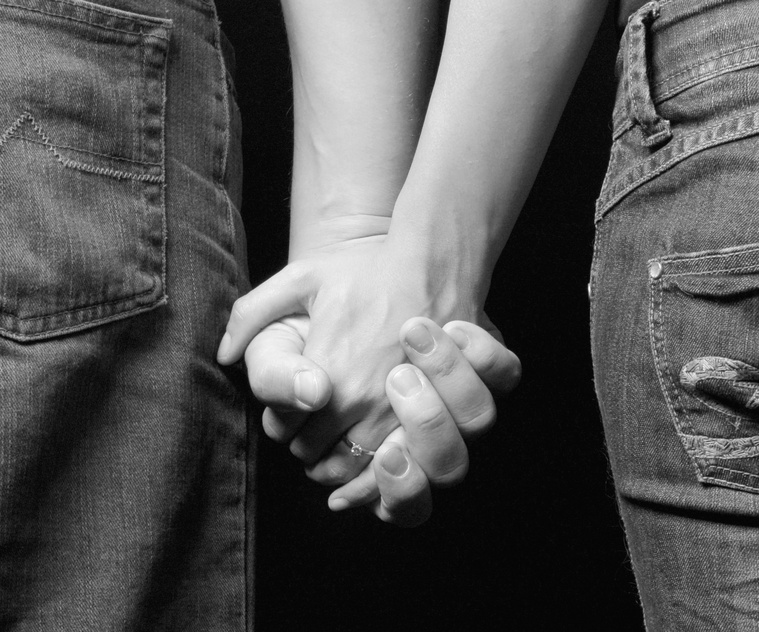
Amir Levine, author of the book Attached., says that independence means having someone reliable to depend on so that you can “walk the path of independence together”. To be truly free and independent we must put faith in the strength of others.IMG_0086 r

Sheryl Sandberg has made a similar point during interviews about her controversial new book, Lean In. She believes that one of the biggest [career] mistakes women make is not making their partners real partners – in other words, not relying on them enough. Success is hard-won, and especially so without a trusted partner in life.

Buddhism teaches the practice of non-attachment, based on the idea that suffering is the result of your ego being too wrapped up in a certain idea, outcome, or possession. The true self becomes obscured when we grasp or cling to something or someone as if our life depended on it. That kind of clinging attachment would be comparable to what Levine calls “anxious” attachment – when we worry excessively about losing the object of our attachment, or worry that the other person won’t love us enough.

Buddhist non-attachment doesn’t mean not caring, however. That could lead to the other end of the spectrum — those who avoid attachment to other people altogether, because they have the belief that attachment means losing independence. In avoiding all attachment, they give up intimacy and all of the richness that can be gained from sharing their innermost feelings with someone they trust.

As in the Goldilocks story, there is a middle ground – what Levine refers to as secure attachment. In a securely attached relationship, the partners don’t spend time worrying about how much one loves the other, or about separation. They trust in themselves and each other enough to know that the relationship is strong enough to allow independence on both sides, without keeping score. Soren Gordhamer thinks of this non-grasping feeling as spaciousness. He writes that “in those moments, we have gratitude. We appreciate a given moment without needing to control or hold it indefinitely. We relate to these moments with trust instead of fear, with openness instead of greed, with letting go instead of holding.”

I like to think of secure attachment as being like Velcro (and not in the negative way some people do). When stuck together, it holds together tightly; but when it’s time to separate, it does so without damaging either side. And it can be put back together again just as snugly whenever we want. It separates and re-joins many times over without effort. I hope that my relationships — with my children, my spouse, my friends, and my mother – have that effortless Velcro quality. Can we allow uncertainty, but know without a doubt that we can rely on each other? Can we walk the path of independence together?

Potholes

On one of the roads I frequently travel, there is a depression where a manhole cover is set too low. You can tell who drives this way all the time by whether or not they swerve a little to avoid it — people in the know will never actually hit the hole.

imageThat started me thinking about the metaphorical potholes in our lives: the sore spots and wounds we just avoid because it would be hurtful or damaging to go over them. This might be the relationship where something isn’t quite right, but it feels too dangerous to address the problem. Or it could be the job that isn’t satisfying but it’s too overwhelming to think about looking for a new one. It could be the health problem that isn’t going away, but we don’t want to hear what the doctor might say.
The human ability to avoid confrontation is phenomenal. We would rather drive around the pothole, live with superficiality in a relationship, take an aspirin for our pain, or trudge reluctantly into work every day than take the necessary action to live more fully and joyfully. I’ve only known a few people who have moved on from a situation before it got totally miserable — the people who see the pothole and immediately find a way to get it filled.
The rest of us make the calculation — is it worth tearing up the road to fill the hole? What if we open things up, and find more damage underneath? Can we wait for somebody else to fill the hole for us? Do we really want to see whatever is in that hole?
I’m reading a book called The Weird Sisters, by Eleanor Brown, in which one of the characters says, “We all have stories we tell ourselves. We tell ourselves we are too fat, or too ugly, or too old, or too foolish. We tell ourselves these stories because they allow us to excuse our actions, and they allow us to pass off the responsibility for things we have done — maybe to something within our control, but anything other than the decisions we have made.”
What story are you telling yourself to excuse inaction, to pass off responsibility for the things you could be doing? Do you tell yourself that you are too old to make a career change, or that the problems in a relationship aren’t your fault, or that someone else will come to rescue you?
image
The start of spring often motivates us to clean our houses, air out our rooms, and prepare our gardens for new plants. It might also be a good time to clear out the old habits of mind that aren’t helping you live your fullest life. What’s dragging you down, what’s energizing you? Can you use the clarity of your nice clean windows to see a hole that needs filling?

Emotions: Too close for comfort?

Does expressing emotions scare you, or make you feel somehow weak? As much as we over-communicate these days, we often keep our emotions in check or hide how we really feel. Perhaps cultivating greater emotional awareness can help us express our emotions more often and more constructively, and lead to more fulfilling relationships at home and at work.

Psychologist Paul Ekman has written that “Without emotions there would be no heroism, empathy, or compassion, but neither would there be cruelty, selfishness, nor spite.” He has studied how our facial expressions convey emotion, and written extensively about paths to a more balanced emotional life.

Interestingly, we might not be expressing emotions in writing as much as we used to. A group of British researchers analyzed a database of over 5 million books and found that words with emotional content have declined over the past 100 years. They looked at the frequency of mood words — those that expressed anger, disgust, fear, joy, sadness or surprise. The one exception to the declining trend was the emotion of fear, which has actually increased. The use of different mood words also tracks closely with historical events such as World War II, when there was a notable increase of words expressing sadness and a decrease in words connected to joy.

While written works don’t necessarily reflect actual behavior, how we tell stories to our children is a behavior with important outcomes. Listening to how we express emotions helps children develop emotional skills. A recent study published in the journal Sex Roles showed that mothers are better at this than fathers. The mothers in the study used more emotional words and elaborated more when reminiscing with their children about past emotional experiences, both good and bad. By doing so, they let the children know that their perspectives about a situation, and their feelings, were important.

Dads shouldn’t feel bad about these results, or leave the reminiscing to moms, though. Emotional awareness can be learned and enriched. The problem is that emotions, especially the negative ones like guilt or anger, sometimes make us uncomfortable, so we push them deep down inside us. In Japanese Morita therapy, people are taught to accept and co-exist with uncomfortable emotions; since the feelings can’t be controlled, opt to change your behavior instead. Go ahead and do what frightens you instead of letting fear hold you back.

Another way to become more aware of emotions is through writing. James Pennebaker, who developed the “writing to heal” program, had a group of people who were laid off write for 20 minutes a day, for 5 days, about their emotions and what they were feeling. After the study ended, 65% of the people who wrote about their emotions found new jobs, versus 26% in the group who didn’t write. The writing, a form of mindfulness practice, helped people clarify what they were looking for.

Putting yourself in another person’s shoes, imagining what they are feeling, is another way to build emotional awareness. Chade-Meng Tan, who developed Search Inside Yourself, has a practice called “Just Like Me” meditation. It serves as a reminder that most of us want the same basic things out of life, such as happiness, and that all of us suffer sometimes. It is a profound way to feel more connected to others.

Improving emotional intelligence isn’t a task with an end point though. Just as athletes and musicians continue to practice, even after reaching the big leagues, we shouldn’t stop refining our emotional abilities. Richard Davidson, who studies the neuroscience of emotions, says that “There are many sources of destructive emotions in our culture, and … constant barrage of stimuli…” We “need to keep practicing to effectively maintain the gains achieved.”

Seeking a muse

Where does inspiration come from? A stray word overheard on the street, a beautiful view, an ironic piece of art, serendipity? Should we seek inspiration or let it come to us?Lake Como_373

All week, I’ve been suffering from a bad case of writer’s block. I don’t know if it is a result of boredom, going on vacation for a week,  or waiting for a spring that never seems to arrive. Sometimes I think it has something to do with the loss of my yoga teacher (no, he didn’t die, just stopped teaching for a while). He would often say something simple in class that would set me off on some whimsical train of thought. Whatever the cause of the barrier, I find that desire for relief makes it hard not to work at finding an idea; hard to relax and trust that something will come.

Thomas Edison famously said that “genius is one percent inspiration and ninety-nine percent perspiration,” but he didn’t actually say where he got that inspiration. There seem to be two schools of thought on this – the first is what I call the “Just do it” school, and the second is the “Wait for it” school. Jack London was in the first category, saying that “You can’t wait for inspiration. You have to go after it with a club.” Pablo Picasso too, thought that “Inspiration exists, but it has to find us working.”

Waiting for inspiration is a little like calling on the muses from Greek mythology. The ancient Greeks believed that poets, artists, musicians and even scientists got their inspiration from one of the nine muses, goddesses that were the source of knowledge. Amy Tan has said, “Who knows where inspiration comes from. Perhaps it arises from desperation. Perhaps it comes from the flukes of the universe, the kindness of the muses.”

Consider another definition of inspiration – “the act or process of inhaling” – and compare creative inspiration to the act of breathing. We know that the breath doesn’t have to be forced. It will happen without us doing a thing. We are born without the need to control the breath, yet it’s incredibly difficult to give up control of other things we want. We don’t have the patience to just let them come.

If we have both open airways and clean air, we trust in our continued ability to breathe. If I keep my mind open and let the breezes of experience flow through, can I learn to trust that ideas will come? I am reminded of two of the qualities of mindfulness: non-striving, which is about being, rather doing; and non-attachment, which means letting go of the idea that things have to turn out a certain way.

Maybe I am my own muse. By being and trusting who I am, letting go of fixed ideas, and not being afraid to wait, inspiration will come – just like my next breath.

Time travels

Ready to spring forward? That cute mnemonic device we use to remember to set our clocks ahead sounds so positive and energetic, but it feels the opposite. The benefits of daylight savings time are few, if any, and the costs are high. Do we really still need it?Analog Clock

Our bodies are finely tuned to respond to cycles of light and dark. There’s truth in the adage, “Early to bed and early to rise makes a man healthy, wealthy and wise.” The facts are these: getting enough sleep is important for physical health, helps you be more productive (leading to wealth) and even affects your ability to learn and remember (making you wise). When the phrase was coined, people didn’t know the mechanisms by which it worked, but they certainly could observe the results.

When we switch on and off of daylight savings time, we take an already-artificial construct (time) and make it more artificial. Our bodies are telling us one thing – it’s time for dinner, or it’s not time to get up – and the clock is forcing us to do something else. Even without daylight savings time, most of us suffer from what’s called social jet lag, a disharmony between our internal clocks and our daily schedules that causes chronic sleep deprivation, contributing to obesity, increases in smoking and higher alcohol consumption. We’re all sleepy when we need to work and wakeful when we want to sleep.

Monday mornings are consistently the peak time of the week for hospitals to see people come in with heart attacks, probably because of the early morning rise in stress hormones combined with the dread of starting the work week. But on the Monday after we switch to daylight savings time, that incidence of heart attacks goes up by 10%. Accidents of all kinds also increase for the first few days after the time change (in either direction).

Benefits of daylight savings time: not too many. Although it was touted for years as a way to save energy, the savings is really only about 1%. Let’s face it, we live
in a 24/7 world and if the lights aren’t on in the evening, they’ll be on in the morning instead. Gasoline consumption actually goes up during daylight savings time because we go more places after work.

IMG_0239Is it nice to be outdoors in the evenings during the nice weather? Of course! It might even help people get more exercise if they go out for a walk, or play a game of softball after work. But I’ve found in my house that everything gets later during daylight savings time. The bright sunlight makes it seem too early to make dinner, so dinner starts shifting to 8 or 8:30. That makes bedtime later. But we still have to get up for work, so sleep is what is sacrificed.

OLYMPUS DIGITAL CAMERAI don’t see any groundswell of opposition to DST, though, so I think it will be with us for the foreseeable future.  Just be aware for the next few days that none of us will be operating at 100%. It will take most of the week to have our bodies adjust, so don’t jump out of bed too quickly in the morning – take a moment to breathe deeply before you start the day. Pay more attention on the road and be mindful in the kitchen to avoid accidents. Get plenty of sunlight during the middle of the day, even if it’s just by looking out the window.

Above all, listen to what your body tells you it needs. As Golda Meir said, “I must govern the clock, not be governed by it.”

Go out and play!

Plato wrote, “You can discover more about a person in an hour of play than in a year of conversation.” Playing allows us to take risks, to laugh at ourselves, to fall down, and to get back up. We discover truths about ourselves, as well as others.

Earlier this week, my yoga teacher announced at the beginning of class, “We’re just going to play today.” It was the last class there for most of us, since the yoga studio was closing at the end of the week. We all felt a little bittersweet about it, and by making the class more playful, our teacher helped us focus on the sweetness and joy rather than the sadness at the ending.

We went on to practice a lot of partner postures, flying postures and other fun stuff. We had to trust each other and give up some control in order to balance in the air on someone’s feet. Some of us found that easier than others, but there was laughter all around as we played together. And yes, I did learn more about my flying partner in that hour than I ever had by practicing yoga next to her.

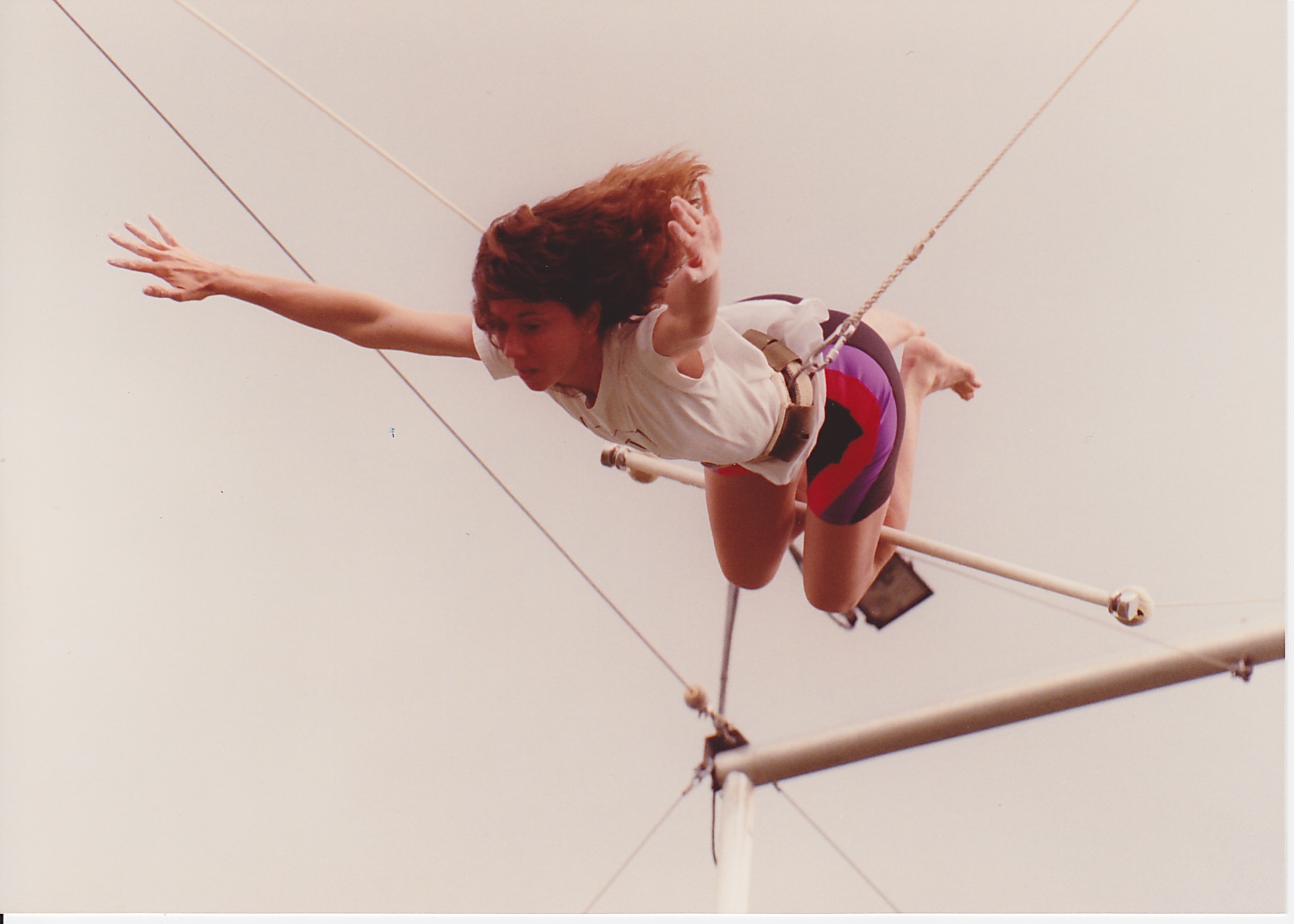
Playing helps take us away from the stresses of “real” life, but it also prepares us for them. The first time I tried the trapeze, years ago, I was terrified. You have to stand with your toes hanging off the edge of a platform, high in the air, and lean forward to grab the swing with the assistant only holding onto your harness with a finger. I had to trust myself to reach for the swing as I stepped into the void, and know that there were only two possible outcomes. Either I would be successful, get a grip on the swing, pull my legs up over it, and fly through the air (with the greatest of ease?). Or I would miss the bar, fall into the safety net, and..….be okay. The only thing at risk was my ego.

Why do you think we use terms like “take the plunge” and “leap of faith” to describe life’s risk-taking? Those physical chances we take during play – diving into the deep end of the pool, and jumping off the trapeze — teach us that we will probably be okay even if we fail. By continuing to play as adults, we keep ourselves flexible (mentally and emotionally, as well as physically) and more able to deal with changes that come along.OLYMPUS DIGITAL CAMERA

Do we play enough? NO! Even kids don’t play in the traditional sense nearly as much as they used to. And adults are often so oriented to work and worried about the future that we forget to incorporate play into our lives. Deep down, though, we all want and need to play.

How can you start playing again? Try a Laughter Yoga class, where you can just be goofy and creative for an hour or two. If you’re near Washington D.C., check out an organization called “Spacious” that connects people around fun and play. Bring the Instant Recess program to your workplace. Play in the snow, dance in the street, go on a roller-coaster, ride a wave, or even try the trapeze. Re-discover that baseline joy that comes from letting go and trusting that everything will be okay.

Discovering what’s here

“È tutto qua” says the little note taped to my computer monitor. It is an Italian phrase meaning “it’s all here”. I first saw it in San Francisco, where it’s the name of an Italian restaurant. I looked up the meaning and was so taken with it that I have kept it in front of me ever since.

Besides my love for all things Italian, the note reminds me to keep life simple. Don’t confuse wants with needs, don’t overcomplicate things. It’s all here already.

Whenever I start thinking that someone else has a nicer house, or a better car, or more success, I remind myself that it’s all here.

Whenever I start fretting about how I look, or stressing over little things that go wrong, I try to remember: it’s all here.

The idea of è tutto qua for me is partially about gratitude, but it’s also about knowing how little we really need to make us happy. The Gallup polling organization surveyed over 130,000 people in 130 countries not long ago, and identified two things that are the biggest predictors of whether people enjoyed their day. The two things were “being able to count on someone for help” and “learned something yesterday”. That’s it.

Once our basic needs (food, shelter, safety) are met, it’s not the extra gadgets and extravagant trips that increase our happiness. It’s as simple as knowing that someone has your back, and that you’re continuing to grow. It’s all here.

The sister I can call for emotional support or advice; the neighbor I can ask to borrow an egg; the friend I can rely on in an emergency: it’s all here.

The ability to read, to listen, to see; to take up skiing when you’re over 40; or to learn (as I did yesterday) that the resveratrol in red wine can protect against hearing loss: it’s all here. OLYMPUS DIGITAL CAMERA

The question is, on how many days can you say, “It’s all here”?  The Gallup people also have something called the Well-Being Index, where they measure the mood of a sample of people every single day. It shows the percentage that had “a lot of happiness/enjoyment without a lot of stress/worry” and the percentage that had “a lot of stress/worry without a lot of enjoyment”. So, for instance, on February 19, 43% said they had a lot of enjoyment without stress, and 14% said they had a lot of stress without enjoyment.

Leo Rosten said, “Happiness comes only when we push our brains and hearts to the farthest reaches of which we are capable.” Maybe the two determinants of enjoyment are dependent on each other. Can we actually be free to learn and grow to our full potential if we don’t have the support of others? And can we have healthy, mutually beneficial relationships if we don’t continue to grow and change?

Are you going to enjoy today? What will you learn? Who will you support, and who supports you?

Lessons from “30 Rock”

Toward the end of the “30 Rock” finale, Liz Lemon is explaining to Tracy Jordan how difficult he has been to work with, and how hard he made her job, but she says “because the human heart isn’t properly connected to the human brain,” she loves him anyway.

The “30 Rock” characters have change thrust upon them as the show ends; they experience love and loss, see dreams fulfilled and have wishes granted. Above all, the last episode is about how sometimes our hearts and our brains are at cross purposes. We think we want one thing, but when we get it, we find out it doesn’t make us happy. Or we discover that the thing that makes us happiest has been right in front of us all along.

Psychologist Daniel Gilbert has written, “We cannot feel good about an imaginary future when we are busy feeling bad about an actual present…We assume that what we feel as we imagine the future is what we’ll feel when we get there, but in fact, what we feel as we imagine the future is often a response to what’s happening in the present.”

The question is whether instead of always using the present to project a rosier future, can you stay focused on the here and now, the reality of what is?

In “30 Rock”, Liz gets the children she wanted and becomes a stay-at-home mom, only to realize that she misses work terribly. Her husband gets a new job, and is miserable because he desperately wants to be at home with the kids. Jack gets his dream job as head of G.E. and immediately starts questioning whether he is truly happy. Jenna and Tracy struggle to figure out their identities now that their show is over.

The only character who doesn’t seem to experience any angst in the face of change is Kenneth. As the intern who becomes the head of the network, he is the only person completely comfortable in his new role. Perhaps he was the only one who had stayed present-focused all along. With his sunny optimism and his homespun wisdom, he never lost touch with his inner compass.

In an article in Yoga Journal, Kate Holcombe wrote about the idea of getting to know your true self, and how we often mistake some external attribute for who we really are. The Sanskrit word “asmita” refers to this misidentification which “happens when you identify with the parts of yourself that change – everything from your mind to your body, appearance, or job title – instead of with the quiet place within you that does not change.”

It’s easier to accept change on the outside if we are more connected to our unchanging self, says Holcombe, and not identifying “too closely with the changeable aspects” of ourselves. That requires a great deal of self-acceptance because the answer to the question, “Who am I?” doesn’t change.IMG_0271

Accepting and connecting with the unchanging self makes it easier to see when you’ve gotten off course, easier to see what it is that serves your needs at any given moment. So, like Liz Lemon, you might realize that being a stay-at-home mom isn’t right for you; or like Jack Donaghy, you might see that it’s not getting the dream job that makes you happy, it’s what you can do in the job.

Sometimes you get your heart’s desire; sometimes you don’t. But “because the human heart isn’t properly connected to the human brain,” you might find that you’re very happy anyway, just because of who you are.