What needs changing?

No one ate many sweets at my New Year’s Day party. Yoga class was packed yesterday. Gyms are full. In other words, a normal January.

Statistics are dismal, though, when it comes to people maintaining their new exercise routines, keeping pounds off, adopting new habits. By the end of the month, most of us will be back to our old, comfortable ways.

That may be because we’re not seeing the forest for the trees. Having a view of the big picture can help us figure out which tree is going to fall today, or which aspect of health lends itself most to changing. Much as you might not want to hear it, maybe exercising more isn’t the thing that’s going to make the biggest difference for you right now.

Michelle Singletary, who writes a personal finance column for the Washington Post, gets it. She wrote a column last week about how better financial health is inextricably connected to physical health, social support and gratitude. She makes the point that health care costs can eat up retirement savings — so isn’t it a good idea to stay as healthy as possible before you reach that point? Are your relationships with family and friends weak or broken? Those are the people you might need if you fall on hard times, so Singletary says it makes sense to keep the ties strong.

In other words, all the dimensions of health — physical, social, spiritual, intellectual, emotional, occupational — help hold the structure of self together, and are equally important if we are going to reach an optimal state of well-being. So while you might want to lose a few pounds in the new year, is your physical health really the dimension where you are most in need of change?

I think of the dimensions of health like a Trivial Pursuit game piece. Each different colored piece of the pie has to be filled in before you can win the game. The same is true for overall wellness. So if you’re already strong with the piece that signifies physical wellness (even if you would like to lose that extra 5 pounds), but you’re struggling to obtain the piece for spiritual wellness, doesn’t it make more sense to focus your efforts in that area?

stick figureIn my stress management class, I sometimes use an activity from a text by Olpin and Hesson to assess balance in the different dimensions. Students get index cards and are asked to draw pictures of their bodies. The head represents the intellectual dimension; the trunk is the spiritual dimension; the arms are social and emotional, respectively; the legs are physical and occupational. If they feel balanced and healthy in a dimension, that body part is drawn so that it is in proportion to the rest of the body. If they feel that they overdo in some dimension, that body part will be outsize. And if there is an aspect of health that is lacking, the body part will look small compared to the rest.

If you do this exercise, are you wobbling from the imbalance? Is one leg shorter than the other? Is your head too big from overthinking everything? Let that be your guide to better new year’s resolutions. Sometimes making a change that no one else can immediately see is the missing piece. As Plutarch said, “What we achieve inwardly will change outer reality.”


What’s in your suitcase?

I’ve been a sporadic journal-keeper for most of my life. My most prolific period was during my angst-ridden teen years when I wrote about everything from bad luck with boyfriends, to concerts I attended, to books I was reading. Some people destroy their youthful writings, mostly because they’re so cringe-inducing. I don’t know if it’s vanity, voyeurism or something else, but I haven’t done that yet.

Recently, when I was looking for something else in my attic, I came across some of my old journals and brought them down to read. Surprisingly, the cringing was minimal. I was mostly intrigued by my younger self, as if she was from some foreign land.  And I found this poem in a collage on one journal cover:

Poets and true pathfinders have

Traveled like this: tires

Stripping pavement have been

Music to ears far finer

Than my own, but

Still I grow gladly

Into my vagabond self. I

Have died sometimes; I have left bolts and

Scraps of my life in unguarded

Corners and have smiled

In apology at my scattered,

Misstated thoughts. I am

Collected now, into one worn

Suitcase and the healing conviction

That everything left

With me is absolutely relevant.

I don’t know who wrote it, but the poem still resonates, even though I’ve been anything but a vagabond.The idea that we can boil down the true necessities of life to what would fit, metaphorically speaking, into a suitcase, rings true. The poet sounds weary, as if it took a long journey to reach that point, and maybe it does.image

Especially at this time of year, when there is such a temptation to indulge in excess holiday buying, it seems wise to remember what is really relevant and valuable in life. To love and be loved, to be safe and secure, to do or create something meaningful, to learn new things, to feel healthy in body, mind and spirit — those are the most important things in my suitcase. Do I really need anything more?

A recent article by Stacey Colino in Bethesda Magazine talked about why people in our affluent area, with money, physical health and great educations, could still be so unhappy and dissatisfied. One possible reason is the constant comparing of ourselves to others. Psychiatrist Norman Rosenthal was quoted as saying, “To compare up is to invite envy; to compare down is to invite gratitude…When we compare and find ourselves wanting, we make ourselves unhappy.”

If I pack my suitcase with the true essentials of my life, I can only feel gratitude, knowing that for many others, things like love and security are elusive. But even if I had to fill a suitcase with the material possessions that matter to me, I don’t think I would have too much trouble fitting them in. A few pictures of my kids, my wedding ring, a special book or two, and I feel rich.

When I was eighteen, I saved that poem because it was romantic to think of myself as a vagabond and because I already felt that I was leaving a little bit of myself behind with each new experience. I share it now for completely different reasons. I hope that the scraps I’ve left behind have touched someone along the way, and the scattered thoughts have gathered themselves into a more focused path forward. Have I learned to compare myself only with the younger version of me?

Lucky in love

What is the essence of a strong, fulfilling relationship? Experts agree that it should make you feel happy and loved, safe and secure, respected, and respectful. It’s one where you can be yourself, or as Erich Fromm said, you unite “with another while still remaining an individual.”holding_hands1

My husband and I are celebrating our anniversary this week, and it makes me reflect on why our marriage has lasted as long as it has. How much was luck, and how much hard work?

Since 2004, the Cornell Legacy Project has been collecting “practical advice” from a large group of people over 70. They’re asked for their counsel on different aspects of life, such as raising children, living through wars, and dealing with loss.  When they were asked about what makes a successful marriage, the top responses were:

  1. Marry someone who is like you in their core values, and don’t think you can change them after marriage.
  2. Friendship is as important as romantic love in lifelong relationships.
  3. Don’t keep score. Marriage isn’t always a 50-50 proposition. The key to success is that both partners try to give more than they take.
  4. Talk to each other.
  5. Don’t just commit to your partner; commit to marriage itself and take it seriously.

The first two tips are about choosing your partner. Marrying someone who shares your values and can be your best friend allows you to take the leap of faith that true intimacy requires. The word intimacy comes from the Latin word meaning “within”, and that willingness to let someone else inside our hearts requires trust. That’s the first building block.

Intimacy is important, but it’s not enough. That’s why I think #5 – commitment — comes next. There has to be a sense of mutual obligation – we’re in this together and we both have to make it work. Both people have to set the intention that they are going to make the relationship a priority.

But once the choice is made and the intention is set, sustaining any relationship over the long term requires attention and effort. It has to be cultivated like a garden so that it thrives. I agree with the advice that marriage isn’t always 50-50. At any given time, someone is going to be giving more than the other, and there are times when you have to make an effort even when you don’t have the energy for it. You just hope that it balances out in the end, that you feel as if the relationship has enriched your life well beyond what you’ve put into it.wildflowers 3

Communication is the other vital element. The elders say “talk to each other”, but I would suggest learning to listen more than you talk. Listen to understand instead of listening just to reply. Listen with empathy. Don’t react quickly, but respond thoughtfully. Apply mindfulness practices to your relationship.

Ultimately, the support that comes from strong relationships is a powerful component of staying healthy, both physically and mentally. Having someone to confide in, to touch, and to provide companionship leads to a better, longer life. It has certainly made my life richer and more meaningful. So has my marriage required hard work? Definitely. But at the same time, I feel really lucky.

Thanks for…well, everything

Even on a bad day, I try to remain grateful. And the thing that I am most grateful for is opportunity. It is opportunity that’s given me the education to get the job that puts me in the traffic that frustrates me. It is opportunity that led to success that bought the house where things break down. It is opportunity that widens my experience so that I go to the concert that disappoints me. So I accept the bad with the good, just grateful that I have choices. thanks

Acknowledging all the good that I have immediately puts life in a different, more favorable perspective. Maybe that’s why having a day devoted to giving thanks is so appealing to everyone. For one day, we put aside our worries, and sometimes our differences, to come together in appreciation, and see things in a positive light.

Here are a few of the other things I give thanks for this year:

Gardens; the gift of friendship; goodness;  grace; room to grow.

Insight; ideas; my ipad; my in-laws; interesting conversations.

Visitors; vacations; Vinyasa yoga; the view from my window.

Eating with friends; the feeling of empathy; my eighty-something mother; having enough.

Time for the things that bring me joy; traditions, old and new;  the taste of good food; the touch of a loved one.

Happiness; good health; a helping hand; my husband.

Acceptance of differences; fresh fall apples; ancestors; the aroma of pie.Thanksgiving_16

Nature; new friends; naps; physical and spiritual nourishment; my neighbors.

Kindness; kisses; my wonderful kids; knowledge; holding a koala.Brisbane_122

Stories; my sisters; the sight of a sunrise; solitude when I need it; stars in the night sky; songs, especially when my daughter sings them.

Tecumseh said, “When you rise in the morning, give thanks for the light, for your life, for your strength. Give thanks for your food and for the joy of living. If you see no reason to give thanks, the fault lies in yourself.”

Thank you for reading!

Intentional living

Many yoga teachers suggest setting an intention at the beginning of a practice. It helps ground you in the moment and keeps you focused on why you are there. But an intention is not the same thing as a goal. Philip Merrill wrote about the difference in Yoga Journal: “It is not oriented toward a future outcome. Instead, it is a path or practice that is focused on how you are “being” in the present moment…You set your intentions based on understanding what matters most to you and make a commitment to align your worldly actions with your inner values.”

Life has been busy and stressful for me lately. Luckily, most of the stress is the good kind: getting ready for an upcoming vacation, planning a move. But as much as I want and look forward to those events, they have upended my life a bit, and made me anxious at times. So two weeks ago I began to set intentions as I woke up each morning. Working with an intention has helped keep the stress at bay and provide clarity about what is important.

Some of my daily intentions have been:

Joy. Waking in the morning and setting a simple intention of being joyful that day has been very powerful for me. So many times our days are spent dealing with problems and mistakes, and things that go wrong. We lose the feeling of innate joy that we are born with. Setting an intention of joy helps me laugh with people, find humor in bad situations, and stay focused on the overall happiness of my life even on a bad day.

Organization. While this sounds more like a goal than an intention, my purpose was very immediate on the day I woke and this word came to mind. I think at that moment it was about having an organized mind as much as an organized life; about acting in an organized way rather than jumping from task to task, and worry to worry.

Equanimity. Like organization, the intention of equanimity is about how I react to what’s going on in my life. It’s easy when we’re under stress to overreact, to catastrophize, to overlook the solutions or silver linings. Setting an intention to foster equanimity in my life helps me recognize that while I cannot control what happens, I can control how I react to what happens. It’s my choice of reaction that will lead to either suffering or happiness.

Kindness. It seems to me that kindness is deeply connected to mindfulness. It’s hard to act kindly without being present to what is happening around me and noticing what others are experiencing. Practicing kindness and compassion gets us out of the mind and into the heart. We forget our own problems for a while to focus on someone else. It’s a win-win for all.

Setting an intention for each day helps guide my actions. The Chopra Center quotes from the Hindu Upanishads to explain the connection between intentions and actions:

“You are what your deepest desire is.
As your desire is, so is your intention. 
As your intention is, so is your will.
As your will is, so is your deed.
As your deed is, so is your destiny.”IMG_0648

When we set intentions, we direct our will in such a way that all our actions take the course we have chosen. If my intention is kindness, and I choose to act kindly, then I have set myself on that path for the day. It becomes my destiny.

Winston Churchill said that, “It is a mistake to look too far ahead. Only one link of the chain of destiny can be handled at a time.” In that sense, setting a new intention each day keeps us present-focused, touching just the one link that will lead to the next.

Vacation days

First day of vacation: The monkey mind is still alive and well, jumping from thought to thought. I wake with an undercurrent of dis-ease. What am I “supposed” to be doing today? My mind isn’t yet allowing me to surrender to the idea of slowing down and doing nothing.
 
So I get up and make a list of things to do. I write some emails. I find something to clean. I sit in the sun and try to read. I start to doze off, the first moment of the day that feels lazy and luxurious. But soon I’m up again, going off to exercise. I believe in working out on vacation, but today it feels like part of my “organized” life, something I’ve scheduled, not something that says “vacation”.
 
Did you know that the majority of Americans don’t use all of their vacation days in the year, leaving billions of dollars of benefits on the table? Many don’t take vacation because they can’t afford a trip, but others are afraid for their job security if they ask for time off.
 
While most employers recognize the value when employees come back rested, refreshed, and more productive, many also expect their employees to answer emails while on vacation. In fact, more than half of the people in one survey said that they are expected to have email access on vacation. So while vacations usually enhance family relationships, work interruptions can actually impede that benefit.
 
Second day of vacation: I’m up early to walk the beach checking sea turtle nests. It’s light, but the sun isn’t up over the horizon yet, and the moon is still visible high in the sky. The shrimp boats are out on the water, and a group of deer graze on the dunes. They let me get amazingly close to them. I’m reminded that the only important things to do today are eating and spending time in nature.Kiawah 003
 
Psychology Today says that “Vacations have the potential to break into the stress cycle,” getting us off the merry-go-round of chronic stress, sleep deprivation and unquiet minds. Vacations are also good times to establish new health habits, especially around exercise.
 
Third day of vacation: I wake in the pre-dawn to the sound of rain beating on the roof. I drift back to sleep thinking about a day spent reading and watching movies indoors. But by 7:00 the storm clouds have moved out to sea and people start to wander onto the beach for morning runs and walks. What will the day ahead hold for me? Beach? Yoga? Biking? All three? Kiawah 006
 
While the joy of vacation wears off quickly when we return to work, people still say they are happiest having spent money on an experience rather than a material possession. Most of that positive feeling comes from being able to share the experience with friends or family. The vacation becomes part of the story of the social network.
 
Fourth day of vacation: Here’s the beauty of it — I don’t need to know what tomorrow will bring. Yes, there are are many more things to do, but there are also all the remaining vacation days on which to do them. It’s time to disconnect……

Daydream believing

My daydreams aren’t what they used to be. I’m pretty sure that’s a good thing, though. It all depends on what we mean by daydream.

Type “daydream” into Google, and this pops up: “Pleasant thoughts that distract one’s attention from the present.” That’s the way I mostly daydreamed for many years. I would use my daydreams as a tool for imagining some future event – usually something that was definitely going to happen, like a vacation. Fantasizing about the future event got me out of the mundane day-to-day life and into something happy and pleasant. After all, who doesn’t like to think about vacation?

But I realized recently that I don’t daydream like that much anymore. I think it’s because I discovered that life is better when I find something satisfying to experience each day that I awake, rather than off in the future. As Daniel Gilbert has written, “When we imagine the future, we often do so in the blind spot of our mind’s eye.” We don’t really know how the future will turn out, and over-fantasizing about it can make it disappointing when it finally arrives.

The dictionary.com definition of daydream is “a reverie indulged in while awake,” a reverie being a “state of dreamy meditation.” This seems like a better way to describe the kind of daydreaming that leads to creativity, problem-solving and fulfilling goals. There’s a saying that ‘where your thoughts go, your energy flows’. In that sense, daydreaming can be uniquely valuable as a way to come up with new ideas, figure out what to do with your life, create a piece of art or music, or imagine a different world.

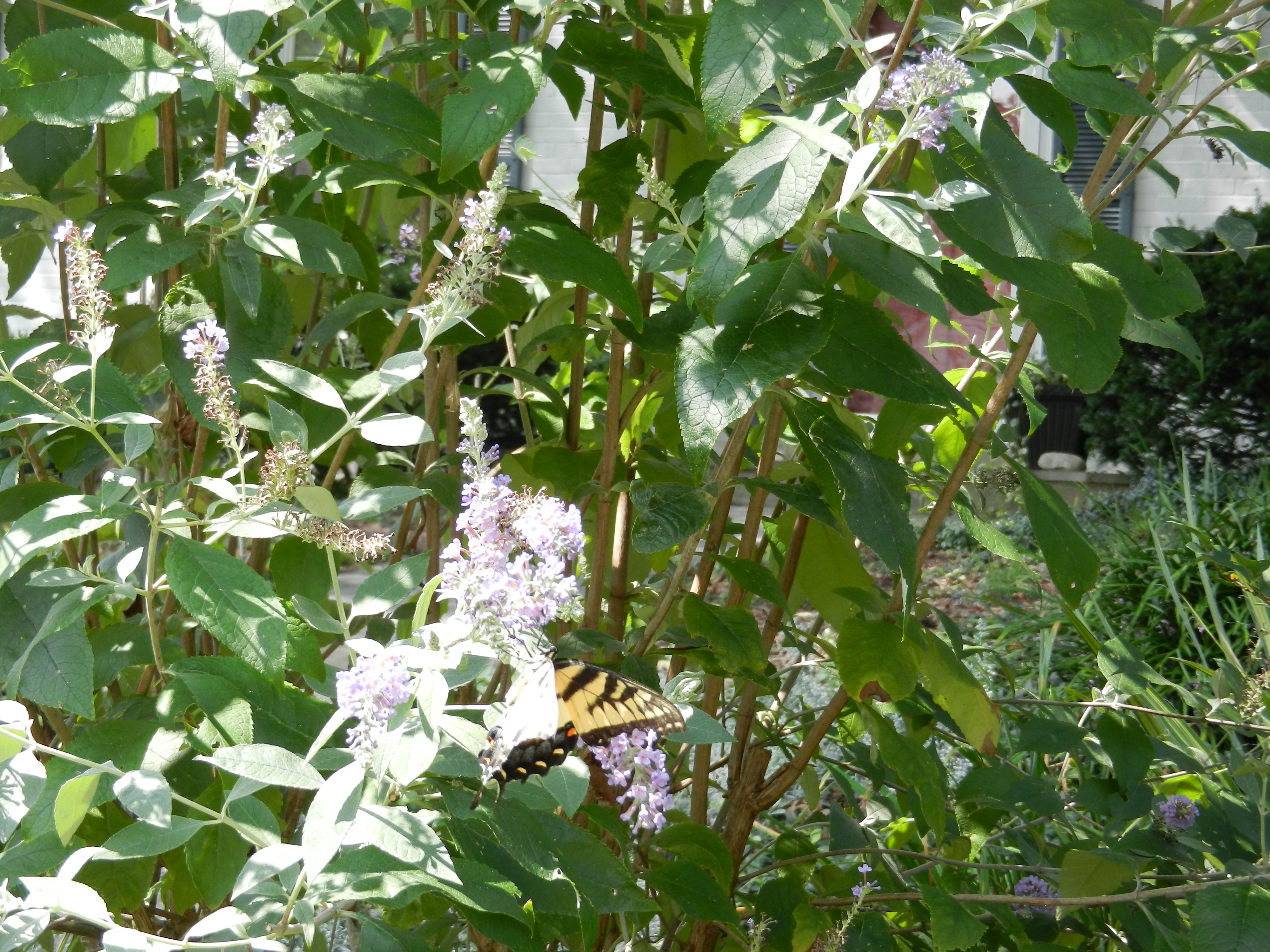
Sitting in my backyard listening to the birds chirping, watching the butterflies flit around the flowers and losing myself in watching clouds, is the kind of daydreaming that occupies me more now. That “dreamy meditation” invites ideas and images into the conscious mind. It’s the daydreaming that leads to new blog posts, and poems, and learning about nature. It’s the daydreaming that allows me to act on what I imagine.Butterflies_03

On the Psychology Today website, there’s an article by Amy Fries called “The Power of Daydreaming.” It’s an extensive overview of all the ways in which daydreaming is good for us, as well as the ways that daydreaming can be negative, such as if it is too “worry-based”. While it’s helpful to use daydreaming as a way to role-play a situation ahead of time, or assess its risk, it becomes maladaptive if it causes anxiety or obsessive negative thinking.

Daydreaming is essentially what we are engaging in when we use positive visualization or guided imagery to relax. We take ourselves away from the present moment (which might be stressful) and into another place that is beautiful and calm, a place that has meaning for us. Daydreaming becomes a short-term tool for getting through a difficult moment.

Does it seem like there’s a disconnect between present moment awareness and daydreaming, which takes us out of the present moment? Fries doesn’t believe the two have to be in conflict, but thinks that we can find the balance that gives us the right amount of each. She says that we need to be able to imagine art, philosophy, spirituality and progress in order to bring them into existence for ourselves.

So I welcome my daydreams as a respite, and try to be present to the serendipitous ideas that come up in them. Who’s to say what the difference is between daydreaming and just thinking? Albert Einstein once said that, “The secret to creativity is knowing how to hide your sources.” Could he have been talking about daydreams?

Three “meals” a day for the soul

It makes sense that a healthy diet and plenty of exercise can help us sleep better at night and be more resilient in the face of stress. But consider the flip side: managing stress and sleeping well can support efforts to eat better and move more.

I recently spent a day counseling people on healthy eating, but I found myself more often than not talking with them about how much sleep they got, and what their stress levels were like. They invariably said that their jobs were stressful and the hours were long. They got home later than they would like, and found it challenging to think about preparing a healthy meal. The stressful day made them feel like they “deserved” the calorie-laden dinner. And by the time they ate, and spent a couple of hours winding down, they got to bed too late to get enough sleep. They often felt fatigued and low in energy.

Most of the people I talked to were relatively young and pretty healthy. But they were struggling with maintaining healthy behaviors in the face of increasingly demanding jobs and hectic lifestyles. Suggesting complicated or time-consuming changes won’t work for them. But what about something that takes only 5 minutes?

Spending 5 minutes once, twice or three times a day doing something that brings you back to the present moment, refreshes your mind, or relaxes your body, can be incredibly restorative. Most of all, in those few minutes, you’re engaged in caring for yourself. While the idea that you deserve care seems like it should be a no-brainer, many people have a hard time embracing it. But a practice that affirms your love and care for self can be the foundation for other health behaviors.

These 5-minute fortifiers come from many sources, including my own practice. Some are adapted from a little book called Five Good Minutes by Jeffrey Brantley and Wendy Millstine. I have divided them into morning, day and evening practices:

Morning

  • Resist the urge to jump right out of bed. Stay still for a moment. Listen to the sounds outside and in your home. Smile. Set an intention for the day, such as being kinder to the people who challenge you.
  • Sing in the shower. As Brantley & Millstine say, “Music and song can make you feel giddy, bubbly, euphoric, and joyful.”
  • Slow down. Ever notice how when you rush, you are more likely to drop things, spill things, and make mistakes; and less likely to find things you need? Taking the extra two minutes to get ready with care will not make you later.

Daytime

  • Breathe at the traffic lights. Too often when we’re rushing to get somewhere, especially in traffic, we chafe at the time spent waiting. Turn it into an opportunity to notice your breath. Inhale deeply and exhale slowly. You will feel calmer when the cars start to move again.
  • Take a break to look at nature. Whether it’s the view out your office window, or a picture on the wall, this practice will rest your eyes and your brain, and shift your perspective.IMG_0117
  • Eat lunch mindfully. Stop working for the time it takes to eat. Chew slowly, really taste the food and think of how it nourishes you.
  • Spend 5 minutes talking with a friend or family member outside of your work. Hearing the voice of someone who loves and cares for you helps ease the stress of the day.

Evening

Relaxing rituals in the evening help separate day from night and work from rest:

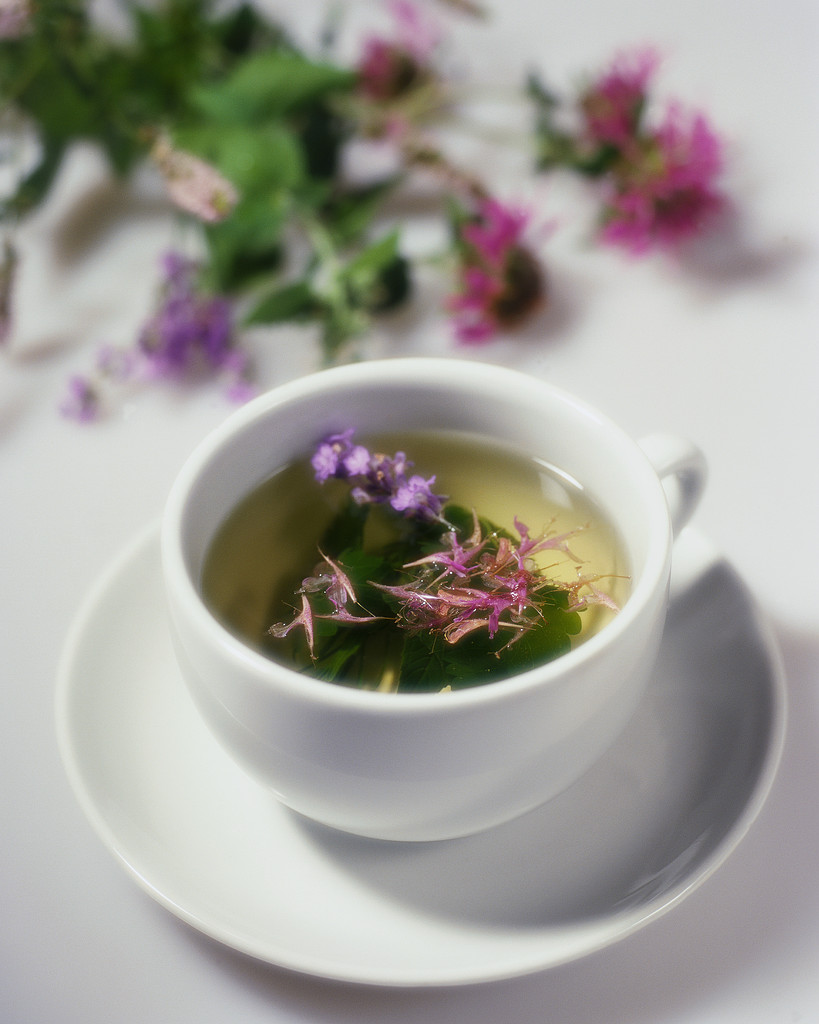
  • Make yourself a cup of herbal tea to warm and soothe you before bed.
  • Listen to some mellow music.
  • Give yourself a foot massage.
  • Read a favorite poem.
  • If you find yourself anxious with thoughts about work, imagine writing them down on pieces of paper. Then picture yourself walking to a nearby river and dropping each thought into the water, letting it drift away.

By tackling stress and sleep first, we put ourselves in a better place to make choices about eating and exercise. We change our habitual ways of thinking about ourselves, make caring for ourselves a routine, and have the energy to stick to a plan.

As Soren Kirkegaard said, “Don’t forget to love yourself.”

Spring recharge

We take for granted that our phones and other devices have to be recharged every day or every week. If we don’t do it, we lose the ability to communicate or do our work. The same is true of our minds and bodies, but because we don’t totally shut down, we don’t sense the same urgency to recharge.

April is coming to a close and it’s starting to feel like spring. What can we do to refresh ourselves? The weather teases us, with a few warm days followed by a really cold one; the pollen is challenging some of us to keep our heads clear; flowers are blooming, yet we’re still wearing winter jackets; kids are getting restless in school, but they have two months to go – we can answer that uncertainty and unsettledness by learning what serves us well and making changes in our routines.

Here’s what my spring recharge looks like:

Rediscovering nature – Sustainability is a buzzword all year long, but Earth Day still serves as an opportunity to get people outdoors. A few days ago, I went on a Nature Conservancy hike at Great Falls Park in Virginia, overlooking the Potomac Gorge. As many times as I have been there, I never fail to be awestruck when I see the falls with all their power and beauty. Vultures, cormorants and herons were soaring over the gorge as the river rushed over the rocks. In the park we saw the first spring wildflowers, and I learned that the flowers of redbud trees are edible (salad garnish!) It doesn’t take a whole day to do something in nature: in the May issue of Yoga Journal, there are ideas for connecting with nature in a minute, an hour, a day or a week.Great Falls NP_1

Fresher, lighter food – The warm, comforting foods of winter will soon be a memory. Florida fruit is starting to appear in my grocery store, and I love tracking the progress of the blueberries for sale: first Florida, then Georgia, North Carolina, Maryland, New Jersey and later in summer, Michigan. Spring and summer will mean more local food, more raw or lightly-cooked food, more fruits and vegetables. The Center for Science in the Public Interest has published a book about the best basic foods including best fruit (guava, watermelon and kiwi), best vegetables (kale, spinach and collard greens) and best beans (soybeans, pinto beans and chickpeas). Think of the combinations!photo

Cleaner spaces – Our homes suffer over the winter too. They’re closed up with stale air; dirt and toxins have accumulated; and closets are cluttered with heavy coats, sweaters and boots. Last week I cleaned out my coat closet, and I can’t stop admiring its organization and empty space. (We’ll see how long that lasts!)

A clearer head — Working on mind clutter is valuable too. Could you possibly let go of activities that are draining you and wearing you out? Sometimes I realize that just the process by which I’m doing something is too complicated, that there is a simpler way that uses less energy. Often it’s because I’m trying to control something too much. But by letting go of some control, the process becomes easier, and I am freer in a way. Recommitting to a meditative practice helps me figure this out.

Reuniting with friends and family – Feeling other people’s energy can be a great way to recharge. Spring is the perfect time to connect with people who stimulate and challenge you, support you and nourish you. It’s the time when we start planning family reunions and summer picnics. Maybe it’s a time to commit to putting out more love, and less fear and judgment; to look for the beauty in people that mirrors springtime’s beauty.

Great Falls NP ChickweedI don’t think there is any season that nourishes the spirit, or gives us more reason to feel hope and optimism as spring does. As the writer and abolitionist Harriet Ann Jacobs wrote, “The beautiful spring came; and when Nature resumes her loveliness, the human soul is apt to revive also.

People who need people

Everyone wants independence – to have the freedom to make choices about values, goals and lifestyles. But as Henry Van Dyke once said, “In the progress of personality, first comes a declaration of independence, then a recognition of interdependence.”

Amir Levine, author of the book Attached., says that independence means having someone reliable to depend on so that you can “walk the path of independence together”. To be truly free and independent we must put faith in the strength of others.IMG_0086 r

Sheryl Sandberg has made a similar point during interviews about her controversial new book, Lean In. She believes that one of the biggest [career] mistakes women make is not making their partners real partners – in other words, not relying on them enough. Success is hard-won, and especially so without a trusted partner in life.

Buddhism teaches the practice of non-attachment, based on the idea that suffering is the result of your ego being too wrapped up in a certain idea, outcome, or possession. The true self becomes obscured when we grasp or cling to something or someone as if our life depended on it. That kind of clinging attachment would be comparable to what Levine calls “anxious” attachment – when we worry excessively about losing the object of our attachment, or worry that the other person won’t love us enough.

Buddhist non-attachment doesn’t mean not caring, however. That could lead to the other end of the spectrum — those who avoid attachment to other people altogether, because they have the belief that attachment means losing independence. In avoiding all attachment, they give up intimacy and all of the richness that can be gained from sharing their innermost feelings with someone they trust.

As in the Goldilocks story, there is a middle ground – what Levine refers to as secure attachment. In a securely attached relationship, the partners don’t spend time worrying about how much one loves the other, or about separation. They trust in themselves and each other enough to know that the relationship is strong enough to allow independence on both sides, without keeping score. Soren Gordhamer thinks of this non-grasping feeling as spaciousness. He writes that “in those moments, we have gratitude. We appreciate a given moment without needing to control or hold it indefinitely. We relate to these moments with trust instead of fear, with openness instead of greed, with letting go instead of holding.”

I like to think of secure attachment as being like Velcro (and not in the negative way some people do). When stuck together, it holds together tightly; but when it’s time to separate, it does so without damaging either side. And it can be put back together again just as snugly whenever we want. It separates and re-joins many times over without effort. I hope that my relationships — with my children, my spouse, my friends, and my mother – have that effortless Velcro quality. Can we allow uncertainty, but know without a doubt that we can rely on each other? Can we walk the path of independence together?