
What was the first thing you did when you got to work today? Greet someone warmly, or snub someone in the elevator? Hold the door for someone, or send the nasty email you were stewing over all night? Compliment someone’s work, or leave a mess in the kitchen? While you may think that your action ends there, it has repercussions throughout the day – for anyone who witnessed it.
Like many emotional states and behaviors, rudeness is actually contagious. And when someone witnesses what they perceive to be rudeness early in the day, it tends to color their perceptions of all the subsequent interactions they have during the remainder of the workday. It contaminates their view, and makes them more likely to perceive something as rude later in the day. That makes rudeness something more than just an encounter between two people; it has ongoing social ramifications that could really impact a workplace or community.
Much of the recent research on the contagion of rudeness has been conducted by Trevor Foulk, a professor at the University of Maryland. And while a great deal of that research has focused on the workplace, there are parallels to what we see every day in the larger societal sphere. A rude tweet early in the morning sets the stage for an escalating battle of words throughout the day, and a tendency to take offense at even the most benign statements because rudeness has been “activated” in people’s associative networks.
Every time we witness something like this, we make an assessment as to what to do about it, using up valuable mental resources that could be better spent on work tasks or other activities. It also makes us more likely to just avoid such social interactions. People with higher self-esteem and a stronger locus of control may have a greater ability to cope with these situations, but even for them, it’s a drain on resources.
Thich Nhat Hanh talks about something similar — the Buddhist concept of “knots:”
When we have sensory input, depending on how we receive it, a knot may be tied in us. When someone speaks unkindly to us, if we understand the reason and do not take his or her words to heart, we will not feel irritated at all, and no knot will be tied. But if we do not understand why we were spoken to that way and we become irritated, a knot will be tied in us.
 He goes on to say that these knots will grow tighter and stronger if they are not untied, and lead to feelings such as anger, fear or regret, creating “fetters” that effect us, even if they are repressed. They eventually express themselves through “destructive feelings, thoughts, words or behavior.” In other words, rudeness and unkindness are as contagious as a physical illness, and we can become carriers without intending to be. It’s not too much of a leap to see a connection to the recent decline in civility across American life and the erosion of trust among people.
How can we inoculate ourselves from the contagion of rudeness? Thich Nhat Hanh suggests that we need to “live every moment in an awakened way.” We must be aware of our feelings and motivations. Where are they coming from? Can we hold them in our consciousness and examine them without discomfort overwhelming us?
If awareness is the first step, then perhaps the second is to recognize the power you have to control your own feelings and thoughts. Not everything is personal. Practice your ability to change negative thoughts into positive ones, remembering that you always have a choice in how you interact with the world around you.
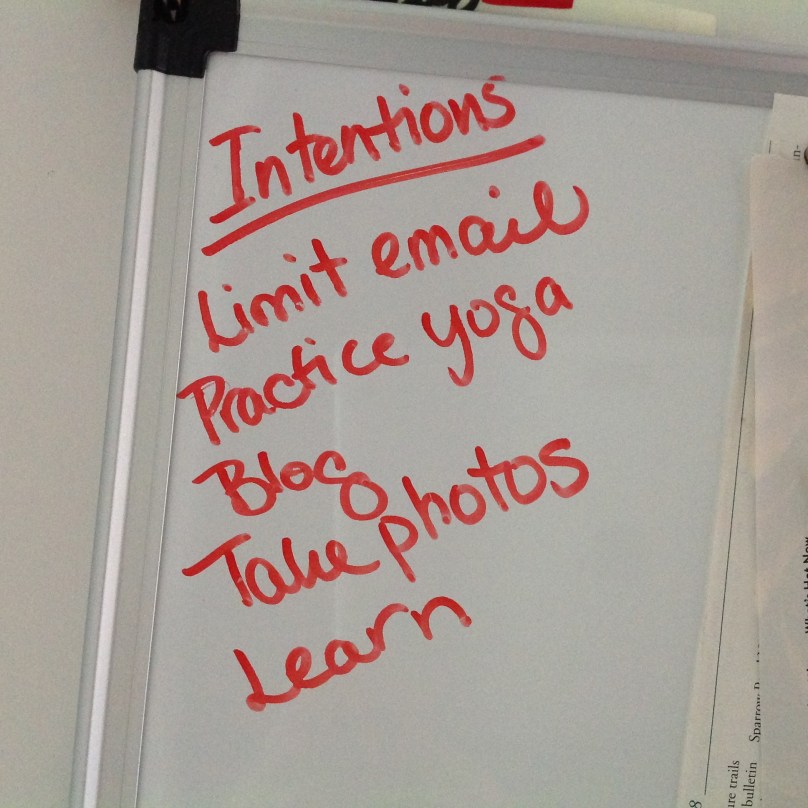
Be more intentional in your words and actions. Too often, we are reactive and impulsive in our responses. But if rudeness is contagious, so can kindness be. Choose your words more carefully, thinking first about how they will be received. Set an intention to start each day with an act of kindness. As Aesop wrote so long ago, “No act of kindness, no matter how small, is ever wasted.”
 So my overall message was that if they want to be around in 4 years or 8 years to start doing good again, they need to practice self-care right now. Here are some of the things we talked about:
 Stress reduction programs and personal choices such as meditation, exercise or disconnecting from email can only alleviate symptoms. The root cause of much workplace stress — corporate culture — is not something that any one individual can change. People are willing to work hard, and even to work long hours, if they see the work as meaningful. In a MIT Sloan Management Review article, Catherine Bailey and Adrian Madden write that meaningfulness is more important to employees than salary, advancement, or even working conditions. Meaning is something that people often discover for themselves. Good leaders can’t make it happen, but research shows that poor leadership can almost certainly destroy it. What makes people feel that the work is meaningless?

 So why do we write? We write to tell stories, to set the record straight, to express emotions, to clarify our thinking, to discover a path forward, and simply to be heard. Sometimes we just vent, other times we are thoughtful; sometimes we write knowing no one will read it, on other days, we seek as many readers as possible. Usually we have no idea what the effect of writing will be on ourselves or others. Consider Anne Frank, who wrote a diary just for herself, but now millions of people have read it. Writing to “Kitty” probably gave her great solace during her time in hiding, but I’m sure she had no idea how many it would touch.







 discover santosha