Let the sun shine

I’m smiling at the news that the health benefits of sunshine may outweigh the risk of getting skin cancer from its rays.

Just in time for summer, new research has shown that exposing our skin to sunshine can lower blood pressure, cut our risk of heart attack and stroke, and perhaps help us live longer. High blood pressure is such a common condition (68 million Americans have it) that it leads to 80 times more deaths than skin cancer does. Now it turns out that when our skin gets sun exposure, a compound is released in the blood that actually lowers blood pressure. This effect is separate from the previously known benefits of Vitamin D from the sun.
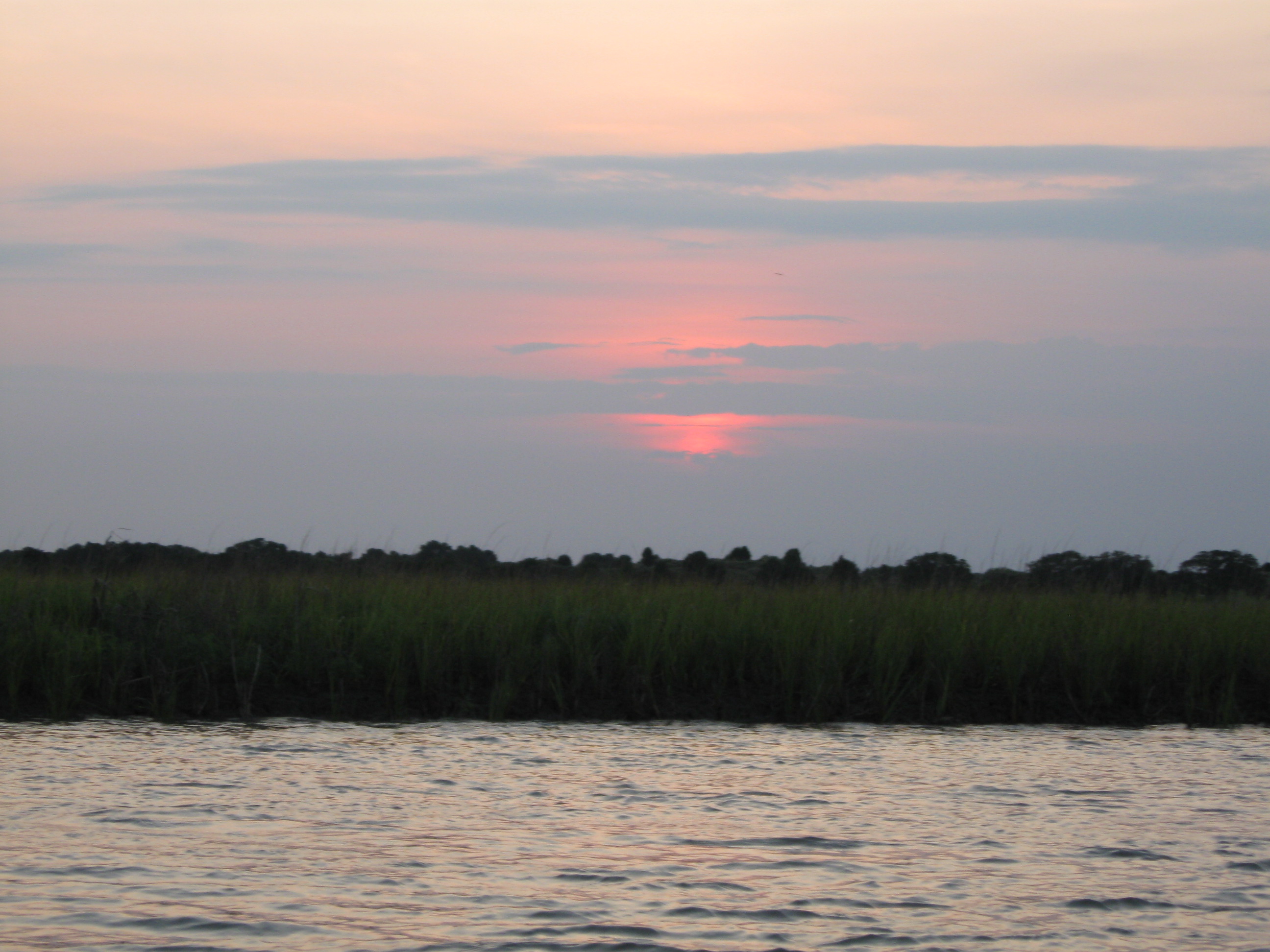
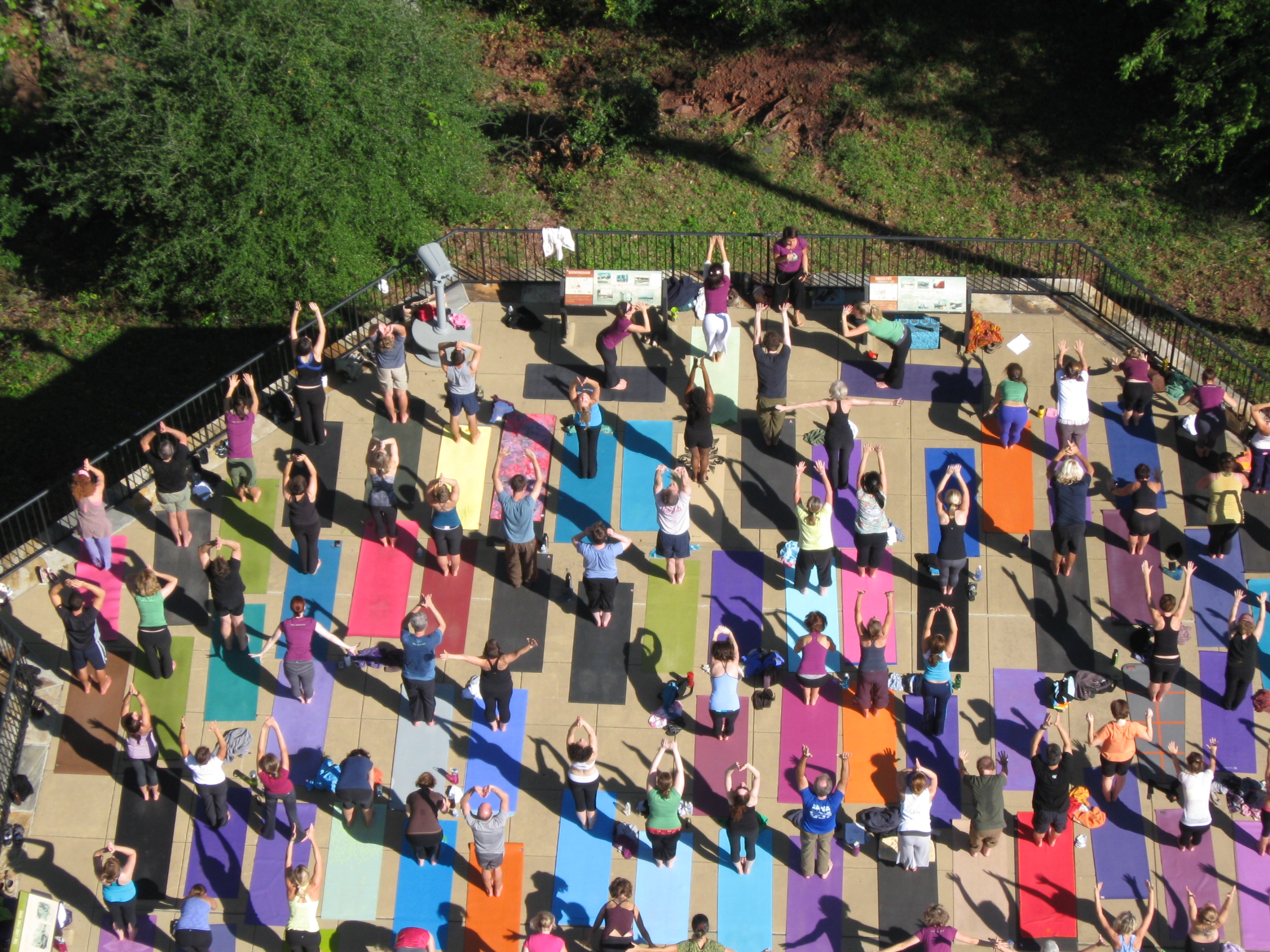
Today we use the term “sun worship” to describe people who like to sit out in the sun and tan. But ritual worship of sun gods and goddesses goes back for millennia. People have long known and appreciated the life-giving force of the sun. It is the source of all energy and life on earth, through the process of photosynthesis and from the warmth it provides our planet. Sunrise and sunset are magical times of the day, when colors blaze across the sky. In yoga, we do sun salutations to open our practice by welcoming the sun.IMG_2347
So today I salute the sun for these life-giving blessings:

  • Sunlight helps improve mood, and lessens the effects of seasonal depression. As Wilma Rudolph said, “When the sun is shining I can do anything; no mountain is too high, no trouble too difficult to overcome.
  • The sun provides Vitamin D, which helps us absorb calcium (keeping bones strong), and may protect against certain types of cancer, diabetes, rheumatoid arthritis and other conditions.
  • The sun powers our hot water heaters, homes, watches, and maybe someday, our cars.
  • The sun gives order to our days, orienting us to time and space.
  • Sunny days get us outdoors, so we get more exercise.
  • The sun stimulates the production of melatonin, which helps us get a good night’s sleep.
  • The sun gives us rainbows.
  • The sun ripens and sweetens the fruit we eat. In the words of Galileo, “The sun, with all those planets revolving around it and dependent on it, can still ripen a bunch of grapes as if it had nothing else in the universe to do.”IMG_03521

And isn’t true that when the sun is shining, we feel as if it shines just for us? We bend toward the sun like flowers do, waiting to be opened up, growing just a little bit taller in its light.
Spring recharge

We take for granted that our phones and other devices have to be recharged every day or every week. If we don’t do it, we lose the ability to communicate or do our work. The same is true of our minds and bodies, but because we don’t totally shut down, we don’t sense the same urgency to recharge.

April is coming to a close and it’s starting to feel like spring. What can we do to refresh ourselves? The weather teases us, with a few warm days followed by a really cold one; the pollen is challenging some of us to keep our heads clear; flowers are blooming, yet we’re still wearing winter jackets; kids are getting restless in school, but they have two months to go – we can answer that uncertainty and unsettledness by learning what serves us well and making changes in our routines.

Here’s what my spring recharge looks like:

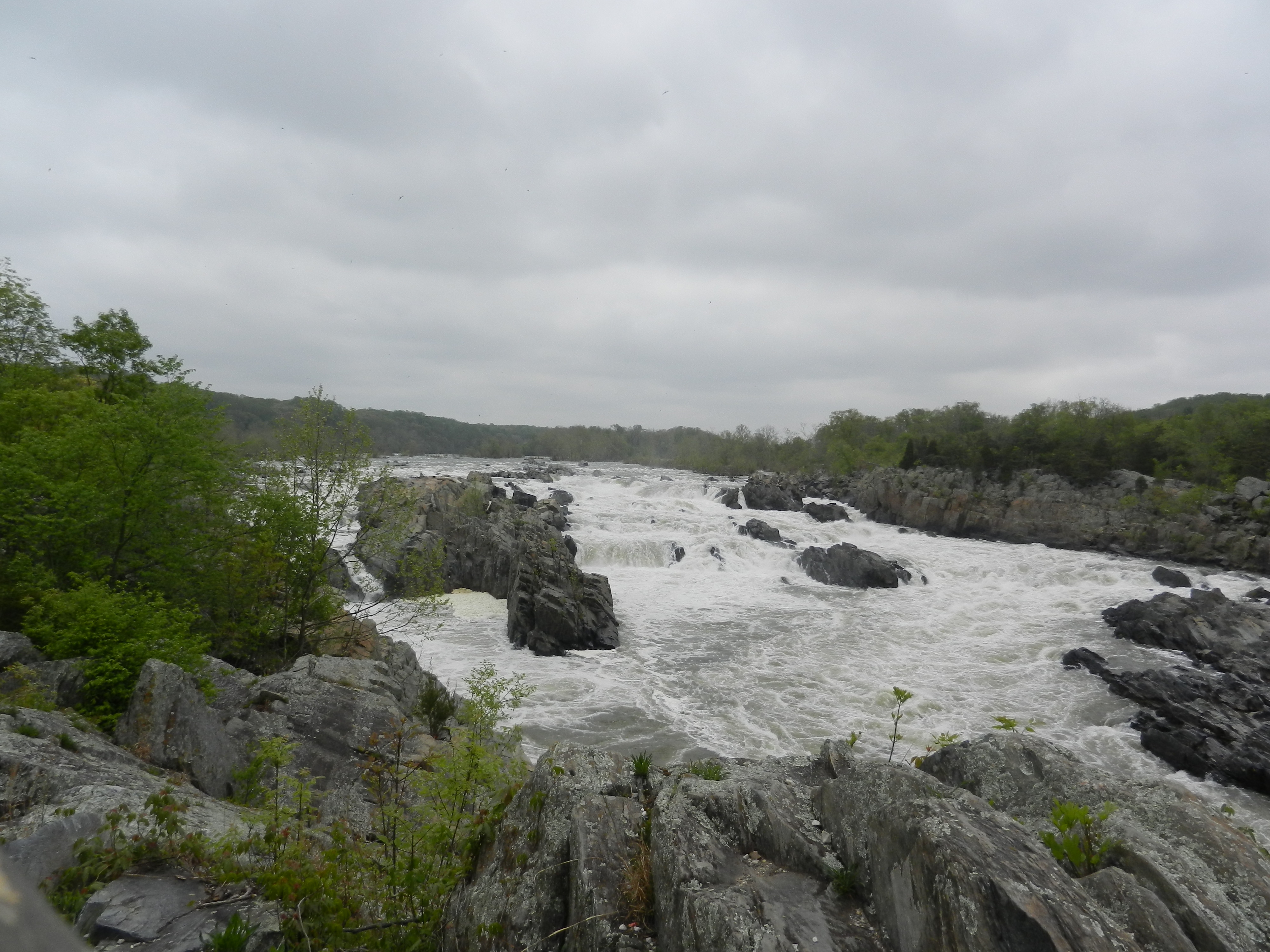
Rediscovering nature – Sustainability is a buzzword all year long, but Earth Day still serves as an opportunity to get people outdoors. A few days ago, I went on a Nature Conservancy hike at Great Falls Park in Virginia, overlooking the Potomac Gorge. As many times as I have been there, I never fail to be awestruck when I see the falls with all their power and beauty. Vultures, cormorants and herons were soaring over the gorge as the river rushed over the rocks. In the park we saw the first spring wildflowers, and I learned that the flowers of redbud trees are edible (salad garnish!) It doesn’t take a whole day to do something in nature: in the May issue of Yoga Journal, there are ideas for connecting with nature in a minute, an hour, a day or a week.Great Falls NP_1

Fresher, lighter food – The warm, comforting foods of winter will soon be a memory. Florida fruit is starting to appear in my grocery store, and I love tracking the progress of the blueberries for sale: first Florida, then Georgia, North Carolina, Maryland, New Jersey and later in summer, Michigan. Spring and summer will mean more local food, more raw or lightly-cooked food, more fruits and vegetables. The Center for Science in the Public Interest has published a book about the best basic foods including best fruit (guava, watermelon and kiwi), best vegetables (kale, spinach and collard greens) and best beans (soybeans, pinto beans and chickpeas). Think of the combinations!photo

Cleaner spaces – Our homes suffer over the winter too. They’re closed up with stale air; dirt and toxins have accumulated; and closets are cluttered with heavy coats, sweaters and boots. Last week I cleaned out my coat closet, and I can’t stop admiring its organization and empty space. (We’ll see how long that lasts!)

A clearer head — Working on mind clutter is valuable too. Could you possibly let go of activities that are draining you and wearing you out? Sometimes I realize that just the process by which I’m doing something is too complicated, that there is a simpler way that uses less energy. Often it’s because I’m trying to control something too much. But by letting go of some control, the process becomes easier, and I am freer in a way. Recommitting to a meditative practice helps me figure this out.

Reuniting with friends and family – Feeling other people’s energy can be a great way to recharge. Spring is the perfect time to connect with people who stimulate and challenge you, support you and nourish you. It’s the time when we start planning family reunions and summer picnics. Maybe it’s a time to commit to putting out more love, and less fear and judgment; to look for the beauty in people that mirrors springtime’s beauty.

Great Falls NP ChickweedI don’t think there is any season that nourishes the spirit, or gives us more reason to feel hope and optimism as spring does. As the writer and abolitionist Harriet Ann Jacobs wrote, “The beautiful spring came; and when Nature resumes her loveliness, the human soul is apt to revive also.

Time travels

Ready to spring forward? That cute mnemonic device we use to remember to set our clocks ahead sounds so positive and energetic, but it feels the opposite. The benefits of daylight savings time are few, if any, and the costs are high. Do we really still need it?Analog Clock

Our bodies are finely tuned to respond to cycles of light and dark. There’s truth in the adage, “Early to bed and early to rise makes a man healthy, wealthy and wise.” The facts are these: getting enough sleep is important for physical health, helps you be more productive (leading to wealth) and even affects your ability to learn and remember (making you wise). When the phrase was coined, people didn’t know the mechanisms by which it worked, but they certainly could observe the results.

When we switch on and off of daylight savings time, we take an already-artificial construct (time) and make it more artificial. Our bodies are telling us one thing – it’s time for dinner, or it’s not time to get up – and the clock is forcing us to do something else. Even without daylight savings time, most of us suffer from what’s called social jet lag, a disharmony between our internal clocks and our daily schedules that causes chronic sleep deprivation, contributing to obesity, increases in smoking and higher alcohol consumption. We’re all sleepy when we need to work and wakeful when we want to sleep.

Monday mornings are consistently the peak time of the week for hospitals to see people come in with heart attacks, probably because of the early morning rise in stress hormones combined with the dread of starting the work week. But on the Monday after we switch to daylight savings time, that incidence of heart attacks goes up by 10%. Accidents of all kinds also increase for the first few days after the time change (in either direction).

Benefits of daylight savings time: not too many. Although it was touted for years as a way to save energy, the savings is really only about 1%. Let’s face it, we live
in a 24/7 world and if the lights aren’t on in the evening, they’ll be on in the morning instead. Gasoline consumption actually goes up during daylight savings time because we go more places after work.

IMG_0239Is it nice to be outdoors in the evenings during the nice weather? Of course! It might even help people get more exercise if they go out for a walk, or play a game of softball after work. But I’ve found in my house that everything gets later during daylight savings time. The bright sunlight makes it seem too early to make dinner, so dinner starts shifting to 8 or 8:30. That makes bedtime later. But we still have to get up for work, so sleep is what is sacrificed.

OLYMPUS DIGITAL CAMERAI don’t see any groundswell of opposition to DST, though, so I think it will be with us for the foreseeable future.  Just be aware for the next few days that none of us will be operating at 100%. It will take most of the week to have our bodies adjust, so don’t jump out of bed too quickly in the morning – take a moment to breathe deeply before you start the day. Pay more attention on the road and be mindful in the kitchen to avoid accidents. Get plenty of sunlight during the middle of the day, even if it’s just by looking out the window.

Above all, listen to what your body tells you it needs. As Golda Meir said, “I must govern the clock, not be governed by it.”

Being grateful for January

By the time I was 18, I really hated winter. I spent my last cold season in my home state of Michigan just grumbling about how much I didn’t want to be there. Then I left for good.

Even now that I live in the Mid-Atlantic region, winter is my least-favorite season. By the time January arrives, I know it’s going to be cold for three more months, I’m already sick of my winter clothes, and don’t even get me started about all the kale I see on restaurant menus! (I’m sorry, I just don’t like it.)

But this year, I’m resolved not to be the winter grinch, so I searched for the silver lining and came up with ten things to like about January:

  1. The world didn’t end on 12/21/12. The misinterpretation of the Mayan prediction was not true, and I am grateful to be alive in January 2013. (That “2012” movie was pretty fun, though.)
  2. Inaugurations. Every four years, we have a reason to continue celebrating in January. In Washington, where I live, a party spirit pervades the air this week.IMG_0740
  3. The start of the new semester in my teaching job. I look forward to meeting my new group of students and feeling like I have a clean slate with them.
  4. Eating comfort food is okay. Even the healthy eating columns are full of recipes for stews, soups and pasta. We can enjoy the warmth and savoriness of heavier food and find it richly satisfying.Comfort food_109
  5. Catching up on books and movies. With outdoor activities curtailed, and holiday craziness winding down, it’s a good time to curl up with a novel, or have a marathon viewing of Pride & Prejudice.
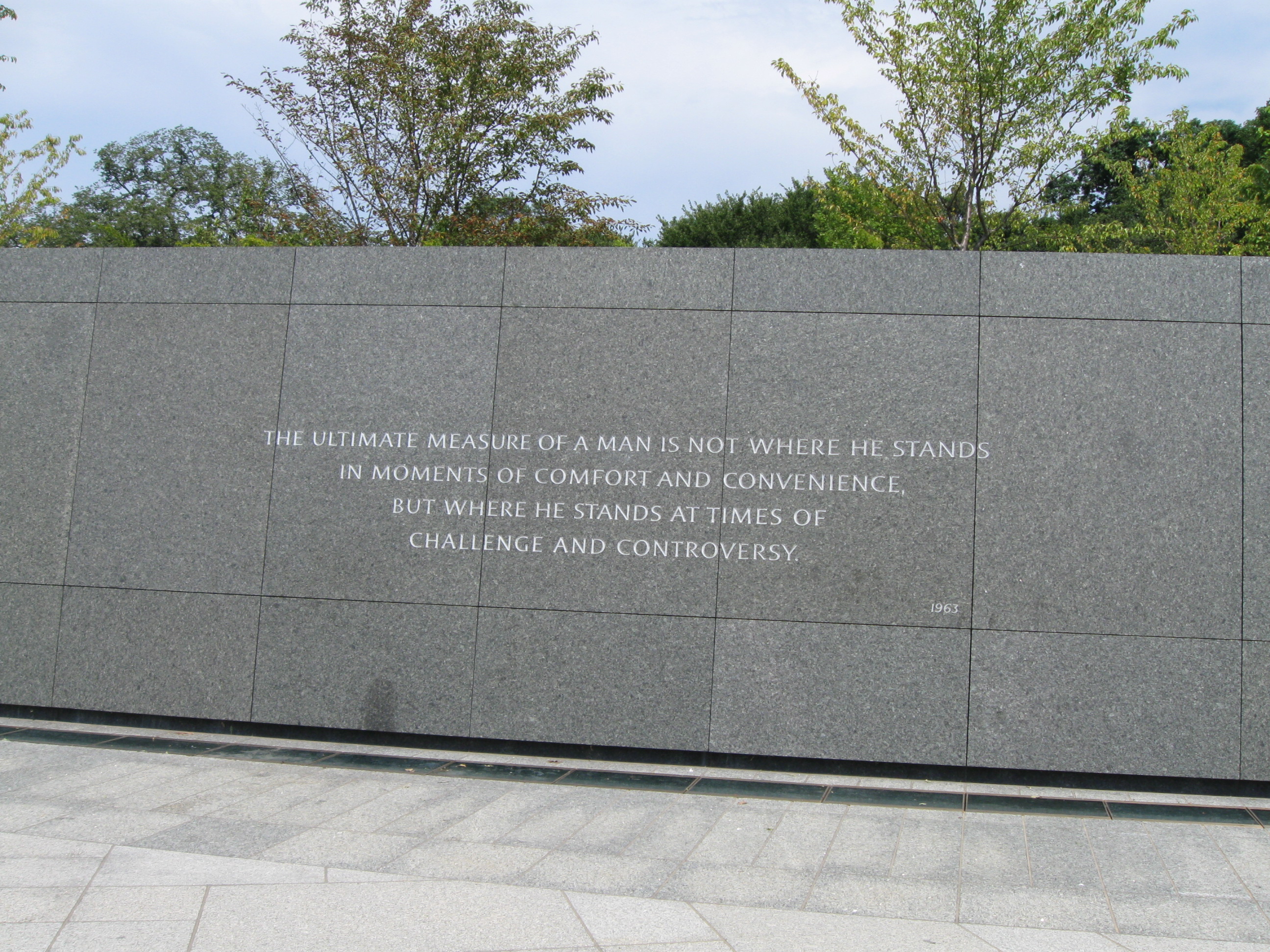
  6. Martin Luther King, Jr. Day. More than just another day off, this is a day to try to give back and be of service to the community.IMG_2315
  7. Starting my new calendar. I still like to keep a paper engagement calendar where I write with ink or pencil. I love the feel of cracking open the new book each year and starting to enter birthdays and appointments.
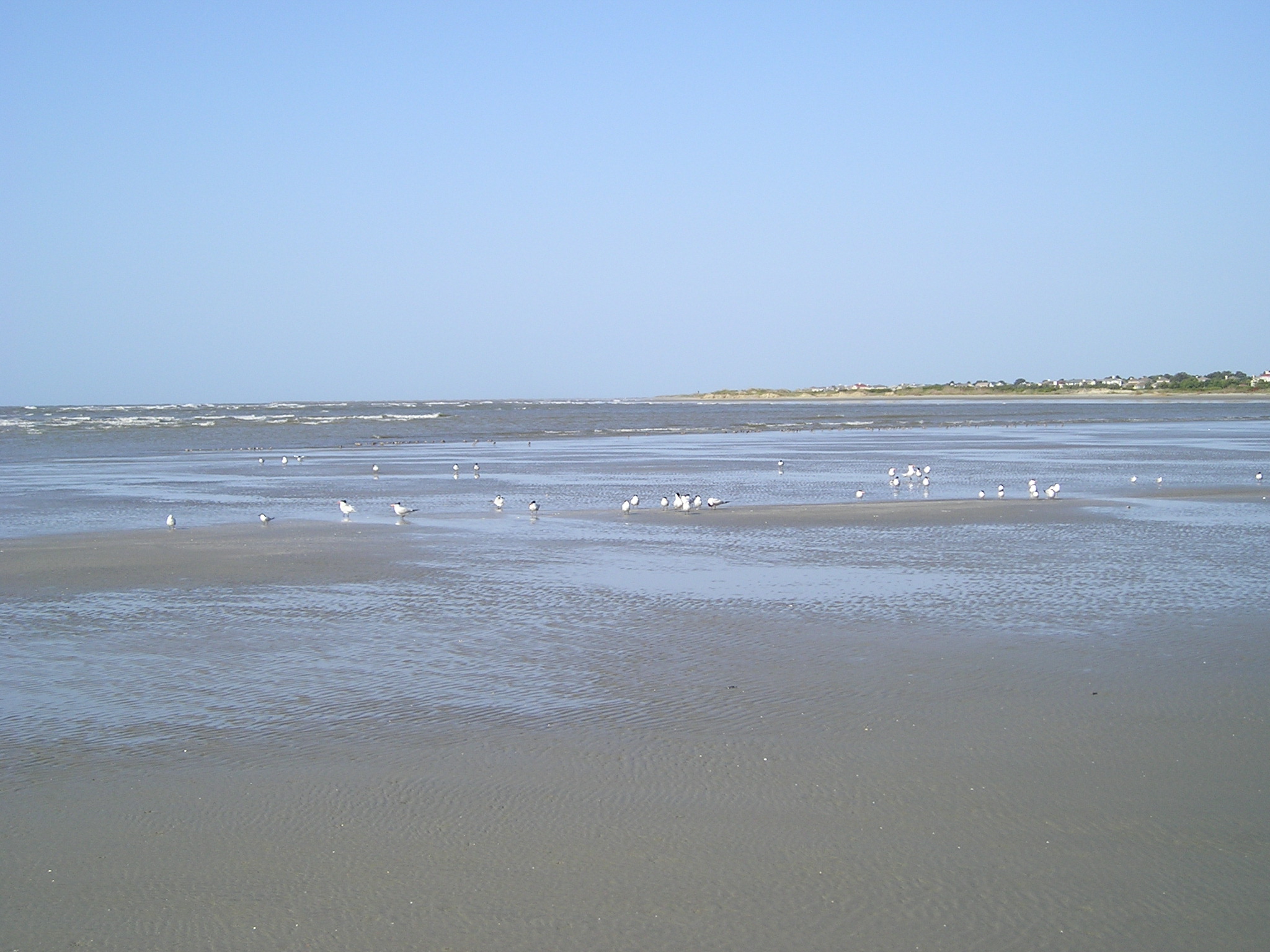
  8. There’s no one at the beach. January is great time to walk along the shore and have the entire beach all to yourself. Just bundle up!OLYMPUS DIGITAL CAMERA
  9. The days are getting longer. Yes, the mornings are still pretty dark, but we’ve crossed over the hump of the shortest day and the light will increase bit by bit from now until June.
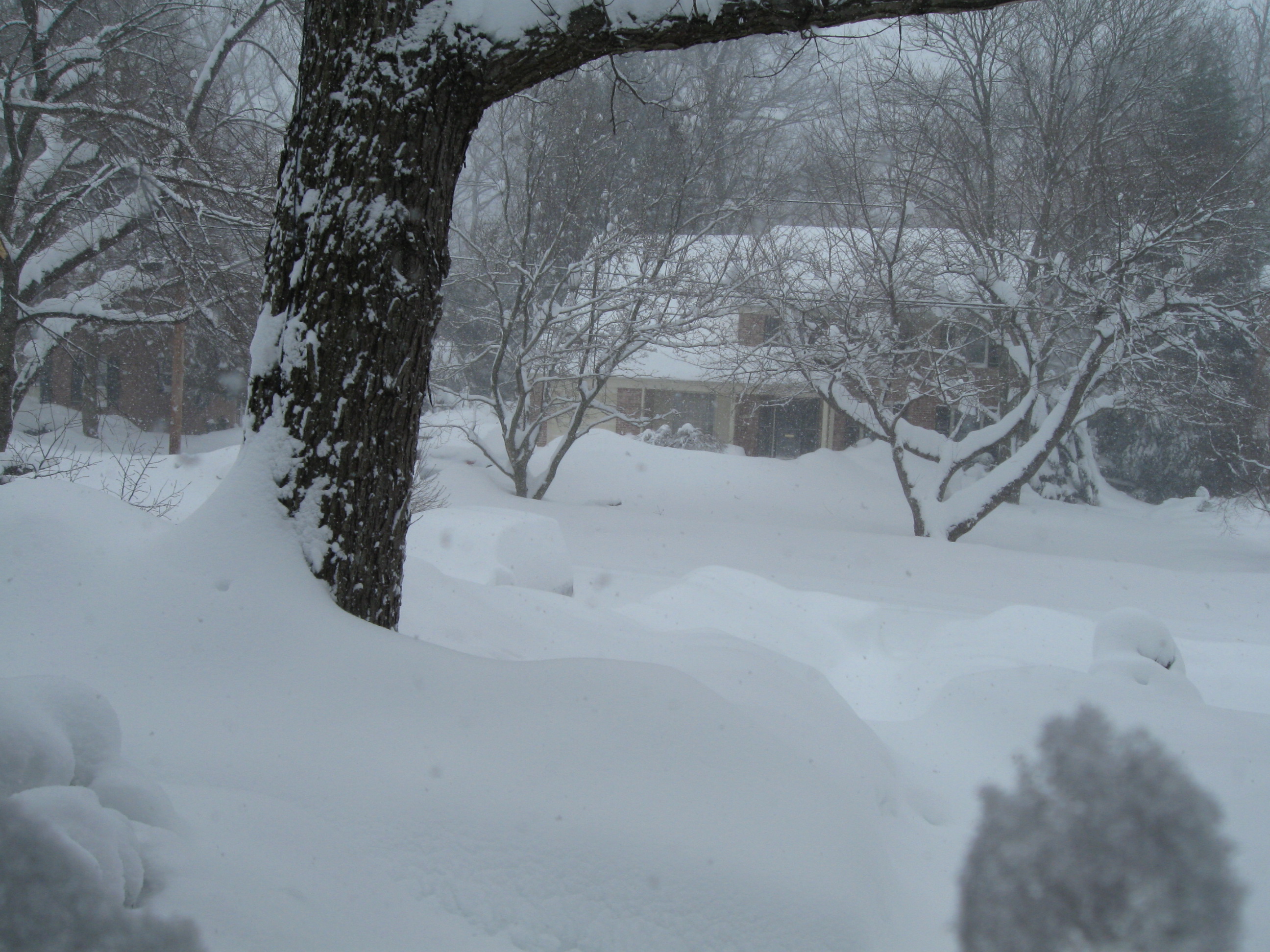
  10. Snow days. There’s no guarantee of snow days where I live. Sometimes two years can go by without one, but that makes it all the more special to wake up to that awesome quiet that comes with a huge snowstorm. I may not like winter, but I enjoy the way all my neighbors talk and laugh while shoveling snow together. There’s a great feeling of camraderie and community at those times.IMG_1052

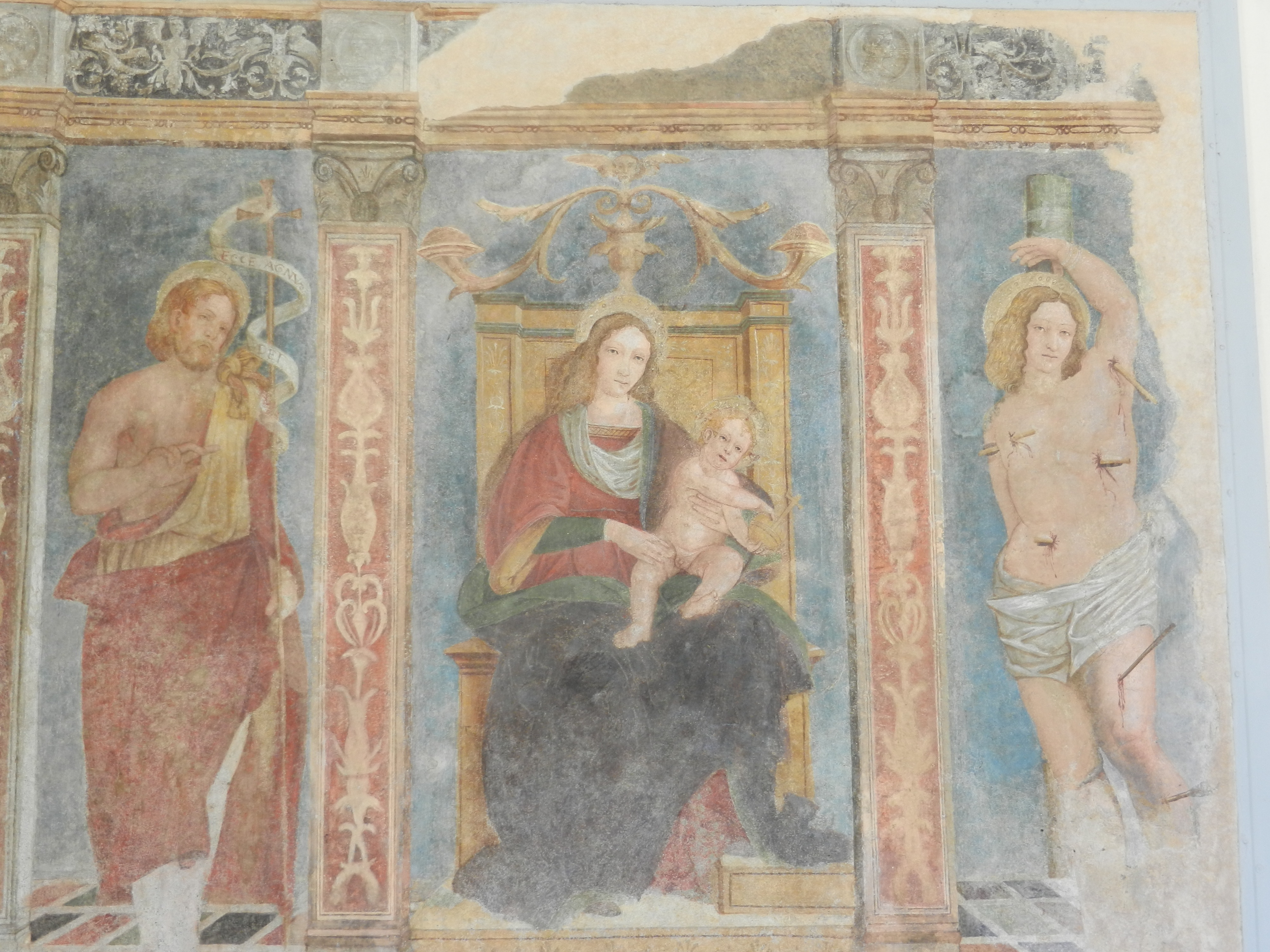
The month of January is named for the Roman god, Janus, who had two faces. That way, he could look back to the year just finished, and forward to the year just beginning. “Janus” is actually the Latin word for arch, which makes the month of January a kind of doorway for us. Knowing that, I can begin to appreciate how we need to pass through January if we are going to reach the balmier days of spring.

Need inspiration? Go outside.

If I told you there was an app for your phone that would help you be more creative, would you buy it? What if I told you that giving up your phone for a while might enhance your creativity? Is that as appealing?

A new study published this week shows that people performed 50% better on a test of creativity after spending four days in nature with no electronic devices. The researchers aren’t sure what exactly caused the gains in creativity — being in nature or giving up the devices, but there’s support for the idea that it’s both of those things.OLYMPUS DIGITAL CAMERA

There’s something called “attentional restoration theory” that apparently relates to multi-tasking. Basically, multitasking requires a lot of executive functioning in the brain, which is kind of exhausting, and the theory is that being in a natural setting can replenish that functioning ability. Other studies have demonstrated that hiking can improve certain mental abilities.

The sad reality is that most of us don’t spend nearly as much time in nature as did previous generations. It’s true that we are not an agrarian society anymore, but it’s also a fact that recreation in nature has declined as time spent with electronics has increased. Yet there’s a lot of evidence that we crave what nature offers us.

Look at our holidays, both religious and secular. Many revolve around symbols of nature. Yes, those holidays originated during agrarian times, but the important thing is that we still celebrate them. So at Christmas, people bring trees into their homes; at the Jewish holiday of Sukkot, people build structures outside, decorated with leaves and branches, in which meals are eaten; at Thanksgiving, a cornucopia is often symbolic; and summer holidays are an occasion for picnicking.

Why are homes and apartments with views of woods and water more valuable? Why do we have houseplants? Why are landscape paintings so popular? Why do we take dozens of photos of sunsets? We are striving to bring the outside in and make that connection with nature.

At the same time, taking a break from 24/7 connection with devices is important too. I read yesterday that silent retreats have become hugely popular in recent years: places that offer solitude and a chance to look inward have waiting lists of people who crave some time in silence. The time spent alone in stillness can be an opportunity to find mental space, to discover things about themselves, to replenish the spirit.

That kind of mental space also nourishes creativity. Why is creativity important? Not only can it help you enhance your ability to reach your highest potential, it is also critically important to managing stress. People who are creative thinkers perceive potential stressors differently, and come up with more ways to cope with them. Creative people are more open to new experiences, so fear doesn’t get in the way of solving problems or achieving dreams. And people who are more creative are also more flexible, enabling them to adapt to new circumstances.

Did you ever get stuck on a problem at work or school, and decide to take a break and go for a walk? Did you find that during your walk you came up with an idea that might move you forward? Fresh air, sun light, and views of nature are food for the mind, body and spirit. As John Muir once wrote, “Keep close to Nature’s heart…and break clear away, once in a while, and climb a mountain or spend a week in the woods. Wash your spirit clean.”

Our essence

Do you consider yourself to be a spiritual person? Do you have only the vaguest idea of what that means? Does it matter?

Spirituality is one of those amorphous words that mean different things to different people. That’s part of why it’s a mistake to draw too many conclusions from the new religious affiliation study by the Pew Forum on Religion & Public Life. While the number of people who say they are not affiliated with any religion has grown to 20% of adults, 37% of those people say that they are spiritual; and even among those who do affiliate with a religion, many say they are “spiritual, but not religious”.

Spirituality is important for health, which is why it is one of the Six Dimensions of Wellness. Its role is to bring together the other dimensions by providing meaning and purpose to our lives. It is not enough to be physically, intellectually or socially healthy if there isn’t an overarching “world view” supplying significance to our actions. Herbert Benson, in his book, Timeless Healing, discusses the idea that humans might be the only species with a sense of our own mortality. If our brains were not wired to “harbor beliefs” that there is a deeper meaning to life, we could easily be overcome by dread and fear.

More and more research shows that people who are religious or spiritual are healthier and live longer than those who are not. The problem is that most studies are based on religion rather than that vague “spirituality” because it is easier to measure. So it’s somewhat unclear where the health benefits come from – the belief itself, the healthy behaviors required by some religions, or the social support that comes from belonging to the religious community?

Unlike religion, each of us can personally define spirituality. At its core, it is about feeling connected to something larger than ourselves. As we become more spiritual, we focus on others more than just ourselves, and move away from material things as a source of meaning. So how do you tell if and how you are spiritual? One good way is to ask yourself where you are and what you are doing when you have feelings of spirituality. In the Pew study, about 58% of people said that they have a deep connection with nature and the earth. For many, spirituality can be found most easily in nature.

What are your beliefs and values? Are you putting them into practice in your life? For many of us, stress results when there is conflict between our values and our actions. The Dalai Lama says, “I don’t see any difference between religious practice and daily life. One can do without religion, but not without spirituality.” He calls spirituality “the full blossoming of human values that is essential for the good of all.”

Other characteristics of a spiritual nature are compassion for others, having the capacity to love and to forgive, altruism, and the ability to experience joy. Even if you feel that you are lacking in one of these areas, they can all be developed and enhanced through practice. Whether it’s volunteering in your community or engaging in compassion meditation, there is a way to cultivate greater spiritual connection.

The root word of spirituality, spirit, comes from the Latin word for breath. A sense of spirituality may be as natural to us as breathing. We not only need it to live, we need it to live well.

Waste in abundance

How much food will you throw away today? Will you even notice it?

The Natural Resources Defense Council, in a new report, estimates that we throw away 40% of our food supply in America every year. Food is wasted at every step in the supply chain, starting at the farm and ending in our kitchens and trash cans. Food now represents the biggest part of the solid waste in our landfills.

Last night, I was congratulating myself on the nice meal I made from ingredients I happened to have on hand – some leftover tomato, farro and onions from my pantry, basil from my garden, and a chunk of Parmigiano that I bought a couple of weeks ago. No waste!

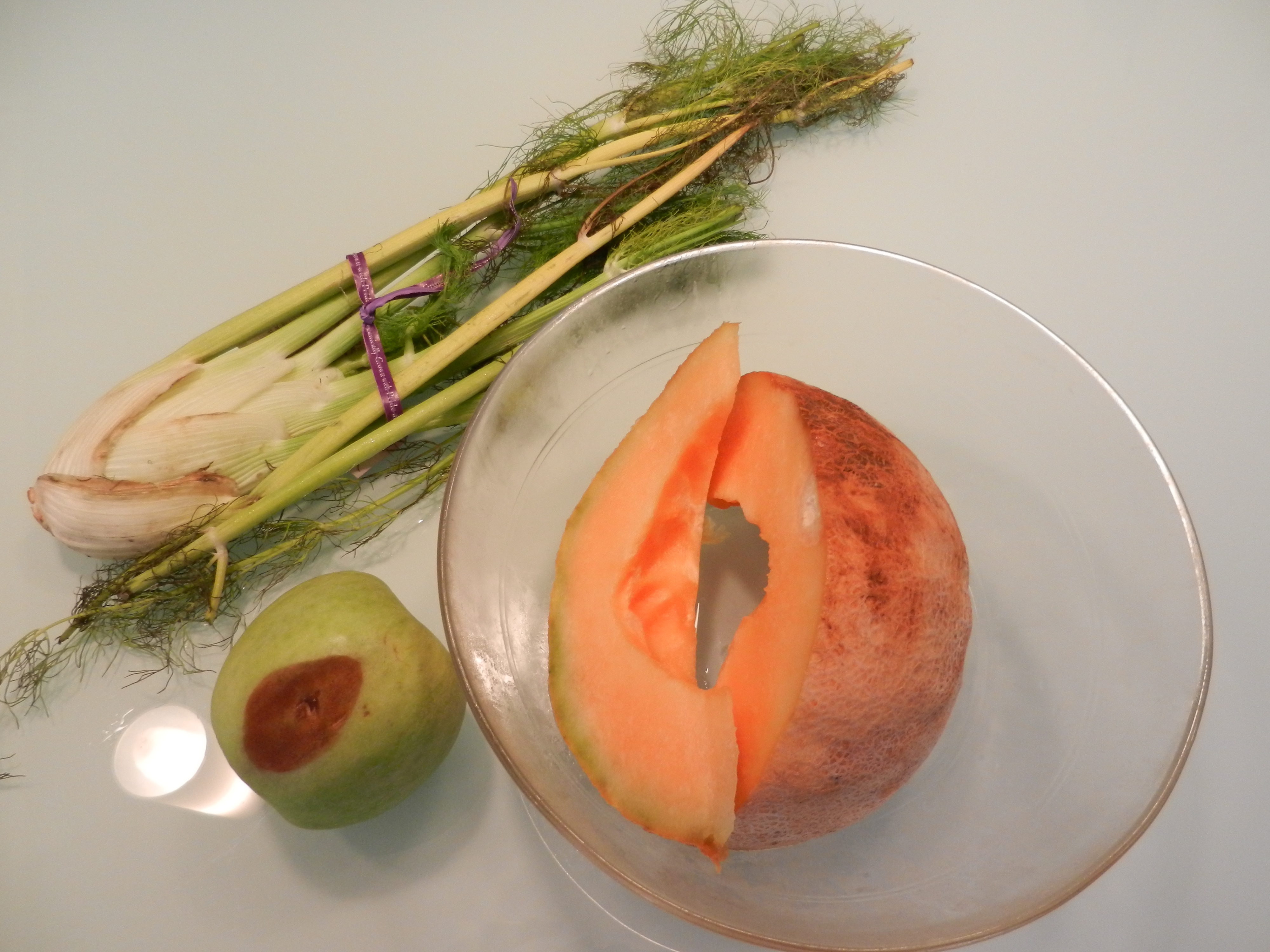
But today I took stock of the food in my refrigerator that I will have to throw away. There is the cantaloupe I bought because my son has recently discovered he likes it – but then he didn’t eat it. There’s the fennel I bought because I needed some of the fronds for a recipe – but I didn’t have a use for the rest of it. There’s the apple someone bought and no one ate – because the summer fruits like peaches and berries are so much better!

As it turns out, fresh produce is the worst food group for waste.

When we personally throw away food, we may only think about the money that we wasted on it. But in reality, the waste is much broader. The NRDC is concerned with the other resources wasted, such as the water and energy to grow and transport it and the pollution caused by its production. They calculate that just a 15% reduction in waste could feed 25 million people a year.

While the issue of food waste is a big one that will require big solutions by government, the agriculture industry, food manufacturers, retailers and restaurants, there are steps that we as individuals can take to reduce our waste.

  • Don’t buy more food than you realistically will eat. People have a tendency to load up their shopping carts because of the bargains offered at warehouse stores, the relatively low cost of food in the U.S., and the convenience of shopping less frequently. But we may have to re-think our ways of shopping to reduce our waste.
  • Don’t bite off more than you can chew. As portion sizes have increased in recent years, so has food waste (a 50% increase since the 1970s). Ordering smaller restaurant portions or taking home the leftovers will reduce waste there. Then don’t forget to eat the leftovers so they don’t end up in the trash at home!
  • Consider composting if you have a yard. At my house, all of our fruit and vegetable scraps go into our compost bin (along with leaves and grass). Although our county frowns on this because they say the food attracts animals, it is not a problem as long as you don’t put any animal products in the compost. We benefit by reducing our trash volume, and by having rich compost to add to our garden.
  • Get involved with a gleaning group. To glean means going in after a crop has been harvested and gathering the small amounts of fruit or vegetables that remain. Farmers will often invite charitable groups to come in for gleaning after the profitable part of the harvest is over. The produce is then donated to groups that feed the needy.
  • The next time you look in the refrigerator and say “There’s nothing to eat”, challenge yourself to make a meal using what you have on hand, instead of going out to buy more that might just be thrown away.

Finally, eat with mindfulness and appreciation. Thich Nhat Hanh has written, “When we sit down to dinner and look at our plate filled with fragrant and appetizing food, we can nourish our awareness of the bitter pain of people who suffer from hunger…Doing so will help us maintain mindfulness of our good fortune, and perhaps one day we will find ways to do something to help change the system of injustice that exists in the world.”

Cicada vs chain saw

Sounds I hear while meditating:

Cicadas

The hum of something – traffic? A lawnmower?

Yipping of a small dog

A hammer

A chain saw

My breath

There’s something incredibly comforting about the sounds I hear on an average day in my neighborhood: the insects, the birds, construction on a neighbor’s house, the sound of children playing. Like a baby who becomes accustomed to its mother’s voice while in her womb, these are the sounds that tell me everything is “normal”, life goes on.

But when I sit down to meditate, these sounds can also serve as a focal point. Following the breath in mindfulness meditation is very popular, but sometimes I find it difficult to stay focused on the breath. So what I like to do is to just sit and experience the sounds in my environment, especially in the spring and summer. If the windows are open, I can hear a lot of sounds from outdoors, both natural and manmade. Today, with the windows closed and the air conditioning on, most of the sounds were distant and muffled. My house was silent; I couldn’t hear appliances, air conditioning or computers from where I was sitting. So I became very aware of what was happening outside.

Most of the time, we don’t focus on the sounds around us, unless they are exceptionally pleasant or irritating. Sound just becomes a background for whatever we are thinking or doing at the moment. But when I stop and listen to each sound separately, it’s easier to find the quiet spaces between them. Deepak Chopra has said that, “Meditation is not a way of making your mind quiet. It’s a way of entering into the quiet that’s already there.” Although it seems counterintuitive, paying attention to sound helps me find silence.

While there aren’t many rules for meditating, having a passive attitude (nonjudging) is recommended. One way to achieve this is by becoming the observer rather than the thinker: I am not my thoughts, so I can note them and watch them pass with a sense of detachment. Observing the sounds around me helps with this, because they seem so remote and apart from me. The sound of the chain saw is no worse or better than the sound of the cicada; they both merely exist.

Heightening my awareness of sound, and observing it passively, can lead, I hope, to becoming a less judgmental observer of myself and others. Can I apply that kind of awareness to my own emotions and attitudes, learning to see and identify them before I act on them? The Dalai Lama says that “It is really a matter of habit…the more habituated you are to this awareness of the rising of emotion, the awareness in itself creates a separation between you and the emotion…”

So I listen to the sounds of my neighborhood, and hope to create a habit.

Aftermath

One of my favorite sayings is, “When you change the way you look at things, the way things look changes.” But is the opposite true as well? When the way things look changes, do we look at things differently?

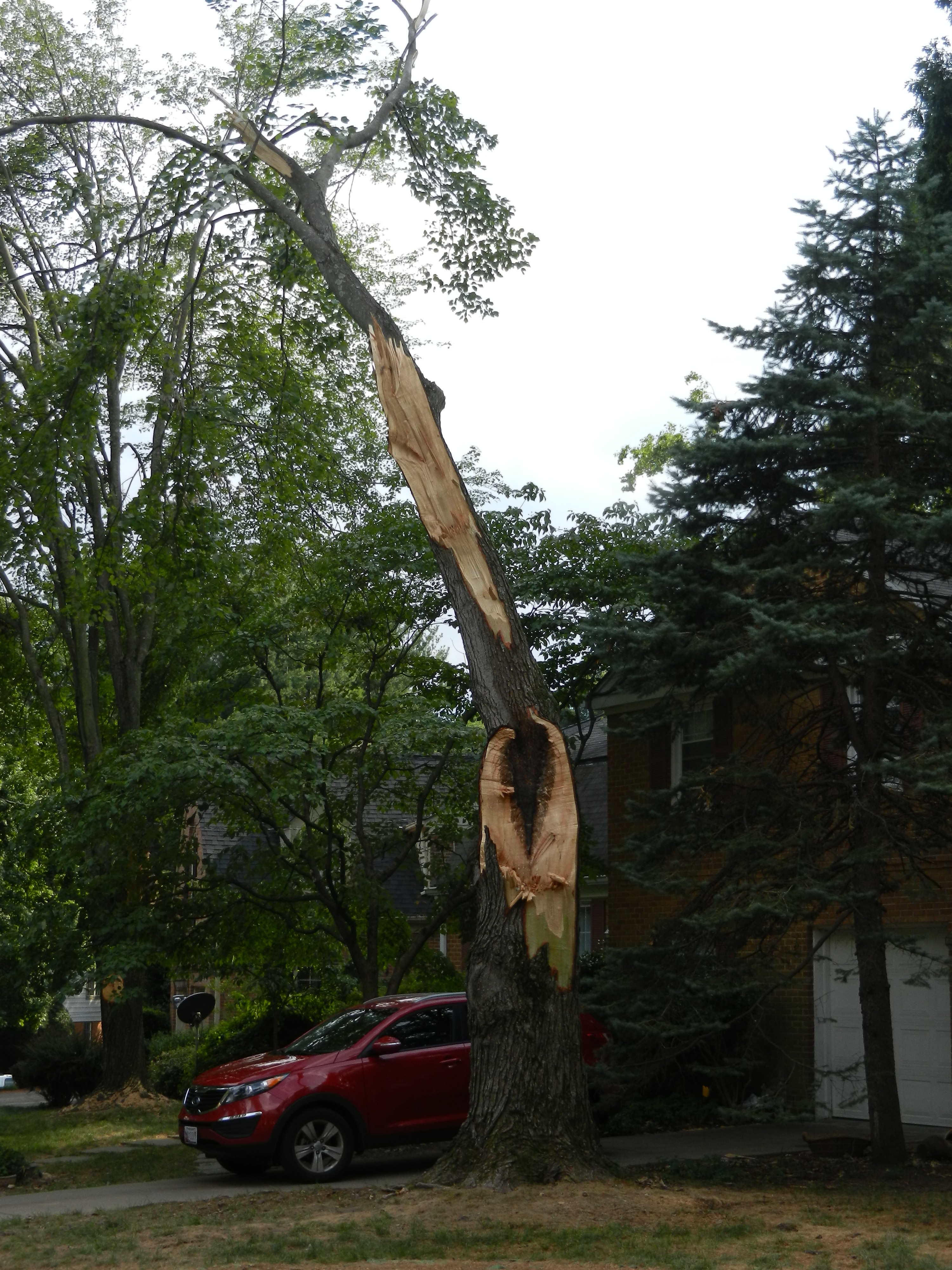
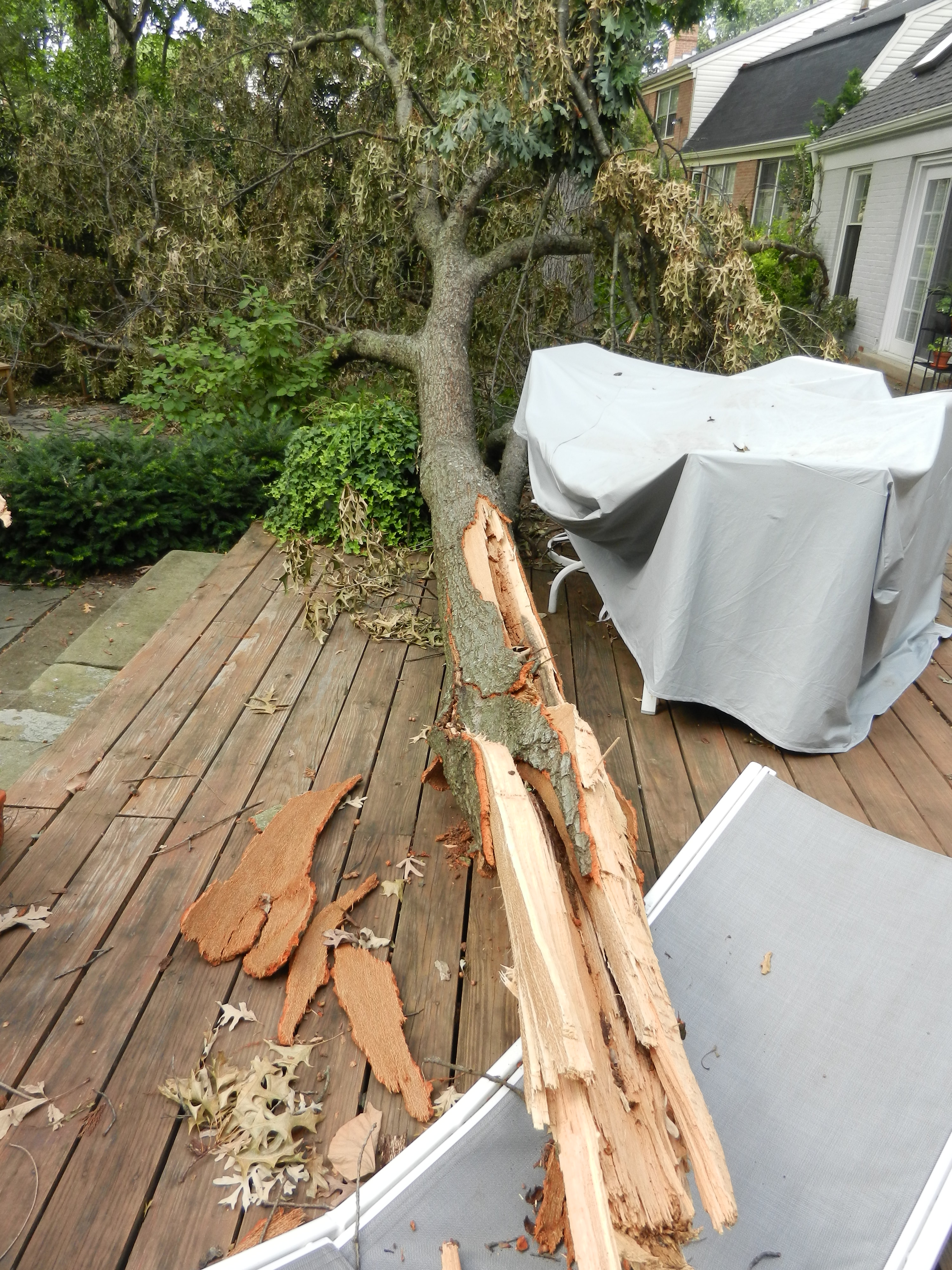
Ten days ago, a powerful storm brought down thousands of trees and caused widespread, prolonged power outages in the area where I live. Initially, everyone’s concerns related to the lack of power – the unremitting 100 degree heat, the spoiled food, the reduced communication ability, and the traffic delays. But now that the power is back on, this week we are dealing with the damage. So many trees snapped in half in my neighborhood that our vistas will permanently change.

The leaves on the fallen limbs have quickly turned from green to brown. The birds are finding strange new places to alight, close to the ground. Every morning we wake to the sound of chain saws and mulching machines. Some tree trunks are still standing, but they will have to be removed later because the trees aren’t salvageable. Now we have sun where there used to be shade, open views where there used to be tree canopy, and exposure where there used to be protection.

It’s hard to know how to feel about this change in perspective. There’s a certain sense of disorientation from the light and the openness. I’m reminded of the David Byrne song, “Once in a Lifetime”, where he says, “You may tell yourself, ‘This is not my beautiful house’”. There’s an unreal quality to the new view.

It’s hard to see benefits and opportunities while we’re spending hundreds of dollars to clean up broken trees. But if I try to change the way I look at it, I can welcome the light. I can look forward to growing sun-loving flowers instead of shade plants. I can expect fewer leaves to clean up this fall. I can picture myself sitting under the festive outdoor umbrella that I’ve never needed before.

Everything changes, and we don’t always get to choose how or when. Marcus Aurelius wrote, “Frightened of change? But what can exist without it? What’s closer to nature’s heart?…Can any vital process take place without something being changed?”

Everything changes. When I accept that, I can begin to see the beauty in my new view.

My week with sea turtles

For most of the year, I don’t willingly get up before sunrise. But for one week every summer, I gladly rise before dawn and leave the house while everyone else is still sleeping. I do it for the sake of sea turtles, serving on the volunteer turtle patrol at a South Carolina beach.

For me, being on turtle patrol means that I get up when it’s still dark, walk two miles along the beach, meet interesting people who also care about wildlife, watch the sun come up, and just maybe, give a few turtles a head start in life. That’s worth getting up early for.

Sea turtles are endangered, due to loss of habitat, fishing activity, predation and being hit by boats. In response, natural resource agencies and beachfront communities around the world have developed programs to give baby sea turtles a helping hand. Think of it as leveling the playing field to make up for the human role in their endangerment.

In my community, volunteers go out each morning during nesting season to look for mother turtles’ tracks and mark where their nests are laid. Then the hatching patrol takes over, checking the nests each morning to make sure they are undisturbed, and looking for signs of hatching when the time draws near.

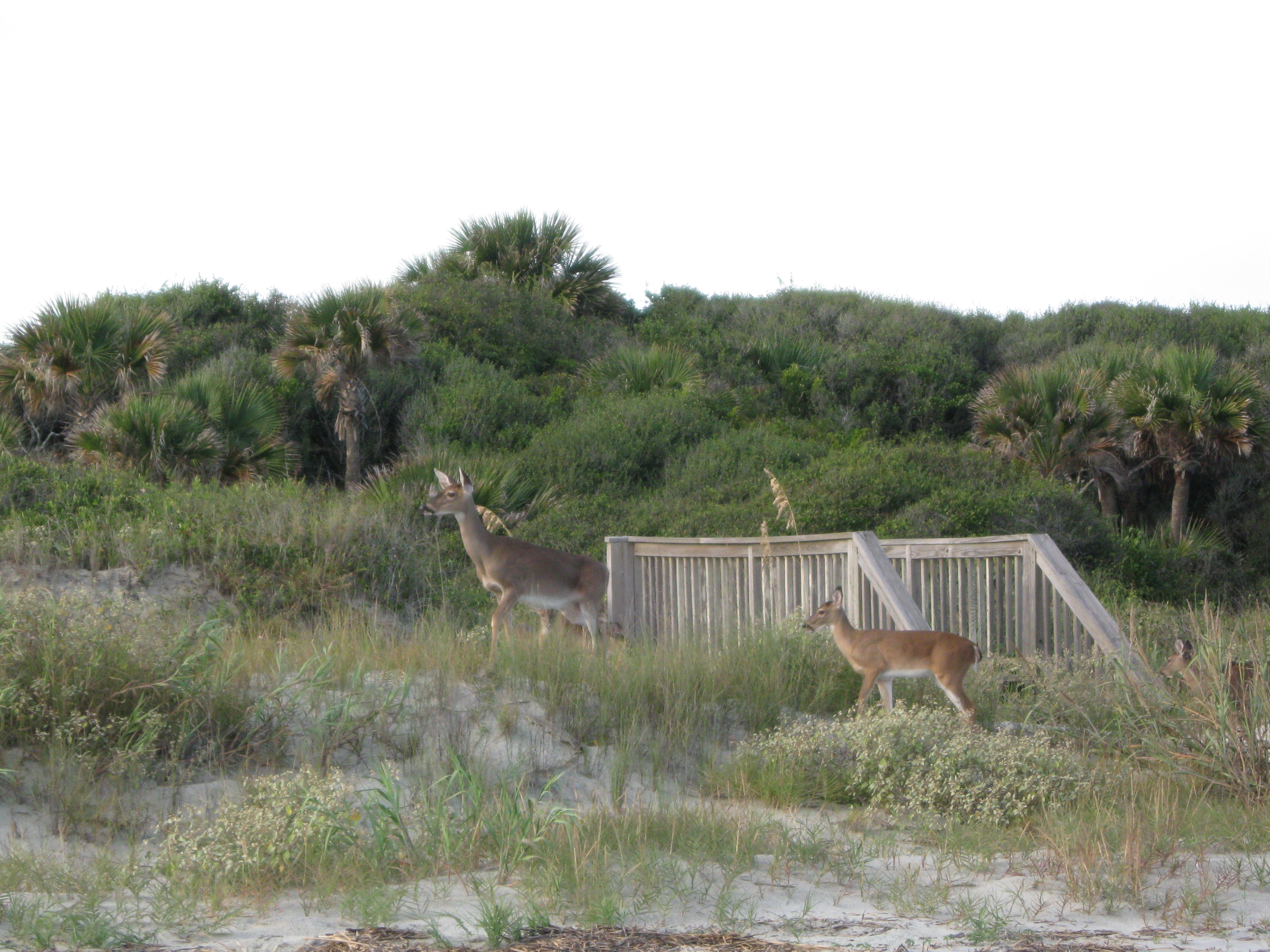
This morning I was practically alone on the beach when I went out. It had been raining all night, but it stopped just as I got to the beach. As I walked along, I saw deer bounding through the dunes and ghost crabs scurrying into their holes. There were no signs of predators near the nests, but crabs, raccoons and coyotes are all potential threats to the sea turtle eggs.

As the nests hatch, the baby turtles have more hazards to overcome on their way to the ocean – they can be eaten by birds, fall into holes people leave in the sand, and go in the wrong direction toward  lights from houses.  Many don’t survive the trip across the beach to the sea.

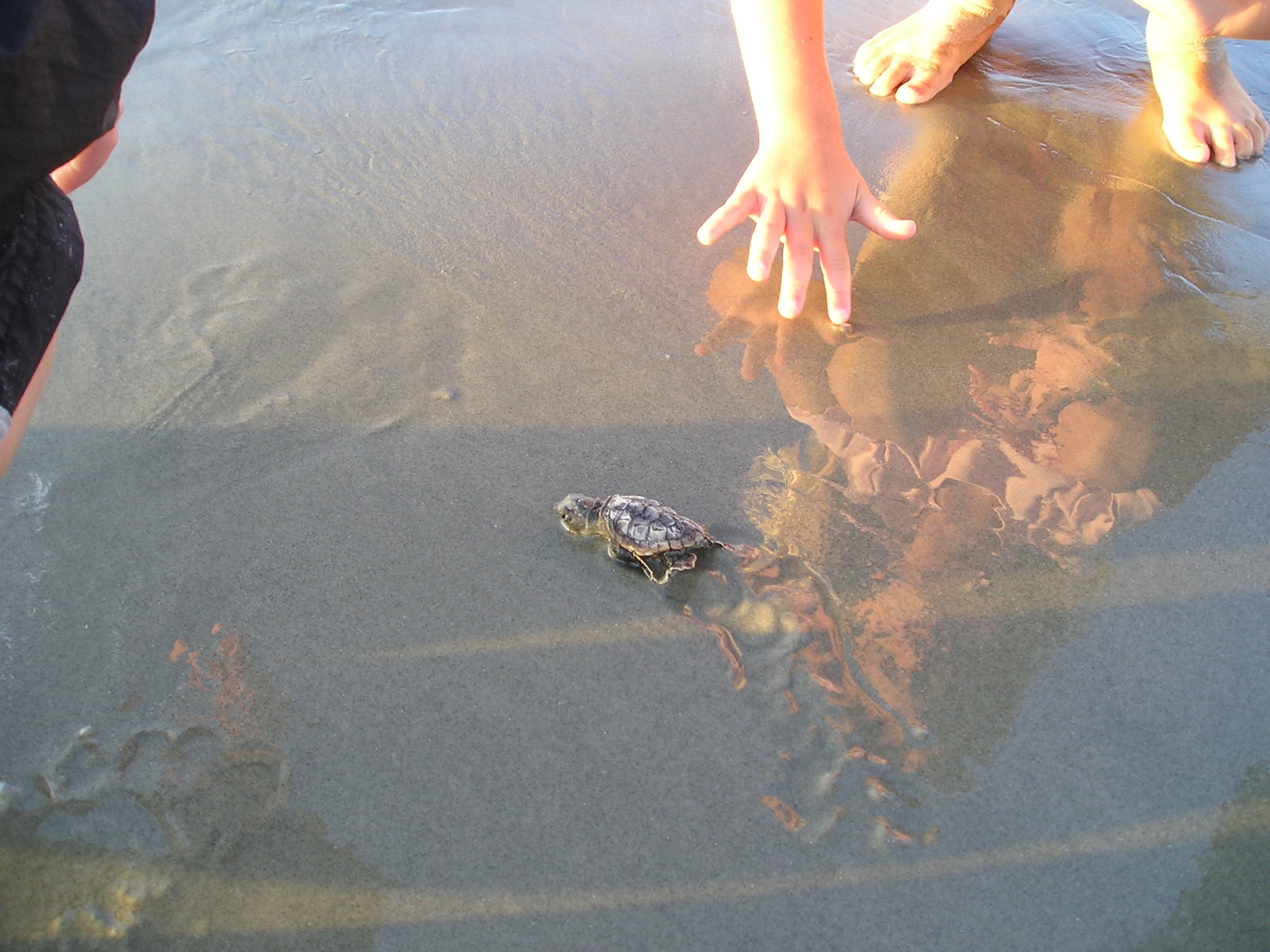
After we see that a nest has hatched, we wait three days, and then dig down into the hole to see how many eggs hatched, and if any live turtles are still inside, perhaps too weak to dig their way out. Volunteers take these turtles down closer to the water, and let them crawl out until a wave catches them and they start swimming. Usually a crowd of people gathers, and everyone clears a path for the turtles, shoos away the birds, and cheers when the turtles finally swim away with their little heads bobbing up for air.

It’s impossible to start the day with anything but a smile after witnessing something like that. I head back to the house where others are just beginning to stir, ready for coffee and breakfast, sandy, sweaty and hot, but knowing that I might have just spent the most valuable hour of my day.