Letting go of fear

Does Cory Booker practice yoga? I wonder because the Newark, NJ mayor was speaking the language of yoga in an interview with the Washington Post’s E.J. Dionne a few days ago. Discussing violence and crime prevention, he said, “Fear is a toxic state of being. You’ve got to lead with love.”

At its essence, the word yoga means to yoke, join or unite. It strikes me that Booker is speaking that language when he says that love can unite people when it replaces the fear that’s at the heart of so much of our distrust of each other. Yoga teacher Kathryn Budig says that in order to meet challenges, we need to “let go of fear and move back into a place of love.” I think they are saying the same thing.

Stress often comes from being unfamiliar with a person, place or experience. That fear of the unknown often manifests itself by us labeling someone or something as “other”, as different from ourselves. By focusing on differences we harden ourselves to feeling any compassion for the other, and we rationalize conflict and dislike. We use otherness as an excuse for our feelings about people of different nationalities, religions, races, political parties, social groups, or abilities. It makes it easier to ignore the paths that might lead to understanding.

Cory Booker’s interview covered a lot of topics, but he was talking in the aftermath of the George Zimmerman acquittal in the death of Trayvon Martin. While there’s a lot we’ll never know about that tragic evening, we can be pretty sure that it started when one person saw another and labeled him as “other”.  It started with fear and distrust.

I’ve written here before about the “Just Like Me” meditation developed by Chade-Meng Tan. Combined with a loving kindness meditation, it becomes a powerful process for tearing down those feelings of otherness. The heart of it is acknowledging that the other person has the same needs and desires for health, happiness and love that you have.

As Meng says, “There are three premises behind this practice. The first is that when we perceive somebody as being similar to ourselves (“just like me”), we become much more likely to feel and act positively towards that person. The second is that kind and loving thoughts towards another can be generated volitionally. The third premise is that mental habits can be formed with practice, so if we spend time and effort creating thoughts of similarity-to-others and loving kindness, over time, these thoughts get generated habitually and effortlessly…”

circleIt takes practice to get to the point where we react with love and kindness first. But isn’t it worth the effort? The “Just Like Me” meditation is a tool for finding our common ground, our humanity. President Obama said last week that, “we should ask ourselves if we’re doing all we can to widen the circle of compassion and understanding in our own communities.” That circle starts with compassion for self, then widens out to families, friends, to neighbors, communities, and eventually encompasses the stranger, the “other”, even perhaps an enemy, by admitting the truth that they are “just like me.”

Keep hope alive

Tell me and I forget. Teach me and I remember. Involve me and I learn.” So said Benjamin Franklin over 200 years ago, and yet it has taken a very long time for schools to consider student engagement in a serious way.

The school system in my community has just announced that they will partner with the Gallup polling organization to measure hope, engagement and well-being in its students. They are the biggest of many school systems that are measuring well-being and putting social/emotional learning into practice. Taking a more holistic approach to student achievement isn’t just some feel good strategy. Social and emotional wellness has been found to be directly linked to student achievement and long-term success in life. The ability of a student to set goals and work toward them requires that he or she have a sense of hope – the belief that the work will lead to something good – and a feeling of being engaged in the process.

While there seems to be some hesitation on the part of some local politicians to fully embrace the idea – they don’t want to seem “silly” – the science backs it up. A 2011 study showed that students demonstrate academic gains when social emotional learning (SEL) is emphasized in school; and Daniel Goleman cites neuroscience research on how the emotional center of the brain is linked to the areas of the brain involved in cognition and learning.IMG

How do schools nurture hope and increase engagement and well-being? Developing self-awareness, self-management and interpersonal skills usually figure prominently in SEL goals. Achieving them entails nothing less than changing the climate of the school. SEL activities might include role-playing stressful situations such as bullying, working on anger management and teaching children the language of expressing emotions.

The president of Emotionally Intelligent Schools, Marc Bracket, uses an acronym to describe social/emotional learning: RULER. It stands for “recognizing, understanding, labeling, expressing and regulating” emotion. Having the words to describe feelings, and being encouraged to express them, is a necessary step to being able to manage emotions better, and the teacher’s role is key in that process. As Daniel Goleman has said, “Teachers need to be comfortable talking about feelings.”

One of the measures on the Gallup survey being used in my district is “There is an adult in my life who cares about my future.” Whether that adult is a parent, a teacher or another mentor, the presence of someone who exhibits concern and empathy for a child is an important backstop for them, and makes it more likely that they will ask for help when they need it.  When I think back on my school years, I remember the teachers who truly cared for me as bright spots in a not-always-happy environment. Those were the teachers I really wanted to please, and I like to believe that I learned more from them than from the teachers who did not inspire me to commit to myself.hope

Holding a positive view of oneself, having a hopeful outlook and being goal-directed are all qualities that relate to resilience – the ability to adapt and bounce back from stress and adversity. Resilience doesn’t mean that you don’t have problems, but it makes you more able to see beyond them – to be happy in spite of them and to take steps to improve your situation

The American Psychological Association says that it’s not success that makes people happy; rather, it is happy people who “work toward goals, find resources they need and attract others with their energy and optimism” who become successful.

Take it outside

There is joy in motion. It’s that simple. That feeling hit me today when I saw a photo in the paper of people doing Zumba outdoors. Their expressions are exuberant, their energy is contagious.

zumba2

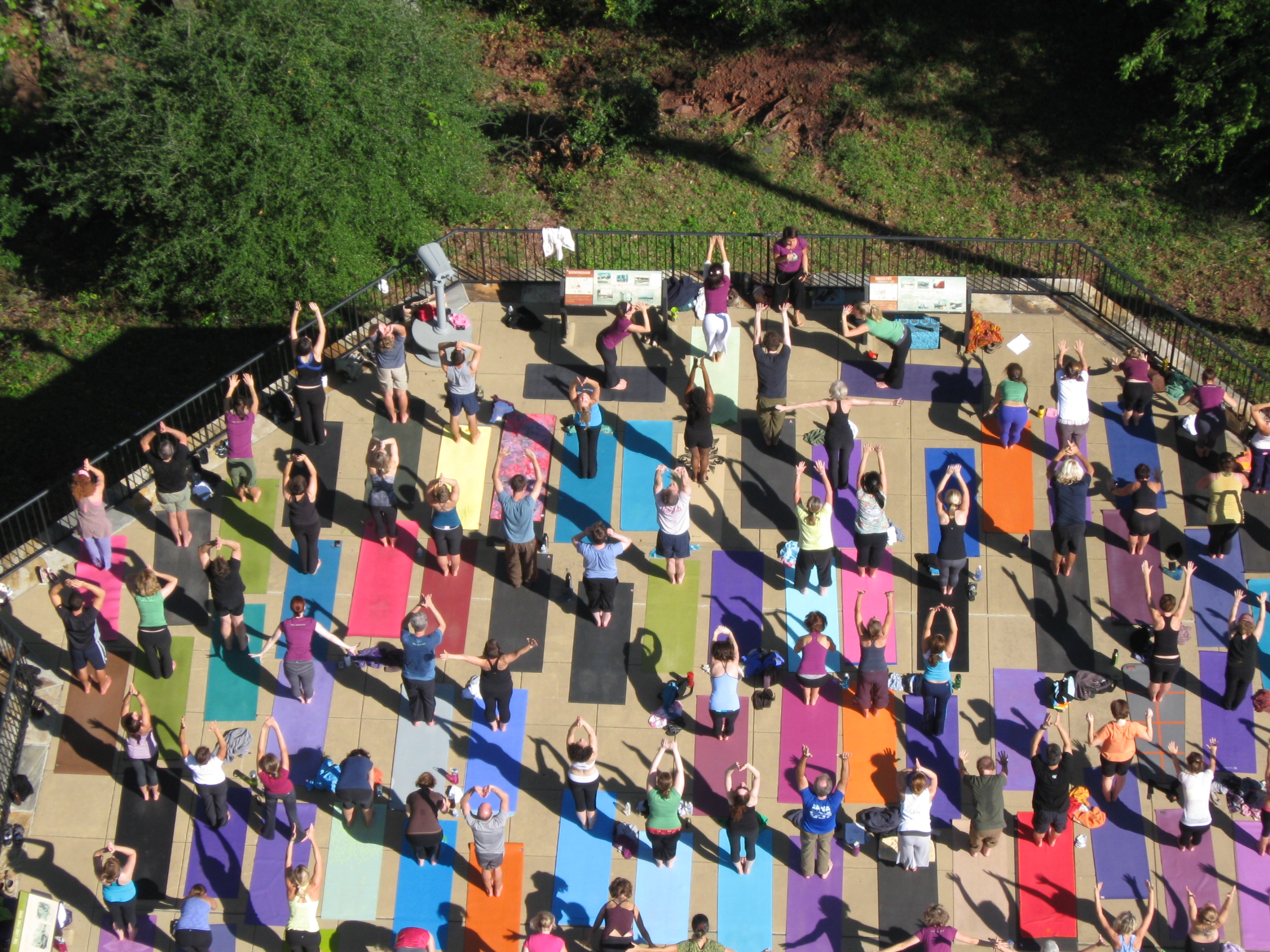
Outdoor exercise has a more free feeling than working out in a gym. Without the confines of walls and machines, something loosens inside. We take more chances, express ourselves more openly, lose some of our inhibitions. There’s also more of a sense of community, because we are physically in the community. And in some cases, the workouts are literally free – free yoga at the farmers’ market, free Zumba on the plaza and free Pilates in the parks.

Besides the individual benefits of outdoor, community exercise, public group workouts can demystify the practices for people who are unfamiliar with them. “Zumba”, “yoga”, “Pilates” – what do those words mean to someone who has never set foot in a gym or yoga studio? They sound like mysterious, esoteric practices that might be difficult and extreme. But when you see other people who look like you doing the moves, you begin to believe that you can do them too.

Americans are full of contradictions. We’re living longer than we did 20 years ago, but with more chronic conditions. Some of us are exercising more, but it’s not enough to keep the rates of obesity from rising. We’re not dying in accidents as much, but many more of us have diabetes. Complicated problems that require complex solutions, right? But while scientists are busy looking for treatments and technologies, we have the power to change our own trajectory. Rediscovering the joy in motion and the freedom of the outdoors can be part of that change.

My mother used to lock us out of the house sometimes when I was a kid. That wasn’t as bad as it sounds. In good weather, we were expected to play outside with other kids in the neighborhood; and if one of us came back in with dirty hands and feet, she wanted to know about it. Playing outside got me out of my head and out of my books for a while. It was during those summertime lockouts that I learned to take risks, like riding downhill on my bike without hands, and to play sports with the boys, and to see just how high we could get the playground swings to go.IMG

What childhood activity brought you that freewheeling joy? Summer might be an ideal time to find the feeling again, either as a way to get a fitness routine going, or to get out of a fitness rut. Look around you – those people dancing in the streets and posing like warriors in the farmers’ market are smiling for a reason.

Vacation days

First day of vacation: The monkey mind is still alive and well, jumping from thought to thought. I wake with an undercurrent of dis-ease. What am I “supposed” to be doing today? My mind isn’t yet allowing me to surrender to the idea of slowing down and doing nothing.
 
So I get up and make a list of things to do. I write some emails. I find something to clean. I sit in the sun and try to read. I start to doze off, the first moment of the day that feels lazy and luxurious. But soon I’m up again, going off to exercise. I believe in working out on vacation, but today it feels like part of my “organized” life, something I’ve scheduled, not something that says “vacation”.
 
Did you know that the majority of Americans don’t use all of their vacation days in the year, leaving billions of dollars of benefits on the table? Many don’t take vacation because they can’t afford a trip, but others are afraid for their job security if they ask for time off.
 
While most employers recognize the value when employees come back rested, refreshed, and more productive, many also expect their employees to answer emails while on vacation. In fact, more than half of the people in one survey said that they are expected to have email access on vacation. So while vacations usually enhance family relationships, work interruptions can actually impede that benefit.
 
Second day of vacation: I’m up early to walk the beach checking sea turtle nests. It’s light, but the sun isn’t up over the horizon yet, and the moon is still visible high in the sky. The shrimp boats are out on the water, and a group of deer graze on the dunes. They let me get amazingly close to them. I’m reminded that the only important things to do today are eating and spending time in nature.Kiawah 003
 
Psychology Today says that “Vacations have the potential to break into the stress cycle,” getting us off the merry-go-round of chronic stress, sleep deprivation and unquiet minds. Vacations are also good times to establish new health habits, especially around exercise.
 
Third day of vacation: I wake in the pre-dawn to the sound of rain beating on the roof. I drift back to sleep thinking about a day spent reading and watching movies indoors. But by 7:00 the storm clouds have moved out to sea and people start to wander onto the beach for morning runs and walks. What will the day ahead hold for me? Beach? Yoga? Biking? All three? Kiawah 006
 
While the joy of vacation wears off quickly when we return to work, people still say they are happiest having spent money on an experience rather than a material possession. Most of that positive feeling comes from being able to share the experience with friends or family. The vacation becomes part of the story of the social network.
 
Fourth day of vacation: Here’s the beauty of it — I don’t need to know what tomorrow will bring. Yes, there are are many more things to do, but there are also all the remaining vacation days on which to do them. It’s time to disconnect……

Daydream believing

My daydreams aren’t what they used to be. I’m pretty sure that’s a good thing, though. It all depends on what we mean by daydream.

Type “daydream” into Google, and this pops up: “Pleasant thoughts that distract one’s attention from the present.” That’s the way I mostly daydreamed for many years. I would use my daydreams as a tool for imagining some future event – usually something that was definitely going to happen, like a vacation. Fantasizing about the future event got me out of the mundane day-to-day life and into something happy and pleasant. After all, who doesn’t like to think about vacation?

But I realized recently that I don’t daydream like that much anymore. I think it’s because I discovered that life is better when I find something satisfying to experience each day that I awake, rather than off in the future. As Daniel Gilbert has written, “When we imagine the future, we often do so in the blind spot of our mind’s eye.” We don’t really know how the future will turn out, and over-fantasizing about it can make it disappointing when it finally arrives.

The dictionary.com definition of daydream is “a reverie indulged in while awake,” a reverie being a “state of dreamy meditation.” This seems like a better way to describe the kind of daydreaming that leads to creativity, problem-solving and fulfilling goals. There’s a saying that ‘where your thoughts go, your energy flows’. In that sense, daydreaming can be uniquely valuable as a way to come up with new ideas, figure out what to do with your life, create a piece of art or music, or imagine a different world.

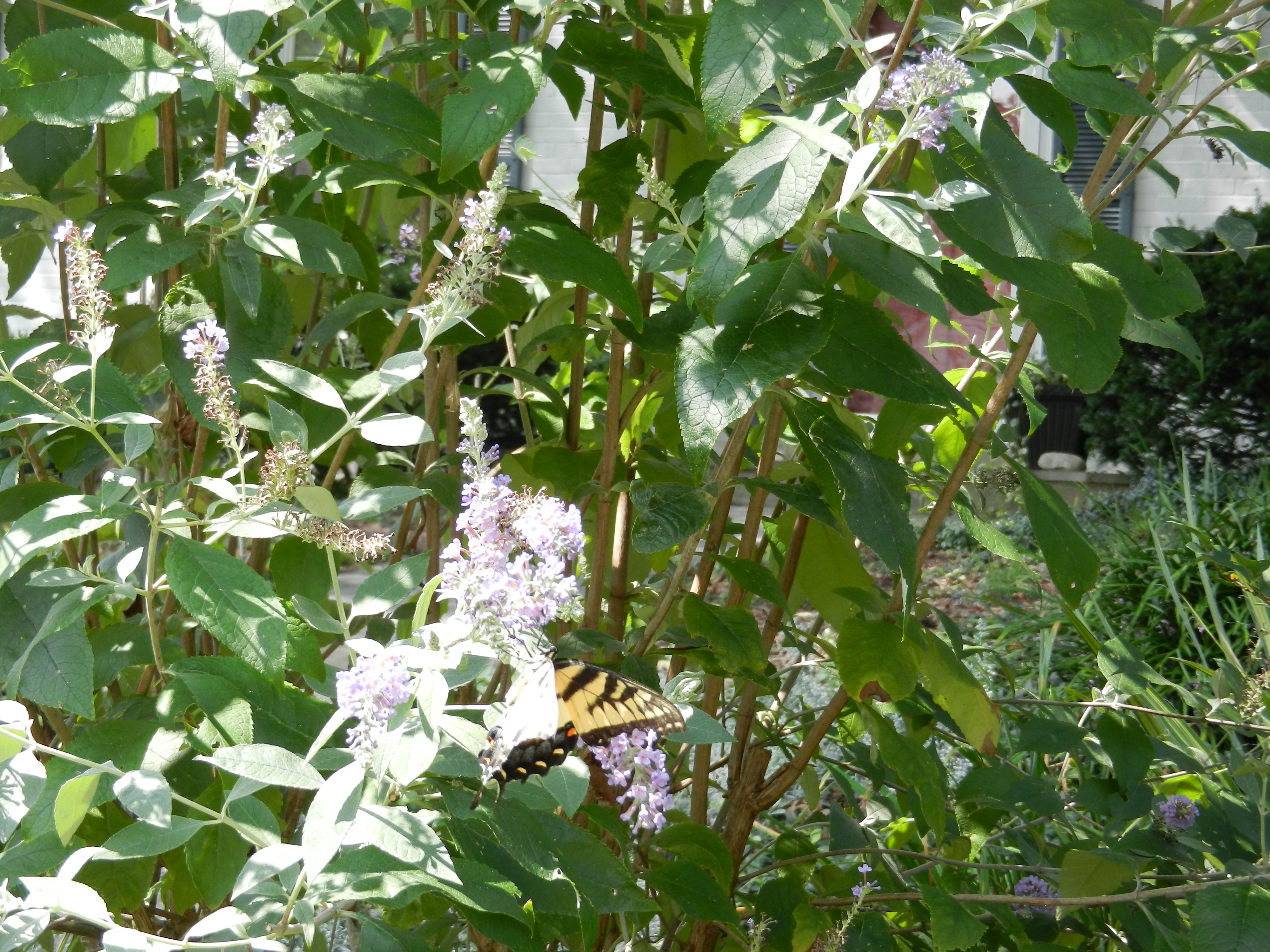
Sitting in my backyard listening to the birds chirping, watching the butterflies flit around the flowers and losing myself in watching clouds, is the kind of daydreaming that occupies me more now. That “dreamy meditation” invites ideas and images into the conscious mind. It’s the daydreaming that leads to new blog posts, and poems, and learning about nature. It’s the daydreaming that allows me to act on what I imagine.Butterflies_03

On the Psychology Today website, there’s an article by Amy Fries called “The Power of Daydreaming.” It’s an extensive overview of all the ways in which daydreaming is good for us, as well as the ways that daydreaming can be negative, such as if it is too “worry-based”. While it’s helpful to use daydreaming as a way to role-play a situation ahead of time, or assess its risk, it becomes maladaptive if it causes anxiety or obsessive negative thinking.

Daydreaming is essentially what we are engaging in when we use positive visualization or guided imagery to relax. We take ourselves away from the present moment (which might be stressful) and into another place that is beautiful and calm, a place that has meaning for us. Daydreaming becomes a short-term tool for getting through a difficult moment.

Does it seem like there’s a disconnect between present moment awareness and daydreaming, which takes us out of the present moment? Fries doesn’t believe the two have to be in conflict, but thinks that we can find the balance that gives us the right amount of each. She says that we need to be able to imagine art, philosophy, spirituality and progress in order to bring them into existence for ourselves.

So I welcome my daydreams as a respite, and try to be present to the serendipitous ideas that come up in them. Who’s to say what the difference is between daydreaming and just thinking? Albert Einstein once said that, “The secret to creativity is knowing how to hide your sources.” Could he have been talking about daydreams?

Three “meals” a day for the soul

It makes sense that a healthy diet and plenty of exercise can help us sleep better at night and be more resilient in the face of stress. But consider the flip side: managing stress and sleeping well can support efforts to eat better and move more.

I recently spent a day counseling people on healthy eating, but I found myself more often than not talking with them about how much sleep they got, and what their stress levels were like. They invariably said that their jobs were stressful and the hours were long. They got home later than they would like, and found it challenging to think about preparing a healthy meal. The stressful day made them feel like they “deserved” the calorie-laden dinner. And by the time they ate, and spent a couple of hours winding down, they got to bed too late to get enough sleep. They often felt fatigued and low in energy.

Most of the people I talked to were relatively young and pretty healthy. But they were struggling with maintaining healthy behaviors in the face of increasingly demanding jobs and hectic lifestyles. Suggesting complicated or time-consuming changes won’t work for them. But what about something that takes only 5 minutes?

Spending 5 minutes once, twice or three times a day doing something that brings you back to the present moment, refreshes your mind, or relaxes your body, can be incredibly restorative. Most of all, in those few minutes, you’re engaged in caring for yourself. While the idea that you deserve care seems like it should be a no-brainer, many people have a hard time embracing it. But a practice that affirms your love and care for self can be the foundation for other health behaviors.

These 5-minute fortifiers come from many sources, including my own practice. Some are adapted from a little book called Five Good Minutes by Jeffrey Brantley and Wendy Millstine. I have divided them into morning, day and evening practices:

Morning

  • Resist the urge to jump right out of bed. Stay still for a moment. Listen to the sounds outside and in your home. Smile. Set an intention for the day, such as being kinder to the people who challenge you.
  • Sing in the shower. As Brantley & Millstine say, “Music and song can make you feel giddy, bubbly, euphoric, and joyful.”
  • Slow down. Ever notice how when you rush, you are more likely to drop things, spill things, and make mistakes; and less likely to find things you need? Taking the extra two minutes to get ready with care will not make you later.

Daytime

  • Breathe at the traffic lights. Too often when we’re rushing to get somewhere, especially in traffic, we chafe at the time spent waiting. Turn it into an opportunity to notice your breath. Inhale deeply and exhale slowly. You will feel calmer when the cars start to move again.
  • Take a break to look at nature. Whether it’s the view out your office window, or a picture on the wall, this practice will rest your eyes and your brain, and shift your perspective.IMG_0117
  • Eat lunch mindfully. Stop working for the time it takes to eat. Chew slowly, really taste the food and think of how it nourishes you.
  • Spend 5 minutes talking with a friend or family member outside of your work. Hearing the voice of someone who loves and cares for you helps ease the stress of the day.

Evening

Relaxing rituals in the evening help separate day from night and work from rest:

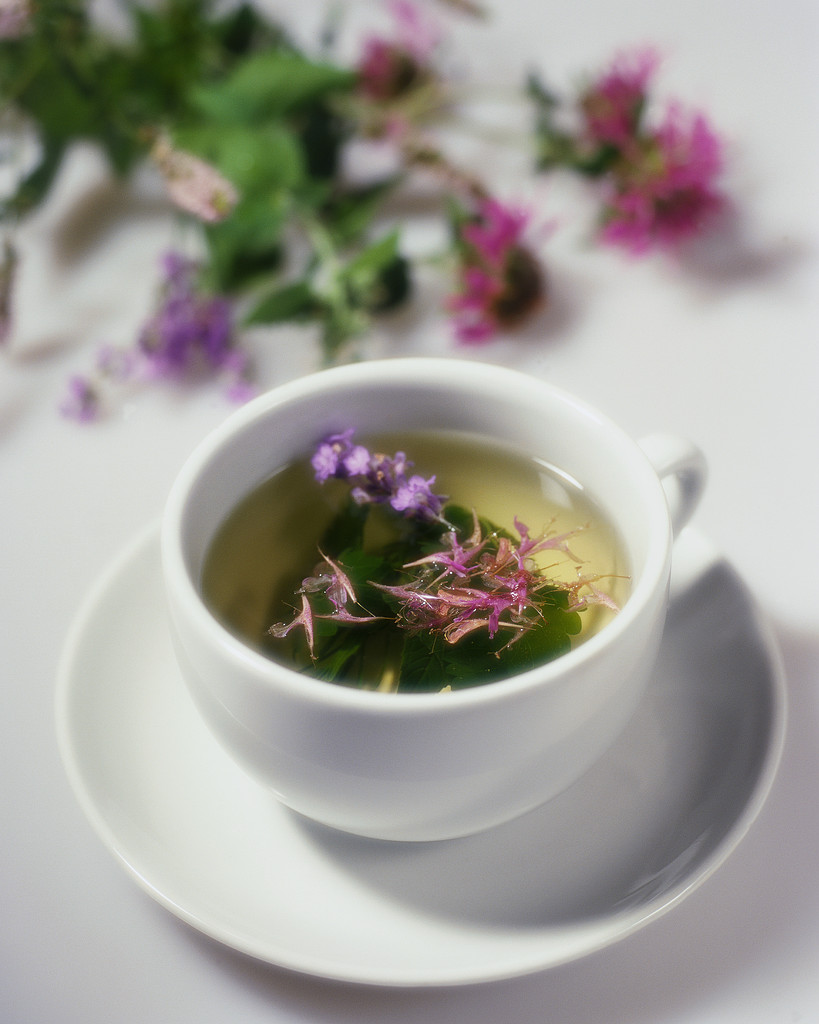
  • Make yourself a cup of herbal tea to warm and soothe you before bed.
  • Listen to some mellow music.
  • Give yourself a foot massage.
  • Read a favorite poem.
  • If you find yourself anxious with thoughts about work, imagine writing them down on pieces of paper. Then picture yourself walking to a nearby river and dropping each thought into the water, letting it drift away.

By tackling stress and sleep first, we put ourselves in a better place to make choices about eating and exercise. We change our habitual ways of thinking about ourselves, make caring for ourselves a routine, and have the energy to stick to a plan.

As Soren Kirkegaard said, “Don’t forget to love yourself.”

“There is nothing either good or bad, but thinking makes it so.”

In this line from “Hamlet”, Shakespeare goes straight to the concept that happiness or unhappiness is all about perspective. Our beliefs color our view of the world. Look at something from a different angle – more importantly, think about it from a new perspective – and it might not bother you at all.

It’s really pretty apropos that a playwright gave us such a useful way to characterize our perception of stress. So much of stress, after all, comes from the stories we tell ourselves about events and the roles in which we cast ourselves. Are you playing the victim, or the victimizer? The hero or the villain? The innocent or the guilty? Sometimes it takes only a slight shift to see ourselves in a different role.ffd6

But the ironic thing about this quote is that the characters were talking about prisons, and thinking of the place they were in (Denmark) as a prison. Nothing imprisons us so much as being unable to see another side of a situation. We get stuck telling the story the same way over and over again, convincing ourselves that it is the “truth”, and not recognizing that someone else’s “truth” might be very different. This way of thinking often traps us when we feel we have been wronged by someone.

Imprisoning ourselves in the story doesn’t make the hurt go away, though. Even though it seems counterintuitive, getting free of the old story and considering a new one can be a lot more healing. Look at what the writer Gregory Maguire did with The Wizard of Oz story. He took a tale that we thought we knew, and knew well, and turned it on its head. The good witch isn’t all good – in fact, she’s downright mean at times. The wicked witch isn’t wicked at all – just misunderstood and discriminated against. Couldn’t the same be possible with the stories we tell ourselves about our own lives?

That was one of the exercises I did in a workshop on writing for health last week. Our first assignment was to write about a traumatic experience in our lives, and our feelings about it, from our own point of view. But the next day we were asked to write about the event from a different perspective. The writing was completely different the second time when I considered the other people who were involved in the event. I was able to feel more empathy and compassion for the people I might have “blamed” for the hurt.

I saw something in Yoga Journal a while back about changing your negative “what-ifs” to positive “what-ifs”. So here goes: What if you looked for the silver lining? What if you “walked a mile in another person’s shoes”? What if you forgave someone for hurting you?  What if you told the story another way? What if you decided to play the villain or the fool instead of your chosen role? How would that look and feel to you?

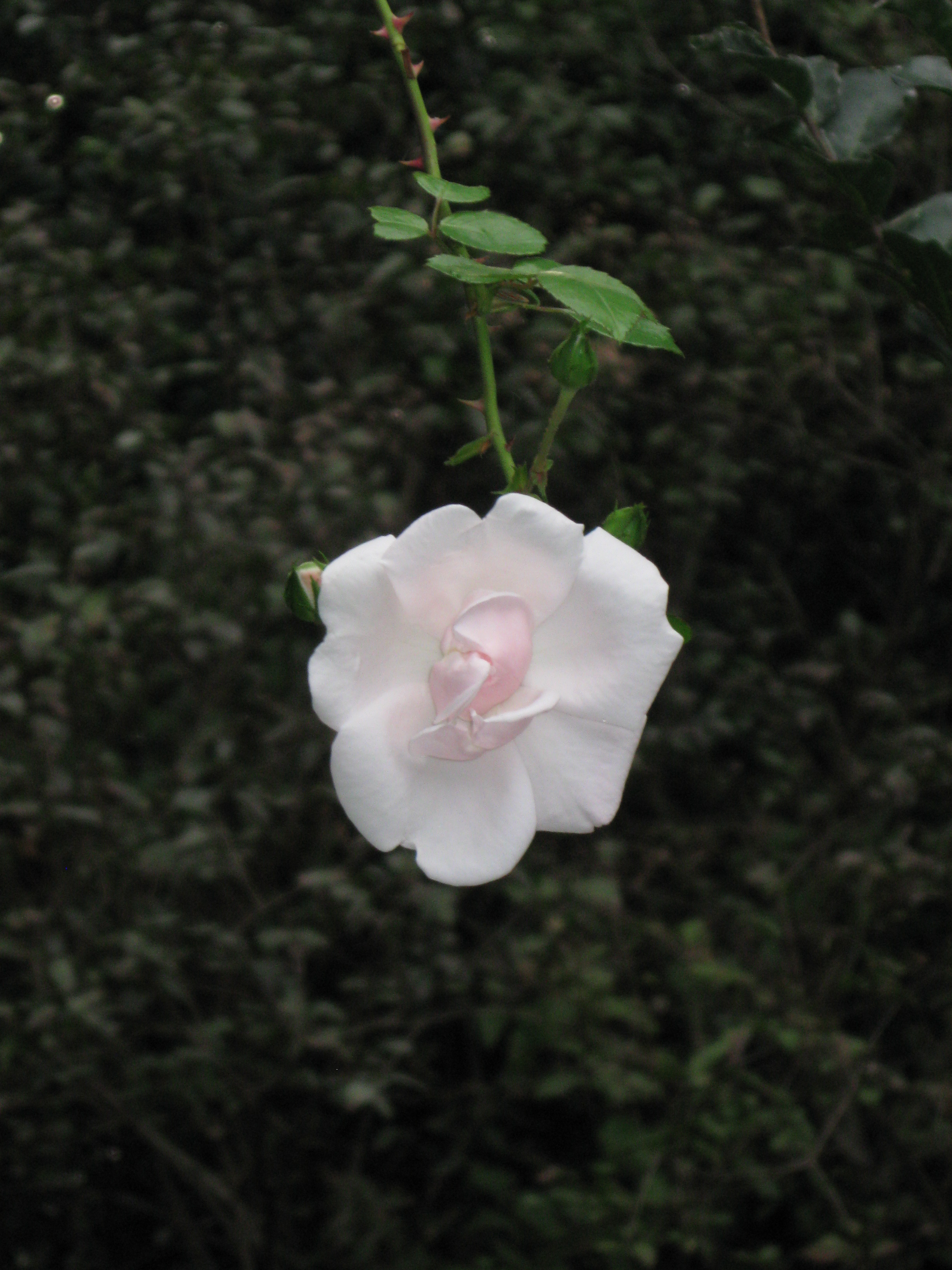
Thich Nhat Hanh has written about roses and garbage that we cannot have one without the other. They are equal, and equally precious. “…we must be careful not to imprison ourselves in concepts. The truth is that everything contains everything else.”

The complete story of any life or any event contains an infinite number of points of view. Each side of the story might hold a valuable truth that could set you free of blaming and on to a path of discovery. The first step is changing the story.

Let the sun shine

I’m smiling at the news that the health benefits of sunshine may outweigh the risk of getting skin cancer from its rays.

Just in time for summer, new research has shown that exposing our skin to sunshine can lower blood pressure, cut our risk of heart attack and stroke, and perhaps help us live longer. High blood pressure is such a common condition (68 million Americans have it) that it leads to 80 times more deaths than skin cancer does. Now it turns out that when our skin gets sun exposure, a compound is released in the blood that actually lowers blood pressure. This effect is separate from the previously known benefits of Vitamin D from the sun.

Today we use the term “sun worship” to describe people who like to sit out in the sun and tan. But ritual worship of sun gods and goddesses goes back for millennia. People have long known and appreciated the life-giving force of the sun. It is the source of all energy and life on earth, through the process of photosynthesis and from the warmth it provides our planet. Sunrise and sunset are magical times of the day, when colors blaze across the sky. In yoga, we do sun salutations to open our practice by welcoming the sun.IMG_2347

So today I salute the sun for these life-giving blessings:

  • Sunlight helps improve mood, and lessens the effects of seasonal depression. As Wilma Rudolph said, “When the sun is shining I can do anything; no mountain is too high, no trouble too difficult to overcome.
  • The sun provides Vitamin D, which helps us absorb calcium (keeping bones strong), and may protect against certain types of cancer, diabetes, rheumatoid arthritis and other conditions.
  • The sun powers our hot water heaters, homes, watches, and maybe someday, our cars.
  • The sun gives order to our days, orienting us to time and space.
  • Sunny days get us outdoors, so we get more exercise.
  • The sun stimulates the production of melatonin, which helps us get a good night’s sleep.
  • The sun gives us rainbows.
  • The sun ripens and sweetens the fruit we eat. In the words of Galileo, “The sun, with all those planets revolving around it and dependent on it, can still ripen a bunch of grapes as if it had nothing else in the universe to do.”IMG_03521

And isn’t true that when the sun is shining, we feel as if it shines just for us? We bend toward the sun like flowers do, waiting to be opened up, growing just a little bit taller in its light.

Spring recharge

We take for granted that our phones and other devices have to be recharged every day or every week. If we don’t do it, we lose the ability to communicate or do our work. The same is true of our minds and bodies, but because we don’t totally shut down, we don’t sense the same urgency to recharge.

April is coming to a close and it’s starting to feel like spring. What can we do to refresh ourselves? The weather teases us, with a few warm days followed by a really cold one; the pollen is challenging some of us to keep our heads clear; flowers are blooming, yet we’re still wearing winter jackets; kids are getting restless in school, but they have two months to go – we can answer that uncertainty and unsettledness by learning what serves us well and making changes in our routines.

Here’s what my spring recharge looks like:

Rediscovering nature – Sustainability is a buzzword all year long, but Earth Day still serves as an opportunity to get people outdoors. A few days ago, I went on a Nature Conservancy hike at Great Falls Park in Virginia, overlooking the Potomac Gorge. As many times as I have been there, I never fail to be awestruck when I see the falls with all their power and beauty. Vultures, cormorants and herons were soaring over the gorge as the river rushed over the rocks. In the park we saw the first spring wildflowers, and I learned that the flowers of redbud trees are edible (salad garnish!) It doesn’t take a whole day to do something in nature: in the May issue of Yoga Journal, there are ideas for connecting with nature in a minute, an hour, a day or a week.Great Falls NP_1

Fresher, lighter food – The warm, comforting foods of winter will soon be a memory. Florida fruit is starting to appear in my grocery store, and I love tracking the progress of the blueberries for sale: first Florida, then Georgia, North Carolina, Maryland, New Jersey and later in summer, Michigan. Spring and summer will mean more local food, more raw or lightly-cooked food, more fruits and vegetables. The Center for Science in the Public Interest has published a book about the best basic foods including best fruit (guava, watermelon and kiwi), best vegetables (kale, spinach and collard greens) and best beans (soybeans, pinto beans and chickpeas). Think of the combinations!photo

Cleaner spaces – Our homes suffer over the winter too. They’re closed up with stale air; dirt and toxins have accumulated; and closets are cluttered with heavy coats, sweaters and boots. Last week I cleaned out my coat closet, and I can’t stop admiring its organization and empty space. (We’ll see how long that lasts!)

A clearer head — Working on mind clutter is valuable too. Could you possibly let go of activities that are draining you and wearing you out? Sometimes I realize that just the process by which I’m doing something is too complicated, that there is a simpler way that uses less energy. Often it’s because I’m trying to control something too much. But by letting go of some control, the process becomes easier, and I am freer in a way. Recommitting to a meditative practice helps me figure this out.

Reuniting with friends and family – Feeling other people’s energy can be a great way to recharge. Spring is the perfect time to connect with people who stimulate and challenge you, support you and nourish you. It’s the time when we start planning family reunions and summer picnics. Maybe it’s a time to commit to putting out more love, and less fear and judgment; to look for the beauty in people that mirrors springtime’s beauty.

Great Falls NP ChickweedI don’t think there is any season that nourishes the spirit, or gives us more reason to feel hope and optimism as spring does. As the writer and abolitionist Harriet Ann Jacobs wrote, “The beautiful spring came; and when Nature resumes her loveliness, the human soul is apt to revive also.

People who need people

Everyone wants independence – to have the freedom to make choices about values, goals and lifestyles. But as Henry Van Dyke once said, “In the progress of personality, first comes a declaration of independence, then a recognition of interdependence.”

Amir Levine, author of the book Attached., says that independence means having someone reliable to depend on so that you can “walk the path of independence together”. To be truly free and independent we must put faith in the strength of others.IMG_0086 r

Sheryl Sandberg has made a similar point during interviews about her controversial new book, Lean In. She believes that one of the biggest [career] mistakes women make is not making their partners real partners – in other words, not relying on them enough. Success is hard-won, and especially so without a trusted partner in life.

Buddhism teaches the practice of non-attachment, based on the idea that suffering is the result of your ego being too wrapped up in a certain idea, outcome, or possession. The true self becomes obscured when we grasp or cling to something or someone as if our life depended on it. That kind of clinging attachment would be comparable to what Levine calls “anxious” attachment – when we worry excessively about losing the object of our attachment, or worry that the other person won’t love us enough.

Buddhist non-attachment doesn’t mean not caring, however. That could lead to the other end of the spectrum — those who avoid attachment to other people altogether, because they have the belief that attachment means losing independence. In avoiding all attachment, they give up intimacy and all of the richness that can be gained from sharing their innermost feelings with someone they trust.

As in the Goldilocks story, there is a middle ground – what Levine refers to as secure attachment. In a securely attached relationship, the partners don’t spend time worrying about how much one loves the other, or about separation. They trust in themselves and each other enough to know that the relationship is strong enough to allow independence on both sides, without keeping score. Soren Gordhamer thinks of this non-grasping feeling as spaciousness. He writes that “in those moments, we have gratitude. We appreciate a given moment without needing to control or hold it indefinitely. We relate to these moments with trust instead of fear, with openness instead of greed, with letting go instead of holding.”

I like to think of secure attachment as being like Velcro (and not in the negative way some people do). When stuck together, it holds together tightly; but when it’s time to separate, it does so without damaging either side. And it can be put back together again just as snugly whenever we want. It separates and re-joins many times over without effort. I hope that my relationships — with my children, my spouse, my friends, and my mother – have that effortless Velcro quality. Can we allow uncertainty, but know without a doubt that we can rely on each other? Can we walk the path of independence together?