“No vacation goes unpunished”*

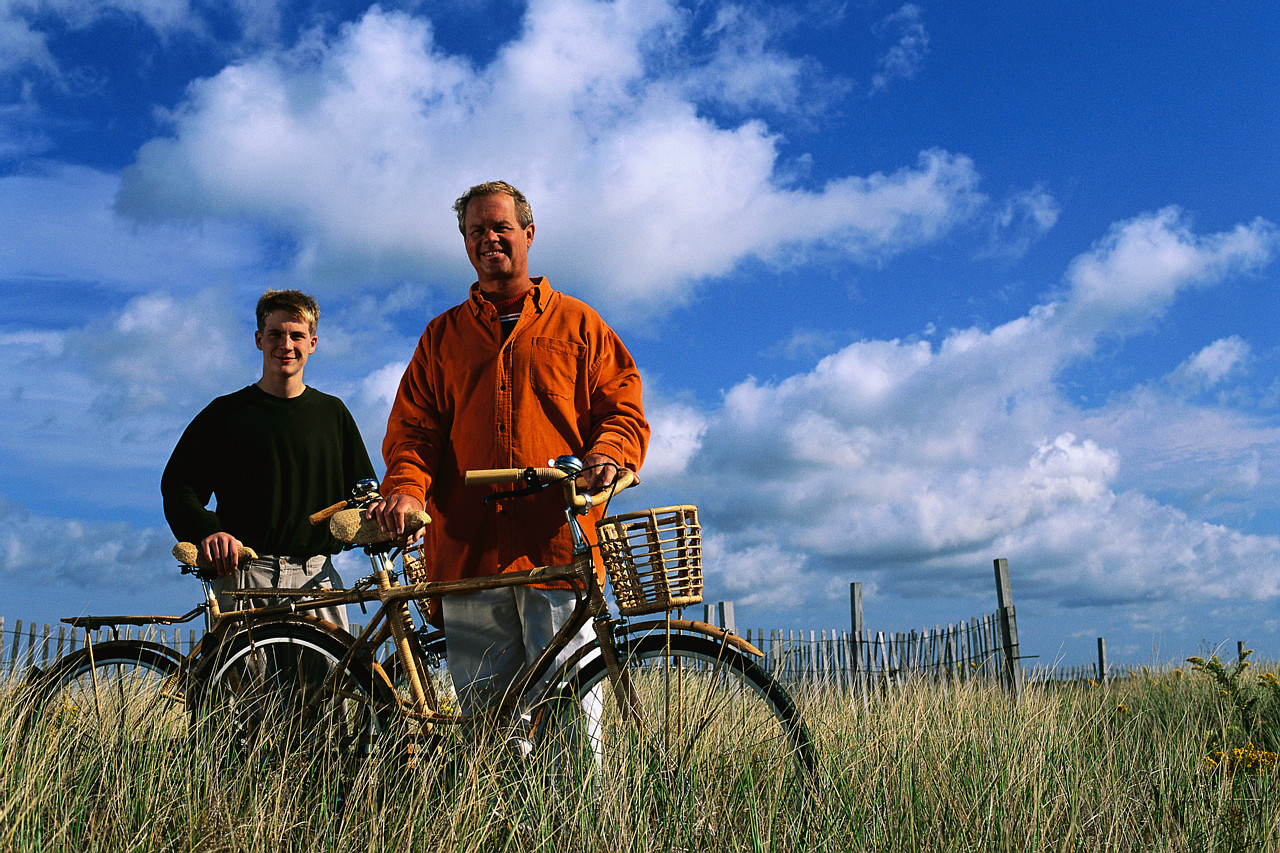
With President Obama vacationing on Martha’s Vineyard this week, some in the press have had a field day discussing whether or not he should be taking time “off”. I doubt a president is ever truly on vacation, but I can think of some good reasons for wanting him to have some down time.

Cindy Aron, the author of Working at Play: A History of Vacations, has said that “we have a love-hate relationship with our vacations”. America’s history of a Puritan work ethic has meant that we tend to frown on idleness. While the wealthy always traveled, and went to spas for their health, the middle class started vacationing later. Many early vacation choices for them were actually associated with churches. If you went to a Methodist campground, there was less temptation
to indulge in idleness or other vices while on vacation.

Only since the 1950s or 1960s have paid vacations been a common aspect of employment. Most employees currently receive paid time off ranging from five to thirty days per year. Since the financial downturn, however, many people don’t feel comfortable taking all of their vacation time anymore. They are either afraid of losing their jobs, or worried that they will have too much work to return to now that companies have downsized so much.

Even earlier, a 2005 survey by the Families & Work Institute found that one-third of employees said they were overworked, and did not use all their vacation days. Half said they worked often during vacation, and one-third said
they were contacted about work during non-work hours.

Research on the health benefits of vacation, or the detriments of not vacationing, is sparse. A study that is often cited is one conducted in 2000 with the Framingham sample. It found that men who took annual vacations had a 30% lower
risk of dying of heart disease. Factors thought to play a role were reduced stress, more sleep, more socialization and more exercise while on vacation.

In 2005, the Wisconsin Medical Journal published a study of women who did not take an annual break from work, which found that they had more psychological health risks. A 2010 study from the University of the Rockies concluded that sufficient vacation time stabilizes mental health and contributes to “professional well-being”. Those researchers also found that a vacation’s benefits peak at 10 days, making a 10-14 day vacation just about perfect.

Some experts, such as Saki Santorelli of the University of Massachusetts Center for Mindfulness, suggest that we try to inject some of the qualities of a vacation into our daily lives at home. Getting more sleep and regular exercise, as well as practicing stress reduction techniques could help balance out the work vs vacation dichotomy.

At least one study backs up Santorelli’s ideas. It examined work engagement and burnout in a group of teachers. The researchers found that positive effects of vacation faded after one month; however, building more relaxation experiences into one’s daily schedule after vacation prolonged the vacation’s effects.

So, in that spirit, here are some tips for making both vacation days and work days better:

  • Consider whether you will benefit most from a very active or more relaxing vacation.
  • Don’t try to cram too much into your vacation. Make sure you actually take time to relax.
  • Set boundaries for work time, work calls and emails. Most of us don’t really need to be available 24/7.
  • Get outside every day, even if it’s just for a walk around the block at lunch time.
  • Take 5-10 minutes every day just to sit quietly and breathe.
  • Laugh. Milton Berle once said, “Laughter is an instant vacation.”

*Karl Hakkarainen

Handle with care

I watched a video on YouTube yesterday called “A Wild Year”. It depicts the activity at just one spot in Banff National Park in a time lapse taken over a 12-month period. The video reveals all the different seasons and the various creatures that crossed the path in that spot, including people, bears, deer, moose, goats, and what looks like a mountain lion. What’s fascinating to me is that each species is at the spot at a different time, and it makes me wonder how much awareness each had of the others.

We all know that animals use more of their senses than people do. Humans rely overwhelmingly on vision most of the time, and hearing second. Would paying more attention and cultivating our other senses allow us to become aware of others in a way that we usually miss? Watching the Banff video raises the question of how we fit into the bigger world. How does what we do affect others? Who can tell that we were here?

The question applies to environmental issues, bringing to mind the American Indian ethos of “tread lightly on the earth” and the Boy Scouts’ philosophy of “leave the world a little better than you found it. “  We can broaden the concept, though. Bringing mindfulness to all of the micro-interactions we personally have every day might change the stamp that we leave on the world.

There is a mindfulness practice I sometimes assign my students, called “Letting Go”. It was created by Gregg Krech of the ToDo Institute.  It involves paying close attention for one full day to how you let go of things: a doorknob, a pen, a dish, someone’s hand. Are you letting go with a sense of intention, or in a careless way? Can you be more deliberate about how you let go, noticing the movement and how it feels? Does the texture, shape or weight of an object determine how you let go of it? At the end of the day, what were the consequences of paying attention to the act of letting go? How did things change?

Most of my students who have tried this practice say that it heightened their awareness of their actions, and of the physical world around them. They became more conscious of their sense of touch. Slowing down their actions also helped calm them, by avoiding unnecessary abruptness and noise.

If we bring more sensory awareness to our everyday acts, maybe our presence can leave things, people and places just a little bit better than how we found them.

Update on network phenomena

In my last post, I wrote about the research into social networks, and the theory of how behaviors or feelings might be contagious in the network. Here is the link to an article in the New York Times this week about others in the scientific community who dispute that theory:

http://www.nytimes.com/2011/08/09/health/09network.html?src=dayp


Everyone else should change, right?

Why is it that even though we know how difficult it is for us to change ourselves, we still think we will be successful in getting other people to change their behaviors? So we knock our heads against the wall trying to persuade, cajole, bribe, or strong-arm someone else into changing. It doesn’t usually work.

I read some advice once that the only influence parents can really have with children once they hit their late teens is by being a good listener and being a role model.  Doesn’t that apply to anyone in our lives whose behavior we’d like to influence? The idea of living by example is common to many religious practices and moral choices, from Christianity to veganism. Letting your actions speak for you, practicing instead of preaching is a mindset that is difficult to embrace, but perhaps more powerful in the long run.

Sometimes when we adopt positive changes in our own lives, the first thing we want to do is tell everyone else about them and then urge them to do the same. What we don’t realize is that usually the people we are telling don’t want to hear it.  But we’re too impatient to wait for them to come to their own realizations about changing. Perhaps we also doubt our own ability to influence others strictly by our actions; we seem to believe that we can only convince someone by overtly teaching and badgering. We need to learn to trust our power to influence by action.

Nicholas Christakis and James Fowler are social scientists who have studied “network phenomena”, and how they relate to things like smoking cessation, the spread of epidemics, the spread of innovation, and even the incidence of loneliness. Their work shows that social networks (not online social networks, but all the interconnections people have with each other in families, workplaces, schools and other groups) are powerful entities. People at the center of a network, those with the most interconnections, have the ability to influence and predict the spread of ideas, disease, and behaviors throughout the network.

For instance, Christakis and Fowler demonstrated that groups of interconnected people in a network tend to stop smoking at the same time, whether their social ties are close or distant. Another study they conducted showed that if one person in a network feels lonely on one additional day per week, then the incidence of loneliness increases among others in the network that month. They have written about the application of the research to other emotions and behaviors as well, both positive and negative.

The power of a social network is pretty awesome, and holds a lot of promise for being able to disseminate change. Another, related method that shows promise is what is called the “social norms” approach. The philosophy behind it is that since humans are group-oriented, and since social norms guide group behavior, it is important that people know what the norm is. Often, people have erroneous opinions about the norms, especially young people.

We’ve all heard teenagers say, “But everybody is doing [fill in the blank], right? Research has shown, though, that just by spreading the word of what the majority behavior really is, risky behaviors can be reduced.  So telling kids that the majority of young people do not engage in binge drinking, do not think smoking is cool, and do report bullying to teachers can reduce all of those behaviors in the group – better than the scare tactics that have traditionally been used.

We’ve all heard that “actions speak louder than words”. The bottom line is that people want to belong to the group, and they want to be like people they admire. Live by your values and do the right thing. It will have an effect on those around you.

Books

Sometimes I tell people that reading saved my life. Yes, but it also made my life what it is.

When I was growing up, I was a shy child in a big family, and my parents had other problems besides the six of us. Reading was my escape from the stress of the household, from my fears, and from the world. Whenever anyone was looking for me, they knew I could be found with my “nose in a book” somewhere.

Reading opened up new worlds for me. I delved into adventure, mysteries, career women, and love stories. It showed me the possibilities that were out there for me if I could just be brave enough to go after them. Reading also comforted me, making me realize that other people had problems too, bigger than mine, and that they were not insurmountable.

Reading doesn’t really qualify as a relaxation technique in stress reduction, as it tends to activate and mentally arouse people most of the time. But reading for pleasure is a form of play or recreation. In that context, it serves to distract from stressors and give us a break from whatever else is going on in life. It turns out that reading for pleasure can allow people to either dull or heighten consciousness.  So if someone has a lot of fear or anxiety, reading can block some self-awareness; while if a person is in a more positive mental state, reading can heighten consciousness and allow more self-exploration.

Life is just better if you are a reader. A National Endowment for the Arts (NEA) report from 2007 called reading “transforming”, saying that it “awakens people’s social and civic sense” and that reading “correlates with measures of positive personal and social behavior”. In fact, people who are regular readers go to more concerts and theatre, exercise more, play more sports, and are twice as likely to volunteer.

Reading gives people a way of connecting to others, both through the empathy it arouses and by providing topics of conversation, ideas and common ground.

Studies on reading show a correlation between reading ability and more time spent reading; but it’s hard to say whether one causes the other. What we do know is that while reading ability continues to rise at the elementary school level, it declines in the teenage years. Time spent reading is down among both teenagers and adults; and both reading ability and the habit of reading for pleasure are declining in college graduates. It is not hard to guess one of the reasons why this is so. The drop in literary reading has correlated with the rise in Internet use.

Why be concerned? For one thing, reading less, and the lower academic achievement associated with it, are also correlated with less success in the job market. High-level reading and writing skills are highly sought by employers, and one of the biggest problems they cite in hiring. Reading ability helps us process an increasingly complex society, from understanding our health care options to knowing how to handle our finances. As the NEA report put it, “Reading is an irreplaceable activity in developing productive and active adults as well as healthy communities.”

Summer seems like a good time to begin or re-discover the habit of reading. (I have fond memories of the summer reading program at my local library.) Marcel Proust said, “There are perhaps no days of our childhood we lived so fully as those we spent with a favorite book.”  Why should that end with childhood?  Pick up a book today and see where your imagination takes you.

“A change is gonna come”

My favorite line about change is one I saw a few years ago on the sign at a church near my house. It said, “When you change how you look at things, the way things look changes.” I love mulling over that line — it’s all about perspective, isn’t it?

Sometimes we choose to change, sometimes we expect change, and sometimes change is thrust upon us. But how we deal with it, from person to person or situation to situation, runs the gamut from graciousness to grumpiness to downright kicking-and-screaming resistance. The only constants are that change will happen and that we have a choice in how we react to it.

All change is potentially stressful, even if we welcome it, because it throws us off balance and out of our comfort zone. But since we cannot grow in our comfort zone, the ability to see change as a challenge or an opportunity has a lot of potential. It depends on what kind of meaning we attach to the change.

Daniel Gilbert, in his book, Stumbling on Happiness, wrote that “When the experience we are having is not the experience we want to be having, our first reaction is to go out and have a different one…It is only when we cannot change the experience that we look for ways to change our view of the experience…We find silver linings only when we must…”

Another way to change our view of experiences is to cultivate equanimity, or calmness.  In the August 2010 issue of Yoga Journal, Frank Jude Boccio talked about this quality of equanimity .  It is a “state of even-minded openness that allows for a balanced, clear response to all situations, rather than a response born of reactivity or emotion.” In other words, developing this quality within ourselves enables us see the truth of our circumstances more clearly, and to deal with them more appropriately.

An important aspect of cultivating equanimity is recognizing that we can’t control everything, much as we might want to. So it helps us accept the things that cannot be changed, as well as the things that aren’t important enough to change. It helps curb our tendencies to judge and resist the way things are.

Conversely, there are times when we want to make changes, and we rush to do too much at once. The starting point for all change is accepting where we are, and believing in our ability to change and to accomplish our goals. The most achievable goals involve small steps that, one after another, add up to big change. I always tell the people I work with at health fairs not to change too much at one time. Wait for one small change to become a habit, and then move on to something else.

Herbert Benson says that “change in our lives, because of our wiring and conditioned responses, is gradual and cumulative.” If you learned one way of doing something, you can unlearn it, but it will take time. So take a breath along with that first small step, and be patient with yourself.


Food for thought

The latest report on obesity rates across the nation was issued last week, and it is pretty sobering. Sixteen states saw their obesity rates go up over the past year, and none went down. In 12 states, more than 30% of the population is obese, and Colorado is the only state with an obesity rate below 20%.

Obesity rates are also higher in racial and ethnic minorities, those with less education, and those with lower incomes.

Why is this happening, and what can we do about it? It is a complex problem with no easy answers. Certainly environmental factors play a big role. Think about the societal changes during the past generation – 24/7 availability of food, acceptability of eating and drinking almost anywhere, huge increases in the number of meals eaten away from home, significant increases in portion sizes, and the difficulty in obtaining fresh fruits and vegetables in certain neighborhoods.

But we also have to consider our susceptibility to becoming “addicted” to the high fat, high sugar diets that are so prevalent. In his 2009 book, The End of Overeating, David Kessler (former head of the Food and Drug Administration) cites research that shows that these “highly palatable foods” actually are addictive for some people. When we eat them, and eventually when we even see or think about them, dopamine is released in the brain. Dopamine is a neurotransmitter associated with pleasurable experiences. In addiction, dopamine actually changes the brain, sending the message to repeat the action that leads to pleasure.

Eating should be a pleasurable sensory experience. But why do some people become unable to stop themselves from indulging in the high fat/high sugar/high salt foods, while others (about 15% of the population, according to Kessler) can just say “no”?

Gabor Mate, a Canadian physician who has treated addiction and written about it, believes that all of us are on the addiction spectrum somewhere (not necessarily just with drugs or alcohol). Everyone wants that endorphin rush. Identified addicts are just further along the spectrum because (he believes) they have suffered more, usually from abuse in childhood.

I’m not suggesting that everyone who overeats was abused as a child; but I do think we have to consider the emotional reasons that people become “addicted” to food. After all, the term “comfort food” came from somewhere! What are we lacking? Soren Gordamer says, in Wisdom 2.0, that “Our relationship to eating is often less about nourishing our body or how the food tastes and more about satisfying our desire system…What we crave is not the food, but the satisfaction of getting what we want, of having our desires filled.”

Gordamer suggests mindful eating practices to bring more consciousness to our eating. Kessler says that it is necessary to create a different reward system for yourself, and to structure your environment in order to avoid the cues that lead to overeating. Dr. Mate believes that it is never too late to get the nurturing and compassion that we need in order to change the conditioning of our brains.

So where do we go from here?

    • We need to hold food manufacturers and restaurants responsible for giving us the information we need to make good decisions about the food we eat. Some have a history of combining sugar, fat and salt in calculated ways that are designed to keep people coming back for more.
    • Our society must change perceptions around food and eating. Dr. Kessler says we need a cognitive shift about unhealthy food like the one we had one about smoking. It used to be viewed as sexy, and now mostly it is thought to be nasty and unhealthy.
    • Have some structure around meals. Sit down at the table with family or friends. When you eat, just eat.
    • What are your triggers for unhealthy eating? How can you avoid them? Maybe it means giving up some TV so you don’t see the commercials; or changing your route to work so you don’t see a certain restaurant.
    • Surround yourself with people who support you and make you feel good about yourself. Avoid situations that might trigger negative emotions, something Buddhists refer to as “guarding the gateway of the senses”.
    • Practice self-compassion. Change starts with acceptance of who you are now.

Urban decay?

The headline in the paper read, “Maybe it’s just crazy to live in a city”. Needless to say, it grabbed my attention.

While it was already known that mental health problems such as anxiety, depression and schizophrenia are more common among people who live in urban areas, new research (published in the journal Nature) looked at the brain to see how and why that happens.

Using fMRI scanners, researchers found heightened activity in the part of the brain called the amygdala when they assigned urban-dwelling participants to complete stressful tasks. One job of the amygdala is to assess social threats. People who lived in rural areas or small towns had lower levels of activity in the amygdala during the stressful tasks; in fact, the reaction increased as the size of the participant’s city increased. Researchers believe that city living may increase risk for mental illness by increasing sensitivity to social stress.

What is social stress? Basically it is any stress that occurs as a result of interaction with other people. For some it might amount to stress from events such as job interviews, public speaking, mingling at a cocktail party, or going on a date. For others, it might be triggered even in everyday interactions with people. Besides the greater risk for mental health issues, it is also linked to physical health conditions.

What is it about city life that makes it more stressful? The immediate things that come to mind are noise, pollution, and pace of life. But if the focus in this research was on social stress, how is that different in an urban environment? Certainly, crowding is one factor. Other possibilities are more diverse populations, more activities to choose from, and perhaps more roles to play. Each of these has the potential to increase the number and complexity of interactions with other people on a daily basis.

In rural areas or small towns, people may tend to see the same faces every day, have fewer choices to make about interactions, and have more personal space around them. Their potential for negative social stress is less.

Know yourself

The important thing to remember is that we all have different requirements from our environments. Some of us would be utterly bored with living in the country; others cringe at the thought of living in a city. Figuring out what suits you best sometimes takes trial and error. When I was younger, I lived in New York City for 6 months and developed the worse case of insomnia I’ve ever had. I came to the conclusion that the unremitting noise and stimulation hour after hour, day after day, was too much for me. Yet, if I spend too much time at a quiet beach retreat, I’m ready to go back to “real life” after a week or so.

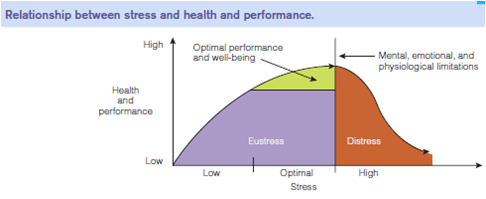
This relates to something called the Yerkes-Dodson principle which shows the relationship between arousal and performance. It’s what is also called finding your “optimal level of stimulation”:

The line where stress increases to the point where performance (or quality of life) declines may be farther to the right or left, depending on each person’s capacity for stimulation.

Make space for yourself

Even if you thrive on the stimulation of city life, it’s important to protect yourself from the cumulative effects of urban stressors. For some, this might mean taking regular breaks from the city by getting away to a more rural, peaceful environment. If that’s not possible, then creating an oasis at home can help. Maybe that’s a certain space in your home that is calm and soothing. Maybe it is a space in your mind that’s created by a daily practice of meditation. It could also be achieved by finding or creating a smaller community for yourself within the larger community, people with whom you feel protected, safe, and comfortable. Whatever form it takes, the goal is to have a “place” where the stimulation is dialed down for a while.

What is your oasis? Leave me a comment to tell me how you create that space.

Generosity

Liberality in giving or willingness to give.

An article in the newsletter from my local hospital caught my eye yesterday. It told about some hospital employees who started a program to volunteer to help patients during meal times. Many patients, especially the elderly, need a little extra help with cutting their food or opening containers. When a family member can’t be there to help them, hospital employees (from all departments) volunteer to step in, providing assistance, encouragement and companionship for one to two hours a week.

By giving the gift of their time and attention, these employees are also receiving many benefits. There is a significant relationship between volunteering and good health. People who regularly volunteer generally live longer, function better, and have lower rates of depression as they get older than people who don’t volunteer.

Volunteers also report more satisfaction with their lives, higher self-esteem, higher levels of happiness and a greater sense of being in control of their lives. In addition, being a volunteer can sometimes involve people in a new social network, with all of the stress-buffering benefits that social support provides.

Why do some people volunteer and others don’t? Sometimes it feels like giving something to others – whether it is our time, our money or our love – means that we will have less of that for ourselves. When we let go of that habit of clinging to things, we learn that to give is to receive, and to receive is to give.

As a practical matter, studies have shown that one big difference between those who volunteer and those who don’t is time spent watching TV. Active volunteers watch far less television. So while it may seem that we don’t have time to volunteer, the reality may be that we only need to give up one of our “low-value” activities.

Helping others can also put people into new social roles; this can give them a sense of meaning and purpose in life. In that context, practicing generosity can be considered a spiritual practice. While that may sound surprising, if you think of spirituality as being connected to something larger than yourself, it makes sense. Practicing generosity helps us see how we are all connected and interdependent. It breaks down the barriers of time, space, age, race or socioeconomic status that may falsely separate us.

If you want to be a volunteer, but aren’t sure how to get started, look into programs in your city or county. Many local governments have web sites devoted to volunteer needs, some keep a roster of volunteers to call upon, and others will match you according to your interests. There are usually short term, long term and one-time opportunities available in your community.

The Corporation for National & Community Service is also a good resource.

The power of friendship

The support of friends is always welcome, but never more so than when people are suffering. I saw that firsthand during the past week when, tragically, my sister lost the person who was her partner, best friend and father of her children. It was a shock to everyone in their community to lose someone so young and vital. But people swung into action immediately, to surround my sister with love and support.

Her friends brought food and drink to her home, cleaned her house, mowed her lawn, and even took her dog to one of their homes so she wouldn’t have to think about him. They cried with her, comforted her, listened to her, hugged her and her children, and at moments, laughed with her. It was awesome to see.

Sadly, this support is limited in its ability to ease the pain in the days and weeks ahead, but my sister still counts herself lucky to have it. She knows that she is cared for and loved, and belongs to a network of people she can call upon for help. If what research tells us is true, the negative effects of this huge stressor will be buffered by the social support, thereby helping her stay strong and healthy for her kids.

That kind of support system didn’t happen overnight. It was built by forming connections with people over many years, connections that became increasingly more stable and complex. It was based on shared interests and activities, work and school communities, and sometimes, shared difficulties. It meant giving time, attention and commitment to building relationships.

As I mentioned in an earlier post, our brains are hardwired for connection, to make and sustain strong attachments to other people, and to feel empathy and compassion. I was impressed and moved these last few days by how these attachments can be such powerful sources of strength in times of need.