
In Washington, some of the bars opened early yesterday so that people could come and drink while watching James Comey’s testimony before the Senate Intelligence Committee. All around the country people took the day off from work so that they could stay riveted to the TV. It’s a crazy world when this is how we’re spending our days off!
Instead of sitting on a barstool, however, I turned to my “52 Lists Project” journal for inspiration and distraction (although I confess to a few sneak peeks at the testimony). List #22 asks us to think of favorite places we have been and what made them so appealing. But that’s not the end — the next step is to think of places in our communities that could “transport” us the same way. In other words, can we bring the vacation experience to our everyday lives? Can we transport ourselves for a little while away from all the chaos of recent times?
When I list my favorite vacations, in places like Croatia, Hawaii, Seattle, Yosemite or Australia, here are some of the characteristics that pop out:
- Simplicity
- Scenic drives
- Grandeur
- Friendly people
- Fresh food
- Connections to the past
- Bringing the outdoors in
How do I replicate that at home?
1. Simplicity & fresh food:

When I visited Croatia, I was impressed by the beautiful national parks, the simplicity of people’s lifestyles, the ability to eat a meal where every bite of food came from the farm we were on. Here at home the next best thing is to make a meal based on what comes from the farmer’s market or my yard:

2. Bringing the outdoors in:
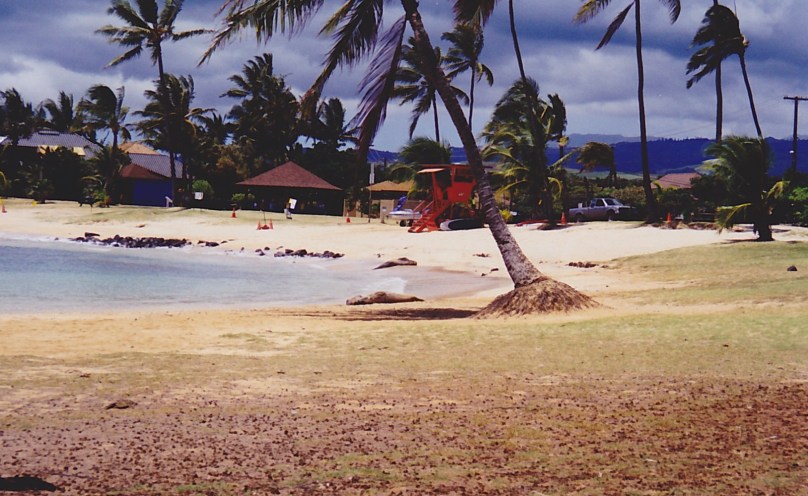
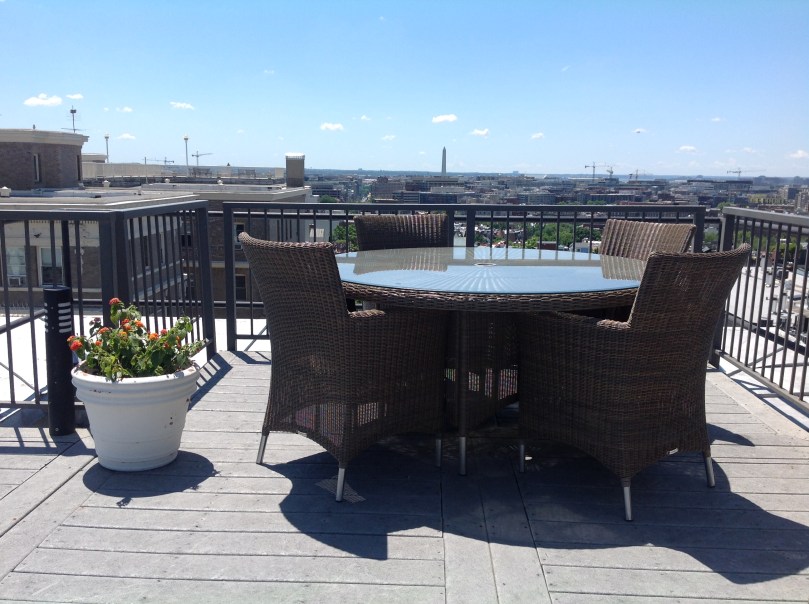
In Hawaii, the thing I liked best was the way the boundary between indoors and outdoors was so blurred. Nearly everyplace I went was open to the outside; there wasn’t a big reliance on artificial air conditioning. This is hard to achieve during summer in DC, but I could spend more time on the roof of my building, eat at more outdoor restaurants, and open my windows when the temperature allows:
3. Grandeur. I haven’t been to Yosemite in years, but the grandeur of the park is something one can never forget. Its sheer rock faces, memorialized by Ansel Adams and countless photographers since him, are familiar even to people who haven’t been there. It’s a place that is just jaw-dropping in all seasons. What my area offers:
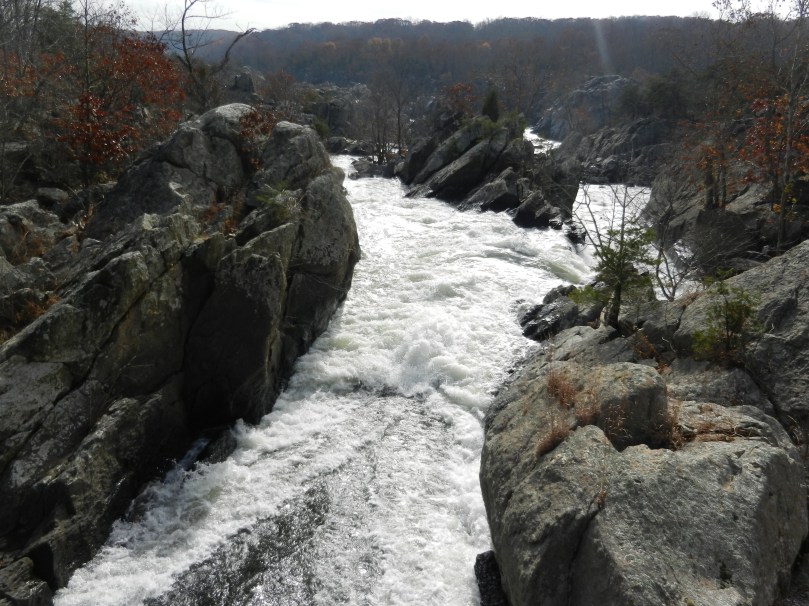 Great Falls Park – the rocky passage of the Potomac down the Mather Gorge, accessible by way of the Olmsted Island bridges, provides a pretty awe-inspiring outing that I never tire of.
 The monuments, while man-made, have a whole lot of grandeur about them.
4. Connections to the past: In America, we can’t compete with the Greeks or Romans on the ancient past, but we do have the advantage of recent history here in Washington:
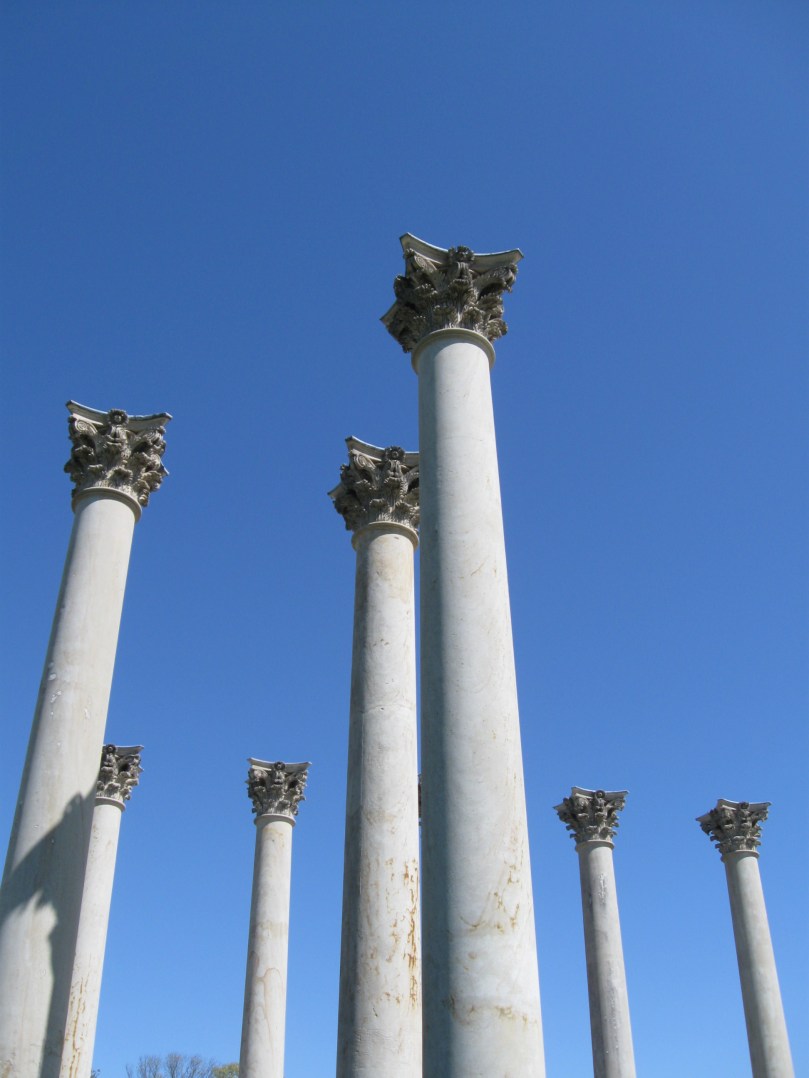 The original columns from the U.S. Capitol can be seen at the National Arboretum. The way they rise up out of nothing, in the middle of a huge expanse of green, is spectacular.
5. Scenic drives:
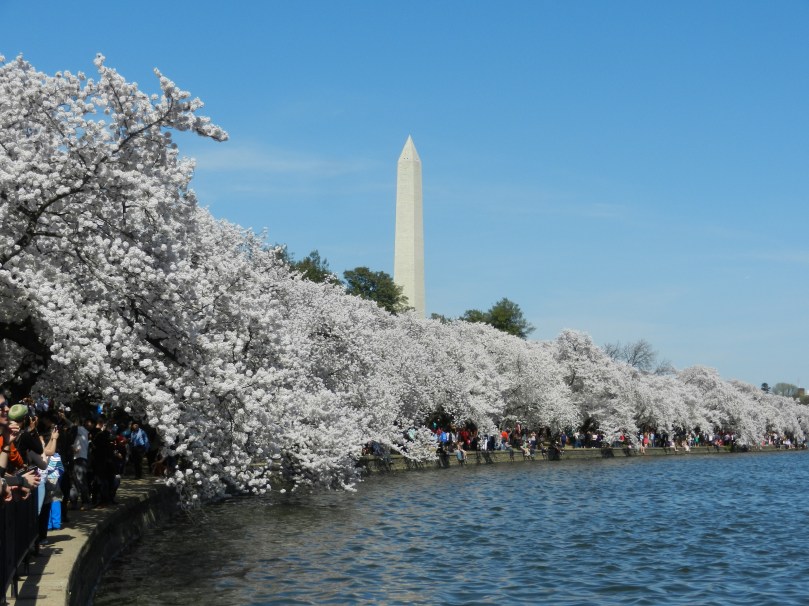
 In both Ireland and Australia, I took breathtaking drives along coastal roads. That’s tougher to replicate here where we’re inland, but how about the cherry blossoms in spring:
In some ways, this prompt is very much like a values exercise we do in stress management. It asks you to imagine your perfect day and what it would include, then compare it to your typical day. How alike are they? Is there a way to make more days perfect, by incorporating more of what you value?
The columnist Earl Wilson once said that, “A vacation is what you take when you can no longer take what you’ve been taking.” As much as we might value watching important Senate testimony, a steady diet of it isn’t good for anyone. If you can’t take it anymore, perhaps it’s time to take a real vacation day.
 My older sister and I like to tell people how we constructed paths around our room with our collection of Little Golden Books. I have no idea how many books we actually had, but at the time, it seemed liked hundreds. Since they were all the same size, we could line them up and turn them into roads. While we were supposed to be napping, somehow we were developing a sense that we needed to have a path to somewhere else.

 Are you feeling like it might take a miracle to get through the next four years? Do you doubt how much control you have over what happens to you? If so, it might be a good time to take stock of your physical, emotional and psychological “bank account”. What resources do you have and how can you best put them to use?







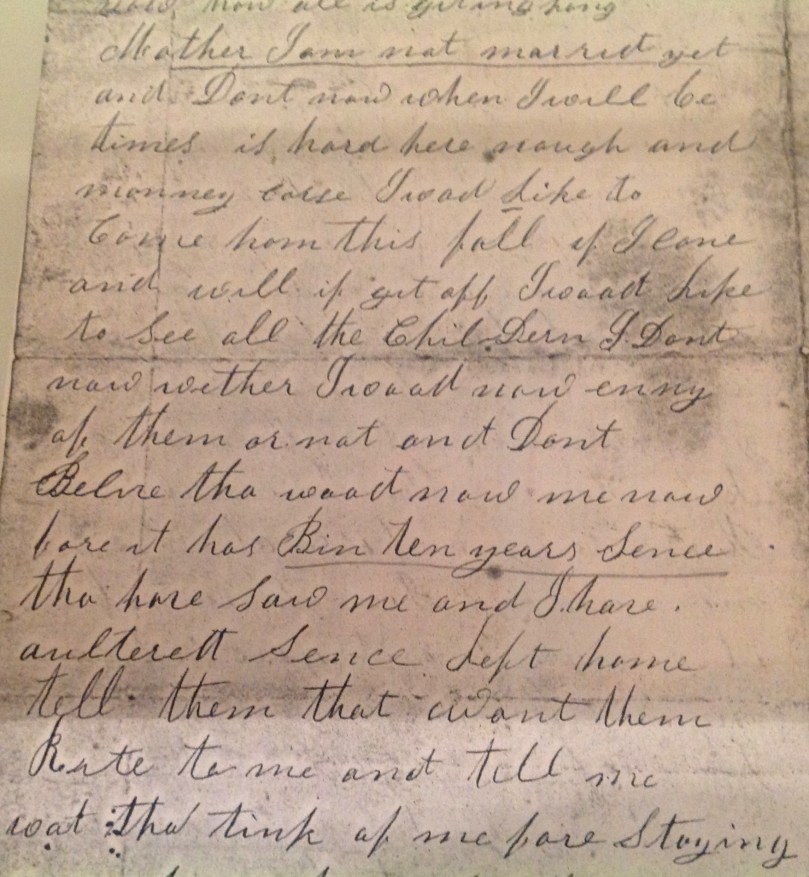 The letters are a way for me to know people I never met, or to know the younger selves of people I only knew when they were older. The letters sometimes reflect an optimism that was missing later in their lives. Often the change from optimism to discouragement is recorded in the letters, as with the relative who between the 1830s and 1840s lost 11 of 12 children, divorced his wife, and thought his brother had forgotten him. I’m fascinated by these people, and I wonder if my children and grandchildren might feel the same if they ever come across my old letters and my younger self.
 discover santosha