How colored chalk changed my brain

Marian Diamond is best known for studying Einstein’s brain, as well as her penchant for carrying around a hatbox with a human brain inside. But my memories of her revolve around the color-coded lectures she used to give in her anatomy class at U-C Berkeley. Before we had PowerPoint, we had Marian Diamond and her colored chalk.

We would arrive in the lecture hall and find the chalkboard covered with an outline of the day’s class, complete with drawings of anatomical structures. Several different colors of chalk were used to separate parts of the lecture or demonstrate various pathways. I never knew exactly what I would see when I walked in, only that I would be mesmerized for the entire class period by the clarity of her presentation and her dynamic teaching style. Of all the professors I had in college, she is one of only two or three whose classes I vividly remember.Diamond-Zhukova750-410x273
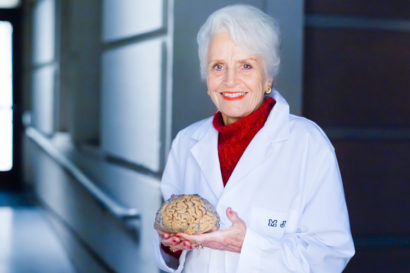
So when I heard that Dr. Diamond died last week, at the age of 90, I was sad for only a moment, and then I smiled, thinking back to that Berkeley lecture hall. Marian Diamond was an expert in brain development, and I realize now that she wasn’t just teaching us about the anatomy of the brain, but actually changing our brains too. She was one of the first scientists to demonstrate neuroplasticity and to test theories of how the right stimulation can promote brain development at any age.

In the introduction to her book, “Magic Trees of the Mind,” Diamond wrote that “The brain, with its complex architecture and limitless potential, is a highly plastic, constantly changing entity that is powerfully shaped by our experiences in childhood and throughout life.” She believed, and showed, that nurture is every bit as important as nature in determining how our lives turn out.

Back when I was in Marian Diamond’s class, I was contemplating a career in nursing, but unprepared for the competitiveness of Cal pre-med students. My laid-back studying habits weren’t a good match for the tough courses I was taking, and I ultimately switched majors. Little did I know that many years later I would go into the field of health education. Now I rely on Diamond’s work all the time in the courses I teach on stress management.

The critical factors in nurturing healthy brain development, according to Marian Diamond, are a healthy diet, physical exercise, being challenged, having new experiences, and being loved – especially love in the form of touch. In studies of rats, she showed that those living in an enriched environment had thicker cerebral cortices, the biggest part of the brain and the one most important for attention, memory and learning. She also learned that rats who were held and petted every day lived longer than others. While much of her work focused on children’s brain development, especially the negative effects of growing up in impoverished environments, she also realized that we retain the capacity for growth throughout life. As she wrote,

“Perhaps the single most valuable piece of information learned from all our studies is that structural differences can be detected in the cerebral cortices of animals exposed at any age to different levels of stimulation in the environment.”

People know this already, even if they don’t know anything about science. A Gallup survey several years ago showed that “learning something new” was one of the biggest predictors for whether someone thinks they had a good day. We’re bored if we’re not challenged, and we languish if we’re not loved. We know we feel better if we eat healthy food, and think better when exercise gets blood flowing to the brain.

Daniel Defoe wrote that, “The soul is placed in the body like a rough diamond, and must be polished, or the luster of it will never appear.” What we learned from the diamond that was Marian is that the brain needs its own share of polishing and nourishment for us to lead a rich, fulfilling life.


Why you need to declare independence

We observed Independence Day all over America yesterday, celebrating our freedom as a country. Yet, as individuals, we still put ourselves in chains a lot of the time. We imprison ourselves with judgment, and with the dreaded “should, ought and must.”

As often happens, I started thinking about this in a yoga class. One day last week, a teacher said, “Allow your eyes to close,” which is typical language in yoga class. But the use of the word “allow” got me thinking. Then I heard a teacher say, “Give yourself permission to….” Hmm – I was starting to see a pattern. It didn’t seem like the words were meant just to let us know that we had a choice; it seemed more like the words were an acknowledgment that we don’t often let ourselves relax, or choose to do less than we are capable of.Woman Closing Eye

At another point, the teacher asked us to do tree pose, which involves resting one foot against the opposite leg while balancing on the other foot. Usually people will use a hand to assist them in getting the foot high up on the inner thigh of the other leg; but this time the teacher asked us not to use our hands, even if that meant that we wouldn’t be able to get the foot as high. It was interesting to me to watch as some in the class couldn’t seem to bring themselves to “settle” for the foot just resting against the ankle or calf — they had to use their hands to bring the foot as high as possible. They just couldn’t allow themselves to do less than their max.

Thich Nhat Hanh writes that the two parts of Buddhist meditation are stopping, and looking deeply. It’s the stopping that’s the hurdle, because once we can do that, the looking deeply will naturally follow. But as he says, “If you’re like most of us, since you’ve been born, you’ve been running. Now it’s a strong habit that many generations of your ancestors also had before you and transmitted to you — the habit of running, being tense, and being carried away by many things, so that your mind is not totally, deeply, peacefully in the present moment.”

The constant running can lead to “wrong perceptions,” including the self-judgment that results in constant striving.  For some of us, the constant striving comes from the mistaken belief that we have to be the best at everything we do — the best in our professional lives, the best parent, the best athlete, the best host, and yes, the best in yoga class. But why? If there is one, or maybe two or three, area of life where we really give 110% to be our best, why can’t we just let ourselves be…okay at some of the other things?

In their book, “Five Good Minutes,” Jeff Brantley and Wendy Millstine have a practice called, “Retire the judges in your mind.” It’s all about letting go of the self-judgment and self-criticism. They suggest that while you are sitting quietly, and with that intention, that you notice the judgmental thoughts and say, “Thank you, you may or  may not be true, but thank you anyway.”Brisbane_85

If you stop striving for a moment, and let that foot rest a little lower on the leg in tree pose, maybe you’ll notice something about tree that you couldn’t see when you were using so much effort. Maybe stopping and looking deeply for a moment allows you to grow your tree differently the next time you do it. Thich Nhat Hanh compares the release of tension that comes from letting go with soaking mung beans: “You don’t need to force the water to enter the mung bean. You let the mung bean be in the water, and slowly, slowly it goes in….The same is true for you.”

Here’s a radical thought — sometimes maybe we should do less in order to do more. So declare your independence from the tyranny of “I must,” “I should” and “I have to.” Allow your eyes to close, give yourself permission to stop, take whatever it is you need.


5 Ways to take a Vacation Day right now

In Washington, some of the bars opened early yesterday so that people could come and drink while watching James Comey’s testimony before the Senate Intelligence Committee. All around the country people took the day off from work so that they could stay riveted to the TV. It’s a crazy world when this is how we’re spending our days off!

Instead of sitting on a barstool, however, I turned to my “52 Lists Project” journal for inspiration and distraction (although I confess to a few sneak peeks at the testimony). List #22 asks us to think of favorite places we have been and what made them so appealing. But that’s not the end — the next step is to think of places in our communities that could “transport” us the same way. In other words, can we bring the vacation experience to our everyday lives? Can we transport ourselves for a little while away from all the chaos of recent times?

When I list my favorite vacations, in places like Croatia, Hawaii, Seattle, Yosemite or Australia, here are some of the characteristics that pop out:

  • Simplicity
  • Scenic drives
  • Grandeur
  • Friendly people
  • Fresh food
  • Connections to the past
  • Bringing the outdoors in

How do I replicate that at home?

1. Simplicity & fresh food:

IMG_0172

When I visited Croatia, I was impressed by the beautiful national parks, the simplicity of people’s lifestyles, the ability to eat a meal where every bite of food came from the farm we were on. Here at home the next best thing is to make a meal based on what comes from the farmer’s market or my yard:

IMG_2332

2. Bringing the outdoors in:

Poipu Beach Park

In Hawaii, the thing I liked best was the way the boundary between indoors and outdoors was so blurred. Nearly everyplace I went was open to the outside; there wasn’t a big reliance on artificial air conditioning.  This is hard to achieve during summer in DC, but I could spend more time on the roof of my building, eat at more outdoor restaurants, and open my windows when the temperature allows:

2017-06-09 11.46.10

3. Grandeur. I haven’t been to Yosemite in years, but the grandeur of the park is something one can never forget. Its sheer rock faces, memorialized by Ansel Adams and countless photographers since him, are familiar even to people who haven’t been there. It’s a place that is just jaw-dropping in all seasons. What my area offers:

Great Falls_3Great Falls Park – the rocky passage of the Potomac down the Mather Gorge, accessible by way of the Olmsted Island bridges, provides a pretty awe-inspiring outing that I never tire of.

IMG_2318The monuments, while man-made, have a whole lot of grandeur about them.

4. Connections to the past:Rome - Colosseum, Forum, Palatine (12)In America, we can’t compete with the Greeks or Romans on the ancient past, but we do have the advantage of recent history here in Washington:
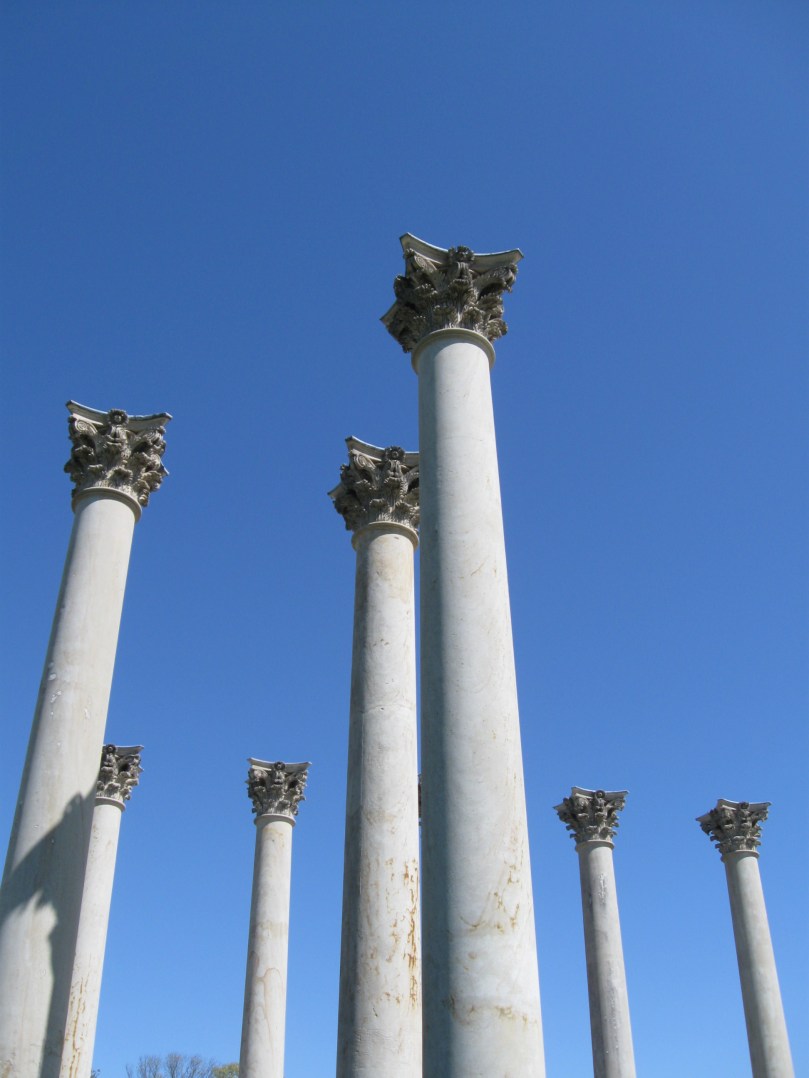
Arboretum_20120407_13The original columns from the U.S. Capitol can be seen at the National Arboretum.  The way they rise up out of nothing, in the middle of a huge expanse of green, is spectacular.

5. Scenic drives:

Great Ocean Road_226In both Ireland and Australia, I took breathtaking drives along coastal roads. That’s tougher to replicate here where we’re inland, but how about the cherry blossoms in spring:


Cherry Blossoms (2)

In some ways, this prompt is very much like a values exercise we do in stress management. It asks you to imagine your perfect day and what it would include, then compare it to your typical day. How alike are they? Is there a way to make more days perfect, by incorporating more of what you value?

The columnist Earl Wilson once said that, “A vacation is what you take when you can no longer take what you’ve been taking.” As much as we might value watching important Senate testimony, a steady diet of it isn’t good for anyone. If you can’t take it anymore, perhaps it’s time to take a real vacation day.


Do or do not? Procrastination’s grip.

The ancient Greeks had a word, “akrasia,” that meant doing something against one’s better judgment. To put it another way, akrasia is a failure to do what one has intended to do and what one ought to do. Our modern word for this is procrastination.

Here are the things I do when I’m procrastinating about doing something else:

  • Check my email
  • Tell myself I can read one (just one!) chapter of a book
  • Call someone
  • Do some laundry
  • Do the crossword puzzle or Sudoko
  • Organize my desk

Here are some of the things that I should be doing instead:

  • Grading my students’ homework
  • Writing for this blog
  • Catching up on work projects
  • Scanning the documents that have been sitting in a box for 3 years

Why is it so hard to get started on these tasks? I know that I can’t really relax with the book or the puzzle while these other things are hovering in the background, yet even that unsettled feeling can’t always move me to begin.

Having just finished teaching a unit on time management to my students, I know that  researchers characterize people like me as either avoidance or arousal procrastinators. Avoidance procrastinators tend to be self-critical, often have a maladaptive sense of perfectionism, and possess irrational beliefs about the outcome that would result from actually doing the thing they avoid. Arousal procrastinators, on the other hand, claim to work best under pressure (which is usually not true) and seek the thrill that comes from doing things at the last minute.

I’m pretty sure that I’m an avoidance procrastinator, although I do have to admit that I get a little adrenaline rush when I’m working up against a deadline. We avoidance procrastinators often believe that unless our work is absolutely perfect and liked by everyone, our self-esteem will be threatened. On other tasks, we switch into avoidance mode because they require us to do something that is out of our comfort zone, and we question our ability to even accomplish them.2016-04-02 12.50.04

Those of us who struggle with procrastination could try jolting ourselves out of it with the Nike motto, “Just do it.” Or we could use Brian Tracy’s metaphor, “Eat That Frog!” which comes from a Mark Twain quote: “If the first thing you do each morning is to eat a live frog, you go through the day with the satisfaction of knowing that that is probably the worst thing that is going to happen to you all day long.” In other words, get the tough stuff done first and then it’s out of the way.

Those tricks might work for some of us some of the time, but it’s important to realize that procrastination isn’t just laziness or lack of willpower. For some people it can have lifelong consequences, such as an inability to make and achieve career or financial goals, a tendency to anxiety and depression, and poorer physical health. Fortunately, procrastination can be treated with cognitive behavior therapies such as REBT (rational emotive behavior therapy). REBT asks you to imagine doing the thing you’ve been avoiding, and then predict and label the emotion that you would experience with it. It’s like a trial run for the real thing.

Practicing mindfulness might also help. A study done by Sirois and Tosti showed that higher mindfulness scores were associated with lower levels of procrastination and with more unconditional self-acceptance. It may seem counter-intuitive that the present-moment awareness of mindfulness would be beneficial to procrastinators who already have difficulty being future-oriented and goal-directed. It’s true that many procrastinators are too focused on short-term pleasure and current rewards, but that’s not the same thing as mindfulness. When we practice mindful acceptance of our present experience, we can accept the discomfort of the difficult task and also generate more self-compassion while we do it.

As Thich Nhat Hanh has written,

“When fear manifests, we want to have the seed of mindfulness also manifest to embrace it. So we have two energies present — the first is the energy of fear, and the second is the energy of mindfulness. The fear receives a bath of mindfulness and becomes a little bit weaker before it drops back down to  the depths of our consciousness in the form of a seed.”

Do you believe in miracles?

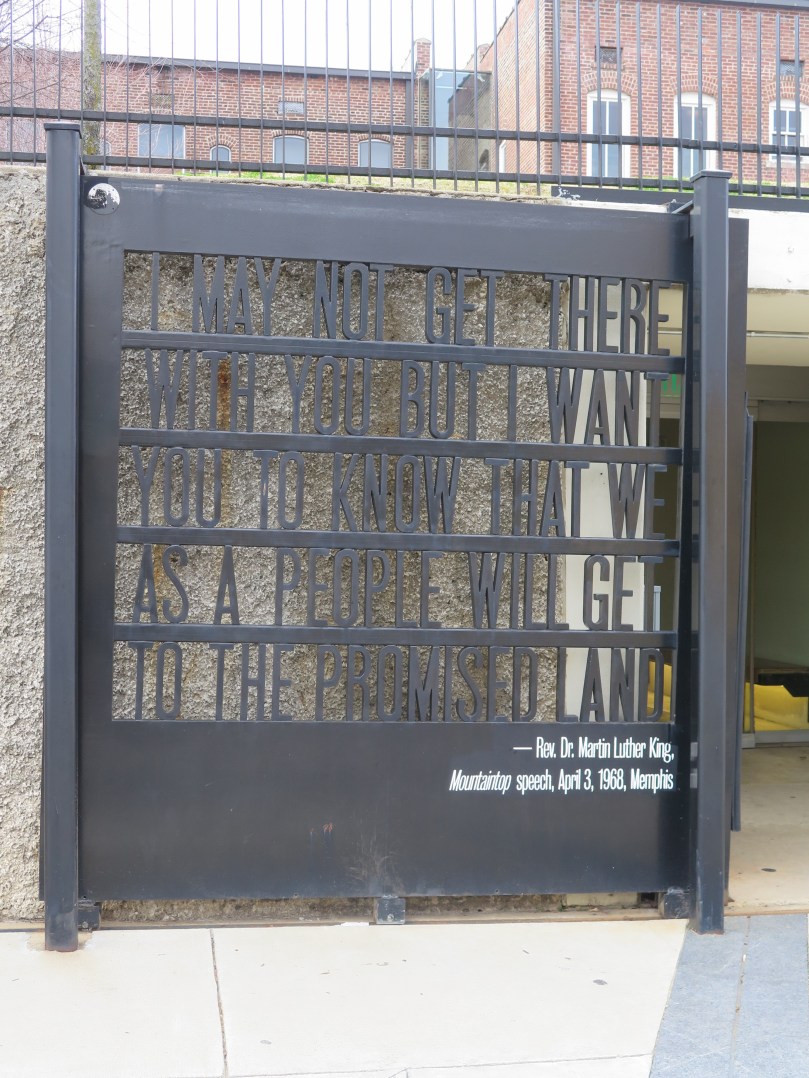
“We need to recognize that there is no age at which we lose our ability to be miracle workers,” writes  Darren Main in “Spiritual Journeys Along the Yellow Brick Road.”  Leave your comfort zone, he says, take risks and rediscover a sense of creativity and exploration – because in doing so, you can accomplish great things.

IMG_0086Are you feeling like it might take a miracle to get through the next four years? Do you doubt how much control you have over what happens to you? If so, it might be a good time to take stock of your physical, emotional and psychological “bank account”. What resources do you have and how can you best put them to use?
It is widely recognized that resilient people are more able to recover quickly from stressful events, and to utilize a variety of coping skills and strengths in doing so. Resilient people have generally built up these resources ahead of time (i.e. the bank account) by engaging in practices that enhance their physical and psychological well-being.  So when tough times hit, they have a more positive view of themselves, can make plans, and are clear-eyed about what’s needed. Most importantly, resilient people tend to have what’s called an internal locus of control.

Locus of control is a term that refers to the degree to which individuals believe that they can control the events that affect them. Are outcomes based on your ability and effort, or are they the result of outside forces and luck? If you believe that you can control yourself and influence the world around you, you are said to have an internal locus of control. If, on the other hand, you think that everything is decided outside of your control, and many events are just fated to happen, you probably have an external locus of control. While most people don’t fall at one extreme or another, we do have tendencies in one direction.

People who have a high internal locus of control tend to be happier, less depressed, and to suffer less stress. People who have a higher external locus of control often don’t seek solutions for problems because they don’t believe they can effect any change. It is possible to develop a more internal locus of control, however, by monitoring your self-talk. Check to see if you are speaking in absolutes (never, always, must, have to), and try substituting other words. Instead of saying, “I can’t”, say “I won’t” or “I choose not to”. The important thing is to remind yourself that you do have choices.

The more you can leave your comfort zone and have some success making small changes, the more you will believe in your capabilities, and the greater sense of agency you will have. Or, as Jon Kabat-Zinn puts it, “Your confidence in your ability to grow influences your ability to grow.”

This is more important than ever for people who are unhappy about the direction of the new U.S. administration. During a recent talk at American University, DeRay Mckesson of the Black Lives Matter movement said that progressive activists need to do more than just oppose everything for the next four years. They need to be creative, ambitious, and to “fight for real things, too, in this moment.  I worry sometimes because I’ve seen people get so defeated that they forget to dream about what the world can be.”

Miracle workers are the resilient, dedicated people who leave their comfort zones every day to dream and enact what the world can be. They are the teachers who show their students how to be critical thinkers. They are the people I volunteer with, who provide food, clothing and opportunity (with dignity) to those who need a helping hand. They are the lawyers who went to airports to represent immigrants. They are the women who are deciding to run for office in their local communities.

Amelia Earhart once said that, “The most difficult thing is the decision to act, the rest is merely tenacity.” We can all be miracle workers if we set aside fear, make the decision to act, and fight for real, positive change.

083


First, do no harm

To reflect upon our true nature is one of the purposes of the five “yamas” in yoga, the ethical and moral codes that are at the center of the practice. In English they are nonharming, truthfulness, generosity, balance and moderation, and abundance. At the Women’s March on Washington this past Saturday, I saw the yamas — and our true nature — on magnificent display. 2017-01-21-09-34-09

People of all ages, races, and backgrounds joined together with one purpose — to say “no” to the policies and mean-spiritedness of the new administration, and to say “yes” to love, inclusiveness and prosperity for all. While everyone came to the march with strong feelings and determination, there was still a joyfulness in the air. It was a relief to hear leaders speak the truth, and energizing to be surrounded by such an abundance of passion. There was no violence, there was a balance between pro and anti messages, and I saw uncountable examples of generosity and kindness among strangers. 2017-01-21-14-43-15

Going forward, though, the most difficult yama to practice could well be nonharming, because it means more than just physical nonviolence toward others. Stephen Cope says that the yamas “are really about restraining behaviors that are motivated by grasping, aversion, hatred and delusion.” So when we practice nonviolence (ahimsa) it means we have to monitor our negative thoughts, which can be a form of violence. We have to let go of hostility, and invite peace into our hearts and minds.  2017-01-21-09-13-08

Yoga Journal has some suggested asana (postures) for cultivating ahimsa. They include warrior poses, which might sound counterintuitive, but the challenge is to use our “warrior” energy with virtue. If you have ever done a warrior sequence in a yoga class, you may remember flowing from Warrior 1 to Warrior 2, to reverse Warrior, and perhaps Warrior 3. The sequence is done slowly and with grace, so that it becomes thoughtful, intentional and nonharming.

Can we bring the strength and quiet grace of the warrior to the long task ahead of us now? Thich Nhat Hanh says:

“Many people…know what needs to be done, and they engage in political, social, and environmental work to try to change things. But after a period of intense involvement, they may become discouraged if they lack the strength needed to sustain a life of action. Real strength is not in power, money, or weapons, but in deep, inner peace.

“Practicing mindfulness in each moment of our daily lives, we can cultivate our own peace. With clarity, determination, and patience — the fruits of meditation — we can sustain a life of action and be real instruments of peace. I have seen this peace in people of various religious and cultural backgrounds who spend their time and energy protecting the weak, struggling for social justice, lessening the disparity between rich and poor, stopping the arms race, fighting against discrimination, and watering the trees of love and understanding throughout the world.”

If we are to be warriors for preserving the ideals of our democracy, we need to be mindful about treating ourselves and others with ahimsa. As Jon Kabat-Zinn writes, ahimsa toward self means that you recognize your limits and don’t push yourself beyond the point of well-being.  “You can start practicing ahimsa’s gentleness on yourself,” before turning it toward others. Expect to be challenged by ahimsa, he says. “It is easy to relate with ahimsa to someone who doesn’t threaten you. The test is in how you will relate to a person or situation when you do feel threatened.”

This January, don’t resolve — repose


It’s interesting that January 1st brings on a frenzy of promises to eat better, exercise more, stop smoking and similar action-oriented resolutions when I always feel like all I want to do is hibernate like a bear. So I was happy to find out when I went to my yoga studio last week that the pose of the month is Savasana.

Savasana (shah-VAHS-anna), also called Corpse Pose, usually is done at the end of every yoga practice, and it looks deceptively easy. After all, what could be that hard about lying flat on one’s back with arms and legs stretched out away from the body, and closing the eyes for 10 minutes or so? But I say “deceptive” because Savasana can be the most difficult yoga pose of all — first, because it’s hard for many of us to truly relax, and second because Savasana is about relaxing “with attention”. Yoga Journal says that in Savasana we attempt to “quiet the physical body and pacify the sense organs”, so we need to pay particular attention to relaxing the eyes, ears, nose, and mouth. It asks us to surrender to the point where the boundaries of the body begin to dissolve, where we can symbolically “die” to old ways of thinking and doing. savasana_in_yoga_gembira_community

Savasana is the bridge that allows you to take the benefits of class into your everyday life. This is why yoga teachers tell people who have to leave class early that they should plan to stop the regular practice with enough time left to take a few minutes in the pose before going. As Jon Kabat Zinn says, “Not forcing anything, we just do our best to line up with the warp and woof of body and mind, floor, and world, staying in touch.” Savasana brings together all the disparate pieces of the yoga class and gives you time for processing them and absorbing their benefits.

Sleep, which we tend to crave during the cold winter months, is like Savasana in that it is important for integrating the separate pieces of our days. We can be more effective the next day if we’ve spent time in sleep, regrouping and consolidating everything that we learned and experienced during the day. In addition, sleep sometimes helps us problem-solve because the useless information that came in during the day is forgotten, and only the crux remains. While there is still much to learn about the purposes of sleep, some researchers theorize that it helps the brain be “plastic”, to dial down synaptic activity for a while and use less energy. We are literally resting the brain, perhaps more so than resting the body.

Animals hibernate in the winter as a way of saving energy too, because food resources are scarce. Most of us don’t have that problem, but there’s still a case to be made for looking at January as a month of repose. It’s the coldest month of the year in the northern hemisphere and has some of the shortest days, so why not sleep a little more and yes, get down on the mat in Savasana? Use the darkness to gather energy, reflect on where you’re going and prepare for the longer days ahead. The word “January” comes from the Latin word meaning “door”. Consider opening the door to the new year slowly rather than abruptly. Take the time to first figure out what’s on the other side.

Indira Gandhi said that, “You must learn to be still in the midst of activity and to be vibrantly alive in repose.” That’s not only the challenge of Savasana, but also the way we manifest it in our everyday lives.


How do we define our values after an election that tested them?

It’s been hard not to think a lot about values during these days following the election. Martin Luther King Jr. wrote that “If we are to go forward, we must go back and rediscover those precious values…all reality hinges on moral foundations…” With those moral foundations so profoundly shaken, can Americans still believe in shared values?

Difficult times test people’s values, and the election proved to be one of those times. Many of us trusted that shared values of love, respect, kindness and honesty would guide people’s decisions. But as I wrote several weeks ago, people often vote with their toddler brains, not their adult brains. Competing values, or alternative interpretations of values, prevailed.

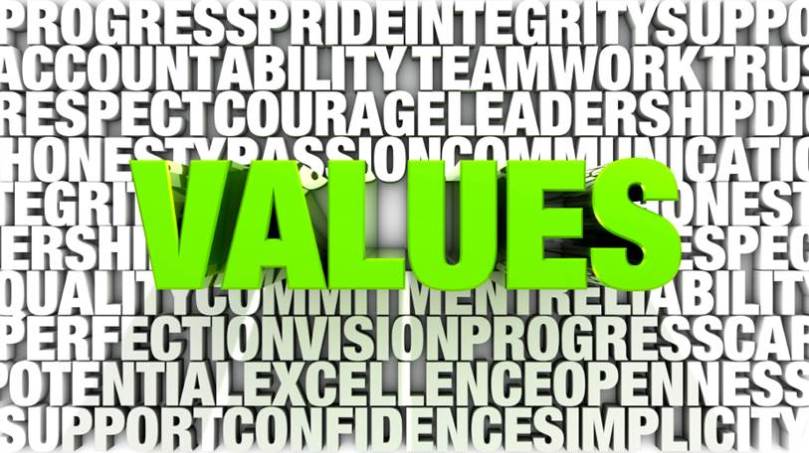
Values can be organized a couple of different ways. We can talk about core vs. satellite values, with core values being the ones you are most strongly attached to, the ones you would fight or die for; and satellite values being ones that are more loosely held and amenable to change. We can also define values as being either instrumental or terminal. Instrumental values are those personal characteristics and traits that guide us, such as honesty and courage, while terminal values are those related to goals or outcomes like having a job that will allow you to support your family.picture1

People’s core values usually don’t change much over time; they are central to who you are. But what if you have to choose between upholding one or another of your core values? Then what? That collection of core principles must be subject to some sort of hierarchy of importance. Is having enough money more important than religion? Some people make that choice when deciding whether to work on the sabbath. Is spending time with your family more highly valued than your career? Many of us have to make that choice.

In much the same way, if we look at values using the instrumental/terminal construct, there might come a time when you perceive that a choice is necessary between upholding an instrumental value, such as respect for others or yourself, and a terminal value, such as getting the job you want.

What do we do when we are tested like that? I could say that I would never sacrifice my core values of respect for others, belief in religious freedom, and teaching our children  loving kindness — no matter which other core value was at risk. But perhaps not everyone feels they have that luxury. Or maybe they just see it through a different lens.

When they cast their votes, did people think that they could temporarily set aside the values of respect, knowledge, inclusiveness and truth, and get them back later? Did they realize that they were making that trade-off for only a promise of something better, not a guarantee? What happens when we are tested again?

This might be a good time for all of us to consider the constitution. Not the U.S. Constitution, but our personal constitutions. A personal constitution is a written clarification of values, a way of identifying and prioritizing core and satellite values.  Your constitution can be just a paragraph that describes in your own words what you believe in and what it means to live by your values. That statement, says Stephen Covey, “becomes the criterion by which you measure everything else in your life.” It’s your guidebook for challenging times and moral tests.

If we are to go forward, we must go back and rediscover those precious values. Start with the constitution, your constitution. Let it be your foundation for the next four years and beyond.


If only this were a Mel Brooks movie

Each new day of the 2016 presidential election campaign makes me feel more as if I’m in some sort of psychocomedy like the movie “High Anxiety“, only instead of a hospital for the “very, very nervous” we have an entire nation on the edge of its seat, unsettled, uncertain, unhappy and yes, very nervous.

Plato said that “a good decision is based on knowledge,” but he also said that “human behavior flows from three main sources: desire, emotion and knowedge.” And when it comes to elections, emotion might have the upper hand. Psychologist Steven Sosny, writing in Psychology Today, says that we suffer from election stress partly because the “toddler brain” hijacks the “adult brain.” Adult thinking is rational and calm, while toddlers make impatient and sometimes greedy choices based on emotions.

A lot of people are already locked in to their candidate. Often such certainty is emotional, says Sosny, not intellectual. That’s why it’s becoming virtually impossible to have a conversation with someone who disagrees with you politically. In fact, just today in The Washington Post, there was an article about how geographically and socially polarized we are politically. People who would have discussed the elections with friends and co-workers in prior years are staying strictly away from such conversations this year.

A study of the 2012 presidential election found that voters don’t always want to feel responsible for the outcomes of elections, especially independent and undecided voters. The harder it was for a person to decide on a candidate, the more likely they were to ascribe the outcome of the election to fate.  In addition, stress hormone levels might even impact voter turnout. Research published in 2014 found that people who have higher baseline levels of the stress hormone cortisol are less likely to participate in voting, while those with lower baseline levels are more likely to vote. In other words, people who have a lower tolerance for stress don’t want to engage in what is an inherently stressful process.door-number

The stress continues into the voting booth. Israeli researchers found that cortisol levels just prior to casting a vote were twice as high as people’s baseline levels and even higher in people whose candidate was predicted to lose. This year, with the rollercoaster we’ve been on, it’s hard to say when we last experienced baseline stress levels. No wonder I’m hearing more and more people say, “I just wish it were over!”

Following a 2004 election in Taiwan, about 10% of the population was diagnosed with depression and anxiety, labeled “post-election stress syndrome.” And in this country, we usually see advice after election day on how to deal with these “blues”. This year, however, our high anxiety and election coverage fatigue might call for some pre-election stress relief. So what might help?

  • Going on a complete media “fast” for a few days.
  • Getting your news from print sources rather than TV or radio, which tend to be more hyped.
  • Focusing on your own life. The truth is that the election outcome won’t affect your day-to-day routine at all, at least not right away. So take comfort in that and use your emotional resources there.
  • Doing a loving kindness “just like me” meditation. The hardest thing for those of us who feel passionate about a candidate is recognizing that those on the “other side” want the same things we want, deep down. Focusing on the ways that they are “just like me” can help.

If the election really were a Mel Brooks movie, it would end with all the bad guys getting their comeuppance and all the good guys living happily ever after. In real life and politics, it’s not that simple. But at least we know that we can do it all over again in 4 more years.

Give up or let go? What’s the difference?

Why do we give up? Why do we surrender, admit defeat, part ways with somebody or something, or stop hoping for a positive outcome? Maybe it’s because sticking with it is too hard, or it takes too long, or because we’re tired of failing. Sometimes we decide that we’re just not strong enough to see something through, or we just don’t care enough.

That’s very different from letting go, at least in the Buddhist sense of letting go. Letting go means easing up on the tightness with which we hold onto people, things or ideas. It means relinquishing our hold on how we want things to be, and instead knowing that we have given our best effort and now we accept what happens. Thich Nhat Hanh has written:

…for many of us, even when we are most joyful, there is fear behind our joy…We are afraid of things outside of ourselves that we cannot control…We try to hold tight to the things we care about — our positions, our property, our loved ones. But holding tightly doesn’t ease our fear. Eventually, one day, we will have to let go of all of them.

Letting go can be a lot scarier than giving up. When you give up, you can stop thinking about the person, thing or  idea, and just eliminate it from your life. Letting go, on the other hand, means realizing that you don’t have control over everything, and you might have to live with and accept an outcome that is different than what you hoped for. You don’t stop caring when you let go of the outcome.

How can the feelings of caring very deeply about something, while at the same time having no control over it, co-exist? To Jon Kabat-Zinn, letting go is “allowing things to be as they are.” That means being a witness to one’s fears and insecurities, being fully aware of those feelings, and being able to live peacefully with them. How hard is that?!

Without a doubt, a really strong mindfulness practice is a good place to start the process of letting go: The practice of looking deeply inside and not being afraid of what arises, but rather noting it and letting it go by. But that’s not enough. We also have to be able, in that stillness, to move from worry and unease to comfort and joy. Not an easy task!

Thich Nhat Hanh suggests that instead of running from the present moment because of the difficulties we face there, we instead try to remember all the positive things in life, which usually are greater. Maybe it’s the smiling face of a loved one, a particular place that brings you peace, or some accomplishment of which you are proud. There is an exercise in a stress workbook that I have, which can help identify both the things in life that drain your energy (the difficulties and worries) as well as the things that fill you with energy and revitalize you. These are the things you want to bring attention to:

Drainers and Fillers

Once you go through this process of identifying what aspects of your life are either filling you with joy and energy, or sapping your strength, you can make decisions. There might actually be things on the left side (drainers) it would make sense to give up on. There will be others on which you’ll want to loosen your grip and try to live with more peacefully. The fillers will help you do that — you’ll remember who is there to support you, what brings you joy, and where you find meaning in your life. The fillers will provide the images you turn your thoughts to during meditation. They will help you remember the wide open space in front of you, and all of the possibility that exists beyond your fears.