5 Intentions for a Happy Thanksgiving

Six days and counting until Thanksgiving…what will your holiday look like? Calm or frantic? Happy or conflicted? Holidays can be stressful, often bringing out the worst in us if we let them. In yoga class, our teacher sometimes asks us to “set an intention” for the practice: something that we would like to focus on or work toward. In that spirit, here are my intentions for the next few days; maybe they will work for you too:

1. Spend time each day planning for the next one.

Time management gurus like Brian Tracy say that each minute spent planning will save 5 to 10 minutes in carrying out the task. This can be accomplished by sitting down each evening for 5 minutes to make lists, check the next day’s calendar, and block out time for priority tasks. Focusing on the most important tasks for each day, dividing them up to correspond with blocks of free time, and eliminating unnecessary tasks will help each day be more productive.

2. Ask for and accept help; take shortcuts when they serve me.

No one can do it all. So let go of the perfectionist tendencies and controlling instincts. Graciously allow others to help with the shopping, cook part of the meal, or set the table. Most likely they will be glad to be asked. Buy some foods already-prepared, especially the ones you don’t excel at or find tedious to prepare (gravy comes to mind!)

3. Take care of myself.

When people feel better, they can be more present for those they care about. During stressful holiday times, it is more important than ever to make health a priority. Exercising will give you more energy. Drinking plenty of water will help fight fatigue and improve appearance. Eating healthy in the days leading up to Thanksgiving feels good and allows for guilt-free splurging on the big day. And if stress catches up with you anyway, take five minutes just to sit and breathe.

4. Have fun each day.

Scheduling time for play or recreation is part of time management too. We all deserve a break to watch a funny movie or play a game with the family. These shared experiences will become part of everyone’s memories of the holiday.

5. Remember to be thankful.

Voltaire once said that “the perfect is the enemy of the good”, and the Thanksgiving holiday is a good time to think about what that means. Don’t strive for a perfect meal worthy of Martha Stewart, but one that will be joyfully eaten with family and friends. If your home isn’t perfectly cleaned and decorated, be glad that it is full of warmth and good cheer. Replace criticism of loved ones with appreciation, even with all of their quirks and imperfections.

As I celebrate Thanksgiving, I will keep these words of Thornton Wilder in mind: “We can only be said to be alive in those moments when our hearts are conscious of our treasures.”

Zzzzzzzz

It’s cold outside, the leaves are falling, days are shorter and today it’s snowing! My body craves sleep more than ever.

While humans are not considered seasonal animals, some of us do experience stronger responses to seasonal changes. People with seasonal affective disorder (a form of depression that impacts people primarily in the northern latitudes) feel the change more than most. Recent research shows that they secrete more melatonin at night during the winter than they do in the summer. Melatonin is the hormone that makes us drowsy, and we produce it in response to darkness.

In a little over a week, we’ll be going off daylight savings time, which will require an adjustment of our internal clocks (also known as our circadian rhythms). This change is a stressor for us, throwing our bodies out of equilibrium, and some people can need as much as a week to make the shift. Moving time ahead in the spring is considered harder than falling back, but you could still experience an increase in daytime sleepiness until you get used to the fall time change.

Most of us already experience a low point in wakefulness in the early afternoon, so when the time changes, we could be even more prone to problems with concentration and productivity. It is a good idea to be more careful than usual to avoid accidents.

Seasonal adjustments are worse if you are one of the 63% of people who say they don’t get enough sleep. Sleep problems and sleep deprivation have been associated with memory problems, being overweight, and having reduced immunity to disease. A new study out of Norway even shows that people with the most symptoms of insomnia have the most heart attacks. Lack of sleep could cause these problems because the body stores memories and repairs itself during sleep. Melatonin (the hormone that promotes sleep) acts as an antioxidant, cleaning up damaging free radicals while we sleep. If we don’t sleep enough, we miss out on that protective benefit.

Getting a good night’s sleep on a regular basis is also linked to living a longer, healthier life. So what can you do to sleep better and handle the time change more smoothly?

  • Go to bed at the same time every day and get up at the same time every day.
  • Get regular exercise each day (especially aerobic and stretching), but not too close to bedtime.
  • Expose yourself to outdoor (or bright) light each day.
  • Keep your bedroom a little on the cool side.
  • Make your bedroom quiet and dark. Turn off or cover anything with a glow (cell phones, digital clocks, and other electronics); and use white noise or ear plugs to muffle noises.
  • Use your bed only for sleep or sex.
  • Allow about 2 hours for “winding down” before going to sleep. Dim the lights, listen to quiet music, minimize screen time.

No-no’s:

  • Caffeine in the evening; too much alcohol                                           
  • Watching TV in bed
  • Eating too much or too little
  • Unprescribed sleeping pills
  • Forcing sleep
  • Sleeping with children or pets

And if you’re especially sensitive to the change back to standard time, these tips from the National Sleep Foundation might help:

  • On the night of the change, resist staying up much later than usual. Try to get your usual amount of sleep.
  • Be sure to use curtains or blinds to keep your room dark in the morning; it will be brighter at an earlier time which could cause you to wake sooner than you intend to.
  • Try making a gradual shift in your sleep/wake time over a few days.

For fun, you might want to check out this link for a list of 10 songs about sleep. Sweet dreams!

Relax into better health

Last Thursday, I was privileged to hear Dr. Herbert Benson, a leader in the field of mind-body medicine, give the keynote address kicking off Mind-Body Week D.C. Although he reiterated much of the material found in his many books and papers, it was still a treat for me to hear him discuss it.

Dr. Benson started his research over 40 years ago as a young medical doctor. At a time when doing research into the connection between mind and body, and spirituality and healing, could be a sure-fire career-ender, he was brave enough to pursue it. In doing so, he defined the effect known as the “relaxation response” and conducted study after study showing how it could be evoked, and what its benefits are.

Benson believes that medical care should consist of what he calls the “3-legged stool”, where the three legs are self-care, medications and procedures. In order for us to have optimal wellness, all three legs must be utilized as needed. His life’s work has been to show how our ability to use the first leg, to heal ourselves, is real and powerful.

In his ground-breaking book, The Relaxation Response, first published in 1975, Benson explained how the relaxation response could counteract the effects of the stress (or “fight or flight”) response. In fact, the relaxation response is the direct opposite of the stress response. In essence, we cannot be stressed and relaxed at the same time.

Benson also demystified meditation for people. While his initial research started with transcendental meditation, he demonstrated how the relaxation response could be achieved using some basic elements of T.M., without needing a mantra or a spiritual guru. Anyone can access it without cost or special equipment. Here are the steps he recommends:

  • Choose a word or phrase on which to focus (some examples are words such as love, peace, or one; or words with religious meaning).
  • Sit quietly in a comfortable position that you can maintain for some time.
  • Close your eyes and relax your muscles.
  • Breathe slowly and naturally, repeating your focus word as you exhale.
  • Maintain a passive, non-judging attitude. If your mind wanders, keep coming back to your breath and your word.
  • Continue in this manner for 10-20 minutes (beginners should try for 5 minutes at a time).

Using mental focusing techniques to bring about relaxation is not radical now as it was in 1975. But it is still not fully a part of Western medicine. Integrative medicine centers exist at many hospitals, but it often seems that they function alongside, rather than as full partners with the traditional departments. That’s too bad, because over the years, Herbert Benson and others have developed a body of research that shows that regularly practicing relaxation:

  • Can lead to lower blood pressure and lower heart rate
  • Reduces metabolism and breathing rate
  • Reduces the harmful effects of stress
  • Leads to changes on the genetic level in areas that control inflammation, aging, and insulin use

By calling upon our ability to relax, we can reduce the physical symptoms of stress. We also have the potential to reduce our use of the health care system since a majority of doctor visits are for stress-related complaints. We can take more control of our health.

Deepak Chopra has said “Meditation is not a way of making your mind quiet. It’s a way of entering into the quiet that’s already there – buried under the 50,000 thoughts the average person thinks every day”. When we regularly experience that quiet, it can also open a mental door that allows us to be receptive to ideas. In that way, a regular relaxation practice can also help us learn, be more creative, and think more clearly.

Life is a laughing matter

Sometimes it seems like every day brings more bad news. My advice? Don’t forget to laugh.

Laughter can be profoundly healing. I recently read the results of a new study showing that laughter and humor were as effective as drugs for reducing agitation in a group of Alzheimer’s patients. Sight gags and verbal humor were used to get the patients to participate and react. Virtually everyone benefited, and the results were found to last beyond the duration of the study.

We are all born knowing how to laugh, although our sense of humor is learned later. Some people seem to laugh more “naturally” than others; but it is a skill that can be fostered and improved, and there are good reasons to do it.

  •  Laughter leads to immediate increases in heart rate, respiratory rate, and oxygen consumption (similar to exercise) and is followed by muscle relaxation, as well as decreases in heart rate, respiratory rate and blood pressure
  • A good belly laugh provides a physical workout for the lungs and abdominal muscles
  • Laughing provides tension relief in the neck and shoulders
  • Laughing may decrease stress hormones and enhance the immune system
  • Laughter is a distraction from negative thoughts and feelings
  • Laughter can provide social bonding with others

That’s why Dr. Madan Kataria started the movement known as Laughter Yoga back in 1995 in Mumbai. As a medical doctor, he was always intrigued with the concept of “Laughter is the best medicine”. So he started getting together with a group of people in a park every morning just to laugh — for no reason other than the joy of laughing.

Today Laughter Yoga has swept the globe and there are thousands of clubs in over 60 countries. People have joined together to laugh in workplaces, schools and public places. The groups have even inspired a documentary by Mira Nair, The Laughing Club of India.

Humor can be an advantage in the workplace, if used appropriately. Studies conducted by Melissa Wanzer of Canisius College have shown that employees have higher job satisfaction and view their managers more positively when the manager is perceived to be humor-oriented. She also found that humor can be a beneficial coping strategy for workers in high-stress occupations; and that students say they learn more from teachers who use humor in the classroom.

Laughter and humor may even protect you from heart disease. A University of Maryland study showed that people with heart disease laughed less often than others; and that they did not  turn to humor as often as others did in response to daily life situations.

How can you start bringing more humor into your life? Begin by not taking yourself too seriously. Learn to recognize the absurdity in certain situations and just laugh at it. Build a humor library of movies, jokes, tv shows and cartoons that you can turn to when you need a laugh. Here are some of my favorites:

Enjoy!

Time Zapper

When people are asked about stressors in their lives, one of the most common answers is not having enough time. Yet, we don’t always acknowledge that we can be our own worst enemies when it comes to creating time crunches for ourselves.

Sometimes time pressures result from genuinely having too much to do. But often they come from either inability to set boundaries for our time, or frequently, from our own unproductive work habits. Probably nothing has had a bigger effect on procrastination and low productivity at work than email, whether it’s our habit of reflexively checking it every five minutes or our expectation that it will be read immediately.

Although we see commercials on TV of people seamlessly and instantaneously completing international business deals with a click of the smart phone, in reality many business and personal transactions take place only after a long string of emails back and forth. The question is, is that the best way to get things done?

Chris Anderson, curator of the TED conference, addressed this topic in last Sunday’s Washington Post. He believes that email volume is getting out of hand in part because email is “easier to create than to respond to”. Someone sends you an email, crosses that off their to-do list, and leaves you with the harder job of formulating an answer. Worst, Anderson says, are the emails with open-ended questions, such as “What are your thoughts?”

Because people have come to expect rapid responses to emails, the recipient is then stuck with deciding whether to drop other (probably more important) work to come up with an adequate answer to that open-ended question, or to leave it in the inbox for a while and let the email pile up.

As long as 20 years ago, some early tech pioneers had already given up email and gone back to using the telephone as a primary tool of communication. Sherry Turkle of MIT may have coined the term “email bankruptcy” after her research showed that people wanted to wipe out all the email in their inboxes. Since then, there have been regular news stories about people who have done just that – deleted all their unanswered emails, and started over with a clean slate.

Stephen Covey, in his books on time management, recommends dividing tasks into a matrix:

  1. Urgent & Important;
  2. Important but Not Urgent;
  3. Urgent but Not Important; and
  4. Not Urgent or Important.

He believes that most time should be spent working in quadrant 2 (important, but not urgent), doing things like planning, relationship building and personal development. The problem might be when you think you are relationship building by sending someone an email, when you’re actually creating a quadrant 3 (urgent, but not important) task for them by expecting them to respond!

With that in mind, Anderson and others at TED have come up with the Email Charter, which is basically a list of principles to abide by when sending email. All the principles are designed to “encourage senders to reduce the time, effort and stress required of responders.” They include points such as “no open-ended questions” and use of the acronym, “NNTR”, which stands for “No need to respond”.

Some other things we might ask ourselves:

  • Is email the best form of communication for this message? Will I be better understood if I call or talk face to face instead?
  • How often do I really need to check my emails? Would once an hour be appropriate? How about every two hours, or three times a day? Figure out what is best for you and try to make it a habit.
  • If you cannot resist checking the email, consider downloading software that will block it for you. Programs such as SelfControl can block email servers and Facebook for a set amount of time, and not let you use them until the timer runs out.
  • Can you declare an email vacation once a week, or once a month? Plan a day without checking or responding to emails. You’d be surprised how much time you have for things like family, friends, reading a book or going for a walk.

Ultimately, we need to figure out if the things that are least important in our lives are getting the most attention. Sherry Turkle has said, “Sometimes we’re too busy communicating to listen to each other.” Can we break the cycle?

“We owe our children”*

Nelson Mandela once said, “There can be no keener revelation of a society’s soul than the way in which it treats its children.” When I consider the somber headlines of the past week or so, I wonder about our soul:

  • Census data show that one in six Americans is living in poverty, including 22% of children last year (40% of black children).
  • Poverty has increased for four years in a row.
  • The proportion of children with at least one unemployed parent doubled between 2007 and 2010, and there is evidence that a parent’s job loss can have a negative effect on children’s academic performance.
  • A new study showed an increase in child abuse, specifically against infants, linked to the recession.

When children grow up in poverty, they grow up with chronic stress. Constant change and uncertainty in their lives causes biological responses that result in wear and tear on their bodies and minds. Long-term stress can damage the part of the brain called the hippocampus, which is essential to learning and memory.

This helps explain why many children who come from poverty don’t do as well in school, and are less likely to graduate from high school. According to the Children’s Defense Fund, they lag in both intellectual and emotional development, and they are more likely to become the poor parents of the future.

Even if your only interest is your self-interest, you should care about these statistics. The longer we have so many children living in poverty, the more our country loses economically from lower productivity, poorer health and higher crime rates.

Last Sunday’s Washington Post ran an editorial titled “Debt Reduction with Compassion”. It argued that we cannot reduce the deficit on the backs of the most vulnerable in society. We have to recognize how much people have suffered and lost during the recession, and not cut off the safety net for them. But how often do we hear the word “compassion” in the current political climate?

I’ve been thinking about what any one of us can do to make a difference for children. Here are some ideas:

  • Think about who and what you vote for. Which candidates are committed to keeping funding in place for programs that benefit children?
  • Be an advocate, in your community and beyond. Speak out about legislation and programs that are important for ensuring a happy and healthy next generation
  • Support teachers and education in your community.
  • Support the organizations that are working to change lives, such as:

Children’s Defense Fund – In existence for 35 years, this organization works to “ensure a level playing field for all children” and to “lift children out of poverty”

Feeding America – Works with a network of food banks to eliminate hunger in America; child hunger is a priority.

HIPPY (Home Instruction for Parents of Preschool Youngsters) – A parent-involvement, school-readiness program that operates on the idea that parents are their children’s first teachers.

Boys & Girls Clubs of America – Their mission is “To enable all young people, especially those who need us most, to reach their full potential as productive, caring, responsible citizens,” through programs in leadership, education, life skills, sports and fitness, and the arts

What do we want the soul of our society to look like? If we truly care about giving our children and grandchildren a decent life, then “all of us have to recognize that we owe our children more than we have been giving them”.*


*Hillary Clinton

“No vacation goes unpunished”*

With President Obama vacationing on Martha’s Vineyard this week, some in the press have had a field day discussing whether or not he should be taking time “off”. I doubt a president is ever truly on vacation, but I can think of some good reasons for wanting him to have some down time.

Cindy Aron, the author of Working at Play: A History of Vacations, has said that “we have a love-hate relationship with our vacations”. America’s history of a Puritan work ethic has meant that we tend to frown on idleness. While the wealthy always traveled, and went to spas for their health, the middle class started vacationing later. Many early vacation choices for them were actually associated with churches. If you went to a Methodist campground, there was less temptation
to indulge in idleness or other vices while on vacation.

Only since the 1950s or 1960s have paid vacations been a common aspect of employment. Most employees currently receive paid time off ranging from five to thirty days per year. Since the financial downturn, however, many people don’t feel comfortable taking all of their vacation time anymore. They are either afraid of losing their jobs, or worried that they will have too much work to return to now that companies have downsized so much.

Even earlier, a 2005 survey by the Families & Work Institute found that one-third of employees said they were overworked, and did not use all their vacation days. Half said they worked often during vacation, and one-third said
they were contacted about work during non-work hours.

Research on the health benefits of vacation, or the detriments of not vacationing, is sparse. A study that is often cited is one conducted in 2000 with the Framingham sample. It found that men who took annual vacations had a 30% lower
risk of dying of heart disease. Factors thought to play a role were reduced stress, more sleep, more socialization and more exercise while on vacation.

In 2005, the Wisconsin Medical Journal published a study of women who did not take an annual break from work, which found that they had more psychological health risks. A 2010 study from the University of the Rockies concluded that sufficient vacation time stabilizes mental health and contributes to “professional well-being”. Those researchers also found that a vacation’s benefits peak at 10 days, making a 10-14 day vacation just about perfect.

Some experts, such as Saki Santorelli of the University of Massachusetts Center for Mindfulness, suggest that we try to inject some of the qualities of a vacation into our daily lives at home. Getting more sleep and regular exercise, as well as practicing stress reduction techniques could help balance out the work vs vacation dichotomy.

At least one study backs up Santorelli’s ideas. It examined work engagement and burnout in a group of teachers. The researchers found that positive effects of vacation faded after one month; however, building more relaxation experiences into one’s daily schedule after vacation prolonged the vacation’s effects.

So, in that spirit, here are some tips for making both vacation days and work days better:

  • Consider whether you will benefit most from a very active or more relaxing vacation.
  • Don’t try to cram too much into your vacation. Make sure you actually take time to relax.
  • Set boundaries for work time, work calls and emails. Most of us don’t really need to be available 24/7.
  • Get outside every day, even if it’s just for a walk around the block at lunch time.
  • Take 5-10 minutes every day just to sit quietly and breathe.
  • Laugh. Milton Berle once said, “Laughter is an instant vacation.”

*Karl Hakkarainen

Handle with care

I watched a video on YouTube yesterday called “A Wild Year”. It depicts the activity at just one spot in Banff National Park in a time lapse taken over a 12-month period. The video reveals all the different seasons and the various creatures that crossed the path in that spot, including people, bears, deer, moose, goats, and what looks like a mountain lion. What’s fascinating to me is that each species is at the spot at a different time, and it makes me wonder how much awareness each had of the others.

We all know that animals use more of their senses than people do. Humans rely overwhelmingly on vision most of the time, and hearing second. Would paying more attention and cultivating our other senses allow us to become aware of others in a way that we usually miss? Watching the Banff video raises the question of how we fit into the bigger world. How does what we do affect others? Who can tell that we were here?

The question applies to environmental issues, bringing to mind the American Indian ethos of “tread lightly on the earth” and the Boy Scouts’ philosophy of “leave the world a little better than you found it. “  We can broaden the concept, though. Bringing mindfulness to all of the micro-interactions we personally have every day might change the stamp that we leave on the world.

There is a mindfulness practice I sometimes assign my students, called “Letting Go”. It was created by Gregg Krech of the ToDo Institute.  It involves paying close attention for one full day to how you let go of things: a doorknob, a pen, a dish, someone’s hand. Are you letting go with a sense of intention, or in a careless way? Can you be more deliberate about how you let go, noticing the movement and how it feels? Does the texture, shape or weight of an object determine how you let go of it? At the end of the day, what were the consequences of paying attention to the act of letting go? How did things change?

Most of my students who have tried this practice say that it heightened their awareness of their actions, and of the physical world around them. They became more conscious of their sense of touch. Slowing down their actions also helped calm them, by avoiding unnecessary abruptness and noise.

If we bring more sensory awareness to our everyday acts, maybe our presence can leave things, people and places just a little bit better than how we found them.

Books

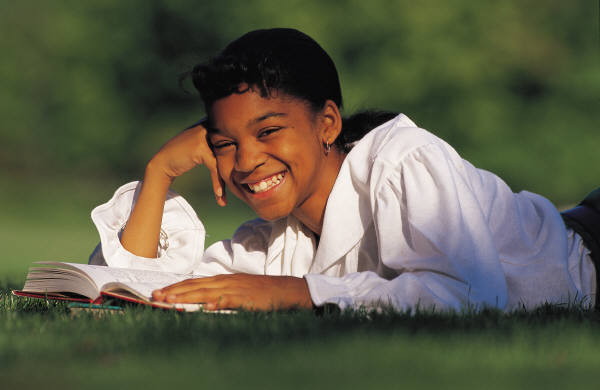
Sometimes I tell people that reading saved my life. Yes, but it also made my life what it is.

When I was growing up, I was a shy child in a big family, and my parents had other problems besides the six of us. Reading was my escape from the stress of the household, from my fears, and from the world. Whenever anyone was looking for me, they knew I could be found with my “nose in a book” somewhere.

Reading opened up new worlds for me. I delved into adventure, mysteries, career women, and love stories. It showed me the possibilities that were out there for me if I could just be brave enough to go after them. Reading also comforted me, making me realize that other people had problems too, bigger than mine, and that they were not insurmountable.

Reading doesn’t really qualify as a relaxation technique in stress reduction, as it tends to activate and mentally arouse people most of the time. But reading for pleasure is a form of play or recreation. In that context, it serves to distract from stressors and give us a break from whatever else is going on in life. It turns out that reading for pleasure can allow people to either dull or heighten consciousness.  So if someone has a lot of fear or anxiety, reading can block some self-awareness; while if a person is in a more positive mental state, reading can heighten consciousness and allow more self-exploration.

Life is just better if you are a reader. A National Endowment for the Arts (NEA) report from 2007 called reading “transforming”, saying that it “awakens people’s social and civic sense” and that reading “correlates with measures of positive personal and social behavior”. In fact, people who are regular readers go to more concerts and theatre, exercise more, play more sports, and are twice as likely to volunteer.

Reading gives people a way of connecting to others, both through the empathy it arouses and by providing topics of conversation, ideas and common ground.

Studies on reading show a correlation between reading ability and more time spent reading; but it’s hard to say whether one causes the other. What we do know is that while reading ability continues to rise at the elementary school level, it declines in the teenage years. Time spent reading is down among both teenagers and adults; and both reading ability and the habit of reading for pleasure are declining in college graduates. It is not hard to guess one of the reasons why this is so. The drop in literary reading has correlated with the rise in Internet use.

Why be concerned? For one thing, reading less, and the lower academic achievement associated with it, are also correlated with less success in the job market. High-level reading and writing skills are highly sought by employers, and one of the biggest problems they cite in hiring. Reading ability helps us process an increasingly complex society, from understanding our health care options to knowing how to handle our finances. As the NEA report put it, “Reading is an irreplaceable activity in developing productive and active adults as well as healthy communities.”

Summer seems like a good time to begin or re-discover the habit of reading. (I have fond memories of the summer reading program at my local library.) Marcel Proust said, “There are perhaps no days of our childhood we lived so fully as those we spent with a favorite book.”  Why should that end with childhood?  Pick up a book today and see where your imagination takes you.

“A change is gonna come”

My favorite line about change is one I saw a few years ago on the sign at a church near my house. It said, “When you change how you look at things, the way things look changes.” I love mulling over that line — it’s all about perspective, isn’t it?

Sometimes we choose to change, sometimes we expect change, and sometimes change is thrust upon us. But how we deal with it, from person to person or situation to situation, runs the gamut from graciousness to grumpiness to downright kicking-and-screaming resistance. The only constants are that change will happen and that we have a choice in how we react to it.

All change is potentially stressful, even if we welcome it, because it throws us off balance and out of our comfort zone. But since we cannot grow in our comfort zone, the ability to see change as a challenge or an opportunity has a lot of potential. It depends on what kind of meaning we attach to the change.

Daniel Gilbert, in his book, Stumbling on Happiness, wrote that “When the experience we are having is not the experience we want to be having, our first reaction is to go out and have a different one…It is only when we cannot change the experience that we look for ways to change our view of the experience…We find silver linings only when we must…”

Another way to change our view of experiences is to cultivate equanimity, or calmness.  In the August 2010 issue of Yoga Journal, Frank Jude Boccio talked about this quality of equanimity .  It is a “state of even-minded openness that allows for a balanced, clear response to all situations, rather than a response born of reactivity or emotion.” In other words, developing this quality within ourselves enables us see the truth of our circumstances more clearly, and to deal with them more appropriately.

An important aspect of cultivating equanimity is recognizing that we can’t control everything, much as we might want to. So it helps us accept the things that cannot be changed, as well as the things that aren’t important enough to change. It helps curb our tendencies to judge and resist the way things are.

Conversely, there are times when we want to make changes, and we rush to do too much at once. The starting point for all change is accepting where we are, and believing in our ability to change and to accomplish our goals. The most achievable goals involve small steps that, one after another, add up to big change. I always tell the people I work with at health fairs not to change too much at one time. Wait for one small change to become a habit, and then move on to something else.

Herbert Benson says that “change in our lives, because of our wiring and conditioned responses, is gradual and cumulative.” If you learned one way of doing something, you can unlearn it, but it will take time. So take a breath along with that first small step, and be patient with yourself.