Words: Handle with care

Wandering around the Library of Congress last week, my eyes gravitated to a quote high on the wall. It said, “Words are also actions, and actions are a kind of words.”   At the time, I didn’t know who had said it (Ralph Waldo Emerson), but it stuck in my head for days.

As I was growing up, I often heard adults say, “Actions speak louder than words.” Emerson seems to be saying that words and actions are equal, that while our actions speak for us, our words have the capacity to sting or caress as surely as if we were using our hands.
This couldn’t be truer than it is today. In this age of digital communication, people tend to throw words around carelessly. With email and texting, we don’t have to worry about wasting paper or ink; we don’t have to take the time to put a letter in an envelope, stamp it and mail it in order to send someone a message. So we don’t think as carefully about the things we say. Words have become a cheap commodity, often chosen without a lot of thought as to their meaning or effect.

If we stop and think about how much of our stress is coming from interactions with other people, we can see that a lot of it is a result of the blunt force of these mindless communications. Emails and texts deprive us of tone of voice, facial expression and body language, so their messages are often misinterpreted. Sometimes offense is taken when none was intended. Speaking face to face is not always better; often people speak at each other rather than to each other. We wait for our turn to speak, rather than listening so that we can respond with understanding.
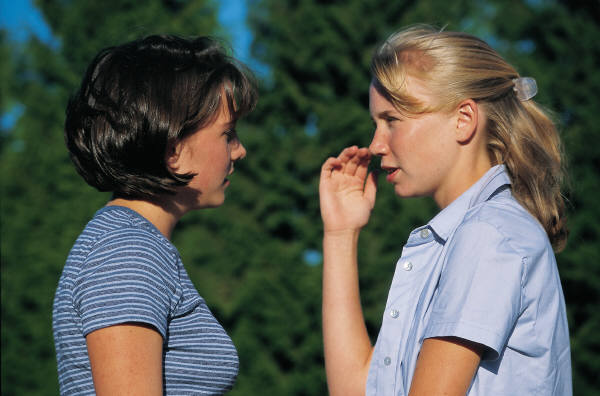
Headlines are made when celebrities are forced to close their Twitter accounts or politicians are driven from office due to ill-advised words. For the rest of us, the results of miscommunication can be just as painful and devastating: someone doesn’t speak to you anymore, relationships are strained, or business is lost.

How can we practice communicating more clearly, more carefully and more compassionately?

  • Do take the time to be sure that saying something serves a useful purpose. Soren Gordhamer makes the point that sometimes our comments (on-line or in person) are just a form of one-upmanship: “When we are caught in what we may call the judging mind, we continually look for people and actions to criticize. Instead of a critique that seeks to help, we do so to build up our own sense of superiority.”
  • Do pay attention to what others are saying non-verbally, with eye contact, body language and even silences.
  • Do listen reflectively to other people. Repeat or rephrase what they have said to you to be sure you understand it.
  • Don’t communicate difficult messages (like breaking up with someone) via email or text. Give the other person the respect of a face-to-face meeting.
  • Don’t hit the “send” button so quickly, especially if your message is complicated or unwelcome. Wait 10 minutes and read it again to be sure it conveys what you really want the other person to hear.

How would it feel to be on the receiving end of your words? Should that be our standard for better communication? As the Buddha said, “Better than a thousand hollow words, is one word that brings peace.”

 

Listening in

We are not just our bodies, but it is important to be aware of what they’re telling us. The more we pay attention to how we feel – in mind, body and spirit – the easier it will be to sense when something is not right. Then we can take steps to bring ourselves back into wellness.

Sometimes conflict arises, though, when we turn to medical professionals who have a one-size-fits-all approach to healing. Too often, that approach involves a prescription for medication as a first step rather than a second or third. Even though we might have doubts about the medication, sometimes we don’t speak up about them.

Dr. Herbert Benson, an authority on mind-body approaches, writes in his book, Timeless Healing, that “…when it comes to the medical profession, we are often intimidated or scared by the subject matter and we disregard our true feelings and reactions, even though brain research tells us that emotions are critically important decision-makers in our minds/bodies.”

Benson believes that physicians underestimate people’s desire and ability to make lifestyle changes, or to try other approaches that don’t involve drugs. He says, “Trust your instincts, and trust the doctor who values your impressions and assessments.” In other words, find the doctor who starts from the premise that you know your body best.

Of course, to know your body best means that you have to pay attention to it. Some of us are very in tune with the nuances of our bodies; others tend to be dissociated. But there are a number of mindfulness practices that help us become more aware.

  • Body scan – this practice involves bringing your attention to each body part, one at a time, starting say, at your left toe, and working your way up. The attention is passive observation only, without judgment.
  • Progressive muscle relaxation – this practice has you tense and tighten parts of your body one at a time, then relax them. It helps bring awareness to the difference in sensation between tension and relaxation.
  • Present moment awareness – by sitting quietly and focusing on the breath, we can often become aware of what kind of body sensations are connected to certain thoughts. If you find your mind drifting to something troubling, you may realize the place in your body that reacts with tension to that thought.

It is estimated that 70%-80% of all healthcare visits are stress-related or stress-induced. It makes sense to use lifestyle change rather than medication to treat many of them. We can start by becoming more alert to the interaction of mind and body, and by treating ourselves with compassion. I sometimes practice a compassion meditation from Frank Jude Boccio (found in Yoga Journal magazine) that includes the line, “May I hold myself with softness and care.” There is something about that statement that always reminds me of my innate value, and the need to treat myself well.

Hippocrates said, “The natural healing force within each one of us is the greatest force in getting well.”  Learning to tune into our bodies and trust in that force would make us all better healthcare consumers and custodians of the awesome gift we have been given.

Finding my balance

After two long weekends in a row away from home, I am still struggling with a feeling of disequilibrium. Don’t get me wrong – both weekends were a lot of fun, and I don’t regret going away. It’s just that I feel off-balance from having so little time at home in between.

In the language of stress, this is what is called “eustress”. It’s the good kind of stress, the kind that comes with a happy event or something else that is desirable. But it still throws us off balance in a way that is similar to negative events. It knocks us out of our usual routines, and makes demands on our bodies and minds.

For some people, travel might be routine, but for me, not so much. The first thing that goes off-kilter when I travel is exercise. My careful routine of running, yoga, and weight-training two times a week is out the window. If I’m lucky, I get in one run and maybe some quick yoga.

Eating also changes. Sometimes the food choices aren’t so healthy, or the mealtimes are erratic, or there’s too much or too little of something. Fruit is something I don’t eat nearly enough of when I am away from home.

Sleep habits might also suffer. Strange or uncomfortable beds, noisy rooms, and time changes can all cause problems.

Mentally, the demands can be more subtle. If we’re traveling for pleasure, we try to shift to vacation mode, but work might still be on our minds, especially if we think about all the things that aren’t getting done while we’re away. If the trip is business-related, we might feel like we are missing out on family time. So we are not fully present in the place we’re supposed to be.

Then, just when we’re getting used to the place we’re in, it’s time to go home!

Now we’re faced with the work that is undone, the people who need our presence and the myriad details of our lives that need to be dealt with. Sometimes it can take days to catch up. Essentially, we are trying to regain “homeostasis”, our steady state.

David Agus, who has a new book out called The End of Illness, argues that to be healthiest, people need to keep to a regular daily schedule of eating, exercise, sleep and relaxation. Most people might find it difficult to eat meals or exercise at the same time every day as he suggests, but I can see how it might be very helpful during times of stress, whether that stress is eustress (good) or distress (bad).

When I get back from a trip, my sense of focus is poor. I don’t know which task to tackle first. The temptation is to skip exercise or sleep, and to use the time to catch up on all I’ve missed. That’s probably the worst thing that I could do. Getting back to my regular schedule will ultimately make me more productive.

Here’s what I’ve observed during my first days back:

  • Right before I left for my first trip, I started doing a 21-day meditation challenge on the Chopra Center web site. Although I missed a couple of days while I was away, I have been pretty diligent about doing the meditations once or twice a day since then. That has helped to keep me grounded and calm.
  • I’ve gone back to reasonably healthy eating, although I find that I am unusually hungry at odd times of the day. That’s probably the result of not eating on a regular schedule while I was away. But I’m expecting that in a couple more days, I’ll be back on track.
  • The exercise habit is kicking back in. It helps that the weather is warmer this week and I’ll be able to run outside over the weekend. That will also help with sleep and appetite.
  • By tomorrow, I’ll probably be caught up on my work, and I’ll feel good about that.

Am I looking forward to my next trip? Yes, but I’m glad it won’t be for at least a month. While I relish the challenge and stimulation of travel and new experiences, I’m happy now for the comfort and well-being of home and habit.

Happiness is…

“We tend to seek happiness… when really happiness is a choice” says a piece of art that I’ve seen in a catalog. I try to live that idea, and last year I came across a video on the TED website that sums it up nicely. It is a talk by Srikumar Rao about not waiting to be happy until some event or change of condition happens. Rao believes that we are hard-wired for happiness (think of babies and how often they laugh). He essentially says that we have everything we need to be happy right now.

When we’re kids, we joyfully sing about happiness. “If you’re happy and you know it, clap your hands…” or as Charlie Brown sings, “…Happiness is anyone and anything at all that’s loved by you.” But when does that unbounded happiness of childhood start eroding, and all of the worry, inferiority and judgment of life take hold? Do we recognize happiness when it is right under our noses?

If you go on the Amazon web site and do a search for self-help books about happiness, 8,894 results come back. Clearly, people are spending a lot of time (and money) figuring out how to be happy.

My students have been working lately with the idea of locus of control. Having an internal locus of control means that you take responsibility for the outcomes of your actions, while an external locus of control suggests that you tend to blame other people or outside events for how things turn out. While it can be tempting, and maybe immediately gratifying, to shift control to luck or outside influences, people are generally healthier and handle stress better when they take responsibility for their own behavior and its outcome.

I think of happiness in a similar fashion. Why blame someone else because you are unhappy? Why wait for the right job or the right house or the right person to be happy? Why not make the decision to be happy right now, in this moment? It doesn’t mean everything will be perfect in your life; you just decide to be happy anyway, without waiting.

How can we recapture some of our hard-wired happiness? In every moment, we have a choice of how to respond. By consciously shifting our responses to gratitude and acceptance, rather than resistance and judgment, we can move one step closer to joy, contentment and happiness.

Robert Green Ingersoll once said, “Happiness is the only good. The time to be happy is now. The place to be happy is here…”

What do you have to say?

There are times when writing is a struggle as I search for ideas and the right words to convey them.  Other times, when I have a compelling story I want to tell, the words just flow and the entire process seems so easy. Having a chance to tell our stories can be incredibly cathartic, even if we don’t share them with anyone else.

I thought of this when I read a story by Chris Richards in the Washington Post this week about a program to help veterans of the wars in Iraq and Afghanistan write songs. The veterans work with professional songwriters in a workshop setting. They tell their stories, pulling together images and memories of their experiences, and the songwriters create a melody and work it into a song. The veterans find the experience to be very healing, giving them an outlet for expression that is hard to find anywhere else.

About 20 years ago, the writer Maxine Hong Kingston started a similar project in California for Vietnam War veterans (see her book, The Fifth Book of Peace). Theirs was strictly a writing workshop, not music, but the purpose was the same – giving the vets an opportunity to tell their stories, in a safe place, without judgment. Kingston began the process as a way of working out a loss of her own, and together with the veterans, found some peace along the way.

Some people keep diaries throughout their lives. Many of us had them as teenagers – an outlet for our angst, emotional ups and downs, and rants against our parents. But a journal devoted to a specific topic or purpose can be a helpful tool in dealing with stress, whether it’s everyday stress or the more intense stress caused by wartime experiences.

James Pennebaker, a professor at the University of Texas, is a leading researcher and proponent of the idea of “writing to heal”. He believes that expressing our emotions makes us healthier and helps prevent many of the chronic diseases that befall so many people in modern society. For a lot of people, writing is the best (maybe the only) way that they can do that. Dr. Pennebaker has written a book about this process (Writing to Heal: A guided journal for recovering from trauma and emotional upheaval) and conducts workshops (one will be held at the Duke Integrative Medicine Center in March).

Gratitude journals are another, somewhat more indirect, way to help relieve stress. I’ve written before about the research showing that people who regularly remind themselves of what they are grateful for tend to be more satisfied with their lives and to experience less stress. Gratitude journals have also been used with veterans and others who experience Post-traumatic Stress Disorder, with promising results.

Whether or not you have had a traumatic experience, writing can still benefit you. In this age of truncated communications like email, Twitter and Facebook, it can be quite satisfying to sit down and express your thoughts and feelings without anyone cutting you off or limiting your characters. A journal can be a place to try out ideas, explore emotions and practice that difficult conversation you need to have with someone. Often, writing can be as mood-lightening as talking with a close friend. I suspect this is the reason why the memoir has become such a popular genre in recent years. Everyone has a story to tell, and wants to tell it if given an opportunity. But we are not very good at remembering emotions accurately after time has gone by, so it’s important to write down how you feel now. Start telling your story  – your audience can be as wide as the Internet or as small as a little notebook sitting by your bed.

Friends for life

The ASPCA ads are hard to resist. You know the ones – with video of sad looking dogs and cats waiting for new homes. They are narrated by Sarah McLachlan, or accompanied by Willie Nelson music. They pull at my heartstrings, and make me wonder if it is time to bring home another dog.

Why is it that the plight of animals touches a nerve with so many of us? I went to see the movie “Warhorse” last month, and while the scenes of humans being killed or injured on the World War I battlefields were difficult to watch, it was the abuse of animals during the war that really made me squirm. In a similar way, the local farm animal sanctuary periodically sends out newsletters with stories of some of the animals they rescue. The stories are often horrifying in terms of the neglect and abuse the animals have suffered, but they usually end happily with the animals finding a home for life at the sanctuary.

Animals have been companions to people for thousands of years. Even before we had domesticated dogs and cats, people’s farm animals often slept in the same shelter with them. For many of us, having a companion animal comes naturally. My family’s dog, Alex, was a part of our life for 10 years, and even though he’s been gone for more than two years now, I still miss him.

There’s a large body of research about the benefits that animals can provide for people. The unconditional love that they give us is hugely important given that we are often so critical and judgmental of each other. People who might otherwise be sedentary get more exercise if they have to go out and walk their dogs regularly. Many studies have shown that petting an animal, or even gazing at fish in an aquarium, can lower blood pressure and sometimes heart rate.

Some people even show a decrease in stress hormones when they are interacting with their dogs. But for every stress-reducing benefit of having a pet, there’s also the possibility of stress-inducing effects. Our dog suffered from several chronic conditions in his last few years, and I often experienced a lot of stress related to vets, medication complications, and the cost of care. That’s a big part of what’s holding me back from adopting another dog now.

But we also can learn a lot from animals. Kids who help care for a pet learn responsibility, and how to put the needs of someone else before their own. Alex taught me a lot about how to relax – when he plopped down to sleep, he would often give a deep sigh of contentment, as if to say, “This is the best!” I’d watch him sleep sometimes; he had a peacefulness that I often envied.

Last month, the New York Times ran a piece called, “What We Can Learn from Old Animals” featuring images shot by photographer Isa Leshko. The project of photographing elderly animals was a way to work through her grief after the death of her mother. She said that the experience helped her, “better understand and make peace with aging.” That makes sense to me because when my dog was near the end of his life, he showed incredible patience and forbearance, and I’m grateful for all he taught me.

John Grogan (the author of Marley & Me) has said, “Such short little lives our pets have to spend with us, and they spend most of it waiting for us to come home each day. It is amazing how much love and laughter they bring into our lives and even how much closer we become with each other because of them.”

Phone a friend

Our stress is getting worse. You’re probably not surprised. Whenever I tell people that I teach stress management to college students, they invariably reply, “Oh, I could really use that.” The latest report on Stress in America, from the American Psychological Association, bears that out: people acknowledge high levels of stress, yet very few believe they are doing a good job of managing it.

It’s also not surprising that the big stressors for most people are money, work and the economy. We are living in a time of great uncertainty and people feel that they lack control over what happens to them. For the most part, people know that there’s a connection between their stress and their health, but often feel too overwhelmed to do anything about it.

A group that is of special concern to the APA researchers is that of caregivers – people who have the primary responsibility of caring for someone who is ill or disabled. Caregivers often feel overwhelmed and isolated, and often report poor health. Caregivers also age faster and die earlier than other people, due in part to cellular changes that are related to chronic stress. The good news is that caregivers who belong to support groups, where they can share their experiences with others, show fewer signs of these cellular changes.

Do people feel that they can’t manage stress because it would require a big life adjustment, like changing jobs, moving to the country, or meditating 24/7? We often hear messages about exercise and healthy eating that tell us small steps are the way to go; any positive change is better than no change at all. But maybe people aren’t used to thinking about stress that way.

Robert Sapolsky, a leading researcher on biology and stress has said, “We are not getting our ulcers being chased by Saber-tooth tigers, we’re inventing our social stressors — and if some baboons are good at dealing with this, we should be able to as well. Insofar as we’re smart enough to have invented this stuff and stupid enough to fall [for] it, we have the potential to be wise enough to keep the stuff in perspective.”

Most of us are pretty good at recognizing stress when we feel it. What truths can we pull out of the new survey and other research to help us in those moments?

Your life doesn’t need a full makeover to make you better at handling stress. Start small.

  • Small step one: Next time you’ve had a bad day and you’re tempted to plop in front of the TV, take a walk first.
  • Small step two: Next time you’re feeling stressed and you find yourself yelling at your kids – call a friend to chat. You don’t even need to tell your friend your problems. Just talking to someone who is non-judgmental will probably make you feel better.
  • Small step three: If you’re feeling wound up, but you don’t have time to exercise, put on your favorite music and dance around the room for five or ten minutes.
  • Small step four:   When feeling stressed at work, don’t take it out on other people – do something nice for one of them instead.
  • Small step five: If you are feeling overwhelmed, take a moment to make a list of all the things in your life that you are grateful for.
  • Small step six: The next time a task seems too big for you, ask for help.
  • Small step seven: If you can’t sleep at night because of worry, distract yourself by thinking of your favorite joke or funny movie. Try to go to sleep with a smile on your face.

If you need a smile or a reminder, watch this: http://www.youtube.com/watch?v=xGbnua2kSa8


Open the door for change

New Year’s resolutions are known more for their grand ambition than their rate of success. Most of the time, we make resolutions to change ourselves: lose weight, get fit, quit smoking, make a career change, learn a language, and so on. But research shows that many people scale back their goals almost immediately, fewer than 50% are still working toward them after 6 months, and fewer than 10% after a year.  I’m not much of a believer in those kinds of odds.

But I’ve been thinking that this year, I might resolve, not to change, but to accept change more gracefully, especially those changes that are thrust upon me. What kinds of changes am I talking about?

  • Changes in the best-laid plans
  • Changes in my neighborhood such as new roads, traffic lights and buildings
  • Changes in my body that come with age
  • Changes in my work life
  • Changes in the people I know and love
  • Changes when a loved moves away, or … moves back

I can choose how I react to the events, big and small, that upset the balance of everyday life. Do I kick and scream, or do I invite them in? Most of the time, these events are out of my control, so why waste valuable energy fighting them?

Soren Gordhamer says this concept of inviting can be applied to challenging situations. He writes, “…we can think, Why are they doing this? …. Or we can look inward, pay attention to our mind and body, and inquire, What creative response wants to arise in this situation?” Inviting “makes more room for clarity and ease of mind”, even in the presence of “strong emotions”.

One of those strong emotions is often fear, because the unknown can be powerfully scary. Dostoyevski said that change is “What people fear most.”  But instead of asking, “Why is this happening [to me],” ask “How can I benefit from this change, or at least make the best of it?” Calling upon past experience, learning everything possible about a new situation,  and having faith in your ability to handle it can ease the transition.

Much like the practice of mindful meditation, this way of approaching change is an ongoing process. When we meditate, we are encouraged not to judge thoughts that arise, but to notice them, and then turn our attention back to the breath. Even if other thoughts come up hundreds of times, we always go back to the breath. In the same way, most of us will never reach the point of accepting change with grace 100% of the time – but that doesn’t mean we stop trying.

So I resolve in 2012, to continue to:

welcome the opportunities that come with change,

look for the silver lining in adversity,

meet challenges with courage and creativity,

allow other people the space to change,

appreciate my ability to learn and adapt,

and be happy just as I am.

Happy new year!

On our wedding day, many years ago, my husband started to say the vows he had written. “I will study…” he began, and then he paused.  I was confused – had he started to give the wrong speech? What did studying have to do with loving me or being committed to our marriage?

After a second or two, my husband went on to say something about studying our past to learn how to keep our relationship strong in the future. But as I think about it now, maybe a commitment to studying has its place in the vows along with “in sickness and in health”.

A new report from the U.K. shows how our brains can continue to develop new neurons, preserve the existing ones, and possibly improve the connection between neurons, if we challenge ourselves mentally. The researchers looked at people training to become London taxi drivers. Over a 3-4 year period, the drivers are required to learn the names and locations of about 25,000 streets and 20,000 landmarks in London. By the end of the training, brain images of successful driver trainees showed an increase in gray matter in the part of the hippocampus related to spatial navigation and memory. In other words, they grew new brain cells.

The study’s authors concluded that our brains remain “plastic” – capable of adapting – even as adults. But learning new tasks and skills is what prompts the response. Their work offers hope to people recovering from brain injuries, and refutes the adage, “you can’t teach an old dog new tricks”. If we needed more encouragement to be lifelong learners, this is certainly it.

Lifelong learning” has been associated with continuing professional education to stay abreast of the latest developments in your field of work. It has also fostered programs such as Elderhostel and other classes for seniors. But in the current economy, with so much job insecurity, continuous learning has become critical for people wishing to remain competitive by learning new skills that will enhance their ability to get and retain a job.

Becoming a lifelong learner is also a way to spark personal growth, and to find meaning in your life. Taking classes, or getting involved in new experiences that have nothing to do with a job, can prompt a renewed sense of curiosity about the world. For people who might be facing job insecurity, studying something unrelated is both a distraction and a way to succeed in another arena.

What are some other benefits of learning new things?  Greater knowledge and experience can help people deal with stress better because they can use it to dispute some of their irrational beliefs about stressful events. Mastering new skills also gives self-confidence a boost, which can increase resiliency. Since chronic stress can actually cause cellular aging, reducing stress and boosting the development of new brain cells might slow some of the decline we see with age.

So what does all this have to do with the marriage vows? By staying mentally sharp and healthy, the “sickness” part of “in sickness and in health” could possibly be minimized. By learning new things, being open to growth and change, someone is more likely to be open to a partner’s perspective. And let’s face it: often when people say they are bored with their husband or wife, they are really bored with themselves. So taking a class, learning a sport or finding your way around a new city makes you a more interesting person, and possibly keeps your relationship interesting too.

When my husband said he would study, he referred to us and our relationship. But I see now that studying the world, staying curious, and engaging in self-discovery is what makes each of us, and all of our relationships, stronger and healthier.

Be the mountain

Grounded! What is the first thought that comes to mind when you hear that word? If you’re a child, you probably associate it with the punishment of being confined to home for a while. A pilot might also view it as punitive, not being allowed to fly. But someone who is trying to connect with awareness and being present in the moment sees “being grounded” as something quite beneficial. Are the positive and negative definitions really so far apart?

I started thinking about grounding yesterday during some restorative poses in yoga class. Our teacher was talking about surrendering to gravity, letting the earth support us, and how gravity is such an elemental force in the universe. Sometimes we need to reestablish that connection to solid ground, especially after times of intense activity or stress in our lives.

Children want to “fly” most of the time. They have so much energy and they are growing so rapidly that sometimes they go too far, too fast, and a time-out or grounding is necessary. As adults, we can self-impose our time-outs, but, like children, we don’t always recognize that we need one. Or, if we do acknowledge the need, we delay it until we “have time”.

Periods of disruption to our daily routines, such as a lot of travel, caring for a family member, or even preparing for holidays can make us feel as if our feet have left the ground for a while. Sometimes we have the luxury of being able to take a few days at home to rejuvenate, but most times we don’t. In those cases it can be helpful to have some tools to help us stay grounded even in the midst of turmoil.

  • Mountain Meditation – there are several versions of this meditation. I use one from Frank Jude Boccio with my students:   Start by sitting in a comfortable, stable and supported position. Imagine a very tall, impressive mountain; think about how the mountain might change with the seasons or the weather, sometimes visible, other times covered with clouds; sometimes green, other times snow-covered. But throughout the changes, the mountain remains stable. Think of your posture as mountain-like, and think of your emotions and experiences as coming and going like the clouds and the sunshine. You have the ability to maintain stability just like the mountain.
  • Get your hands dirty – Jeff Brantley and Wendy Millstine recommend this practice in their book, Five Good Minutes:    Spend some time digging in sand or dirt, working in your garden, or even repotting a houseplant. Focus on how the soil feels, and what it nourishes. (Bread-making, or working with other kinds of dough, would provide a similar experience.)
  • Restorative yoga – this type of yoga practice requires little in the way of experience or special ability. It uses lots of props such as blankets and blocks to support you while you rest in different postures. For a good overview of the practice see the Yoga Journal web page.
  • Take a sensory walk – this walk will serve to focus your awareness and heighten your experience of your surroundings. Be sure to turn off your phone before you start, and bring along some food or gum for the taste portion of the walk:  Go for a walk, and spend three minutes or so concentrating on each sense one at a time. So, first focus just on the sounds around you; then the smells; next, touch everything that you can; and finally see everything around you as if for the first time. After that, find a place to sit down and close your eyes. Spend the last three minutes on taste, using the food that you brought with you. When you are finished, get up and walk again, using all of your senses. Allow yourself to experience whatever presents itself, without too much planning or judgment.

John Muir said, “I never saw a discontented tree. They grip the ground as though they liked it, and though fast rooted they travel about as far as we do. “