Running with friends

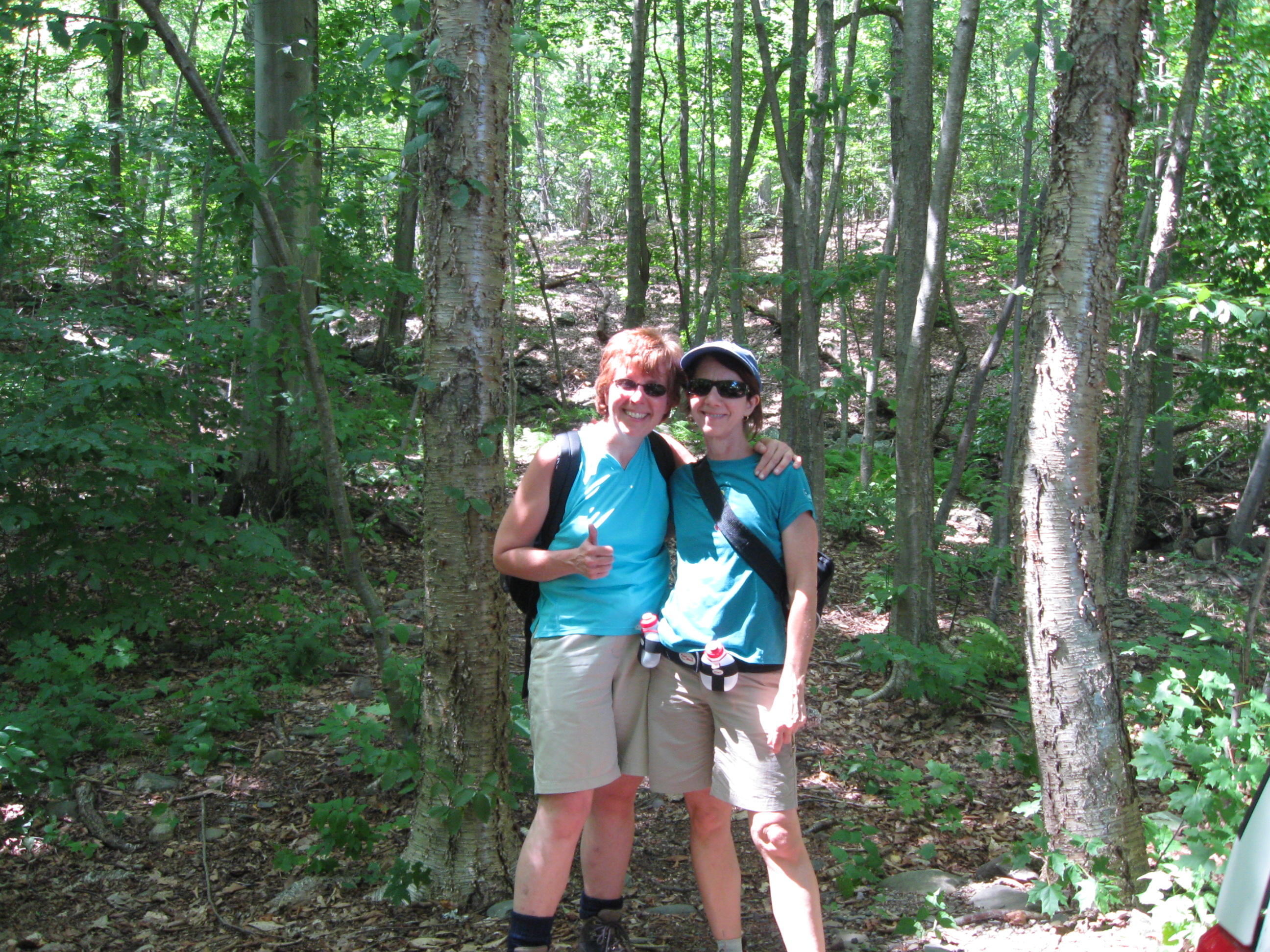
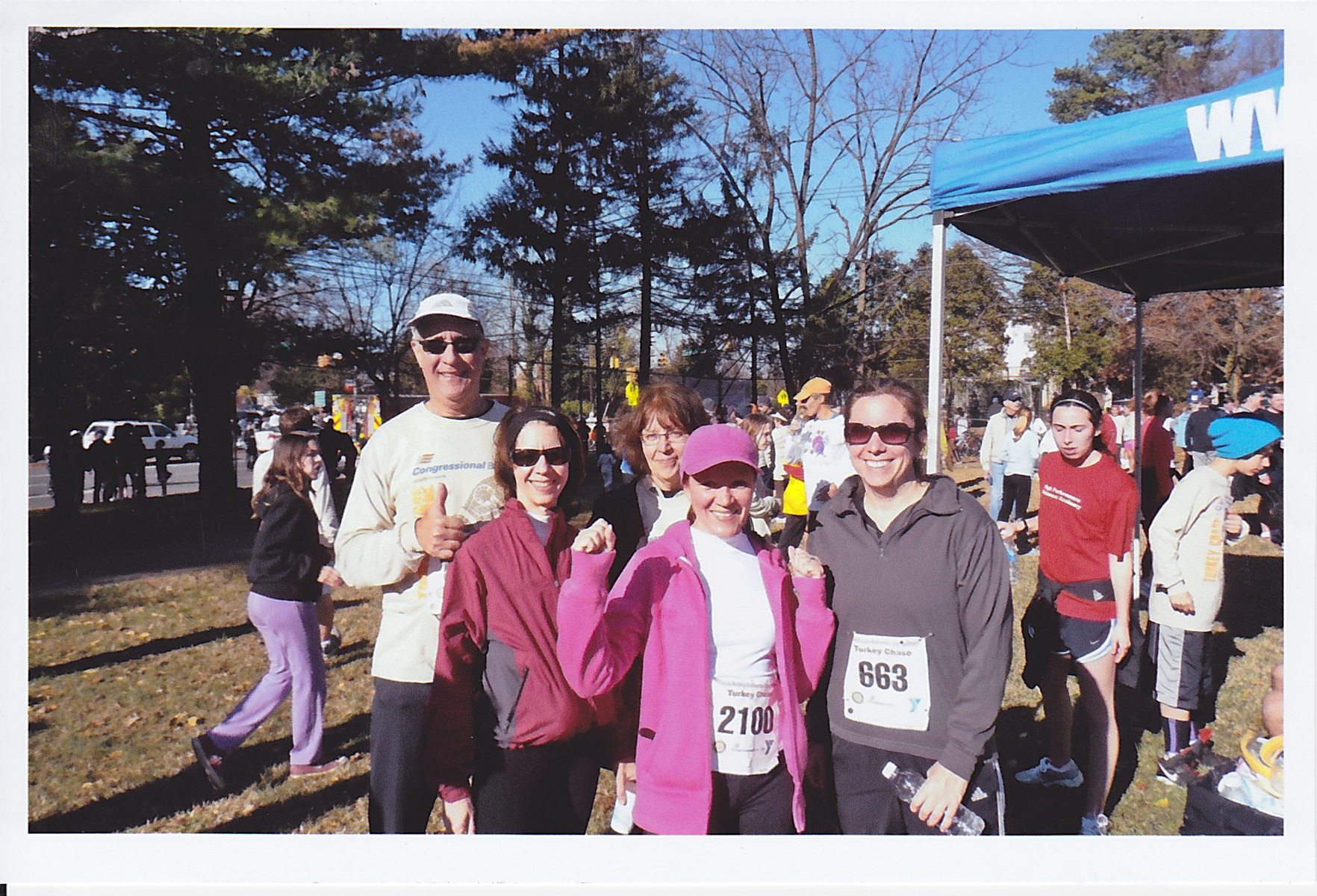
Yesterday I ran a 10k race, the longest I’ve run since my last 10k in November. I would not have done it without my running partner, Naomi.  I would say we keep each other motivated, but it’s more like we keep each other from being slackers. Neither of us loves running enough to do it consistently on our own. But knowing that we’re each depending on the other keeps us going.
Years of studies consistently show that social support is a significant factor in keeping people exercising, especially women. One recent study indicates that it is the esteem social support that is most significant – the positive feedback, encouragement and compliments we receive from others. On the other hand, companionship social support – having another person exercise with you – can actually keep people from exercising more strenuously.

I guess in some ways, that’s what’s happening with my friend and me. We keep each other running, but we don’t often push each other to work harder. We talk a lot while we run; a favorite question when the running gets difficult for one of us is, “Do you have a good story?” We don’t work together or live near each other, so hearing about each other’s lives is a great diversion. This doesn’t lend itself to doing speed work, but it has made us better friends over the years.

I could, and sometimes do, run with my husband. He’s good about keeping us on pace and running longer distances. But he sets a high standard for himself and that can sometimes carry over to me. Running with my friend, by comparison, is pretty much judgment-free. If one of us wants to walk, we walk. If one of us wants to run 3 miles instead of 4, that’s what we do. And if one of us suggests a 10k, the other one usually agrees.
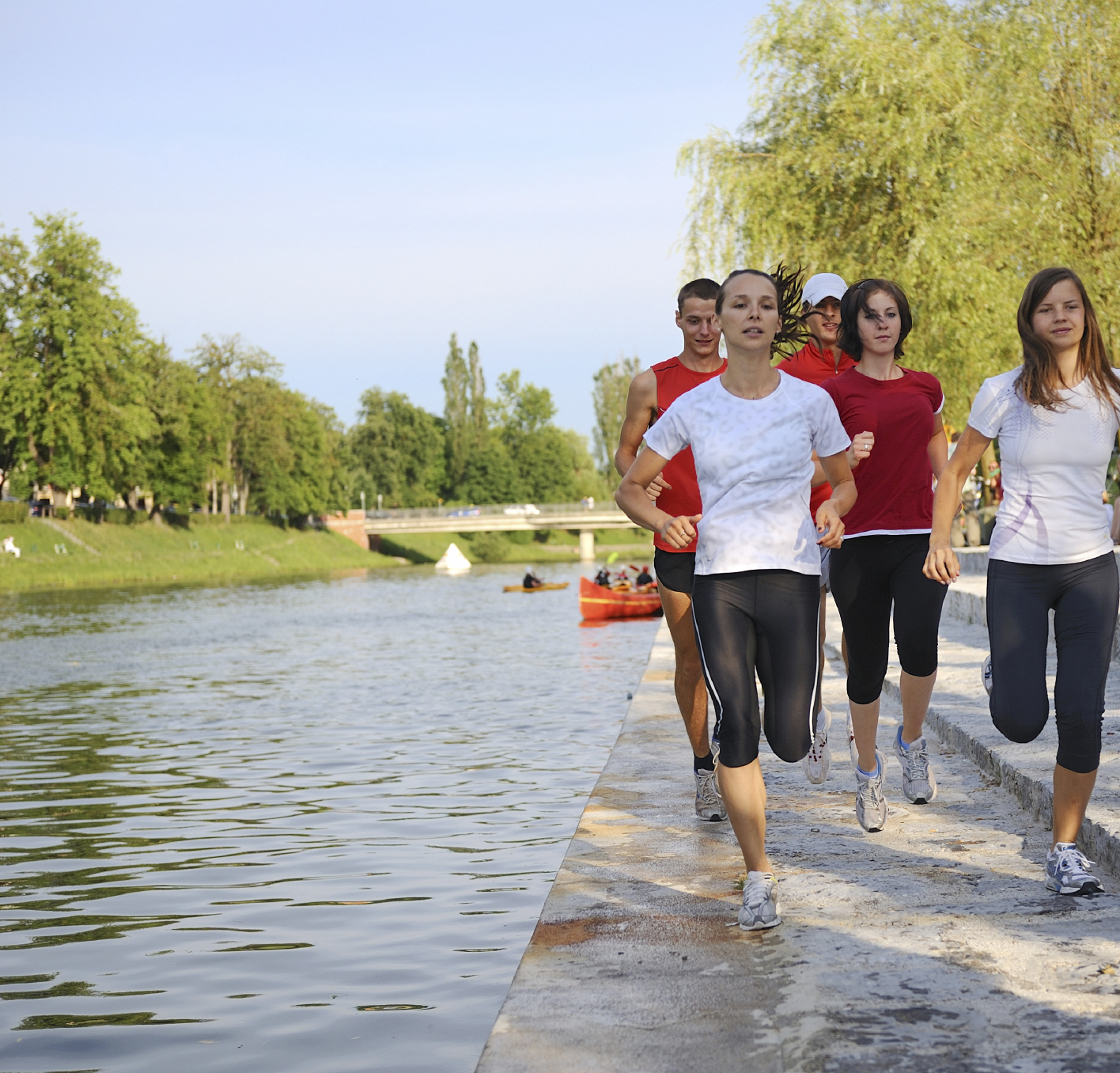
The question, I guess, is what’s enough? While I know that challenging myself physically can prepare me for other challenges in life, I’m not the kind of person who needs to run a marathon to accomplish that. I have plenty of other opportunities in my life to prove myself, and to get that runner’s “high” feeling. Running is just one of the ways that I stay healthy. So even though it was a bit disheartening to see the fastest runners returning toward us when we were still two miles from the finish, I don’t feel too bad about our 10-1/2 minute miles yesterday. We ran 6.2 miles for the first time this year, and we felt pretty good at the end of it.

Olympian Wilma Rudolph, once the fastest woman in the world, said that she “… loved the feeling of freedom in running, the fresh air, the feeling that the only person I’m competing with is me.” My wish for every run is to find that kind of freedom and to feel the lightness that can come from running unencumbered in the fresh air. I may not be setting records, but I’m still running, and I’m glad I’m not alone.

Earth Day 2012…

…and it’s raining a steady, drenching rain. It is cold and miserable, yet nourishing to our plants and soil, which were snow-deprived all winter. It’s a good day to sit inside and think about what the day means and how I can do my part to make my piece of the Earth a healthier place.

When Earth Day started 40 years ago, it was in response to an an oil spill, and it ignited a new focus on environmental activism and political action. Much of the Earth Day messaging has been about energy use, clean air and water, and more recently, climate change. The theme for Earth Day last year was “A Billion Acts of Green”, and currently the counter on the EDN web site shows over 999 million acts of green submitted by visitors to the site.

The theme for the Earth Day Network this year is “Mobilize the Earth”, calling on people worldwide to unite their words and actions to create a sustainable future. “A Billion Acts of Green” and “Mobilize the Earth” speak to the idea that small actions can add up to a large impact, and that it will take all of us together to make the world a better place to live and grow.

So I’ve been thinking about what acts of green I can add to my life. I already recycle as much of my trash as I can, freecycle some unwanted items and donate others, try to use gadgets as long as possible before buying new ones, responsibly recycle my electronics, use an electric lawn mower, combine errands in the car when possible, and respond to appeals from Clean Water Action and other environmental groups. What’s left?

  • Being more mindful of water use. My local water company says that 70 gallons is the typical daily per person water usage in our area. My household is a little lower than that, but it’s still vastly greater than people use in other countries. Millions of people in the world don’t have access to a reliable source of clean water at all.
  • Riding my bike instead of driving. Last summer I bought a pannier for my bicycle, determined that I was going to start riding to the grocery store. I did it exactly once before the weather got cold. (I’m a bit of a wimp when it comes to riding in cold weather). I am going to set a goal of substituting the bike for the car once a week this spring and summer. This has the added benefit of being exercise too!
  • Making “meatless Mondays” a habit. We’ve been gradually incorporating this idea in our house and 2012 could be the year to solidify it. The meatless Monday trend has the benefit of being good for the environment (lots of CO2 comes from cattle), saving water (it takes a lot more water to raise animals for meat than it does to grow plants) and making us healthier too. The Meatless Mondays web site has lots of great recipe ideas and other tips on how to incorporate this idea into your life.
  • Volunteering. Yes, I belong to environmental organizations, write letters occasionally, and send them money sometimes. But I used to do more, such as cleaning up my local stream and volunteering for environmental organizations. I can do that again.

I read back over the steps I’m proposing to take, and I see how intertwined my well-being is with that of the Earth. Eating less meat, exercising more and being connected to my community will all benefit me while I am getting “greener”. My individual future is inextricably linked to the future of my world. As Aldo Leopold once said, “We abuse land because we regard it as a commodity belonging to us. When we see land as a community to which we belong, we may begin to use it with love and respect.”

My Perfect Day

The warm weather this week has everyone excited. Everywhere I go, people have something to say about it (80 degrees in March!) and a smile on their faces when they talk about it. When I wake up in the morning now, I hear the birds chirping through my open window, indicating another glorious day. I get out of bed with a lightness that is missing in the cold, dark days of winter.

All of that leads me to think about my perfect day. This is a tool that I use with students as a starting point to figuring out their values. If you can make a list of things that constitute a good day for you, it gives you an idea of what is most important to you. What I’ve seen this week is that warm, sunny weather is very valuable to me!

Here are some other things that would make up a perfect (or very good) day:

  • Time spent with friends or family. Whether I reach out to someone, or they make contact with me, it feels good to talk (in person or on the phone) with someone I’ve known a long time. It is a reminder that I have a support system out there.
  • A really yummy meal that isn’t too unhealthy. I love to cook and I love to eat, so this is a significant part of the day. Having healthy food is a bonus because I can feel both satisfied and virtuous about the meal.
  • Some work to do, but not too much. I like the challenge of work and feeling like I make a contribution to something bigger than myself. On the other hand, I like to have choices about how I spend my time.
  • Some physical activity that I enjoy. There’s that good feeling of exhaustion that comes with working my body hard, but not too hard. I don’t need to run a marathon, but I like to get out and move. Running, hiking or yoga all fit the bill.
  • A good book to read. I’ve written before about the important role books have played in my life, along with curiosity and learning. Whether I’m reading novels or non-fiction, I always take something from the books I read.
  • Words of love or encouragement. This could be my kids saying, “I love you, Mom”; a student saying he was helped by my class; a co-worker praising my work; or even a stranger complimenting me on what I’m wearing. Affirmation always brightens my day.
  • Physical contact with someone I love. The skin is the body’s largest organ, and the sense of touch an important way to communicate. Hugs and kisses are a necessity on a perfect day!

When I look at my list of “perfect day” requirements, I see that they correspond very closely to the six dimensions of wellnessPhysical (the exercise and eating); Social (time spent with friends); Emotional (physical contact and words of love); Intellectual (reading); Occupational (working a little bit); and Spiritual (appreciating that warm, sunny day with the birds chirping). Without consciously thinking about it, my desires are reflecting my core values.

Do we know the perfect day when we are living it, or does it exist only in retrospect? Can we wake up every morning with the desire to live it well?

The Indian poet Rabindranath Tagore wrote, Do not say, ‘It is morning,’ and dismiss it with a name of yesterday. See it for the first time as a newborn child that has no name.”

Finding my balance

After two long weekends in a row away from home, I am still struggling with a feeling of disequilibrium. Don’t get me wrong – both weekends were a lot of fun, and I don’t regret going away. It’s just that I feel off-balance from having so little time at home in between.

In the language of stress, this is what is called “eustress”. It’s the good kind of stress, the kind that comes with a happy event or something else that is desirable. But it still throws us off balance in a way that is similar to negative events. It knocks us out of our usual routines, and makes demands on our bodies and minds.

For some people, travel might be routine, but for me, not so much. The first thing that goes off-kilter when I travel is exercise. My careful routine of running, yoga, and weight-training two times a week is out the window. If I’m lucky, I get in one run and maybe some quick yoga.

Eating also changes. Sometimes the food choices aren’t so healthy, or the mealtimes are erratic, or there’s too much or too little of something. Fruit is something I don’t eat nearly enough of when I am away from home.

Sleep habits might also suffer. Strange or uncomfortable beds, noisy rooms, and time changes can all cause problems.

Mentally, the demands can be more subtle. If we’re traveling for pleasure, we try to shift to vacation mode, but work might still be on our minds, especially if we think about all the things that aren’t getting done while we’re away. If the trip is business-related, we might feel like we are missing out on family time. So we are not fully present in the place we’re supposed to be.

Then, just when we’re getting used to the place we’re in, it’s time to go home!

Now we’re faced with the work that is undone, the people who need our presence and the myriad details of our lives that need to be dealt with. Sometimes it can take days to catch up. Essentially, we are trying to regain “homeostasis”, our steady state.

David Agus, who has a new book out called The End of Illness, argues that to be healthiest, people need to keep to a regular daily schedule of eating, exercise, sleep and relaxation. Most people might find it difficult to eat meals or exercise at the same time every day as he suggests, but I can see how it might be very helpful during times of stress, whether that stress is eustress (good) or distress (bad).

When I get back from a trip, my sense of focus is poor. I don’t know which task to tackle first. The temptation is to skip exercise or sleep, and to use the time to catch up on all I’ve missed. That’s probably the worst thing that I could do. Getting back to my regular schedule will ultimately make me more productive.

Here’s what I’ve observed during my first days back:

  • Right before I left for my first trip, I started doing a 21-day meditation challenge on the Chopra Center web site. Although I missed a couple of days while I was away, I have been pretty diligent about doing the meditations once or twice a day since then. That has helped to keep me grounded and calm.
  • I’ve gone back to reasonably healthy eating, although I find that I am unusually hungry at odd times of the day. That’s probably the result of not eating on a regular schedule while I was away. But I’m expecting that in a couple more days, I’ll be back on track.
  • The exercise habit is kicking back in. It helps that the weather is warmer this week and I’ll be able to run outside over the weekend. That will also help with sleep and appetite.
  • By tomorrow, I’ll probably be caught up on my work, and I’ll feel good about that.

Am I looking forward to my next trip? Yes, but I’m glad it won’t be for at least a month. While I relish the challenge and stimulation of travel and new experiences, I’m happy now for the comfort and well-being of home and habit.

You look, but do you see?

Do you ever feel as if you must be invisible? You know the feeling you get when you sit down in a restaurant, and then four different servers walk past you five different times without acknowledging you’re there. Or when you’re walking down the street and you see someone approaching whom you’ve met before – and then they don’t meet your eye and continue walking past you.

Feeling ignored or left out is an awful feeling. Even if we have a strong sense of self, we start to wonder what’s wrong with us. It doesn’t matter if we’re slighted by a friend or snubbed by a total stranger – it still hurts.

Last week I read about a study that demonstrated just how much we look to other people, even strangers, for acceptance. Researchers at Purdue University randomly selected people walking on the campus. A research assistant walked by each of them, and did one of three things: made eye contact, made eye contact and smiled, or just looked in their general direction without eye contact. Each person was then immediately asked by another researcher how connected they felt to other people. Those who did not get any eye contact felt more disconnected from others than did either group who got eye contact.

The reality is that no one wants to feel excluded. We all have a need to be part of a community of some kind. A stranger not making eye contact may only lead to a momentary feeling of disconnection, but what about situations where it happens over and over again with groups we want to be a part of?

It turns out that for children who are left out, that feeling can lead to them being less active. In a study by Jacob Barkley of Kent State University, children played a virtual ball game with each other. Some children got the ball fairly often and others very few times. Then they all went to play in a real gym. The children who had been excluded in the online game ended up being less physically active in the gym. They tended to choose sedentary activities such as drawing or reading alone more of the time.

Previous studies have already shown that being ostracized leads people to eat more. We also know that people who are lonely tend to have weaker immune systems. Now we see that children won’t be as active if they feel excluded. Clearly as humans we are healthiest when we are part of a group, and feel supported and loved by that group.

So why do we ignore each other? Does the message from childhood, “Don’t talk to strangers!” sink in so deeply that we are unable to reach out to others? Are we too afraid of rejection to take a risk?

Flip it around and think about how good it feels when you’re out somewhere, and someone admires what you are wearing. Or imagine that you’re at a social event where you don’t know anyone, and someone comes up and engages you in conversation – don’t you breathe a sigh of relief that you’re no longer standing there looking awkward? Doesn’t it feel good when you walk in a room, and someone greets you by name?

Everyone wants to be noticed, to be appreciated, even by strangers. We all need someone who says, either with words or actions, “I see you.” Can you make an effort to be that person?  As William Butler Yeats once said, “There are no strangers here; only friends you haven’t yet met.”

Friends for life

The ASPCA ads are hard to resist. You know the ones – with video of sad looking dogs and cats waiting for new homes. They are narrated by Sarah McLachlan, or accompanied by Willie Nelson music. They pull at my heartstrings, and make me wonder if it is time to bring home another dog.

Why is it that the plight of animals touches a nerve with so many of us? I went to see the movie “Warhorse” last month, and while the scenes of humans being killed or injured on the World War I battlefields were difficult to watch, it was the abuse of animals during the war that really made me squirm. In a similar way, the local farm animal sanctuary periodically sends out newsletters with stories of some of the animals they rescue. The stories are often horrifying in terms of the neglect and abuse the animals have suffered, but they usually end happily with the animals finding a home for life at the sanctuary.

Animals have been companions to people for thousands of years. Even before we had domesticated dogs and cats, people’s farm animals often slept in the same shelter with them. For many of us, having a companion animal comes naturally. My family’s dog, Alex, was a part of our life for 10 years, and even though he’s been gone for more than two years now, I still miss him.

There’s a large body of research about the benefits that animals can provide for people. The unconditional love that they give us is hugely important given that we are often so critical and judgmental of each other. People who might otherwise be sedentary get more exercise if they have to go out and walk their dogs regularly. Many studies have shown that petting an animal, or even gazing at fish in an aquarium, can lower blood pressure and sometimes heart rate.

Some people even show a decrease in stress hormones when they are interacting with their dogs. But for every stress-reducing benefit of having a pet, there’s also the possibility of stress-inducing effects. Our dog suffered from several chronic conditions in his last few years, and I often experienced a lot of stress related to vets, medication complications, and the cost of care. That’s a big part of what’s holding me back from adopting another dog now.

But we also can learn a lot from animals. Kids who help care for a pet learn responsibility, and how to put the needs of someone else before their own. Alex taught me a lot about how to relax – when he plopped down to sleep, he would often give a deep sigh of contentment, as if to say, “This is the best!” I’d watch him sleep sometimes; he had a peacefulness that I often envied.

Last month, the New York Times ran a piece called, “What We Can Learn from Old Animals” featuring images shot by photographer Isa Leshko. The project of photographing elderly animals was a way to work through her grief after the death of her mother. She said that the experience helped her, “better understand and make peace with aging.” That makes sense to me because when my dog was near the end of his life, he showed incredible patience and forbearance, and I’m grateful for all he taught me.

John Grogan (the author of Marley & Me) has said, “Such short little lives our pets have to spend with us, and they spend most of it waiting for us to come home each day. It is amazing how much love and laughter they bring into our lives and even how much closer we become with each other because of them.”

Training for Life

Several years ago, when I was part of a boot camp fitness program, I was running one morning with my group. A woman passing by asked us “What are you training for?” Without missing a beat, our instructor answered, “For life.”

Today I’ve been thinking about this idea that we have to be ready for whatever life throws at us, the curve balls like divorce, job loss, deaths or serious illnesses. Sadly, too many people I know are dealing with some of those big life stressors right now. While we expect in an abstract way that our lives are going to have low points, it still can feel like a ton of bricks when we are hit with it. And when we have to deal day after day with the repercussions of divorce, or caring for a sick family member, it will tax even those of us with deep reserves of strength and good health.

Coming into a stressful situation with high levels of wellness in all dimensions can help people be more resilient and better able to meet the challenges. Physical wellness is very important, but it’s not the whole story. The 6 Dimensions of Wellness model emphasizes the whole person:

  • Physical – Do you have healthy eating habits and engage in regular exercise? Are you getting regular medical exams and engaging in self-care?
  • Occupational — Are you getting satisfaction from your work? Do you feel like you make a contribution to something? Does your choice of work align with your values?
  • Social – How are your relationships with family and friends? Do you feel that you have a support network you can call upon when needed? Do you feel connected to others in a community?
  • Emotional – How able are you to accept and express your feelings? Is your outlook on life more optimistic or pessimistic?
  • Spiritual – Do you feel a connection to something larger than yourself? Do you feel your life has meaning? Are your actions in harmony with your values and beliefs?
  • Intellectual – Are you a life-long learner? Do you take opportunities to be creative, to challenge yourself, and to share knowledge with others?

All of these dimensions make up your wellness path, and contribute to your ability to handle stress. Visualize your path right now, and think about an area you would like to improve.  Focus on enhancing your wellness in just that one dimension for now. Here are some ideas to get you thinking:

  • Physical – If your nutrition needs a boost, set a goal of eating 5 servings of fruits and vegetables each day.
  • Occupational – Evaluate your current job. Can you develop a new skill for use there or in your next job?
  • Social — Reach out to someone you’ve been missing. Make a date to go out with friends. Plan a neighborhood get-together.
  • Emotional – Start writing down your feelings in a journal. Watch a funny movie to lighten your mood with humor.
  • Spiritual – Take a walk in nature. Get involved in helping others. If you have been religious in the past, think about reconnecting with your faith.
  • Intellectual – Set a goal to read a newspaper every day, or a book each month. Perhaps sign up for a class on a subject you’ve always wanted to learn.

Wherever your path takes you, and no matter how many bumps in the road, I wish you ease and well-being in body, mind and spirit. Train for life!

Have you played today?

“Health begins where we live, learn, work and play.”

That statement came out of a recent Robert Wood Johnson Foundation commission on building a healthier America. It means that all of the social environments in which we spend time help determine our overall health outcomes.

Play (def.): to occupy oneself in amusement, sport, or other recreation.

But how much do adults play? Is having fun the lowest priority item on your to-do list when obligations at work and at home have to be met? The truth is that, like exercise, we will never have enough extra time for play until we make the time for it and schedule it in our day.

There’s a good case to be made for playing – doing something that’s fun just for the sake of having fun, in a noncompetitive and unpressured way. It helps us regain some of the unqualified joy and spontaneity we had as children, and, possibly, to experience what Buddhists refer to as “beginner’s mind”. Beginner’s mind means looking at something without the lens of prior knowledge, experience, or, especially, judgment. It means simply experiencing something as it is, in the moment, instead of how we want or expect it to be.

Beginner’s mind can more easily be accessed if we regularly try new “play” activities. Being a little bit adventurous, perhaps even taking a risk (whether it is physical, social or psychological) could create an opportunity for a beginner’s mind experience.  A few years ago, I decided that birthdays are a good time of year to try something new. That’s a bit challenging with a birthday at Thanksgiving time, but it was easier on my sister’s summertime birthday, when we tried a 7-mile hike on the Appalachian Trail. We challenged ourselves, took a wrong turn or two, laughed a lot and thought about nothing else for those few hours.

While it’s pretty widely recognized that play is important for children’s development, we sometimes forget that adults have a need for play too. Any type of play, whether it is something we’ve always enjoyed or something new, can give us perspective on other areas of our lives. It can foster creative thinking and problem-solving. Play can stimulate and refresh both brain and body.  Playing with other people helps us make and nurture social connections. Play teaches us to be flexible and cooperative, and to work as a team.

In some workplaces, play is integrated into the workday. Google is probably the most famous for supplying games such as Foosball, ping pong and volleyball on site. At Zappos, one of the company’s core values is to “create fun and a little weirdness”. Other companies provide climbing walls, swimming pools and monthly parties. Some would say that these perks are designed to keep people working longer hours. That may be true, but at least they have the opportunity to take a play break.

What are your ideas for fun at work or at home? Have you played today?

A weapon to fight childhood obesity?

About 12.5 million children and teenagers in the U.S. are obese, a prevalence that has almost tripled since 1980. The cost of this rapid and frightening rise is $14 billion each year in direct health expenses, not to mention the long term consequences: A greater likelihood of being overweight or obese as adults, as well as higher risk for heart disease, stroke, diabetes, and even some cancers.

So it is understandable, even ethically imperative, that people want to take action to address one of the possible causes.  A public forum was held in Washington yesterday to hear input on new government guidelines limiting how and what food manufacturers and other advertisers can market to children. The guidelines drawn up by the FDA, FTC, CDC and USDA are voluntary, but would put pressure on food marketers to change their products in order to meet certain standards. The guidelines would apply not just to TV advertising, but also print, radio, internet, social media, movie theaters, toy premiums, product placement and sponsorships. Written comments from the public will be accepted until July 14 at the FTC web site.

Few American children have eating habits that meet the Dietary Guidelines. The new voluntary standards would attempt to standardize the current self-regulation by food manufacturers, and prod them to reduce the amounts of sugar, fat and sodium in the products they market to children. Although some companies are already taking slow steps to reformulate products, there is no across-the-board effort to do so, and the industry objects to the new guidelines. Yet the American public seems to support government intervention in this area. A 2008 survey found that 57% of respondents thought the government should take more action to help deal with childhood obesity, 82% said that manufacturers should do more to reduce fat, sugar and salt, and 60% disagreed with the statement that food companies were already doing enough to limit advertising of unhealthy food to kids.

Why worry about advertising so much? An extensive review of the literature by the American Psychological Association found that children under 8 cannot critically interpret advertising, do not understand that it is designed to persuade, and generally accept product claims as true. Children under the age of 6 usually cannot tell the difference between a program and an advertisement. Yet young children do recall the content of ads they see, and often demonstrate preference for advertised foods with as little as one exposure to an advertisement.

It is estimated that children spend almost 45 hours per week in front of a TV, computer or video game. A strong association has been found between the increase in ads for non-nutritious food, and increases in childhood obesity. While parents have a responsibility to provide healthful food and to limit screen time, their authority is constantly subverted by a 24-7 bombardment of messages, as well as what the CDC refers to as obesogenic environments. Doesn’t it make sense to provide parents and children with this relatively modest attempt to fight back?

_____________________________________________________________

Check out the Admongo game that the Federal Trade Commission developed to teach older kids and teens about advertising.

Natural Wonders

Sitting at my desk this week, all I hear is the sound of birds chirping, singing and calling to each other. The distant sounds of the highway fade away to the background. Even the neighborhood dogs can’t compete with the birds in springtime.

I was so taken with the bird sounds a few days ago that I found a web site where you can click on the name of the bird and hear a recording of its song. Check it out at http://www.enature.com/birding/audio.asp

Relaxing sounds can soothe people, lower our heart rates and stimulate production of endorphins. Of course “relaxing” is in the ear of the beholder; but for me, the sounds of the birds are in that category. There is a reason why so many recordings of guided meditations tend to focus on images of nature, such as waterfalls, mountains, beaches and forests. The natural world has the capacity to nurture us, make us feel calm and supported, even improve our sleep. But thinking about connecting with nature leads to the unfortunate fact that many of us just don’t spend enough time outdoors.

Most alarming is the fact that children don’t spend nearly as much time outdoors as they used to, in fact only half as much time as they did twenty years ago. Very few play outside on their own, yet research shows that unstructured free play in the outdoors has many benefits to them – ranging from doing better in school, to being more cooperative, to just being healthier overall.

Something as simple as a view of nature helps to reduce stress in children who are highly stressed, and daily proximity to nature can help children focus, even reducing symptoms of attention deficit disorder. Playing in nature also serves the important purpose of giving children the opportunity to take appropriate risks, solve problems and develop creativity, which can lead to enhanced self-esteem.

So many benefits! Yet finding the time, a safe space, adults who are comfortable enough in nature to guide children – all are barriers. Luckily, a few organizations are working to make sure that the next generation has a taste for nature:

  • The Children & Nature Network, whose mission aims to “give every child in every community a wide range of opportunities to experience nature directly”, has tips on their web site for starting your own family nature club, along with other ideas.
  •  The No Child Left Inside Coalition is an advocacy group with almost 2,000 member organizations from across the country that seeks to raise awareness in Congress and among the public of the need for more environmental education in schools. The coalition was formed after many programs were cut in the wake of the No Child Left Behind Act.

As Thoreau once wrote, “We need the tonic of wildness … We can never have enough of nature.”