My simple season

When my kids were small, they had a Little Golden Book called My Book of the Seasons. This book had an appealing way of using alliteration and repetition to bring to life the change of seasons. For each season, the book described traditional, iconic imagery, such as pumpkins and snowflakes, and then asked, “Can you see it, can you hear it, can you smell it?” It was wonderful to read out loud.

I think of the book fairly frequently, especially now when I am enjoying the  transition from late spring to early summer. At the beach for Memorial Day weekend, I have had my first local peaches and strawberries of the year. I’ve been basking in the warm sun on the sand. I’ve been taking in the aromas of the plants, as well as the smells of backyard barbeques. I’ve been listening to the birds calling to each other and the children splashing in the waves. Yes, I can feel it, I can smell it and I can taste it. Summer is here!

There’s something incredibly elemental about using the senses to experience the change of seasons. And while a lot of change can be unsettling to people, there is something comforting in the cycle of the seasons, and in knowing that these simple pleasures of summer (or any other season) will be available year after year.

This is also the easiest time of year to simplify and improve how we eat. John Schlimm, the author of a couple of vegan cookbooks, described his style of cooking recently on a radio program. One of his criteria is that all the ingredients he uses have to be available in any neighborhood supermarket, even in the smallest towns. The point is, we don’t need exotic ingredients to make a wonderful-tasting, healthy meal. And with summer here, the farmers’ markets are open, the fruits are ripening, the tomatoes are full of flavor, and there is an abundance of choices. Mmmm…I can see it, I can smell it, I can taste it….

Summer offers itself to us as a lesson in simplicity. It’s not just that the food is fresher and more basic. Our pace slows as we take school breaks and work vacations.  We don’t need to wear heavy clothes so our bodies feel lighter and easier. We can be more in touch with nature because it’s so easy to step outside. All that is required of us is to pay attention and make the choice to enjoy the simple pleasures without asking for more.

Jon Kabat-Zinn talks about voluntary simplicity as “seeing less  so I can see more, doing less so I can do more, acquiring less so that I can have more”. I see the truth of his words today when I feel so incredibly rich because of the simplest things I have – good, fresh food, beautiful surroundings, warm air, blue skies, and loving people.  

People often talk about simplifying their lives. But what they don’t realize is that there’s no “doing” involved in it. It’s all right in front of us already. Like Dorothy in “The Wizard of Oz”, who realized that she could go home any time she wanted, all we have to do is say, “I can see it, I can hear it, I can feel it…”

Earth Day 2012…

…and it’s raining a steady, drenching rain. It is cold and miserable, yet nourishing to our plants and soil, which were snow-deprived all winter. It’s a good day to sit inside and think about what the day means and how I can do my part to make my piece of the Earth a healthier place.

When Earth Day started 40 years ago, it was in response to an an oil spill, and it ignited a new focus on environmental activism and political action. Much of the Earth Day messaging has been about energy use, clean air and water, and more recently, climate change. The theme for Earth Day last year was “A Billion Acts of Green”, and currently the counter on the EDN web site shows over 999 million acts of green submitted by visitors to the site.

The theme for the Earth Day Network this year is “Mobilize the Earth”, calling on people worldwide to unite their words and actions to create a sustainable future. “A Billion Acts of Green” and “Mobilize the Earth” speak to the idea that small actions can add up to a large impact, and that it will take all of us together to make the world a better place to live and grow.

So I’ve been thinking about what acts of green I can add to my life. I already recycle as much of my trash as I can, freecycle some unwanted items and donate others, try to use gadgets as long as possible before buying new ones, responsibly recycle my electronics, use an electric lawn mower, combine errands in the car when possible, and respond to appeals from Clean Water Action and other environmental groups. What’s left?

  • Being more mindful of water use. My local water company says that 70 gallons is the typical daily per person water usage in our area. My household is a little lower than that, but it’s still vastly greater than people use in other countries. Millions of people in the world don’t have access to a reliable source of clean water at all.
  • Riding my bike instead of driving. Last summer I bought a pannier for my bicycle, determined that I was going to start riding to the grocery store. I did it exactly once before the weather got cold. (I’m a bit of a wimp when it comes to riding in cold weather). I am going to set a goal of substituting the bike for the car once a week this spring and summer. This has the added benefit of being exercise too!
  • Making “meatless Mondays” a habit. We’ve been gradually incorporating this idea in our house and 2012 could be the year to solidify it. The meatless Monday trend has the benefit of being good for the environment (lots of CO2 comes from cattle), saving water (it takes a lot more water to raise animals for meat than it does to grow plants) and making us healthier too. The Meatless Mondays web site has lots of great recipe ideas and other tips on how to incorporate this idea into your life.
  • Volunteering. Yes, I belong to environmental organizations, write letters occasionally, and send them money sometimes. But I used to do more, such as cleaning up my local stream and volunteering for environmental organizations. I can do that again.

I read back over the steps I’m proposing to take, and I see how intertwined my well-being is with that of the Earth. Eating less meat, exercising more and being connected to my community will all benefit me while I am getting “greener”. My individual future is inextricably linked to the future of my world. As Aldo Leopold once said, “We abuse land because we regard it as a commodity belonging to us. When we see land as a community to which we belong, we may begin to use it with love and respect.”

My Perfect Day

The warm weather this week has everyone excited. Everywhere I go, people have something to say about it (80 degrees in March!) and a smile on their faces when they talk about it. When I wake up in the morning now, I hear the birds chirping through my open window, indicating another glorious day. I get out of bed with a lightness that is missing in the cold, dark days of winter.

All of that leads me to think about my perfect day. This is a tool that I use with students as a starting point to figuring out their values. If you can make a list of things that constitute a good day for you, it gives you an idea of what is most important to you. What I’ve seen this week is that warm, sunny weather is very valuable to me!

Here are some other things that would make up a perfect (or very good) day:

  • Time spent with friends or family. Whether I reach out to someone, or they make contact with me, it feels good to talk (in person or on the phone) with someone I’ve known a long time. It is a reminder that I have a support system out there.
  • A really yummy meal that isn’t too unhealthy. I love to cook and I love to eat, so this is a significant part of the day. Having healthy food is a bonus because I can feel both satisfied and virtuous about the meal.
  • Some work to do, but not too much. I like the challenge of work and feeling like I make a contribution to something bigger than myself. On the other hand, I like to have choices about how I spend my time.
  • Some physical activity that I enjoy. There’s that good feeling of exhaustion that comes with working my body hard, but not too hard. I don’t need to run a marathon, but I like to get out and move. Running, hiking or yoga all fit the bill.
  • A good book to read. I’ve written before about the important role books have played in my life, along with curiosity and learning. Whether I’m reading novels or non-fiction, I always take something from the books I read.
  • Words of love or encouragement. This could be my kids saying, “I love you, Mom”; a student saying he was helped by my class; a co-worker praising my work; or even a stranger complimenting me on what I’m wearing. Affirmation always brightens my day.
  • Physical contact with someone I love. The skin is the body’s largest organ, and the sense of touch an important way to communicate. Hugs and kisses are a necessity on a perfect day!

When I look at my list of “perfect day” requirements, I see that they correspond very closely to the six dimensions of wellnessPhysical (the exercise and eating); Social (time spent with friends); Emotional (physical contact and words of love); Intellectual (reading); Occupational (working a little bit); and Spiritual (appreciating that warm, sunny day with the birds chirping). Without consciously thinking about it, my desires are reflecting my core values.

Do we know the perfect day when we are living it, or does it exist only in retrospect? Can we wake up every morning with the desire to live it well?

The Indian poet Rabindranath Tagore wrote, Do not say, ‘It is morning,’ and dismiss it with a name of yesterday. See it for the first time as a newborn child that has no name.”

Be the mountain

Grounded! What is the first thought that comes to mind when you hear that word? If you’re a child, you probably associate it with the punishment of being confined to home for a while. A pilot might also view it as punitive, not being allowed to fly. But someone who is trying to connect with awareness and being present in the moment sees “being grounded” as something quite beneficial. Are the positive and negative definitions really so far apart?

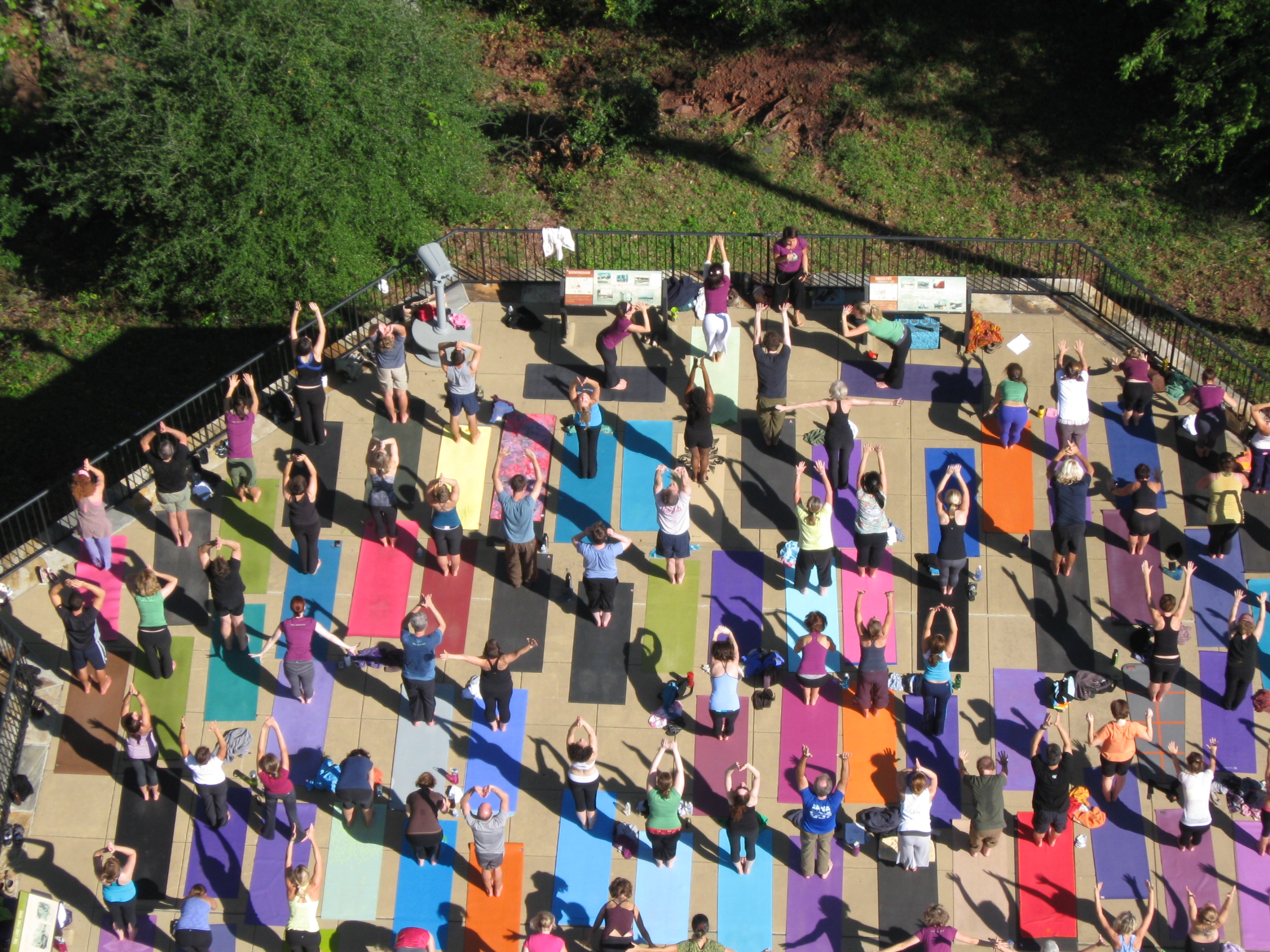
I started thinking about grounding yesterday during some restorative poses in yoga class. Our teacher was talking about surrendering to gravity, letting the earth support us, and how gravity is such an elemental force in the universe. Sometimes we need to reestablish that connection to solid ground, especially after times of intense activity or stress in our lives.

Children want to “fly” most of the time. They have so much energy and they are growing so rapidly that sometimes they go too far, too fast, and a time-out or grounding is necessary. As adults, we can self-impose our time-outs, but, like children, we don’t always recognize that we need one. Or, if we do acknowledge the need, we delay it until we “have time”.

Periods of disruption to our daily routines, such as a lot of travel, caring for a family member, or even preparing for holidays can make us feel as if our feet have left the ground for a while. Sometimes we have the luxury of being able to take a few days at home to rejuvenate, but most times we don’t. In those cases it can be helpful to have some tools to help us stay grounded even in the midst of turmoil.

  • Mountain Meditation – there are several versions of this meditation. I use one from Frank Jude Boccio with my students:   Start by sitting in a comfortable, stable and supported position. Imagine a very tall, impressive mountain; think about how the mountain might change with the seasons or the weather, sometimes visible, other times covered with clouds; sometimes green, other times snow-covered. But throughout the changes, the mountain remains stable. Think of your posture as mountain-like, and think of your emotions and experiences as coming and going like the clouds and the sunshine. You have the ability to maintain stability just like the mountain.
  • Get your hands dirty – Jeff Brantley and Wendy Millstine recommend this practice in their book, Five Good Minutes:    Spend some time digging in sand or dirt, working in your garden, or even repotting a houseplant. Focus on how the soil feels, and what it nourishes. (Bread-making, or working with other kinds of dough, would provide a similar experience.)
  • Restorative yoga – this type of yoga practice requires little in the way of experience or special ability. It uses lots of props such as blankets and blocks to support you while you rest in different postures. For a good overview of the practice see the Yoga Journal web page.
  • Take a sensory walk – this walk will serve to focus your awareness and heighten your experience of your surroundings. Be sure to turn off your phone before you start, and bring along some food or gum for the taste portion of the walk:  Go for a walk, and spend three minutes or so concentrating on each sense one at a time. So, first focus just on the sounds around you; then the smells; next, touch everything that you can; and finally see everything around you as if for the first time. After that, find a place to sit down and close your eyes. Spend the last three minutes on taste, using the food that you brought with you. When you are finished, get up and walk again, using all of your senses. Allow yourself to experience whatever presents itself, without too much planning or judgment.

John Muir said, “I never saw a discontented tree. They grip the ground as though they liked it, and though fast rooted they travel about as far as we do. “

Handle with care

I watched a video on YouTube yesterday called “A Wild Year”. It depicts the activity at just one spot in Banff National Park in a time lapse taken over a 12-month period. The video reveals all the different seasons and the various creatures that crossed the path in that spot, including people, bears, deer, moose, goats, and what looks like a mountain lion. What’s fascinating to me is that each species is at the spot at a different time, and it makes me wonder how much awareness each had of the others.

We all know that animals use more of their senses than people do. Humans rely overwhelmingly on vision most of the time, and hearing second. Would paying more attention and cultivating our other senses allow us to become aware of others in a way that we usually miss? Watching the Banff video raises the question of how we fit into the bigger world. How does what we do affect others? Who can tell that we were here?

The question applies to environmental issues, bringing to mind the American Indian ethos of “tread lightly on the earth” and the Boy Scouts’ philosophy of “leave the world a little better than you found it. “  We can broaden the concept, though. Bringing mindfulness to all of the micro-interactions we personally have every day might change the stamp that we leave on the world.

There is a mindfulness practice I sometimes assign my students, called “Letting Go”. It was created by Gregg Krech of the ToDo Institute.  It involves paying close attention for one full day to how you let go of things: a doorknob, a pen, a dish, someone’s hand. Are you letting go with a sense of intention, or in a careless way? Can you be more deliberate about how you let go, noticing the movement and how it feels? Does the texture, shape or weight of an object determine how you let go of it? At the end of the day, what were the consequences of paying attention to the act of letting go? How did things change?

Most of my students who have tried this practice say that it heightened their awareness of their actions, and of the physical world around them. They became more conscious of their sense of touch. Slowing down their actions also helped calm them, by avoiding unnecessary abruptness and noise.

If we bring more sensory awareness to our everyday acts, maybe our presence can leave things, people and places just a little bit better than how we found them.

Training for Life

Several years ago, when I was part of a boot camp fitness program, I was running one morning with my group. A woman passing by asked us “What are you training for?” Without missing a beat, our instructor answered, “For life.”

Today I’ve been thinking about this idea that we have to be ready for whatever life throws at us, the curve balls like divorce, job loss, deaths or serious illnesses. Sadly, too many people I know are dealing with some of those big life stressors right now. While we expect in an abstract way that our lives are going to have low points, it still can feel like a ton of bricks when we are hit with it. And when we have to deal day after day with the repercussions of divorce, or caring for a sick family member, it will tax even those of us with deep reserves of strength and good health.

Coming into a stressful situation with high levels of wellness in all dimensions can help people be more resilient and better able to meet the challenges. Physical wellness is very important, but it’s not the whole story. The 6 Dimensions of Wellness model emphasizes the whole person:

  • Physical – Do you have healthy eating habits and engage in regular exercise? Are you getting regular medical exams and engaging in self-care?
  • Occupational — Are you getting satisfaction from your work? Do you feel like you make a contribution to something? Does your choice of work align with your values?
  • Social – How are your relationships with family and friends? Do you feel that you have a support network you can call upon when needed? Do you feel connected to others in a community?
  • Emotional – How able are you to accept and express your feelings? Is your outlook on life more optimistic or pessimistic?
  • Spiritual – Do you feel a connection to something larger than yourself? Do you feel your life has meaning? Are your actions in harmony with your values and beliefs?
  • Intellectual – Are you a life-long learner? Do you take opportunities to be creative, to challenge yourself, and to share knowledge with others?

All of these dimensions make up your wellness path, and contribute to your ability to handle stress. Visualize your path right now, and think about an area you would like to improve.  Focus on enhancing your wellness in just that one dimension for now. Here are some ideas to get you thinking:

  • Physical – If your nutrition needs a boost, set a goal of eating 5 servings of fruits and vegetables each day.
  • Occupational – Evaluate your current job. Can you develop a new skill for use there or in your next job?
  • Social — Reach out to someone you’ve been missing. Make a date to go out with friends. Plan a neighborhood get-together.
  • Emotional – Start writing down your feelings in a journal. Watch a funny movie to lighten your mood with humor.
  • Spiritual – Take a walk in nature. Get involved in helping others. If you have been religious in the past, think about reconnecting with your faith.
  • Intellectual – Set a goal to read a newspaper every day, or a book each month. Perhaps sign up for a class on a subject you’ve always wanted to learn.

Wherever your path takes you, and no matter how many bumps in the road, I wish you ease and well-being in body, mind and spirit. Train for life!

Natural Wonders

Sitting at my desk this week, all I hear is the sound of birds chirping, singing and calling to each other. The distant sounds of the highway fade away to the background. Even the neighborhood dogs can’t compete with the birds in springtime.

I was so taken with the bird sounds a few days ago that I found a web site where you can click on the name of the bird and hear a recording of its song. Check it out at http://www.enature.com/birding/audio.asp

Relaxing sounds can soothe people, lower our heart rates and stimulate production of endorphins. Of course “relaxing” is in the ear of the beholder; but for me, the sounds of the birds are in that category. There is a reason why so many recordings of guided meditations tend to focus on images of nature, such as waterfalls, mountains, beaches and forests. The natural world has the capacity to nurture us, make us feel calm and supported, even improve our sleep. But thinking about connecting with nature leads to the unfortunate fact that many of us just don’t spend enough time outdoors.

Most alarming is the fact that children don’t spend nearly as much time outdoors as they used to, in fact only half as much time as they did twenty years ago. Very few play outside on their own, yet research shows that unstructured free play in the outdoors has many benefits to them – ranging from doing better in school, to being more cooperative, to just being healthier overall.

Something as simple as a view of nature helps to reduce stress in children who are highly stressed, and daily proximity to nature can help children focus, even reducing symptoms of attention deficit disorder. Playing in nature also serves the important purpose of giving children the opportunity to take appropriate risks, solve problems and develop creativity, which can lead to enhanced self-esteem.

So many benefits! Yet finding the time, a safe space, adults who are comfortable enough in nature to guide children – all are barriers. Luckily, a few organizations are working to make sure that the next generation has a taste for nature:

  • The Children & Nature Network, whose mission aims to “give every child in every community a wide range of opportunities to experience nature directly”, has tips on their web site for starting your own family nature club, along with other ideas.
  •  The No Child Left Inside Coalition is an advocacy group with almost 2,000 member organizations from across the country that seeks to raise awareness in Congress and among the public of the need for more environmental education in schools. The coalition was formed after many programs were cut in the wake of the No Child Left Behind Act.

As Thoreau once wrote, “We need the tonic of wildness … We can never have enough of nature.”