What it means to be happy humans

Today I attended a discussion on the question, “Are we losing our humanity?” It was a wide-ranging conversation on what it means to be human, how the study of humanities serves us, and what it means to put the humanities into practice in daily life.

One of the many topics that came up was reading, and the importance of reading in helping us develop as human beings. One of the panelists commented that “reading is the vehicle for getting us into narrative,” and that narratives (stories) teach us about human behavior, which can be the basis for discussions about society.

This reminded me of something that my children’s elementary school principal used to say: “Reading is the way in, writing is the way out.” Although she never specified in and out of what, I have some ideas on it in the context of what I heard today: Reading is the way in to your mind, to your inner self, to a deeper understanding of life. Writing (and other forms of expression, especially speaking) is the way out to the world, out to society, out of yourself and into your community.

So to “do” humanities involves engagement in the world. But that’s another area that troubled some of today’s panelists – what is true engagement, true connection, in today’s world? Technology allows us to “talk” all the time, but does it help us listen, truly listen, to others? Certainly we’ve seen that the decline of listening has made us less tolerant of others’ opinions, and less likely to change our own.

Part of that issue is the shrinking of people’s attention spans. We communicate in ever more truncated “language”, we engage in shorter and shorter bursts of activity, and our brains are changing accordingly. Many of us would be hard-pressed to sit and listen to someone for any length of time. In order to be fully engaged as citizens of the world and members of our communities do we need to reverse that trend? Should we be re-training our brains to be able to pay attention and focus for longer periods? There was talk today of the “slow reading” movement – literally an attempt to get people to “move away from the computer” for a while and sit with a book, reading slowly and carefully, even re-reading favorite texts.

Modern life has been made easier by technology and by many of the societal changes that have occurred; but I don’t think that people are really much happier than they were two or three generations ago. Martin Seligman and others who study happiness have developed a three-part model of what happiness is. It includes positive emotion (the kind that comes from having pleasurable experiences), engagement (being in the “flow”, fully absorbed by some activity), and meaning. Tweeting and texting and multi-tasking might provide moments of pleasure, but I doubt that they can generate that feeling of flow that comes with full engagement, let alone supply meaning to our lives.

Engagement and meaning are more likely to be found in reading a book that touches something in your soul; listening to music that moves you; seeing a piece of art or a play that provokes ideas or controversy; writing a letter or a journal; or learning something new. The ways that we assimilate those experiences and make them a part of us opens the door for a deeper connection with others and something larger than ourselves. That’s what makes us happy.

So maybe the question is, are the humanities the key to more happiness in life?

Be kind

“Be kind, for everyone you know is fighting a harder battle,” says the Plato quote that is on the plate displayed in my kitchen. “Be kind…be kind…be kind…” Why is it so hard to keep that mantra in my head?

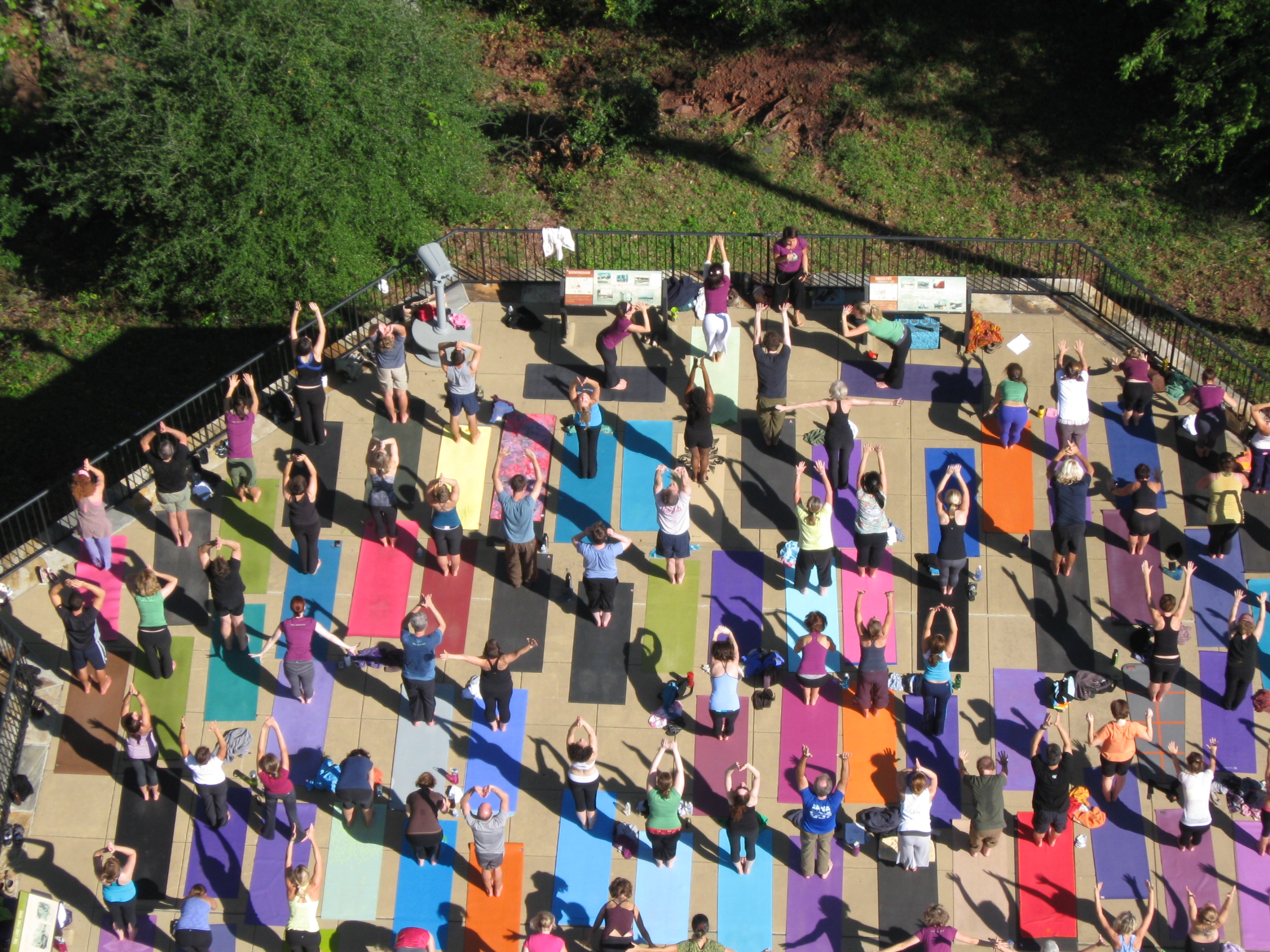
For instance, I’m always baffled by how quickly after finishing a yoga class I can sometimes be not nice to someone! Whether it’s swearing at another driver, or snapping at a store clerk, it seems that my mellow mood evaporates as soon as I walk out the door. Why is that?

Like compassion, kindness is easier when the recipient is someone we love, or someone vulnerable, or someone clearly suffering through no fault of his own. It is much more difficult to practice when the other person is a stranger, or someone unlikeable, or someone who has clearly done something wrong. Being kind in that situation requires a degree of mindfulness and intention that needs to be cultivated purposefully in most of us.

Emotions like anger or impatience are always preceded by a thought, if only for a split second. That’s the moment when we have a choice of how to respond to a situation. Too often, we get trapped by our notions of how things should be, and our “choice” of response is harsh and unkind. Strangely, though, we don’t usually feel better after yelling at someone, but we do have feelings of well-being after acting kindly.

Olpin and Hesson have developed a framework of “levels of responding.” At one end of the spectrum are attachment, rightness, judgment, blaming, resistance and complaining – responses that are usually not effective and result in negative emotions. At the other end are observation (noticing without judgment), discovery (seeking to learn and understand), acceptance and gratitude – responses that are more effective and result in positive emotions. Studies conducted by Sonja Lyubomirsky  and others also show that people who practiced a variety of random acts of kindness experienced an increase in happiness.

It’s so easy to make every situation personal. Why did she do that to me? Why did that person cut me off? Why is he so mean to me? It might not have anything to do with me. It might be accidental, it might be that the person is having a bad day; it might be that the person is in pain. When we stop judging, stop personalizing, and start trying to understand, it becomes a lot easier to respond with kindness, or at least with acceptance.

Kahlil Gibran wrote, “I have learned silence from the talkative, toleration from the intolerant, and kindness from the unkind; yet strange, I am ungrateful to those teachers.” Plato’s reminder in my kitchen makes me realize that kindness is not something to master, but something to practice. Luckily, I meet someone every day who gives me the chance to do just that.

Seize the day

Good time management can help most of us avoid a lot of stress. Setting goals, planning out the day ahead of time, and working during our most high-energy hours can lead to greater productivity, less time pressure and a calmer life. Sometimes, though, it’s best to let serendipity win out over planning.

Case in point: yesterday was a gorgeous day. It was one of those days where the sky is a completely cloudless, brilliant blue. The day was warm, but the humidity was low. It was the best day we had had, or were going to have, this entire week.

So when my friend said to me after a morning yoga class, “What are you doing today? Let’s get something to eat and then take a long walk – it’s so beautiful today!” I barely hesitated. It’s true that thoughts of my to-do list, and the vague commitments I had for the day did cross my mind. But I quickly realized that there was nothing so pressing that it couldn’t be done later in the day, or even the next day.

The word “serendipity” is a difficult one to define and translate, but it essentially means discovering something by accident while looking for something else, or finding something wonderful when we weren’t looking for it at all.  It’s possible to let serendipity play a role in daily time management, just by being aware of, and open to, the opportunities and beautiful moments that might turn up in the course of the day. Michael Olpin and Margie Hesson, in their text on stress management, suggest ‘split-page scheduling’ – dividing your planner page with a line down the middle, listing your plans, activities and appointments down the left side, and leaving the right side blank until the end of the day. Then you use the right side to record the unpredicted moments that arose during the day, such as “a new acquaintance, a fresh idea, a child’s question, an unexpected opportunity, a friend’s need, a chance meeting, a beautiful sunset.”

By opening ourselves to a certain amount of spontaneity in the day, we have the possibility of becoming more creative, experiencing life more fully, and even choosing to take new directions. We allow ourselves to enjoy the journey more, while not losing sight of the destination.

Yesterday, I spent a few lovely hours with my friend, walking and talking. We learned more about each other, enjoyed the fresh air and exercise, and came home hungry and tired. Even with my sore feet (lesson learned: don’t walk 4 miles in flip-flops), I still felt invigorated when I got home. I was able to get some of my work done, I enjoyed the process of preparing dinner more than usual, and I slept well. It felt like a day well-lived.

Look to this day!

For it is life, the very life of life.

In its brief course

Lie all the verities and realities of your existence:

The bliss of growth;

The glory of action;

The splendor of achievement;

For yesterday is but a dream,

And tomorrow is only a vision;

But today, well lived, makes every yesterday a dream of happiness,

And every tomorrow a vision of hope.

Look well, therefore, to this day!

“Kalidasa,” ancient Sanskrit poem

Cicada vs chain saw

Sounds I hear while meditating:

Cicadas

The hum of something – traffic? A lawnmower?

Yipping of a small dog

A hammer

A chain saw

My breath

There’s something incredibly comforting about the sounds I hear on an average day in my neighborhood: the insects, the birds, construction on a neighbor’s house, the sound of children playing. Like a baby who becomes accustomed to its mother’s voice while in her womb, these are the sounds that tell me everything is “normal”, life goes on.

But when I sit down to meditate, these sounds can also serve as a focal point. Following the breath in mindfulness meditation is very popular, but sometimes I find it difficult to stay focused on the breath. So what I like to do is to just sit and experience the sounds in my environment, especially in the spring and summer. If the windows are open, I can hear a lot of sounds from outdoors, both natural and manmade. Today, with the windows closed and the air conditioning on, most of the sounds were distant and muffled. My house was silent; I couldn’t hear appliances, air conditioning or computers from where I was sitting. So I became very aware of what was happening outside.

Most of the time, we don’t focus on the sounds around us, unless they are exceptionally pleasant or irritating. Sound just becomes a background for whatever we are thinking or doing at the moment. But when I stop and listen to each sound separately, it’s easier to find the quiet spaces between them. Deepak Chopra has said that, “Meditation is not a way of making your mind quiet. It’s a way of entering into the quiet that’s already there.” Although it seems counterintuitive, paying attention to sound helps me find silence.

While there aren’t many rules for meditating, having a passive attitude (nonjudging) is recommended. One way to achieve this is by becoming the observer rather than the thinker: I am not my thoughts, so I can note them and watch them pass with a sense of detachment. Observing the sounds around me helps with this, because they seem so remote and apart from me. The sound of the chain saw is no worse or better than the sound of the cicada; they both merely exist.

Heightening my awareness of sound, and observing it passively, can lead, I hope, to becoming a less judgmental observer of myself and others. Can I apply that kind of awareness to my own emotions and attitudes, learning to see and identify them before I act on them? The Dalai Lama says that “It is really a matter of habit…the more habituated you are to this awareness of the rising of emotion, the awareness in itself creates a separation between you and the emotion…”

So I listen to the sounds of my neighborhood, and hope to create a habit.

Living with uncertainty

“Stress levels increased since 1983,” read the headline in USA Today last week. Not surprised? What’s interesting is why stress is higher for some people than others.

Sheldon Cohen and Denise Janicki-Deverts analyzed three national surveys (1983, 2006 and 2009) that used the same measure of stress. In all three, women’s stress was consistently higher than men’s, younger people had more stress than older people, people with less education reported higher stress than those with more, and people with lower incomes showed more stress than people with higher incomes.

What was different between 2006 and 2009 was that the increase in stress after the economic downturn was almost totally driven by middle-aged, college-educated, white men who were employed full-time. Cohen and Janicki-Deverts theorize that this finding could be related to the “threat of job loss, actual job loss, or loss of retirement funds.”

But what I see is that this could also be about loss of power and control. It’s not news that people who are lower in a hierarchy have more stress than those on top. And since it’s also still true that most of the power in our society is held by white middle-aged men with college degrees and full-time jobs, in some senses those people had the most to lose when the economy turned sour.

The stress levels of women, the young and the poor didn’t increase significantly because their position in the hierarchy didn’t change much. But for white, middle-aged men, the downturn may have been the first time they felt themselves to be on shaky ground. All of a sudden, there were no guarantees.

The Company Men”, a film about the economic downturn, portrays this theme convincingly. The main characters, who thought they had it made, suddenly were experiencing the uncertainty that other groups have traditionally lived with. Depending on their access to coping strategies, they either weathered the storm or were destroyed by it.

Our new reality is that many of us will be living with uncertainty for a long time. So how do we inhabit that reality in a way that doesn’t wear us down and make us sick?

  • Recognize what you can control and what you cannot. The stock market is out of our control. So are the actions of other people. But we can control how we react to events. Focus on what’s present right now instead of worrying about what can’t be predicted or controlled.
  • Be careful of how you talk to yourself. Too often, we limit ourselves by having a negative narrative going on in our minds (I’m not good enough, I’m too old, I’ll be next to lose my job). Practice replacing those negative thoughts with positive statements.
  • Believe in yourself. Easier said than done, right? It takes practice to change how you think of yourself. But if you remind yourself of the way you’ve handled situations in the past, and all the things that you are capable of, your ability to believe and trust in yourself will increase.
  • Write about it. James Pennebaker and others have shown that people who write about their feelings every day for several days can improve their moods and feel better emotionally.
  • Have a sense of humor. It helps us change our perspective on life events and sometimes even turns a potential stressor into something less threatening. Know what kinds of jokes, movies or comics are sure to make you laugh, so that you can turn to them when necessary.
  • Consider the idea of change as opportunity. As Claude Bernard once said, “Man can learn nothing unless he proceeds from the known to the unknown.”


Stories we tell

Every family has stories – usually a mix of the good, the bad and the ugly. Some stories are told over and over, and others get hidden away like skeletons in the closet. But all the stories shape us and our life stories.

Sometimes I stare at the old photos of my great-grandparents, or my dad with his army buddies, and try to figure out who they were. Were their lives mostly hard work and disappointment, or did they experience joy and possibility? How does the answer to that question explain who I am? Did I just inherit my blue eyes and brown hair from them, or does their legacy also include patterns of behavior and ways of looking at the world?

Carl Jung wrote that, “The more intensively the family has stamped its character upon the child, the more it will tend to feel and see its earlier miniature world again in the bigger world of adult life.” In other words, our perspective can be profoundly shaped by our early experience.

People in my family have been farmers, miners, autoworkers, soldiers, teachers and cooks. One was a blacksmith, one a postmaster, and another a mayor. One person has a library named for him, while others lived and died in anonymity. Their stories include poverty, abandonment, infidelity and suicide, as well as pioneering spirit, public service, loyalty and courage.

While I want to embrace many of the values I inherited from them, such as a strong work ethic and sense of responsibility, I sometimes find myself stuck with some of the others, such as a tendency to think small and play it safe – characteristics that probably result from generations who always had to struggle. Can we change our lives enough as adults to establish a broader legacy for our own children? Is it possible to get past the negative self-talk, the family dysfunction, and the habitual patterns of behavior to grow into a more satisfying life while still building on the positive aspects of the past?

Just tuning in and becoming aware of our thoughts and feelings, then being able to label them, are good first steps. In their book Emotional Intelligence 2.0, Travis Bradberry and Jean Greaves define emotional intelligence as “your ability to recognize and understand emotions in yourself and others, and your ability to use this awareness to manage your behavior and relationships.”

Understanding emotions and managing behavior require us to pay attention to them. Sometimes we are so caught up in daily life that we act and react without thought. Keeping a journal (or writing a blog) can help focus the attention on what we are doing and feeling.  Formally practicing mindfulness can also help develop the ability to slow down and pay more attention to our emotional lives. A mindfulness practice can be as simple as sitting quietly and observing the breath for a little while each day. In his book, Peace is Every Step, Thich Nhat Hanh writes about mindfulness that it “enables us to be in touch with life, which is wonderful in the present moment.”

So perhaps that is the legacy I can give my children: a consciousness of my actions, a smile shared in joy, an awareness of how awesome life is right now. If I can do that for myself, and for them, what stories will they tell?


Knowing when to surrender

While doing child’s pose yesterday in yoga, our teacher said that the pose is also called “wisdom pose”. I had never heard this before, but as I thought about it, it made sense. In child’s pose, we need to relax and surrender to gravity, to make ourselves vulnerable like children. And in life, it often requires a lot of wisdom for us to fully surrender and let things be.

Do you ever think about how much energy you use up fighting things? From the mundane fights (traffic, kids’ bedtimes, the cable company) to more important fights (interpersonal conflict, problems at work, health issues), so much of our time is taken up with struggling against things that we sometimes feel like we’re not moving to anything.

Part of what drives us is the need to have and keep control of things in our lives. A feeling of control is important to managing stress; but so is realizing when something is out of our control, or deciding that control just isn’t worth the price it requires. So there might be times when it’s appropriate to “give in”, such as when maintaining a relationship is more important than winning an argument, or when the outcome is clearly more important to the other person than it is to you.

Exercising control is often a response to fear as well. Fear of change, fear of failure, fear of success, fear of facing difficult emotions – all can lead us to fiercely hold onto positions that really aren’t serving us. Bertrand Russell said that “to conquer fear is the beginning of wisdom.” And sometimes surrendering control, allowing events to happen and feelings to rise, is the beginning of conquering fear.

Sometimes when we are over-efforting, micromanaging every detail, too focused on the outcome, it’s easy to lose sight of the big picture. If we take a step back to see things as they are, and just stop trying so hard, we might be more successful in reaching our goals. Soren Gordhamer writes that “we can often make more progress and with less stress not by trying harder but by trying softer. By doing so, there is an ease to our effort…”

Top athletes and other types of performers know how to try “softer”, although they may call it by a different name. They train and practice for hours, but when called upon to perform, they have to let go of thinking through every move, step, or note and just let things flow through them. They have the wisdom to surrender, and to trust what is inside of them.

I just read about a study of centenarians showing that the people who live longest are the most optimistic and carefree, relaxed and upbeat, and notably non-neurotic. They are the people who let go of their stress rather than internalizing it. I don’t know if they are practicing child’s pose, but something tells me that they are also people who have learned the value of surrendering.

In the zone

Comfort zone, time zone, twilight zone, euro zone, green zone, in the zone? As we traverse in and out of various kinds of zones, how can we keep as balanced and true to ourselves as possible?

I just came back from a trip to three different countries in 11 days. While this trip sets no kind of record for whirlwind travel, it still demanded an expenditure of energy in both mind and body to find some kind of equilibrium each day. Stepping into another country takes me to the borders of my comfort zone, at least at first. Then I add crossing time zones, and life definitely takes on a twilight zone feel!

While the body can be helped by following good travel advice like refraining from caffeine and alcohol, drinking plenty of water, and exposing oneself to sunlight every day, how do we handle the mental stress?

I love having new experiences, seeing unfamiliar places, learning new things – but such growth doesn’t happen in my comfort zone. So I had to think about how best to navigate the challenges of meeting a lot of new people, learning my way around strange cities and communicating in places where I don’t speak the language.

On my trip, I happened to be reading Search Inside Yourself, a new book by Chade-Meng Tan about the mindfulness-based emotional intelligence curriculum he started at Google. In the book, Meng describes the emotional competencies that (according to Daniel Goleman) make up self-awareness: emotional awareness, accurate self-assessment and self-confidence.

Meng, who describes himself as a shy person, discussed how he prepared for a speech to a large audience by using these competencies of self-awareness. He made his ego “small enough that my ‘self’ did not matter,” and big enough that he “felt perfectly comfortable speaking alongside” the luminaries at the event. He also kept in mind his strengths and limitations so that he could focus “on adding value where [he] could contribute most.”

I realized that by bringing mindfulness and self-awareness to my experiences on my trip, I was better able to deal with the challenges and turn them into positive events. I’m not the bravest or most out-going person in the world, but by staying present and paying attention to people and situations, I was able to increase my self-confidence and to use my strengths to my advantage. For instance, as a spouse at a dinner with people in an industry in which I do not work, sometimes I might feel inadequate or not “high-powered” enough. But by focusing on my strengths in my own field of stress management, and being mindfully engaged with each person I met, I found that I had plenty to contribute to conversations.

In a similar way, as I navigated streets and neighborhoods, I relied on my strong sense of direction, my curiosity and my desire to see everything to give me the confidence to explore on my own. But I tried to stay emotionally aware so that I would know when I needed a break in the “comfort” zone of my hotel room.

The British writer Lawrence Durrell once said, “Travel can be one of the most rewarding forms of introspection.” In that spirit, I’m still tapping into Search Inside Yourself at home now. I plan to use some of the book’s tools, such as journaling and body scanning, to build even greater self-awareness. After all, we never know when the next trip outside our comfort zone will happen.

Words: Handle with care

Wandering around the Library of Congress last week, my eyes gravitated to a quote high on the wall. It said, “Words are also actions, and actions are a kind of words.”   At the time, I didn’t know who had said it (Ralph Waldo Emerson), but it stuck in my head for days.

As I was growing up, I often heard adults say, “Actions speak louder than words.” Emerson seems to be saying that words and actions are equal, that while our actions speak for us, our words have the capacity to sting or caress as surely as if we were using our hands.

This couldn’t be truer than it is today. In this age of digital communication, people tend to throw words around carelessly. With email and texting, we don’t have to worry about wasting paper or ink; we don’t have to take the time to put a letter in an envelope, stamp it and mail it in order to send someone a message. So we don’t think as carefully about the things we say. Words have become a cheap commodity, often chosen without a lot of thought as to their meaning or effect.

If we stop and think about how much of our stress is coming from interactions with other people, we can see that a lot of it is a result of the blunt force of these mindless communications. Emails and texts deprive us of tone of voice, facial expression and body language, so their messages are often misinterpreted. Sometimes offense is taken when none was intended. Speaking face to face is not always better; often people speak at each other rather than to each other. We wait for our turn to speak, rather than listening so that we can respond with understanding.

Headlines are made when celebrities are forced to close their Twitter accounts or politicians are driven from office due to ill-advised words. For the rest of us, the results of miscommunication can be just as painful and devastating: someone doesn’t speak to you anymore, relationships are strained, or business is lost.

How can we practice communicating more clearly, more carefully and more compassionately?

  • Do take the time to be sure that saying something serves a useful purpose. Soren Gordhamer makes the point that sometimes our comments (on-line or in person) are just a form of one-upmanship: “When we are caught in what we may call the judging mind, we continually look for people and actions to criticize. Instead of a critique that seeks to help, we do so to build up our own sense of superiority.”
  • Do pay attention to what others are saying non-verbally, with eye contact, body language and even silences.
  • Do listen reflectively to other people. Repeat or rephrase what they have said to you to be sure you understand it.
  • Don’t communicate difficult messages (like breaking up with someone) via email or text. Give the other person the respect of a face-to-face meeting.
  • Don’t hit the “send” button so quickly, especially if your message is complicated or unwelcome. Wait 10 minutes and read it again to be sure it conveys what you really want the other person to hear.

How would it feel to be on the receiving end of your words? Should that be our standard for better communication? As the Buddha said, “Better than a thousand hollow words, is one word that brings peace.”


My Perfect Day

The warm weather this week has everyone excited. Everywhere I go, people have something to say about it (80 degrees in March!) and a smile on their faces when they talk about it. When I wake up in the morning now, I hear the birds chirping through my open window, indicating another glorious day. I get out of bed with a lightness that is missing in the cold, dark days of winter.

All of that leads me to think about my perfect day. This is a tool that I use with students as a starting point to figuring out their values. If you can make a list of things that constitute a good day for you, it gives you an idea of what is most important to you. What I’ve seen this week is that warm, sunny weather is very valuable to me!

Here are some other things that would make up a perfect (or very good) day:

  • Time spent with friends or family. Whether I reach out to someone, or they make contact with me, it feels good to talk (in person or on the phone) with someone I’ve known a long time. It is a reminder that I have a support system out there.
  • A really yummy meal that isn’t too unhealthy. I love to cook and I love to eat, so this is a significant part of the day. Having healthy food is a bonus because I can feel both satisfied and virtuous about the meal.
  • Some work to do, but not too much. I like the challenge of work and feeling like I make a contribution to something bigger than myself. On the other hand, I like to have choices about how I spend my time.
  • Some physical activity that I enjoy. There’s that good feeling of exhaustion that comes with working my body hard, but not too hard. I don’t need to run a marathon, but I like to get out and move. Running, hiking or yoga all fit the bill.
  • A good book to read. I’ve written before about the important role books have played in my life, along with curiosity and learning. Whether I’m reading novels or non-fiction, I always take something from the books I read.
  • Words of love or encouragement. This could be my kids saying, “I love you, Mom”; a student saying he was helped by my class; a co-worker praising my work; or even a stranger complimenting me on what I’m wearing. Affirmation always brightens my day.
  • Physical contact with someone I love. The skin is the body’s largest organ, and the sense of touch an important way to communicate. Hugs and kisses are a necessity on a perfect day!

When I look at my list of “perfect day” requirements, I see that they correspond very closely to the six dimensions of wellnessPhysical (the exercise and eating); Social (time spent with friends); Emotional (physical contact and words of love); Intellectual (reading); Occupational (working a little bit); and Spiritual (appreciating that warm, sunny day with the birds chirping). Without consciously thinking about it, my desires are reflecting my core values.

Do we know the perfect day when we are living it, or does it exist only in retrospect? Can we wake up every morning with the desire to live it well?

The Indian poet Rabindranath Tagore wrote, Do not say, ‘It is morning,’ and dismiss it with a name of yesterday. See it for the first time as a newborn child that has no name.”