Who’s your Sputnik?

We go through our lives circling, and being circled by, a changing array of characters: parents, siblings, children, spouses, friends and cousins. Our social networks and relationships change with the lifecycle, first one, and then another, becoming more or less important, a few of them constants. These circles of enclosure resemble nothing so much as satellites.
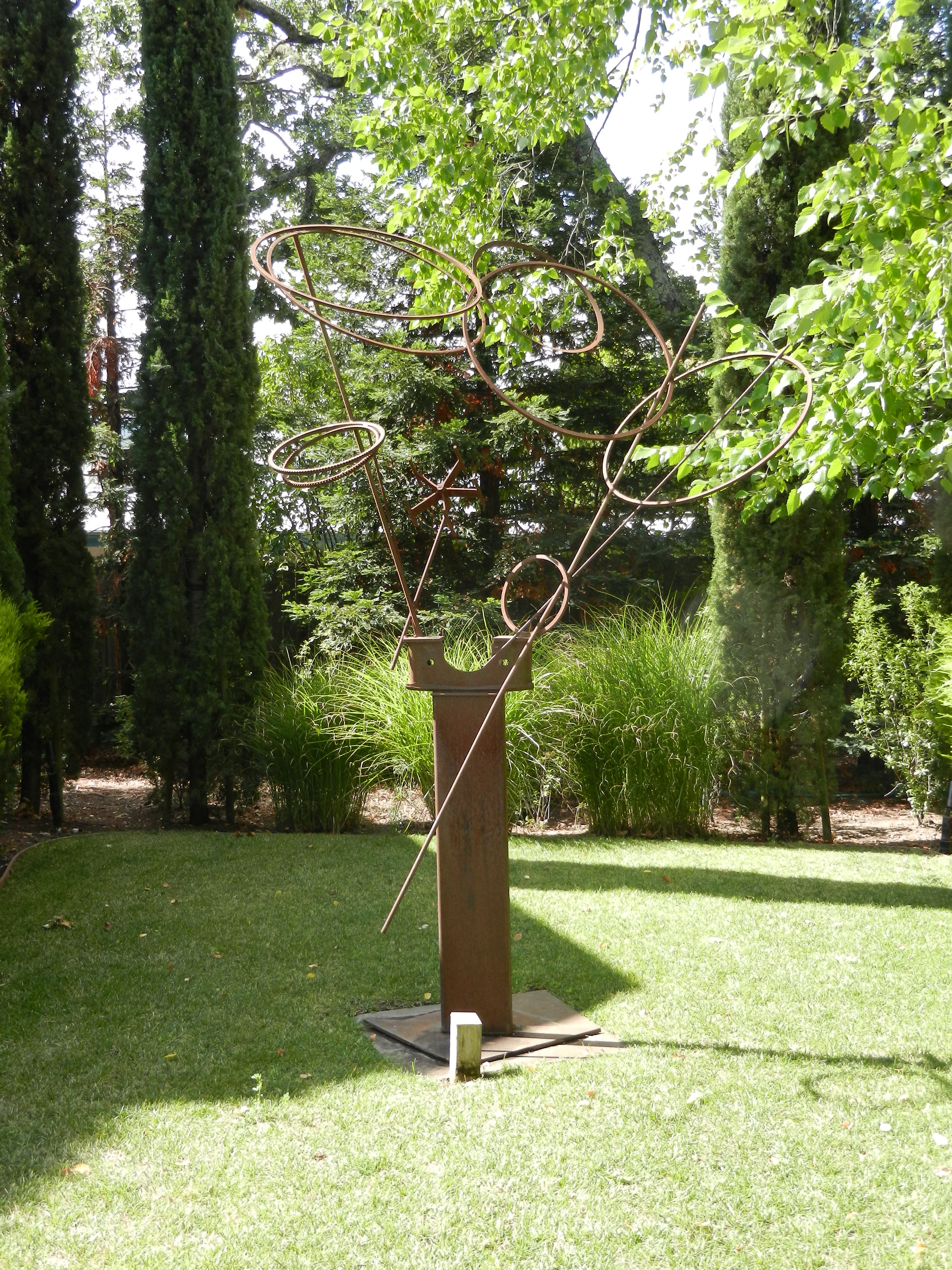
A satellite is a celestial body that orbits a planet, such as Earth’s moon. In 1957, the Soviet Union launched the first artificial satellite into orbit, naming it “Sputnik”. Since that time, the word “sputnik” has become a Russian idiom meaning a special friend or life partner – in other words, a person around whom your life turns, and whose world revolves around you. The staff of the aid organization Partners in Health was so taken with this concept that they gave the name Sputnik to one of their treatment programs in Russia, signifying their commitment to patient-centered care and support.

But the term “sputnik” could be synonymous with any kind of social support. Who are the sputniks in your life? The people to whom you turn in times of crisis, as well as the ones in whom you confide on a daily basis? And for whom are you a sputnik? Which people would you drop everything to help? Whose well-being is vitally important to you?

Parents are like satellites orbiting and protecting their children; and sometimes in later years, that circle turns inside out and children’s lives begin to revolve around their parents. Sometimes we lose someone in our orbit; other times, new friends or spouses join it. We are members of overlapping orbits around other people, our social networks looking like elaborate Venn diagrams. The beautiful thing about a circle is that it can always expand.

Just as Saturn has 53 moons, but the Earth has only one, it doesn’t matter how many people are in your social support orbit if the ones who are there are giving you what you need. That support takes different forms:

  • Feeling cared for and loved
  • Feeling valued and respected
  • Having a sense of belonging
  • Having somewhere to turn for advice and guidance
  • Knowing that there is a safety net of physical or material support

These resources we can tap from our social relationships are powerful players when dealing with stress. The perception of support can either prevent stress from occurring, or be a buffer against stress after it starts. Whether it is someone to listen or someone to give advice, someone who gives a hug or someone who loans you money, someone who raises your self-esteem or someone who stitches up your wounds, support from the people in your orbit keeps you healthier, both physically and emotionally.

The people in your support circle should not be taken for granted. Thich Nhat Hanh writes that investing in people is more important than having money in the bank:

We can get in touch with the refreshing, healing elements within and around us thanks to the loving support of other people. If we have a good community of friends, we are very fortunate. To create a good community we first have to transform ourselves into a good element of the community…We have to think of friends and community as investments, as our most important asset. They can comfort us and help us in difficult times, and they can share our joy and happiness.

During medieval times, many early scientists believed that there was something divine or perfect in the shape of a circle. Is that any less true today? Isn’t there something supremely magnificent about the satellites that slowly rotate around us, keeping us safe?

How Do You Play?

Is it purposeless, spontaneous, an antidote to boredom or loneliness? Does it involve risk, excitement, pleasure or freedom? If so, you play like a child — and that’s good news.

Childhood play has recently become a target of our attempts to help kids be more physically active, but children themselves have a very different idea of what constitutes play. And their perspective could help us help ourselves as well as them.

IMGIn a child’s view, playing has no goal. It is the ultimate in present moment awareness – there is no desired end result – it is an end in itself. That’s one of the take-aways from a new study conducted at the University of Montreal. Other important findings are that risk-taking is pleasurable for children, helping them learn how to cope with life’s unpredictability; that play doesn’t necessarily have to be active; and that they feel ambiguous about scheduled play activities. For both kids and adults, this is a reminder that the social and emotional benefits of play are every bit as important as the physical benefits.

According to Stuart Brown of the National Institute of Play, being playful helps us be more adaptable, leads to trust and benefits brain development. He has studied the rough-and-tumble play of animals, as well as babies’ early play with their mothers. Play is driven by curiosity about the world and each other, and social play is often the glue that holds us together. Brown says that “The opposite of play isn’t work — it’s depression.”

Play can help us be more creative. John Cleese recommends using humor to enhance creativity, because it makes us more playful and relaxed. Brown says that play is a mediator between the brain and the hand. He has observed that design students who can’t creatively solve problems haven’t worked with their hands enough, doing things like playing and tinkering.

In order to “infuse” your life with more play, Brown recommends spending time with children, surrounding yourself with playful people, and looking back at your “play history“. What kinds of play did you enjoy as a child? Can you make an emotional connection between your childhood play and your life now? What is the story you tell about playing?

When I was a child, much of my play was unstructured. I grew up in a big family, and there was always someone around to play with. Because I didn’t have any brothers, our play often involved dress-up and make-believe rather than physical play. We had a music box that played the wedding march, and we would take turns putting on a bridal “veil” and playing wedding. We would take our large collection of “Little Golden” books and make paths around our bedroom with them, or build a fort or tent with a blanket thrown over a clothesline or picnic table. I also enjoyed solitary activities like reading, paint-by-number and crocheting. Our physical needs were satisfied with bike riding and occasional games of softball with the boys next door.

I’m still a fan of make-believe in my preference for dramas and fiction, and my dislike of reality TV. My exercise most often comes in the form of activities I do by myself (running, biking) rather than “team” sports, since I had little of that during childhood. But I try to keep myself open to ways of playing that I’m less comfortable with — partner yoga with my husband expanded my ability to trust; snorkeling and stand-up paddle boarding have helped me enjoy playing in the water; taking more opportunities to laugh and be less serious about life has helped me relax.image

Play is whatever feels like fun and freedom to you: sports, games, puzzles, playing with a pet, laughing at a movie, acting in a play. Play is what makes you feel like your child self again. As George Bernard Shaw said, “We don’t stop playing because we grow old; we grow old because we stop playing.”

Look up. Reach out.

A student of mine once used the phrase, “the world inside my phone”, to describe the allure of technology. Like gravity, it attracts us with its promise of stimulation, information, affirmation and control. Inside the phone, we can adjust what we see, who we friend, how things look, how we respond, and most importantly, how the world views us. It can be as compulsive as a very powerful drug.

There’s a subway station in Washington where big crowds are often waiting for trains late in the evening. Sometimes when I’m there I just want to shout, “Look up!” because it seems that the majority of people, whether they are alone or with others, are staring down at their phones, lost in that world.Smartphone

I’m probably showing my age, but it troubles me to see this. One reason is physical safety – inattention on a crowded subway platform could lead to accidents, injury or becoming a victim of crime. But there’s also the issue of simple human interaction. Everyone laments those who ignore the actual people they’re with in favor of the device. What about the fact of our decreasing tolerance for interacting with anyone outside of our preferred group, whatever that might be?

Marc J. Dunkelman writes about this trend in his new book, The Vanishing Neighbor. He sees us losing relationships with those in our communities that he refers to as the “middle ring” – people who aren’t as close and familiar to us as family and friends, but are perhaps more than just acquaintances. In other words, people like our neighbors. We keep our inner ring close, and we pay attention to the distant outer ring via social media, but we often neglect the people living right next door, because we don’t have to acknowledge them or depend on them anymore. We can buy almost anything on-line, we can stare at our phones instead of making eye contact as we pass someone on the street, flip through our texts as we stand next to a co-worker in the elevator, maybe we don’t even order from a real person in a restaurant. We can keep all our interactions limited to people we deem to be like us. There’s an app that lets us decide where to shop based on politics. Another app steers us away from “sketchy” people and places. It’s all about control.

But there’s something lost by giving up the richness and randomness, and yes, even the danger, of everyday encounters: The chat with the neighbor in the street, saying hello to someone in an elevator, even arguing with the person who doesn’t agree with you. Of course it’s more comfortable to surround ourselves with the safe and familiar, the good and the beautiful. But just as Georges Braque said that “art is meant to disturb,” life should force us to question, to confront, to improve, to grow, to see inequity and injustice and be motivated to change it, to see suffering and hurt and want to end it. If we stay in the world inside our phones, what are we not seeing?

IMG_0385Maybe it’s because I just finished reading Dave Eggers novel, The Circle, that this digital immersion scares me. Eggers’ fictional Circle is a company that combines all social media, and more, under one roof. It’s as if Facebook, Twitter, Instagram, Google, and virtually every app were integrated and controlled by one organization. As the main character becomes more caught up in her job at the Circle, she ultimately sacrifices her family, her old friends, her privacy and her solitude because she so desperately wants to be a part of this far-reaching entity.


Our reality probably won’t mimic this fiction, but there are enough similarities already to give us pause. Before we become the tools of our tools (to paraphrase Thoreau), let’s not forget how to use the powerful apps we were born with. What do you see? What do you hear? What do you smell? What do you feel? Step outside the circle. Be surprised.


How high do you bounce when you hit bottom?

Humans may be unique among species in our potential to be resilient in the face of change. Biological imperative drives most species to persevere in a programmed way even when circumstances become dire. The sea turtle returns to the same beach no matter how much development or predation occurs there. The monarch butterfly’s route to a certain Mexican forest is encoded in its DNA and it flies as if on auto-pilot. The salmon will swim upriver to spawn even when a dam is in its way.

OLYMPUS DIGITAL CAMERAPerseverance is necessary for our success too, and sometimes it’s enough. But today, more than ever before, the world is changing at a breathtaking pace and we need something more than drive and diligence. We need resilience.

Resilience is the ability to adapt to change, to bounce back from losses and hardship, to thrive anew after experiencing adversity. Our resilience benefits us in small ways every day, but especially when life throws a big curveball our way. Think job loss, natural disaster or personal tragedy.

Resilience is about having inner strength, but it’s not about being a Lone Ranger kind of tough guy. In fact, one of the hallmarks of a resilient person is being socially connected: having supportive relationships, working collaboratively with others, and asking for help when necessary.

Our ability to be resilient isn’t fixed — it’s not even something we’re really born with. According to This Emotional Life, resilience develops as people grow up. We gradually gain more knowledge and experience, and that enhances the belief that we can cope with new situations. Ideally, we also learn self-management skills such as how to express emotions. And if we enjoy supportive relationships with our family and community, they help us gain trust and optimism.

Of course we’re all born with different kinds of temperaments, and most of us don’t grow up in that kind of ideal environment. So it comes as no surprise that many of us aren’t all that resilient. We become rigid in our beliefs, resistant to change, and unwilling to look for silver linings. We dig in our heels, deny that change is necessary and hold on to the status quo as long as possible.Detour

See, decide, believe. That’s how someone who resists change can change himself. Like any behavior change, first it’s necessary to see that you might not be so resilient, then decide you want to change. After that, start telling yourself that you are resilient. Believing it helps make it so, because brain research suggests that resilience depends on communication between the logical, prefrontal cortex part of the brain, and the limbic system, which is the seat of emotions. So what we say, what we think, the story we tell about ourselves, helps make the reality.

Other tips for building resilience come from the Mayo Clinic and the Centre for Confidence:

  • Try to see change as a meaningful challenge, and make each day have purpose
  • Learn from experience, and use it to build problem-solving strategies
  • Nurture connections with others; try to resolve any persistent conflicts with family or co-workers
  • Stay positive and hopeful
  • Know that you cannot control all events, but you can control your reaction to events
  • Take care of yourself – being physically, mentally and spiritually well prepares you to adapt to change.

Nothing lasts forever, change is a given and there are no guarantees. The headline of a piece in the Harvard Business Review said it best: “Surprises are the new normal; resilience is the new skill.” Be ready.

She rises still

I rose today and found out that Maya Angelou had died, but in her beautiful words I found inspiration and an intention for my days:

My great hope is to laugh as much as I cry; to get my work done and try to love somebody and have the courage to accept the love in return.

Maya Angelou wrote frequently about courage. She realized that it takes courage to love and be loved, it takes courage to express empathy, it takes courage to avoid making the same mistakes twice, and it takes courage to see ourselves for who we are. Like Aristotle, she thought that courage was “the most important of all virtues. Because without courage, you can’t practice any other virtues consistently.”

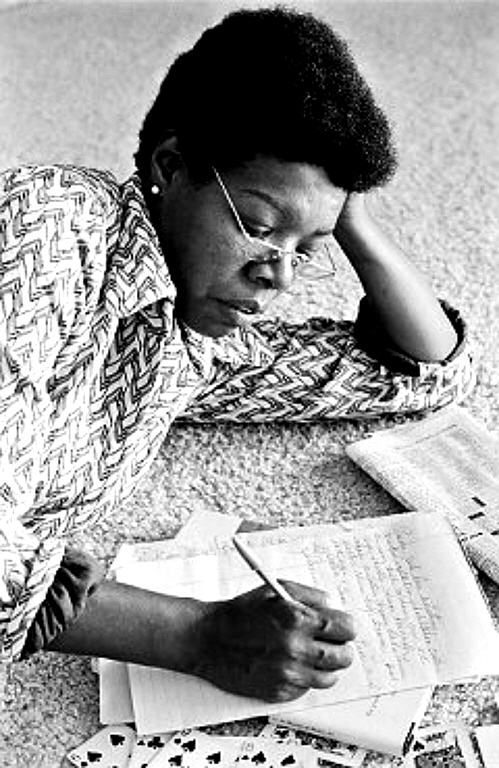
600full-maya-angelouWithout courage, it is difficult to have faith in the unseen and unknown; without courage, hope becomes a struggle; and without courage, it is nearly impossible to fight for justice. For most of us, courage is a word that we use to describe other people, not ourselves. We think that someone who is courageous faces danger all the time without any fear. But Maya Angelou seemed to know that being courageous is about embracing fear with resolution, and acting in spite of it. A courageous person has the self-possession that allows her to live life fully. Courage can be quiet too.

To be courageous is to accept risk and uncertainty. In the absence of such courage, we often resist, as Sally Kempton says, “not only life’s difficulties but also life’s potential sweetness.” We deny ourselves the pleasure of opening to love or to personal growth because it might upset the delicate balance of life as we know it.  But Maya Angelou was not afraid to disturb or to change. She experienced abuse, poverty and segregation, and still embodied hope, faith and courage. She was a dancer, poet, author, actor, mother, and activist. She was not caged by any label, any role or any experience.

How do we become courageous? Eleanor Roosevelt said that, “You gain strength, courage, and confidence by every experience in which you really stop to look fear in the face…we must do that which we think we cannot.” We become brave by practicing courage one day at a time; by saying “Yes, I can”; by letting go of fear, and moving toward love.

The “Habitastic” way to deal with stress

It’s fairly well known that practicing generosity can be an effective way of alleviating stress. Acts of kindness and volunteer work get us out of our heads and out of the “I’m the center of the universe” trap by forcing us to focus on something or someone else for a while. All of a sudden our problems don’t seem so big or overwhelming when put in the perspective of another person’s.

Sweating through a morning of hard work at a Habitat for Humanity home-build this week showed me that there are even more benefits to lending a helping hand on a regular basis. Besides the distraction from our own problems, there is the self-esteem and self-efficacy that comes from learning to do an unfamiliar job and doing it well. I can proudly say that I helped build a roof today, and that feeling of accomplishment helps to dislodge any negative thoughts about myself that might be causing stress.

imageThe hard physical work is also so unlike what most of us spend our days doing that our monkey minds shut off for a while and we are able to stay focused on the task at hand. When operating a table saw or lifting heavy trusses atop a house, keeping everyone safe and doing it right take precedence over worrying about the project at work or the problems of our children.

There’s also the camaraderie of working as a team, whether it’s with perfect strangers, co-workers, or family members. We learn about each other, strengthen existing bonds, and are reminded of the need to be good communicators. Most people very quickly fall into a rhythm of working together for the common goal.

I don’t know what brought all these people together to build a house for an unknown family. There was the young woman getting married in two weeks, stressed over wedding plans, but taking the day to build instead. There was a group of people who work in the same office given the day off for the project. Two sisters, a mother and daughter, people on vacation. Was it for fun, stress relief, a belief in the cause? Does it really matter?

Jacques Cousteau said that, “It takes generosity to discover the whole through others. If you realize you are only a violin, you can open yourself up to the world by playing your role in the concert.”

How to wage peace

Martin Luther King, Jr. said that, “It is not enough to say we must not wage war. It is necessary to love peace and sacrifice for it.”  Each time I pass this banner in front of the Quaker meeting house I’m reminded that our actions for peace have to start in our own homes and lives.image

What are the causes of war but the same things that lead to strife on the micro-level: wanting an advantage over someone else, refusing to forgive a past wrong, holding on to things long after their importance has waned?

A more peaceable life might be within reach if we turned more often to these intentions:

Compromise — The word comes from the Latin meaning a “mutual promise”. Too often we think of compromise as one-sided, only seeing how much we are giving up. But the promise in compromise is powerful, and it shows how much we are gaining from the other side.

Listen first — In the words of a U.N. peacekeeper, “You have to be willing to let each person express their point of view, even if it’s a criticism against you. You have to let them talk first, and then speak. If you don’t let them express themselves, you won’t get any results from the discussion.”

Forgiveness — When we forgive, we can begin to heal the hurt that we feel. Refusing to forgive just lets the hurt fester – and closes down our hearts a little. Gregory David Roberts writes that “every act of love is in some way a promise to forgive,” that love is dependent upon our ability to forgive.

Accept change — Nothing stays the same. And as Frank Jude Boccio writes, “The problem is not that things change, but that you try to live as if they don’t.” We let beliefs about how things should be keep us locked in a struggle with how things actually are. Shedding those habits of mind can drastically shift perspective.

Happiness is a universal goal — In an interview in The Atlantic, Daniel Gilbert talked about it this way:

I think the problem with the word “happiness” is that it sounds fluffy. It sounds like something trivial that we shouldn’t be concerned with. But just set aside the word and think about what the word signifies. You quickly realize that not only should we be concerned with the study of happiness, but that it’s impossible to be concerned with anything else. Pascal says: “All men seek happiness. This is without exception … This is the motive of every action of every man, even of those who hang themselves.”

How could the goal of all human behavior be a trivial thing?

How does your life help to remove the causes of war? We may not be able to solve the problems in the Ukraine or Syria, but if we live our lives in a way that demonstrates the principles of peace — acceptance, forgiveness, compromise, humanity, understanding — maybe we can start a tiny ripple of peace in the world.


Dalai Lama shares his favorite prayer

“May there be joy in the world with harvest and spiritual rest. May every good fortune come to be and may all our wishes be fulfilled.”

These words, which the Dalai Lama prays every day, were the start of his message to the U.S. Senate yesterday.  What would the world be like if we all started the day with similar intentions?

Flower conservatory at GG Park 1

Can 25 words describe a friend?

My first best friend left my life so long ago that I can barely remember her face. Strawberry blond hair, some freckles, a vague recollection of her smile, and that’s it. But a writing prompt from my Wellness & Writing Connections group has had me trying to conjure memories of her all week.  “Write 25 words that describe a childhood friend.” Can I find 25 words that fully capture Susie and what she meant to me?

yin yangShe was the yang to my yin, bold where I was shy, fearless where I was cautious, loud where I was quiet. With Susie, I tasted independence for the first time, earned my first money, ran away from home, and learned about sex. From the age of 4 until 11, we were inseparable, the sidewalk that ran between our houses a well-worn path.

From Susie, I also learned about loss, not when she died, but when our friendship broke up. I spent a summer mourning her, just as surely as if she had died. I know now that I was just as responsible for the end of our friendship as she was, though I didn’t see it that way back then. It was devastating to me.

Having Susie for a friend taught me to leave my comfort zone in two ways. When we were together, she was often challenging me to do things I wouldn’t ordinarily do. And when we weren’t together anymore, I had to forge bonds with new people outside the comfort zone of her friendship.

Social scientists believe that we tend to seek out friendships with people of similar personalities (the “similarity effect”), but Susie taught me to appreciate a friend who is the opposite of me, one who stretches my view of the world and pushes me toward new possibilities. As Henry Ford once said, “My best friend is the one who brings out the best in me.”

I see glimmers of my first best friend in several close friends who came along later: The ones who were from very different backgrounds; the ones who were bold and outspoken; the ones who were just a little bit wild. I’m grateful to all of them for where they’ve taken me and how they have enriched my life. But I will never be able to thank Susie in person for what she taught me; there will be no re-connection on Facebook, no school reunions, no chance meetings. She died young, and true to form, doing something a little bit dangerous.

So let these 400+ words that describe my childhood friend be my letter of gratitude, my valentine to her.Valentine2

Learning about mindfulness from The Mentalist

Have you ever been upset with someone, frustrated because they didn’t understand what you needed from them, only to have them say, “I’m not psychic you know!” The message, of course, is that we can’t read each other’s minds, so how can we possibly know what another person feels or needs?

But the reality is that we really don’t have to be psychic to know some basic things about other people; we just have to pay attention.

In case you’ve never seen The Mentalist, it’s about Patrick Jane, a man who at one time pretended to be a psychic. In reality, he just has very keen powers of observation and a lot of chutzpah. His arrogance as a fake psychic caused his family to be murdered, however, so he stopped pretending, and went to work for the police, helping them solve criminal cases.

Of course, The Mentalist is a fictional TV show, but it’s fascinating to watch as the character explains what he knows about a suspect or a witness, just from observing or talking with them. Body language, clothes, nervous habits, accents, the things we surround ourselves with – they tell our story, if anyone takes the time to read it. Patrick Jane does that – he questions things that seem out of place; he uses his senses; he looks for what people value, he empathizes.

If only we were all TV characters like the Mentalist! We might understand so much more about each other. Don’t despair, though, there’s an app for that. Cognitive psychologists have been developing wearable gadgets that can monitor emotional ups and downs by measuring things such as heart rate and electrical changes in the skin. Depending on the device, they send messages about your emotional state to you or to other people. This is not as creepy as it sounds. Worn by children with autism, they can provide valuable messages to parents and caregivers so that the adults can respond to a child’s behaviors appropriately, even if the child isn’t able to express what he or she is feeling. The devices are also useful as biofeedback tools so that you can learn to recognize and manage your own moods and emotions.

Would feedback like that help us understand each other better? If you’re wearing a wristband that sends me messages when you’re feeling low, would I eventually learn to recognize those moods without the technology? Or would I become dependent on the technology and no more sensitive than I was before?

Humans are hard-wired for empathy – somewhat. We learn it as children by watching the adults around us, and from stories we read and hear. But we need to keep practicing it. Even as adults, we can improve our emotional intelligence. Before we can truly understand others’ emotions, we have to start with ourselves – staying connected to our emotions instead of suppressing them, learning how to reduce stress and being okay with strong feelings. Then we can expand that intelligence to include others – communicating better by staying focused on the person we’re with, making eye contact, paying attention to nonverbal cues (like the Mentalist!)

Daniel Goleman says that, “A prerequisite to empathy is simply paying attention to the person in pain.” How you turn your attention to someone may not matter in the end. Staying tuned in emotionally with the people we love makes our relationships stronger, whether it comes from a gadget, a mindfulness practice, or even psychic ability.