Dreaming & scheming together

I was nearing my seventeenth birthday before I slept in a room without one of my sisters. I’ve always thought those years of close contact had something to do with my need for a lot of “alone” time now. As Joseph Campbell said, we all need “a sacred space,” even just a corner of a room, where “you can experience and bring forth what you are and what you might be.” And yet, my memories of the rooms I shared resonate so much more vividly than those I had to myself.

The Patient Voice Project at the University of Iowa (an expressive writing project for people who are ill) often assigns participants to write about their childhood bedrooms. After all, it’s a topic that virtually everyone can write about, and it offers a “way in” to the practice of expressive writing. Telling stories through expressive writing often changes the experience and shows us the way forward.

We lived first in a small duplex house built in 1924. The presence of my older sister, born only 16 months before, hovered over me. We napped together, played together, and shared everything. Shortly after our third sister was born (just  shy of two years after me) we moved to a “bigger” house, about 1000 square feet, but with three bedrooms. Most of my memories begin  there.

The musician Robert Smith says that he still goes back to his parents’ house so that he can just sit in his childhood bedroom and “feel small.” When I think about the shared rooms of my childhood, small is the operative word. We felt small and so we played small games and dreamed small dreams in those rooms.

Little golden bookMy older sister and I like to tell people how we constructed paths around our room with our collection of Little Golden Books. I have no idea how many books we actually had, but at the time, it seemed liked hundreds. Since they were all the same size, we could line them up and turn them into roads. While we were supposed to be napping, somehow we were developing a sense that we needed to have a path to somewhere else.
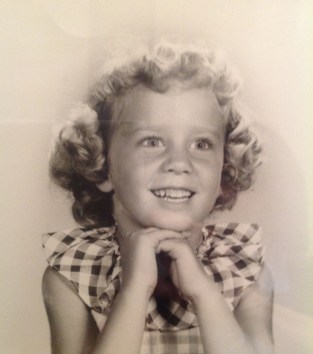

Role-playing the life of the adults we knew was another pastime in our room. Our mother went every week to have her hair done, so we decided to do it too. My sister (being the bossy one) decided to take the part of hairdresser, so it fell to me to have my hair “done.” She cut my hair with preschool scissors, we stuffed the shorn locks into a shoe box and thought no one would notice. I don’t recall feeling any remorse or regret, even after we were found out.

2017-04-19 15.55.37
After the haircut

For many years, the three of us shared a room with Sleeping Beauty cut-outs on the wall where we created our own fantasy lives. We had to go to bed when it was still light outside and other kids were playing in the streets, so we played “house” in our beds. By carefully turning down the covers (bedspread, blanket, sheet) to different intervals, we could delineate three different rooms atop the bed. There, we would each play-out grown-up life in our own “home.” Invariably, we ended up making too much noise and bringing down the wrath of our very real parents.

By high school, of course, our world had expanded, and the bedroom was no longer our playground. My older sister and I got a “new”, wood-paneled bedroom when my dad finished the basement of the house, but we fought like cats and dogs over the space. My sharpest memory of that time is when I divided our room by building a wall between our beds out of my shoe boxes. (Even then, I loved shoes!) We had gone from building roads to building walls, and I couldn’t wait for her to go off to college and leave me with a room of my own.

The funny thing is that I don’t remember much from the time when I had the room to myself. Sarah Susanka has written that, “We are all searching for home, but we are trying to find it by building more rooms and more space,” instead of thinking about the essence of what makes the spaces feel like home. Without someone to share it and fight over it, the room lost some its luster. There’s a line in the Beach Boys’ song, “In My Room,” that goes, “Do my dreaming and my scheming lie awake and pray…” I think I must have sensed that so much of the dreaming, scheming and praying had been a shared experience, that it was the people, not the place, that were important to me.

.

Do or do not? Procrastination’s grip.

The ancient Greeks had a word, “akrasia,” that meant doing something against one’s better judgment. To put it another way, akrasia is a failure to do what one has intended to do and what one ought to do. Our modern word for this is procrastination.

Here are the things I do when I’m procrastinating about doing something else:

  • Check my email
  • Tell myself I can read one (just one!) chapter of a book
  • Call someone
  • Do some laundry
  • Do the crossword puzzle or Sudoko
  • Organize my desk

Here are some of the things that I should be doing instead:

  • Grading my students’ homework
  • Writing for this blog
  • Catching up on work projects
  • Scanning the documents that have been sitting in a box for 3 years

Why is it so hard to get started on these tasks? I know that I can’t really relax with the book or the puzzle while these other things are hovering in the background, yet even that unsettled feeling can’t always move me to begin.

Having just finished teaching a unit on time management to my students, I know that  researchers characterize people like me as either avoidance or arousal procrastinators. Avoidance procrastinators tend to be self-critical, often have a maladaptive sense of perfectionism, and possess irrational beliefs about the outcome that would result from actually doing the thing they avoid. Arousal procrastinators, on the other hand, claim to work best under pressure (which is usually not true) and seek the thrill that comes from doing things at the last minute.

I’m pretty sure that I’m an avoidance procrastinator, although I do have to admit that I get a little adrenaline rush when I’m working up against a deadline. We avoidance procrastinators often believe that unless our work is absolutely perfect and liked by everyone, our self-esteem will be threatened. On other tasks, we switch into avoidance mode because they require us to do something that is out of our comfort zone, and we question our ability to even accomplish them.2016-04-02 12.50.04

Those of us who struggle with procrastination could try jolting ourselves out of it with the Nike motto, “Just do it.” Or we could use Brian Tracy’s metaphor, “Eat That Frog!” which comes from a Mark Twain quote: “If the first thing you do each morning is to eat a live frog, you go through the day with the satisfaction of knowing that that is probably the worst thing that is going to happen to you all day long.” In other words, get the tough stuff done first and then it’s out of the way.

Those tricks might work for some of us some of the time, but it’s important to realize that procrastination isn’t just laziness or lack of willpower. For some people it can have lifelong consequences, such as an inability to make and achieve career or financial goals, a tendency to anxiety and depression, and poorer physical health. Fortunately, procrastination can be treated with cognitive behavior therapies such as REBT (rational emotive behavior therapy). REBT asks you to imagine doing the thing you’ve been avoiding, and then predict and label the emotion that you would experience with it. It’s like a trial run for the real thing.

Practicing mindfulness might also help. A study done by Sirois and Tosti showed that higher mindfulness scores were associated with lower levels of procrastination and with more unconditional self-acceptance. It may seem counter-intuitive that the present-moment awareness of mindfulness would be beneficial to procrastinators who already have difficulty being future-oriented and goal-directed. It’s true that many procrastinators are too focused on short-term pleasure and current rewards, but that’s not the same thing as mindfulness. When we practice mindful acceptance of our present experience, we can accept the discomfort of the difficult task and also generate more self-compassion while we do it.

As Thich Nhat Hanh has written,

“When fear manifests, we want to have the seed of mindfulness also manifest to embrace it. So we have two energies present — the first is the energy of fear, and the second is the energy of mindfulness. The fear receives a bath of mindfulness and becomes a little bit weaker before it drops back down to  the depths of our consciousness in the form of a seed.”

Do you believe in miracles?

“We need to recognize that there is no age at which we lose our ability to be miracle workers,” writes  Darren Main in “Spiritual Journeys Along the Yellow Brick Road.”  Leave your comfort zone, he says, take risks and rediscover a sense of creativity and exploration – because in doing so, you can accomplish great things.

IMG_0086Are you feeling like it might take a miracle to get through the next four years? Do you doubt how much control you have over what happens to you? If so, it might be a good time to take stock of your physical, emotional and psychological “bank account”. What resources do you have and how can you best put them to use?
It is widely recognized that resilient people are more able to recover quickly from stressful events, and to utilize a variety of coping skills and strengths in doing so. Resilient people have generally built up these resources ahead of time (i.e. the bank account) by engaging in practices that enhance their physical and psychological well-being.  So when tough times hit, they have a more positive view of themselves, can make plans, and are clear-eyed about what’s needed. Most importantly, resilient people tend to have what’s called an internal locus of control.

Locus of control is a term that refers to the degree to which individuals believe that they can control the events that affect them. Are outcomes based on your ability and effort, or are they the result of outside forces and luck? If you believe that you can control yourself and influence the world around you, you are said to have an internal locus of control. If, on the other hand, you think that everything is decided outside of your control, and many events are just fated to happen, you probably have an external locus of control. While most people don’t fall at one extreme or another, we do have tendencies in one direction.

People who have a high internal locus of control tend to be happier, less depressed, and to suffer less stress. People who have a higher external locus of control often don’t seek solutions for problems because they don’t believe they can effect any change. It is possible to develop a more internal locus of control, however, by monitoring your self-talk. Check to see if you are speaking in absolutes (never, always, must, have to), and try substituting other words. Instead of saying, “I can’t”, say “I won’t” or “I choose not to”. The important thing is to remind yourself that you do have choices.

The more you can leave your comfort zone and have some success making small changes, the more you will believe in your capabilities, and the greater sense of agency you will have. Or, as Jon Kabat-Zinn puts it, “Your confidence in your ability to grow influences your ability to grow.”

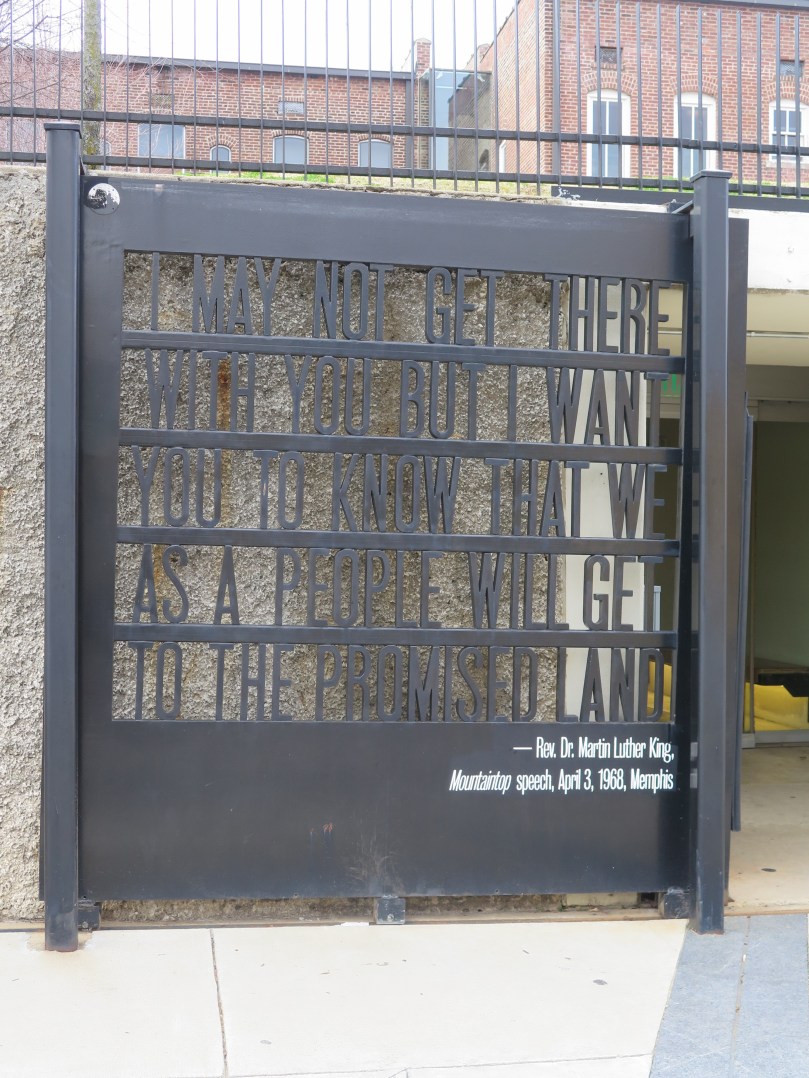
This is more important than ever for people who are unhappy about the direction of the new U.S. administration. During a recent talk at American University, DeRay Mckesson of the Black Lives Matter movement said that progressive activists need to do more than just oppose everything for the next four years. They need to be creative, ambitious, and to “fight for real things, too, in this moment.  I worry sometimes because I’ve seen people get so defeated that they forget to dream about what the world can be.”

Miracle workers are the resilient, dedicated people who leave their comfort zones every day to dream and enact what the world can be. They are the teachers who show their students how to be critical thinkers. They are the people I volunteer with, who provide food, clothing and opportunity (with dignity) to those who need a helping hand. They are the lawyers who went to airports to represent immigrants. They are the women who are deciding to run for office in their local communities.

Amelia Earhart once said that, “The most difficult thing is the decision to act, the rest is merely tenacity.” We can all be miracle workers if we set aside fear, make the decision to act, and fight for real, positive change.

083


This January, don’t resolve — repose


It’s interesting that January 1st brings on a frenzy of promises to eat better, exercise more, stop smoking and similar action-oriented resolutions when I always feel like all I want to do is hibernate like a bear. So I was happy to find out when I went to my yoga studio last week that the pose of the month is Savasana.

Savasana (shah-VAHS-anna), also called Corpse Pose, usually is done at the end of every yoga practice, and it looks deceptively easy. After all, what could be that hard about lying flat on one’s back with arms and legs stretched out away from the body, and closing the eyes for 10 minutes or so? But I say “deceptive” because Savasana can be the most difficult yoga pose of all — first, because it’s hard for many of us to truly relax, and second because Savasana is about relaxing “with attention”. Yoga Journal says that in Savasana we attempt to “quiet the physical body and pacify the sense organs”, so we need to pay particular attention to relaxing the eyes, ears, nose, and mouth. It asks us to surrender to the point where the boundaries of the body begin to dissolve, where we can symbolically “die” to old ways of thinking and doing. savasana_in_yoga_gembira_community

Savasana is the bridge that allows you to take the benefits of class into your everyday life. This is why yoga teachers tell people who have to leave class early that they should plan to stop the regular practice with enough time left to take a few minutes in the pose before going. As Jon Kabat Zinn says, “Not forcing anything, we just do our best to line up with the warp and woof of body and mind, floor, and world, staying in touch.” Savasana brings together all the disparate pieces of the yoga class and gives you time for processing them and absorbing their benefits.

Sleep, which we tend to crave during the cold winter months, is like Savasana in that it is important for integrating the separate pieces of our days. We can be more effective the next day if we’ve spent time in sleep, regrouping and consolidating everything that we learned and experienced during the day. In addition, sleep sometimes helps us problem-solve because the useless information that came in during the day is forgotten, and only the crux remains. While there is still much to learn about the purposes of sleep, some researchers theorize that it helps the brain be “plastic”, to dial down synaptic activity for a while and use less energy. We are literally resting the brain, perhaps more so than resting the body.

Animals hibernate in the winter as a way of saving energy too, because food resources are scarce. Most of us don’t have that problem, but there’s still a case to be made for looking at January as a month of repose. It’s the coldest month of the year in the northern hemisphere and has some of the shortest days, so why not sleep a little more and yes, get down on the mat in Savasana? Use the darkness to gather energy, reflect on where you’re going and prepare for the longer days ahead. The word “January” comes from the Latin word meaning “door”. Consider opening the door to the new year slowly rather than abruptly. Take the time to first figure out what’s on the other side.

Indira Gandhi said that, “You must learn to be still in the midst of activity and to be vibrantly alive in repose.” That’s not only the challenge of Savasana, but also the way we manifest it in our everyday lives.


Wouldn’t it be more pleasant to ask for nothing?

Sometimes I lose sight of the fact that the “Santosha” of my blog name means contentment. I write about the struggle to find contentment more than what it means to have it. The Roman Stoic philosopher Seneca said that “We never reflect how pleasant it is to ask for nothing.” Now I see that I’ve been asking for contentment more than discovering it right here.

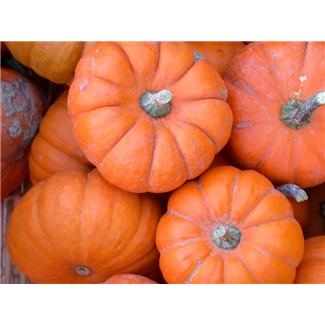
One of my favorite yoga teachers, Jo Tastula, says that we tend to focus a lot on what we want to receive, rather than what we want to let go of. She relates this to the season of Fall, and recommends that we consider the image of the tree dropping its leaves. What does that perspective look like? From up in the branches, perhaps it is a relief, or a comfort, to let go of what’s been weighing us down; to be bare and pared down to essentials. The fullness of Fall (imagine a nice round pumpkin or apple) gives way to completion (harvest, year-end). It’s a time to rest, to renew, and to strive less and prepare more.pumpkinsWhile Seneca has a somewhat mixed historical reputation, he is still considered to be one of the first great Western thinkers, and much of what he had to say about emotions is relevant to us today. When he said that “Contentment is achieved through a simple, unperturbed life,” he was talking not only about emotional regulation, but also gratitude, because contentment is impossible without feeling grateful for what we have already. Contentment requires us to stop asking for things, so that we can reflect on what is present. Thanksgiving_23

A recent episode of the comedy TV show “Blackish” demonstrated this idea in a gently humorous way. The main character, Andre, is upset to learn that his daughter is questioning her belief in God. But his own belief often consists of prayers that are requests  — asking God for some action or some thing that he thinks will make him happy. Later in the episode, after a moment of crisis for the family, he realizes the value of what he has and what he almost lost. Then his prayers change, and are about gratitude and thanks. In that moment, he stops striving, knowing that he has what is essential to him.

What would happen if you stopped striving for a while, maybe even shed some dead leaves? Perhaps you’d have time to nourish the truly important parts of your core. Or maybe just have time to breathe, and in that moment, discover santosha.

It seems to me that contentment is about satisfaction, and happiness is about satisfaction-plus. The plus is extra joy, extra pleasure. It’s like dessert at the end of the meal – it’s nice, but you don’t need to have it every day. I’m reminded of two books that I used to read to my kids when they were little. One was called “More, More, More, said the Baby”, and the other was titled “Just Enough is Plenty.” It’s nice to have more, but on many days, simply to be satisfied is enough, in fact it’s plenty.


If only this were a Mel Brooks movie

Each new day of the 2016 presidential election campaign makes me feel more as if I’m in some sort of psychocomedy like the movie “High Anxiety“, only instead of a hospital for the “very, very nervous” we have an entire nation on the edge of its seat, unsettled, uncertain, unhappy and yes, very nervous.

Plato said that “a good decision is based on knowledge,” but he also said that “human behavior flows from three main sources: desire, emotion and knowedge.” And when it comes to elections, emotion might have the upper hand. Psychologist Steven Sosny, writing in Psychology Today, says that we suffer from election stress partly because the “toddler brain” hijacks the “adult brain.” Adult thinking is rational and calm, while toddlers make impatient and sometimes greedy choices based on emotions.

A lot of people are already locked in to their candidate. Often such certainty is emotional, says Sosny, not intellectual. That’s why it’s becoming virtually impossible to have a conversation with someone who disagrees with you politically. In fact, just today in The Washington Post, there was an article about how geographically and socially polarized we are politically. People who would have discussed the elections with friends and co-workers in prior years are staying strictly away from such conversations this year.

A study of the 2012 presidential election found that voters don’t always want to feel responsible for the outcomes of elections, especially independent and undecided voters. The harder it was for a person to decide on a candidate, the more likely they were to ascribe the outcome of the election to fate.  In addition, stress hormone levels might even impact voter turnout. Research published in 2014 found that people who have higher baseline levels of the stress hormone cortisol are less likely to participate in voting, while those with lower baseline levels are more likely to vote. In other words, people who have a lower tolerance for stress don’t want to engage in what is an inherently stressful process.door-number

The stress continues into the voting booth. Israeli researchers found that cortisol levels just prior to casting a vote were twice as high as people’s baseline levels and even higher in people whose candidate was predicted to lose. This year, with the rollercoaster we’ve been on, it’s hard to say when we last experienced baseline stress levels. No wonder I’m hearing more and more people say, “I just wish it were over!”

Following a 2004 election in Taiwan, about 10% of the population was diagnosed with depression and anxiety, labeled “post-election stress syndrome.” And in this country, we usually see advice after election day on how to deal with these “blues”. This year, however, our high anxiety and election coverage fatigue might call for some pre-election stress relief. So what might help?

  • Going on a complete media “fast” for a few days.
  • Getting your news from print sources rather than TV or radio, which tend to be more hyped.
  • Focusing on your own life. The truth is that the election outcome won’t affect your day-to-day routine at all, at least not right away. So take comfort in that and use your emotional resources there.
  • Doing a loving kindness “just like me” meditation. The hardest thing for those of us who feel passionate about a candidate is recognizing that those on the “other side” want the same things we want, deep down. Focusing on the ways that they are “just like me” can help.

If the election really were a Mel Brooks movie, it would end with all the bad guys getting their comeuppance and all the good guys living happily ever after. In real life and politics, it’s not that simple. But at least we know that we can do it all over again in 4 more years.

Give up or let go? What’s the difference?

Why do we give up? Why do we surrender, admit defeat, part ways with somebody or something, or stop hoping for a positive outcome? Maybe it’s because sticking with it is too hard, or it takes too long, or because we’re tired of failing. Sometimes we decide that we’re just not strong enough to see something through, or we just don’t care enough.

That’s very different from letting go, at least in the Buddhist sense of letting go. Letting go means easing up on the tightness with which we hold onto people, things or ideas. It means relinquishing our hold on how we want things to be, and instead knowing that we have given our best effort and now we accept what happens. Thich Nhat Hanh has written:

…for many of us, even when we are most joyful, there is fear behind our joy…We are afraid of things outside of ourselves that we cannot control…We try to hold tight to the things we care about — our positions, our property, our loved ones. But holding tightly doesn’t ease our fear. Eventually, one day, we will have to let go of all of them.

Letting go can be a lot scarier than giving up. When you give up, you can stop thinking about the person, thing or  idea, and just eliminate it from your life. Letting go, on the other hand, means realizing that you don’t have control over everything, and you might have to live with and accept an outcome that is different than what you hoped for. You don’t stop caring when you let go of the outcome.

How can the feelings of caring very deeply about something, while at the same time having no control over it, co-exist? To Jon Kabat-Zinn, letting go is “allowing things to be as they are.” That means being a witness to one’s fears and insecurities, being fully aware of those feelings, and being able to live peacefully with them. How hard is that?!

Without a doubt, a really strong mindfulness practice is a good place to start the process of letting go: The practice of looking deeply inside and not being afraid of what arises, but rather noting it and letting it go by. But that’s not enough. We also have to be able, in that stillness, to move from worry and unease to comfort and joy. Not an easy task!

Thich Nhat Hanh suggests that instead of running from the present moment because of the difficulties we face there, we instead try to remember all the positive things in life, which usually are greater. Maybe it’s the smiling face of a loved one, a particular place that brings you peace, or some accomplishment of which you are proud. There is an exercise in a stress workbook that I have, which can help identify both the things in life that drain your energy (the difficulties and worries) as well as the things that fill you with energy and revitalize you. These are the things you want to bring attention to:

Drainers and Fillers

Once you go through this process of identifying what aspects of your life are either filling you with joy and energy, or sapping your strength, you can make decisions. There might actually be things on the left side (drainers) it would make sense to give up on. There will be others on which you’ll want to loosen your grip and try to live with more peacefully. The fillers will help you do that — you’ll remember who is there to support you, what brings you joy, and where you find meaning in your life. The fillers will provide the images you turn your thoughts to during meditation. They will help you remember the wide open space in front of you, and all of the possibility that exists beyond your fears.

Six ways to tend your emotional garden

Emotional wellbeing depends on regular nourishment, not unlike a flower or vegetable garden you cultivate. While vacations, sabbaticals and spa days are great, they’re the emotional equivalent of trying to maintain a garden just on the weekends or at the change of season — things might look okay, but they’re not thriving spectacularly with just that level of care. Most of us require more routine weeding and watering to maintain a high level of emotional wellness.

Thich Nhat Hanh says that our consciousness exists as seeds and as the manifestation of those seeds. We may have seeds of happiness, seeds of anger, seeds of sadness. But it’s the ones we “water” that manifest, and when they manifest they plant more seeds like themselves. Whatever is manifested the most takes up more space in the garden. Do you want it to be weeds or flowers?2016-07-21 16.59.10

You plant seeds during your own life, and also may have inherited seeds from previous generations. You may have a legacy of sadness or anxiety in your family, as well as seeds of joy or peace. Because of this blend of both inherited tendencies, and personal ones, the actions we take make a difference. Can you live in a way that will nurture the positive, healthy seeds rather than the negative ones?

People often overseed their lawns in the fall, so that new grass will come up in the spring and crowd out the weeds. So should we look for ways to overseed with the more positive emotional states that we desire, or as  Thich Nhat Hanh says, build “a strong storehouse of healthy seeds” to help us during times of trouble. Here are some ways to do that:

  • Have a place (a sort of safe space) that you go to regularly to re-generate. A special room in your home, a park, a church, a meditation space. I often regard the yoga studio this way – someplace where the outside world does not intrude, and the surroundings are peaceful.
  • If you are lucky, you’ll have at least one person in your life that you can confide in without judgment or recrimination. Sometimes we need to express things that are painful, shocking, or even hateful. Just because you have nasty emotions sometimes doesn’t make you a nasty person. It helps to have a space where you can rid yourself of these weeds.
  • If you don’t have such a person, or even if you do, you can also engage in expressive writing for health. Writing your story, for your eyes only, can be very healing. There’s some recent research from John Evans showing positive benefits.
  • Practice acts of kindness toward others. Seeing yourself in the eyes of someone you help or treat with love, feeling their gratitude, will scatter more seeds of love and kindness in your life and the lives of those around you.
  • And as for those around you, to the extent possible, surround yourself with people who are positive and loving. Yesterday, when I started to write this, I got a call from a friend who is one of the friendliest, most positive people I know. We made a plan to meet later in the week. When the call was ending, she said, “You’ve made my day!” but I was thinking, “No, you made my day.”
  • Practice living more mindfully and being present to the people and opportunities around you. Even when you are with loving friends and family, it’s important to be with them mindfully. Thich Nhat Hanh advises us to “practice full awareness in each precious moment” you are together, so that your friend isn’t just “ameliorating your suffering” but also planting a strong image in your mind that you can call upon to sustain you later on when you are not with her.

These practices become even more important when we are surrounded by so much turmoil 4-Co. Kerry-Killarney NP (10)and angry rhetoric in our world. The volume of that discourse could easily fertilize the seeds of anger, hate and misunderstanding within us if we let it. Change has to begin within each one of us, planting seeds of love instead. Remember Gandhi’s words, “There is no path to peace. Peace is the path.”
 

Warning: This could be habit forming

There are many people I know who subscribe to the belief that if you want to establish a particular daily habit, it’s best to do it as soon as you get up in the morning. A teacher of mine has the habit of writing first thing in the morning, my husband insists that exercising in the morning is the only way to make sure he does it, and most regular meditators say that it’s important to establish that practice upon rising. You could say it’s the Nike model: Just do it.

But here’s my typical morning when I don’t have to rush out: get up, drink a cup of coffee while reading the newspaper, eat breakfast with a second cup of coffee, have more coffee while doing the crossword puzzle…you get the idea. Can I possibly get into a different morning routine that allows me to accomplish more?

It’s tough to change habits. What we forget when we talk about establishing a “good” habit is that we usually have to eradicate a “bad” habit first. As a health educator, I’m frequently advising people on healthy eating, exercise and stress management, but even though they may have an intention to change, their habits of mind get in the way. If I examine my own life, and think about changes I’ve wanted to make, how often have I made progress? How often have I achieved my goal? And how often have I done that on my first try? Rarely, if at all.

Research has shown that as much as 40% of our daily activity is performed in exactly the same way each day. In other words, much of our time is spent acting automatically. This is great, in the sense that you don’t have to think about how to brush your teeth every time you do it, but it makes it tough if you actually do want to change how you brush your teeth!geisha

We have two parts of our minds competing against each other. One is the intentional mind, which is goal-directed. This is the part we want to activate if we’re trying to lose weight, finish a project, or train for a marathon. The other part is the habitual mind, and it operates mostly outside of our awareness, helped by neurochemicals in the brain that allow habits to take over. We need the goal-directed part to be in charge long enough to get a new behavior established, then hope that the habitual mind kicks in and makes the behavior automatic. But how can we accomplish that?

According to social psychologist Wendy Wood, we first have to derail the existing habit and create an opening for a new one to take root. Because habits form through associative learning, a change in environment can often be a way to derail an old habit because  the cues for the behavior disappear. Some examples might be moving, changing jobs or hanging out with a different group of people.

What are some of the things that cue behavior? Many smokers say that they always have a cigarette when they have a drink. The drink is the cue for the cigarette – take away the drink, and maybe they are less likely to smoke. For others, watching TV is a cue to start snacking. So if you substitute another activity for TV viewing, you derail the snacking habit.

After creating opportunity and letting the intentional mind set a goal, it’s all about repetition. Studies show that it can take anywhere from 15-254 days for a new habit to be established. So repeating the behavior frequently is important, as is creating a consistent context in which it happens. In other words, we need to have new cues in the environment that trigger the new behavior.

It can take a while to figure out the new cues. When I moved a couple of years ago, I found that my writing habit was disrupted because my desk suddenly wasn’t a place where I could write anymore. Only after I began writing at the kitchen table was I able to consistently be productive. Then I could let repetition turn it into habit.chains

The theologian Tryon Edwards once wrote,

Any act often repeated soon forms a habit; and habit allowed, steady gains in strength, At first it may be but as a spider’s web, easily broken through, but if not resisted it soon binds us with chains of steel.

While chains of steel sound a little scary, they’re exactly what our healthy habits need. Unfortunately, they’re also what makes it so hard to break the bad ones.


Finding a new way to share the road

I recently returned from two weeks in Ireland, including a week spent driving on a lot of country roads. Toward the end of the trip, I was reading Rick Steves’ advice on driving in Ireland. One has to remember, he said, that there’s no “my side” and “your side” on the narrow, twisting roads, there’s just “the road”. 

What a metaphor for a lot of life’s encounters! We spend so much time jockeying for position, trying to gain the upper hand in work, in relationships, and yes, while driving, when we might benefit from remembering that we’re all in this together. Being flexible, knowing when to give and take, even yielding to someone else is often the wiser course of action. 

Just as there’s an inherent conflict in two cars driving in opposite directions on a road that’s only wide enough for one or one and a half, many of life’s struggles often appear impossible to resolve in a win-win sort of way. But sharing the metaphorical road doesn’t mean giving up (although I do admit to just pulling off the road in Ireland at times). It means learning how to approach, rather avoid or attack. 3-Co. Kerry-Gallarus hike (1)

There’s a conflict resolution model called the Thomas-Kilman Mode Instrument that describes five different styles commonly used by people, depending on the situation and on their personalities. They range from avoidance to collaboration, with accommodating, competing and compromising falling in between. While not everyone may use all the styles, they each have appropriate uses, depending on timing and what’s at stake. The two styles that I find most comparable to driving in Ireland are Accommodating and Compromising. 

Accommodating means that you sacrifice your own needs for someone else’s (thereby not being assertive). It is agreeable, friendly and yielding, but also cooperative; and appropriate in these instances:

  • When the conflict is about something that’s not very important to you, but it is important to the other person.
  • When it is necessary, and worth it, in order to maintain the relationship
  • When you turn out to be wrong about the situation
  • When damage would occur if you continued to compete, and you know you can’t win [think Bernie Sanders]. 

The Compromising style falls somewhere between being assertive and being cooperative. Using this style means that you try to find a middle ground where each person gets some of what they want. It is most useful: 

  • When you attach a certain amount of importance to your goals, but not so much that you want to assert yourself fully.
  • When people “of equal status are equally committed”. [Think 2 cars passing on the road.]
  • As a temporary measure in a complicated situation until some better solution is reached.
  • When you need to get resolution quickly in an important situation. 

As we drive through life, we’re often avoiding the narrow roads (being unassertive and uncooperative) or competing to take up the whole road (being aggressive and uncooperative), when we might “gain” more by using the accommodating or compromising styles. Ultimately, the gain comes in reduced stress and more time spent feeling relaxed and enjoying the view. What’s more important? 

Here’s what I learned on my vacation: It’s okay to yield, even to be soft sometimes; not everything has to be a fight to the finish. As Wayne Dyer has said, “Conflict cannot survive without your participation.”