How to find home in the clutter

It’s time to shake things up a bit. Get the dust out of the corners, check for cracks in the foundation and clear the clutter. Fall – the time of new clothes, new schools, new jobs – is the perfect time for spring cleaning – not just in your home, but maybe in your life.

imageTransitions into summer and winter feel almost seamless to me, but moving into spring or fall is always more significant. Wardrobes change, colors change, and the association with the start of the school year never fades, no matter how long I’ve been out of school. That trepidation I felt as a child is reflected in the feelings that start after Labor Day – time to get serious about work, start new projects, and stop spending dreamy afternoons in the sun. Start asking, “What serves me well, what doesn’t?”

The idea of spring cleaning (or fall, in this case) has roots in various religious and cultural traditions, often connected to the start of the New Year. The Iranian word for the practice translates as “shaking the house”, and what better image is there for the clearing of clutter, both literal and figurative?

Two weeks ago, I happened to be in California when an earthquake actually did “shake the house”. But we don’t need something quite that dramatic to spur us to take a look at what needs a revamp. Unfortunately, we often view the clutter in our lives with a lot of negative self-judgment, which sometimes just causes us to procrastinate more. By encouraging yourself, rather than focusing on shame, you leave the personalizing behind, accept where you are now, and begin to think creatively about it.

Carolyn Koehnline, a therapist who helps people with clutter, recommends “clearing clutter with compassion.” A lot of times, the physical things we need to lose, as well as the relationships we need to change, are so loaded with emotion that we just get stuck. Koehnline recommends some writing prompts that help get you past the stuck point:

Finish the sentences:

If I keep it…..”

“If I let it go….”

Or make lists:

It is time to let go of….”

“It is time to keep….”

“It is time to make space for….”

Not only do these writing exercises help us visualize possible scenarios, they also solidify our intentions, making action more likely. Notice that the list-making is constructed in the present tense – instead of wishfully saying I will do this in the future, I create a world where I am doing this right now.

In a Slate magazine piece, J. Bryan Lowder also recommends reassessing all of the “passive systems” in your environment that enable clutter. Is there something about the way things are designed or placed in your home or office that encourages accumulation and confusion? What habits do you have that support disorder? Can you change your relationship with your space and your stuff?
Sarah Susanka, architect and author of the best-selling book, The Not So Big House, followed that up a few years ago with a book called The Not So Big Life: Making Room for What Really Matters. It is a workbook for examining our relationship to time, space, work, and possessions. She says that often our desire for more stuff is really a way of covering up what our hearts are actually longing for – a life that is a true reflection of who we are.

When I moved a few months ago, I had to face my clutter head-on and make tough decisions about what it was time to let go of. In many ways, I am still in that process of creating a life that reflects who I am. But I remind myself that home isn’t the building we live in, the furniture we sit on or the things we own. As Sarah Susanka says, “Home is a way of being in one’s life.”

Look up. Reach out.

A student of mine once used the phrase, “the world inside my phone”, to describe the allure of technology. Like gravity, it attracts us with its promise of stimulation, information, affirmation and control. Inside the phone, we can adjust what we see, who we friend, how things look, how we respond, and most importantly, how the world views us. It can be as compulsive as a very powerful drug.

There’s a subway station in Washington where big crowds are often waiting for trains late in the evening. Sometimes when I’m there I just want to shout, “Look up!” because it seems that the majority of people, whether they are alone or with others, are staring down at their phones, lost in that world.Smartphone

I’m probably showing my age, but it troubles me to see this. One reason is physical safety – inattention on a crowded subway platform could lead to accidents, injury or becoming a victim of crime. But there’s also the issue of simple human interaction. Everyone laments those who ignore the actual people they’re with in favor of the device. What about the fact of our decreasing tolerance for interacting with anyone outside of our preferred group, whatever that might be?

Marc J. Dunkelman writes about this trend in his new book, The Vanishing Neighbor. He sees us losing relationships with those in our communities that he refers to as the “middle ring” – people who aren’t as close and familiar to us as family and friends, but are perhaps more than just acquaintances. In other words, people like our neighbors. We keep our inner ring close, and we pay attention to the distant outer ring via social media, but we often neglect the people living right next door, because we don’t have to acknowledge them or depend on them anymore. We can buy almost anything on-line, we can stare at our phones instead of making eye contact as we pass someone on the street, flip through our texts as we stand next to a co-worker in the elevator, maybe we don’t even order from a real person in a restaurant. We can keep all our interactions limited to people we deem to be like us. There’s an app that lets us decide where to shop based on politics. Another app steers us away from “sketchy” people and places. It’s all about control.

But there’s something lost by giving up the richness and randomness, and yes, even the danger, of everyday encounters: The chat with the neighbor in the street, saying hello to someone in an elevator, even arguing with the person who doesn’t agree with you. Of course it’s more comfortable to surround ourselves with the safe and familiar, the good and the beautiful. But just as Georges Braque said that “art is meant to disturb,” life should force us to question, to confront, to improve, to grow, to see inequity and injustice and be motivated to change it, to see suffering and hurt and want to end it. If we stay in the world inside our phones, what are we not seeing?

IMG_0385Maybe it’s because I just finished reading Dave Eggers novel, The Circle, that this digital immersion scares me. Eggers’ fictional Circle is a company that combines all social media, and more, under one roof. It’s as if Facebook, Twitter, Instagram, Google, and virtually every app were integrated and controlled by one organization. As the main character becomes more caught up in her job at the Circle, she ultimately sacrifices her family, her old friends, her privacy and her solitude because she so desperately wants to be a part of this far-reaching entity.


Our reality probably won’t mimic this fiction, but there are enough similarities already to give us pause. Before we become the tools of our tools (to paraphrase Thoreau), let’s not forget how to use the powerful apps we were born with. What do you see? What do you hear? What do you smell? What do you feel? Step outside the circle. Be surprised.


In the full moon’s reflection

Like it or not, we are formed by all of life’s experiences. Sometimes our faces or bodies hold the story; other times it stays hidden in the recesses of our hearts. But how often do we stop to feel gratitude for the bad experiences, the things that “don’t kill us, but make us stronger”? The full story of a life contains all that can be held of both past and present. So when the moon is at its fullest, it’s a fitting time to celebrate everything and everyone who helped us get to where we are, says yoga teacher Jo Tastula.

Tastula’s full moon yoga practice inspired me to explore the abundance of my existence. The poses are expansive and opening, sweeping in the totality of what I have observed, encountered, undergone or remembered. To celebrate our fullness, she says, we must include everything and exclude nothing. That means that all of the pain, the missteps, the bad judgments and embarrassments must be a part of the whole. We cannot selectively acknowledge just the joyful moments, successes and correct decisions that have made up our lives.image

Whenever I even remotely start to regret some of my youthful mistakes, I remind myself that I would never have met my husband if I had done things much differently. We were from opposite ends of the country, living in dissimilar circumstances, at very different places in our lives, when we met by chance in a foreign country. We really only had one chance to meet. The song “On My Way to You” beautifully expresses the idea that even the crooked roads we’ve traveled contribute to the goodness of life:

I relive the roles I’ve played

The tears I may have squandered

The many pipers I have paid

Along the roads I’ve wandered

Yet all the time I knew it

Love was somewhere out there waiting

Though I may regret a kiss or two

If I had changed a single day

What went amiss or went astray

I may have never found my way to you

The falls along the road help us find our way. Hardship and hassles round us out, hone our appreciation for the good times, teach us patience and tolerance, make us smarter and more interesting. So when we practice gratitude, why not give thanks for them too?

This week, for example, I had a lovely visit with my sister, read a good book, enjoyed phone calls with my kids, and did some meaningful volunteer work, all of which I loved. But I also got bug bites all over my body, had to deal with some issues in my house, and was screamed at by two separate people who didn’t like the bumper sticker on my car. Much as I might like to exclude those negative experiences,  I can’t. They are part of the whole picture of my week.

The full moon is visible to us when it is completely illuminated by the sun, as seen from Earth. It is something we perceive only because of the light shining on it. The full moon gives us the opportunity to illuminate all the nooks and crannies of our lives, to take a look at what’s in there that we’ve tried to hide, and to be grateful for our capacity to hold it all.


How high do you bounce when you hit bottom?

Humans may be unique among species in our potential to be resilient in the face of change. Biological imperative drives most species to persevere in a programmed way even when circumstances become dire. The sea turtle returns to the same beach no matter how much development or predation occurs there. The monarch butterfly’s route to a certain Mexican forest is encoded in its DNA and it flies as if on auto-pilot. The salmon will swim upriver to spawn even when a dam is in its way.

OLYMPUS DIGITAL CAMERAPerseverance is necessary for our success too, and sometimes it’s enough. But today, more than ever before, the world is changing at a breathtaking pace and we need something more than drive and diligence. We need resilience.

Resilience is the ability to adapt to change, to bounce back from losses and hardship, to thrive anew after experiencing adversity. Our resilience benefits us in small ways every day, but especially when life throws a big curveball our way. Think job loss, natural disaster or personal tragedy.

Resilience is about having inner strength, but it’s not about being a Lone Ranger kind of tough guy. In fact, one of the hallmarks of a resilient person is being socially connected: having supportive relationships, working collaboratively with others, and asking for help when necessary.

Our ability to be resilient isn’t fixed — it’s not even something we’re really born with. According to This Emotional Life, resilience develops as people grow up. We gradually gain more knowledge and experience, and that enhances the belief that we can cope with new situations. Ideally, we also learn self-management skills such as how to express emotions. And if we enjoy supportive relationships with our family and community, they help us gain trust and optimism.

Of course we’re all born with different kinds of temperaments, and most of us don’t grow up in that kind of ideal environment. So it comes as no surprise that many of us aren’t all that resilient. We become rigid in our beliefs, resistant to change, and unwilling to look for silver linings. We dig in our heels, deny that change is necessary and hold on to the status quo as long as possible.Detour

See, decide, believe. That’s how someone who resists change can change himself. Like any behavior change, first it’s necessary to see that you might not be so resilient, then decide you want to change. After that, start telling yourself that you are resilient. Believing it helps make it so, because brain research suggests that resilience depends on communication between the logical, prefrontal cortex part of the brain, and the limbic system, which is the seat of emotions. So what we say, what we think, the story we tell about ourselves, helps make the reality.

Other tips for building resilience come from the Mayo Clinic and the Centre for Confidence:

  • Try to see change as a meaningful challenge, and make each day have purpose
  • Learn from experience, and use it to build problem-solving strategies
  • Nurture connections with others; try to resolve any persistent conflicts with family or co-workers
  • Stay positive and hopeful
  • Know that you cannot control all events, but you can control your reaction to events
  • Take care of yourself – being physically, mentally and spiritually well prepares you to adapt to change.

Nothing lasts forever, change is a given and there are no guarantees. The headline of a piece in the Harvard Business Review said it best: “Surprises are the new normal; resilience is the new skill.” Be ready.

How to take a time-in

My breath slowed as I rolled out my mat and sat down to await the start of yoga class. I looked around at the mostly-young group of people there for the 5 pm class. Had they left work early? Do they have flexible hours? Do they work part-time? Were they going back to work later?

As I silently congratulated all of us on taking time out of the day to do something good for ourselves, I realized that it wasn’t really a “time out” – it was very much a “time in”. It might even have been the most time I’d really spent “in” and engaged all day.

What is “time in”? It’s not just time spent looking inward, though that could be a part of it. It’s time being fully present, and in the moment. It’s time when our brains get a rest from the over stimulating environment that we’re exposed to most of the day. It’s time when we pay attention to our senses, stop multitasking, and regain focus and concentration.

Spending time in meditation, for instance, leads to a restful, yet awake, state where we have more alpha wave activity in the brain. This brings greater mental clarity, fosters creativity and enhances memory. Research shows that regular meditators can stay on task longer and are less distracted even when they are in a multitasking situation.

Less formal meditative experiences happen in yoga, where the sequence of postures commands focused attention, or in exercise such as running, when the sounds of the breath or footfalls become a focal point. Such activities have a beneficial effect on the brain, making us alert to what’s happening in the moment, and sometimes opening a window to better directions or opportunities.

I’m continually surprised by the way that an idea will just pop into my head when I’m in a yoga class or out for a run. Even when I’ve been blocked creatively about something for days, allowing some mental space from it and taking “time in” almost always helps. That must be why companies such as Google, Nike, Ben & Jerry’s and Zappo’s have on-site meditation classes or nap rooms for their employees. Resting the brain can have surprisingly productive results (like new ice cream flavors!)

Being able to bring intense focus and concentration to a project is a necessary element of what is called a “flow” experience in positive psychology. Flow is “a joyful state” that we experience when “we are actively involved in trying to reach a goal, or an activity that is challenging but well suited to our skills”. During “flow”, we lose track of time and self-consciousness. People who are “high-flow” generally demonstrate better performance, commitment to goals, and greater long-term happiness. Without the motivation or ability to focus, however, high-flow activities seem too hard. We choose the easier low-flow activities (like watching TV) that might provide immediate gratification but don’t really lead to long-term satisfaction. That’s why it is so important to well-being that we strengthen the capacity to focus through “time in” pursuits.

Instead of saying we don’t have time to meditate or exercise, we should be saying there’s no time to waste before starting. Shawn Achor, author of The Happiness Advantage, says that “Our daily decisions and habits have a huge impact upon both our levels of happiness and success.” Maybe today’s decision to spend “time in” will be the start of a recurring pattern for you – one with a far-reaching effect on your fulfillment in life.

What will you fight for?

There’s a moment in the film “Fed Up” when Dr. Harvey Karp says that if a foreign nation were “doing this to our children, we would defend our families.” He’s talking about the way food manufacturers market products full of sugar to our kids, leading to addiction that is every bit as powerful as that caused by drugs like cocaine. The potential for a lifetime of health problems caused by the resulting obesity is both real and heartbreaking.

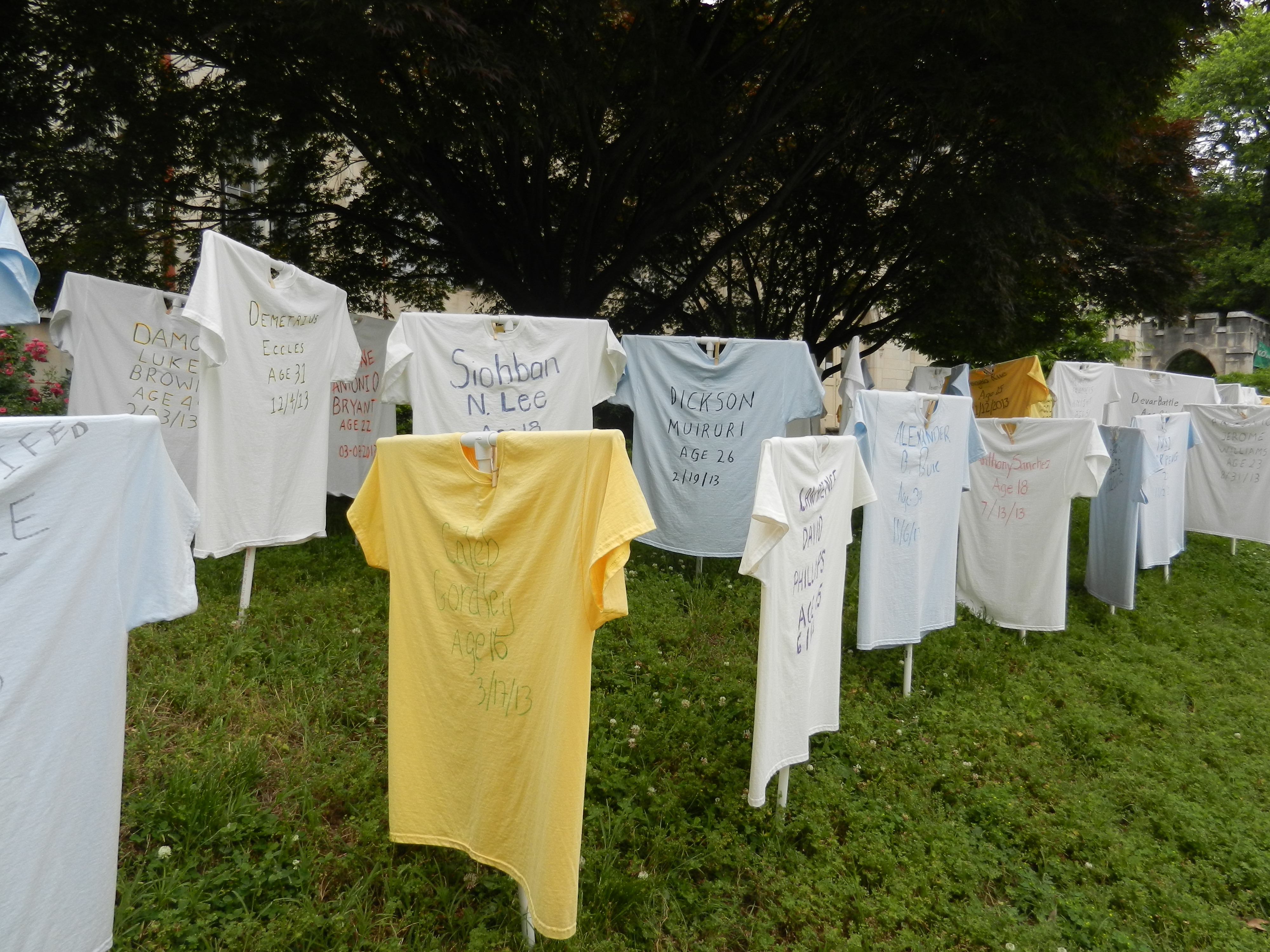
He could just as easily be talking about the gun lobby, though, another instance where big money and weak politicians combine to create open season on our children. The parallels between the two industries, and our lack of political will, hit me as I walked by a neighborhood church last week. On their front lawn was a memorial to victims of gun violence – rows of t-shirts with the names and ages of people in the area who died by guns in 2013.

Would we fight an outsider who was doing this to our children? What do we fight for anymore? I feel like we, as a society, are in a state of learned helplessness. That’s a condition where someone stops looking for a way to help himself, or change a bad situation, because experience has taught that nothing but pain or disappointment comes from trying. We’ve just stopped fighting the way we should be.

Sure, there are people like Tom Harkin in the U.S. Senate who have fought the good fight on school nutrition standards and food marketing to kids, just as there are groups and individuals who have passionately worked for tighter gun laws. But both efforts are uphill battles that seem marked by more defeats than successes. Just this week, there were two or three more school shootings. When the news comes on, we can no longer tell if we’re hearing about yesterday’s shooting or a new one today; we’ve become so inured to such news that hardly anyone is even calling for a change in gun laws.

People on the other side of this debate – for both food and guns – say that it’s about individual responsibility. “Kids need to eat less and exercise more.” “Guns don’t kill people, people kill people.” But we can no longer control everything individually. That just doesn’t work in a modern country where everyone is exposed to huge social networks and an unstoppable media barrage. At this point the only changes that will be of significance are the ones that alter the conditions in which we live, that transform the toxic environment for everyone.

Clarence Darrow said that “Lost causes are the only ones worth fighting for.” So let’s stop the helplessness. We all need to stand up and say we’re fed up.

She rises still

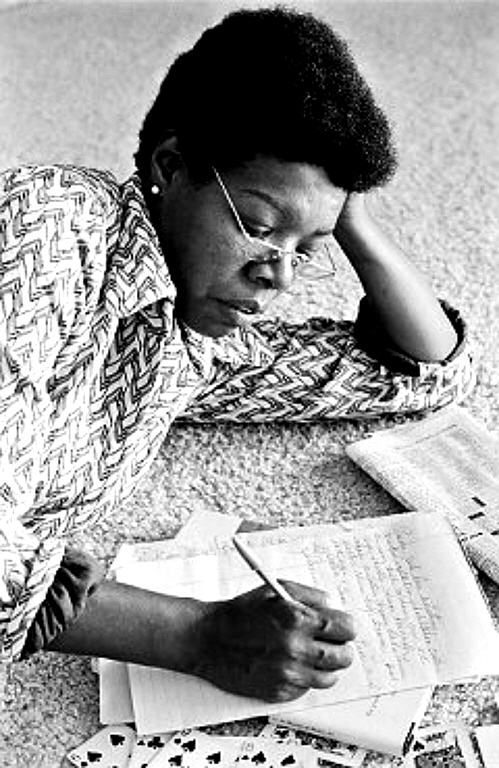
I rose today and found out that Maya Angelou had died, but in her beautiful words I found inspiration and an intention for my days:

My great hope is to laugh as much as I cry; to get my work done and try to love somebody and have the courage to accept the love in return.

Maya Angelou wrote frequently about courage. She realized that it takes courage to love and be loved, it takes courage to express empathy, it takes courage to avoid making the same mistakes twice, and it takes courage to see ourselves for who we are. Like Aristotle, she thought that courage was “the most important of all virtues. Because without courage, you can’t practice any other virtues consistently.”

600full-maya-angelouWithout courage, it is difficult to have faith in the unseen and unknown; without courage, hope becomes a struggle; and without courage, it is nearly impossible to fight for justice. For most of us, courage is a word that we use to describe other people, not ourselves. We think that someone who is courageous faces danger all the time without any fear. But Maya Angelou seemed to know that being courageous is about embracing fear with resolution, and acting in spite of it. A courageous person has the self-possession that allows her to live life fully. Courage can be quiet too.

To be courageous is to accept risk and uncertainty. In the absence of such courage, we often resist, as Sally Kempton says, “not only life’s difficulties but also life’s potential sweetness.” We deny ourselves the pleasure of opening to love or to personal growth because it might upset the delicate balance of life as we know it.  But Maya Angelou was not afraid to disturb or to change. She experienced abuse, poverty and segregation, and still embodied hope, faith and courage. She was a dancer, poet, author, actor, mother, and activist. She was not caged by any label, any role or any experience.

How do we become courageous? Eleanor Roosevelt said that, “You gain strength, courage, and confidence by every experience in which you really stop to look fear in the face…we must do that which we think we cannot.” We become brave by practicing courage one day at a time; by saying “Yes, I can”; by letting go of fear, and moving toward love.

Wobbling toward trust

Bob Dylan sang, “Trust yourself …If you need somebody you can trust, trust yourself.” Somehow I think he must have known just how much many of us need to hear that.

Reckless personWhen I wobble in tree pose, or can’t bring myself into a headstand in yoga, it’s not just equilibrium or core strength holding me back – it’s lack of trust in my ability to do it. When the anxiety over my recent move took hold of me, it wasn’t because anything was going wrong — it was my failure to trust myself and my strength. When I worry about one of my kids doing something new, it’s not so much about them, but about me not trusting that I taught them well.

According to Psychology Today, not trusting ourselves often evolves out of being hurt by someone or something we trusted. We become afraid to trust anyone again, and we start to question our judgment. From there, faith in our selves begins to dwindle. So how do we rebuild trust in our own abilities, capacities and judgment?

The magazine offers this simple somatic exercise as a first step to restoring trust in yourself:

“Sit or lie down so that you are comfortable and in a safe place.
Now, how can you make it even more comfortable? Get a blanket, a pillow… whatever will make you feel relaxed and content.
Once you are settled, ask yourself: “How do I know this is comfortable?” This might appear to be a silly question, and perhaps even confusing. However, it is an important one in increasing your skills of building trust.
Continue to explore what sensation you feel that you recognize as comfort. For example, you might think, “I do not feel any pain,” “I breath easily,” or “I feel relaxed.”
You might be anticipating that this feeling won’t last, which is true. We can’t control or grasp on to this pleasurable feeling. It’s only important that you are in the present moment right now, not drifting into thoughts of the future or the past. Thinking of the future can create anxiety; thinking of the past can create depression.
Remain aware of any sounds, the temperature, the light, and your physical sensations. Can you let yourself simply enjoy the moment?
You can practice this exercise for as long as you prefer and as time allows you. Just keep checking in with your level of comfort. What feelings indicate that you are comfortable? With time, you may start to trust your feelings again.”

When we were babies, we learned to trust when our needs for food, safety, warmth and love were satisfied. This exercise takes us back to those basics. If I believe that this warm, comfy feeling I’m experiencing right now is real, then I can have faith that it will come again and I will be able to recognize it.

Great Ocean Road_23.1The other thing worth noting about this exercise is that it is very much focused on present-moment awareness. If we think about trust as the flip side of fear, then the inability to trust is all about fear of what the next moment, or the one after, might bring. By staying focused on the present, we only have to trust what we are experiencing in this moment.

Life is full of surprises, dangers, joys, hurts, disappointment, elation, boredom, passion. In order to have the good with the bad, we need to worry less about what’s around the corner and focus more on everything that is absolutely right, right now. As Thich Nhat Hanh suggests, instead of asking, “What’s wrong?”, we should learn to ask, “What’s not wrong?”

Can 25 words describe a friend?

My first best friend left my life so long ago that I can barely remember her face. Strawberry blond hair, some freckles, a vague recollection of her smile, and that’s it. But a writing prompt from my Wellness & Writing Connections group has had me trying to conjure memories of her all week.  “Write 25 words that describe a childhood friend.” Can I find 25 words that fully capture Susie and what she meant to me?

yin yangShe was the yang to my yin, bold where I was shy, fearless where I was cautious, loud where I was quiet. With Susie, I tasted independence for the first time, earned my first money, ran away from home, and learned about sex. From the age of 4 until 11, we were inseparable, the sidewalk that ran between our houses a well-worn path.

From Susie, I also learned about loss, not when she died, but when our friendship broke up. I spent a summer mourning her, just as surely as if she had died. I know now that I was just as responsible for the end of our friendship as she was, though I didn’t see it that way back then. It was devastating to me.

Having Susie for a friend taught me to leave my comfort zone in two ways. When we were together, she was often challenging me to do things I wouldn’t ordinarily do. And when we weren’t together anymore, I had to forge bonds with new people outside the comfort zone of her friendship.

Social scientists believe that we tend to seek out friendships with people of similar personalities (the “similarity effect”), but Susie taught me to appreciate a friend who is the opposite of me, one who stretches my view of the world and pushes me toward new possibilities. As Henry Ford once said, “My best friend is the one who brings out the best in me.”

I see glimmers of my first best friend in several close friends who came along later: The ones who were from very different backgrounds; the ones who were bold and outspoken; the ones who were just a little bit wild. I’m grateful to all of them for where they’ve taken me and how they have enriched my life. But I will never be able to thank Susie in person for what she taught me; there will be no re-connection on Facebook, no school reunions, no chance meetings. She died young, and true to form, doing something a little bit dangerous.

So let these 400+ words that describe my childhood friend be my letter of gratitude, my valentine to her.Valentine2

What’s in your suitcase?

I’ve been a sporadic journal-keeper for most of my life. My most prolific period was during my angst-ridden teen years when I wrote about everything from bad luck with boyfriends, to concerts I attended, to books I was reading. Some people destroy their youthful writings, mostly because they’re so cringe-inducing. I don’t know if it’s vanity, voyeurism or something else, but I haven’t done that yet.

Recently, when I was looking for something else in my attic, I came across some of my old journals and brought them down to read. Surprisingly, the cringing was minimal. I was mostly intrigued by my younger self, as if she was from some foreign land.  And I found this poem in a collage on one journal cover:

Poets and true pathfinders have

Traveled like this: tires

Stripping pavement have been

Music to ears far finer

Than my own, but

Still I grow gladly

Into my vagabond self. I

Have died sometimes; I have left bolts and

Scraps of my life in unguarded

Corners and have smiled

In apology at my scattered,

Misstated thoughts. I am

Collected now, into one worn

Suitcase and the healing conviction

That everything left

With me is absolutely relevant.

I don’t know who wrote it, but the poem still resonates, even though I’ve been anything but a vagabond.The idea that we can boil down the true necessities of life to what would fit, metaphorically speaking, into a suitcase, rings true. The poet sounds weary, as if it took a long journey to reach that point, and maybe it does.image

Especially at this time of year, when there is such a temptation to indulge in excess holiday buying, it seems wise to remember what is really relevant and valuable in life. To love and be loved, to be safe and secure, to do or create something meaningful, to learn new things, to feel healthy in body, mind and spirit — those are the most important things in my suitcase. Do I really need anything more?

A recent article by Stacey Colino in Bethesda Magazine talked about why people in our affluent area, with money, physical health and great educations, could still be so unhappy and dissatisfied. One possible reason is the constant comparing of ourselves to others. Psychiatrist Norman Rosenthal was quoted as saying, “To compare up is to invite envy; to compare down is to invite gratitude…When we compare and find ourselves wanting, we make ourselves unhappy.”

If I pack my suitcase with the true essentials of my life, I can only feel gratitude, knowing that for many others, things like love and security are elusive. But even if I had to fill a suitcase with the material possessions that matter to me, I don’t think I would have too much trouble fitting them in. A few pictures of my kids, my wedding ring, a special book or two, and I feel rich.

When I was eighteen, I saved that poem because it was romantic to think of myself as a vagabond and because I already felt that I was leaving a little bit of myself behind with each new experience. I share it now for completely different reasons. I hope that the scraps I’ve left behind have touched someone along the way, and the scattered thoughts have gathered themselves into a more focused path forward. Have I learned to compare myself only with the younger version of me?