How to take a time-in

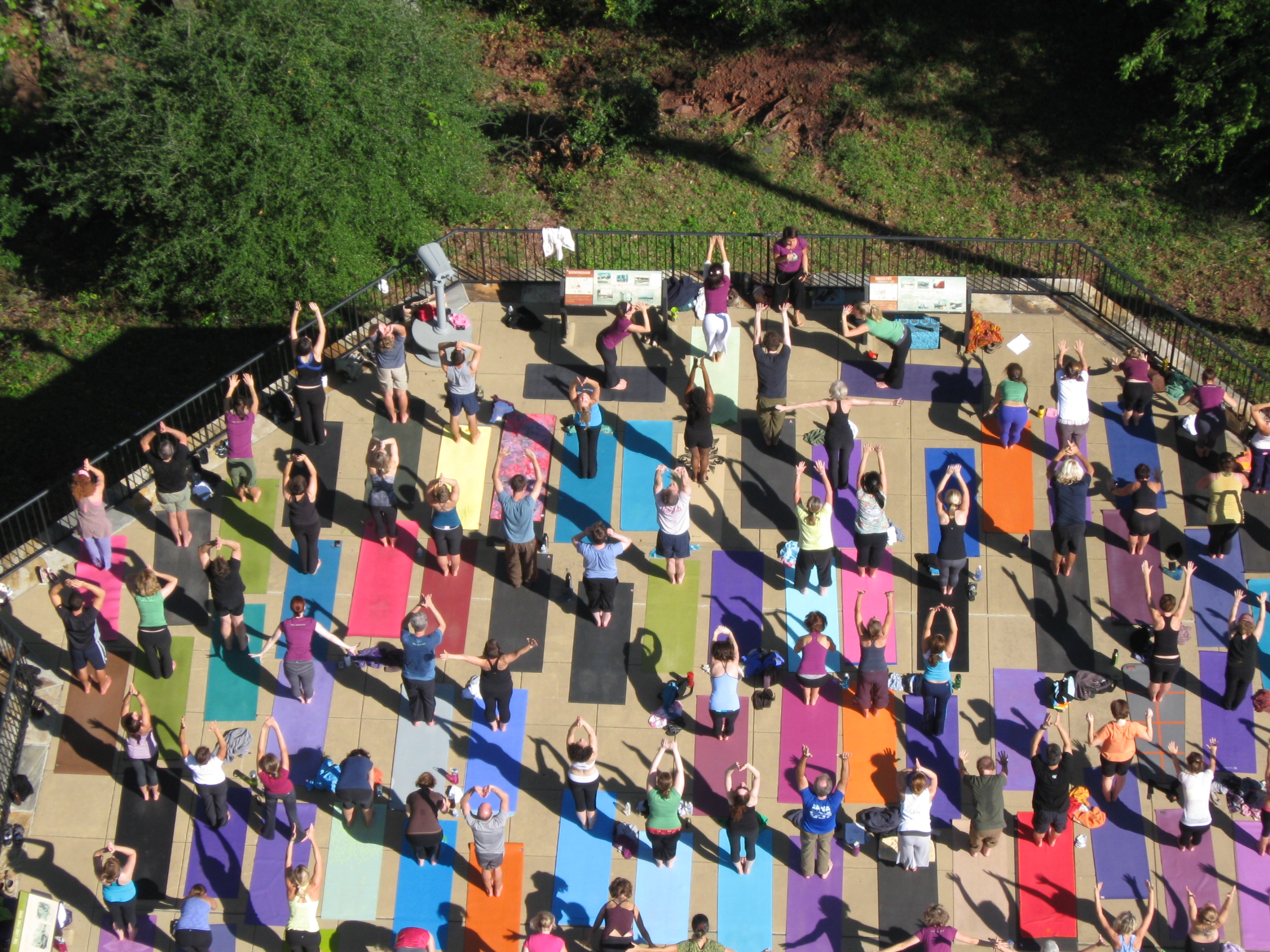
My breath slowed as I rolled out my mat and sat down to await the start of yoga class. I looked around at the mostly-young group of people there for the 5 pm class. Had they left work early? Do they have flexible hours? Do they work part-time? Were they going back to work later?

As I silently congratulated all of us on taking time out of the day to do something good for ourselves, I realized that it wasn’t really a “time out” – it was very much a “time in”. It might even have been the most time I’d really spent “in” and engaged all day.

What is “time in”? It’s not just time spent looking inward, though that could be a part of it. It’s time being fully present, and in the moment. It’s time when our brains get a rest from the over stimulating environment that we’re exposed to most of the day. It’s time when we pay attention to our senses, stop multitasking, and regain focus and concentration.

Spending time in meditation, for instance, leads to a restful, yet awake, state where we have more alpha wave activity in the brain. This brings greater mental clarity, fosters creativity and enhances memory. Research shows that regular meditators can stay on task longer and are less distracted even when they are in a multitasking situation.

Less formal meditative experiences happen in yoga, where the sequence of postures commands focused attention, or in exercise such as running, when the sounds of the breath or footfalls become a focal point. Such activities have a beneficial effect on the brain, making us alert to what’s happening in the moment, and sometimes opening a window to better directions or opportunities.

I’m continually surprised by the way that an idea will just pop into my head when I’m in a yoga class or out for a run. Even when I’ve been blocked creatively about something for days, allowing some mental space from it and taking “time in” almost always helps. That must be why companies such as Google, Nike, Ben & Jerry’s and Zappo’s have on-site meditation classes or nap rooms for their employees. Resting the brain can have surprisingly productive results (like new ice cream flavors!)

Being able to bring intense focus and concentration to a project is a necessary element of what is called a “flow” experience in positive psychology. Flow is “a joyful state” that we experience when “we are actively involved in trying to reach a goal, or an activity that is challenging but well suited to our skills”. During “flow”, we lose track of time and self-consciousness. People who are “high-flow” generally demonstrate better performance, commitment to goals, and greater long-term happiness. Without the motivation or ability to focus, however, high-flow activities seem too hard. We choose the easier low-flow activities (like watching TV) that might provide immediate gratification but don’t really lead to long-term satisfaction. That’s why it is so important to well-being that we strengthen the capacity to focus through “time in” pursuits.

Instead of saying we don’t have time to meditate or exercise, we should be saying there’s no time to waste before starting. Shawn Achor, author of The Happiness Advantage, says that “Our daily decisions and habits have a huge impact upon both our levels of happiness and success.” Maybe today’s decision to spend “time in” will be the start of a recurring pattern for you – one with a far-reaching effect on your fulfillment in life.

Intentional living

Many yoga teachers suggest setting an intention at the beginning of a practice. It helps ground you in the moment and keeps you focused on why you are there. But an intention is not the same thing as a goal. Philip Merrill wrote about the difference in Yoga Journal: “It is not oriented toward a future outcome. Instead, it is a path or practice that is focused on how you are “being” in the present moment…You set your intentions based on understanding what matters most to you and make a commitment to align your worldly actions with your inner values.”

Life has been busy and stressful for me lately. Luckily, most of the stress is the good kind: getting ready for an upcoming vacation, planning a move. But as much as I want and look forward to those events, they have upended my life a bit, and made me anxious at times. So two weeks ago I began to set intentions as I woke up each morning. Working with an intention has helped keep the stress at bay and provide clarity about what is important.

Some of my daily intentions have been:

Joy. Waking in the morning and setting a simple intention of being joyful that day has been very powerful for me. So many times our days are spent dealing with problems and mistakes, and things that go wrong. We lose the feeling of innate joy that we are born with. Setting an intention of joy helps me laugh with people, find humor in bad situations, and stay focused on the overall happiness of my life even on a bad day.

Organization. While this sounds more like a goal than an intention, my purpose was very immediate on the day I woke and this word came to mind. I think at that moment it was about having an organized mind as much as an organized life; about acting in an organized way rather than jumping from task to task, and worry to worry.

Equanimity. Like organization, the intention of equanimity is about how I react to what’s going on in my life. It’s easy when we’re under stress to overreact, to catastrophize, to overlook the solutions or silver linings. Setting an intention to foster equanimity in my life helps me recognize that while I cannot control what happens, I can control how I react to what happens. It’s my choice of reaction that will lead to either suffering or happiness.

Kindness. It seems to me that kindness is deeply connected to mindfulness. It’s hard to act kindly without being present to what is happening around me and noticing what others are experiencing. Practicing kindness and compassion gets us out of the mind and into the heart. We forget our own problems for a while to focus on someone else. It’s a win-win for all.

Setting an intention for each day helps guide my actions. The Chopra Center quotes from the Hindu Upanishads to explain the connection between intentions and actions:

“You are what your deepest desire is.
As your desire is, so is your intention. 
As your intention is, so is your will.
As your will is, so is your deed.
As your deed is, so is your destiny.”IMG_0648

When we set intentions, we direct our will in such a way that all our actions take the course we have chosen. If my intention is kindness, and I choose to act kindly, then I have set myself on that path for the day. It becomes my destiny.

Winston Churchill said that, “It is a mistake to look too far ahead. Only one link of the chain of destiny can be handled at a time.” In that sense, setting a new intention each day keeps us present-focused, touching just the one link that will lead to the next.

Expanding my circle of comfort

“Change is gonna do me good,” goes the lyric of Elton John’s song “Honky Cat”. I’m one of those people who has to say things like that to myself, to force myself to stretch a little. No matter how much there is to gain outside what’s familiar and comfortable, most of us have to be convinced and cajoled, or forced by circumstance, out of our comfort zones.

 Because I’m traveling this week, I tried a yoga class at an out-of-town yoga studio yesterday. It was a good class, and I’m glad I went, but there was still the point in class when the teacher told me to do something in a way completely opposite to what I’ve been taught.Was her way right or wrong? Is there a right way? Does it matter? Those were the questions I asked myself as I mentally resisted what she was telling me. My comfort zone was definitely being challenged.
Six months ago, my two favorite yoga teachers shut down their studio and stopped teaching. The studio, my yoga “home”, was gone, forcing me to change whether I wanted to or not. It hasn’t been easy. Sometimes I can take a class  with one of the teachers I liked from the old place, but mostly I was forced to try new teachers. Some I’ve enjoyed and some I haven’t. But I have learned to appreciate at least a few things about each of them. I realize now that in leaving, my former teachers gave me a great gift —a lesson in practicing yoga off the mat. Staying focused. Breathing through change and uncertainty. Accepting what I cannot change. Expanding my circle of comfort.
Often when I see friends from the old yoga studio, we talk about which teachers we are practicing with now, but we always finish by saying, “It’s not the same as…” And it’s not, it can never be, the “same”. Nothing stays the same, everything changes.  And luckily, we humans have an amazing ability to adapt to new conditions; the question is do you adapt with resistance, or adapt with acceptance? How much energy do you expend denying and complaining before you acknowledge the new reality?
Like the mice in the fable, Who Moved my Cheese?, we can either respond to unwelcome change by spending our time looking for someone to blame, hoping that everything is going to go back to “normal,” or we can go look for new opportunities. Relatively small changes, like finding new yoga teachers, train us for the bigger life events. If you learn to keep your balance in the shifting sands of everyday life, it’s easier to embrace the idea that  “change is gonna do you good.”

My summer reading club

The local library was one of my favorite places during childhood. Even today, when I enter a library and get a whiff of that familiar smell of books, glue, and something undefined, I feel at home. It was, and is, a place of quiet discovery.

During every summer growing up, I was an avid member of the library’s summer reading program. The end of the school year didn’t signify a break from books to me – instead, it meant that I could dive into even more. I loved going into the cool, silent library (so different from the heat and noise outside!) and coming out filled with anticipation of what awaited me between the covers I held in my arms. Whatever the program entailed – number of books, stamps or stickers, charts or check-offs, I didn’t hesitate to sign up. Not only did I love the reading, my competitive nature kicked in as my book count got higher each week.books3

Those lazy days of reading for hours on end are mostly gone from my summers now, except for a few days at the beach each year. My reading takes place at odd moments here and there – subway rides, waiting rooms, or the time it takes me to fall asleep at night. Nobody but me is tracking the number of books I read – I’m in a book club of one. I’ll receive no stickers or prizes. My name won’t go on any list. Nevertheless, I feel richly rewarded.

The characters I’ve met this summer have invited me into their lives and made me care about what happens to them. Their stories are sometimes funny, but often sad; some of them are clever, others bizarre; most of them end with hopefulness, others with just a bleak sense of resignation. But all of them teach me something about life.

archerThe importance of breath came into play in two novels I read. In The Garden of Evening Mists, a damaged young woman is learning archery, while in The Sojourn, a teenager becomes a sharpshooter during World War I. Both learn to “Feel your body expanding as you breathe: that is where we live, in the moments between inhalation and exhalation.” I loved the images of connecting breath and movement, just like yoga. No matter what we are aiming for, the breath is what takes us there, and the space between breaths is like a doorway.

My passion for books was affirmed by reading Will Schwalbe’s  The End of Your Life Book Club. Schwalbe and his mother, both keen readers all their lives, formed an informal book “club” while she was undergoing treatment for cancer. They would read and discuss books as they sat in waiting or treatment rooms. Schwalbe’s loving memoir chronicles the time by connecting it to the books. He remembers his mother’s friendships with people she had met around the world, and her insistence “that books are the most powerful tool in the human arsenal.” She was passionate about getting a library built in Afghanistan before she died. About one novel, she said, “That’s one of the amazing things great books like this do – they don’t just get you to see the world differently, they get you to look at people, the people all around you, differently.”

I may never visit Malaysia or Sri Lanka, settings for three of this summer’s books, and I can’t relive the World Wars which featured in others, but reading about them has given me an expanded view of what those places and times are all about. I’m so grateful that reading has given me eyes to see the world, increasing my compassion for and connection with people everywhere. That’s the power of summer reading!

Letting go of fear

Does Cory Booker practice yoga? I wonder because the Newark, NJ mayor was speaking the language of yoga in an interview with the Washington Post’s E.J. Dionne a few days ago. Discussing violence and crime prevention, he said, “Fear is a toxic state of being. You’ve got to lead with love.”

At its essence, the word yoga means to yoke, join or unite. It strikes me that Booker is speaking that language when he says that love can unite people when it replaces the fear that’s at the heart of so much of our distrust of each other. Yoga teacher Kathryn Budig says that in order to meet challenges, we need to “let go of fear and move back into a place of love.” I think they are saying the same thing.

Stress often comes from being unfamiliar with a person, place or experience. That fear of the unknown often manifests itself by us labeling someone or something as “other”, as different from ourselves. By focusing on differences we harden ourselves to feeling any compassion for the other, and we rationalize conflict and dislike. We use otherness as an excuse for our feelings about people of different nationalities, religions, races, political parties, social groups, or abilities. It makes it easier to ignore the paths that might lead to understanding.

Cory Booker’s interview covered a lot of topics, but he was talking in the aftermath of the George Zimmerman acquittal in the death of Trayvon Martin. While there’s a lot we’ll never know about that tragic evening, we can be pretty sure that it started when one person saw another and labeled him as “other”.  It started with fear and distrust.

I’ve written here before about the “Just Like Me” meditation developed by Chade-Meng Tan. Combined with a loving kindness meditation, it becomes a powerful process for tearing down those feelings of otherness. The heart of it is acknowledging that the other person has the same needs and desires for health, happiness and love that you have.

As Meng says, “There are three premises behind this practice. The first is that when we perceive somebody as being similar to ourselves (“just like me”), we become much more likely to feel and act positively towards that person. The second is that kind and loving thoughts towards another can be generated volitionally. The third premise is that mental habits can be formed with practice, so if we spend time and effort creating thoughts of similarity-to-others and loving kindness, over time, these thoughts get generated habitually and effortlessly…”

circleIt takes practice to get to the point where we react with love and kindness first. But isn’t it worth the effort? The “Just Like Me” meditation is a tool for finding our common ground, our humanity. President Obama said last week that, “we should ask ourselves if we’re doing all we can to widen the circle of compassion and understanding in our own communities.” That circle starts with compassion for self, then widens out to families, friends, to neighbors, communities, and eventually encompasses the stranger, the “other”, even perhaps an enemy, by admitting the truth that they are “just like me.”

Take it outside

There is joy in motion. It’s that simple. That feeling hit me today when I saw a photo in the paper of people doing Zumba outdoors. Their expressions are exuberant, their energy is contagious.

zumba2

Outdoor exercise has a more free feeling than working out in a gym. Without the confines of walls and machines, something loosens inside. We take more chances, express ourselves more openly, lose some of our inhibitions. There’s also more of a sense of community, because we are physically in the community. And in some cases, the workouts are literally free – free yoga at the farmers’ market, free Zumba on the plaza and free Pilates in the parks.

Besides the individual benefits of outdoor, community exercise, public group workouts can demystify the practices for people who are unfamiliar with them. “Zumba”, “yoga”, “Pilates” – what do those words mean to someone who has never set foot in a gym or yoga studio? They sound like mysterious, esoteric practices that might be difficult and extreme. But when you see other people who look like you doing the moves, you begin to believe that you can do them too.

Americans are full of contradictions. We’re living longer than we did 20 years ago, but with more chronic conditions. Some of us are exercising more, but it’s not enough to keep the rates of obesity from rising. We’re not dying in accidents as much, but many more of us have diabetes. Complicated problems that require complex solutions, right? But while scientists are busy looking for treatments and technologies, we have the power to change our own trajectory. Rediscovering the joy in motion and the freedom of the outdoors can be part of that change.

My mother used to lock us out of the house sometimes when I was a kid. That wasn’t as bad as it sounds. In good weather, we were expected to play outside with other kids in the neighborhood; and if one of us came back in with dirty hands and feet, she wanted to know about it. Playing outside got me out of my head and out of my books for a while. It was during those summertime lockouts that I learned to take risks, like riding downhill on my bike without hands, and to play sports with the boys, and to see just how high we could get the playground swings to go.IMG

What childhood activity brought you that freewheeling joy? Summer might be an ideal time to find the feeling again, either as a way to get a fitness routine going, or to get out of a fitness rut. Look around you – those people dancing in the streets and posing like warriors in the farmers’ market are smiling for a reason.

Let the sun shine

I’m smiling at the news that the health benefits of sunshine may outweigh the risk of getting skin cancer from its rays.

Just in time for summer, new research has shown that exposing our skin to sunshine can lower blood pressure, cut our risk of heart attack and stroke, and perhaps help us live longer. High blood pressure is such a common condition (68 million Americans have it) that it leads to 80 times more deaths than skin cancer does. Now it turns out that when our skin gets sun exposure, a compound is released in the blood that actually lowers blood pressure. This effect is separate from the previously known benefits of Vitamin D from the sun.

Today we use the term “sun worship” to describe people who like to sit out in the sun and tan. But ritual worship of sun gods and goddesses goes back for millennia. People have long known and appreciated the life-giving force of the sun. It is the source of all energy and life on earth, through the process of photosynthesis and from the warmth it provides our planet. Sunrise and sunset are magical times of the day, when colors blaze across the sky. In yoga, we do sun salutations to open our practice by welcoming the sun.IMG_2347

So today I salute the sun for these life-giving blessings:

  • Sunlight helps improve mood, and lessens the effects of seasonal depression. As Wilma Rudolph said, “When the sun is shining I can do anything; no mountain is too high, no trouble too difficult to overcome.
  • The sun provides Vitamin D, which helps us absorb calcium (keeping bones strong), and may protect against certain types of cancer, diabetes, rheumatoid arthritis and other conditions.
  • The sun powers our hot water heaters, homes, watches, and maybe someday, our cars.
  • The sun gives order to our days, orienting us to time and space.
  • Sunny days get us outdoors, so we get more exercise.
  • The sun stimulates the production of melatonin, which helps us get a good night’s sleep.
  • The sun gives us rainbows.
  • The sun ripens and sweetens the fruit we eat. In the words of Galileo, “The sun, with all those planets revolving around it and dependent on it, can still ripen a bunch of grapes as if it had nothing else in the universe to do.”IMG_03521

And isn’t true that when the sun is shining, we feel as if it shines just for us? We bend toward the sun like flowers do, waiting to be opened up, growing just a little bit taller in its light.

Go out and play!

Plato wrote, “You can discover more about a person in an hour of play than in a year of conversation.” Playing allows us to take risks, to laugh at ourselves, to fall down, and to get back up. We discover truths about ourselves, as well as others.

Earlier this week, my yoga teacher announced at the beginning of class, “We’re just going to play today.” It was the last class there for most of us, since the yoga studio was closing at the end of the week. We all felt a little bittersweet about it, and by making the class more playful, our teacher helped us focus on the sweetness and joy rather than the sadness at the ending.

We went on to practice a lot of partner postures, flying postures and other fun stuff. We had to trust each other and give up some control in order to balance in the air on someone’s feet. Some of us found that easier than others, but there was laughter all around as we played together. And yes, I did learn more about my flying partner in that hour than I ever had by practicing yoga next to her.

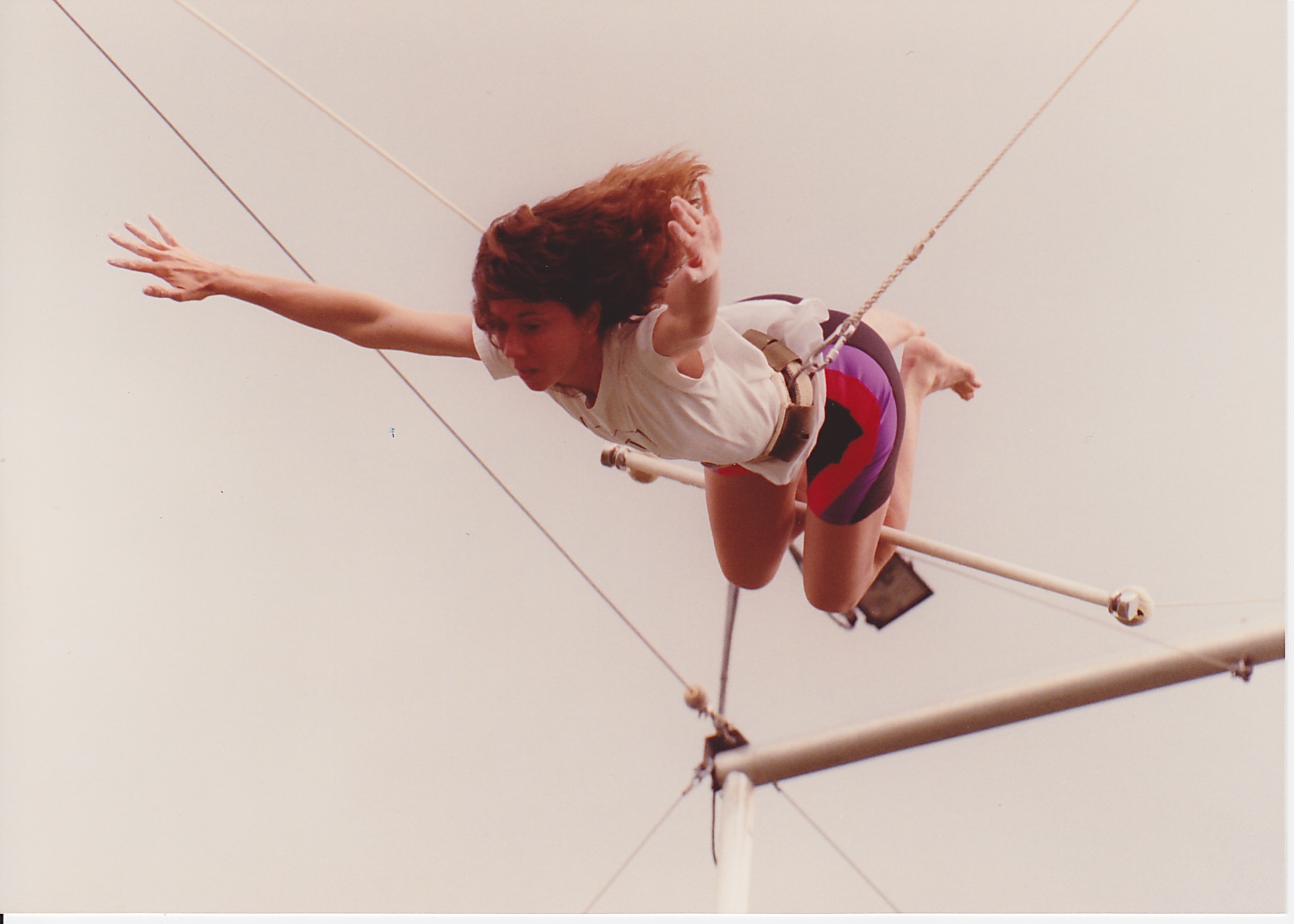
Playing helps take us away from the stresses of “real” life, but it also prepares us for them. The first time I tried the trapeze, years ago, I was terrified. You have to stand with your toes hanging off the edge of a platform, high in the air, and lean forward to grab the swing with the assistant only holding onto your harness with a finger. I had to trust myself to reach for the swing as I stepped into the void, and know that there were only two possible outcomes. Either I would be successful, get a grip on the swing, pull my legs up over it, and fly through the air (with the greatest of ease?). Or I would miss the bar, fall into the safety net, and..….be okay. The only thing at risk was my ego.

Why do you think we use terms like “take the plunge” and “leap of faith” to describe life’s risk-taking? Those physical chances we take during play – diving into the deep end of the pool, and jumping off the trapeze — teach us that we will probably be okay even if we fail. By continuing to play as adults, we keep ourselves flexible (mentally and emotionally, as well as physically) and more able to deal with changes that come along.OLYMPUS DIGITAL CAMERA

Do we play enough? NO! Even kids don’t play in the traditional sense nearly as much as they used to. And adults are often so oriented to work and worried about the future that we forget to incorporate play into our lives. Deep down, though, we all want and need to play.

How can you start playing again? Try a Laughter Yoga class, where you can just be goofy and creative for an hour or two. If you’re near Washington D.C., check out an organization called “Spacious” that connects people around fun and play. Bring the Instant Recess program to your workplace. Play in the snow, dance in the street, go on a roller-coaster, ride a wave, or even try the trapeze. Re-discover that baseline joy that comes from letting go and trusting that everything will be okay.

So maybe life is a journey

It’s amusing while driving on a long trip to read people’s vanity license plates and wonder about their messages. A couple of months ago, somewhere in the Carolinas, I saw this on a car:

NOTDONE

The message has stayed on my mind ever since. I think it’s because it can be either very straightforward or deeply profound in its meaning. I speculated that it might relate to food or cooking – maybe a chef or a baker drives the car. But it also occurred to me that the driver is saying, “I’m not done” with life, that he has some sort of “bucket list” of things to do, and isn’t finished with it yet. That’s what keeps me pondering it.

When are we finished? When have we done everything we want to do, or think we should do? These kinds of questions can dog our daily life – the never-ending “to-do” list – as well as our overall feelings about achieving goals, making a difference, being satisfied with life. A young person struggling with what to do next told me recently that it surprised her when other people admired her for being so successful in her work. She didn’t feel successful; she felt as if she still had so much to do to get where she wanted to be. In her friends’ eyes, though, she looks like a success right now.

What is success? We equate it with fame and fortune, reaching some sort of end point, accomplishing something big or difficult. In my thesaurus, however, the first synonym for the word success is fulfillment, which to me implies that it is possible to be successful, while still being “not done”, if you feel fulfilled by what you do. The flip side is that someone could have all the money and fame in the world and still not be successful if a sense of fulfillment isn’t there.

Yoga teaches us to practice detachment from results. Detachment doesn’t mean a lack of feeling or emotion, rather a letting go of the outcome of events. As Kate Holcombe explains it, “…detachment means that you strive toward your goal, but if things don’t go the way you want them to, your sense of Self is not shattered…This has the effect of keeping you in the present moment of your action or practice rather than being distracted by thinking about the outcome.” In other words, focus on the satisfaction that your life and work offer right now, while still acknowledging that work remains to be done.

Another instructive lesson comes from Soren Gordhamer in his book, Wisdom 2.0. He relates the story of a martial arts student who goes to a master to learn everything he can. The student wants to work as hard as he can to achieve mastery as quickly as possible; but every time he says he’ll work harder in order to finish his studies sooner, the master says that it will take even longer. When the student asks why, the master tells him, “’With one eye focused on your destination, there is only one eye left with which to find the way.’”

I went to a time management workshop once where were advised to write our goals in the present tense, rather than the future. So a goal like “I will become a writer,” became “I am a writer,” and “I will exercise every day” became “I exercise every day.” It was a way of visualizing ourselves where we wanted to be. But it’s also a way of staying present-focused, of realizing that the person I want to be is here inside me right now, and that the steps I’m taking now are what will bring fulfillment.

So we may forever be “not done”, but by keeping both eyes on the path, with an occasional glance at the destination, we may find that the journey is quite successful.

Something to teach, something to learn

Today I learned that my new yoga teacher is about to be a high school senior. I knew she was young, but not that young. She had just led us through a vinyasa flow class that was challenging, yet gentle; energetic, yet calming. Everyone thought it was great.

I am amazed by the grace and composure of this 17-year-old. When I think back to myself at that age, I can’t imagine even doing what she does, let alone doing it so well.

What makes a good teacher? Passion, confidence, knowledge? Along with those attributes, I believe that a good teacher cares deeply about her students, demonstrates it, and has the wisdom to know that there is as much to learn from them as there is to teach to them.

We benefit most as students when we let go of any expectations we have about what our teacher should be. Age, sex and size don’t define a talented yoga teacher, just as degrees and credentials don’t define talent in a college professor. Losing the words “should”, “ought”, and “must” from our vocabulary opens the door to invaluable experiences, and prevents a lot of the stress that comes from the belief that situations have to evolve in a certain way. Opening that door prepares us to engage, learn and make the most of what life, and our teachers, offer.

Certainly I used to be more rigid than I am today. From my children, I learned to be patient and adaptable. From my older relatives, I learned about dignity. From my friends, I learned to be compassionate and understanding. From my neighbors, I learned about community. From difficult people, I learned to forgive and let go.

Perhaps the most self-discovery comes when the lines between teacher and student blur, and we realize that there is something to be learned from everyone we meet. Every interaction is an opportunity to uncover something we already knew, but weren’t seeing. I only hope that I am able to touch other people the way my new yoga teacher touches me.