How high do you bounce when you hit bottom?

Humans may be unique among species in our potential to be resilient in the face of change. Biological imperative drives most species to persevere in a programmed way even when circumstances become dire. The sea turtle returns to the same beach no matter how much development or predation occurs there. The monarch butterfly’s route to a certain Mexican forest is encoded in its DNA and it flies as if on auto-pilot. The salmon will swim upriver to spawn even when a dam is in its way.

OLYMPUS DIGITAL CAMERAPerseverance is necessary for our success too, and sometimes it’s enough. But today, more than ever before, the world is changing at a breathtaking pace and we need something more than drive and diligence. We need resilience.

Resilience is the ability to adapt to change, to bounce back from losses and hardship, to thrive anew after experiencing adversity. Our resilience benefits us in small ways every day, but especially when life throws a big curveball our way. Think job loss, natural disaster or personal tragedy.

Resilience is about having inner strength, but it’s not about being a Lone Ranger kind of tough guy. In fact, one of the hallmarks of a resilient person is being socially connected: having supportive relationships, working collaboratively with others, and asking for help when necessary.

Our ability to be resilient isn’t fixed — it’s not even something we’re really born with. According to This Emotional Life, resilience develops as people grow up. We gradually gain more knowledge and experience, and that enhances the belief that we can cope with new situations. Ideally, we also learn self-management skills such as how to express emotions. And if we enjoy supportive relationships with our family and community, they help us gain trust and optimism.

Of course we’re all born with different kinds of temperaments, and most of us don’t grow up in that kind of ideal environment. So it comes as no surprise that many of us aren’t all that resilient. We become rigid in our beliefs, resistant to change, and unwilling to look for silver linings. We dig in our heels, deny that change is necessary and hold on to the status quo as long as possible.Detour

See, decide, believe. That’s how someone who resists change can change himself. Like any behavior change, first it’s necessary to see that you might not be so resilient, then decide you want to change. After that, start telling yourself that you are resilient. Believing it helps make it so, because brain research suggests that resilience depends on communication between the logical, prefrontal cortex part of the brain, and the limbic system, which is the seat of emotions. So what we say, what we think, the story we tell about ourselves, helps make the reality.

Other tips for building resilience come from the Mayo Clinic and the Centre for Confidence:

  • Try to see change as a meaningful challenge, and make each day have purpose
  • Learn from experience, and use it to build problem-solving strategies
  • Nurture connections with others; try to resolve any persistent conflicts with family or co-workers
  • Stay positive and hopeful
  • Know that you cannot control all events, but you can control your reaction to events
  • Take care of yourself – being physically, mentally and spiritually well prepares you to adapt to change.

Nothing lasts forever, change is a given and there are no guarantees. The headline of a piece in the Harvard Business Review said it best: “Surprises are the new normal; resilience is the new skill.” Be ready.

The “Habitastic” way to deal with stress

It’s fairly well known that practicing generosity can be an effective way of alleviating stress. Acts of kindness and volunteer work get us out of our heads and out of the “I’m the center of the universe” trap by forcing us to focus on something or someone else for a while. All of a sudden our problems don’t seem so big or overwhelming when put in the perspective of another person’s.

Sweating through a morning of hard work at a Habitat for Humanity home-build this week showed me that there are even more benefits to lending a helping hand on a regular basis. Besides the distraction from our own problems, there is the self-esteem and self-efficacy that comes from learning to do an unfamiliar job and doing it well. I can proudly say that I helped build a roof today, and that feeling of accomplishment helps to dislodge any negative thoughts about myself that might be causing stress.

imageThe hard physical work is also so unlike what most of us spend our days doing that our monkey minds shut off for a while and we are able to stay focused on the task at hand. When operating a table saw or lifting heavy trusses atop a house, keeping everyone safe and doing it right take precedence over worrying about the project at work or the problems of our children.

There’s also the camaraderie of working as a team, whether it’s with perfect strangers, co-workers, or family members. We learn about each other, strengthen existing bonds, and are reminded of the need to be good communicators. Most people very quickly fall into a rhythm of working together for the common goal.

I don’t know what brought all these people together to build a house for an unknown family. There was the young woman getting married in two weeks, stressed over wedding plans, but taking the day to build instead. There was a group of people who work in the same office given the day off for the project. Two sisters, a mother and daughter, people on vacation. Was it for fun, stress relief, a belief in the cause? Does it really matter?

Jacques Cousteau said that, “It takes generosity to discover the whole through others. If you realize you are only a violin, you can open yourself up to the world by playing your role in the concert.”

A new balance

I thought I had stress management under control until I decided to move. I was maybe even a little bit smug, staying calm when others fell apart, stepping in to support my friends and family through their crises. Now I’m realizing just how easily the balance can be disturbed, life can feel chaotic and turmoil can take over.

In most stressful situations, there are both emotional coping responses and practical, problem-focused responses that will help ease the feeling of discomfort. For me, it’s easier to focus on the practical steps, so I make the to-do lists; I schedule the cleaning, the repairing and the painting; I go through the closets; I sort things to keep or get rid of.

The problem is that focusing solely on the action steps is making me more than a little anxious and kind of obsessive. I literally can’t stop thinking about what needs to be done next. I can spend half a morning organizing my Craig’s list posts and Freecycle emails. I can spend half an afternoon organizing bags of castoffs for Goodwill. Meantime, all semblance of normal life is lost.image

Larry David once quipped, “I don’t like to be out my comfort zone, which is about a half inch wide.” Getting ready to move has been forcing me to see the limits of my own comfort zone.  I keep thinking that if I can just clear the clutter out of my house, I’ll feel calmer. But really what I need to do is clear the clutter out of my mind. It’s time for some emotion-focused stress management steps.

Emotion-focused coping means using techniques that help change how I’m looking at the stressor of moving. According to Richard Blonna, one such emotion-focused method comes from Morita therapy — accepting the strong feelings that I have right now, and turning my attention instead to productive work (like writing a blog post!) Another thing I could do is examine whether any of my thinking around the move is illogical. For instance, am I setting arbitrary deadlines for myself? Am I catastrophizing any aspects (if I don’t do this today, the move won’t happen)? If that’s the case, I can try substituting more positive statements for the negative ones.

I realize also that I’m making a classic mistake of people who have too much to do. I’m sacrificing some of the very activities that could make me feel better. While I’m continuing to do yoga regularly, its benefits would last longer if I also added some meditation or breathing breaks on the days in between classes. I could also be turning to my friends more for social support — a night out is okay, even when there’s a lot to do. And, in spite of the cold, a walk in the park would be calming.

Most of all I need to be mindful of spinning my wheels. As Robert Anthony has said, “Moving fast is not the same as going somewhere.” Maybe there are days when the best preparation for moving is not to pack, clean or organize anything.

Intentional living

Many yoga teachers suggest setting an intention at the beginning of a practice. It helps ground you in the moment and keeps you focused on why you are there. But an intention is not the same thing as a goal. Philip Merrill wrote about the difference in Yoga Journal: “It is not oriented toward a future outcome. Instead, it is a path or practice that is focused on how you are “being” in the present moment…You set your intentions based on understanding what matters most to you and make a commitment to align your worldly actions with your inner values.”

Life has been busy and stressful for me lately. Luckily, most of the stress is the good kind: getting ready for an upcoming vacation, planning a move. But as much as I want and look forward to those events, they have upended my life a bit, and made me anxious at times. So two weeks ago I began to set intentions as I woke up each morning. Working with an intention has helped keep the stress at bay and provide clarity about what is important.

Some of my daily intentions have been:

Joy. Waking in the morning and setting a simple intention of being joyful that day has been very powerful for me. So many times our days are spent dealing with problems and mistakes, and things that go wrong. We lose the feeling of innate joy that we are born with. Setting an intention of joy helps me laugh with people, find humor in bad situations, and stay focused on the overall happiness of my life even on a bad day.

Organization. While this sounds more like a goal than an intention, my purpose was very immediate on the day I woke and this word came to mind. I think at that moment it was about having an organized mind as much as an organized life; about acting in an organized way rather than jumping from task to task, and worry to worry.

Equanimity. Like organization, the intention of equanimity is about how I react to what’s going on in my life. It’s easy when we’re under stress to overreact, to catastrophize, to overlook the solutions or silver linings. Setting an intention to foster equanimity in my life helps me recognize that while I cannot control what happens, I can control how I react to what happens. It’s my choice of reaction that will lead to either suffering or happiness.

Kindness. It seems to me that kindness is deeply connected to mindfulness. It’s hard to act kindly without being present to what is happening around me and noticing what others are experiencing. Practicing kindness and compassion gets us out of the mind and into the heart. We forget our own problems for a while to focus on someone else. It’s a win-win for all.

Setting an intention for each day helps guide my actions. The Chopra Center quotes from the Hindu Upanishads to explain the connection between intentions and actions:

“You are what your deepest desire is.
As your desire is, so is your intention. 
As your intention is, so is your will.
As your will is, so is your deed.
As your deed is, so is your destiny.”IMG_0648

When we set intentions, we direct our will in such a way that all our actions take the course we have chosen. If my intention is kindness, and I choose to act kindly, then I have set myself on that path for the day. It becomes my destiny.

Winston Churchill said that, “It is a mistake to look too far ahead. Only one link of the chain of destiny can be handled at a time.” In that sense, setting a new intention each day keeps us present-focused, touching just the one link that will lead to the next.

Prepare yourself

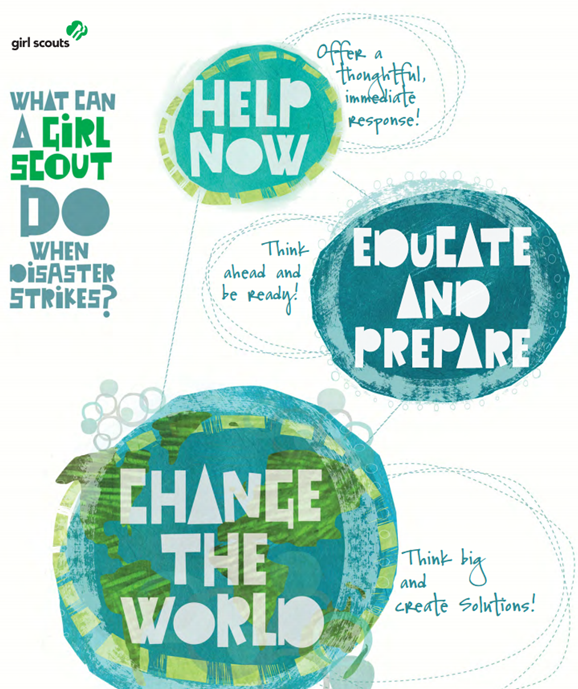
The government is closed for business, and the impact has quickly become personal for a lot of people. No pay, no parks, no museums, no monuments. It’s at moments like this that my Girl Scout training comes to mind: Be prepared.

There is perhaps nothing as stressful as having our best-laid plans turned upside down by events that are out of our control. This week it’s the couple whose wedding can’t take place at the Jefferson Memorial as planned, and the tourists who scheduled a big week in Washington only to find the museums and monuments closed, and the government workers who were hoping to pay bills and save for Christmas and will now lose pay for every day they don’t work.image

But even when we don’t experience something as dramatic as a government shutdown, life throws us curve balls. Storms cancel our flights and take out our power; illness and injuries keep us from work and activities; friends let us down. Some say that managing stress is about managing expectations, as if by lowering our expectations and anticipating less, we won’t be disappointed. But being prepared doesn’t mean we should have to look forward to less; it means we need a plan B.

Having a plan B might mean building redundancy into systems, or bringing two power cords for your phone, or making backup dinner reservations, or applying to a safety school for college. Before we can solve a problem with a backup plan, however, we often need to change the story we’re telling about the situation. Herbert Benson and Eileen Stuart (in The Wellness Book) refer to this story as the “emotional hook”. The emotional hook consists of all your judgments, feelings and self-talk about the event – the shoulds, nevers, musts, oughts, and alwayses. “The government shouldn’t shut down. Why does this always happen to me? I’ll never be able to do this again.”

In order to effectively solve the problem and come up with a solution (the plan B), we need to get past the emotional hooks that are trapping us in the story. Taking some time to calm yourself, breathe and reflect puts you in a better place to counter the negative self-talk with positive statements and then choose how to respond. After that, you can look for possible solutions. For instance, The Washington Post is helping out this week by listing alternative destinations for all the major attractions that are closed, but if you haven’t gotten past the hooks, you might not see that help is there.

The more someone practices calming techniques and positive self-talk, the more it becomes second nature in times of stress. That takes us back to the Girl Scouts (of course). On the Girl Scouts web site, they explain their motto by quoting from the 1947 handbook: “A Girl Scout is ready to help out wherever she is needed. Willingness to serve is not enough; you must know how to do the job well, even in an emergency.

What-can-a-Girl-Scout-do-when-Disaster1In other words, being prepared isn’t just about equipment and supplies, or even intention; it’s about preparing yourself – being ready and able to deal with what life throws at you, both practically and emotionally. You can prepare yourself for those emotional hooks by checking your story on a regular basis. What’s bothering you today? What’s hard for you? Once you’ve answered that, think about what you’re telling yourself about it. Is there anger in your story? Self-pity? Sadness? If so, maybe it’s time for a re-write. Can you turn the story into something more positive by changing the words you are using about it?

Yeats said that “Life is a long preparation for something that never happens.” We always hope that the worst never happens, but a Girl Scout would say be prepared anyway.

Vacation days

First day of vacation: The monkey mind is still alive and well, jumping from thought to thought. I wake with an undercurrent of dis-ease. What am I “supposed” to be doing today? My mind isn’t yet allowing me to surrender to the idea of slowing down and doing nothing.
 
So I get up and make a list of things to do. I write some emails. I find something to clean. I sit in the sun and try to read. I start to doze off, the first moment of the day that feels lazy and luxurious. But soon I’m up again, going off to exercise. I believe in working out on vacation, but today it feels like part of my “organized” life, something I’ve scheduled, not something that says “vacation”.
 
Did you know that the majority of Americans don’t use all of their vacation days in the year, leaving billions of dollars of benefits on the table? Many don’t take vacation because they can’t afford a trip, but others are afraid for their job security if they ask for time off.
 
While most employers recognize the value when employees come back rested, refreshed, and more productive, many also expect their employees to answer emails while on vacation. In fact, more than half of the people in one survey said that they are expected to have email access on vacation. So while vacations usually enhance family relationships, work interruptions can actually impede that benefit.
 
Second day of vacation: I’m up early to walk the beach checking sea turtle nests. It’s light, but the sun isn’t up over the horizon yet, and the moon is still visible high in the sky. The shrimp boats are out on the water, and a group of deer graze on the dunes. They let me get amazingly close to them. I’m reminded that the only important things to do today are eating and spending time in nature.Kiawah 003
 
Psychology Today says that “Vacations have the potential to break into the stress cycle,” getting us off the merry-go-round of chronic stress, sleep deprivation and unquiet minds. Vacations are also good times to establish new health habits, especially around exercise.
 
Third day of vacation: I wake in the pre-dawn to the sound of rain beating on the roof. I drift back to sleep thinking about a day spent reading and watching movies indoors. But by 7:00 the storm clouds have moved out to sea and people start to wander onto the beach for morning runs and walks. What will the day ahead hold for me? Beach? Yoga? Biking? All three? Kiawah 006
 
While the joy of vacation wears off quickly when we return to work, people still say they are happiest having spent money on an experience rather than a material possession. Most of that positive feeling comes from being able to share the experience with friends or family. The vacation becomes part of the story of the social network.
 
Fourth day of vacation: Here’s the beauty of it — I don’t need to know what tomorrow will bring. Yes, there are are many more things to do, but there are also all the remaining vacation days on which to do them. It’s time to disconnect……

Three “meals” a day for the soul

It makes sense that a healthy diet and plenty of exercise can help us sleep better at night and be more resilient in the face of stress. But consider the flip side: managing stress and sleeping well can support efforts to eat better and move more.

I recently spent a day counseling people on healthy eating, but I found myself more often than not talking with them about how much sleep they got, and what their stress levels were like. They invariably said that their jobs were stressful and the hours were long. They got home later than they would like, and found it challenging to think about preparing a healthy meal. The stressful day made them feel like they “deserved” the calorie-laden dinner. And by the time they ate, and spent a couple of hours winding down, they got to bed too late to get enough sleep. They often felt fatigued and low in energy.

Most of the people I talked to were relatively young and pretty healthy. But they were struggling with maintaining healthy behaviors in the face of increasingly demanding jobs and hectic lifestyles. Suggesting complicated or time-consuming changes won’t work for them. But what about something that takes only 5 minutes?

Spending 5 minutes once, twice or three times a day doing something that brings you back to the present moment, refreshes your mind, or relaxes your body, can be incredibly restorative. Most of all, in those few minutes, you’re engaged in caring for yourself. While the idea that you deserve care seems like it should be a no-brainer, many people have a hard time embracing it. But a practice that affirms your love and care for self can be the foundation for other health behaviors.

These 5-minute fortifiers come from many sources, including my own practice. Some are adapted from a little book called Five Good Minutes by Jeffrey Brantley and Wendy Millstine. I have divided them into morning, day and evening practices:

Morning

  • Resist the urge to jump right out of bed. Stay still for a moment. Listen to the sounds outside and in your home. Smile. Set an intention for the day, such as being kinder to the people who challenge you.
  • Sing in the shower. As Brantley & Millstine say, “Music and song can make you feel giddy, bubbly, euphoric, and joyful.”
  • Slow down. Ever notice how when you rush, you are more likely to drop things, spill things, and make mistakes; and less likely to find things you need? Taking the extra two minutes to get ready with care will not make you later.

Daytime

  • Breathe at the traffic lights. Too often when we’re rushing to get somewhere, especially in traffic, we chafe at the time spent waiting. Turn it into an opportunity to notice your breath. Inhale deeply and exhale slowly. You will feel calmer when the cars start to move again.
  • Take a break to look at nature. Whether it’s the view out your office window, or a picture on the wall, this practice will rest your eyes and your brain, and shift your perspective.IMG_0117
  • Eat lunch mindfully. Stop working for the time it takes to eat. Chew slowly, really taste the food and think of how it nourishes you.
  • Spend 5 minutes talking with a friend or family member outside of your work. Hearing the voice of someone who loves and cares for you helps ease the stress of the day.

Evening

Relaxing rituals in the evening help separate day from night and work from rest:

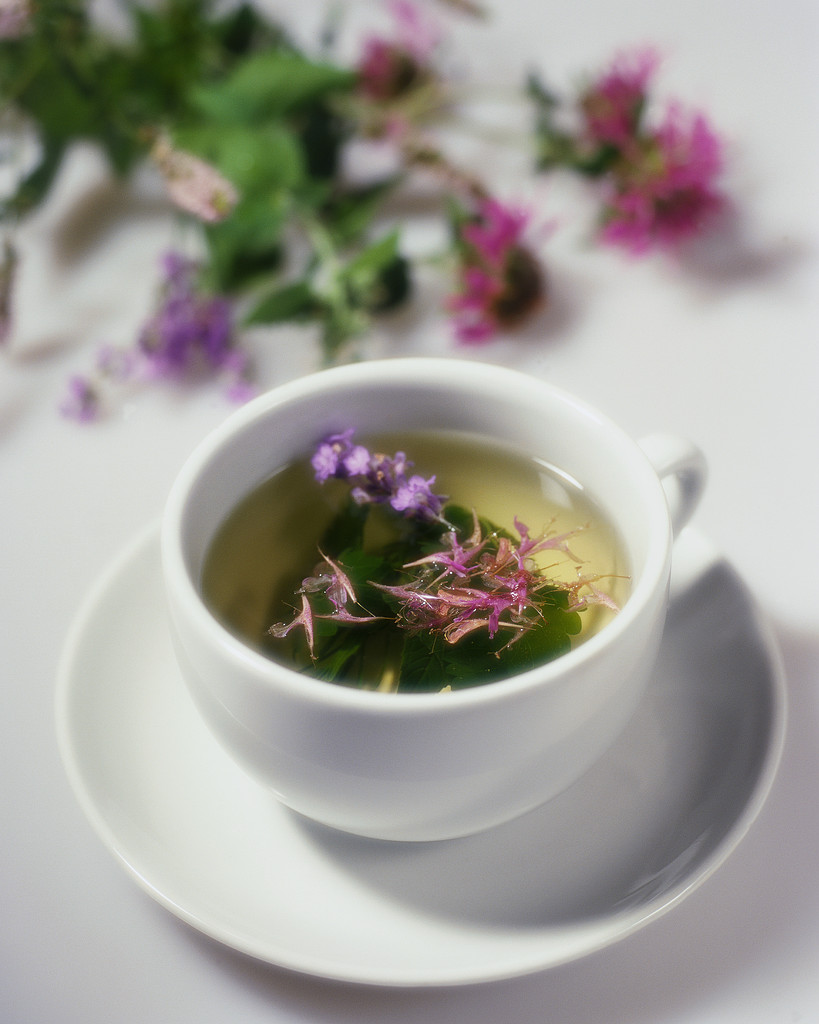
  • Make yourself a cup of herbal tea to warm and soothe you before bed.
  • Listen to some mellow music.
  • Give yourself a foot massage.
  • Read a favorite poem.
  • If you find yourself anxious with thoughts about work, imagine writing them down on pieces of paper. Then picture yourself walking to a nearby river and dropping each thought into the water, letting it drift away.

By tackling stress and sleep first, we put ourselves in a better place to make choices about eating and exercise. We change our habitual ways of thinking about ourselves, make caring for ourselves a routine, and have the energy to stick to a plan.

As Soren Kirkegaard said, “Don’t forget to love yourself.”

“There is nothing either good or bad, but thinking makes it so.”

In this line from “Hamlet”, Shakespeare goes straight to the concept that happiness or unhappiness is all about perspective. Our beliefs color our view of the world. Look at something from a different angle – more importantly, think about it from a new perspective – and it might not bother you at all.

It’s really pretty apropos that a playwright gave us such a useful way to characterize our perception of stress. So much of stress, after all, comes from the stories we tell ourselves about events and the roles in which we cast ourselves. Are you playing the victim, or the victimizer? The hero or the villain? The innocent or the guilty? Sometimes it takes only a slight shift to see ourselves in a different role.ffd6

But the ironic thing about this quote is that the characters were talking about prisons, and thinking of the place they were in (Denmark) as a prison. Nothing imprisons us so much as being unable to see another side of a situation. We get stuck telling the story the same way over and over again, convincing ourselves that it is the “truth”, and not recognizing that someone else’s “truth” might be very different. This way of thinking often traps us when we feel we have been wronged by someone.

Imprisoning ourselves in the story doesn’t make the hurt go away, though. Even though it seems counterintuitive, getting free of the old story and considering a new one can be a lot more healing. Look at what the writer Gregory Maguire did with The Wizard of Oz story. He took a tale that we thought we knew, and knew well, and turned it on its head. The good witch isn’t all good – in fact, she’s downright mean at times. The wicked witch isn’t wicked at all – just misunderstood and discriminated against. Couldn’t the same be possible with the stories we tell ourselves about our own lives?

That was one of the exercises I did in a workshop on writing for health last week. Our first assignment was to write about a traumatic experience in our lives, and our feelings about it, from our own point of view. But the next day we were asked to write about the event from a different perspective. The writing was completely different the second time when I considered the other people who were involved in the event. I was able to feel more empathy and compassion for the people I might have “blamed” for the hurt.

I saw something in Yoga Journal a while back about changing your negative “what-ifs” to positive “what-ifs”. So here goes: What if you looked for the silver lining? What if you “walked a mile in another person’s shoes”? What if you forgave someone for hurting you?  What if you told the story another way? What if you decided to play the villain or the fool instead of your chosen role? How would that look and feel to you?

Thich Nhat Hanh has written about roses and garbage that we cannot have one without the other. They are equal, and equally precious. “…we must be careful not to imprison ourselves in concepts. The truth is that everything contains everything else.”

The complete story of any life or any event contains an infinite number of points of view. Each side of the story might hold a valuable truth that could set you free of blaming and on to a path of discovery. The first step is changing the story.

Time travels

Ready to spring forward? That cute mnemonic device we use to remember to set our clocks ahead sounds so positive and energetic, but it feels the opposite. The benefits of daylight savings time are few, if any, and the costs are high. Do we really still need it?Analog Clock

Our bodies are finely tuned to respond to cycles of light and dark. There’s truth in the adage, “Early to bed and early to rise makes a man healthy, wealthy and wise.” The facts are these: getting enough sleep is important for physical health, helps you be more productive (leading to wealth) and even affects your ability to learn and remember (making you wise). When the phrase was coined, people didn’t know the mechanisms by which it worked, but they certainly could observe the results.

When we switch on and off of daylight savings time, we take an already-artificial construct (time) and make it more artificial. Our bodies are telling us one thing – it’s time for dinner, or it’s not time to get up – and the clock is forcing us to do something else. Even without daylight savings time, most of us suffer from what’s called social jet lag, a disharmony between our internal clocks and our daily schedules that causes chronic sleep deprivation, contributing to obesity, increases in smoking and higher alcohol consumption. We’re all sleepy when we need to work and wakeful when we want to sleep.

Monday mornings are consistently the peak time of the week for hospitals to see people come in with heart attacks, probably because of the early morning rise in stress hormones combined with the dread of starting the work week. But on the Monday after we switch to daylight savings time, that incidence of heart attacks goes up by 10%. Accidents of all kinds also increase for the first few days after the time change (in either direction).

Benefits of daylight savings time: not too many. Although it was touted for years as a way to save energy, the savings is really only about 1%. Let’s face it, we live
in a 24/7 world and if the lights aren’t on in the evening, they’ll be on in the morning instead. Gasoline consumption actually goes up during daylight savings time because we go more places after work.

IMG_0239Is it nice to be outdoors in the evenings during the nice weather? Of course! It might even help people get more exercise if they go out for a walk, or play a game of softball after work. But I’ve found in my house that everything gets later during daylight savings time. The bright sunlight makes it seem too early to make dinner, so dinner starts shifting to 8 or 8:30. That makes bedtime later. But we still have to get up for work, so sleep is what is sacrificed.

OLYMPUS DIGITAL CAMERAI don’t see any groundswell of opposition to DST, though, so I think it will be with us for the foreseeable future.  Just be aware for the next few days that none of us will be operating at 100%. It will take most of the week to have our bodies adjust, so don’t jump out of bed too quickly in the morning – take a moment to breathe deeply before you start the day. Pay more attention on the road and be mindful in the kitchen to avoid accidents. Get plenty of sunlight during the middle of the day, even if it’s just by looking out the window.

Above all, listen to what your body tells you it needs. As Golda Meir said, “I must govern the clock, not be governed by it.”

Go out and play!

Plato wrote, “You can discover more about a person in an hour of play than in a year of conversation.” Playing allows us to take risks, to laugh at ourselves, to fall down, and to get back up. We discover truths about ourselves, as well as others.

Earlier this week, my yoga teacher announced at the beginning of class, “We’re just going to play today.” It was the last class there for most of us, since the yoga studio was closing at the end of the week. We all felt a little bittersweet about it, and by making the class more playful, our teacher helped us focus on the sweetness and joy rather than the sadness at the ending.

We went on to practice a lot of partner postures, flying postures and other fun stuff. We had to trust each other and give up some control in order to balance in the air on someone’s feet. Some of us found that easier than others, but there was laughter all around as we played together. And yes, I did learn more about my flying partner in that hour than I ever had by practicing yoga next to her.

Playing helps take us away from the stresses of “real” life, but it also prepares us for them. The first time I tried the trapeze, years ago, I was terrified. You have to stand with your toes hanging off the edge of a platform, high in the air, and lean forward to grab the swing with the assistant only holding onto your harness with a finger. I had to trust myself to reach for the swing as I stepped into the void, and know that there were only two possible outcomes. Either I would be successful, get a grip on the swing, pull my legs up over it, and fly through the air (with the greatest of ease?). Or I would miss the bar, fall into the safety net, and..….be okay. The only thing at risk was my ego.

Why do you think we use terms like “take the plunge” and “leap of faith” to describe life’s risk-taking? Those physical chances we take during play – diving into the deep end of the pool, and jumping off the trapeze — teach us that we will probably be okay even if we fail. By continuing to play as adults, we keep ourselves flexible (mentally and emotionally, as well as physically) and more able to deal with changes that come along.OLYMPUS DIGITAL CAMERA

Do we play enough? NO! Even kids don’t play in the traditional sense nearly as much as they used to. And adults are often so oriented to work and worried about the future that we forget to incorporate play into our lives. Deep down, though, we all want and need to play.

How can you start playing again? Try a Laughter Yoga class, where you can just be goofy and creative for an hour or two. If you’re near Washington D.C., check out an organization called “Spacious” that connects people around fun and play. Bring the Instant Recess program to your workplace. Play in the snow, dance in the street, go on a roller-coaster, ride a wave, or even try the trapeze. Re-discover that baseline joy that comes from letting go and trusting that everything will be okay.