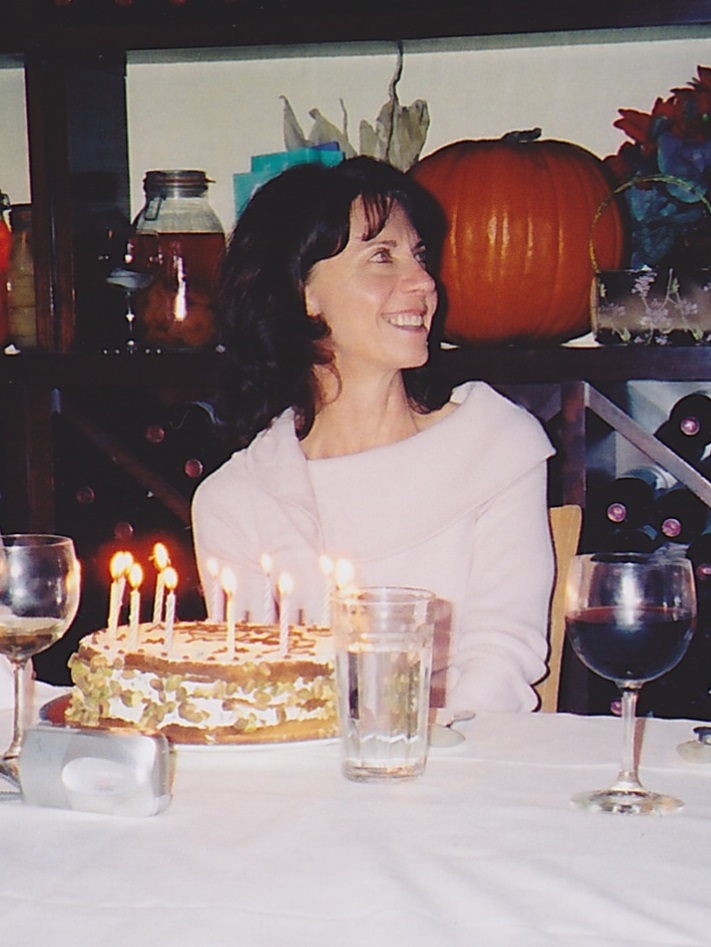
Resolution = intention –> heart’s desire

A resolution and an intention are pretty much the same thing. But in the yoga tradition, the ideal is for intentions to come from the heart more often than from the mind’s desires. And that’s why I find myself setting an intention for 2015 even though I don’t really believe in New Year’s resolutions.

In Sanskrit, the word for intention is sankalpa. It comes from kalpa, which means “a way of proceeding” and san, a “concept or idea formed in the heart”. So setting an intention means acting on an idea or desire that comes from the heart.

What is my intention? Simply to spend 30 minutes each day reading a non-fiction book.

How does this intention come from my heart’s desire?

All my life, reading has been a treasured experience, “the greatest gift” according to Elizabeth Hardwick: “It is cheap, it consoles, it distracts, it excites, it gives you knowledge of the world and experience of a wide kind.” It has calmed me when I’ve been distressed, stimulated when I’ve been bored, provoked when I’ve been complacent. imageYet I have developed two habits that are getting in the way of reading serving my heart’s purpose. One is reading on the iPad, and one is reading mostly novels.
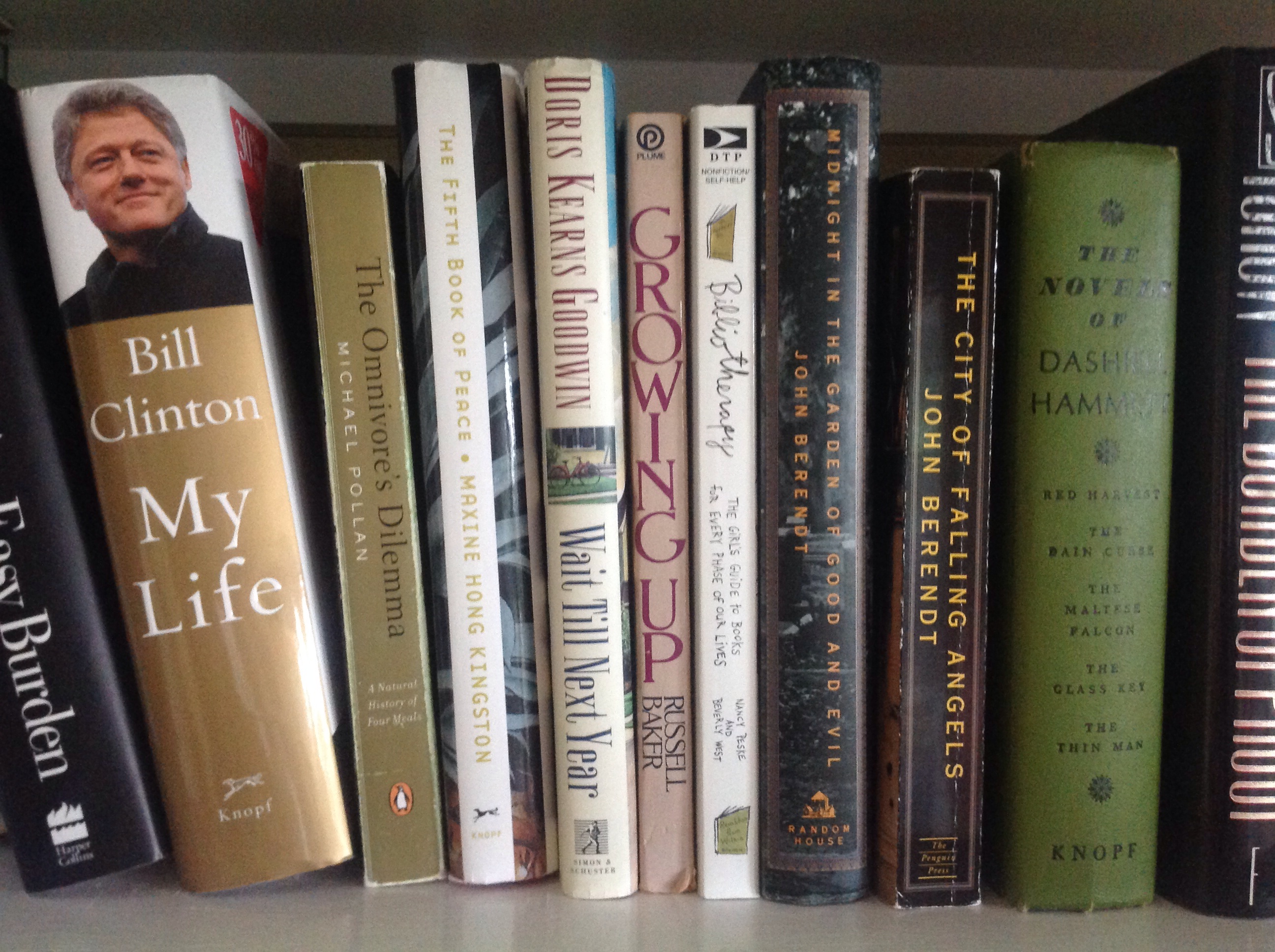
When I first started reading on the iPad, I promised myself that it would only be for traveling, so that I didn’t have to pack heavy books with me. Then I discovered Overdrive and started checking out library e-books. After that, I moved, and had to drastically reduce the number of physical books on my shelves. So I stopped buying “real” books. But one of the things I discovered is that I dislike reading nonfiction e-books because of the difficulty with flipping back and forth in the book, or easily finding a piece of information. So I just stopped reading nonfiction.

I will always enjoy reading novels more, and that’s okay. In fact, studies have shown that reading literary fiction helps us understand other people better and to build stronger relationships. But there is another world of information out there that I am missing by excluding nonfiction from my menu.

Reading is declining pretty much everywhere. A recent Wall Street Journal article discussed this development and the “Slow Reading” movement that has sprung up in places to counter  it. Proponents of slow reading even get together in some cities to read as a group (each with his or her own book). Research indicates that we need 30-45 minutes of reading in one stretch for true immersion (and presumably, improved comprehension), so that’s what these slow readers do.

I don’t think I’ll be joining a slow reading group, but I hope to model my reading on their design. Even my fiction reading doesn’t meet the immersion threshold most days — if I’m busy, I read for maybe 5 or 10 minutes before falling asleep, and while I mostly switch to airplane mode while reading, the iPad just offers too many distractions that lure me away from the book I’m reading.

The interesting thing about the Slow Reading movement is that their prerequisites for it sound a lot like those for meditation: a comfortable seat, a quiet environment, no distractions, the book as focal point. By bringing mindfulness to the act of reading, we can deepen the experience and its impact on us.

We take time for what is important to us. Thirty minutes a day to rekindle a treasured gift, to illuminate life’s purpose — that’s an intention from my heart.

Where stillness resides

Does stillness catch you by surprise sometimes? By stillness, I mean the hyper-focused, super-engaged moments of true mindfulness. These are the moments when you’re not fidgeting, your mind’s not wandering, and every sense is on heightened awareness.

I had one of those moments yesterday, notable mostly because of how rare it is. As much as I try to be mindful in my daily life, to bring my full attention to whatever I am doing, I can see that most of the time there is still a lot of noise, static, in the background.

What are the necessary elements for finding these moments of stillness? First, not being afraid to let the on-going mental narrative subside so you can see what else is there. Too often, we give the monkey mind free rein, burying any chance for stillness under layers of busy-ness and planning and worrying, because we are afraid of what it would mean to accept ourselves and this moment just as it is. What would happen if you turned down the volume for a while?

Is solitude a prerequisite for stillness? Maybe. I found myself alone in the morning this weekend while my husband travels for work. The rhythms of the day changed, slowed, were more reflective. No one was waiting to hear me say something, so I said nothing. I have never thought I could handle a silent retreat, but a silent morning once in a while opens something up.IMG_0072

Nature also contributes to the capacity for stillness. A particularly beautiful day – crisp air, brilliant sun, the smell of fallen leaves – stimulates the senses so deeply sometimes that we snap to attention and appreciation. It is impossible to ignore the birds singing, the breeze blowing, and my presence in the midst of it.

Thoreau famously went to live in the woods at Walden Pond in order to find these moments of stillness. But even he realized that solitude in nature wasn’t realistic all the time. He wrote, “I had three chairs in my house; one for solitude, two for friendship, three for society.” He understood that there was a time and a need for each of these. The two years of solitary living showed him a path for how to live, though, and as Brooks Atkinson observed, confirmed that he “could find all truth within himself.”

If we are to find the truth within ourselves, how we start and finish our days matters. Those beginnings and endings are the set-up for our energy levels, our potential for everyday mindfulness and even our creativity. Soren Gordhamer recommends 30 minutes in the morning for activities that “help you meet the day with calm and clarity,” and 60 minutes in the evening for activities of relaxation and ease that help you “transition from the day to sleep”. There is no one prescription for these activities, the idea is simply to pay attention to the inner life instead of the outer life that dominates so much of our time. So whether you meditate, pray, read, take a walk, enjoy a warm bath, or listen to music, you will probably improve the quality of your sleep and your ability to focus during the day.balance

These deliberate practices open a door to so-called “dispositional” mindfulness, being aware of what we are thinking and feeling in the moment, which is connected to healthier lifestyles, better heart health and fewer symptoms of depression. The more often you step over that threshold into the quiet place where stillness resides, the better able you will be to locate stillness again, even when life moves too fast and feels out of control.

Taking the slow road on Earth Day

Okay, I know it’s a bit of an oxymoron — driving on Earth Day. But if we assume the drive is necessary, can it be a mindful celebration of nature?

Driving into the city, I have a choice: Take the busy highway and then the congested main street, or make the journey on the slower parkway that meanders along the water, but gets me to the same destination. Today the road less traveled is clearly the better choice.

It’s mid-afternoon with a light rain falling. The road twists and turns, following nature’s path, not mine. Suddenly I am fully awake to my experience. This is not the time for rote driving; rather, the road grabs my attention and demands that I give it its due.

Thich Nhat Hanh says that any time we use an instrument or a machine, we change. We become something else that is a blend of self and machine. He suggests reciting this verse before driving, to make the experience more mindful:

Before starting the car,

I know where I’m going.

The car and I are one.

If the car goes fast, I go fast.

imageI settle into a steady rhythm as I respond to the organic curves in the road. There are stretches where I can go faster, but being forced to take my time around the curves makes keeping a slower, steady pace more fluid. On the main roads, I would have been speeding up just to stop. Here on the parkway, pauses are fewer, the motion is smoother, and I feel calmer as I drive.

I notice places in the creek where trees have fallen and boulders have piled up, chaotic spots that are reminders of wild winter weather. At the same time, Spring is announcing itself with a full-on burst of color. The bright yellow-green of new growth and the intense magenta of redbud trees flash around every turn. I realize what a gift it is to have this way of coming home.

Thoreau wrote that, “There are moments when all anxiety and stated toil are becalmed in the infinite leisure and repose of nature.” During the thirty minutes I’ve spent on the parkway, it’s been impossible to think about work or worries for very long. Nature has taken over my attention, if only for a little while.

Celebrating Earth Day by driving might not be what environmentalists had in mind when they inaugurated the occasion back in 1970. But before we can care for the environment, we have to notice it, and a mindful Earth Day drive has a way of stirring close observation and appreciation for all that surrounds us.


Learning about mindfulness from The Mentalist

Have you ever been upset with someone, frustrated because they didn’t understand what you needed from them, only to have them say, “I’m not psychic you know!” The message, of course, is that we can’t read each other’s minds, so how can we possibly know what another person feels or needs?

But the reality is that we really don’t have to be psychic to know some basic things about other people; we just have to pay attention.

In case you’ve never seen The Mentalist, it’s about Patrick Jane, a man who at one time pretended to be a psychic. In reality, he just has very keen powers of observation and a lot of chutzpah. His arrogance as a fake psychic caused his family to be murdered, however, so he stopped pretending, and went to work for the police, helping them solve criminal cases.

Of course, The Mentalist is a fictional TV show, but it’s fascinating to watch as the character explains what he knows about a suspect or a witness, just from observing or talking with them. Body language, clothes, nervous habits, accents, the things we surround ourselves with – they tell our story, if anyone takes the time to read it. Patrick Jane does that – he questions things that seem out of place; he uses his senses; he looks for what people value, he empathizes.

If only we were all TV characters like the Mentalist! We might understand so much more about each other. Don’t despair, though, there’s an app for that. Cognitive psychologists have been developing wearable gadgets that can monitor emotional ups and downs by measuring things such as heart rate and electrical changes in the skin. Depending on the device, they send messages about your emotional state to you or to other people. This is not as creepy as it sounds. Worn by children with autism, they can provide valuable messages to parents and caregivers so that the adults can respond to a child’s behaviors appropriately, even if the child isn’t able to express what he or she is feeling. The devices are also useful as biofeedback tools so that you can learn to recognize and manage your own moods and emotions.

Would feedback like that help us understand each other better? If you’re wearing a wristband that sends me messages when you’re feeling low, would I eventually learn to recognize those moods without the technology? Or would I become dependent on the technology and no more sensitive than I was before?

Humans are hard-wired for empathy – somewhat. We learn it as children by watching the adults around us, and from stories we read and hear. But we need to keep practicing it. Even as adults, we can improve our emotional intelligence. Before we can truly understand others’ emotions, we have to start with ourselves – staying connected to our emotions instead of suppressing them, learning how to reduce stress and being okay with strong feelings. Then we can expand that intelligence to include others – communicating better by staying focused on the person we’re with, making eye contact, paying attention to nonverbal cues (like the Mentalist!)

Daniel Goleman says that, “A prerequisite to empathy is simply paying attention to the person in pain.” How you turn your attention to someone may not matter in the end. Staying tuned in emotionally with the people we love makes our relationships stronger, whether it comes from a gadget, a mindfulness practice, or even psychic ability.


Lucky in love

What is the essence of a strong, fulfilling relationship? Experts agree that it should make you feel happy and loved, safe and secure, respected, and respectful. It’s one where you can be yourself, or as Erich Fromm said, you unite “with another while still remaining an individual.”holding_hands1

My husband and I are celebrating our anniversary this week, and it makes me reflect on why our marriage has lasted as long as it has. How much was luck, and how much hard work?

Since 2004, the Cornell Legacy Project has been collecting “practical advice” from a large group of people over 70. They’re asked for their counsel on different aspects of life, such as raising children, living through wars, and dealing with loss.  When they were asked about what makes a successful marriage, the top responses were:

  1. Marry someone who is like you in their core values, and don’t think you can change them after marriage.
  2. Friendship is as important as romantic love in lifelong relationships.
  3. Don’t keep score. Marriage isn’t always a 50-50 proposition. The key to success is that both partners try to give more than they take.
  4. Talk to each other.
  5. Don’t just commit to your partner; commit to marriage itself and take it seriously.

The first two tips are about choosing your partner. Marrying someone who shares your values and can be your best friend allows you to take the leap of faith that true intimacy requires. The word intimacy comes from the Latin word meaning “within”, and that willingness to let someone else inside our hearts requires trust. That’s the first building block.

Intimacy is important, but it’s not enough. That’s why I think #5 – commitment — comes next. There has to be a sense of mutual obligation – we’re in this together and we both have to make it work. Both people have to set the intention that they are going to make the relationship a priority.

But once the choice is made and the intention is set, sustaining any relationship over the long term requires attention and effort. It has to be cultivated like a garden so that it thrives. I agree with the advice that marriage isn’t always 50-50. At any given time, someone is going to be giving more than the other, and there are times when you have to make an effort even when you don’t have the energy for it. You just hope that it balances out in the end, that you feel as if the relationship has enriched your life well beyond what you’ve put into it.wildflowers 3

Communication is the other vital element. The elders say “talk to each other”, but I would suggest learning to listen more than you talk. Listen to understand instead of listening just to reply. Listen with empathy. Don’t react quickly, but respond thoughtfully. Apply mindfulness practices to your relationship.

Ultimately, the support that comes from strong relationships is a powerful component of staying healthy, both physically and mentally. Having someone to confide in, to touch, and to provide companionship leads to a better, longer life. It has certainly made my life richer and more meaningful. So has my marriage required hard work? Definitely. But at the same time, I feel really lucky.

Time flies, but it’s a lovely ride

Every time I have to wash and dry my hair, I think, “This again, already?” Each week when we put out the trash, I ask, “How can it be Friday again, so soon?” Paying the phone bill always makes me think, “How can a month have passed so quickly?” And whenever I celebrate a birthday, I wonder, “Where did the year go?”

Mundane tasks and rituals can be comforting because they provide order to our days and a sense that some things do not change, but they can also be disturbing because they remind us that life seems to be inexorably speeding past, with nothing to slow it down. The fear that time is slipping away, combined with the tediousness of some of our days is enough to bring anyone down.

But, as James Taylor reminds us:

“The secret of life is enjoying the passage of time

Any fool can do it

There ain’t nothing to it….

It’s just a lovely ride.”

Maybe the secret to enjoying the passage of time is to bring more mindfulness to the chores and more awareness to the celebrations. Can I up my level of engagement? Paying closer attention might imbue activities with more of the pleasure that James Taylor sings about so beautifully.

For instance, my first act upon waking is to start making coffee. But I usually do it by rote, not stopping to appreciate the smell of the coffee or the clarity of the water going into the pot. Though my attention snaps back when I take my first sip, my challenge is to bring awareness to the entire process. “I have measured out my life with coffee spoons,” wrote T.S. Eliot. If this is literally true of my life, shouldn’t I at least smell the coffee?

Jon Kabat-Zinn says that, “If we are to grasp the reality of our life while we have it, we will need to wake up to our moments. Otherwise, whole days, even a whole life, could slip past unnoticed.” In his book, Wherever You Go, There You Are, he has a wonderful entry called “Cleaning the stove while listening to Bobby McFerrin,” about using the process of cleaning the stove as a mindfulness practice, and the accompanying music as a way to engage the whole body in the task. It is a good lesson for me to remember when I reluctantly approach the job of drying my hair – can I engage both my mind and body while doing it, can I be more fully aware of the transition from wet to dry?

So maybe you’re saying “Sure, I zone out when I’m doing boring jobs, but I always pay attention when it’s something important like lunch with my mom, or playing a game with my kids.” Really? Kabat-Zinn suggests that one way to wake up “is to look at other people and ask yourself if you are really seeing them or just your thoughts about them. Sometimes our thoughts act like dream glasses…Without knowing it, we are coloring everything, putting our spin on it all.” Am I fully IMG2present at the birthday party, soaking it in with all my senses, or just going through the motions of enjoyment while planning the story I will tell about it later?

As I write this, it strikes me that everyday mindfulness can’t help but be connected to a sense of gratitude. How can I smell the coffee beans or acknowledge the clean water that goes into making the coffee without being grateful that I have both those things available to me? How can I pay my bills every month without gratitude that I have the money to pay them? How can I observe my birthday, and those of others, without giving thanks that we’re all here together to celebrate? Yes, time flies, but the ride is lovely even when it’s fast.


Three “meals” a day for the soul

It makes sense that a healthy diet and plenty of exercise can help us sleep better at night and be more resilient in the face of stress. But consider the flip side: managing stress and sleeping well can support efforts to eat better and move more.

I recently spent a day counseling people on healthy eating, but I found myself more often than not talking with them about how much sleep they got, and what their stress levels were like. They invariably said that their jobs were stressful and the hours were long. They got home later than they would like, and found it challenging to think about preparing a healthy meal. The stressful day made them feel like they “deserved” the calorie-laden dinner. And by the time they ate, and spent a couple of hours winding down, they got to bed too late to get enough sleep. They often felt fatigued and low in energy.

Most of the people I talked to were relatively young and pretty healthy. But they were struggling with maintaining healthy behaviors in the face of increasingly demanding jobs and hectic lifestyles. Suggesting complicated or time-consuming changes won’t work for them. But what about something that takes only 5 minutes?

Spending 5 minutes once, twice or three times a day doing something that brings you back to the present moment, refreshes your mind, or relaxes your body, can be incredibly restorative. Most of all, in those few minutes, you’re engaged in caring for yourself. While the idea that you deserve care seems like it should be a no-brainer, many people have a hard time embracing it. But a practice that affirms your love and care for self can be the foundation for other health behaviors.

These 5-minute fortifiers come from many sources, including my own practice. Some are adapted from a little book called Five Good Minutes by Jeffrey Brantley and Wendy Millstine. I have divided them into morning, day and evening practices:

Morning

  • Resist the urge to jump right out of bed. Stay still for a moment. Listen to the sounds outside and in your home. Smile. Set an intention for the day, such as being kinder to the people who challenge you.
  • Sing in the shower. As Brantley & Millstine say, “Music and song can make you feel giddy, bubbly, euphoric, and joyful.”
  • Slow down. Ever notice how when you rush, you are more likely to drop things, spill things, and make mistakes; and less likely to find things you need? Taking the extra two minutes to get ready with care will not make you later.

Daytime

  • Breathe at the traffic lights. Too often when we’re rushing to get somewhere, especially in traffic, we chafe at the time spent waiting. Turn it into an opportunity to notice your breath. Inhale deeply and exhale slowly. You will feel calmer when the cars start to move again.
  • Take a break to look at nature. Whether it’s the view out your office window, or a picture on the wall, this practice will rest your eyes and your brain, and shift your perspective.IMG_0117
  • Eat lunch mindfully. Stop working for the time it takes to eat. Chew slowly, really taste the food and think of how it nourishes you.
  • Spend 5 minutes talking with a friend or family member outside of your work. Hearing the voice of someone who loves and cares for you helps ease the stress of the day.

Evening

Relaxing rituals in the evening help separate day from night and work from rest:

  • Make yourself a cup of herbal tea to warm and soothe you before bed.
  • Listen to some mellow music.
  • Give yourself a foot massage.
  • Read a favorite poem.
  • If you find yourself anxious with thoughts about work, imagine writing them down on pieces of paper. Then picture yourself walking to a nearby river and dropping each thought into the water, letting it drift away.

By tackling stress and sleep first, we put ourselves in a better place to make choices about eating and exercise. We change our habitual ways of thinking about ourselves, make caring for ourselves a routine, and have the energy to stick to a plan.

As Soren Kirkegaard said, “Don’t forget to love yourself.”

You gotta have heart

For how many moments of your life is your heart present? Do you do things in a “half-hearted” way? Do you agree to do something, knowing that your “heart isn’t in it”? We use expressions like this to describe lack of enthusiasm, but they are really just another way of describing an absence of mindfulness.

Jon Kabat-Zinn, the founder of the Mindfulness Based Stress Reduction program, described in an interview the Chinese ideogram for the word mindfulness. He said it is made up of the character for presence, combined with the character for heart. In essence , mindfulness means presence of heart. By cultivating a quality of presence, he says, we inhabit our true selves and are more able to uncover our sense of compassion.image

I’ve spent the past few days reading a book called The Orchardist, by Amanda Coplin. It is a novel about separation and grief, loneliness and misunderstanding, freedom and imprisonment. It contains a beautiful passage that, to me, perfectly describes mindfulness:

When she was alone, when she was working, it was as if she forgot about herself. It seemed strange to state it this way, but it was as if she had no outline, no body, even though the work was physical. Where did her mind go? Her mind was steeped in the task at hand. At such times she felt a depth of kinship with the earth, and also felt very grown up, rife with compassion.”

Is mindfulness necessary for compassion to exist? Are we able to feel deep sympathy for someone else, and to care about ending their suffering, if we don’t have the ability to pay attention and be present to what they are feeling? The character in the book realizes in moments of mindfulness at work that she has attained a greater capacity to feel, that there is a spaciousness in her heart that wasn’t there before.

I’m also reminded of Like Water for Chocolate, in which all of the emotions of the character Tita become contained in the food she prepares, so that when people eat the food, they immediately feel what she feels — sadness, joy, pain. It doesn’t matter if you believe in the magic; there is something to learn from the idea that our work can contain some essential part of ourselves and that others can use their senses (taste, in this instance) to feel the emotion and presence that we put into it.

If we tune in to what our senses are telling us, really tune in, what can we learn? Whether it’s the expression on someone’s face, the sound of birds chirping, the smell of someone’s perfume, the taste of just-baked cookies, or the touch of a dog’s nose on my arm — engaging with my whole heart in that moment can help me understand what someone else feels, what is happening in my world, or just how much love can be contained in a batch of cookies. And that sense of understanding can open doors in the mind.image

Our brains are plastic; we can change them if we desire. The work of Richard Davidson and other neuroscientists has shown that if we train ourselves in mindfulness, we can hone skills that help us experience more happiness and compassion. But this isn’t something minor that just makes me or you happy on an individual level. The more we “widen our circle of compassion” as Einstein said, the more chance there is for harmony and peace in the world.

Our brains are plastic, but in order for them to expand, our hearts need to be present. So think about it — can you bring your whole heart to more of what you do every day?

Seeking a muse

Where does inspiration come from? A stray word overheard on the street, a beautiful view, an ironic piece of art, serendipity? Should we seek inspiration or let it come to us?Lake Como_373

All week, I’ve been suffering from a bad case of writer’s block. I don’t know if it is a result of boredom, going on vacation for a week,  or waiting for a spring that never seems to arrive. Sometimes I think it has something to do with the loss of my yoga teacher (no, he didn’t die, just stopped teaching for a while). He would often say something simple in class that would set me off on some whimsical train of thought. Whatever the cause of the barrier, I find that desire for relief makes it hard not to work at finding an idea; hard to relax and trust that something will come.

Thomas Edison famously said that “genius is one percent inspiration and ninety-nine percent perspiration,” but he didn’t actually say where he got that inspiration. There seem to be two schools of thought on this – the first is what I call the “Just do it” school, and the second is the “Wait for it” school. Jack London was in the first category, saying that “You can’t wait for inspiration. You have to go after it with a club.” Pablo Picasso too, thought that “Inspiration exists, but it has to find us working.”

Waiting for inspiration is a little like calling on the muses from Greek mythology. The ancient Greeks believed that poets, artists, musicians and even scientists got their inspiration from one of the nine muses, goddesses that were the source of knowledge. Amy Tan has said, “Who knows where inspiration comes from. Perhaps it arises from desperation. Perhaps it comes from the flukes of the universe, the kindness of the muses.”

Consider another definition of inspiration – “the act or process of inhaling” – and compare creative inspiration to the act of breathing. We know that the breath doesn’t have to be forced. It will happen without us doing a thing. We are born without the need to control the breath, yet it’s incredibly difficult to give up control of other things we want. We don’t have the patience to just let them come.

If we have both open airways and clean air, we trust in our continued ability to breathe. If I keep my mind open and let the breezes of experience flow through, can I learn to trust that ideas will come? I am reminded of two of the qualities of mindfulness: non-striving, which is about being, rather doing; and non-attachment, which means letting go of the idea that things have to turn out a certain way.

Maybe I am my own muse. By being and trusting who I am, letting go of fixed ideas, and not being afraid to wait, inspiration will come – just like my next breath.

Teach your children well

The public conversation has been a swirl of questions since the unspeakable mass shooting in Newtown, Connecticut last week. How can we prevent these kinds of events? What does mental illness have to do with it? Can we control it by banning certain weapons? How will these child survivors handle it? How can we best protect our children?

Kids_0003We could buy our children bulletproof backpacks, as many parents are apparently doing in the aftermath. Or we can teach them lifelong skills that will not only build resilience for dealing with stressful events, but perhaps help schools and communities become environments where young people will not feel isolated, marginalized and desperate.

The American Psychological Association has tips for parents on how to help children build resilience. Their suggestions include things like “make connections”, “teach self-care”, and “nurture a positive self-view”. This is great advice, but a little vague. Even if a few parents look at the APA web site, how many have the skills to implement the ideas? Children, teachers and communities would be better-served by school-based programs:

  • Mindfulness programs in school. Congressman Tim Ryan of Ohio was so affected by a mindfulness retreat he experienced a few years ago that he wrote a book about it (A Mindful Nation) and worked to get funding for “Skills for Life”, a social and emotional learning program, in Youngstown, OH schools. Teachers receive training, which helps them with their personal stressors, and then they bring the program into the classroom. The children have responded enthusiastically, teachers have found that their classes are better-behaved, and academic performance has even improved. Goldie Hawn, through her Hawn Foundation, has supported a similar program called “MindUP” in the Miami-Dade schools. The program helps develop emotional resilience skills, as well as “helping children function in their environments in a more mindful and less stressful way”.
  • Teaching Tolerance, a program of The Southern Poverty Law Center which aims to foster “school environments that are inclusive and nurturing”. They have developed many anti-bias education resources, including teaching kits, curricula and professional development programs. While their program was initially focused on building tolerance for people of different races and ethnicities, it is applicable to fostering acceptance for children with any kind of differences. One of their initiatives is the “Mix It Up at Lunch Day” which has been held every November since 2002. On that day, kids are encouraged to sit with someone new, someone outside of their “group”, at lunch. These kind of interactions help reduce bias and misconceptions about others.Hand Reaching
  • Compassion training. Dr. James R. Doty, Director and Founder of Project Compassion and Clinical Professor of Neurosurgery at Stanford University, has written, “Why, in a country that consumes 25% of the world’s resources (the U.S.), is there an epidemic of loneliness, depression, and anxiety…Our poverty in the West is not that of the wallet but rather that of social connectedness.” Neuroscience research, at Stanford and elsewhere, has shown that people can train themselves to be more compassionate and to feel greater empathy. This is vital for all of us to cultivate, no matter how old we are. As long as people do not feel connected to each other, it is too easy to forget about the people on the margins.

Will we ever eliminate all acts of violence? Probably not. But I would argue that time and money spent on building mindfulness, peace and compassion in schools are equally as important as resources for math and reading.  Thich Nhat Hanh has written, “A fresh way of being peace, of making peace, is needed…We rely on each other. Our children are relying on us in order for them to have a future.”