Our essence

Do you consider yourself to be a spiritual person? Do you have only the vaguest idea of what that means? Does it matter?

Spirituality is one of those amorphous words that mean different things to different people. That’s part of why it’s a mistake to draw too many conclusions from the new religious affiliation study by the Pew Forum on Religion & Public Life. While the number of people who say they are not affiliated with any religion has grown to 20% of adults, 37% of those people say that they are spiritual; and even among those who do affiliate with a religion, many say they are “spiritual, but not religious”.

Spirituality is important for health, which is why it is one of the Six Dimensions of Wellness. Its role is to bring together the other dimensions by providing meaning and purpose to our lives. It is not enough to be physically, intellectually or socially healthy if there isn’t an overarching “world view” supplying significance to our actions. Herbert Benson, in his book, Timeless Healing, discusses the idea that humans might be the only species with a sense of our own mortality. If our brains were not wired to “harbor beliefs” that there is a deeper meaning to life, we could easily be overcome by dread and fear.

More and more research shows that people who are religious or spiritual are healthier and live longer than those who are not. The problem is that most studies are based on religion rather than that vague “spirituality” because it is easier to measure. So it’s somewhat unclear where the health benefits come from – the belief itself, the healthy behaviors required by some religions, or the social support that comes from belonging to the religious community?

Unlike religion, each of us can personally define spirituality. At its core, it is about feeling connected to something larger than ourselves. As we become more spiritual, we focus on others more than just ourselves, and move away from material things as a source of meaning. So how do you tell if and how you are spiritual? One good way is to ask yourself where you are and what you are doing when you have feelings of spirituality. In the Pew study, about 58% of people said that they have a deep connection with nature and the earth. For many, spirituality can be found most easily in nature.

What are your beliefs and values? Are you putting them into practice in your life? For many of us, stress results when there is conflict between our values and our actions. The Dalai Lama says, “I don’t see any difference between religious practice and daily life. One can do without religion, but not without spirituality.” He calls spirituality “the full blossoming of human values that is essential for the good of all.”

Other characteristics of a spiritual nature are compassion for others, having the capacity to love and to forgive, altruism, and the ability to experience joy. Even if you feel that you are lacking in one of these areas, they can all be developed and enhanced through practice. Whether it’s volunteering in your community or engaging in compassion meditation, there is a way to cultivate greater spiritual connection.

The root word of spirituality, spirit, comes from the Latin word for breath. A sense of spirituality may be as natural to us as breathing. We not only need it to live, we need it to live well.

Listening in

We are not just our bodies, but it is important to be aware of what they’re telling us. The more we pay attention to how we feel – in mind, body and spirit – the easier it will be to sense when something is not right. Then we can take steps to bring ourselves back into wellness.

Sometimes conflict arises, though, when we turn to medical professionals who have a one-size-fits-all approach to healing. Too often, that approach involves a prescription for medication as a first step rather than a second or third. Even though we might have doubts about the medication, sometimes we don’t speak up about them.

Dr. Herbert Benson, an authority on mind-body approaches, writes in his book, Timeless Healing, that “…when it comes to the medical profession, we are often intimidated or scared by the subject matter and we disregard our true feelings and reactions, even though brain research tells us that emotions are critically important decision-makers in our minds/bodies.”

Benson believes that physicians underestimate people’s desire and ability to make lifestyle changes, or to try other approaches that don’t involve drugs. He says, “Trust your instincts, and trust the doctor who values your impressions and assessments.” In other words, find the doctor who starts from the premise that you know your body best.

Of course, to know your body best means that you have to pay attention to it. Some of us are very in tune with the nuances of our bodies; others tend to be dissociated. But there are a number of mindfulness practices that help us become more aware.

  • Body scan – this practice involves bringing your attention to each body part, one at a time, starting say, at your left toe, and working your way up. The attention is passive observation only, without judgment.
  • Progressive muscle relaxation – this practice has you tense and tighten parts of your body one at a time, then relax them. It helps bring awareness to the difference in sensation between tension and relaxation.
  • Present moment awareness – by sitting quietly and focusing on the breath, we can often become aware of what kind of body sensations are connected to certain thoughts. If you find your mind drifting to something troubling, you may realize the place in your body that reacts with tension to that thought.

It is estimated that 70%-80% of all healthcare visits are stress-related or stress-induced. It makes sense to use lifestyle change rather than medication to treat many of them. We can start by becoming more alert to the interaction of mind and body, and by treating ourselves with compassion. I sometimes practice a compassion meditation from Frank Jude Boccio (found in Yoga Journal magazine) that includes the line, “May I hold myself with softness and care.” There is something about that statement that always reminds me of my innate value, and the need to treat myself well.

Hippocrates said, “The natural healing force within each one of us is the greatest force in getting well.”  Learning to tune into our bodies and trust in that force would make us all better healthcare consumers and custodians of the awesome gift we have been given.

My Perfect Day

The warm weather this week has everyone excited. Everywhere I go, people have something to say about it (80 degrees in March!) and a smile on their faces when they talk about it. When I wake up in the morning now, I hear the birds chirping through my open window, indicating another glorious day. I get out of bed with a lightness that is missing in the cold, dark days of winter.

All of that leads me to think about my perfect day. This is a tool that I use with students as a starting point to figuring out their values. If you can make a list of things that constitute a good day for you, it gives you an idea of what is most important to you. What I’ve seen this week is that warm, sunny weather is very valuable to me!

Here are some other things that would make up a perfect (or very good) day:

  • Time spent with friends or family. Whether I reach out to someone, or they make contact with me, it feels good to talk (in person or on the phone) with someone I’ve known a long time. It is a reminder that I have a support system out there.
  • A really yummy meal that isn’t too unhealthy. I love to cook and I love to eat, so this is a significant part of the day. Having healthy food is a bonus because I can feel both satisfied and virtuous about the meal.
  • Some work to do, but not too much. I like the challenge of work and feeling like I make a contribution to something bigger than myself. On the other hand, I like to have choices about how I spend my time.
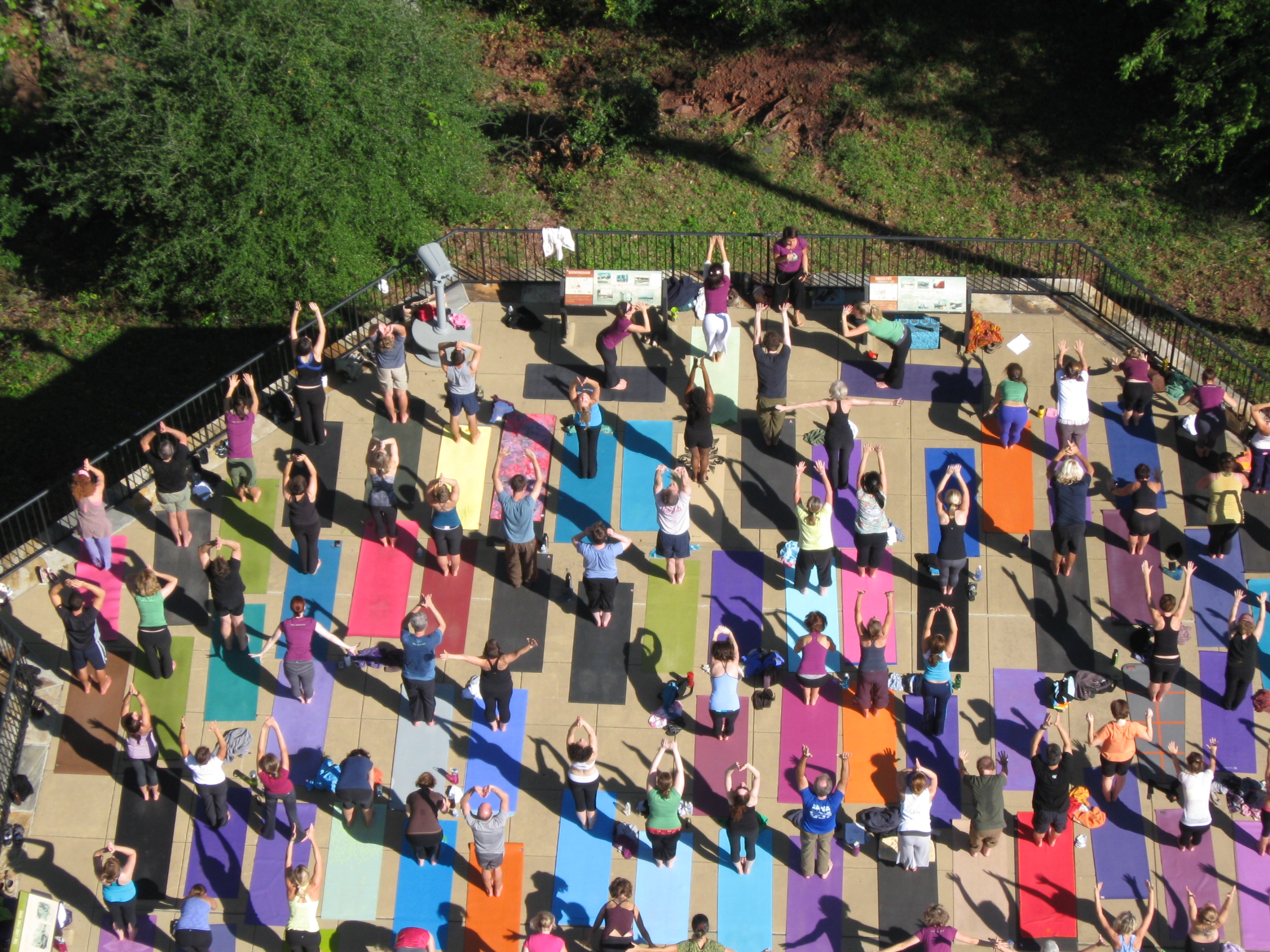
  • Some physical activity that I enjoy. There’s that good feeling of exhaustion that comes with working my body hard, but not too hard. I don’t need to run a marathon, but I like to get out and move. Running, hiking or yoga all fit the bill.
  • A good book to read. I’ve written before about the important role books have played in my life, along with curiosity and learning. Whether I’m reading novels or non-fiction, I always take something from the books I read.
  • Words of love or encouragement. This could be my kids saying, “I love you, Mom”; a student saying he was helped by my class; a co-worker praising my work; or even a stranger complimenting me on what I’m wearing. Affirmation always brightens my day.
  • Physical contact with someone I love. The skin is the body’s largest organ, and the sense of touch an important way to communicate. Hugs and kisses are a necessity on a perfect day!

When I look at my list of “perfect day” requirements, I see that they correspond very closely to the six dimensions of wellnessPhysical (the exercise and eating); Social (time spent with friends); Emotional (physical contact and words of love); Intellectual (reading); Occupational (working a little bit); and Spiritual (appreciating that warm, sunny day with the birds chirping). Without consciously thinking about it, my desires are reflecting my core values.

Do we know the perfect day when we are living it, or does it exist only in retrospect? Can we wake up every morning with the desire to live it well?

The Indian poet Rabindranath Tagore wrote, Do not say, ‘It is morning,’ and dismiss it with a name of yesterday. See it for the first time as a newborn child that has no name.”

Natural Wonders

Sitting at my desk this week, all I hear is the sound of birds chirping, singing and calling to each other. The distant sounds of the highway fade away to the background. Even the neighborhood dogs can’t compete with the birds in springtime.

I was so taken with the bird sounds a few days ago that I found a web site where you can click on the name of the bird and hear a recording of its song. Check it out at http://www.enature.com/birding/audio.asp

Relaxing sounds can soothe people, lower our heart rates and stimulate production of endorphins. Of course “relaxing” is in the ear of the beholder; but for me, the sounds of the birds are in that category. There is a reason why so many recordings of guided meditations tend to focus on images of nature, such as waterfalls, mountains, beaches and forests. The natural world has the capacity to nurture us, make us feel calm and supported, even improve our sleep. But thinking about connecting with nature leads to the unfortunate fact that many of us just don’t spend enough time outdoors.

Most alarming is the fact that children don’t spend nearly as much time outdoors as they used to, in fact only half as much time as they did twenty years ago. Very few play outside on their own, yet research shows that unstructured free play in the outdoors has many benefits to them – ranging from doing better in school, to being more cooperative, to just being healthier overall.

Something as simple as a view of nature helps to reduce stress in children who are highly stressed, and daily proximity to nature can help children focus, even reducing symptoms of attention deficit disorder. Playing in nature also serves the important purpose of giving children the opportunity to take appropriate risks, solve problems and develop creativity, which can lead to enhanced self-esteem.

So many benefits! Yet finding the time, a safe space, adults who are comfortable enough in nature to guide children – all are barriers. Luckily, a few organizations are working to make sure that the next generation has a taste for nature:

  • The Children & Nature Network, whose mission aims to “give every child in every community a wide range of opportunities to experience nature directly”, has tips on their web site for starting your own family nature club, along with other ideas.
  •  The No Child Left Inside Coalition is an advocacy group with almost 2,000 member organizations from across the country that seeks to raise awareness in Congress and among the public of the need for more environmental education in schools. The coalition was formed after many programs were cut in the wake of the No Child Left Behind Act.

As Thoreau once wrote, “We need the tonic of wildness … We can never have enough of nature.”