Training for Life

Several years ago, when I was part of a boot camp fitness program, I was running one morning with my group. A woman passing by asked us “What are you training for?” Without missing a beat, our instructor answered, “For life.”

Today I’ve been thinking about this idea that we have to be ready for whatever life throws at us, the curve balls like divorce, job loss, deaths or serious illnesses. Sadly, too many people I know are dealing with some of those big life stressors right now. While we expect in an abstract way that our lives are going to have low points, it still can feel like a ton of bricks when we are hit with it. And when we have to deal day after day with the repercussions of divorce, or caring for a sick family member, it will tax even those of us with deep reserves of strength and good health.

Coming into a stressful situation with high levels of wellness in all dimensions can help people be more resilient and better able to meet the challenges. Physical wellness is very important, but it’s not the whole story. The 6 Dimensions of Wellness model emphasizes the whole person:

  • Physical – Do you have healthy eating habits and engage in regular exercise? Are you getting regular medical exams and engaging in self-care?
  • Occupational — Are you getting satisfaction from your work? Do you feel like you make a contribution to something? Does your choice of work align with your values?
  • Social – How are your relationships with family and friends? Do you feel that you have a support network you can call upon when needed? Do you feel connected to others in a community?
  • Emotional – How able are you to accept and express your feelings? Is your outlook on life more optimistic or pessimistic?
  • Spiritual – Do you feel a connection to something larger than yourself? Do you feel your life has meaning? Are your actions in harmony with your values and beliefs?
  • Intellectual – Are you a life-long learner? Do you take opportunities to be creative, to challenge yourself, and to share knowledge with others?

All of these dimensions make up your wellness path, and contribute to your ability to handle stress. Visualize your path right now, and think about an area you would like to improve.  Focus on enhancing your wellness in just that one dimension for now. Here are some ideas to get you thinking:

  • Physical – If your nutrition needs a boost, set a goal of eating 5 servings of fruits and vegetables each day.
  • Occupational – Evaluate your current job. Can you develop a new skill for use there or in your next job?
  • Social — Reach out to someone you’ve been missing. Make a date to go out with friends. Plan a neighborhood get-together.
  • Emotional – Start writing down your feelings in a journal. Watch a funny movie to lighten your mood with humor.
  • Spiritual – Take a walk in nature. Get involved in helping others. If you have been religious in the past, think about reconnecting with your faith.
  • Intellectual – Set a goal to read a newspaper every day, or a book each month. Perhaps sign up for a class on a subject you’ve always wanted to learn.

Wherever your path takes you, and no matter how many bumps in the road, I wish you ease and well-being in body, mind and spirit. Train for life!

Have you played today?

“Health begins where we live, learn, work and play.”

That statement came out of a recent Robert Wood Johnson Foundation commission on building a healthier America. It means that all of the social environments in which we spend time help determine our overall health outcomes.

Play (def.): to occupy oneself in amusement, sport, or other recreation.

But how much do adults play? Is having fun the lowest priority item on your to-do list when obligations at work and at home have to be met? The truth is that, like exercise, we will never have enough extra time for play until we make the time for it and schedule it in our day.

There’s a good case to be made for playing – doing something that’s fun just for the sake of having fun, in a noncompetitive and unpressured way. It helps us regain some of the unqualified joy and spontaneity we had as children, and, possibly, to experience what Buddhists refer to as “beginner’s mind”. Beginner’s mind means looking at something without the lens of prior knowledge, experience, or, especially, judgment. It means simply experiencing something as it is, in the moment, instead of how we want or expect it to be.

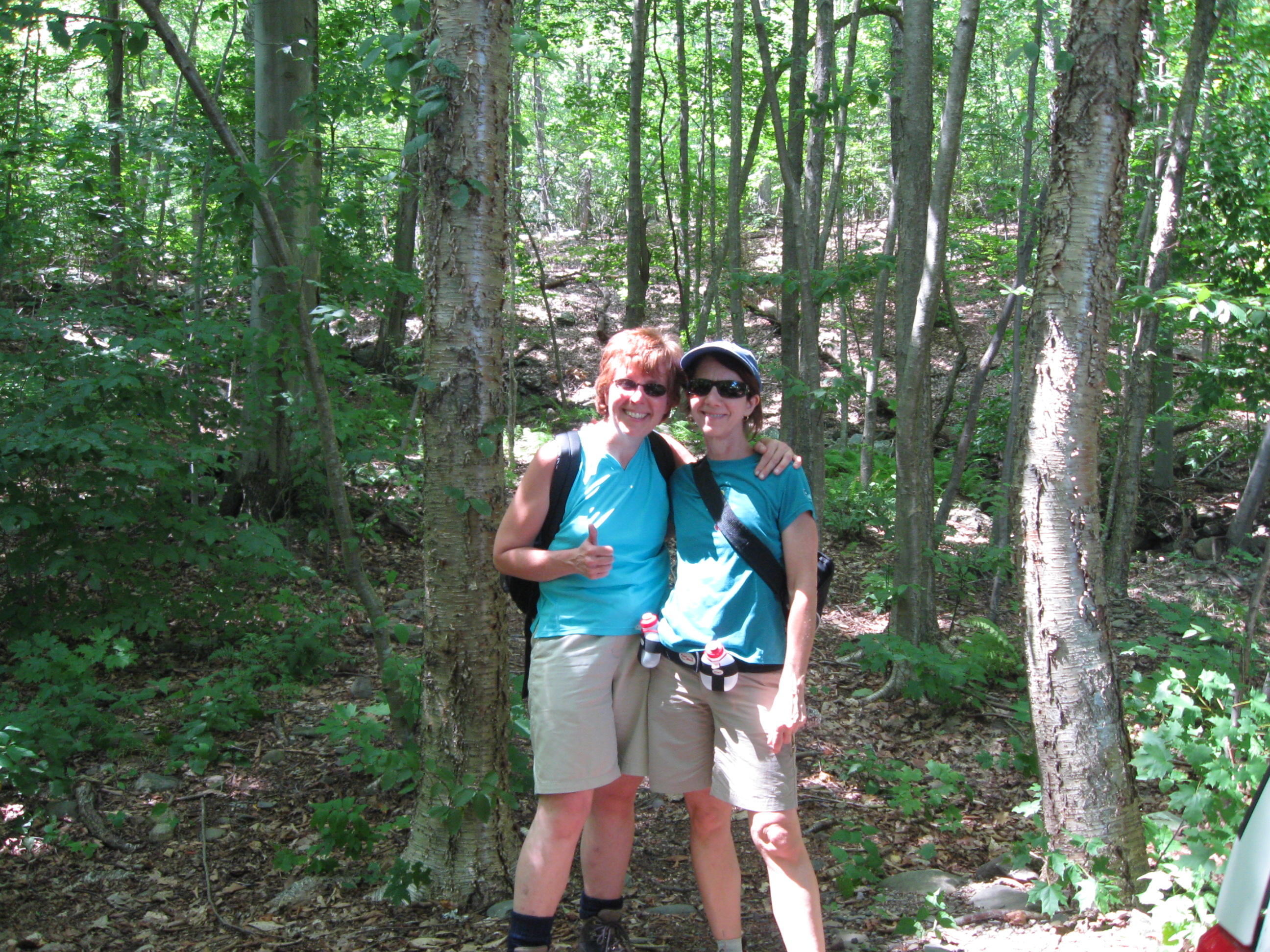
Beginner’s mind can more easily be accessed if we regularly try new “play” activities. Being a little bit adventurous, perhaps even taking a risk (whether it is physical, social or psychological) could create an opportunity for a beginner’s mind experience.  A few years ago, I decided that birthdays are a good time of year to try something new. That’s a bit challenging with a birthday at Thanksgiving time, but it was easier on my sister’s summertime birthday, when we tried a 7-mile hike on the Appalachian Trail. We challenged ourselves, took a wrong turn or two, laughed a lot and thought about nothing else for those few hours.

While it’s pretty widely recognized that play is important for children’s development, we sometimes forget that adults have a need for play too. Any type of play, whether it is something we’ve always enjoyed or something new, can give us perspective on other areas of our lives. It can foster creative thinking and problem-solving. Play can stimulate and refresh both brain and body.  Playing with other people helps us make and nurture social connections. Play teaches us to be flexible and cooperative, and to work as a team.

In some workplaces, play is integrated into the workday. Google is probably the most famous for supplying games such as Foosball, ping pong and volleyball on site. At Zappos, one of the company’s core values is to “create fun and a little weirdness”. Other companies provide climbing walls, swimming pools and monthly parties. Some would say that these perks are designed to keep people working longer hours. That may be true, but at least they have the opportunity to take a play break.

What are your ideas for fun at work or at home? Have you played today?

Update on kids’ health

After my last two posts about childhood obesity and the lack of time that kids spend outdoors, I was heartened to see this article in the Washington Post last weekend. It’s about a school in Frederick County, MD that started a running club, and all the benefits they have reaped from it. Here’s the link:

http://www.washingtonpost.com/local/education/fredericks-orchard-grove-elementary-school-is-making-strides-in-fitness/2011/05/25/AGC2LOEH_story.html

A weapon to fight childhood obesity?

About 12.5 million children and teenagers in the U.S. are obese, a prevalence that has almost tripled since 1980. The cost of this rapid and frightening rise is $14 billion each year in direct health expenses, not to mention the long term consequences: A greater likelihood of being overweight or obese as adults, as well as higher risk for heart disease, stroke, diabetes, and even some cancers.

So it is understandable, even ethically imperative, that people want to take action to address one of the possible causes.  A public forum was held in Washington yesterday to hear input on new government guidelines limiting how and what food manufacturers and other advertisers can market to children. The guidelines drawn up by the FDA, FTC, CDC and USDA are voluntary, but would put pressure on food marketers to change their products in order to meet certain standards. The guidelines would apply not just to TV advertising, but also print, radio, internet, social media, movie theaters, toy premiums, product placement and sponsorships. Written comments from the public will be accepted until July 14 at the FTC web site.

Few American children have eating habits that meet the Dietary Guidelines. The new voluntary standards would attempt to standardize the current self-regulation by food manufacturers, and prod them to reduce the amounts of sugar, fat and sodium in the products they market to children. Although some companies are already taking slow steps to reformulate products, there is no across-the-board effort to do so, and the industry objects to the new guidelines. Yet the American public seems to support government intervention in this area. A 2008 survey found that 57% of respondents thought the government should take more action to help deal with childhood obesity, 82% said that manufacturers should do more to reduce fat, sugar and salt, and 60% disagreed with the statement that food companies were already doing enough to limit advertising of unhealthy food to kids.

Why worry about advertising so much? An extensive review of the literature by the American Psychological Association found that children under 8 cannot critically interpret advertising, do not understand that it is designed to persuade, and generally accept product claims as true. Children under the age of 6 usually cannot tell the difference between a program and an advertisement. Yet young children do recall the content of ads they see, and often demonstrate preference for advertised foods with as little as one exposure to an advertisement.

It is estimated that children spend almost 45 hours per week in front of a TV, computer or video game. A strong association has been found between the increase in ads for non-nutritious food, and increases in childhood obesity. While parents have a responsibility to provide healthful food and to limit screen time, their authority is constantly subverted by a 24-7 bombardment of messages, as well as what the CDC refers to as obesogenic environments. Doesn’t it make sense to provide parents and children with this relatively modest attempt to fight back?

_____________________________________________________________

Check out the Admongo game that the Federal Trade Commission developed to teach older kids and teens about advertising.

Natural Wonders

Sitting at my desk this week, all I hear is the sound of birds chirping, singing and calling to each other. The distant sounds of the highway fade away to the background. Even the neighborhood dogs can’t compete with the birds in springtime.

I was so taken with the bird sounds a few days ago that I found a web site where you can click on the name of the bird and hear a recording of its song. Check it out at http://www.enature.com/birding/audio.asp

Relaxing sounds can soothe people, lower our heart rates and stimulate production of endorphins. Of course “relaxing” is in the ear of the beholder; but for me, the sounds of the birds are in that category. There is a reason why so many recordings of guided meditations tend to focus on images of nature, such as waterfalls, mountains, beaches and forests. The natural world has the capacity to nurture us, make us feel calm and supported, even improve our sleep. But thinking about connecting with nature leads to the unfortunate fact that many of us just don’t spend enough time outdoors.

Most alarming is the fact that children don’t spend nearly as much time outdoors as they used to, in fact only half as much time as they did twenty years ago. Very few play outside on their own, yet research shows that unstructured free play in the outdoors has many benefits to them – ranging from doing better in school, to being more cooperative, to just being healthier overall.

Something as simple as a view of nature helps to reduce stress in children who are highly stressed, and daily proximity to nature can help children focus, even reducing symptoms of attention deficit disorder. Playing in nature also serves the important purpose of giving children the opportunity to take appropriate risks, solve problems and develop creativity, which can lead to enhanced self-esteem.

So many benefits! Yet finding the time, a safe space, adults who are comfortable enough in nature to guide children – all are barriers. Luckily, a few organizations are working to make sure that the next generation has a taste for nature:

  • The Children & Nature Network, whose mission aims to “give every child in every community a wide range of opportunities to experience nature directly”, has tips on their web site for starting your own family nature club, along with other ideas.
  •  The No Child Left Inside Coalition is an advocacy group with almost 2,000 member organizations from across the country that seeks to raise awareness in Congress and among the public of the need for more environmental education in schools. The coalition was formed after many programs were cut in the wake of the No Child Left Behind Act.

As Thoreau once wrote, “We need the tonic of wildness … We can never have enough of nature.”

A great time to try yoga

D.C. Yoga Week starts this Sunday, May 15. The week of events, including free and reduced classes at local yoga studios, kicks off Sunday with yoga on the National Mall from 1:30 to 4:30 p.m. There will be kids’ activities, yoga practice, music and an appearance by Shiva Rea, a nationally-known yoga teacher.

D.C. Yoga Week is a great time to give yoga a try if you have never experienced it before, or if it has been a long time since you tried it. Ten local yoga studios will be offering specials during the week (see the D.C. Yoga week web site for a listing). The purpose of D.C. Yoga Week is to raise awareness of yoga’s benefits for both physical and mental health, and to give people an opportunity to try it at a reduced cost.

What are some of those benefits? Practicing yoga postures increases blood flow to specific areas of the body, supplying them with oxygen, which helps them function better. Yoga also increases flexibility in the spine & elsewhere, helping people  carry out daily activities without injury. Yoga has been shown to alleviate symptoms of many diseases and conditions, such as anxiety and stress, arthritis, headaches, high blood pressure, addiction and insomnia.

Concentration on the physical postures of yoga trains the mind to focus away from thoughts. Regular yoga practice leads to greater stress tolerance because the autonomic nervous system has a higher threshold for arousal. The parasympathetic nervous system (which correlates with relaxation) is activated when practicing yoga, and becomes more dominant. Yoga teachers will often tell you that breathing through challenges on your mat makes you better able to deal with the challenges off the mat, in your daily life.

When you try yoga for the first time, don’t give up if you’re not sure you like it. Try several different types of classes, and several different teachers, before you decide. There are so many kinds of yoga, and styles of teaching, that sometimes it takes a while to find a practice that suits you. In the meantime, Yoga on the Mall (Sunday May 15) would be a low-key, fun way to try it!

Love

Mother’s Day is upon us, and once again millions of flowery cards and words of love and gratitude will be exchanged on Sunday. Some of the sentiment will be genuine and some will feel perfunctory. Either way, it seems like a good time to stop and reflect on what love really does for us. How does giving and receiving love keep us healthy?

Hugging and hand-holding are known to trigger release of the hormone oxytocin, lowering stress hormones in the blood, thereby reducing blood pressure. Feelings of love also trigger the release of dopamine in the brain, leading to feelings of pleasure and motivation.

Practicing gratitude has been associated with sleeping better, exercising more, having fewer health problems, and experiencing greater general well-being. How do you practice gratitude? Some people keep journals for this purpose, and write in them regularly.

Married people (who we will assume love each other) tend to live longer, visit the doctor less often and drink less than single people. Happily married people have lower blood pressure than those who are not, and tend to recover from injuries faster.

So it’s always a good day to nurture your relationships, and not just with Mom. Surprising as it may seem, loving yourself first goes a long way to helping you love others. If you treat yourself like your own best friend, limiting the negative self-talk going on in your head, your perspective on life will be brighter and your interactions with others will improve.

During a loving kindness meditation yesterday, I reflected on the people in my life that I love. Some are easier to love, and be loved by, than others. But it’s important to let all of them know that they are loved. One of the best ways to do that is to be generous with my time and attention to them, to really see and listen to them, even in the difficult moments.

“The most precious gift we can offer others is our presence. When mindfulness embraces those we love, they will bloom like flowers.” (Thich Nhat Hanh)

All You Need is Love

One Moment, Please

Get ready: May is Employee Health & Fitness Month. This is a change from prior years, when just a day was devoted to employee health. The National Association for Health & Fitness and ActiveLife (sponsors of EHFM) made the change for one simple reason – it takes longer than one day to change behaviors.

The two organizations have a web site and a week-long kick-off (Demand Healthy Week) to get people started. They are promoting a 3-prong strategy:  Healthy Moments (actions taken by individuals), Healthy Groups, and Healthy Projects (company or community-based). The focus on employee health comes at a critical time: the economy has caused many companies to cut back on employee wellness programs.  It’s a short-sighted decision, however, because there is a wealth of evidence that investing in employee wellness can lead to lower long-term health care costs for employers.

When employees aren’t well, employers pay not just through direct health care costs, but through lower productivity. In fact, some research indicates that the productivity costs are higher than the direct expenses. And since chronic conditions (many of them related to unhealthy lifestyles) account for about 75% of medical costs in this country, it just makes sense to focus on health in the workplace.

So, in the spirit of Employee Health & Fitness Month,

I’ve come up with my own list of suggestions for Healthy Moments. My ideas aren’t limited to physical wellness. They encompass other dimensions of wellness, such as emotional and social, as well.

Healthy Moment #1: Take a break to breathe at work. Just sitting quietly for five minutes, with your eyes closed, paying attention to your breath, will calm and refresh you.

Healthy Moment #2: Check out Instant Recess. You can follow right along (at work!) with this video: http://www.youtube.com/watch?v=CHiwiTZtl7Q

Healthy Moment #3: If you work at a computer, give your eyes a break from the screen. Look out the window if you have one. Otherwise, bring in some nice pictures to decorate your workspace. Doing this will rest your eyes and give you a mental break too.

Healthy Moment #4: Instead of emailing people in your office, get up and walk over to see them. Not only will you stretch your legs, you’ll also benefit from face-to-face communication.

Health Moment #5: Thank someone at work for their help. Sometimes in the rush of work, we don’t always express appreciation. But thinking about gratitude can help you be more optimistic and positive.

Now you have tips for 5 days of work!  What else can you think of?

The Space Between

The other day my yoga teacher was talking about pausing between breaths, and how that relates to taking moments of stillness between life’s activities. I thought about how we tend to focus on what we do, hear, say and see rather than on what we don’t. A couple of years ago, I went to a concert where the musician commented that the space between the notes is still part of the music. When I teach communication skills, I remind students that silences are still part of a conversation. White space in an advertisement is part of the message. And not doing can often help you get where you want to be.

Too often, we have the urge to fill those spaces between. We barely wait for someone else to finish talking before we begin. We fill all the space on the page with words and pictures. We fill our houses with stuff. We fill our days with activity after activity. We are uncomfortable with silence, we mistake simplicity for emptiness, and we confuse activity with accomplishment.

In his book, Wisdom 2.0, Soren Gordhamer suggests that our stress and irritation whenever we have to stop and wait for something (traffic, checkout lines, slow computers) might come from our disconnection with our inner life.  We just feel uncomfortable being alone with our thoughts and feelings, even for a few minutes.  To restore that connection, Gordhamer recommends viewing these forced pauses as an invitation to relax, to breathe, and to take a break. Yes, it’s frustrating to wait when you might already be late, but since you cannot change it, accept it as a gift. Use the time to breathe deeply and notice what’s going on around you, and “be present as you wait.”

I tried this yesterday while waiting in line to pick up a prescription. Everyone in front of me was taking a long time. But I didn’t get impatient; I just waited, and breathed. I even let the person behind me go ahead of me because he seemed to be in distress. I felt pretty good when I left the store – at exactly the same time, but in a much better frame of mind, as I would have left if I had been fuming the whole time.

Work to live, or live to work?

Earlier this week, a study was reported in the Annals of Internal Medicine, indicating that working 11 or more hours per day may be a risk factor for heart disease. Risk factors for heart disease have been long-established by the Framingham study, a 60+ year project that followed a group of people living in Framingham, Massachusetts. By studying the same people (and later their children) over a life span, researchers were able to learn a great deal about risk factors for heart disease (the study was designed for that purpose).

The new study examined people in the British civil service, first in the early 1990s and through 2004. The researchers wanted to see if working hours could also be a predictor for heart disease, in addition to those factors established by Framingham research. The British civil service provides a desirable population for researchers because everyone has the same access to health care in England. Results showed that those participants working 11 hours or more a day had a 67% higher risk of developing heart disease. (One caveat is that this was a relatively low-risk population to begin with, so there is no way of knowing if the results could be generalized to higher-risk populations.)

How do we tame working hours in an era of being constantly tethered to our work through smart phones and laptops? Forty years ago, people thought that when computers and other technology became universally available, our lives would be easier and include more leisure time. In fact, one could argue that the opposite is true. There is a fun video on YouTube by Philip Zimbardo (Stanford professor famous for the Stanford Prison Experiment), called The Secret Powers of Time. It’s a riff on our attitudes about time, cultural differences related to time and how technological changes have influenced our perceptions of time. One distressing part of the video is when Zimbardo talks about a study that asked people what they would do with an extra day if there were 8 days in the week. In spite of the fact that so many people bemoan not having enough leisure time or time with family, what did most people say they would do? Work more.

I think we all know at some innate level what is good for us and what’s not. We know that more sleep feels good, that being with people who love us feels good, that being in nature nourishes us, and that eating good food and moving our bodies a little (or a lot) feels right. So when are we going to make the choice (for those of us privileged enough to have a choice) to live in a way that brings us that sense of well-being? Maybe it will take a major cultural shift that will be led by a younger generation that rejects the value of live to work. Maybe they will figure out that living a “balanced” life isn’t about finding a way to have and do it all. Balance is about knowing your values and making choices based on them.