Seeking truth and beauty

On our journey to better health and wellness, the spiritual dimension can be like the elephant in the room. We know somehow that it is important, but talking about it and figuring out what it means can be uncomfortable. So we avoid it as long as we can, before realizing that a fit body and mind only go so far if your spiritual health is struggling.

What is spiritual wellness? Every definition stresses that it is personal and individual. No one can create a mold for spiritual wellness and fit you into it. It involves your values and beliefs, the meaning you attach to life events and your existence, your sense of purpose in life. But some general components of spiritual wellness include having and demonstrating some purpose, the ability to be compassionate to others, the ability to forgive, the ability to spend solitary time in reflection, and aiming for a certain harmony about your relationship to the world. One of the things that make people squirmy about spirituality is confusing it with religious practice. But while religion certainly encompasses a sense of spirituality, the inverse is not true. Spirituality does not have to include any religious belief.

When we write goals for wellness, we can include spiritual values and goals as part of the overall plan, as John Evans suggests in Wellness and Writing Connections. He also proposes affirming spiritual wellness by writing “notes to yourself when you notice beauty, truth, peace, hope, courage, kindness, love, compassion.” These notes can be an antidote to our daily dose of stories about conflict, violence and hate. Writing them down helps us to remember them, and gives us something to return to repeatedly for spiritual nourishment.  A few months ago, for instance, I wrote myself a note about a 10-year-old boy who was learning how to grow a garden. He told a newspaper reporter that, “You give it love and care like you would a baby. You feed and water it.” I often like to let my mind rest on that child’s simple message of truth and love.IMG_0121

I also wrote myself a note when I read And The Mountains Echoed by Khaled Hosseini. He included part of a poem by the 13th century poet Jelaluddin Rumi that goes like this:

Out beyond ideas of wrongdoing and rightdoing,

there is a field. I’ll meet you there.

When the soul lies down in that grass,

the world is too full to talk about.

Ideas, language, even the phrase each other

doesn’t make any sense.

Here too, I find truth and beauty that resonate with each reading.

Author Gail Radley writes that “Human beings are meaning-makers,” but “to make meaning and find purpose, we must expand our vision [by] stepping into the realm of spirituality, into belief in something larger than ourselves.” Stepping into the realm of spirituality means sensing unity with other people, with other creatures, and with nature, and seeing your connection to the larger environment. It means meeting the world from that inner soulful place that is your best self. That’s the place from which we say “Namaste” at the end of a yoga practice. It translates to something like, “The divine in me bows to the divine in you.” It is a way of expressing gratitude for the spark of goodness and beauty in another.

Where is the field of grass where you can let your soul lie down? Where do you find truth and beauty, hope and courage, kindness and compassion?

Resolution = intention –> heart’s desire

A resolution and an intention are pretty much the same thing. But in the yoga tradition, the ideal is for intentions to come from the heart more often than from the mind’s desires. And that’s why I find myself setting an intention for 2015 even though I don’t really believe in New Year’s resolutions.

In Sanskrit, the word for intention is sankalpa. It comes from kalpa, which means “a way of proceeding” and san, a “concept or idea formed in the heart”. So setting an intention means acting on an idea or desire that comes from the heart.

What is my intention? Simply to spend 30 minutes each day reading a non-fiction book.

How does this intention come from my heart’s desire?

All my life, reading has been a treasured experience, “the greatest gift” according to Elizabeth Hardwick: “It is cheap, it consoles, it distracts, it excites, it gives you knowledge of the world and experience of a wide kind.” It has calmed me when I’ve been distressed, stimulated when I’ve been bored, provoked when I’ve been complacent. imageYet I have developed two habits that are getting in the way of reading serving my heart’s purpose. One is reading on the iPad, and one is reading mostly novels.

When I first started reading on the iPad, I promised myself that it would only be for traveling, so that I didn’t have to pack heavy books with me. Then I discovered Overdrive and started checking out library e-books. After that, I moved, and had to drastically reduce the number of physical books on my shelves. So I stopped buying “real” books. But one of the things I discovered is that I dislike reading nonfiction e-books because of the difficulty with flipping back and forth in the book, or easily finding a piece of information. So I just stopped reading nonfiction.

I will always enjoy reading novels more, and that’s okay. In fact, studies have shown that reading literary fiction helps us understand other people better and to build stronger relationships. But there is another world of information out there that I am missing by excluding nonfiction from my menu.

Reading is declining pretty much everywhere. A recent Wall Street Journal article discussed this development and the “Slow Reading” movement that has sprung up in places to counter  it. Proponents of slow reading even get together in some cities to read as a group (each with his or her own book). Research indicates that we need 30-45 minutes of reading in one stretch for true immersion (and presumably, improved comprehension), so that’s what these slow readers do.

I don’t think I’ll be joining a slow reading group, but I hope to model my reading on their design. Even my fiction reading doesn’t meet the immersion threshold most days — if I’m busy, I read for maybe 5 or 10 minutes before falling asleep, and while I mostly switch to airplane mode while reading, the iPad just offers too many distractions that lure me away from the book I’m reading.

The interesting thing about the Slow Reading movement is that their prerequisites for it sound a lot like those for meditation: a comfortable seat, a quiet environment, no distractions, the book as focal point. By bringing mindfulness to the act of reading, we can deepen the experience and its impact on us.

We take time for what is important to us. Thirty minutes a day to rekindle a treasured gift, to illuminate life’s purpose — that’s an intention from my heart.

Where stillness resides

Does stillness catch you by surprise sometimes? By stillness, I mean the hyper-focused, super-engaged moments of true mindfulness. These are the moments when you’re not fidgeting, your mind’s not wandering, and every sense is on heightened awareness.

I had one of those moments yesterday, notable mostly because of how rare it is. As much as I try to be mindful in my daily life, to bring my full attention to whatever I am doing, I can see that most of the time there is still a lot of noise, static, in the background.

What are the necessary elements for finding these moments of stillness? First, not being afraid to let the on-going mental narrative subside so you can see what else is there. Too often, we give the monkey mind free rein, burying any chance for stillness under layers of busy-ness and planning and worrying, because we are afraid of what it would mean to accept ourselves and this moment just as it is. What would happen if you turned down the volume for a while?

Is solitude a prerequisite for stillness? Maybe. I found myself alone in the morning this weekend while my husband travels for work. The rhythms of the day changed, slowed, were more reflective. No one was waiting to hear me say something, so I said nothing. I have never thought I could handle a silent retreat, but a silent morning once in a while opens something up.IMG_0072

Nature also contributes to the capacity for stillness. A particularly beautiful day – crisp air, brilliant sun, the smell of fallen leaves – stimulates the senses so deeply sometimes that we snap to attention and appreciation. It is impossible to ignore the birds singing, the breeze blowing, and my presence in the midst of it.

Thoreau famously went to live in the woods at Walden Pond in order to find these moments of stillness. But even he realized that solitude in nature wasn’t realistic all the time. He wrote, “I had three chairs in my house; one for solitude, two for friendship, three for society.” He understood that there was a time and a need for each of these. The two years of solitary living showed him a path for how to live, though, and as Brooks Atkinson observed, confirmed that he “could find all truth within himself.”

If we are to find the truth within ourselves, how we start and finish our days matters. Those beginnings and endings are the set-up for our energy levels, our potential for everyday mindfulness and even our creativity. Soren Gordhamer recommends 30 minutes in the morning for activities that “help you meet the day with calm and clarity,” and 60 minutes in the evening for activities of relaxation and ease that help you “transition from the day to sleep”. There is no one prescription for these activities, the idea is simply to pay attention to the inner life instead of the outer life that dominates so much of our time. So whether you meditate, pray, read, take a walk, enjoy a warm bath, or listen to music, you will probably improve the quality of your sleep and your ability to focus during the day.balance

These deliberate practices open a door to so-called “dispositional” mindfulness, being aware of what we are thinking and feeling in the moment, which is connected to healthier lifestyles, better heart health and fewer symptoms of depression. The more often you step over that threshold into the quiet place where stillness resides, the better able you will be to locate stillness again, even when life moves too fast and feels out of control.

How to find home in the clutter

It’s time to shake things up a bit. Get the dust out of the corners, check for cracks in the foundation and clear the clutter. Fall – the time of new clothes, new schools, new jobs – is the perfect time for spring cleaning – not just in your home, but maybe in your life.

imageTransitions into summer and winter feel almost seamless to me, but moving into spring or fall is always more significant. Wardrobes change, colors change, and the association with the start of the school year never fades, no matter how long I’ve been out of school. That trepidation I felt as a child is reflected in the feelings that start after Labor Day – time to get serious about work, start new projects, and stop spending dreamy afternoons in the sun. Start asking, “What serves me well, what doesn’t?”

The idea of spring cleaning (or fall, in this case) has roots in various religious and cultural traditions, often connected to the start of the New Year. The Iranian word for the practice translates as “shaking the house”, and what better image is there for the clearing of clutter, both literal and figurative?

Two weeks ago, I happened to be in California when an earthquake actually did “shake the house”. But we don’t need something quite that dramatic to spur us to take a look at what needs a revamp. Unfortunately, we often view the clutter in our lives with a lot of negative self-judgment, which sometimes just causes us to procrastinate more. By encouraging yourself, rather than focusing on shame, you leave the personalizing behind, accept where you are now, and begin to think creatively about it.

Carolyn Koehnline, a therapist who helps people with clutter, recommends “clearing clutter with compassion.” A lot of times, the physical things we need to lose, as well as the relationships we need to change, are so loaded with emotion that we just get stuck. Koehnline recommends some writing prompts that help get you past the stuck point:

Finish the sentences:

If I keep it…..”

“If I let it go….”

Or make lists:

It is time to let go of….”

“It is time to keep….”

“It is time to make space for….”

Not only do these writing exercises help us visualize possible scenarios, they also solidify our intentions, making action more likely. Notice that the list-making is constructed in the present tense – instead of wishfully saying I will do this in the future, I create a world where I am doing this right now.

In a Slate magazine piece, J. Bryan Lowder also recommends reassessing all of the “passive systems” in your environment that enable clutter. Is there something about the way things are designed or placed in your home or office that encourages accumulation and confusion? What habits do you have that support disorder? Can you change your relationship with your space and your stuff?

Sarah Susanka, architect and author of the best-selling book, The Not So Big House, followed that up a few years ago with a book called The Not So Big Life: Making Room for What Really Matters. It is a workbook for examining our relationship to time, space, work, and possessions. She says that often our desire for more stuff is really a way of covering up what our hearts are actually longing for – a life that is a true reflection of who we are.

When I moved a few months ago, I had to face my clutter head-on and make tough decisions about what it was time to let go of. In many ways, I am still in that process of creating a life that reflects who I am. But I remind myself that home isn’t the building we live in, the furniture we sit on or the things we own. As Sarah Susanka says, “Home is a way of being in one’s life.”

How high do you bounce when you hit bottom?

Humans may be unique among species in our potential to be resilient in the face of change. Biological imperative drives most species to persevere in a programmed way even when circumstances become dire. The sea turtle returns to the same beach no matter how much development or predation occurs there. The monarch butterfly’s route to a certain Mexican forest is encoded in its DNA and it flies as if on auto-pilot. The salmon will swim upriver to spawn even when a dam is in its way.

OLYMPUS DIGITAL CAMERAPerseverance is necessary for our success too, and sometimes it’s enough. But today, more than ever before, the world is changing at a breathtaking pace and we need something more than drive and diligence. We need resilience.

Resilience is the ability to adapt to change, to bounce back from losses and hardship, to thrive anew after experiencing adversity. Our resilience benefits us in small ways every day, but especially when life throws a big curveball our way. Think job loss, natural disaster or personal tragedy.

Resilience is about having inner strength, but it’s not about being a Lone Ranger kind of tough guy. In fact, one of the hallmarks of a resilient person is being socially connected: having supportive relationships, working collaboratively with others, and asking for help when necessary.

Our ability to be resilient isn’t fixed — it’s not even something we’re really born with. According to This Emotional Life, resilience develops as people grow up. We gradually gain more knowledge and experience, and that enhances the belief that we can cope with new situations. Ideally, we also learn self-management skills such as how to express emotions. And if we enjoy supportive relationships with our family and community, they help us gain trust and optimism.

Of course we’re all born with different kinds of temperaments, and most of us don’t grow up in that kind of ideal environment. So it comes as no surprise that many of us aren’t all that resilient. We become rigid in our beliefs, resistant to change, and unwilling to look for silver linings. We dig in our heels, deny that change is necessary and hold on to the status quo as long as possible.Detour

See, decide, believe. That’s how someone who resists change can change himself. Like any behavior change, first it’s necessary to see that you might not be so resilient, then decide you want to change. After that, start telling yourself that you are resilient. Believing it helps make it so, because brain research suggests that resilience depends on communication between the logical, prefrontal cortex part of the brain, and the limbic system, which is the seat of emotions. So what we say, what we think, the story we tell about ourselves, helps make the reality.

Other tips for building resilience come from the Mayo Clinic and the Centre for Confidence:

  • Try to see change as a meaningful challenge, and make each day have purpose
  • Learn from experience, and use it to build problem-solving strategies
  • Nurture connections with others; try to resolve any persistent conflicts with family or co-workers
  • Stay positive and hopeful
  • Know that you cannot control all events, but you can control your reaction to events
  • Take care of yourself – being physically, mentally and spiritually well prepares you to adapt to change.

Nothing lasts forever, change is a given and there are no guarantees. The headline of a piece in the Harvard Business Review said it best: “Surprises are the new normal; resilience is the new skill.” Be ready.

What will you fight for?

There’s a moment in the film “Fed Up” when Dr. Harvey Karp says that if a foreign nation were “doing this to our children, we would defend our families.” He’s talking about the way food manufacturers market products full of sugar to our kids, leading to addiction that is every bit as powerful as that caused by drugs like cocaine. The potential for a lifetime of health problems caused by the resulting obesity is both real and heartbreaking.

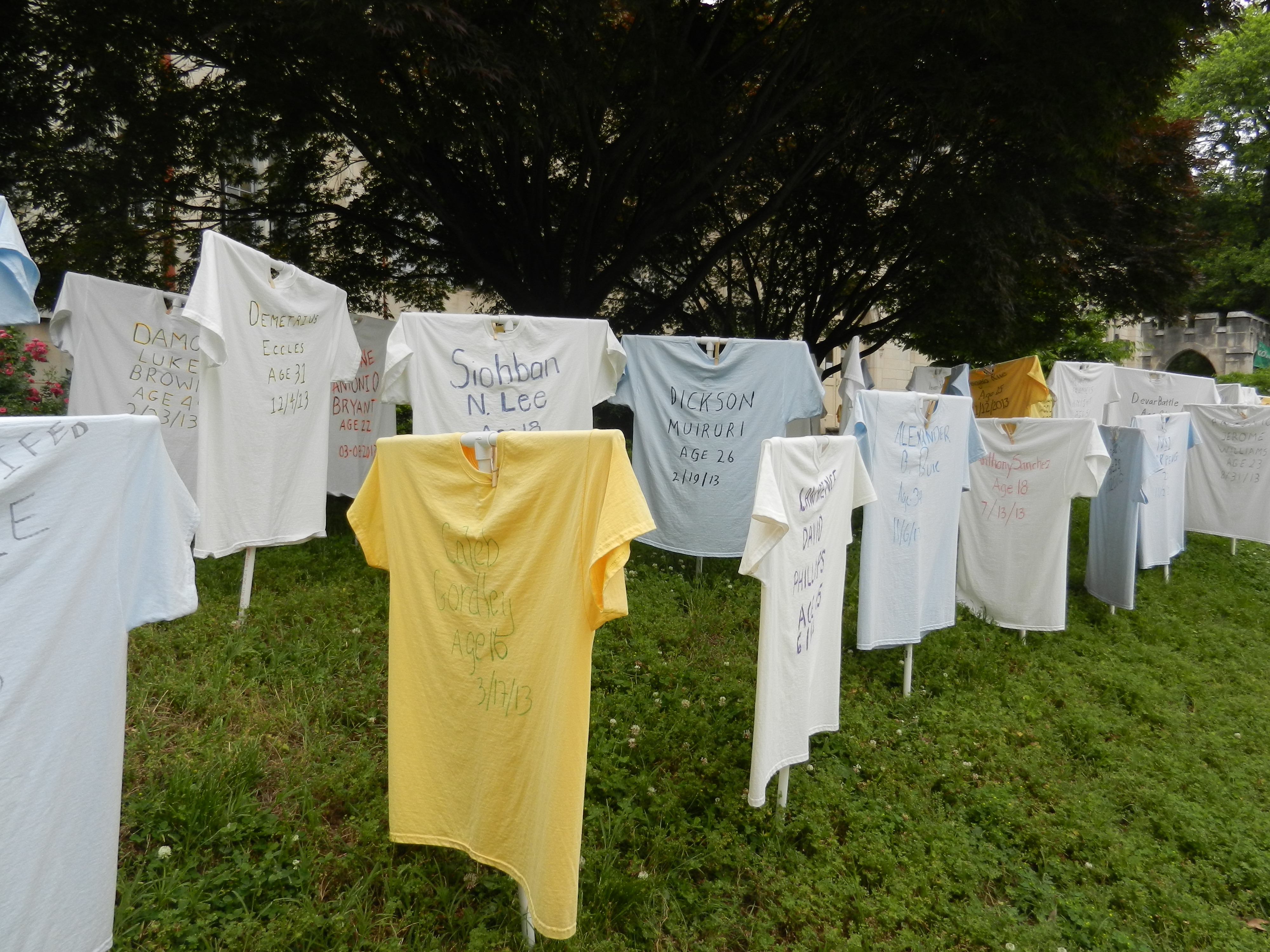
He could just as easily be talking about the gun lobby, though, another instance where big money and weak politicians combine to create open season on our children. The parallels between the two industries, and our lack of political will, hit me as I walked by a neighborhood church last week. On their front lawn was a memorial to victims of gun violence – rows of t-shirts with the names and ages of people in the area who died by guns in 2013.

Would we fight an outsider who was doing this to our children? What do we fight for anymore? I feel like we, as a society, are in a state of learned helplessness. That’s a condition where someone stops looking for a way to help himself, or change a bad situation, because experience has taught that nothing but pain or disappointment comes from trying. We’ve just stopped fighting the way we should be.

Sure, there are people like Tom Harkin in the U.S. Senate who have fought the good fight on school nutrition standards and food marketing to kids, just as there are groups and individuals who have passionately worked for tighter gun laws. But both efforts are uphill battles that seem marked by more defeats than successes. Just this week, there were two or three more school shootings. When the news comes on, we can no longer tell if we’re hearing about yesterday’s shooting or a new one today; we’ve become so inured to such news that hardly anyone is even calling for a change in gun laws.

People on the other side of this debate – for both food and guns – say that it’s about individual responsibility. “Kids need to eat less and exercise more.” “Guns don’t kill people, people kill people.” But we can no longer control everything individually. That just doesn’t work in a modern country where everyone is exposed to huge social networks and an unstoppable media barrage. At this point the only changes that will be of significance are the ones that alter the conditions in which we live, that transform the toxic environment for everyone.

Clarence Darrow said that “Lost causes are the only ones worth fighting for.” So let’s stop the helplessness. We all need to stand up and say we’re fed up.

How to wage peace

Martin Luther King, Jr. said that, “It is not enough to say we must not wage war. It is necessary to love peace and sacrifice for it.”  Each time I pass this banner in front of the Quaker meeting house I’m reminded that our actions for peace have to start in our own homes and lives.image

What are the causes of war but the same things that lead to strife on the micro-level: wanting an advantage over someone else, refusing to forgive a past wrong, holding on to things long after their importance has waned?

A more peaceable life might be within reach if we turned more often to these intentions:

Compromise — The word comes from the Latin meaning a “mutual promise”. Too often we think of compromise as one-sided, only seeing how much we are giving up. But the promise in compromise is powerful, and it shows how much we are gaining from the other side.

Listen first — In the words of a U.N. peacekeeper, “You have to be willing to let each person express their point of view, even if it’s a criticism against you. You have to let them talk first, and then speak. If you don’t let them express themselves, you won’t get any results from the discussion.”

Forgiveness — When we forgive, we can begin to heal the hurt that we feel. Refusing to forgive just lets the hurt fester – and closes down our hearts a little. Gregory David Roberts writes that “every act of love is in some way a promise to forgive,” that love is dependent upon our ability to forgive.

Accept change — Nothing stays the same. And as Frank Jude Boccio writes, “The problem is not that things change, but that you try to live as if they don’t.” We let beliefs about how things should be keep us locked in a struggle with how things actually are. Shedding those habits of mind can drastically shift perspective.

Happiness is a universal goal — In an interview in The Atlantic, Daniel Gilbert talked about it this way:

I think the problem with the word “happiness” is that it sounds fluffy. It sounds like something trivial that we shouldn’t be concerned with. But just set aside the word and think about what the word signifies. You quickly realize that not only should we be concerned with the study of happiness, but that it’s impossible to be concerned with anything else. Pascal says: “All men seek happiness. This is without exception … This is the motive of every action of every man, even of those who hang themselves.”

How could the goal of all human behavior be a trivial thing?

How does your life help to remove the causes of war? We may not be able to solve the problems in the Ukraine or Syria, but if we live our lives in a way that demonstrates the principles of peace — acceptance, forgiveness, compromise, humanity, understanding — maybe we can start a tiny ripple of peace in the world.


Wobbling toward trust

Bob Dylan sang, “Trust yourself …If you need somebody you can trust, trust yourself.” Somehow I think he must have known just how much many of us need to hear that.

Reckless personWhen I wobble in tree pose, or can’t bring myself into a headstand in yoga, it’s not just equilibrium or core strength holding me back – it’s lack of trust in my ability to do it. When the anxiety over my recent move took hold of me, it wasn’t because anything was going wrong — it was my failure to trust myself and my strength. When I worry about one of my kids doing something new, it’s not so much about them, but about me not trusting that I taught them well.

According to Psychology Today, not trusting ourselves often evolves out of being hurt by someone or something we trusted. We become afraid to trust anyone again, and we start to question our judgment. From there, faith in our selves begins to dwindle. So how do we rebuild trust in our own abilities, capacities and judgment?

The magazine offers this simple somatic exercise as a first step to restoring trust in yourself:

“Sit or lie down so that you are comfortable and in a safe place.
Now, how can you make it even more comfortable? Get a blanket, a pillow… whatever will make you feel relaxed and content.
Once you are settled, ask yourself: “How do I know this is comfortable?” This might appear to be a silly question, and perhaps even confusing. However, it is an important one in increasing your skills of building trust.
Continue to explore what sensation you feel that you recognize as comfort. For example, you might think, “I do not feel any pain,” “I breath easily,” or “I feel relaxed.”
You might be anticipating that this feeling won’t last, which is true. We can’t control or grasp on to this pleasurable feeling. It’s only important that you are in the present moment right now, not drifting into thoughts of the future or the past. Thinking of the future can create anxiety; thinking of the past can create depression.
Remain aware of any sounds, the temperature, the light, and your physical sensations. Can you let yourself simply enjoy the moment?
You can practice this exercise for as long as you prefer and as time allows you. Just keep checking in with your level of comfort. What feelings indicate that you are comfortable? With time, you may start to trust your feelings again.”

When we were babies, we learned to trust when our needs for food, safety, warmth and love were satisfied. This exercise takes us back to those basics. If I believe that this warm, comfy feeling I’m experiencing right now is real, then I can have faith that it will come again and I will be able to recognize it.

Great Ocean Road_23.1The other thing worth noting about this exercise is that it is very much focused on present-moment awareness. If we think about trust as the flip side of fear, then the inability to trust is all about fear of what the next moment, or the one after, might bring. By staying focused on the present, we only have to trust what we are experiencing in this moment.

Life is full of surprises, dangers, joys, hurts, disappointment, elation, boredom, passion. In order to have the good with the bad, we need to worry less about what’s around the corner and focus more on everything that is absolutely right, right now. As Thich Nhat Hanh suggests, instead of asking, “What’s wrong?”, we should learn to ask, “What’s not wrong?”

Learning about mindfulness from The Mentalist

Have you ever been upset with someone, frustrated because they didn’t understand what you needed from them, only to have them say, “I’m not psychic you know!” The message, of course, is that we can’t read each other’s minds, so how can we possibly know what another person feels or needs?

But the reality is that we really don’t have to be psychic to know some basic things about other people; we just have to pay attention.

In case you’ve never seen The Mentalist, it’s about Patrick Jane, a man who at one time pretended to be a psychic. In reality, he just has very keen powers of observation and a lot of chutzpah. His arrogance as a fake psychic caused his family to be murdered, however, so he stopped pretending, and went to work for the police, helping them solve criminal cases.

Of course, The Mentalist is a fictional TV show, but it’s fascinating to watch as the character explains what he knows about a suspect or a witness, just from observing or talking with them. Body language, clothes, nervous habits, accents, the things we surround ourselves with – they tell our story, if anyone takes the time to read it. Patrick Jane does that – he questions things that seem out of place; he uses his senses; he looks for what people value, he empathizes.

If only we were all TV characters like the Mentalist! We might understand so much more about each other. Don’t despair, though, there’s an app for that. Cognitive psychologists have been developing wearable gadgets that can monitor emotional ups and downs by measuring things such as heart rate and electrical changes in the skin. Depending on the device, they send messages about your emotional state to you or to other people. This is not as creepy as it sounds. Worn by children with autism, they can provide valuable messages to parents and caregivers so that the adults can respond to a child’s behaviors appropriately, even if the child isn’t able to express what he or she is feeling. The devices are also useful as biofeedback tools so that you can learn to recognize and manage your own moods and emotions.

Would feedback like that help us understand each other better? If you’re wearing a wristband that sends me messages when you’re feeling low, would I eventually learn to recognize those moods without the technology? Or would I become dependent on the technology and no more sensitive than I was before?

Humans are hard-wired for empathy – somewhat. We learn it as children by watching the adults around us, and from stories we read and hear. But we need to keep practicing it. Even as adults, we can improve our emotional intelligence. Before we can truly understand others’ emotions, we have to start with ourselves – staying connected to our emotions instead of suppressing them, learning how to reduce stress and being okay with strong feelings. Then we can expand that intelligence to include others – communicating better by staying focused on the person we’re with, making eye contact, paying attention to nonverbal cues (like the Mentalist!)

Daniel Goleman says that, “A prerequisite to empathy is simply paying attention to the person in pain.” How you turn your attention to someone may not matter in the end. Staying tuned in emotionally with the people we love makes our relationships stronger, whether it comes from a gadget, a mindfulness practice, or even psychic ability.


A new balance

I thought I had stress management under control until I decided to move. I was maybe even a little bit smug, staying calm when others fell apart, stepping in to support my friends and family through their crises. Now I’m realizing just how easily the balance can be disturbed, life can feel chaotic and turmoil can take over.

In most stressful situations, there are both emotional coping responses and practical, problem-focused responses that will help ease the feeling of discomfort. For me, it’s easier to focus on the practical steps, so I make the to-do lists; I schedule the cleaning, the repairing and the painting; I go through the closets; I sort things to keep or get rid of.

The problem is that focusing solely on the action steps is making me more than a little anxious and kind of obsessive. I literally can’t stop thinking about what needs to be done next. I can spend half a morning organizing my Craig’s list posts and Freecycle emails. I can spend half an afternoon organizing bags of castoffs for Goodwill. Meantime, all semblance of normal life is lost.image

Larry David once quipped, “I don’t like to be out my comfort zone, which is about a half inch wide.” Getting ready to move has been forcing me to see the limits of my own comfort zone.  I keep thinking that if I can just clear the clutter out of my house, I’ll feel calmer. But really what I need to do is clear the clutter out of my mind. It’s time for some emotion-focused stress management steps.

Emotion-focused coping means using techniques that help change how I’m looking at the stressor of moving. According to Richard Blonna, one such emotion-focused method comes from Morita therapy — accepting the strong feelings that I have right now, and turning my attention instead to productive work (like writing a blog post!) Another thing I could do is examine whether any of my thinking around the move is illogical. For instance, am I setting arbitrary deadlines for myself? Am I catastrophizing any aspects (if I don’t do this today, the move won’t happen)? If that’s the case, I can try substituting more positive statements for the negative ones.

I realize also that I’m making a classic mistake of people who have too much to do. I’m sacrificing some of the very activities that could make me feel better. While I’m continuing to do yoga regularly, its benefits would last longer if I also added some meditation or breathing breaks on the days in between classes. I could also be turning to my friends more for social support — a night out is okay, even when there’s a lot to do. And, in spite of the cold, a walk in the park would be calming.

Most of all I need to be mindful of spinning my wheels. As Robert Anthony has said, “Moving fast is not the same as going somewhere.” Maybe there are days when the best preparation for moving is not to pack, clean or organize anything.