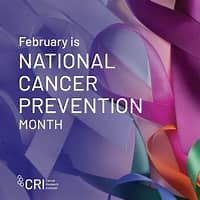
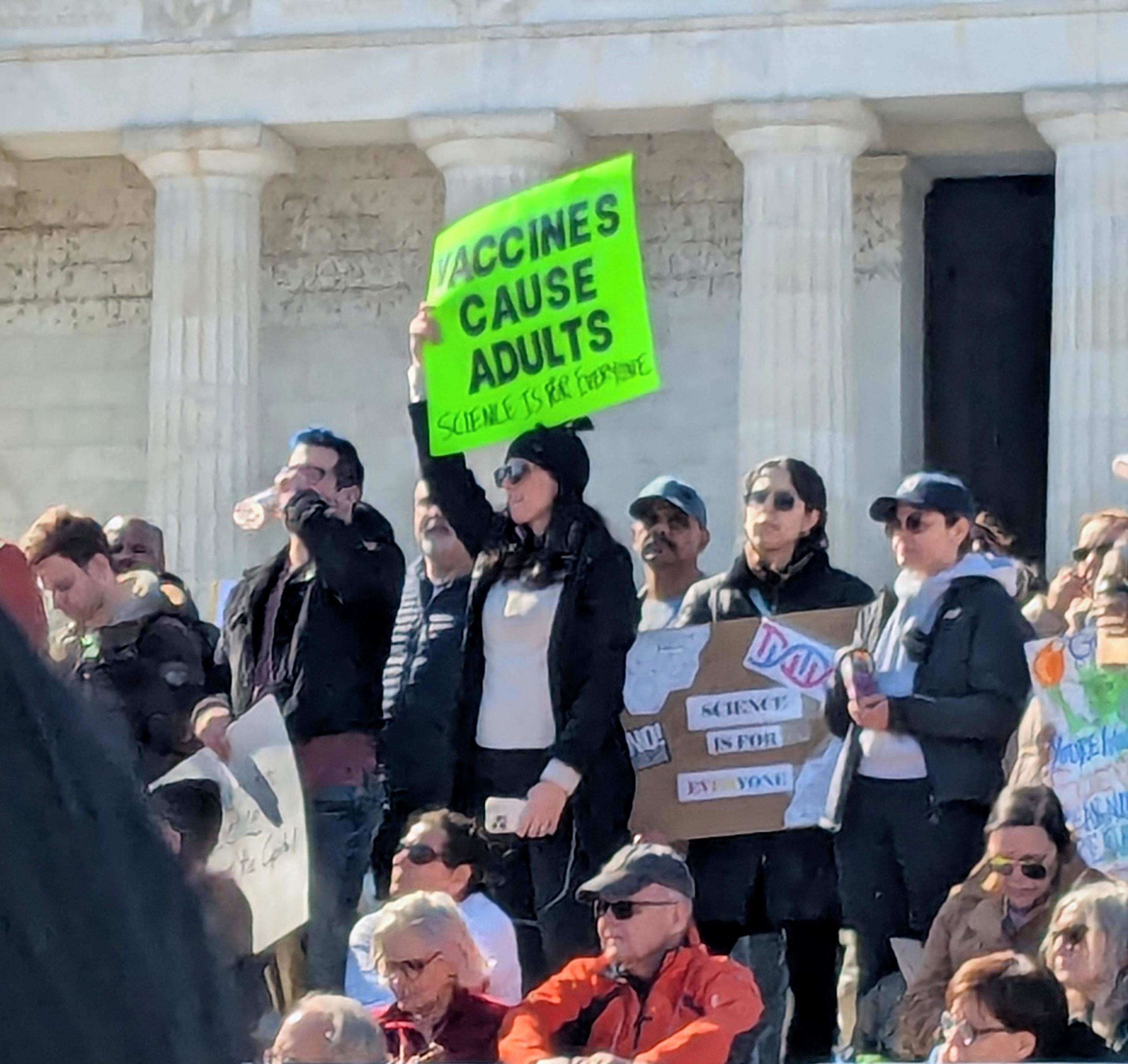
I think everybody wants to have a cure for cancer someday or, preferably, not get cancer in the first place. So it’s important to recognize that vaccines have a role to play in both prevention against certain forms of cancer and protection for people with cancer. When people skip routine vaccination, they may not be considering the long-term consequences of some of those decisions. The American Cancer Society issued a statement recently that says it a lot better than I can:
American Cancer Society Public Health Statement on the Importance of Vaccination to the Cancer Community
The American Cancer Society (ACS) strongly supports the critical role of vaccination in promoting public health and protecting communities impacted by cancer. Vaccines are an essential part of care for people with cancer and their families. Vaccines undergo extensive safety, effectiveness, and quality testing before becoming available.
Vaccines are among the most effective tools we have to prevent disease, reduce suffering, and save lives.
Population-level immunity to infectious diseases is essential for safeguarding the health of people with chronic disease-related immunocompromise. Without adequate community vaccination coverage, people with cancer, cancer survivors, and their families risk preventable morbidity and mortality through participation in everyday activities. High vaccination rates ensure that these individuals remain protected against vaccine-preventable diseases.
Vaccines against human papillomavirus (HPV) and hepatitis B are powerful cancer prevention tools. HPV vaccination provides protection from HPV-related cancers, including cervical, oropharyngeal, anal, penile, vulvar, and vaginal cancer, while hepatitis B vaccination reduces the risk of liver cancer. The ACS currently recommends a 2-dose routine HPV vaccination beginning at ages 9–12 years, with catch-up vaccination through age 26 years for those who were not adequately vaccinated earlier.
Several cancer treatment vaccines have shown promise in clinical trials across a wide range of disease sites. Research supporting novel therapeutic vaccines can provide new ways to improve survival from cancer.
Increased access and broad uptake of safe and effective vaccinations save lives and reduces the burden of cancer for future generations. The American Cancer Society supports science-based immunization recommendations and policies that protect all communities.
Help us end cancer as we know it, for everyone.
Click here for more trustworthy information on cancer prevention.
It really pains me to say this, but we have entered an era when we can no longer trust our government’s health agencies or the advice they give us. I know that there are some people who have felt this way for a long time (in some instances for good reason); however, for the most part government agencies like the CDC and the FDA have relied on sound science and expert opinion to guide their recommendations. Sadly, this is no longer true. If we had any doubt about it, it was erased by watching Robert F. Kennedy Jr.’s appearance before a Senate committee yesterday.
So what are we supposed to do? How do we get reliable guidance on things like vaccines and screenings? Who do we trust now?
Some states – such as the consortium formed by California, Oregon, Washington and Hawaii – are going to come up with their own vaccine guidelines based on the most evidence-based medical research. I hope that they are successful and that the people living in those places feel reassured and will place their trust in their local public health professionals. For the rest of us, though, the reality may be that we have to do our own research, apply a critical eye to what we hear and read, and be our own health advocates.
To that end, I’m beginning to compile a list of sources that I believe are reliable, trustworthy, and based on solid medical evidence. Here’s what I have so far (in no particular order):
KFF Health News – If you want all the latest health news about policies and the health system in general, this is a good place to get it. It is published by KFF, an endowed nonprofit organization that doesn’t appear to be beholden to anyone. All of their content is free to everyone. Currently they have articles on their site about the upheaval at the CDC, confusion around back-to-school vaccine policies, as well as health studies that have been published elsewhere. Another source for public health news is the Public Health Newswire published by the American Public Health Association.
Doing Well – A newsletter from Arizona State University Health, Doing Well’s tagline is “Better health, one story at a time.” Because it’s published on Substack, it does require a free subscription, but they don’t send you too many messages, and you can access the stories through audio as well as reading them. Recent stories have covered how to stay healthy when wildfires are nearby, how to get more fiber in your diet, and a podcast about underhydration. In addition, each newsletter defines a medical term that people might not understand, such as “microbiome” and “epigenetics.”
Women’s Health from Johns Hopkins – This site has comprehensive health and wellness information specifically targeted to women’s health concerns at all ages, including preventive care, sexual health, menopause and stress.
Your Local Epidemiologist – Dr. Katelyn Jetelina is a public health professional and epidemiologist who writes this Substack newsletter (you might be asked to subscribe). I haven’t spent a lot of time with it, but I know several people who speak very highly of her writing, and her ability to translate complicated and confusing information into a form that is easily understandable for laypeople. She currently has a guide to the fall 2025 vaccines on her site.
The medical specialty associations – Organizations dedicated to medical specialties continue to issue their own sets of health guidelines and can be a good source of information for consumers. These include the American Academy of Pediatrics, which still maintains its recommendations for childhood vaccinations, the American Heart Association for heart health information, and the American Psychological Association, which supports mental health and has posts on topics like misinformation and “managing uncertainty in a chaotic work environment.”
And for dealing with stress and finding meaning in life, despite the chaos, check out Greater Good Magazine from the Greater Good Science Center at the University of California, Berkeley.
Finally, I want to express my heartfelt gratitude to the employees, past and present, at the CDC who have tried to do the right thing for the American people – thank you for fighting the good fight.
“The Torqued Man” by Peter Mann is a Nazi-era novel about spies and double agents, truth and lies, and contorting oneself to survive. At one point a character reflects on the changes that have been inflicted on society:
When each day brings unprecedented assaults on civility, each one enough to make you gasp with rage and disbelief, you gradually grow accustomed to this new form of breathing, until you hardly notice you are hyperventilating.
Living in an environment of nonstop rage and disbelief will soon exhaust even the most resilient person’s energy. That’s why it’s so important that we take moments of care for ourselves, in order to rest, replenish, and restore.
Anxiety makes us feel worried and fearful, and it can also lead to rapid, shallow breathing – even hyperventilating. At such times it’s helpful to have an array of breathing practices to counteract the escalating fear and slow the breathing down. A previous post of mine outlines some of those practices, like alternate nostril breathing and 4-7-8 breathing. When you do 4-7-8 breathing, the exhale is twice as long as the inhale (8-count vs 4-count) which works well to dial down the stress response and trigger the parasympathetic nervous system.
Ujjayi breathing, which is used in yoga practice, is also beneficial for anxiety. To do ujjayi breathing, you keep your lips closed and constrict the back of your throat as you breathe so that you make a kind of rushing sound. Some people describe it as sounding like snoring, and others say it sounds like the ocean, which I prefer. The breathing itself calms you like the other practices and the sound adds a resonance that becomes another focal point.
Sometimes repeating the lyrics to a song, a poem, or a favorite prayer can also help ground us when we’re anxious. This week the New York Times has a special feature about the benefits of memorizing a poem, as many of us had to do in school. Using the poem “Recuerdo”, by Edna St. Vincent Millay, they are guiding readers each day through the process of using rhythm and alliteration to memorize it, stanza by stanza, so that by the end of the week, it can be committed to memory. This poem happens to incorporate all five senses, which makes it almost like a guided imagery practice. Try it!
By taking the time to restore ourselves in these kinds of ways, we can develop more long-term resilience for the challenges we face. As James Baldwin said, “There is never time in the future in which we will work out our salvation. The challenge is in the moment; the time is always now.” So let’s be ready to meet our moment by first treating ourselves with compassion and care.
I can’t get this line out of my head ever since I heard it last Friday during a webinar from Partners in Health. Vincent Lin, who works with the organization on health policy and advocacy, attributed this quote to one of his mentors, and it really resonated with many of us who were watching. The focus of the webinar was on advocacy and action to “save Global Health” because so much of PIH’s work is at risk right now due to funding cuts at USAID. Programs to treat TB and HIV are especially hard hit.
If you’re not familiar with Partners in Health, it is an organization co-founded almost 40 years ago by Dr. Paul Farmer with the belief that everyone deserves quality health care. They combine health care and social justice work in countries around the world to advance health and health equity. (You can watch a documentary about PIH here.) They understand that when everyone everywhere enjoys good health, we are all better off. But right now millions of lives are at risk as the funding that pays for community health workers, medications, and more has been reduced to a trickle.
It’s been really difficult to figure out what to do in the face of all these cuts. Of course we can vote – but not for over a year; we can donate money if we have it; but what else? That’s what people are asking themselves, and it’s a natural question. When we’re confronted with such a stressful situation, sure it helps to engage in some calming practices, but we also want to figure out what we can control. We want some sort of action-oriented strategy that will help us feel that we are doing something. As I wrote in one of my earlier posts, “For any kind of stressor, there are usually two main ways of handling it – either through a problem-focused approach or an emotion-focused approach. The problem-focused approach asks, ‘What actions can I take to either eliminate or change this stressor?’ The emotion-focused approach doesn’t change the stressor, but may change how you think about it, how often you think about it or how you interact with it.”
So it was helpful that the PIH program was focused on actions to address the problem. They discussed emailing and calling your members of Congress but also suggested writing letters to the editor of your local newspaper. As someone who lives in Washington, D.C., without any voting members of Congress, it’s especially important to me to have other ways to take action. There is also a resource guide for people to learn more about TB (a disease about which most of us in the U.S. are probably pretty ignorant) and find out how you can play a part in the fight against it.
It may still not seem like enough, but if a lot of people engage in small ways, I have to believe it will make a difference. We can’t afford to feel helpless right now, we each have to use the power we have.
I’d love to hear back from you – are there other ways that you are taking action right now to change policy or address injustice? Please share them!
Almost five years ago, I gave up writing in this space because I didn’t have much left to say and I thought there were other voices that needed to be heard. The experiences of the last couple of months, however, have compelled me to speak up again. This platform is a place that I can use my voice, small as it is, to counteract the really devastating changes that are happening to our country — the opportunity to use my voice in the voting booth is way too far off.
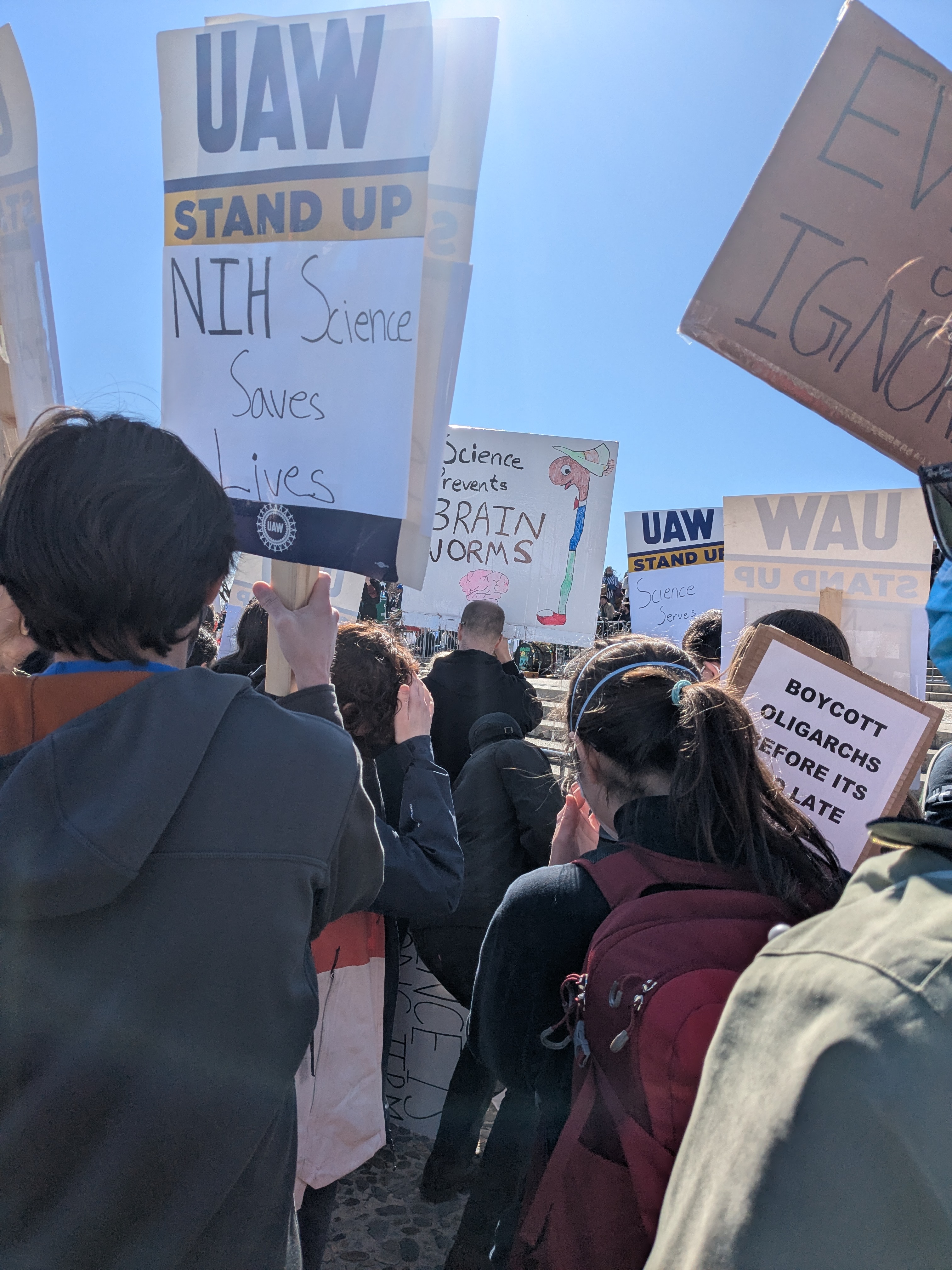
Today I’m most concerned about the state of public health in America. Yesterday we saw lines of health agency employees locked out of their offices, finding out when they showed up for work that they were out of a job or put on leave. The advisory committees that help keep our food supply safe and determine the makeup of next year’s flu shots have either been disbanded or had their meetings cancelled. Research dollars have been cut off from the academic centers where new treatments for cancer or heart disease might be discovered.
Who is protecting us, the people, if all these institutions are dismantled? I’ve never been a person who lacked trust for the government, but my trust is going to be really shaken if these changes aren’t overturned. So, my goal here is to provide you with information, links and resources where you can still find trustworthy health information, and to amplify the voices of those who are fighting for us.
One of those organizations is the American Public Health Association, which has introduced a new undertaking, For Our Health, to bring together people in the public health sphere, and defend evidence-based health initiatives. Last week, they wrote to Congress about the cuts to public health agencies, saying in part,
Public health is not a partisan issue—it is a core responsibility of the government and essential to our nation’s security, stability, and prosperity. HHS and CDC play an irreplaceable role in safeguarding American lives, yet their mission is sabotaged by neglect and misinformation at the highest levels. Failure to act now will result in preventable suffering, deaths, and the further deterioration of our nation’s standing as a global leader in health and innovation.
I encourage you to check out For Our Health, and to use your voices too. Let’s protect ourselves and each other.
There’s a local “celebrity” around my neighborhood who seems to favor the question mark. He sometimes wears a suit with question marks on it, and also drives around in a car covered in question marks. I don’t know why he started doing it, but his quirk is emblematic of how I feel at the current moment. I think if we could see people’s thought bubbles as they pass by, they would all be full of questions.
When will this pandemic end? Is my family safe? Will I ever work again? When will I be able to hug my children, my sisters, my mom? Do I have enough money to see me through this? Will the stores ever have Clorox wipes again? Is it safe to reopen? When will my kids go back to school? Will we ever have a vaccine? Why did my loved one have to die? Is there anyone we can depend on?
Apprehension about what lies ahead of us is leading to a heightened sense of worry that has both physical and emotional consequences. We’re facing an invisible enemy and that makes us feel helpless, even hopeless sometimes. People report difficulty sleeping, changes in eating habits, irritability, increased feelings of isolation, and lack of motivation. In fact, the census bureau reported this week that about one-third of U.S. adults are showing signs of clinical depression or anxiety. One-third! The American Psychological Association, which usually issues a report on Stress in America annually, is now doing a monthly survey. Here is some of what they’re finding:
Adults with children have considerably more stress than those who don’t, and much of it has to do with education, food and housing.
The government’s response to the pandemic is a major source of stress.
People are worried about their jobs and the economy.
People of color are reporting more pandemic-related stress than are white people.
Even when we do our best to control the things that are controllable, and to acquire as much reliable information as possible, at the end of the day we are still left with a giant question mark about what’s to come. People aren’t just burning through their financial savings, they’re also using up a lot of emotional and psychological reserves. We can’t wait for a post-pandemic time to start rebuilding those reserves – we need to start now.
Here are some suggestions:
Know when to ask for help. The APA website lists the signs and symptoms of anxiety, depression and suicide risk. If you or someone you know is experiencing these, reach out to your doctor or a hotline.
Incorporate more than one stress management tool in your daily life. For instance, physical activity helps use up stress hormones in the moment, but having a mindfulness practice also will provide some emotional regulation.
Make sure to do something fun every day. The danger of staying at home all the time is that we get into ruts and stop looking for diversions. Dr. Giuseppe Raviola, the director of mental health for Partners in Health, says to “remember the things that you really enjoy doing, and find a way to do them.”
Learn something new. Download a language app; check out your local library’s website for free online classes; or pick up a musical instrument. Learning may give you new skills that will be useful in the future, it is mentally stimulating, and it provides a sense of accomplishment and control that we all need right now.
Close the emotional distance with those you care about. Even if we can’t physically touch each other, we can reach out, check in, share stories and heal relationships. We need them now more than ever. Don’t be afraid to say what’s in your heart.
Lately I often pose the question, “What’s not wrong?” As humans, we’re programmed to focus more on what is going badly, instead of what’s going well. Thich Nhat Hanh writes that “We should learn to ask, “What’s not wrong?” and be in touch with that. There are so many elements in the world and within our bodies, feelings, perceptions and consciousness that are wholesome, refreshing, and healing. If we block ourselves, if we stay in the prison of our sorrow, we will not be in touch with these healing elements.”
Even in the midst of our fear, our grief, our anger and our stress, can we take a moment to find healing in the answers to just that one question – what’s not wrong?
It’s funny what can put you over the edge. I had been managing to stay pretty upbeat during the first two weeks plus of “pandemic normal.” All through my son’s layoff, my work cancellations, my husband’s working at home and my newly terrifying trips to the grocery store. But the last straw for me was when on Tuesday, as president of my condo board, I had to shut down our roof deck. It was the one place where people here could go to be alone or to work, or to let their toddler run around for a few minutes. Stricter stay-at-home guidelines took that last little escape away from us. Tuesday was also the day that it became clear that these orders will probably have to remain in place not until the end of April, but more likely at least the end of May. I felt sad, depressed and trapped.
Today, I read about polling by the Kaiser Family Foundation that found high numbers of people suffering mentally and emotionally from the pandemic. Forty-five percent said it had affected their mental health, with 19% saying it had a “major impact.” Nobody knows yet how this experience, which is essentially a mass trauma, will affect us long term. Many, if not most, people have the coping resources to bounce back, but as always, some are more resilient than others. And even highly resilient people are finding themselves challenged right now.
What does resilience look like anyway? Here are some of the characteristics of resilient people:
Commitment – a resilient person has a sense of meaning & purpose; and believes in their own value.
Challenge – a resilient person sees change as opportunity and looks for creative ways to manage it.
Control – a resilient person tries to impact the things they have control over, and lets go of the things they don’t.
You can build your resilience by:
Developing & strengthening supportive relationships – it’s more important than ever to bolster the bonds you have with family, neighbors and co-workers in order to build a mutual support network. Keep reaching out.
Making & carrying out realistic plans – even it’s just a daily to-do list, rather than a long-term plan, it’s important to have a structure and to get a sense of accomplishment from each day.
Believing in yourself — Keep saying, “I can do this.” Think back to other hard times when you survived and thrived.
Enhancing your communication skills — take the time to think about what you write in emails and texts so that your true meaning gets conveyed; check in with people more often by phone; work on ways to convey meaning without the benefit of body language; use humor.
Learning how to manage strong feelings — take the time everyday to sit quietly for a few minutes and notice what arises. Name your feelings, think about where they’re coming from, maybe write them down. Tell yourself that it’s okay to feel the way you do.
We’re going through one of the biggest challenges most of us will ever have to face, but I I have to believe we can get through it. I wish you and your loved ones continued good health. Be safe, stay strong.
What a difference a couple of weeks can make. When I last wrote about the stress of COVID-19, it was becoming a source of anxiety, but it felt remote, still at a distance for most of us. We were still going to work, shaking hands and enjoying restaurants and movies. Now it has completely upended the lives of virtually every American. I can hear birds chirping outside my window in the springlike weather, but theirs is the only sound of cheerfulness I hear.
Underlying all the busyness of reorganizing the home office, figuring out how to use Zoom meetings, and shopping for bleach is a current of fear and uncertainty. We know it’s only a matter of time before we, or someone we love, is diagnosed with the virus. We have no idea how long we will be confined to this circumscribed existence. We’re unsure how far out to cancel our plans. Even as I type this, I can feel the knot tightening in my stomach.
Today I was flipping through Thich Nhat Hanh‘s book, “Fear.” He writes that, “If you are truly present and know how to take care of the present moment as best you can, you are doing your best for the future already,” and won’t lose “yourself to anxiety and uncertainty.” What can any of us do right now except do our best one day at a time, trying to protect and be present for the people who need us?
In an email today, Michael O’Donnell (CEO of the Art & Science of Health Promotion Institute) wrote that, “We need to enhance our social embrace while we increase our physical distance” from others. Yes, we may be physically confined to our homes, but reaching out socially and emotionally is more important than ever. My daughter and I have been writing longer emails to each other and spending more time talking on the phone than usual. My husband is calling his siblings more often. I’m trying to spend more time on the phone with my elderly mother as well, because she’s even more isolated than the rest of us. None of it feels like quite enough, but I’m taking care of the present moment as best I can.
Living by yourself at this time can be lonely, but living with others is challenging too. With some of us laid off and others working from home, it can feel like no one has quite the amount of space they are used to. Good communication and some ground rules about privacy, workspace, and household obligations can help, as can patience and a sense of humor. While the first few days together were pretty stressful, I’m beginning to sense a new rhythm to life in my home as we all settle in to our revamped routines.
Here are some other things I’m doing to manage fear, loneliness & boredom:
Practicing belly breathing – placing hands on the belly and taking slow, deep breaths while focusing on the rise and fall of the abdomen.
Using online classes for yoga. Yogaglo will give you a 14-day free trial.
Guided meditation using phone apps like Mindfulness Coach, Headspace or Calm.
Reading! If you haven’t already, sign up for digital downloads from the library.
Limiting news viewing to certain times of the day.
Checking in with friends and relatives regularly. Funny emojis bring a smile.
Playing board games or putting together puzzles. The old-fashioned games with real pieces, like Monopoly, dominoes or chess pieces are great. The tactile stimulation helps with your nervous energy.
Taking regular walks outside – there are so few people out that it is easy to keep your distance in most places. Nature is known to be a wonderful antidote to stress.
If nothing else good comes out of this pandemic, perhaps it’s a way to remind all of us what is most important in life and what is unnecessary. Until we get there, let’s care for each other and remember to be compassionate to ourselves and others.
In America, and globally, levels of stress, worry and anger have been on an upward trend for several years. As if that’s not enough of a concern, we now have the outbreak of Coronavirus arriving in the midst of these already-high levels of stress and anxiety. Given the situation, it would not be alarmist to ask yourself if you have the mental and emotional resources to cope with yet another stressor.
We can’t isolate Coronavirus from the other stressors in our lives. Its impacts – especially to the economy – may intersect with, and exacerbate, other existing stressors such as worries about job security, the election, health issues, and our children’s futures. When we don’t know exactly what will happen or how bad it will be, what can we do to calm our worries?
For any kind of stressor, there are usually two main ways of handling it – either through a problem-focused approach or an emotion-focused approach. The problem-focused approach asks, “What actions can I take to either eliminate or change this stressor?” The emotion-focused approach doesn’t change the stressor, but may change how you think about it, how often you think about it or how you interact with it.
With Coronavirus, there aren’t many problem-focused steps to take. Why? Because the spread of the virus really isn’t in any individual’s ability to control. The actions we can take are simply those we’ve read about in the press for the past couple of weeks:
Wash your hands, frequently and well. See how here.
Don’t cough or sneeze on other people.
Keep clear of people who seem sick.
Don’t go to work if you are sick.
With such a limited ability to act, the only way to keep our worries under control is to look at the emotion-focused strategies we have available. These kinds of strategies help us refrain from catastrophizing, they distract us, they help us reframe our thinking about the virus. Luckily, there are a lot of these kinds of tools available:
Tune out the noise on social media. Get your information straight from the CDC here.
Reframe the story – instead of focusing on the numbers of cases, think about the billions of people who are well.
Express your worries – either to friends or family; or by writing them down in a journal.
Distract yourself – watch a movie, play a game, start a project.
Relax with meditation, prayer, or simple breathing practices.
Get outside in nature.
If necessary, say “STOP” when you find yourself obsessively focusing on the negative.
The difference between the problem-focused and the emotion-focused strategies reminds me in some ways of the concept of effort vs ease in yoga. Effort (or sthira) is about steadiness and strength, while ease (sukha) is about feeling light and balanced. It’s about when to step on the gas (take action) and when to ease off the pedal (find relaxation). We need both of these for managing stress so that we can regain a steady state where we have that sense of balance.
While we may not feel completely easeful until the danger has passed, we can do a lot to calm anxiety by using the tools we have. We may not be in control of this virus, but we are most definitely in control of how we react to it. As Henry Ward Beecher wrote, “Every tomorrow has two handles. We can take hold of it with the handle of anxiety or the handle of faith.”
January has seemed like the longest month ever to me. As it – finally – comes to an end, I wonder if that’s because I didn’t set out this year with any new intentions. I just eased into 2020 and almost immediately became bogged down in boredom, and maybe a slight case of seasonal depression too. I’m beginning to see that the new year’s resolutions I’ve always scoffed at can serve a purpose — giving this long cold month something to organize itself around.
If that’s the case, then even if you’ve already given up on your resolution (as most people have by now) it’s still done you some good. Just the process of setting a goal and creating a structure for achieving it stimulated your productivity. And if you managed to shed a couple of pounds, try some new form of exercise, or save some money you would have spent at Starbucks, then you’re ahead of the game.
But don’t give up now. Think of it this way: February is the shortest month of the year, so it’s that much easier to keep up with an intention for the whole month. How about reexamining those January 1 goals – can you tweak them? Or, as in my case, set a new one now?
I decided to turn to my “52 Lists” book for inspiration since its ideas are loosely organized around the calendar year. The prompt for week #6 (which roughly corresponds to where we are in the year) was just the ticket: “List the ways you love to have fun.” And then the action step: “Plan to integrate something fun into every day this week.” What a perfect way to set goals for February – instead of focusing on what’s wrong about self, focus on what’s not satisfying about life right now, and do something about it. In other words, put the spotlight on emotional and social health instead of the physical or mental.
I started making the list of things to do for fun, focusing first on the ones that get me out and moving:
Hiking
Ice skating
Seeing friends
Going to the movies
Exploring new neighborhoods
Trying new recipes
The book provides two pages to list all the ways to have fun, but I think I can start with this list. I got a head start by going on a 3-mile hike last weekend, which was the most invigorated I’d felt in a while. And I’ve been talking about going ice skating ever since Christmas – even though I haven’t gone to a rink in years, something in me wants to lace up the old skates and get out there. I think it’s because I remember the freedom and weightlessness of gliding around on the ice.
How to put my intentions into action though? If step one was the list and step two is writing about them here, what comes next? Psychology Today has a good article on goal setting and creating an action plan. There I find out that my intention should have a time frame around it, and include some intermediate steps if they’re appropriate. So my action plan for today could include calling a friend to set up a lunch date; checking the web for the hours of the ice rinks; and reading the reviews of new movies so I can plan what to see and put it on the calendar.
Every day is a fresh start, but it may not be smart to just let a day, or a month, unfold any which way. We can have a plan, and still leave the door open for serendipity. Dwight Eisenhower said, “Plans are nothing; planning is everything.” I think he meant that it’s important to create the structure, but don’t make it so rigid that there’s only one particular way of reaching the outcome.



 Apprehension about what lies ahead of us is leading to a heightened sense of worry that has both physical and emotional consequences. We’re facing an invisible enemy and that makes us feel helpless, even hopeless sometimes. People report difficulty sleeping, changes in eating habits, irritability, increased feelings of isolation, and lack of motivation. In fact, the census bureau reported this week that about one-third of U.S. adults are showing signs of clinical depression or anxiety. One-third! The
 Lately I often pose the question, “What’s not wrong?” As humans, we’re programmed to focus more on what is going badly, instead of what’s going well. Thich Nhat Hanh writes that “We should learn to ask, “What’s not wrong?” and be in touch with that. There are so many elements in the world and within our bodies, feelings, perceptions and consciousness that are wholesome, refreshing, and healing. If we block ourselves, if we stay in the prison of our sorrow, we will not be in touch with these healing elements.”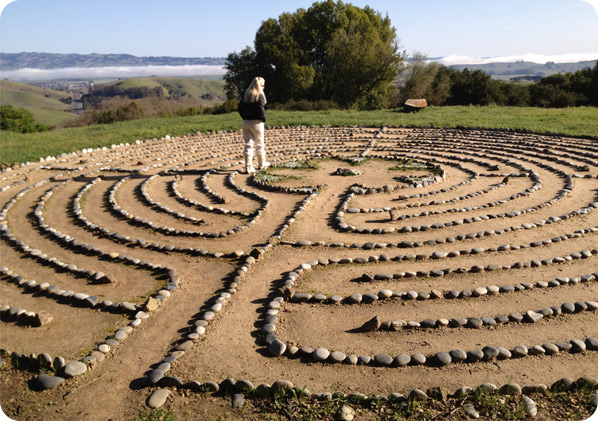


 discover santosha