How Do You Play?

Is it purposeless, spontaneous, an antidote to boredom or loneliness? Does it involve risk, excitement, pleasure or freedom? If so, you play like a child — and that’s good news.

Childhood play has recently become a target of our attempts to help kids be more physically active, but children themselves have a very different idea of what constitutes play. And their perspective could help us help ourselves as well as them.

IMGIn a child’s view, playing has no goal. It is the ultimate in present moment awareness – there is no desired end result – it is an end in itself. That’s one of the take-aways from a new study conducted at the University of Montreal. Other important findings are that risk-taking is pleasurable for children, helping them learn how to cope with life’s unpredictability; that play doesn’t necessarily have to be active; and that they feel ambiguous about scheduled play activities. For both kids and adults, this is a reminder that the social and emotional benefits of play are every bit as important as the physical benefits.

According to Stuart Brown of the National Institute of Play, being playful helps us be more adaptable, leads to trust and benefits brain development. He has studied the rough-and-tumble play of animals, as well as babies’ early play with their mothers. Play is driven by curiosity about the world and each other, and social play is often the glue that holds us together. Brown says that “The opposite of play isn’t work — it’s depression.”

Play can help us be more creative. John Cleese recommends using humor to enhance creativity, because it makes us more playful and relaxed. Brown says that play is a mediator between the brain and the hand. He has observed that design students who can’t creatively solve problems haven’t worked with their hands enough, doing things like playing and tinkering.

In order to “infuse” your life with more play, Brown recommends spending time with children, surrounding yourself with playful people, and looking back at your “play history“. What kinds of play did you enjoy as a child? Can you make an emotional connection between your childhood play and your life now? What is the story you tell about playing?

When I was a child, much of my play was unstructured. I grew up in a big family, and there was always someone around to play with. Because I didn’t have any brothers, our play often involved dress-up and make-believe rather than physical play. We had a music box that played the wedding march, and we would take turns putting on a bridal “veil” and playing wedding. We would take our large collection of “Little Golden” books and make paths around our bedroom with them, or build a fort or tent with a blanket thrown over a clothesline or picnic table. I also enjoyed solitary activities like reading, paint-by-number and crocheting. Our physical needs were satisfied with bike riding and occasional games of softball with the boys next door.

I’m still a fan of make-believe in my preference for dramas and fiction, and my dislike of reality TV. My exercise most often comes in the form of activities I do by myself (running, biking) rather than “team” sports, since I had little of that during childhood. But I try to keep myself open to ways of playing that I’m less comfortable with — partner yoga with my husband expanded my ability to trust; snorkeling and stand-up paddle boarding have helped me enjoy playing in the water; taking more opportunities to laugh and be less serious about life has helped me relax.image

Play is whatever feels like fun and freedom to you: sports, games, puzzles, playing with a pet, laughing at a movie, acting in a play. Play is what makes you feel like your child self again. As George Bernard Shaw said, “We don’t stop playing because we grow old; we grow old because we stop playing.”

How to find home in the clutter

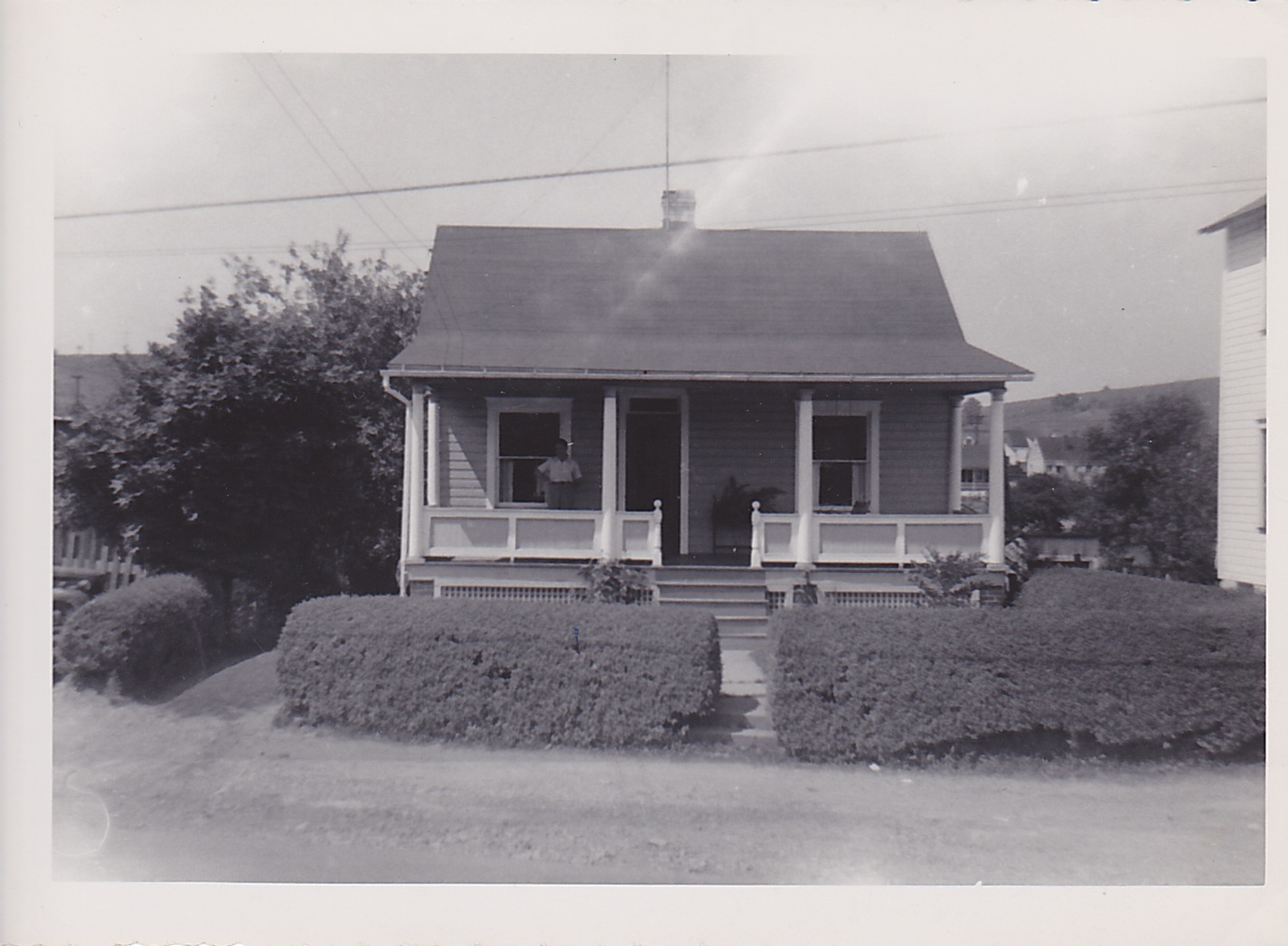
It’s time to shake things up a bit. Get the dust out of the corners, check for cracks in the foundation and clear the clutter. Fall – the time of new clothes, new schools, new jobs – is the perfect time for spring cleaning – not just in your home, but maybe in your life.

imageTransitions into summer and winter feel almost seamless to me, but moving into spring or fall is always more significant. Wardrobes change, colors change, and the association with the start of the school year never fades, no matter how long I’ve been out of school. That trepidation I felt as a child is reflected in the feelings that start after Labor Day – time to get serious about work, start new projects, and stop spending dreamy afternoons in the sun. Start asking, “What serves me well, what doesn’t?”

The idea of spring cleaning (or fall, in this case) has roots in various religious and cultural traditions, often connected to the start of the New Year. The Iranian word for the practice translates as “shaking the house”, and what better image is there for the clearing of clutter, both literal and figurative?

Two weeks ago, I happened to be in California when an earthquake actually did “shake the house”. But we don’t need something quite that dramatic to spur us to take a look at what needs a revamp. Unfortunately, we often view the clutter in our lives with a lot of negative self-judgment, which sometimes just causes us to procrastinate more. By encouraging yourself, rather than focusing on shame, you leave the personalizing behind, accept where you are now, and begin to think creatively about it.

Carolyn Koehnline, a therapist who helps people with clutter, recommends “clearing clutter with compassion.” A lot of times, the physical things we need to lose, as well as the relationships we need to change, are so loaded with emotion that we just get stuck. Koehnline recommends some writing prompts that help get you past the stuck point:

Finish the sentences:

If I keep it…..”

“If I let it go….”

Or make lists:

It is time to let go of….”

“It is time to keep….”

“It is time to make space for….”

Not only do these writing exercises help us visualize possible scenarios, they also solidify our intentions, making action more likely. Notice that the list-making is constructed in the present tense – instead of wishfully saying I will do this in the future, I create a world where I am doing this right now.

In a Slate magazine piece, J. Bryan Lowder also recommends reassessing all of the “passive systems” in your environment that enable clutter. Is there something about the way things are designed or placed in your home or office that encourages accumulation and confusion? What habits do you have that support disorder? Can you change your relationship with your space and your stuff?

Sarah Susanka, architect and author of the best-selling book, The Not So Big House, followed that up a few years ago with a book called The Not So Big Life: Making Room for What Really Matters. It is a workbook for examining our relationship to time, space, work, and possessions. She says that often our desire for more stuff is really a way of covering up what our hearts are actually longing for – a life that is a true reflection of who we are.

When I moved a few months ago, I had to face my clutter head-on and make tough decisions about what it was time to let go of. In many ways, I am still in that process of creating a life that reflects who I am. But I remind myself that home isn’t the building we live in, the furniture we sit on or the things we own. As Sarah Susanka says, “Home is a way of being in one’s life.”

Look up. Reach out.

A student of mine once used the phrase, “the world inside my phone”, to describe the allure of technology. Like gravity, it attracts us with its promise of stimulation, information, affirmation and control. Inside the phone, we can adjust what we see, who we friend, how things look, how we respond, and most importantly, how the world views us. It can be as compulsive as a very powerful drug.

There’s a subway station in Washington where big crowds are often waiting for trains late in the evening. Sometimes when I’m there I just want to shout, “Look up!” because it seems that the majority of people, whether they are alone or with others, are staring down at their phones, lost in that world.Smartphone

I’m probably showing my age, but it troubles me to see this. One reason is physical safety – inattention on a crowded subway platform could lead to accidents, injury or becoming a victim of crime. But there’s also the issue of simple human interaction. Everyone laments those who ignore the actual people they’re with in favor of the device. What about the fact of our decreasing tolerance for interacting with anyone outside of our preferred group, whatever that might be?

Marc J. Dunkelman writes about this trend in his new book, The Vanishing Neighbor. He sees us losing relationships with those in our communities that he refers to as the “middle ring” – people who aren’t as close and familiar to us as family and friends, but are perhaps more than just acquaintances. In other words, people like our neighbors. We keep our inner ring close, and we pay attention to the distant outer ring via social media, but we often neglect the people living right next door, because we don’t have to acknowledge them or depend on them anymore. We can buy almost anything on-line, we can stare at our phones instead of making eye contact as we pass someone on the street, flip through our texts as we stand next to a co-worker in the elevator, maybe we don’t even order from a real person in a restaurant. We can keep all our interactions limited to people we deem to be like us. There’s an app that lets us decide where to shop based on politics. Another app steers us away from “sketchy” people and places. It’s all about control.

But there’s something lost by giving up the richness and randomness, and yes, even the danger, of everyday encounters: The chat with the neighbor in the street, saying hello to someone in an elevator, even arguing with the person who doesn’t agree with you. Of course it’s more comfortable to surround ourselves with the safe and familiar, the good and the beautiful. But just as Georges Braque said that “art is meant to disturb,” life should force us to question, to confront, to improve, to grow, to see inequity and injustice and be motivated to change it, to see suffering and hurt and want to end it. If we stay in the world inside our phones, what are we not seeing?

IMG_0385Maybe it’s because I just finished reading Dave Eggers novel, The Circle, that this digital immersion scares me. Eggers’ fictional Circle is a company that combines all social media, and more, under one roof. It’s as if Facebook, Twitter, Instagram, Google, and virtually every app were integrated and controlled by one organization. As the main character becomes more caught up in her job at the Circle, she ultimately sacrifices her family, her old friends, her privacy and her solitude because she so desperately wants to be a part of this far-reaching entity.


Our reality probably won’t mimic this fiction, but there are enough similarities already to give us pause. Before we become the tools of our tools (to paraphrase Thoreau), let’s not forget how to use the powerful apps we were born with. What do you see? What do you hear? What do you smell? What do you feel? Step outside the circle. Be surprised.


In the full moon’s reflection

Like it or not, we are formed by all of life’s experiences. Sometimes our faces or bodies hold the story; other times it stays hidden in the recesses of our hearts. But how often do we stop to feel gratitude for the bad experiences, the things that “don’t kill us, but make us stronger”? The full story of a life contains all that can be held of both past and present. So when the moon is at its fullest, it’s a fitting time to celebrate everything and everyone who helped us get to where we are, says yoga teacher Jo Tastula.

Tastula’s full moon yoga practice inspired me to explore the abundance of my existence. The poses are expansive and opening, sweeping in the totality of what I have observed, encountered, undergone or remembered. To celebrate our fullness, she says, we must include everything and exclude nothing. That means that all of the pain, the missteps, the bad judgments and embarrassments must be a part of the whole. We cannot selectively acknowledge just the joyful moments, successes and correct decisions that have made up our lives.image

Whenever I even remotely start to regret some of my youthful mistakes, I remind myself that I would never have met my husband if I had done things much differently. We were from opposite ends of the country, living in dissimilar circumstances, at very different places in our lives, when we met by chance in a foreign country. We really only had one chance to meet. The song “On My Way to You” beautifully expresses the idea that even the crooked roads we’ve traveled contribute to the goodness of life:

I relive the roles I’ve played

The tears I may have squandered

The many pipers I have paid

Along the roads I’ve wandered

Yet all the time I knew it

Love was somewhere out there waiting

Though I may regret a kiss or two

If I had changed a single day

What went amiss or went astray

I may have never found my way to you

The falls along the road help us find our way. Hardship and hassles round us out, hone our appreciation for the good times, teach us patience and tolerance, make us smarter and more interesting. So when we practice gratitude, why not give thanks for them too?

This week, for example, I had a lovely visit with my sister, read a good book, enjoyed phone calls with my kids, and did some meaningful volunteer work, all of which I loved. But I also got bug bites all over my body, had to deal with some issues in my house, and was screamed at by two separate people who didn’t like the bumper sticker on my car. Much as I might like to exclude those negative experiences,  I can’t. They are part of the whole picture of my week.

The full moon is visible to us when it is completely illuminated by the sun, as seen from Earth. It is something we perceive only because of the light shining on it. The full moon gives us the opportunity to illuminate all the nooks and crannies of our lives, to take a look at what’s in there that we’ve tried to hide, and to be grateful for our capacity to hold it all.


Creating an oasis

“We become habituated to the familiar, but the familiar isn’t always healthy,” says yoga teacher Felicia Tomasko. Her words might apply to our relationships, our diets, our jobs, or our surroundings. Sometimes we get so used to living in situations that don’t benefit us that we forget there is an alternative. But look around – is your environment helping or hurting you?

Our minds and bodies are one big source of input, and the saying, “Garbage in, garbage out” seems appropriate. If our senses are bombarded by too much noise, tension, unpleasant colors, harsh light and bad air – if we don’t have someplace to serve as an oasis from all that – if we don’t feel safe and comfortable —  the environment will increase stress and contribute to poor health and lower productivity.

The renowned architect and designer Michael Graves says, “I believe well-designed places and objects can actually improve healing, while poor design can inhibit it.” He doesn’t say that lightly. A recent profile in the Washington Post described how Graves was left paralyzed after an illness, and how his experiences turned his work in a new direction. He has first-hand awareness of how the color of a room can lift or sink one’s spirits, or how a lack of accessibility to perform everyday tasks can lead to feelings of helplessness and hopelessness. He is now taking on projects that rethink hospitals, senior living centers and housing for wounded military.

We can think of the environment on both the macro and micro levels. The term, “built environment” isn’t a household phrase yet, but it is widely used in the public health community. According to the Prevention Institute, the built environment consists of the “physical structures and infrastructure of communities”; it can encompass how land is zoned, how a community is designed, what kind of housing is available, transportation options and access to green space. The Prevention Institute has highlighted some recent projects that have contributed to healthier communities:

  • Building a jogging path through a cemetery in Los Angeles so that people without a park in their neighborhood would have a place to exercise and enjoy green space
  • Organizing a community to obtain a full-service grocery store in their area
  • Starting a project in Boston for lead-safe backyards for children to play in
  • Turning vacant lots into community gardens
  • Redesigning an unsafe intersection to make it more pedestrian and community-friendly
  • Engaging a community to create murals that improved the aesthetics of their Philadelphia neighborhoodNew York (2)

By changing the macro environment in even small ways, people may feel safer, may be able to eat more healthy foods, may enjoy more social support from the community and may have more opportunity to exercise. When a community buys in to projects like these, and uses the assets it has to bring them to fruition, the first project can often serve as a catalyst for on-going improvements to the environment.

Our micro environments, on the other hand, are sometimes easier, or at least quicker, to alter. With fewer people to please, it becomes simpler to take pro-active steps to create a healthier space. Think about how you feel in certain rooms. Are there particular places that you associate with stress? Are there others where you feel more calm or creative? What is it about the space that provokes those feelings? Is it the activities that take place there? Is it the design or usefulness of the area? Does it feel light or dark, cluttered or spacious? What can you change to make your space more conducive to health and well-being? Some things to consider are:

  • Having sources of natural light and good ventilation
  • Bringing nature indoors – with flowers, a plant, or even a picture of nature
  • Rearranging furniture, or even room uses, to better suit how you live and work
  • Painting your rooms in colors that please you, or calming colors like blues and greens
  • Creating sound that is pleasing – music, water, wind chimes
  • Setting aside a place in the home, even a small one, that is free of work, tension and dissension

Philip Johnson has said that “all great architecture is the design of space that contains, cuddles, exalts, or stimulates the persons in that space.” Even without a great architect, can we create those places of contentment for ourselves?


What will you fight for?

There’s a moment in the film “Fed Up” when Dr. Harvey Karp says that if a foreign nation were “doing this to our children, we would defend our families.” He’s talking about the way food manufacturers market products full of sugar to our kids, leading to addiction that is every bit as powerful as that caused by drugs like cocaine. The potential for a lifetime of health problems caused by the resulting obesity is both real and heartbreaking.

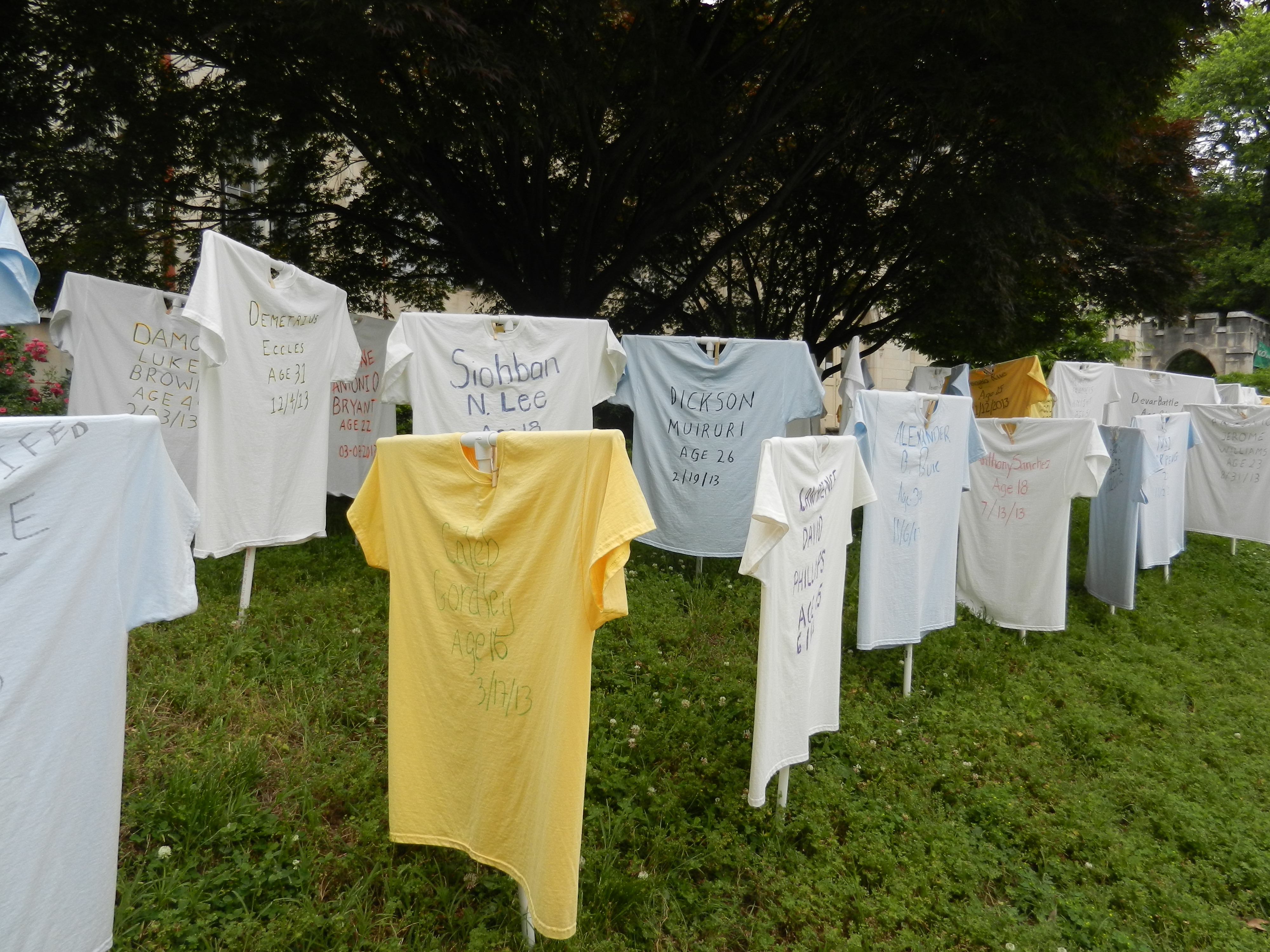
He could just as easily be talking about the gun lobby, though, another instance where big money and weak politicians combine to create open season on our children. The parallels between the two industries, and our lack of political will, hit me as I walked by a neighborhood church last week. On their front lawn was a memorial to victims of gun violence – rows of t-shirts with the names and ages of people in the area who died by guns in 2013.

Would we fight an outsider who was doing this to our children? What do we fight for anymore? I feel like we, as a society, are in a state of learned helplessness. That’s a condition where someone stops looking for a way to help himself, or change a bad situation, because experience has taught that nothing but pain or disappointment comes from trying. We’ve just stopped fighting the way we should be.

Sure, there are people like Tom Harkin in the U.S. Senate who have fought the good fight on school nutrition standards and food marketing to kids, just as there are groups and individuals who have passionately worked for tighter gun laws. But both efforts are uphill battles that seem marked by more defeats than successes. Just this week, there were two or three more school shootings. When the news comes on, we can no longer tell if we’re hearing about yesterday’s shooting or a new one today; we’ve become so inured to such news that hardly anyone is even calling for a change in gun laws.

People on the other side of this debate – for both food and guns – say that it’s about individual responsibility. “Kids need to eat less and exercise more.” “Guns don’t kill people, people kill people.” But we can no longer control everything individually. That just doesn’t work in a modern country where everyone is exposed to huge social networks and an unstoppable media barrage. At this point the only changes that will be of significance are the ones that alter the conditions in which we live, that transform the toxic environment for everyone.

Clarence Darrow said that “Lost causes are the only ones worth fighting for.” So let’s stop the helplessness. We all need to stand up and say we’re fed up.

The “Habitastic” way to deal with stress

It’s fairly well known that practicing generosity can be an effective way of alleviating stress. Acts of kindness and volunteer work get us out of our heads and out of the “I’m the center of the universe” trap by forcing us to focus on something or someone else for a while. All of a sudden our problems don’t seem so big or overwhelming when put in the perspective of another person’s.

Sweating through a morning of hard work at a Habitat for Humanity home-build this week showed me that there are even more benefits to lending a helping hand on a regular basis. Besides the distraction from our own problems, there is the self-esteem and self-efficacy that comes from learning to do an unfamiliar job and doing it well. I can proudly say that I helped build a roof today, and that feeling of accomplishment helps to dislodge any negative thoughts about myself that might be causing stress.

imageThe hard physical work is also so unlike what most of us spend our days doing that our monkey minds shut off for a while and we are able to stay focused on the task at hand. When operating a table saw or lifting heavy trusses atop a house, keeping everyone safe and doing it right take precedence over worrying about the project at work or the problems of our children.

There’s also the camaraderie of working as a team, whether it’s with perfect strangers, co-workers, or family members. We learn about each other, strengthen existing bonds, and are reminded of the need to be good communicators. Most people very quickly fall into a rhythm of working together for the common goal.

I don’t know what brought all these people together to build a house for an unknown family. There was the young woman getting married in two weeks, stressed over wedding plans, but taking the day to build instead. There was a group of people who work in the same office given the day off for the project. Two sisters, a mother and daughter, people on vacation. Was it for fun, stress relief, a belief in the cause? Does it really matter?

Jacques Cousteau said that, “It takes generosity to discover the whole through others. If you realize you are only a violin, you can open yourself up to the world by playing your role in the concert.”

Taking the slow road on Earth Day

Okay, I know it’s a bit of an oxymoron — driving on Earth Day. But if we assume the drive is necessary, can it be a mindful celebration of nature?

Driving into the city, I have a choice: Take the busy highway and then the congested main street, or make the journey on the slower parkway that meanders along the water, but gets me to the same destination. Today the road less traveled is clearly the better choice.

It’s mid-afternoon with a light rain falling. The road twists and turns, following nature’s path, not mine. Suddenly I am fully awake to my experience. This is not the time for rote driving; rather, the road grabs my attention and demands that I give it its due.

Thich Nhat Hanh says that any time we use an instrument or a machine, we change. We become something else that is a blend of self and machine. He suggests reciting this verse before driving, to make the experience more mindful:

Before starting the car,

I know where I’m going.

The car and I are one.

If the car goes fast, I go fast.

imageI settle into a steady rhythm as I respond to the organic curves in the road. There are stretches where I can go faster, but being forced to take my time around the curves makes keeping a slower, steady pace more fluid. On the main roads, I would have been speeding up just to stop. Here on the parkway, pauses are fewer, the motion is smoother, and I feel calmer as I drive.

I notice places in the creek where trees have fallen and boulders have piled up, chaotic spots that are reminders of wild winter weather. At the same time, Spring is announcing itself with a full-on burst of color. The bright yellow-green of new growth and the intense magenta of redbud trees flash around every turn. I realize what a gift it is to have this way of coming home.

Thoreau wrote that, “There are moments when all anxiety and stated toil are becalmed in the infinite leisure and repose of nature.” During the thirty minutes I’ve spent on the parkway, it’s been impossible to think about work or worries for very long. Nature has taken over my attention, if only for a little while.

Celebrating Earth Day by driving might not be what environmentalists had in mind when they inaugurated the occasion back in 1970. But before we can care for the environment, we have to notice it, and a mindful Earth Day drive has a way of stirring close observation and appreciation for all that surrounds us.


How to wage peace

Martin Luther King, Jr. said that, “It is not enough to say we must not wage war. It is necessary to love peace and sacrifice for it.”  Each time I pass this banner in front of the Quaker meeting house I’m reminded that our actions for peace have to start in our own homes and lives.image

What are the causes of war but the same things that lead to strife on the micro-level: wanting an advantage over someone else, refusing to forgive a past wrong, holding on to things long after their importance has waned?

A more peaceable life might be within reach if we turned more often to these intentions:

Compromise — The word comes from the Latin meaning a “mutual promise”. Too often we think of compromise as one-sided, only seeing how much we are giving up. But the promise in compromise is powerful, and it shows how much we are gaining from the other side.

Listen first — In the words of a U.N. peacekeeper, “You have to be willing to let each person express their point of view, even if it’s a criticism against you. You have to let them talk first, and then speak. If you don’t let them express themselves, you won’t get any results from the discussion.”

Forgiveness — When we forgive, we can begin to heal the hurt that we feel. Refusing to forgive just lets the hurt fester – and closes down our hearts a little. Gregory David Roberts writes that “every act of love is in some way a promise to forgive,” that love is dependent upon our ability to forgive.

Accept change — Nothing stays the same. And as Frank Jude Boccio writes, “The problem is not that things change, but that you try to live as if they don’t.” We let beliefs about how things should be keep us locked in a struggle with how things actually are. Shedding those habits of mind can drastically shift perspective.

Happiness is a universal goal — In an interview in The Atlantic, Daniel Gilbert talked about it this way:

I think the problem with the word “happiness” is that it sounds fluffy. It sounds like something trivial that we shouldn’t be concerned with. But just set aside the word and think about what the word signifies. You quickly realize that not only should we be concerned with the study of happiness, but that it’s impossible to be concerned with anything else. Pascal says: “All men seek happiness. This is without exception … This is the motive of every action of every man, even of those who hang themselves.”

How could the goal of all human behavior be a trivial thing?

How does your life help to remove the causes of war? We may not be able to solve the problems in the Ukraine or Syria, but if we live our lives in a way that demonstrates the principles of peace — acceptance, forgiveness, compromise, humanity, understanding — maybe we can start a tiny ripple of peace in the world.


Wobbling toward trust

Bob Dylan sang, “Trust yourself …If you need somebody you can trust, trust yourself.” Somehow I think he must have known just how much many of us need to hear that.

Reckless personWhen I wobble in tree pose, or can’t bring myself into a headstand in yoga, it’s not just equilibrium or core strength holding me back – it’s lack of trust in my ability to do it. When the anxiety over my recent move took hold of me, it wasn’t because anything was going wrong — it was my failure to trust myself and my strength. When I worry about one of my kids doing something new, it’s not so much about them, but about me not trusting that I taught them well.

According to Psychology Today, not trusting ourselves often evolves out of being hurt by someone or something we trusted. We become afraid to trust anyone again, and we start to question our judgment. From there, faith in our selves begins to dwindle. So how do we rebuild trust in our own abilities, capacities and judgment?

The magazine offers this simple somatic exercise as a first step to restoring trust in yourself:

“Sit or lie down so that you are comfortable and in a safe place.
Now, how can you make it even more comfortable? Get a blanket, a pillow… whatever will make you feel relaxed and content.
Once you are settled, ask yourself: “How do I know this is comfortable?” This might appear to be a silly question, and perhaps even confusing. However, it is an important one in increasing your skills of building trust.
Continue to explore what sensation you feel that you recognize as comfort. For example, you might think, “I do not feel any pain,” “I breath easily,” or “I feel relaxed.”
You might be anticipating that this feeling won’t last, which is true. We can’t control or grasp on to this pleasurable feeling. It’s only important that you are in the present moment right now, not drifting into thoughts of the future or the past. Thinking of the future can create anxiety; thinking of the past can create depression.
Remain aware of any sounds, the temperature, the light, and your physical sensations. Can you let yourself simply enjoy the moment?
You can practice this exercise for as long as you prefer and as time allows you. Just keep checking in with your level of comfort. What feelings indicate that you are comfortable? With time, you may start to trust your feelings again.”

When we were babies, we learned to trust when our needs for food, safety, warmth and love were satisfied. This exercise takes us back to those basics. If I believe that this warm, comfy feeling I’m experiencing right now is real, then I can have faith that it will come again and I will be able to recognize it.

Great Ocean Road_23.1The other thing worth noting about this exercise is that it is very much focused on present-moment awareness. If we think about trust as the flip side of fear, then the inability to trust is all about fear of what the next moment, or the one after, might bring. By staying focused on the present, we only have to trust what we are experiencing in this moment.

Life is full of surprises, dangers, joys, hurts, disappointment, elation, boredom, passion. In order to have the good with the bad, we need to worry less about what’s around the corner and focus more on everything that is absolutely right, right now. As Thich Nhat Hanh suggests, instead of asking, “What’s wrong?”, we should learn to ask, “What’s not wrong?”