Tell me your story

Walking a mile in someone else’s shoes isn’t easy. A mile might seem awfully long if the shoes are too big, too small, not your style, or have holes in them. But the ability to slip into the shoes, the skin, or the story of another person is how we practice empathy and become better communicators.

In a program on clinical empathy at Duke University, oncologists are taught to “Never respond to a feeling with a fact.”  When people are in distress, their ability to listen (and hear what is being said) is compromised. They just want their emotions – fear, sadness, confusion, anger – to be acknowledged. Ideally, the person on the other side of the conversation is adept at recognizing emotions and responding appropriately.

Howard Wainer has written that, “It is absolutely crucial to try to determine what information the receiver needs to hear and not let that be overwhelmed by other things that you may want to tell her…the core of effective communication is empathy.” One Duke-trained doctor asks himself before such encounters, “What is needed here?” The answer is not always facts or solutions.

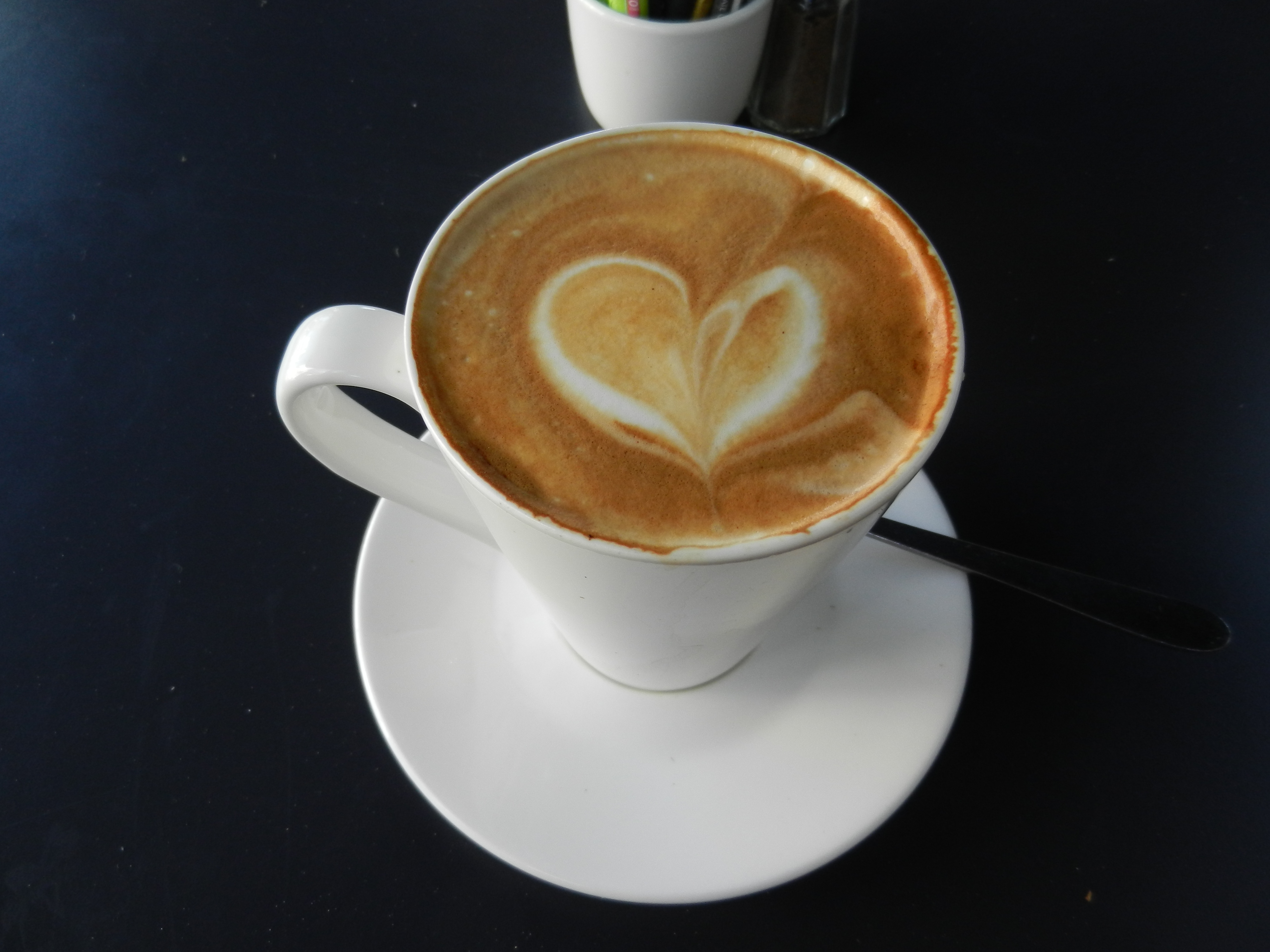
photoOn my computer monitor, I have a sticky note that says FAVE. It’s left over from a communication workshop I took. The acronym stands for “First Acknowledge, Validate, Empathize”. This is especially helpful to practice when you have a difficult or emotionally charged conversation to handle. Even if you don’t agree with someone, it’s important to listen first and acknowledge what you have heard by paraphrasing or repeating back the speaker’s words. Then validate that their feelings are grounded in a solid premise, that they are entitled to have them. Finally, empathize, let the person know that you can identify with those feelings, either because you have felt them yourself, or you imagine you could.

We all know how frustrating it can be to call a customer service number for product support. But even those interactions, where customers and agents inherently have conflicting needs, can often be improved by the use of empathy work. Researchers who studied employees at a telephone call center found that three types of skills – attentive, affective and cognitive – made the difference. The attentive skills were focused on active listening: repeating back, acknowledging, asking for more information and summarizing what was said. The affective skills dealt with being able to recognize customers’ feelings and identifying with them. The cognitive steps came last – taking the customer’s perspective, trying to provide help, and offering options. The most important part of the interaction was the attentive, being able to listen well enough to know what was needed. Sometimes people don’t want to hear, “I’m sorry”, they just want you to solve the problem. Other times, the apology is very much necessary. Attentiveness is key – “what is needed here?”IMG_2325

Have you ever heard, “You just don’t understand!” from someone you love? It hurts, because relationships matter and understanding is their foundation. Essentially, what each of us really wants is to have our story matter, to be heard, to be understood, to have someone else feel what we feel. Novelist Sue Monk Kidd has written, “Empathy is the most mysterious transaction that the human soul can have, and it’s accessible to all of us, but we have to give ourselves the opportunity to identify, to plunge ourselves in a story where we see the world from the bottom up or through another’s eyes or heart.”

Taking the plunge is the challenge for us. Diving into someone’s story, looking out through their eyes, walking in their shoes. Asking, “What is needed here?”

What some women can tell you about stress

We see the headlines all the time: “Stress makes you sick,” “Work makes you stressed,” “Stress makes you fat,” even “Stress Kills.” But why does all this happen? Why is stress so dangerous, and how do we know?

Luckily for us, there are a lot of outstanding neuroscientists, social scientists and others who are devoting their careers to answering these questions. Many of them are women, so in honor of Women’s History Month and International Women’s Day, I thought I would profile a few of them and the highlights from their work.

What socioemotional resources are available to us during stress and where do they originate?

Shelley E. Taylor is a Distinguished Research Professor at UCLA and winner of a Lifetime Achievement Award from the American Psychological Association. She is perhaps best known for the “Tend and Befriend” theory: the idea that our response to stressful situations is not always “fight or flight.” Sometimes primates, especially females, seek out social relationships to protect themselves and their offspring during stress. These “affiliative” behaviors may be mediated by the hormone oxytocin, or in men, vasopressin, which may act as a thermostat for social resources, triggering a hormone response when our social support goes too low.holding_hands1

How exactly does stress age us and why are we more likely to develop chronic diseases as we age?

It turns out that we have little caps on the ends of our chromosomes called “telomeres”. These are bit like the tips at the ends of our shoelaces. Just like shoelace tips, the telomeres stabilize the ends of the chromosomes and keep them from unraveling. Elizabeth H. Blackburn and Carol W. Greider (along with Jack W. Szostak) won the 2009 Nobel Prize in Medicine for their work on how telomeres protect the chromosomes and how the enzyme telomerase maintains the length of the telomeres even as the cells divide. If we don’t have enough telomerase, and cells keep dividing as they do, eventually telomeres get so short that cells die — limiting years of healthy life. And guess what has an impact on telomerase — stress!image

How does that cell aging manifest itself physically and psychologically?

Elissa Epel of UCSF studies cell aging in people with major depression and those who suffer acute and chronic psychosocial stress. She has focused on the role of telomerase and the stress pathways that lead to early aging, overeating, abdominal obesity and immune responses. She is also involved with interventions using mindfulness and social support to help lower stress reactivity and improve emotion regulation.

How does social status impact our stress levels and their health consequences?

Carol Shively, of Wake Forest University, studies monkeys and other primates to explore how social stress might lead to depression and greater susceptibility to disease. She has found that animals who are lower on the social ladder for extended periods of time have twice as much hardening of the arteries as dominant animals. Other studies have shown similar patterns in humans.

Why do we want to eat comfort food during stress, and why do we gain fat around the abdomen?

Comfort foods and abdominal fat actually reduce stress and make us feel better. Mary Dallman, also at UCSF, studies the brain-pituitary-adrenal interrelationships and how chronic stress effects changes in energy balance. She has found that every type of cell in the body has receptors for glucocorticoids [stress hormones], which means that stress can potentially cause havoc everywhere. It also leads to an increase in the synthesis of fat and glucose, while protein synthesis declines, throwing off how we process the food we eat.

In spite of all this stress, how can we be happy?

Sonja Lyubomirsky, professor of psychology at UC Riverside, and winner of the Templeton Positive Psychology Prize, studies human happiness, what makes people happy, and how people can become happier. Her work shows that while we all have temperaments that make us more or less happy to begin with, a fairly significant percentage of our potential for happiness is open to change. Her research has found that generally happy people tend to interpret events in a positive way that supports their happiness, while chronically unhappy people tend to interpret the same events in ways that bolster their unhappiness. So she also studies how the thoughts and behaviors of the naturally happy people an be encouraged or taught to those who are less positive.

The takeaways from all of this work are 1) stress is toxic; 2) it affects all of us; and 3) there are ways to reduce its impact on our health. I’m grateful to these scientists, and so many others, for the intellect and passion they have devoted to this work. It has informed my teaching, inspired my writing and improved my personal wellness.


It’s easy to be hard, harder to be soft

Contentment is hard to find in January. There’s a letdown after the holiday months of November and December. Many of us are experiencing winter at its harshest. And the resolutions that we made a month ago with optimism and enthusiasm have collapsed, wavered, or become a struggle to maintain. It’s easy to fall into patterns of judging ourselves pretty harshly and with a lot of negativity. If ever there was a time to practice self-compassion, this is it.

This morning, feeling like I needed to start my days in a more positive way, I hauled myself out to an early yoga class. When it came time to set an intention for the practice, I realized that I rarely set an intention or dedication of love toward myself. I usually send love and compassion to someone else in my life, or if I do direct an intention toward myself, it leans toward self-improvement: Energy! Patience! Greater productivity! I’ve become attached to outcomes in a big way, and forgotten to treat myself with the care and kindness of a good friend.

By the end of January, it’s easy to get into patterns of negativity and isolation, beating ourselves up about not reaching our goals, and cocooning ourselves at home with TV and comfort food while we wait for spring. But by looking forward rather than in, we miss an opportunity to flourish right now. Practicing self-compassion can, on the other hand, help us realize greater emotional well-being and more of that elusive feeling of contentment.

Kristin Neff, a professor at the University of Texas, says that there are three core components to self-compassion: self-kindness, recognition of common humanity, and mindfulness. Mindfulness means that we acknowledge our pain and discontent, our flaws and our failures, along with all of our good qualities. But we don’t feel isolated by those imperfections and our mistakes don’t feel so personal, because by recognizing our common humanity, we see that everyone else has the same needs and desires, and ups and downs that we have. And by directing loving kindness to ourselves and others, we reap a lot of potential benefits.

Neff’s research has shown that people who have more self-compassion experience less anxiety and depression, and have increases in happiness, optimism and other positive emotions. They engage in less negative self-talk, and their self-esteem  stays higher when something goes wrong for them, because they realize that everyone makes mistakes and they don’t take it so personally.

Author Karen Armstrong says that, “Compassion is a practically acquired knowledge, like dancing. You must do it and practice diligently every day.” The recommended way of practicing compassion is through loving kindness and compassion meditations. Here is an example of loving kindness meditation (practice it by directing it first to yourself, then one-by-one to others: benefactors/teachers, beloved friends and family, a neutral person, a difficult person):

May I be happy.

May I be peaceful.

May I be safe from harm.

May I enjoy happiness and the root of happiness.

May I experience ease and well-being in body, mind and spirit.

And a compassion meditation (practice the same way as loving kindness):

May I be free from suffering.

May I hold myself with softness and care.

May I be free from suffering and the root of suffering.

May I be free from the suffering caused by greed [or anger, fear, confusion, etc]

May I experience ease of body, mind and spirit.

May I respond to suffering with compassion.

Each time I go through these meditations, I return to the line, “May I hold myself with softness and care”, because I know that sometimes this is the thing we forget in our day-to-day lives. Softness and care, rather than harsh judgment: That’s what we need in January, and beyond.

Stranger danger

Empathy – the ability to understand and share the feelings of someone else – doesn’t come naturally to everyone in every situation. While we might flinch if we see someone get slapped – our mirror neurons reacting as if we had been hit – that’s not the same as feeling what they feel. And it turns out that true empathy might even be repressed if the person who is affected is a stranger to us.

A new study out of McGill University demonstrates that the social stress of being around strangers restricts our ability to feel and express empathy for them. Participants were subjected to a painful experience (plunging their arms into ice water) alone, with a friend or with a stranger. The level of pain reported was the same when people were alone or with strangers, but increased when the experience was shared with a friend. Empathizing with the friend’s pain actually increased the amount of pain the participants felt, but they did not have the same reaction when the person across from them was a stranger.

We know that empathy has benefits for society. The Greater Good Science Center lists studies showing that people with empathy are more likely to help others and to be heroic; empathy reduces prejudice, racism and bullying; it increases intimacy in relationships; and it helps managers to foster happier workplaces.New York (2)

At Psychology Today, Guy Winch writes that to build empathy, we have to direct our mind “to a place it does not go of its own accord” —  the other person’s perspective. We have to mindfully “paint the landscape” of that person’s situation in detail, so that we can feel what it’s like to walk in their shoes, look through their eyes. That takes intention and plenty of practice.

The Dalai Lama has said, “On the basis of [shared humanity], you then can learn how to empathize with others beyond your boundaries.” In the McGill study, it took surprisingly little for participants to overcome the boundary of social stress. When the participants spent just 15 minutes playing a video game (Rock Band) together before the experiment, they were able to feel and express empathy for each other during the cold water plunge. Those 15 minutes of shared experience turned strangers into friends, or at least made them familiar enough to lower stress.

Diplomatic efforts and peace talks between countries and factions are often an effort to build familiarity and empathy between people. Sometimes they are successful, like the Camp David Accords, but often they are not. Maybe we need to start smaller and sooner to building familiarity, trust and empathy in order to avoid the kinds of conflict that are so prevalent in the world today.

Jeff Brantley has a practice called “Look deeply at another” that helps alleviate feelings of separation and isolation from others. It starts with mindful breathing, and then selecting an image of someone to focus on. The next steps are:

See the person as if for the first time. Drop all the old stories about him or her. Notice as many details as you can.

Imagine this person moving through the stages of life, as a child, adolescent, adult, in old age, and at death.

See in this person the same wishes and fears everyone has. See the desire for love, safety and peace.

End by releasing the image and noticing your own thoughts and feelings without judgment.IMG_2320

If we look for common values and recognize that most of us want the same basic things from life, we can strengthen our capacity for empathy. Even if we start with something as simple as playing a game together, or saying hello in an elevator, we’re on the right path. As Martin Luther King, Jr. said, “Faith is taking the first step even when you don’t see the whole staircase.”


Resolution = intention –> heart’s desire

A resolution and an intention are pretty much the same thing. But in the yoga tradition, the ideal is for intentions to come from the heart more often than from the mind’s desires. And that’s why I find myself setting an intention for 2015 even though I don’t really believe in New Year’s resolutions.

In Sanskrit, the word for intention is sankalpa. It comes from kalpa, which means “a way of proceeding” and san, a “concept or idea formed in the heart”. So setting an intention means acting on an idea or desire that comes from the heart.

What is my intention? Simply to spend 30 minutes each day reading a non-fiction book.

How does this intention come from my heart’s desire?

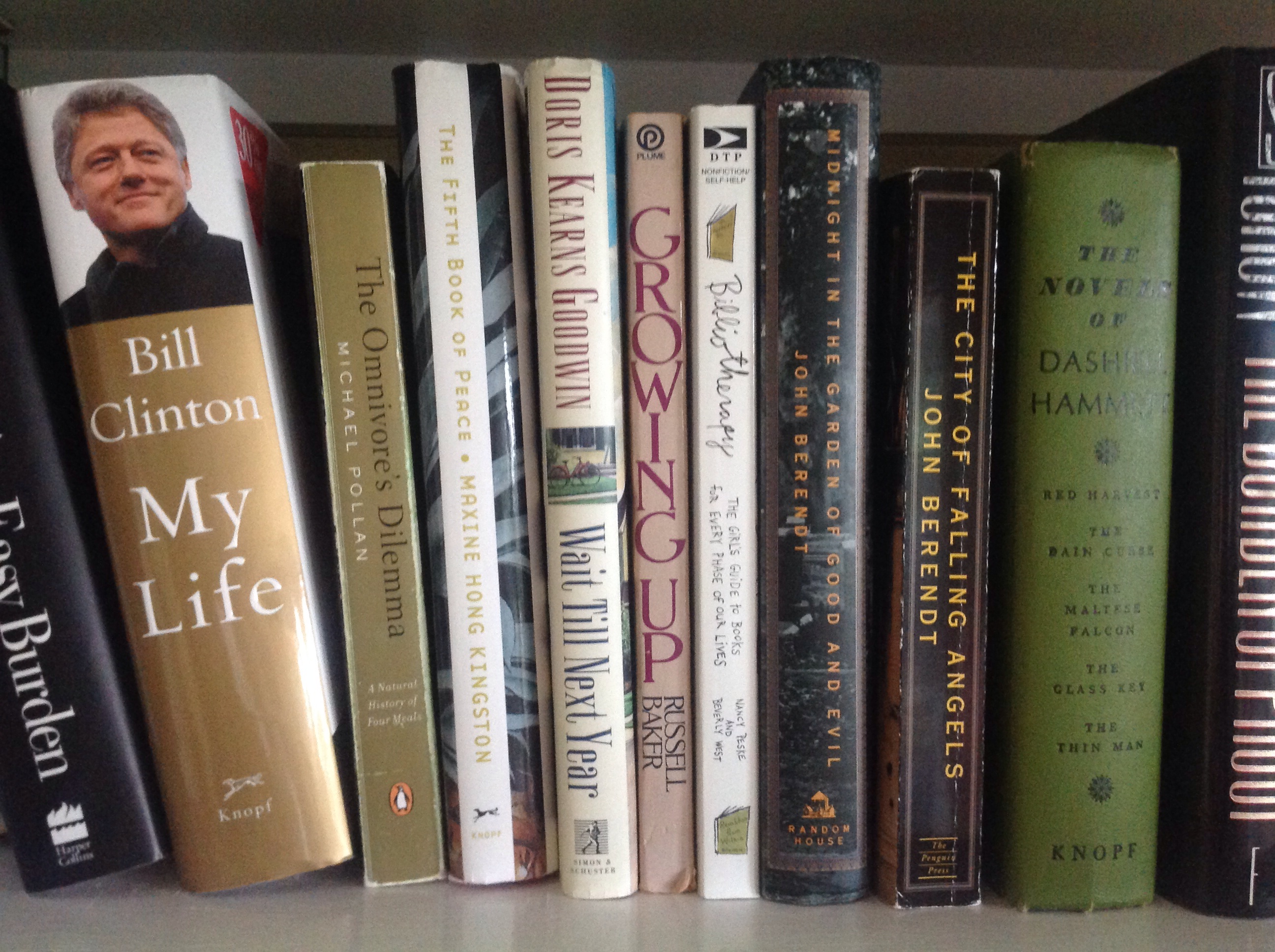
All my life, reading has been a treasured experience, “the greatest gift” according to Elizabeth Hardwick: “It is cheap, it consoles, it distracts, it excites, it gives you knowledge of the world and experience of a wide kind.” It has calmed me when I’ve been distressed, stimulated when I’ve been bored, provoked when I’ve been complacent. imageYet I have developed two habits that are getting in the way of reading serving my heart’s purpose. One is reading on the iPad, and one is reading mostly novels.

When I first started reading on the iPad, I promised myself that it would only be for traveling, so that I didn’t have to pack heavy books with me. Then I discovered Overdrive and started checking out library e-books. After that, I moved, and had to drastically reduce the number of physical books on my shelves. So I stopped buying “real” books. But one of the things I discovered is that I dislike reading nonfiction e-books because of the difficulty with flipping back and forth in the book, or easily finding a piece of information. So I just stopped reading nonfiction.

I will always enjoy reading novels more, and that’s okay. In fact, studies have shown that reading literary fiction helps us understand other people better and to build stronger relationships. But there is another world of information out there that I am missing by excluding nonfiction from my menu.

Reading is declining pretty much everywhere. A recent Wall Street Journal article discussed this development and the “Slow Reading” movement that has sprung up in places to counter  it. Proponents of slow reading even get together in some cities to read as a group (each with his or her own book). Research indicates that we need 30-45 minutes of reading in one stretch for true immersion (and presumably, improved comprehension), so that’s what these slow readers do.

I don’t think I’ll be joining a slow reading group, but I hope to model my reading on their design. Even my fiction reading doesn’t meet the immersion threshold most days — if I’m busy, I read for maybe 5 or 10 minutes before falling asleep, and while I mostly switch to airplane mode while reading, the iPad just offers too many distractions that lure me away from the book I’m reading.

The interesting thing about the Slow Reading movement is that their prerequisites for it sound a lot like those for meditation: a comfortable seat, a quiet environment, no distractions, the book as focal point. By bringing mindfulness to the act of reading, we can deepen the experience and its impact on us.

We take time for what is important to us. Thirty minutes a day to rekindle a treasured gift, to illuminate life’s purpose — that’s an intention from my heart.

No mud, no Christmas tree?

It’s the week before Christmas, and somehow it seems appropriate that I’m reading “No Mud, No Lotus” at the same time that I’m going around giving presentations to people on holiday stress management! In the book, Thich Nhat Hahn says that, “One of the most difficult things for us to accept is that there is no realm where there’s only happiness and there’s no suffering.” When it comes to holidays, sometimes we set our expectations for only one or the other, not realizing that happiness and suffering must co-exist.

IMG_1262Suffering can run the gamut from everyday stressors like traffic and annoying co-workers, to physical pain and poor health, to anxiety and depression, to the overwhelming grief that accompanies losing a loved one. But it is the “mud” of suffering that makes happiness real and meaningful. At the holidays, if we “get stuck in the mud of life”, wallowing in our pain, we risk turning into Scrooges. Yet if we are too starry-eyed about the ideal holiday, we feel slammed when something turns out differently. How do we find a middle ground and feel comfortable being there?

Here are 5 ways to improve your holiday — body, mind and spirit:

Start by acknowledging the bad along with the good. Thich Nhat Hahn writes, “We have to learn how to embrace and cradle our own suffering and the suffering of the world, with a lot of tenderness.” One of the best tools for doing this is to keep a little notebook near your bed, and use it to write each morning or evening. Write about what you are grateful for, or write about something that causes stress or pain in your life. Be present with the emotions that arise. You will probably gain insight and perspective from the process of telling your story.

Make sure your days are values-driven. How long has it been since you considered what is most important to you in life? Is it family, money, work, service to others? Whatever your core values are, how does your holiday time align with them? Are you spending time each day on the things that are the most meaningful to you? If you plan your day with your values in mind, you will end each day feeling better.

Practice mindful breathing. All suffering manifests in the body somewhere, but by reuniting mind with body, we can relax that tension. Thich Nhat Hanh says, “The great news is that oneness of body and mind can be realized just by one in-breath.” When we focus on the movement of the breath, in and out, our minds are released for a while from their monkey-like tendency to jump from thought to thought.

Communicate. Sometimes relationships get strained around the holidays because of conflicting traditions, past grievances, or differing expectations. We often assume things about other people, their motives, their likes and dislikes. Try approaching a difficult situation with love rather than fear. People may surprise you.

Keep yourself healthy. Sleep long, eat well, and move often to use up stress hormones and negative energy. From No Mud, No Lotus: “…if we don’t have the time and the willingness to take care of ourselves, how can we offer any genuine care to the people we love?” Just as we are instructed on airplanes to put on our own oxygen masks first, before helping others, we need to do the same in everyday life. Only by starting with self-care are we wholly able to care for others.

“If you know how to make good use of the mud, you can grow beautiful lotuses.” How has your holiday grown out of you and your experiences? Perhaps you can see its reflection in the clear water that runs after the mud washes away.

Have you been lucky? Pass it on.

If luck is believing you’re lucky, as Tennessee Williams said, then I have had a lot of luck in my life. I have always felt fortunate, lucky, blessed, satisfied with the hand I’ve been dealt. This past week, with the celebration of both Thanksgiving and my birthday, offered time to reflect on those opportunities.

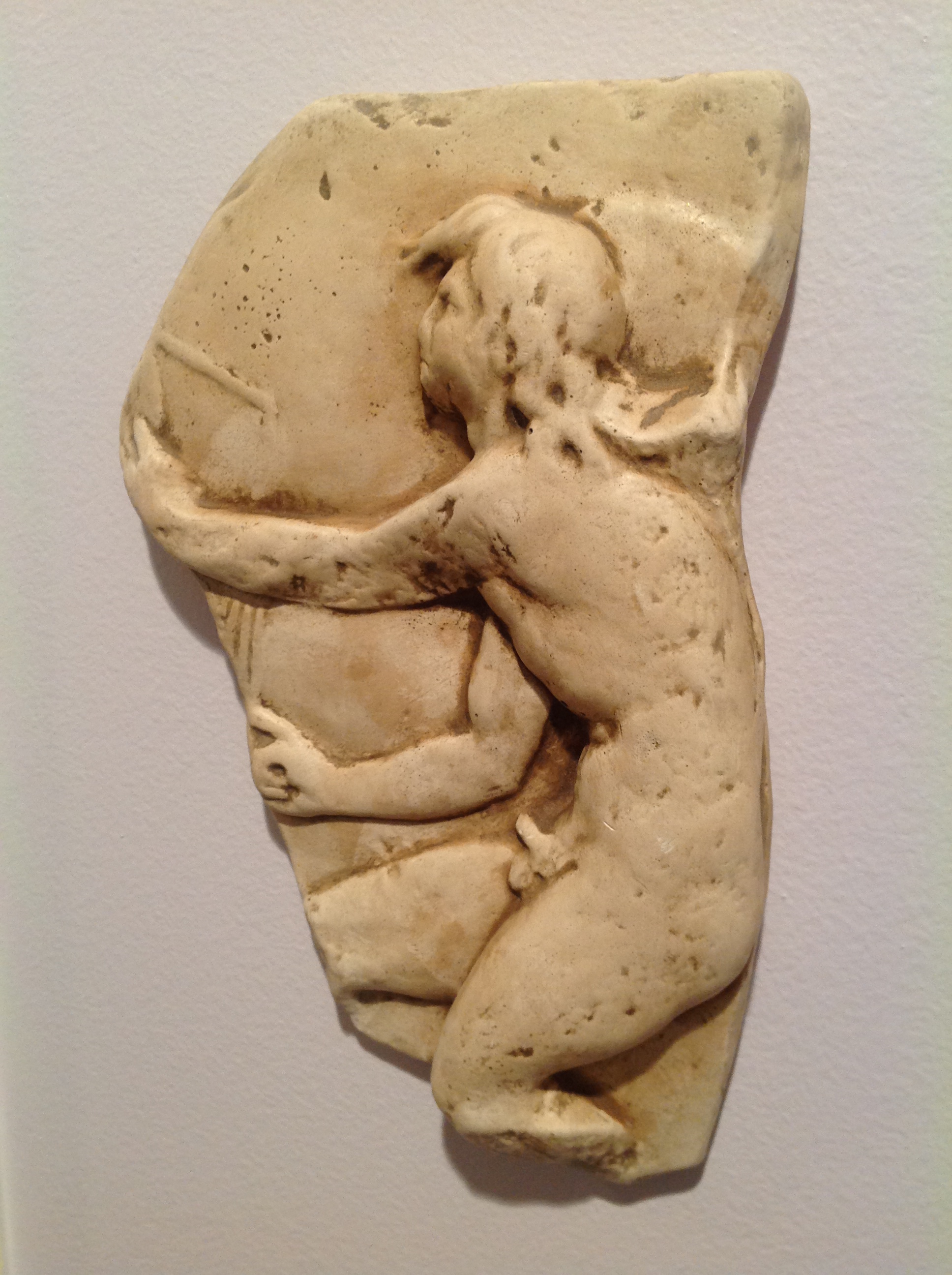
In Trogir, Croatia, there is an ancient bas relief picturing the Greek god Kairos, or Kaerus, the god of luck, opportunity and favorable moments. He is usually pictured holding scales, or a razor, symbolizing the fleeting nature of opportunity, occasions that can appear and disappear in an instant. It is during Kairos time that opportunities must be seized. In fact, the god is also shown with a tuft of hair sticking out – which you must quickly grasp to take advantage of the lucky moment, or see it be lost forever.

KairosThe Greeks had two words for time: chronos, which meant chronological or sequential time; and Kairos, which was a more indeterminate time, a time lapse, the time in between other times, the time in which everything happened. Sometimes it takes courage to look away from chronos, the circadian routine of our lives, to see an opportunity and grab it. It’s not part of the plan, so we hesitate and sometimes lose it. But paying attention, and welcoming serendipity, prepares us for the lucky moment. And then…carpe diem!

Some “Kairos” moments in my life have been truly fleeting, such as the chance meeting with my husband. Other opportune moments have come in the form of a random job offer that led my career in a new direction, the unlikely friendship that lasted years, and a moment that allowed me to say “I’m sorry” to someone I hurt. I count myself lucky to have the happy marriage, the satisfying work, the close friendship, but at the same time, I have to be careful not to cling too hard to those blessings. I grabbed the tuft of hair, but now that I have it, my grip can loosen. Soren Gordhamer says that “when we are spacious with the good…we have gratitude. We appreciate a given moment without needing to control or hold it indefinitely. We relate…with openness instead of greed.”

Perhaps feeling spacious about the good we have can translate into a lucky moment for someone else. A chance encounter might turn someone’s life around; a kind word might change the course of a person’s day. Instead of considering only the lucky moments that have benefited me, how have I participated in lucky moments for someone else?

Opportunity never grows old, so Kairos is always portrayed as young and beautiful. If Kairos is a time out of chronological time, then it is ageless, and always available to us. Growing older doesn’t mean that all opportunity has passed us by, only that new and different opportunities are waiting on the horizon. Maybe more of them will be about reaching out to others so that they can more easily grab a lucky moment. The times we are giving back, or holding out a hand, can be as favorable to us as to those who receive them.

Hand ReachingThe month of December is full of occasions for giving and receiving, but these events often become bogged down in stress and anxiety. Instead of giving in to those feelings, take a breath, and consider your lucky moments. How can you pass them on?


Who’s your Sputnik?

We go through our lives circling, and being circled by, a changing array of characters: parents, siblings, children, spouses, friends and cousins. Our social networks and relationships change with the lifecycle, first one, and then another, becoming more or less important, a few of them constants. These circles of enclosure resemble nothing so much as satellites.

A satellite is a celestial body that orbits a planet, such as Earth’s moon. In 1957, the Soviet Union launched the first artificial satellite into orbit, naming it “Sputnik”. Since that time, the word “sputnik” has become a Russian idiom meaning a special friend or life partner – in other words, a person around whom your life turns, and whose world revolves around you. The staff of the aid organization Partners in Health was so taken with this concept that they gave the name Sputnik to one of their treatment programs in Russia, signifying their commitment to patient-centered care and support.

But the term “sputnik” could be synonymous with any kind of social support. Who are the sputniks in your life? The people to whom you turn in times of crisis, as well as the ones in whom you confide on a daily basis? And for whom are you a sputnik? Which people would you drop everything to help? Whose well-being is vitally important to you?

Parents are like satellites orbiting and protecting their children; and sometimes in later years, that circle turns inside out and children’s lives begin to revolve around their parents. Sometimes we lose someone in our orbit; other times, new friends or spouses join it. We are members of overlapping orbits around other people, our social networks looking like elaborate Venn diagrams. The beautiful thing about a circle is that it can always expand.

Just as Saturn has 53 moons, but the Earth has only one, it doesn’t matter how many people are in your social support orbit if the ones who are there are giving you what you need. That support takes different forms:

  • Feeling cared for and loved
  • Feeling valued and respected
  • Having a sense of belonging
  • Having somewhere to turn for advice and guidance
  • Knowing that there is a safety net of physical or material support

These resources we can tap from our social relationships are powerful players when dealing with stress. The perception of support can either prevent stress from occurring, or be a buffer against stress after it starts. Whether it is someone to listen or someone to give advice, someone who gives a hug or someone who loans you money, someone who raises your self-esteem or someone who stitches up your wounds, support from the people in your orbit keeps you healthier, both physically and emotionally.

The people in your support circle should not be taken for granted. Thich Nhat Hanh writes that investing in people is more important than having money in the bank:

We can get in touch with the refreshing, healing elements within and around us thanks to the loving support of other people. If we have a good community of friends, we are very fortunate. To create a good community we first have to transform ourselves into a good element of the community…We have to think of friends and community as investments, as our most important asset. They can comfort us and help us in difficult times, and they can share our joy and happiness.

During medieval times, many early scientists believed that there was something divine or perfect in the shape of a circle. Is that any less true today? Isn’t there something supremely magnificent about the satellites that slowly rotate around us, keeping us safe?

Where stillness resides

Does stillness catch you by surprise sometimes? By stillness, I mean the hyper-focused, super-engaged moments of true mindfulness. These are the moments when you’re not fidgeting, your mind’s not wandering, and every sense is on heightened awareness.

I had one of those moments yesterday, notable mostly because of how rare it is. As much as I try to be mindful in my daily life, to bring my full attention to whatever I am doing, I can see that most of the time there is still a lot of noise, static, in the background.

What are the necessary elements for finding these moments of stillness? First, not being afraid to let the on-going mental narrative subside so you can see what else is there. Too often, we give the monkey mind free rein, burying any chance for stillness under layers of busy-ness and planning and worrying, because we are afraid of what it would mean to accept ourselves and this moment just as it is. What would happen if you turned down the volume for a while?

Is solitude a prerequisite for stillness? Maybe. I found myself alone in the morning this weekend while my husband travels for work. The rhythms of the day changed, slowed, were more reflective. No one was waiting to hear me say something, so I said nothing. I have never thought I could handle a silent retreat, but a silent morning once in a while opens something up.IMG_0072

Nature also contributes to the capacity for stillness. A particularly beautiful day – crisp air, brilliant sun, the smell of fallen leaves – stimulates the senses so deeply sometimes that we snap to attention and appreciation. It is impossible to ignore the birds singing, the breeze blowing, and my presence in the midst of it.

Thoreau famously went to live in the woods at Walden Pond in order to find these moments of stillness. But even he realized that solitude in nature wasn’t realistic all the time. He wrote, “I had three chairs in my house; one for solitude, two for friendship, three for society.” He understood that there was a time and a need for each of these. The two years of solitary living showed him a path for how to live, though, and as Brooks Atkinson observed, confirmed that he “could find all truth within himself.”

If we are to find the truth within ourselves, how we start and finish our days matters. Those beginnings and endings are the set-up for our energy levels, our potential for everyday mindfulness and even our creativity. Soren Gordhamer recommends 30 minutes in the morning for activities that “help you meet the day with calm and clarity,” and 60 minutes in the evening for activities of relaxation and ease that help you “transition from the day to sleep”. There is no one prescription for these activities, the idea is simply to pay attention to the inner life instead of the outer life that dominates so much of our time. So whether you meditate, pray, read, take a walk, enjoy a warm bath, or listen to music, you will probably improve the quality of your sleep and your ability to focus during the day.balance

These deliberate practices open a door to so-called “dispositional” mindfulness, being aware of what we are thinking and feeling in the moment, which is connected to healthier lifestyles, better heart health and fewer symptoms of depression. The more often you step over that threshold into the quiet place where stillness resides, the better able you will be to locate stillness again, even when life moves too fast and feels out of control.

Wisdom by way of Picasso and Elizabeth Bennet

Our greatest thinkers, artists, innovators and scholars have in common a curiosity that persists throughout life. They are open to new ideas and never stop learning. As Pablo Picasso said, “I am always doing that which I cannot do, in order that I may learn how to do it.”

All dimensions of wellness “act and interact” in ways that impact quality of life. Growth in the intellectual dimension helps us pro-actively solve problems, widens our understanding of the world and its people, and gives us a sense of control over events. Intellectual well-being is a key factor in maintaining resilience in the face of stress because it enables us to think critically, to see opposing points of view and to trust ourselves to make good decisions.IMG_0416

Recent findings from the Benefits of Lifelong Learning project show that non-job related adult education increases self-confidence and well-being, leads to greater tolerance of and trust in other people, and broadens social networks. Adult learners become more health-conscious, start doing more volunteer work in their communities, and show increased motivation to further their studies. Learning begets learning, or as daVinci noted, “Learning never exhausts the mind.”

Earlier this week, I attended a funeral where a young man eulogized his grandfather by sharing with us some of his wisdom. The older man was intensely proud of his grandson, yet he often said to him (with a smile), “Remember – you’re always a freshman.” Not only was he saying, “Don’t get cocky,” he also meant that we’ve always got something to learn, we’ll always be new to something. Or as John Wooden put it, “It’s what you learn after you know it all that counts.”

There’s often a sigh of relief at graduations – whether high school, college or grad school – that formal education is finished, at least for a while. But after some time passes, many of us miss those days in school, and not just because of the lifestyle. We miss being challenged, stimulated, exposed to new ideas, that buzz we get when we feel ourselves growing. Unfortunately modern life often distracts us from further intellectual pursuits – we get caught up in earning a living, raising a family, keeping up with the latest technology, and think that we don’t have the time or money or energy to take a class, learn a language or practice a musical instrument.

Fear sometimes holds people back too. Deciding to learn something new first requires us to admit that there’s something we don’t know. That’s more difficult for some of us than we’d like to admit. We don’t really want to be “a freshman” again. What if we fail? What if we’re not good at something? Can our fragile egos take the risk?

Fortunately, there are ways to dip a toe in the water of intellectual growth if signing up for that degree program or those cello lessons is too big a step right now:

  • Read a book for fun. Yes, fun. It might be non-fiction on a topic that interests you; or try fiction in a genre different than your usual taste.
  • Attend a seminar or lecture. Local newspapers are usually full of listings for free events, at least in big metropolitan areas.
  • Write. A private journal or a blog such as this one will stimulate critical thinking and send you out looking for information and ideas.
  • Play old-fashioned board games or card games. Many of these challenge you to think strategically.
  • Watch a TED talk. They have thousands of short lectures that offer “ideas worth spreading.”
  • Stay up to date with events in the world, but don’t just accept what you see and read. Question it, look for the opposite view.

There’s a scene in “Pride and Prejudice” where Mr. Darcy tells Elizabeth Bennet that he doesn’t have the talent for easily conversing that some people do. Elizabeth counters by saying that she doesn’t play piano as well as some women, but she always took that to be her own fault for not practicing enough. Ultimately we are each responsible for our own growth and development, aren’t we?