
“The Torqued Man” by Peter Mann is a Nazi-era novel about spies and double agents, truth and lies, and contorting oneself to survive. At one point a character reflects on the changes that have been inflicted on society:
When each day brings unprecedented assaults on civility, each one enough to make you gasp with rage and disbelief, you gradually grow accustomed to this new form of breathing, until you hardly notice you are hyperventilating.
Living in an environment of nonstop rage and disbelief will soon exhaust even the most resilient person’s energy. That’s why it’s so important that we take moments of care for ourselves, in order to rest, replenish, and restore.
Anxiety makes us feel worried and fearful, and it can also lead to rapid, shallow breathing – even hyperventilating. At such times it’s helpful to have an array of breathing practices to counteract the escalating fear and slow the breathing down. A previous post of mine outlines some of those practices, like alternate nostril breathing and 4-7-8 breathing. When you do 4-7-8 breathing, the exhale is twice as long as the inhale (8-count vs 4-count) which works well to dial down the stress response and trigger the parasympathetic nervous system.
Ujjayi breathing, which is used in yoga practice, is also beneficial for anxiety. To do ujjayi breathing, you keep your lips closed and constrict the back of your throat as you breathe so that you make a kind of rushing sound. Some people describe it as sounding like snoring, and others say it sounds like the ocean, which I prefer. The breathing itself calms you like the other practices and the sound adds a resonance that becomes another focal point.
Sometimes repeating the lyrics to a song, a poem, or a favorite prayer can also help ground us when we’re anxious. This week the New York Times has a special feature about the benefits of memorizing a poem, as many of us had to do in school. Using the poem “Recuerdo”, by Edna St. Vincent Millay, they are guiding readers each day through the process of using rhythm and alliteration to memorize it, stanza by stanza, so that by the end of the week, it can be committed to memory. This poem happens to incorporate all five senses, which makes it almost like a guided imagery practice. Try it!
By taking the time to restore ourselves in these kinds of ways, we can develop more long-term resilience for the challenges we face. As James Baldwin said, “There is never time in the future in which we will work out our salvation. The challenge is in the moment; the time is always now.” So let’s be ready to meet our moment by first treating ourselves with compassion and care.


 Apprehension about what lies ahead of us is leading to a heightened sense of worry that has both physical and emotional consequences. We’re facing an invisible enemy and that makes us feel helpless, even hopeless sometimes. People report difficulty sleeping, changes in eating habits, irritability, increased feelings of isolation, and lack of motivation. In fact, the census bureau reported this week that about one-third of U.S. adults are showing signs of clinical depression or anxiety. One-third! The
 Lately I often pose the question, “What’s not wrong?” As humans, we’re programmed to focus more on what is going badly, instead of what’s going well. Thich Nhat Hanh writes that “We should learn to ask, “What’s not wrong?” and be in touch with that. There are so many elements in the world and within our bodies, feelings, perceptions and consciousness that are wholesome, refreshing, and healing. If we block ourselves, if we stay in the prison of our sorrow, we will not be in touch with these healing elements.”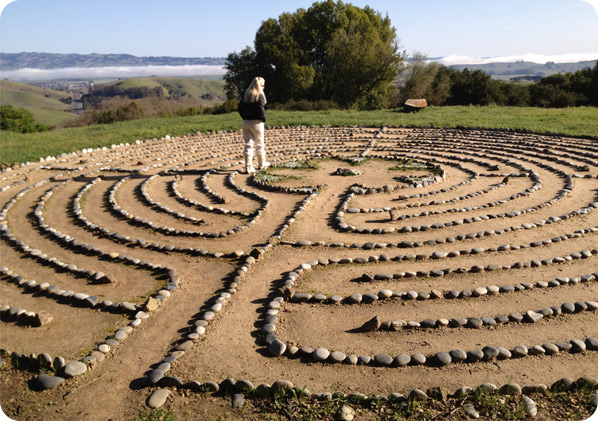


 This is why the concept of “drishti” is so important in yoga, and can also be a practice that helps us off the mat. Drishti is a Sanskrit word that means “gaze” or “sight”; but also vision or point of view. By practicing drishti, we potentially develop better focus, concentration, and receptivity. It is a technique, but also, Life says, a metaphor.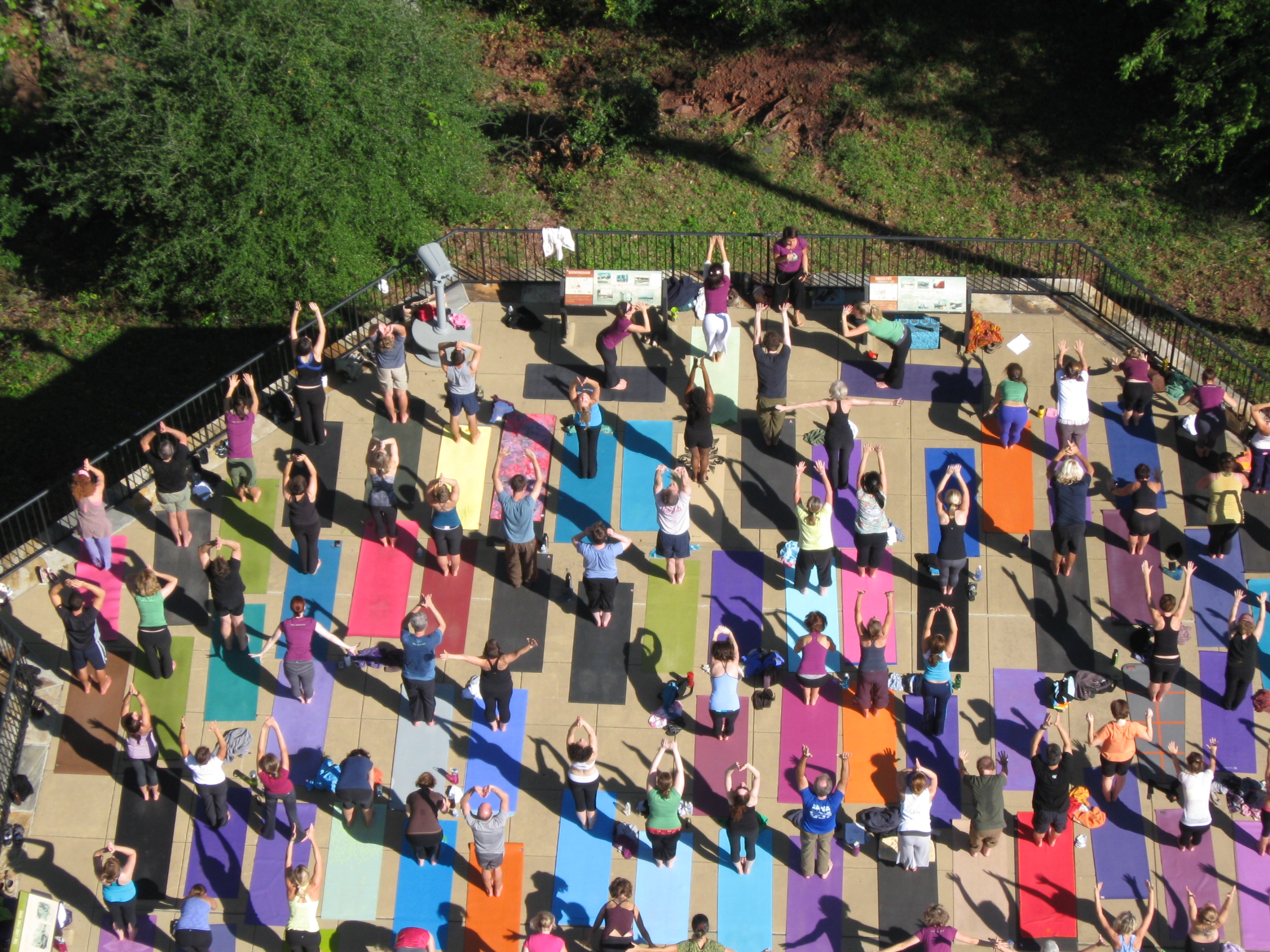


 discover santosha