Secrets to tightrope walking without a net

Why can one person walk with ease across a rope strung between two tall buildings, while another wobbles on a beam five times as wide? Why can one person meet life’s challenges with calmness and purpose, while the next person seems buffeted by the slightest turbulence? The difference may well be the quality of equanimity, “mental calmness, composure and evenness of temper, especially in a difficult situation.”

My own recent failures to maintain composure led me to reflect on my capacity for equanimity. I realize that when I am over-tired or surprised, or when dealing with phone or cable companies, I can sometimes completely lose any equanimity I possess. But at least I am noticing when it happens, which I believe is a step toward deepening my ability to stay calm.

Benjamin Franklin was well-known for developing his character through self-monitoring. He had a checklist of 13 virtues that he considered important, and he evaluated himself every day to see how he had done. His virtues included things like temperance, frugality, sincerity and humility. But number 11 on his list was the virtue of tranquility, which he described as, “be not disturbed by trifles, or at accidents common or unavoidable.” That sounds a lot like equanimity to me.benjamin-franklin-scorecard

Buddhist teacher Gil Fronsdal writes that the Pali word “upekkha” can be translated as equanimity.  It literally means “to look over”, to become the observer rather than the thinker, to see the big picture. Perhaps the tightrope walker is practicing upekkha when he calmly walks between buildings without a net – is he observing himself from above, visualizing not just himself, but the rope, the buildings, the sky, the earth?

It’s important to realize that maintaining an even temper during difficult times doesn’t mean that someone is apathetic. It is merely the balancing point between suppressing emotions and feelings on the one hand, and overly identifying with them on the other. It’s the sweet spot where you accept that you can’t control the actions of other people, only your own actions and reactions.

Equanimity is considered one of the four great virtues in Buddhism (along with lovingkindness, compassion and the ability to feel joy with others). A study at UCLA on spirituality in higher education concluded that “Equanimity may well be the prototypic defining quality of a spiritual person,” someone who can find meaning in times of hardship and who feels generally at peace with life.

DSCN3334So how do we develop equanimity? Pay attention. Observe what you are experiencing in body, mind and spirit. Engage in self-reflection so that you are more in touch with your thoughts and feelings. Notice when you are reacting rather than responding. Jon Kabat-Zinn suggests that we commit to “meeting each moment mindfully, with as much calmness and acceptance as possible,” and embodying an “openhearted presence” when engaging with others.

Bringing more mindfulness to each situation will help you make the subtle shift to being the observer, but it takes practice. You may not always succeed, and sometimes your composure will be shaken, but look back at the end of each day, much like Ben Franklin did, and set an intention for greater equanimity tomorrow.


5 Books to Read This Summer

Nothing gave me so much contentment in childhood as curling up somewhere with a good book and losing myself for a while. And if one good book was a pleasure, then summer reading – book after book after book – was a feast.

In that spirit, I made a list of the best books I’ve read this past year – a feast of summer reading for you:

(In no particular order)

All the Light We Cannot See by Anthony Doerr – Will we ever run out of stories to tell about World War II? The sheer number of books and films in this genre speaks to the importance of telling a story from multiple perspectives, whether in fiction or real life. Doerr’s novel is a great addition to the shelf. Beginning in the 1930s and continuing to the present day, it tells the story, in parallel narratives, of a French girl and a German boy. Both of them damaged in some way, and struggling to survive the war, they touch, and even save, each other’s lives in improbable ways, over space and time. It is only rarely a happy read, but is amazingly touching, poignant and captivating.

The Good Lord Bird by James McBride – This piece of historical fiction by the author of The Color of Water is a new twist on the tale of abolitionist John Brown and his ill-fated raid on Harper’s Ferry. The fictional “Onion”, a boy Brown plucked from slavery, narrates the story many years later. Onion is at first a reluctant traveling companion to the God-fearing, Bible-preaching Brown, but he comes to love him, and his observations of the foolhardy, yet brave, abolitionist are sharp, yet funny and warm. It took me a while to get absorbed in this book, but I was glad I stuck with it.photo

Americanah by Chimamanda Ngozi Adichie — This best-selling novel is both a love story and an immigrant story. Nigerians Ifemulu and Obinze are soulmates, but after Ifemulu leaves for school in America, they are separated for years. Not able to join her, Obinze goes to England on a visitor’s visa and stays after it expires. Both of them struggle to adapt to the new cultures in which they find themselves; perhaps the best part of this book are Ifemulu’s observations on Americans and American life, as seen by an outsider. [The author also has an interesting TED talk about the danger of telling a story from only a single perspective.]

Close Your Eyes, Hold Hands by Chris Bohjalian – Bohjalian is the only male writer I know who can write believably in a woman’s voice. This time he does it from the perspective of a teenage girl, one who becomes a runaway after a devastating nuclear accident in which both her parents are implicated. We feel her struggles with whom to trust, what choices to make and how to come to terms with all she has lost. Bohjalian is not a “feel-good” writer – there is always loss in his novels – but he tells a compelling story.

Behind the Beautiful Forevers: Life, Death and Hope in a Mumbai Undercity by Katherine Boo – This is the non-fiction entry on my list, but it reads like a novel.  Boo takes us into life in a Mumbai slum situated right beside the international airport. Juxtaposing the clean and glittery approach to Mumbai that visitors see, with the grim and gritty life of those scratching out a living at its edge in Annawadi, she tells the stories of Abdul, Asha and other residents trying to get ahead, or at least get by. Winner of the National Book Award, this is a story told with great humanity even as it deals with seemingly hopeless situations.

The poet Kyle Dargan has said that, “..being a poet means I notice stuff for a living. To write is to first see or hear some element of the world and then attempt to render it with language.” The books on my list do indeed have poetry in them, and their writers are masters of noticing, rendering and presenting us with the gift of story.

Enjoy!

It’s no magic wand, but it is a plan

Most of us can probably rattle off any number of things on a daily basis that stress us out. So when you hear that April is stress awareness month, you’re probably asking why you need a special month to let you know something so obvious. But it is one thing to see the path you’re on, and something quite different to envision where you’d like to be and figure out how to get there.

magicwandWe get so used to living with our stressors that they become like old shoes we don’t even notice are wearing out – until the sole falls off or the heel breaks. To find a new way to live calls for paying attention to that old shoe before it breaks. It requires a heightened awareness of stress, some self-exploration, and a commitment to change. I don’t have a magic wand that will whisk away stress, but I do have a 6-step plan for identifying your stressors, seeing how they affect you, and learning ways to lessen their impact:

  1. Just how stressed are you? Assessment is always a good place to begin, and the Perceived Stress Scale is one way to do that. This scale has been the foremost instrument used in self-reported stress studies for years. It’s quick and easy to score, and you can even see how you compare to averages for your age group and sex.
  2. What are your stress symptoms? Stress affects all of us differently, but there are some common physical, mental and emotional symptoms that are often related to stress. Perhaps that nagging back ache, or the irritability you feel sometimes, are related to stress. Use a symptoms checklist to see how you are faring.
  3. What are your triggers? Is your stress mostly related to the hassles of daily life, such as traffic and time pressures, or do you have bigger issues like chronic illness, relationship problems or financial worries?

Once you know a little more about yourself and your stressors, consider these steps:

  1. Eliminate, or interact differently with, your stressors. The simpler strategies here are delegating tasks and saying no to new commitments. Then consider whether the things you really value are represented in how you spend most of your time – should you make changes to live more in alignment with your values? Another way to change interaction is improving communication – thereby strengthening relationships and perhaps avoiding some conflict-related stress.
  2. Change how you think about your stressors. What’s your story? How do you perceive your situation, your misfortunes, and the hand you’ve been dealt? Practice substituting positive statements for some of the negative self-talk in your mental narration. Use humor to defuse stressful situations. Consider your blessings and express gratitude for them. Bring mindful attention to the people and tasks you deal with.
  3. Live more peacefully with the persistent stressors. Let’s face it – some stressors don’t go away and aren’t that amenable to re-thinking. That’s when social, emotional and spiritual resources come into play. Call on your friends and community for support; cry on someone’s shoulder; talk and laugh with others. Cultivate a spiritual life; feel connected to something bigger than yourself; spend time in nature. And finally, incorporate some kind of relaxation technique into your daily life: meditation, breathing, yoga, and massage are all good choices.Woman in the sun

We can discover santosha (contentment) every day if we look for it. As Walt Whitman said, “Keep your face always toward the sunshine – and the shadows will fall behind you.”

Let your senses do the walking

Quick – can you name your five main senses? When was the last time you really tuned in to them? We take the senses for granted, probably relying too much on sight, if anything. Only when we lose one do we appreciate how important it is. As Helen Keller poignantly put it, “Of all the senses, sight must be the most delightful.”

So one way of being more mindful of self and surroundings is to fully utilize all five senses: sight, smell, sound, touch and taste. I have a book from the 1960s called “Sense Relaxation Below Your Mind”. The title conjures up images of psychedelic experiences and love beads, doesn’t it? And the book certainly has a lot of artsy photos of blissful people engaging in touchy-feely exercises in sensory awareness. But it is actually a useful source of ideas for re-establishing your connection to your senses, and using them to mediate your experience of the world.

The thing I like most to do from the book is a sense walk, either in a familiar place or somewhere new. The way to do the sense walk is to concentrate for 3 minutes at a time on just one sense: first sound, then smell, then touch, then sight. After the first four, you sit down and eat something very slowly and mindfully, focusing on taste. You finish the experience by continuing to walk mindfully, seeing if you can fuse all five senses into a complete experience.

When I do a sense walk at this time of year, the signs of spring are foremost in my experience:

What do I hear? Birds singing and chirping more than just a week or two ago, but also sirens, traffic, children playing.

What do I smell? Mulch and manure as plant beds are replenished for the season; cooking aromas; cigarettes.

What do I feel? Everything is warmer to the touch; my feet connect with cobblestones; cool breezes kiss my skin.

What do I see? Forsythia and dogwood are blooming; the Washington Monument comes into view as I walk down the hill; spring break tourists walk dazedly, lugging Disney tote bags.

What do I taste? One piece of chocolate savored for several minutes. It reminds me of eating Almond Joys as a child when I used to nibble around the almonds and save them for last!

The sense walk offers an opportunity for a ‘beginner’s mind’ experience, or as Barbara Sher says, “When you start using senses you’ve neglected, your reward is to see the world with completely fresh eyes.” Instead of listening to the endless chatter of our minds, we start to hear the sounds of nature. Instead of smelling only what is close by, we learn to notice the aromas all around. Instead of being more familiar with the hard plastic of our digital devices than the feel of our own skin, we have a chance to rediscover the touch of something natural. Instead of focusing just on what’s relevant to us, we learn to look around and notice others. And instead of shoving food mindlessly into our mouths, we take the time to truly taste and be nourished.

Sense relaxation is about remembering what you innately know already. It is about giving yourself permission to just let go for a while. It is about being alive to your full experience. Try it.

What some women can tell you about stress

We see the headlines all the time: “Stress makes you sick,” “Work makes you stressed,” “Stress makes you fat,” even “Stress Kills.” But why does all this happen? Why is stress so dangerous, and how do we know?

Luckily for us, there are a lot of outstanding neuroscientists, social scientists and others who are devoting their careers to answering these questions. Many of them are women, so in honor of Women’s History Month and International Women’s Day, I thought I would profile a few of them and the highlights from their work.

What socioemotional resources are available to us during stress and where do they originate?

Shelley E. Taylor is a Distinguished Research Professor at UCLA and winner of a Lifetime Achievement Award from the American Psychological Association. She is perhaps best known for the “Tend and Befriend” theory: the idea that our response to stressful situations is not always “fight or flight.” Sometimes primates, especially females, seek out social relationships to protect themselves and their offspring during stress. These “affiliative” behaviors may be mediated by the hormone oxytocin, or in men, vasopressin, which may act as a thermostat for social resources, triggering a hormone response when our social support goes too low.holding_hands1

How exactly does stress age us and why are we more likely to develop chronic diseases as we age?

It turns out that we have little caps on the ends of our chromosomes called “telomeres”. These are bit like the tips at the ends of our shoelaces. Just like shoelace tips, the telomeres stabilize the ends of the chromosomes and keep them from unraveling. Elizabeth H. Blackburn and Carol W. Greider (along with Jack W. Szostak) won the 2009 Nobel Prize in Medicine for their work on how telomeres protect the chromosomes and how the enzyme telomerase maintains the length of the telomeres even as the cells divide. If we don’t have enough telomerase, and cells keep dividing as they do, eventually telomeres get so short that cells die — limiting years of healthy life. And guess what has an impact on telomerase — stress!image

How does that cell aging manifest itself physically and psychologically?

Elissa Epel of UCSF studies cell aging in people with major depression and those who suffer acute and chronic psychosocial stress. She has focused on the role of telomerase and the stress pathways that lead to early aging, overeating, abdominal obesity and immune responses. She is also involved with interventions using mindfulness and social support to help lower stress reactivity and improve emotion regulation.

How does social status impact our stress levels and their health consequences?

Carol Shively, of Wake Forest University, studies monkeys and other primates to explore how social stress might lead to depression and greater susceptibility to disease. She has found that animals who are lower on the social ladder for extended periods of time have twice as much hardening of the arteries as dominant animals. Other studies have shown similar patterns in humans.

Why do we want to eat comfort food during stress, and why do we gain fat around the abdomen?

Comfort foods and abdominal fat actually reduce stress and make us feel better. Mary Dallman, also at UCSF, studies the brain-pituitary-adrenal interrelationships and how chronic stress effects changes in energy balance. She has found that every type of cell in the body has receptors for glucocorticoids [stress hormones], which means that stress can potentially cause havoc everywhere. It also leads to an increase in the synthesis of fat and glucose, while protein synthesis declines, throwing off how we process the food we eat.

In spite of all this stress, how can we be happy?

Sonja Lyubomirsky, professor of psychology at UC Riverside, and winner of the Templeton Positive Psychology Prize, studies human happiness, what makes people happy, and how people can become happier. Her work shows that while we all have temperaments that make us more or less happy to begin with, a fairly significant percentage of our potential for happiness is open to change. Her research has found that generally happy people tend to interpret events in a positive way that supports their happiness, while chronically unhappy people tend to interpret the same events in ways that bolster their unhappiness. So she also studies how the thoughts and behaviors of the naturally happy people an be encouraged or taught to those who are less positive.

The takeaways from all of this work are 1) stress is toxic; 2) it affects all of us; and 3) there are ways to reduce its impact on our health. I’m grateful to these scientists, and so many others, for the intellect and passion they have devoted to this work. It has informed my teaching, inspired my writing and improved my personal wellness.


Seeking truth and beauty

On our journey to better health and wellness, the spiritual dimension can be like the elephant in the room. We know somehow that it is important, but talking about it and figuring out what it means can be uncomfortable. So we avoid it as long as we can, before realizing that a fit body and mind only go so far if your spiritual health is struggling.

What is spiritual wellness? Every definition stresses that it is personal and individual. No one can create a mold for spiritual wellness and fit you into it. It involves your values and beliefs, the meaning you attach to life events and your existence, your sense of purpose in life. But some general components of spiritual wellness include having and demonstrating some purpose, the ability to be compassionate to others, the ability to forgive, the ability to spend solitary time in reflection, and aiming for a certain harmony about your relationship to the world. One of the things that make people squirmy about spirituality is confusing it with religious practice. But while religion certainly encompasses a sense of spirituality, the inverse is not true. Spirituality does not have to include any religious belief.

When we write goals for wellness, we can include spiritual values and goals as part of the overall plan, as John Evans suggests in Wellness and Writing Connections. He also proposes affirming spiritual wellness by writing “notes to yourself when you notice beauty, truth, peace, hope, courage, kindness, love, compassion.” These notes can be an antidote to our daily dose of stories about conflict, violence and hate. Writing them down helps us to remember them, and gives us something to return to repeatedly for spiritual nourishment.  A few months ago, for instance, I wrote myself a note about a 10-year-old boy who was learning how to grow a garden. He told a newspaper reporter that, “You give it love and care like you would a baby. You feed and water it.” I often like to let my mind rest on that child’s simple message of truth and love.IMG_0121

I also wrote myself a note when I read And The Mountains Echoed by Khaled Hosseini. He included part of a poem by the 13th century poet Jelaluddin Rumi that goes like this:

Out beyond ideas of wrongdoing and rightdoing,

there is a field. I’ll meet you there.

When the soul lies down in that grass,

the world is too full to talk about.

Ideas, language, even the phrase each other

doesn’t make any sense.

Here too, I find truth and beauty that resonate with each reading.

Author Gail Radley writes that “Human beings are meaning-makers,” but “to make meaning and find purpose, we must expand our vision [by] stepping into the realm of spirituality, into belief in something larger than ourselves.” Stepping into the realm of spirituality means sensing unity with other people, with other creatures, and with nature, and seeing your connection to the larger environment. It means meeting the world from that inner soulful place that is your best self. That’s the place from which we say “Namaste” at the end of a yoga practice. It translates to something like, “The divine in me bows to the divine in you.” It is a way of expressing gratitude for the spark of goodness and beauty in another.

Where is the field of grass where you can let your soul lie down? Where do you find truth and beauty, hope and courage, kindness and compassion?

It’s easy to be hard, harder to be soft

Contentment is hard to find in January. There’s a letdown after the holiday months of November and December. Many of us are experiencing winter at its harshest. And the resolutions that we made a month ago with optimism and enthusiasm have collapsed, wavered, or become a struggle to maintain. It’s easy to fall into patterns of judging ourselves pretty harshly and with a lot of negativity. If ever there was a time to practice self-compassion, this is it.

This morning, feeling like I needed to start my days in a more positive way, I hauled myself out to an early yoga class. When it came time to set an intention for the practice, I realized that I rarely set an intention or dedication of love toward myself. I usually send love and compassion to someone else in my life, or if I do direct an intention toward myself, it leans toward self-improvement: Energy! Patience! Greater productivity! I’ve become attached to outcomes in a big way, and forgotten to treat myself with the care and kindness of a good friend.

By the end of January, it’s easy to get into patterns of negativity and isolation, beating ourselves up about not reaching our goals, and cocooning ourselves at home with TV and comfort food while we wait for spring. But by looking forward rather than in, we miss an opportunity to flourish right now. Practicing self-compassion can, on the other hand, help us realize greater emotional well-being and more of that elusive feeling of contentment.

Kristin Neff, a professor at the University of Texas, says that there are three core components to self-compassion: self-kindness, recognition of common humanity, and mindfulness. Mindfulness means that we acknowledge our pain and discontent, our flaws and our failures, along with all of our good qualities. But we don’t feel isolated by those imperfections and our mistakes don’t feel so personal, because by recognizing our common humanity, we see that everyone else has the same needs and desires, and ups and downs that we have. And by directing loving kindness to ourselves and others, we reap a lot of potential benefits.

Neff’s research has shown that people who have more self-compassion experience less anxiety and depression, and have increases in happiness, optimism and other positive emotions. They engage in less negative self-talk, and their self-esteem  stays higher when something goes wrong for them, because they realize that everyone makes mistakes and they don’t take it so personally.

Author Karen Armstrong says that, “Compassion is a practically acquired knowledge, like dancing. You must do it and practice diligently every day.” The recommended way of practicing compassion is through loving kindness and compassion meditations. Here is an example of loving kindness meditation (practice it by directing it first to yourself, then one-by-one to others: benefactors/teachers, beloved friends and family, a neutral person, a difficult person):

May I be happy.

May I be peaceful.

May I be safe from harm.

May I enjoy happiness and the root of happiness.

May I experience ease and well-being in body, mind and spirit.

And a compassion meditation (practice the same way as loving kindness):

May I be free from suffering.

May I hold myself with softness and care.

May I be free from suffering and the root of suffering.

May I be free from the suffering caused by greed [or anger, fear, confusion, etc]

May I experience ease of body, mind and spirit.

May I respond to suffering with compassion.

Each time I go through these meditations, I return to the line, “May I hold myself with softness and care”, because I know that sometimes this is the thing we forget in our day-to-day lives. Softness and care, rather than harsh judgment: That’s what we need in January, and beyond.

Stranger danger

Empathy – the ability to understand and share the feelings of someone else – doesn’t come naturally to everyone in every situation. While we might flinch if we see someone get slapped – our mirror neurons reacting as if we had been hit – that’s not the same as feeling what they feel. And it turns out that true empathy might even be repressed if the person who is affected is a stranger to us.

A new study out of McGill University demonstrates that the social stress of being around strangers restricts our ability to feel and express empathy for them. Participants were subjected to a painful experience (plunging their arms into ice water) alone, with a friend or with a stranger. The level of pain reported was the same when people were alone or with strangers, but increased when the experience was shared with a friend. Empathizing with the friend’s pain actually increased the amount of pain the participants felt, but they did not have the same reaction when the person across from them was a stranger.

We know that empathy has benefits for society. The Greater Good Science Center lists studies showing that people with empathy are more likely to help others and to be heroic; empathy reduces prejudice, racism and bullying; it increases intimacy in relationships; and it helps managers to foster happier workplaces.New York (2)

At Psychology Today, Guy Winch writes that to build empathy, we have to direct our mind “to a place it does not go of its own accord” —  the other person’s perspective. We have to mindfully “paint the landscape” of that person’s situation in detail, so that we can feel what it’s like to walk in their shoes, look through their eyes. That takes intention and plenty of practice.

The Dalai Lama has said, “On the basis of [shared humanity], you then can learn how to empathize with others beyond your boundaries.” In the McGill study, it took surprisingly little for participants to overcome the boundary of social stress. When the participants spent just 15 minutes playing a video game (Rock Band) together before the experiment, they were able to feel and express empathy for each other during the cold water plunge. Those 15 minutes of shared experience turned strangers into friends, or at least made them familiar enough to lower stress.

Diplomatic efforts and peace talks between countries and factions are often an effort to build familiarity and empathy between people. Sometimes they are successful, like the Camp David Accords, but often they are not. Maybe we need to start smaller and sooner to building familiarity, trust and empathy in order to avoid the kinds of conflict that are so prevalent in the world today.

Jeff Brantley has a practice called “Look deeply at another” that helps alleviate feelings of separation and isolation from others. It starts with mindful breathing, and then selecting an image of someone to focus on. The next steps are:

See the person as if for the first time. Drop all the old stories about him or her. Notice as many details as you can.

Imagine this person moving through the stages of life, as a child, adolescent, adult, in old age, and at death.

See in this person the same wishes and fears everyone has. See the desire for love, safety and peace.

End by releasing the image and noticing your own thoughts and feelings without judgment.IMG_2320

If we look for common values and recognize that most of us want the same basic things from life, we can strengthen our capacity for empathy. Even if we start with something as simple as playing a game together, or saying hello in an elevator, we’re on the right path. As Martin Luther King, Jr. said, “Faith is taking the first step even when you don’t see the whole staircase.”


Resolution = intention –> heart’s desire

A resolution and an intention are pretty much the same thing. But in the yoga tradition, the ideal is for intentions to come from the heart more often than from the mind’s desires. And that’s why I find myself setting an intention for 2015 even though I don’t really believe in New Year’s resolutions.

In Sanskrit, the word for intention is sankalpa. It comes from kalpa, which means “a way of proceeding” and san, a “concept or idea formed in the heart”. So setting an intention means acting on an idea or desire that comes from the heart.

What is my intention? Simply to spend 30 minutes each day reading a non-fiction book.

How does this intention come from my heart’s desire?

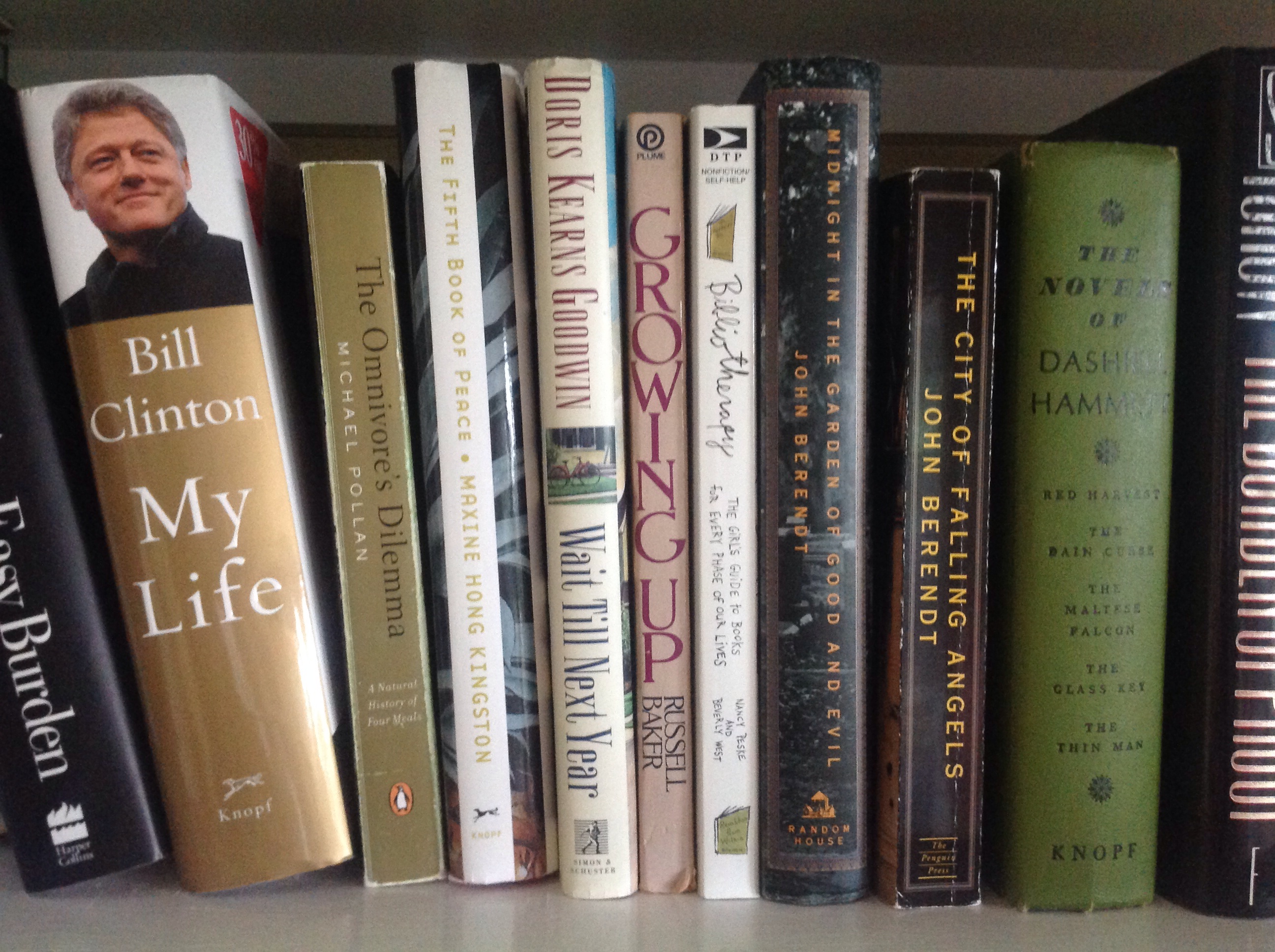
All my life, reading has been a treasured experience, “the greatest gift” according to Elizabeth Hardwick: “It is cheap, it consoles, it distracts, it excites, it gives you knowledge of the world and experience of a wide kind.” It has calmed me when I’ve been distressed, stimulated when I’ve been bored, provoked when I’ve been complacent. imageYet I have developed two habits that are getting in the way of reading serving my heart’s purpose. One is reading on the iPad, and one is reading mostly novels.

When I first started reading on the iPad, I promised myself that it would only be for traveling, so that I didn’t have to pack heavy books with me. Then I discovered Overdrive and started checking out library e-books. After that, I moved, and had to drastically reduce the number of physical books on my shelves. So I stopped buying “real” books. But one of the things I discovered is that I dislike reading nonfiction e-books because of the difficulty with flipping back and forth in the book, or easily finding a piece of information. So I just stopped reading nonfiction.

I will always enjoy reading novels more, and that’s okay. In fact, studies have shown that reading literary fiction helps us understand other people better and to build stronger relationships. But there is another world of information out there that I am missing by excluding nonfiction from my menu.

Reading is declining pretty much everywhere. A recent Wall Street Journal article discussed this development and the “Slow Reading” movement that has sprung up in places to counter  it. Proponents of slow reading even get together in some cities to read as a group (each with his or her own book). Research indicates that we need 30-45 minutes of reading in one stretch for true immersion (and presumably, improved comprehension), so that’s what these slow readers do.

I don’t think I’ll be joining a slow reading group, but I hope to model my reading on their design. Even my fiction reading doesn’t meet the immersion threshold most days — if I’m busy, I read for maybe 5 or 10 minutes before falling asleep, and while I mostly switch to airplane mode while reading, the iPad just offers too many distractions that lure me away from the book I’m reading.

The interesting thing about the Slow Reading movement is that their prerequisites for it sound a lot like those for meditation: a comfortable seat, a quiet environment, no distractions, the book as focal point. By bringing mindfulness to the act of reading, we can deepen the experience and its impact on us.

We take time for what is important to us. Thirty minutes a day to rekindle a treasured gift, to illuminate life’s purpose — that’s an intention from my heart.

No mud, no Christmas tree?

It’s the week before Christmas, and somehow it seems appropriate that I’m reading “No Mud, No Lotus” at the same time that I’m going around giving presentations to people on holiday stress management! In the book, Thich Nhat Hahn says that, “One of the most difficult things for us to accept is that there is no realm where there’s only happiness and there’s no suffering.” When it comes to holidays, sometimes we set our expectations for only one or the other, not realizing that happiness and suffering must co-exist.

IMG_1262Suffering can run the gamut from everyday stressors like traffic and annoying co-workers, to physical pain and poor health, to anxiety and depression, to the overwhelming grief that accompanies losing a loved one. But it is the “mud” of suffering that makes happiness real and meaningful. At the holidays, if we “get stuck in the mud of life”, wallowing in our pain, we risk turning into Scrooges. Yet if we are too starry-eyed about the ideal holiday, we feel slammed when something turns out differently. How do we find a middle ground and feel comfortable being there?

Here are 5 ways to improve your holiday — body, mind and spirit:

Start by acknowledging the bad along with the good. Thich Nhat Hahn writes, “We have to learn how to embrace and cradle our own suffering and the suffering of the world, with a lot of tenderness.” One of the best tools for doing this is to keep a little notebook near your bed, and use it to write each morning or evening. Write about what you are grateful for, or write about something that causes stress or pain in your life. Be present with the emotions that arise. You will probably gain insight and perspective from the process of telling your story.

Make sure your days are values-driven. How long has it been since you considered what is most important to you in life? Is it family, money, work, service to others? Whatever your core values are, how does your holiday time align with them? Are you spending time each day on the things that are the most meaningful to you? If you plan your day with your values in mind, you will end each day feeling better.

Practice mindful breathing. All suffering manifests in the body somewhere, but by reuniting mind with body, we can relax that tension. Thich Nhat Hanh says, “The great news is that oneness of body and mind can be realized just by one in-breath.” When we focus on the movement of the breath, in and out, our minds are released for a while from their monkey-like tendency to jump from thought to thought.

Communicate. Sometimes relationships get strained around the holidays because of conflicting traditions, past grievances, or differing expectations. We often assume things about other people, their motives, their likes and dislikes. Try approaching a difficult situation with love rather than fear. People may surprise you.

Keep yourself healthy. Sleep long, eat well, and move often to use up stress hormones and negative energy. From No Mud, No Lotus: “…if we don’t have the time and the willingness to take care of ourselves, how can we offer any genuine care to the people we love?” Just as we are instructed on airplanes to put on our own oxygen masks first, before helping others, we need to do the same in everyday life. Only by starting with self-care are we wholly able to care for others.

“If you know how to make good use of the mud, you can grow beautiful lotuses.” How has your holiday grown out of you and your experiences? Perhaps you can see its reflection in the clear water that runs after the mud washes away.