Potholes

On one of the roads I frequently travel, there is a depression where a manhole cover is set too low. You can tell who drives this way all the time by whether or not they swerve a little to avoid it — people in the know will never actually hit the hole.

imageThat started me thinking about the metaphorical potholes in our lives: the sore spots and wounds we just avoid because it would be hurtful or damaging to go over them. This might be the relationship where something isn’t quite right, but it feels too dangerous to address the problem. Or it could be the job that isn’t satisfying but it’s too overwhelming to think about looking for a new one. It could be the health problem that isn’t going away, but we don’t want to hear what the doctor might say.
The human ability to avoid confrontation is phenomenal. We would rather drive around the pothole, live with superficiality in a relationship, take an aspirin for our pain, or trudge reluctantly into work every day than take the necessary action to live more fully and joyfully. I’ve only known a few people who have moved on from a situation before it got totally miserable — the people who see the pothole and immediately find a way to get it filled.
The rest of us make the calculation — is it worth tearing up the road to fill the hole? What if we open things up, and find more damage underneath? Can we wait for somebody else to fill the hole for us? Do we really want to see whatever is in that hole?
I’m reading a book called The Weird Sisters, by Eleanor Brown, in which one of the characters says, “We all have stories we tell ourselves. We tell ourselves we are too fat, or too ugly, or too old, or too foolish. We tell ourselves these stories because they allow us to excuse our actions, and they allow us to pass off the responsibility for things we have done — maybe to something within our control, but anything other than the decisions we have made.”
What story are you telling yourself to excuse inaction, to pass off responsibility for the things you could be doing? Do you tell yourself that you are too old to make a career change, or that the problems in a relationship aren’t your fault, or that someone else will come to rescue you?
image
The start of spring often motivates us to clean our houses, air out our rooms, and prepare our gardens for new plants. It might also be a good time to clear out the old habits of mind that aren’t helping you live your fullest life. What’s dragging you down, what’s energizing you? Can you use the clarity of your nice clean windows to see a hole that needs filling?

Emotions: Too close for comfort?

Does expressing emotions scare you, or make you feel somehow weak? As much as we over-communicate these days, we often keep our emotions in check or hide how we really feel. Perhaps cultivating greater emotional awareness can help us express our emotions more often and more constructively, and lead to more fulfilling relationships at home and at work.

Psychologist Paul Ekman has written that “Without emotions there would be no heroism, empathy, or compassion, but neither would there be cruelty, selfishness, nor spite.” He has studied how our facial expressions convey emotion, and written extensively about paths to a more balanced emotional life.

Interestingly, we might not be expressing emotions in writing as much as we used to. A group of British researchers analyzed a database of over 5 million books and found that words with emotional content have declined over the past 100 years. They looked at the frequency of mood words — those that expressed anger, disgust, fear, joy, sadness or surprise. The one exception to the declining trend was the emotion of fear, which has actually increased. The use of different mood words also tracks closely with historical events such as World War II, when there was a notable increase of words expressing sadness and a decrease in words connected to joy.

While written works don’t necessarily reflect actual behavior, how we tell stories to our children is a behavior with important outcomes. Listening to how we express emotions helps children develop emotional skills. A recent study published in the journal Sex Roles showed that mothers are better at this than fathers. The mothers in the study used more emotional words and elaborated more when reminiscing with their children about past emotional experiences, both good and bad. By doing so, they let the children know that their perspectives about a situation, and their feelings, were important.

Dads shouldn’t feel bad about these results, or leave the reminiscing to moms, though. Emotional awareness can be learned and enriched. The problem is that emotions, especially the negative ones like guilt or anger, sometimes make us uncomfortable, so we push them deep down inside us. In Japanese Morita therapy, people are taught to accept and co-exist with uncomfortable emotions; since the feelings can’t be controlled, opt to change your behavior instead. Go ahead and do what frightens you instead of letting fear hold you back.

Another way to become more aware of emotions is through writing. James Pennebaker, who developed the “writing to heal” program, had a group of people who were laid off write for 20 minutes a day, for 5 days, about their emotions and what they were feeling. After the study ended, 65% of the people who wrote about their emotions found new jobs, versus 26% in the group who didn’t write. The writing, a form of mindfulness practice, helped people clarify what they were looking for.

Putting yourself in another person’s shoes, imagining what they are feeling, is another way to build emotional awareness. Chade-Meng Tan, who developed Search Inside Yourself, has a practice called “Just Like Me” meditation. It serves as a reminder that most of us want the same basic things out of life, such as happiness, and that all of us suffer sometimes. It is a profound way to feel more connected to others.

Improving emotional intelligence isn’t a task with an end point though. Just as athletes and musicians continue to practice, even after reaching the big leagues, we shouldn’t stop refining our emotional abilities. Richard Davidson, who studies the neuroscience of emotions, says that “There are many sources of destructive emotions in our culture, and … constant barrage of stimuli…” We “need to keep practicing to effectively maintain the gains achieved.”

Time travels

Ready to spring forward? That cute mnemonic device we use to remember to set our clocks ahead sounds so positive and energetic, but it feels the opposite. The benefits of daylight savings time are few, if any, and the costs are high. Do we really still need it?Analog Clock

Our bodies are finely tuned to respond to cycles of light and dark. There’s truth in the adage, “Early to bed and early to rise makes a man healthy, wealthy and wise.” The facts are these: getting enough sleep is important for physical health, helps you be more productive (leading to wealth) and even affects your ability to learn and remember (making you wise). When the phrase was coined, people didn’t know the mechanisms by which it worked, but they certainly could observe the results.

When we switch on and off of daylight savings time, we take an already-artificial construct (time) and make it more artificial. Our bodies are telling us one thing – it’s time for dinner, or it’s not time to get up – and the clock is forcing us to do something else. Even without daylight savings time, most of us suffer from what’s called social jet lag, a disharmony between our internal clocks and our daily schedules that causes chronic sleep deprivation, contributing to obesity, increases in smoking and higher alcohol consumption. We’re all sleepy when we need to work and wakeful when we want to sleep.

Monday mornings are consistently the peak time of the week for hospitals to see people come in with heart attacks, probably because of the early morning rise in stress hormones combined with the dread of starting the work week. But on the Monday after we switch to daylight savings time, that incidence of heart attacks goes up by 10%. Accidents of all kinds also increase for the first few days after the time change (in either direction).

Benefits of daylight savings time: not too many. Although it was touted for years as a way to save energy, the savings is really only about 1%. Let’s face it, we live
in a 24/7 world and if the lights aren’t on in the evening, they’ll be on in the morning instead. Gasoline consumption actually goes up during daylight savings time because we go more places after work.

IMG_0239Is it nice to be outdoors in the evenings during the nice weather? Of course! It might even help people get more exercise if they go out for a walk, or play a game of softball after work. But I’ve found in my house that everything gets later during daylight savings time. The bright sunlight makes it seem too early to make dinner, so dinner starts shifting to 8 or 8:30. That makes bedtime later. But we still have to get up for work, so sleep is what is sacrificed.

OLYMPUS DIGITAL CAMERAI don’t see any groundswell of opposition to DST, though, so I think it will be with us for the foreseeable future.  Just be aware for the next few days that none of us will be operating at 100%. It will take most of the week to have our bodies adjust, so don’t jump out of bed too quickly in the morning – take a moment to breathe deeply before you start the day. Pay more attention on the road and be mindful in the kitchen to avoid accidents. Get plenty of sunlight during the middle of the day, even if it’s just by looking out the window.

Above all, listen to what your body tells you it needs. As Golda Meir said, “I must govern the clock, not be governed by it.”

Go out and play!

Plato wrote, “You can discover more about a person in an hour of play than in a year of conversation.” Playing allows us to take risks, to laugh at ourselves, to fall down, and to get back up. We discover truths about ourselves, as well as others.

Earlier this week, my yoga teacher announced at the beginning of class, “We’re just going to play today.” It was the last class there for most of us, since the yoga studio was closing at the end of the week. We all felt a little bittersweet about it, and by making the class more playful, our teacher helped us focus on the sweetness and joy rather than the sadness at the ending.

We went on to practice a lot of partner postures, flying postures and other fun stuff. We had to trust each other and give up some control in order to balance in the air on someone’s feet. Some of us found that easier than others, but there was laughter all around as we played together. And yes, I did learn more about my flying partner in that hour than I ever had by practicing yoga next to her.

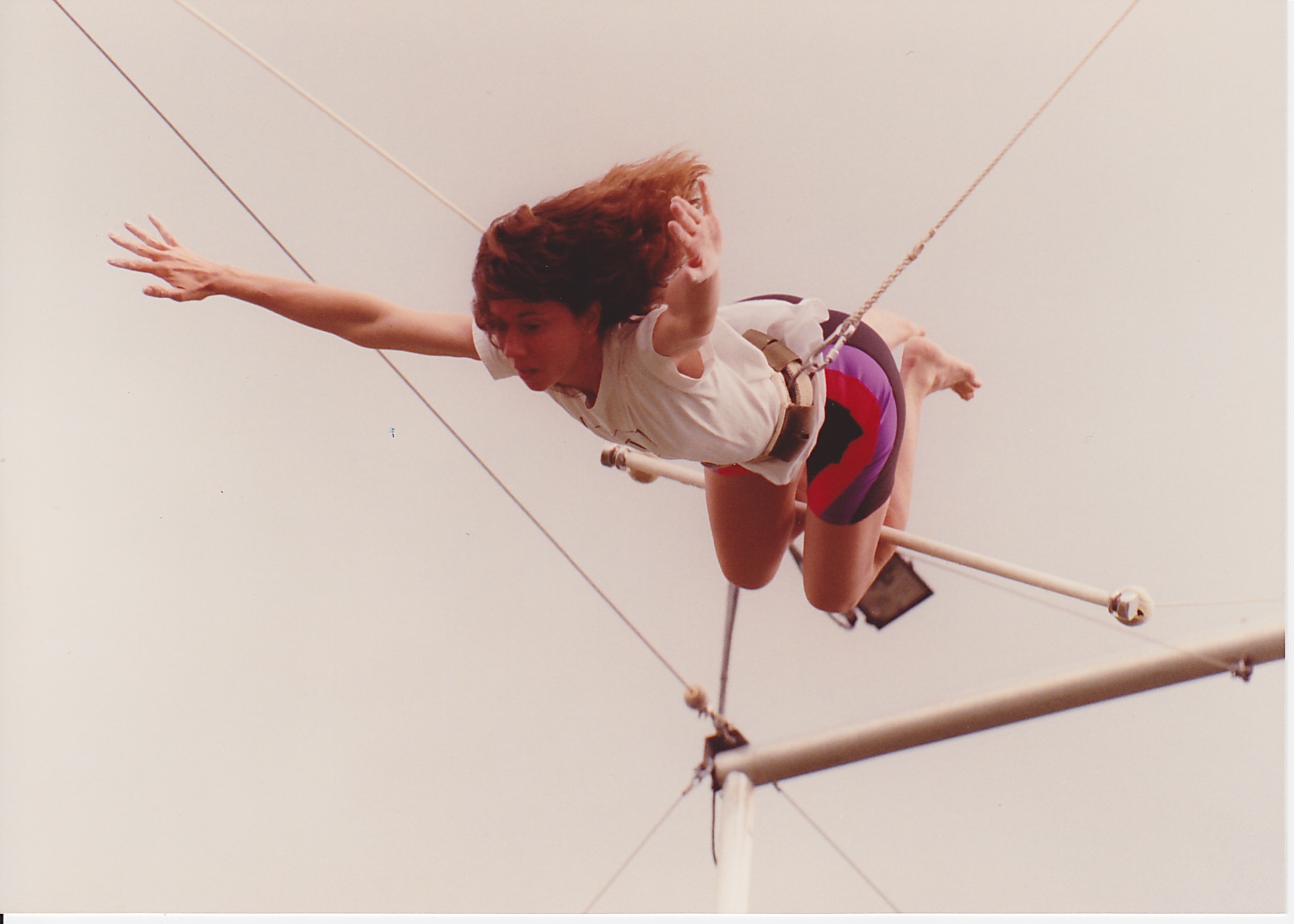
Playing helps take us away from the stresses of “real” life, but it also prepares us for them. The first time I tried the trapeze, years ago, I was terrified. You have to stand with your toes hanging off the edge of a platform, high in the air, and lean forward to grab the swing with the assistant only holding onto your harness with a finger. I had to trust myself to reach for the swing as I stepped into the void, and know that there were only two possible outcomes. Either I would be successful, get a grip on the swing, pull my legs up over it, and fly through the air (with the greatest of ease?). Or I would miss the bar, fall into the safety net, and..….be okay. The only thing at risk was my ego.

Why do you think we use terms like “take the plunge” and “leap of faith” to describe life’s risk-taking? Those physical chances we take during play – diving into the deep end of the pool, and jumping off the trapeze — teach us that we will probably be okay even if we fail. By continuing to play as adults, we keep ourselves flexible (mentally and emotionally, as well as physically) and more able to deal with changes that come along.OLYMPUS DIGITAL CAMERA

Do we play enough? NO! Even kids don’t play in the traditional sense nearly as much as they used to. And adults are often so oriented to work and worried about the future that we forget to incorporate play into our lives. Deep down, though, we all want and need to play.

How can you start playing again? Try a Laughter Yoga class, where you can just be goofy and creative for an hour or two. If you’re near Washington D.C., check out an organization called “Spacious” that connects people around fun and play. Bring the Instant Recess program to your workplace. Play in the snow, dance in the street, go on a roller-coaster, ride a wave, or even try the trapeze. Re-discover that baseline joy that comes from letting go and trusting that everything will be okay.

Discovering what’s here

“È tutto qua” says the little note taped to my computer monitor. It is an Italian phrase meaning “it’s all here”. I first saw it in San Francisco, where it’s the name of an Italian restaurant. I looked up the meaning and was so taken with it that I have kept it in front of me ever since.

Besides my love for all things Italian, the note reminds me to keep life simple. Don’t confuse wants with needs, don’t overcomplicate things. It’s all here already.

Whenever I start thinking that someone else has a nicer house, or a better car, or more success, I remind myself that it’s all here.

Whenever I start fretting about how I look, or stressing over little things that go wrong, I try to remember: it’s all here.

The idea of è tutto qua for me is partially about gratitude, but it’s also about knowing how little we really need to make us happy. The Gallup polling organization surveyed over 130,000 people in 130 countries not long ago, and identified two things that are the biggest predictors of whether people enjoyed their day. The two things were “being able to count on someone for help” and “learned something yesterday”. That’s it.

Once our basic needs (food, shelter, safety) are met, it’s not the extra gadgets and extravagant trips that increase our happiness. It’s as simple as knowing that someone has your back, and that you’re continuing to grow. It’s all here.

The sister I can call for emotional support or advice; the neighbor I can ask to borrow an egg; the friend I can rely on in an emergency: it’s all here.

The ability to read, to listen, to see; to take up skiing when you’re over 40; or to learn (as I did yesterday) that the resveratrol in red wine can protect against hearing loss: it’s all here. OLYMPUS DIGITAL CAMERA

The question is, on how many days can you say, “It’s all here”?  The Gallup people also have something called the Well-Being Index, where they measure the mood of a sample of people every single day. It shows the percentage that had “a lot of happiness/enjoyment without a lot of stress/worry” and the percentage that had “a lot of stress/worry without a lot of enjoyment”. So, for instance, on February 19, 43% said they had a lot of enjoyment without stress, and 14% said they had a lot of stress without enjoyment.

Leo Rosten said, “Happiness comes only when we push our brains and hearts to the farthest reaches of which we are capable.” Maybe the two determinants of enjoyment are dependent on each other. Can we actually be free to learn and grow to our full potential if we don’t have the support of others? And can we have healthy, mutually beneficial relationships if we don’t continue to grow and change?

Are you going to enjoy today? What will you learn? Who will you support, and who supports you?

Thanks, I’ll walk

Walking meditation, says Thich Nhat Hanh, “is really to enjoy the walking – walking not in order to arrive, but just to walk. The purpose is to be in the present moment and, aware of our breathing and our walking, to enjoy each step.” Instead of being on the way to someplace, it is the act of walking itself that is the purpose.

I’m in the middle of a book that inspires me to contemplate walking as meditation. The Unlikely Pilgrimage of Harold Fry, by Rachel Joyce, is about a recently retired man who gets a letter from a friend he hasn’t seen in 20 years, telling him that she is dying of cancer. The letter disrupts the unhappy inertia of his life, and on the spur of the moment, he decides to walk hundreds of miles across England to see her before she dies.

When I started reading, I thought that this book would be just a lighthearted, quirky story. But it has turned out to be engaging, thought-provoking and touching. Harold changes on the journey, not only from being physically unprepared to being fit and able; but also in the way he views his life. At first he is tortured by memories of the past, and he doubts what he is doing; but the walk transforms him into someone who has hope.Pt Reyes Natl _03

Walking is the most recommended physical activity in the world, because it is accessible to almost everyone, and offers many health benefits. Among them is an increase in “well-being” in people who walk regularly. Walking promotes clear thinking, and gives people an opportunity to notice their thoughts and feelings. Its ability to integrate sensory experience, motor skills and brain activity make it a part of psychotherapy for some mental health practitioners.

While it is possible to walk mindfully as you walk for exercise, walking meditation means paying attention to the walking itself: the sound your feet make as they touch the ground, the rhythm of your steps, the sound of your breath. Gradually you might find that your breath becomes regular and paces itself with your footsteps, for example 3 steps for each inhale and 4 steps for each exhale. Jon Kabat-Zinn says about walking meditation, “The challenge is, can you be fully with this step, with this breath?”Labyrinth-with-Pilgrim

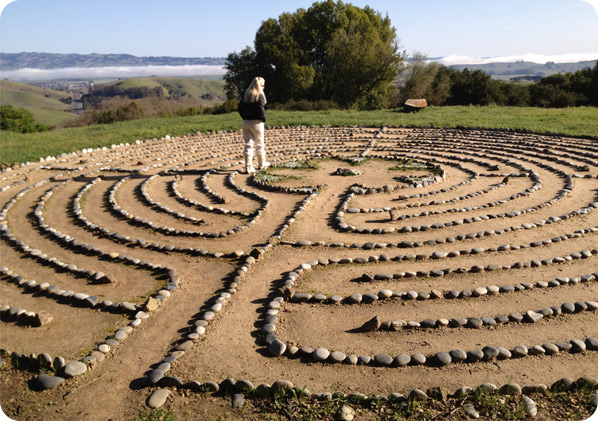
Another way to do a walking meditation is to walk in a labyrinth. Labyrinths have been used for thousands of years as a way to clear the mind and find answers to questions. They are often found on the grounds of churches or other religious centers, or in places of health and healing. A labyrinth consists of concentric circles leading to a center; you walk around the spiral to the center and then retrace your steps on the way out. It is a metaphor for the spiritual journey inward. At the labyrinth near my house, there is a quote from St. Augustine: “It is solved by walking.”

I don’t know yet if Harold Fry will solve the unhappiness of his life by the end of his journey, or the end of the book. While I wonder what will happen, I’m savoring each chapter as I go. I do know that what he has learned already is this: He doesn’t need to be in a hurry to arrive at his destination, because at each moment of the journey he is arriving somewhere.

Change: always hard, never too late, start now

The good news this week came from a study showing that if you stop smoking by age 40, you get back all the years of life that you had lost by smoking. Even if you stop smoking after 40, some of your longevity deficit is made up.

The bad news is that it is still just as hard as ever to quit smoking.

We can hear and believe all of the benefits of eating healthy, exercising, getting a new job or ending a relationship, and still find ourselves unable to make the changes we need. Sometimes change is too frightening, and sometimes it’s just overwhelming; either way, we stay stuck where we are. Changes on the outside come more easily – we might change the color of our hair, the way we dress, or the car we drive on a whim. But making changes to our habits of mind, belief and behavior is so much harder.

So we swat away the thoughts about changing, as if they were gnats buzzing around our heads. “It’s too late for me”, “I’m too busy right now”, “Maybe I’ll think about it tomorrow, or next week, or next month.”

You know what? The time to change is now, and it always has been.  The promise of a longer, healthier, happier life might seem like a distant dream, but what about the certainty that the action you take today is your first, necessary step? You cannot be different in the future if you never start. Henry David Thoreau wrote, “You must live in the present, launch yourself on every wave, find your eternity in each moment.” Close your eyes, visualize launching yourself on that wave, and start believing that you can change.IMG_0851

I attended an amazing concert a few nights ago, called “Sing the Truth,” featuring singers Dianne Reeves, Angelique Kidjo and Lizz Wright. They sang songs of empowerment, freedom, truth and love, by great female artists. Their rendition of “Both Sides Now” brought me to tears. At one point, Kidjo spoke to the audience about peace and freedom in the world, reminding us that it is up to each of us to do one small thing every day to make the world a better place for each other. In that moment, I know that everyone believed that possible.sing the truth

That’s how change will come – little by little, with one small choice each day. That’s how change happens for us as individuals, and for the world we live in. So whether it’s the choice to skip one cigarette today, or the choice to be kind today to someone you dislike, or the choice to speak out today about injustice you’ve ignored, look to today. Today is when we change.

What was your first social network? (Hint: Not Facebook)

A baby in the arms of her father – with her mom looking on – is forming her first and most important social network. Her network expands day by day, babybecoming more complex, as she is introduced to siblings, babysitters, aunts, uncles, and cousins. Soon, she starts forming networks separate from the family – friends, neighbors, teachers and coaches. Eventually she has networks that encompass jobs, community and the entire digital world.

Traditional social networks give us several kinds of support.  Tangible support includes things like money, a place to live or help with chores; informational support includes advice and instruction; emotional support covers love, trust, a listening ear, a shoulder to cry on. When we’re young, we rely on our parents for all three kinds of support; but as we mature, we look to other people in our network to provide some or most of these things, and we learn not to rely on any one person for everything.

Social connection is vitally important for health and well-being, but “connect” may be one of the most overused words of the last decade. We connect on Facebook, Linked In,Twitter and blogs; we connect with old friends, strangers, and people around the world; we connect at home, at work, on the subway and as we walk. But in our rush to connect with everyone, all the time, everywhere we go, do we make it all seem too facile? Do we forget the effort that goes into forging strong and lasting bonds?

It’s easy to click the “Like” button, but not so easy to engage with people day after day, through good times and bad, in the face of disagreements and hurts. It’s easy to send a text or an email, but it takes time to pick up the phone or meet in person to iron out differences. As our digital networks expand, are our in-person networks contracting?

The family network – our first – in many ways bears the brunt of our relational laziness. Maybe it’s because we don’t have the same fear of losing the people in that network. We learned early that we could rely on them, so we don’t worry about paying attention to them and cultivating the relationships. We take them for granted. Worse, we don’t mend the little tears and breaks in the fabric of the relationships, because we don’t think we need to.

OLYMPUS DIGITAL CAMERAIn the past two weeks, I’ve been both to a family funeral and on a family vacation. Each one reminded me that families are messy and complicated organisms! At the funeral, a sister stood on one side of the room not speaking to her siblings. No one even knows for sure why she’s not speaking to them. On every family vacation, I see how hard it is for everyone not to slip back into their habitual roles: good child, bad child; provocateur, peacemaker; the bossy one, the passive one. No wonder we want to be with our “easier” social networks instead!

The novelist Doug Coupland has written, “People are pretty forgiving when it comes to other people’s families. The only family that ever horrifies you is your own.” The truth is, though, that unless you have a truly terrible family, they are the people who will be there for you over the long haul, the ones you’ll be able to call in the middle of the night with a crisis, and the ones you’ll want to share your successes with. Sometimes you feel like you can’t live with them, but it’s almost always better than living without them.

My intention for the new year? To pay attention to my family, to give and forgive, to listen more patiently, to judge less often and to share more meaningfully.

Teach your children well

The public conversation has been a swirl of questions since the unspeakable mass shooting in Newtown, Connecticut last week. How can we prevent these kinds of events? What does mental illness have to do with it? Can we control it by banning certain weapons? How will these child survivors handle it? How can we best protect our children?

Kids_0003We could buy our children bulletproof backpacks, as many parents are apparently doing in the aftermath. Or we can teach them lifelong skills that will not only build resilience for dealing with stressful events, but perhaps help schools and communities become environments where young people will not feel isolated, marginalized and desperate.

The American Psychological Association has tips for parents on how to help children build resilience. Their suggestions include things like “make connections”, “teach self-care”, and “nurture a positive self-view”. This is great advice, but a little vague. Even if a few parents look at the APA web site, how many have the skills to implement the ideas? Children, teachers and communities would be better-served by school-based programs:

  • Mindfulness programs in school. Congressman Tim Ryan of Ohio was so affected by a mindfulness retreat he experienced a few years ago that he wrote a book about it (A Mindful Nation) and worked to get funding for “Skills for Life”, a social and emotional learning program, in Youngstown, OH schools. Teachers receive training, which helps them with their personal stressors, and then they bring the program into the classroom. The children have responded enthusiastically, teachers have found that their classes are better-behaved, and academic performance has even improved. Goldie Hawn, through her Hawn Foundation, has supported a similar program called “MindUP” in the Miami-Dade schools. The program helps develop emotional resilience skills, as well as “helping children function in their environments in a more mindful and less stressful way”.
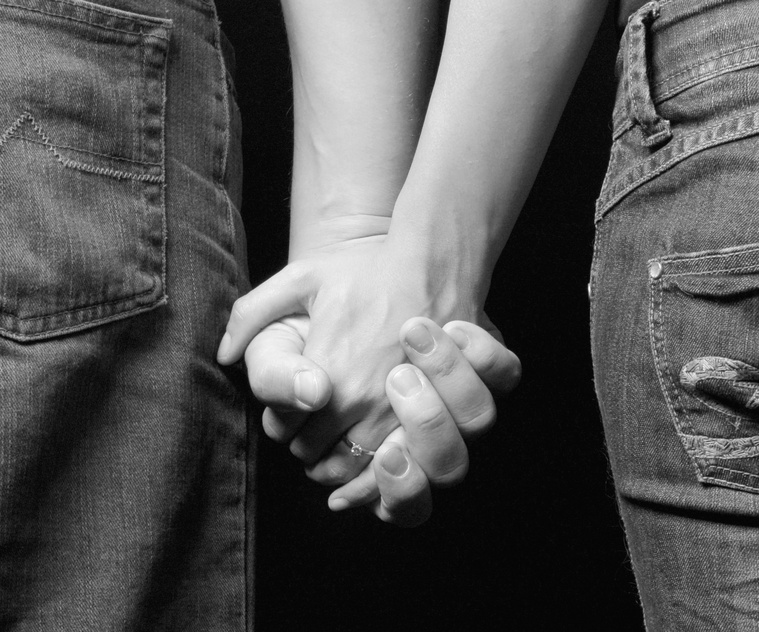
  • Teaching Tolerance, a program of The Southern Poverty Law Center which aims to foster “school environments that are inclusive and nurturing”. They have developed many anti-bias education resources, including teaching kits, curricula and professional development programs. While their program was initially focused on building tolerance for people of different races and ethnicities, it is applicable to fostering acceptance for children with any kind of differences. One of their initiatives is the “Mix It Up at Lunch Day” which has been held every November since 2002. On that day, kids are encouraged to sit with someone new, someone outside of their “group”, at lunch. These kind of interactions help reduce bias and misconceptions about others.Hand Reaching
  • Compassion training. Dr. James R. Doty, Director and Founder of Project Compassion and Clinical Professor of Neurosurgery at Stanford University, has written, “Why, in a country that consumes 25% of the world’s resources (the U.S.), is there an epidemic of loneliness, depression, and anxiety…Our poverty in the West is not that of the wallet but rather that of social connectedness.” Neuroscience research, at Stanford and elsewhere, has shown that people can train themselves to be more compassionate and to feel greater empathy. This is vital for all of us to cultivate, no matter how old we are. As long as people do not feel connected to each other, it is too easy to forget about the people on the margins.

Will we ever eliminate all acts of violence? Probably not. But I would argue that time and money spent on building mindfulness, peace and compassion in schools are equally as important as resources for math and reading.  Thich Nhat Hanh has written, “A fresh way of being peace, of making peace, is needed…We rely on each other. Our children are relying on us in order for them to have a future.”

Need inspiration? Go outside.

If I told you there was an app for your phone that would help you be more creative, would you buy it? What if I told you that giving up your phone for a while might enhance your creativity? Is that as appealing?

A new study published this week shows that people performed 50% better on a test of creativity after spending four days in nature with no electronic devices. The researchers aren’t sure what exactly caused the gains in creativity — being in nature or giving up the devices, but there’s support for the idea that it’s both of those things.OLYMPUS DIGITAL CAMERA

There’s something called “attentional restoration theory” that apparently relates to multi-tasking. Basically, multitasking requires a lot of executive functioning in the brain, which is kind of exhausting, and the theory is that being in a natural setting can replenish that functioning ability. Other studies have demonstrated that hiking can improve certain mental abilities.

The sad reality is that most of us don’t spend nearly as much time in nature as did previous generations. It’s true that we are not an agrarian society anymore, but it’s also a fact that recreation in nature has declined as time spent with electronics has increased. Yet there’s a lot of evidence that we crave what nature offers us.

Look at our holidays, both religious and secular. Many revolve around symbols of nature. Yes, those holidays originated during agrarian times, but the important thing is that we still celebrate them. So at Christmas, people bring trees into their homes; at the Jewish holiday of Sukkot, people build structures outside, decorated with leaves and branches, in which meals are eaten; at Thanksgiving, a cornucopia is often symbolic; and summer holidays are an occasion for picnicking.

Why are homes and apartments with views of woods and water more valuable? Why do we have houseplants? Why are landscape paintings so popular? Why do we take dozens of photos of sunsets? We are striving to bring the outside in and make that connection with nature.

At the same time, taking a break from 24/7 connection with devices is important too. I read yesterday that silent retreats have become hugely popular in recent years: places that offer solitude and a chance to look inward have waiting lists of people who crave some time in silence. The time spent alone in stillness can be an opportunity to find mental space, to discover things about themselves, to replenish the spirit.

That kind of mental space also nourishes creativity. Why is creativity important? Not only can it help you enhance your ability to reach your highest potential, it is also critically important to managing stress. People who are creative thinkers perceive potential stressors differently, and come up with more ways to cope with them. Creative people are more open to new experiences, so fear doesn’t get in the way of solving problems or achieving dreams. And people who are more creative are also more flexible, enabling them to adapt to new circumstances.

Did you ever get stuck on a problem at work or school, and decide to take a break and go for a walk? Did you find that during your walk you came up with an idea that might move you forward? Fresh air, sun light, and views of nature are food for the mind, body and spirit. As John Muir once wrote, “Keep close to Nature’s heart…and break clear away, once in a while, and climb a mountain or spend a week in the woods. Wash your spirit clean.”