What do you have to say?

There are times when writing is a struggle as I search for ideas and the right words to convey them.  Other times, when I have a compelling story I want to tell, the words just flow and the entire process seems so easy. Having a chance to tell our stories can be incredibly cathartic, even if we don’t share them with anyone else.

I thought of this when I read a story by Chris Richards in the Washington Post this week about a program to help veterans of the wars in Iraq and Afghanistan write songs. The veterans work with professional songwriters in a workshop setting. They tell their stories, pulling together images and memories of their experiences, and the songwriters create a melody and work it into a song. The veterans find the experience to be very healing, giving them an outlet for expression that is hard to find anywhere else.
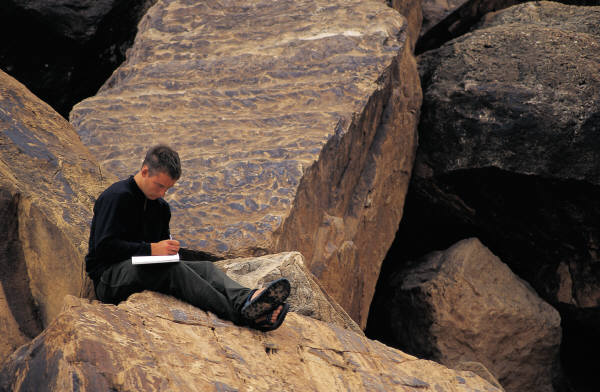
About 20 years ago, the writer Maxine Hong Kingston started a similar project in California for Vietnam War veterans (see her book, The Fifth Book of Peace). Theirs was strictly a writing workshop, not music, but the purpose was the same – giving the vets an opportunity to tell their stories, in a safe place, without judgment. Kingston began the process as a way of working out a loss of her own, and together with the veterans, found some peace along the way.

Some people keep diaries throughout their lives. Many of us had them as teenagers – an outlet for our angst, emotional ups and downs, and rants against our parents. But a journal devoted to a specific topic or purpose can be a helpful tool in dealing with stress, whether it’s everyday stress or the more intense stress caused by wartime experiences.
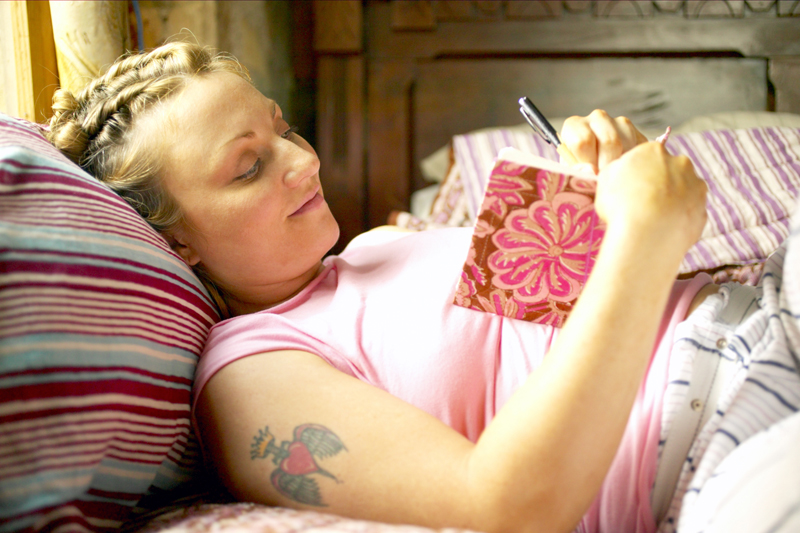
James Pennebaker, a professor at the University of Texas, is a leading researcher and proponent of the idea of “writing to heal”. He believes that expressing our emotions makes us healthier and helps prevent many of the chronic diseases that befall so many people in modern society. For a lot of people, writing is the best (maybe the only) way that they can do that. Dr. Pennebaker has written a book about this process (Writing to Heal: A guided journal for recovering from trauma and emotional upheaval) and conducts workshops (one will be held at the Duke Integrative Medicine Center in March).

Gratitude journals are another, somewhat more indirect, way to help relieve stress. I’ve written before about the research showing that people who regularly remind themselves of what they are grateful for tend to be more satisfied with their lives and to experience less stress. Gratitude journals have also been used with veterans and others who experience Post-traumatic Stress Disorder, with promising results.

Whether or not you have had a traumatic experience, writing can still benefit you. In this age of truncated communications like email, Twitter and Facebook, it can be quite satisfying to sit down and express your thoughts and feelings without anyone cutting you off or limiting your characters. A journal can be a place to try out ideas, explore emotions and practice that difficult conversation you need to have with someone. Often, writing can be as mood-lightening as talking with a close friend. I suspect this is the reason why the memoir has become such a popular genre in recent years. Everyone has a story to tell, and wants to tell it if given an opportunity. But we are not very good at remembering emotions accurately after time has gone by, so it’s important to write down how you feel now. Start telling your story  – your audience can be as wide as the Internet or as small as a little notebook sitting by your bed.

Phone a friend

Our stress is getting worse. You’re probably not surprised. Whenever I tell people that I teach stress management to college students, they invariably reply, “Oh, I could really use that.” The latest report on Stress in America, from the American Psychological Association, bears that out: people acknowledge high levels of stress, yet very few believe they are doing a good job of managing it.

It’s also not surprising that the big stressors for most people are money, work and the economy. We are living in a time of great uncertainty and people feel that they lack control over what happens to them. For the most part, people know that there’s a connection between their stress and their health, but often feel too overwhelmed to do anything about it.

A group that is of special concern to the APA researchers is that of caregivers – people who have the primary responsibility of caring for someone who is ill or disabled. Caregivers often feel overwhelmed and isolated, and often report poor health. Caregivers also age faster and die earlier than other people, due in part to cellular changes that are related to chronic stress. The good news is that caregivers who belong to support groups, where they can share their experiences with others, show fewer signs of these cellular changes.

Do people feel that they can’t manage stress because it would require a big life adjustment, like changing jobs, moving to the country, or meditating 24/7? We often hear messages about exercise and healthy eating that tell us small steps are the way to go; any positive change is better than no change at all. But maybe people aren’t used to thinking about stress that way.

Robert Sapolsky, a leading researcher on biology and stress has said, “We are not getting our ulcers being chased by Saber-tooth tigers, we’re inventing our social stressors — and if some baboons are good at dealing with this, we should be able to as well. Insofar as we’re smart enough to have invented this stuff and stupid enough to fall [for] it, we have the potential to be wise enough to keep the stuff in perspective.”

Most of us are pretty good at recognizing stress when we feel it. What truths can we pull out of the new survey and other research to help us in those moments?

Your life doesn’t need a full makeover to make you better at handling stress. Start small.

  • Small step one: Next time you’ve had a bad day and you’re tempted to plop in front of the TV, take a walk first.
  • Small step two: Next time you’re feeling stressed and you find yourself yelling at your kids – call a friend to chat. You don’t even need to tell your friend your problems. Just talking to someone who is non-judgmental will probably make you feel better.
  • Small step three: If you’re feeling wound up, but you don’t have time to exercise, put on your favorite music and dance around the room for five or ten minutes.
  • Small step four:   When feeling stressed at work, don’t take it out on other people – do something nice for one of them instead.
  • Small step five: If you are feeling overwhelmed, take a moment to make a list of all the things in your life that you are grateful for.
  • Small step six: The next time a task seems too big for you, ask for help.
  • Small step seven: If you can’t sleep at night because of worry, distract yourself by thinking of your favorite joke or funny movie. Try to go to sleep with a smile on your face.

If you need a smile or a reminder, watch this: http://www.youtube.com/watch?v=xGbnua2kSa8


On our wedding day, many years ago, my husband started to say the vows he had written. “I will study…” he began, and then he paused.  I was confused – had he started to give the wrong speech? What did studying have to do with loving me or being committed to our marriage?

After a second or two, my husband went on to say something about studying our past to learn how to keep our relationship strong in the future. But as I think about it now, maybe a commitment to studying has its place in the vows along with “in sickness and in health”.

A new report from the U.K. shows how our brains can continue to develop new neurons, preserve the existing ones, and possibly improve the connection between neurons, if we challenge ourselves mentally. The researchers looked at people training to become London taxi drivers. Over a 3-4 year period, the drivers are required to learn the names and locations of about 25,000 streets and 20,000 landmarks in London. By the end of the training, brain images of successful driver trainees showed an increase in gray matter in the part of the hippocampus related to spatial navigation and memory. In other words, they grew new brain cells.

The study’s authors concluded that our brains remain “plastic” – capable of adapting – even as adults. But learning new tasks and skills is what prompts the response. Their work offers hope to people recovering from brain injuries, and refutes the adage, “you can’t teach an old dog new tricks”. If we needed more encouragement to be lifelong learners, this is certainly it.

Lifelong learning” has been associated with continuing professional education to stay abreast of the latest developments in your field of work. It has also fostered programs such as Elderhostel and other classes for seniors. But in the current economy, with so much job insecurity, continuous learning has become critical for people wishing to remain competitive by learning new skills that will enhance their ability to get and retain a job.

Becoming a lifelong learner is also a way to spark personal growth, and to find meaning in your life. Taking classes, or getting involved in new experiences that have nothing to do with a job, can prompt a renewed sense of curiosity about the world. For people who might be facing job insecurity, studying something unrelated is both a distraction and a way to succeed in another arena.

What are some other benefits of learning new things?  Greater knowledge and experience can help people deal with stress better because they can use it to dispute some of their irrational beliefs about stressful events. Mastering new skills also gives self-confidence a boost, which can increase resiliency. Since chronic stress can actually cause cellular aging, reducing stress and boosting the development of new brain cells might slow some of the decline we see with age.

So what does all this have to do with the marriage vows? By staying mentally sharp and healthy, the “sickness” part of “in sickness and in health” could possibly be minimized. By learning new things, being open to growth and change, someone is more likely to be open to a partner’s perspective. And let’s face it: often when people say they are bored with their husband or wife, they are really bored with themselves. So taking a class, learning a sport or finding your way around a new city makes you a more interesting person, and possibly keeps your relationship interesting too.

When my husband said he would study, he referred to us and our relationship. But I see now that studying the world, staying curious, and engaging in self-discovery is what makes each of us, and all of our relationships, stronger and healthier.

Be the mountain

Grounded! What is the first thought that comes to mind when you hear that word? If you’re a child, you probably associate it with the punishment of being confined to home for a while. A pilot might also view it as punitive, not being allowed to fly. But someone who is trying to connect with awareness and being present in the moment sees “being grounded” as something quite beneficial. Are the positive and negative definitions really so far apart?

I started thinking about grounding yesterday during some restorative poses in yoga class. Our teacher was talking about surrendering to gravity, letting the earth support us, and how gravity is such an elemental force in the universe. Sometimes we need to reestablish that connection to solid ground, especially after times of intense activity or stress in our lives.

Children want to “fly” most of the time. They have so much energy and they are growing so rapidly that sometimes they go too far, too fast, and a time-out or grounding is necessary. As adults, we can self-impose our time-outs, but, like children, we don’t always recognize that we need one. Or, if we do acknowledge the need, we delay it until we “have time”.

Periods of disruption to our daily routines, such as a lot of travel, caring for a family member, or even preparing for holidays can make us feel as if our feet have left the ground for a while. Sometimes we have the luxury of being able to take a few days at home to rejuvenate, but most times we don’t. In those cases it can be helpful to have some tools to help us stay grounded even in the midst of turmoil.

  • Mountain Meditation – there are several versions of this meditation. I use one from Frank Jude Boccio with my students:   Start by sitting in a comfortable, stable and supported position. Imagine a very tall, impressive mountain; think about how the mountain might change with the seasons or the weather, sometimes visible, other times covered with clouds; sometimes green, other times snow-covered. But throughout the changes, the mountain remains stable. Think of your posture as mountain-like, and think of your emotions and experiences as coming and going like the clouds and the sunshine. You have the ability to maintain stability just like the mountain.
  • Get your hands dirty – Jeff Brantley and Wendy Millstine recommend this practice in their book, Five Good Minutes:    Spend some time digging in sand or dirt, working in your garden, or even repotting a houseplant. Focus on how the soil feels, and what it nourishes. (Bread-making, or working with other kinds of dough, would provide a similar experience.)
  • Restorative yoga – this type of yoga practice requires little in the way of experience or special ability. It uses lots of props such as blankets and blocks to support you while you rest in different postures. For a good overview of the practice see the Yoga Journal web page.
  • Take a sensory walk – this walk will serve to focus your awareness and heighten your experience of your surroundings. Be sure to turn off your phone before you start, and bring along some food or gum for the taste portion of the walk:  Go for a walk, and spend three minutes or so concentrating on each sense one at a time. So, first focus just on the sounds around you; then the smells; next, touch everything that you can; and finally see everything around you as if for the first time. After that, find a place to sit down and close your eyes. Spend the last three minutes on taste, using the food that you brought with you. When you are finished, get up and walk again, using all of your senses. Allow yourself to experience whatever presents itself, without too much planning or judgment.

John Muir said, “I never saw a discontented tree. They grip the ground as though they liked it, and though fast rooted they travel about as far as we do. “

Relax into better health

Last Thursday, I was privileged to hear Dr. Herbert Benson, a leader in the field of mind-body medicine, give the keynote address kicking off Mind-Body Week D.C. Although he reiterated much of the material found in his many books and papers, it was still a treat for me to hear him discuss it.

Dr. Benson started his research over 40 years ago as a young medical doctor. At a time when doing research into the connection between mind and body, and spirituality and healing, could be a sure-fire career-ender, he was brave enough to pursue it. In doing so, he defined the effect known as the “relaxation response” and conducted study after study showing how it could be evoked, and what its benefits are.

Benson believes that medical care should consist of what he calls the “3-legged stool”, where the three legs are self-care, medications and procedures. In order for us to have optimal wellness, all three legs must be utilized as needed. His life’s work has been to show how our ability to use the first leg, to heal ourselves, is real and powerful.

In his ground-breaking book, The Relaxation Response, first published in 1975, Benson explained how the relaxation response could counteract the effects of the stress (or “fight or flight”) response. In fact, the relaxation response is the direct opposite of the stress response. In essence, we cannot be stressed and relaxed at the same time.

Benson also demystified meditation for people. While his initial research started with transcendental meditation, he demonstrated how the relaxation response could be achieved using some basic elements of T.M., without needing a mantra or a spiritual guru. Anyone can access it without cost or special equipment. Here are the steps he recommends:

  • Choose a word or phrase on which to focus (some examples are words such as love, peace, or one; or words with religious meaning).
  • Sit quietly in a comfortable position that you can maintain for some time.
  • Close your eyes and relax your muscles.
  • Breathe slowly and naturally, repeating your focus word as you exhale.
  • Maintain a passive, non-judging attitude. If your mind wanders, keep coming back to your breath and your word.
  • Continue in this manner for 10-20 minutes (beginners should try for 5 minutes at a time).

Using mental focusing techniques to bring about relaxation is not radical now as it was in 1975. But it is still not fully a part of Western medicine. Integrative medicine centers exist at many hospitals, but it often seems that they function alongside, rather than as full partners with the traditional departments. That’s too bad, because over the years, Herbert Benson and others have developed a body of research that shows that regularly practicing relaxation:

  • Can lead to lower blood pressure and lower heart rate
  • Reduces metabolism and breathing rate
  • Reduces the harmful effects of stress
  • Leads to changes on the genetic level in areas that control inflammation, aging, and insulin use

By calling upon our ability to relax, we can reduce the physical symptoms of stress. We also have the potential to reduce our use of the health care system since a majority of doctor visits are for stress-related complaints. We can take more control of our health.

Deepak Chopra has said “Meditation is not a way of making your mind quiet. It’s a way of entering into the quiet that’s already there – buried under the 50,000 thoughts the average person thinks every day”. When we regularly experience that quiet, it can also open a mental door that allows us to be receptive to ideas. In that way, a regular relaxation practice can also help us learn, be more creative, and think more clearly.

“We owe our children”*

Nelson Mandela once said, “There can be no keener revelation of a society’s soul than the way in which it treats its children.” When I consider the somber headlines of the past week or so, I wonder about our soul:

  • Census data show that one in six Americans is living in poverty, including 22% of children last year (40% of black children).
  • Poverty has increased for four years in a row.
  • The proportion of children with at least one unemployed parent doubled between 2007 and 2010, and there is evidence that a parent’s job loss can have a negative effect on children’s academic performance.
  • A new study showed an increase in child abuse, specifically against infants, linked to the recession.

When children grow up in poverty, they grow up with chronic stress. Constant change and uncertainty in their lives causes biological responses that result in wear and tear on their bodies and minds. Long-term stress can damage the part of the brain called the hippocampus, which is essential to learning and memory.

This helps explain why many children who come from poverty don’t do as well in school, and are less likely to graduate from high school. According to the Children’s Defense Fund, they lag in both intellectual and emotional development, and they are more likely to become the poor parents of the future.

Even if your only interest is your self-interest, you should care about these statistics. The longer we have so many children living in poverty, the more our country loses economically from lower productivity, poorer health and higher crime rates.

Last Sunday’s Washington Post ran an editorial titled “Debt Reduction with Compassion”. It argued that we cannot reduce the deficit on the backs of the most vulnerable in society. We have to recognize how much people have suffered and lost during the recession, and not cut off the safety net for them. But how often do we hear the word “compassion” in the current political climate?

I’ve been thinking about what any one of us can do to make a difference for children. Here are some ideas:

  • Think about who and what you vote for. Which candidates are committed to keeping funding in place for programs that benefit children?
  • Be an advocate, in your community and beyond. Speak out about legislation and programs that are important for ensuring a happy and healthy next generation
  • Support teachers and education in your community.
  • Support the organizations that are working to change lives, such as:

Children’s Defense Fund – In existence for 35 years, this organization works to “ensure a level playing field for all children” and to “lift children out of poverty”

Feeding America – Works with a network of food banks to eliminate hunger in America; child hunger is a priority.

HIPPY (Home Instruction for Parents of Preschool Youngsters) – A parent-involvement, school-readiness program that operates on the idea that parents are their children’s first teachers.

Boys & Girls Clubs of America – Their mission is “To enable all young people, especially those who need us most, to reach their full potential as productive, caring, responsible citizens,” through programs in leadership, education, life skills, sports and fitness, and the arts

What do we want the soul of our society to look like? If we truly care about giving our children and grandchildren a decent life, then “all of us have to recognize that we owe our children more than we have been giving them”.*


*Hillary Clinton

When you wish upon a tree…

Just last week, I became aware that we have a wishing tree in Washington, D.C. It is located at the Hirshhorn Museum Sculpture Garden on the National Mall, and it is part of an interactive project conceived by Yoko Ono. She often saw wishing trees at Japanese temples when she was a child, and decided to make the Wish Trees part of her exhibits around the world.

So last Monday, I decided to get myself down to our Wish Tree and see what kinds of things people were wishing for. The wishes ran the gamut from the expected, to the poignant, to the humorous. People wished for jobs, better health, reconciliation and world peace. One person wished for “peace and prosperity for Africa”; another wished for a second term for “our great President Obama”; and someone else wished that it was okay for Washingtonians to be “just a bit more weird”!

Not everyone wants something for himself. Many write wishes with other people in mind. One person even wished that she could give up her wish so that all the others would come true. Those kind of aspirations made me think of the Make-a-Wish Foundation, which grants wishes to very sick children. Their mission is to enrich the lives of desperately ill children, giving them some hope and joy. They rely on a group of volunteers called “wish granters” to help realize the dreams of the children. One of these wish granters has said that “Helping them get their wish is the best feeling ever.”

So is it better to have my own wish come true, or to see someone else get their wish? The Bible says, “It is more blessed to give than to receive.” Does the good feeling of seeing another person happy last longer than our own gratification? I guess it depends on your perspective. We all fall prey to the ‘center of the universe’ trap, where we get so hyper-focused on our own problems and needs that we can’t see that someone else might have the same or worse situation. Whether we give a wish or another kind of gift, focusing on another gets us out of the trap, focuses our energies outward, and helps us be more positive.

Where do all the wishes go? So far, over 250,000 children have had their wishes granted by Make-a-Wish. All of the Wish Tree wishes are sent to Iceland, where they are placed in capsules around the Imagine Peace Tower on the Isle of Videy. About a million and a half wishes have been accumulated since the project began. The Imagine Peace Tower is a tower of light that is a tribute to John Lennon, and to his and Yoko’s campaign for world peace. It is a reminder that we are all connected by peace and love.

Imagine that.

“No vacation goes unpunished”*

With President Obama vacationing on Martha’s Vineyard this week, some in the press have had a field day discussing whether or not he should be taking time “off”. I doubt a president is ever truly on vacation, but I can think of some good reasons for wanting him to have some down time.

Cindy Aron, the author of Working at Play: A History of Vacations, has said that “we have a love-hate relationship with our vacations”. America’s history of a Puritan work ethic has meant that we tend to frown on idleness. While the wealthy always traveled, and went to spas for their health, the middle class started vacationing later. Many early vacation choices for them were actually associated with churches. If you went to a Methodist campground, there was less temptation
to indulge in idleness or other vices while on vacation.

Only since the 1950s or 1960s have paid vacations been a common aspect of employment. Most employees currently receive paid time off ranging from five to thirty days per year. Since the financial downturn, however, many people don’t feel comfortable taking all of their vacation time anymore. They are either afraid of losing their jobs, or worried that they will have too much work to return to now that companies have downsized so much.

Even earlier, a 2005 survey by the Families & Work Institute found that one-third of employees said they were overworked, and did not use all their vacation days. Half said they worked often during vacation, and one-third said
they were contacted about work during non-work hours.

Research on the health benefits of vacation, or the detriments of not vacationing, is sparse. A study that is often cited is one conducted in 2000 with the Framingham sample. It found that men who took annual vacations had a 30% lower
risk of dying of heart disease. Factors thought to play a role were reduced stress, more sleep, more socialization and more exercise while on vacation.

In 2005, the Wisconsin Medical Journal published a study of women who did not take an annual break from work, which found that they had more psychological health risks. A 2010 study from the University of the Rockies concluded that sufficient vacation time stabilizes mental health and contributes to “professional well-being”. Those researchers also found that a vacation’s benefits peak at 10 days, making a 10-14 day vacation just about perfect.

Some experts, such as Saki Santorelli of the University of Massachusetts Center for Mindfulness, suggest that we try to inject some of the qualities of a vacation into our daily lives at home. Getting more sleep and regular exercise, as well as practicing stress reduction techniques could help balance out the work vs vacation dichotomy.

At least one study backs up Santorelli’s ideas. It examined work engagement and burnout in a group of teachers. The researchers found that positive effects of vacation faded after one month; however, building more relaxation experiences into one’s daily schedule after vacation prolonged the vacation’s effects.

So, in that spirit, here are some tips for making both vacation days and work days better:

  • Consider whether you will benefit most from a very active or more relaxing vacation.
  • Don’t try to cram too much into your vacation. Make sure you actually take time to relax.
  • Set boundaries for work time, work calls and emails. Most of us don’t really need to be available 24/7.
  • Get outside every day, even if it’s just for a walk around the block at lunch time.
  • Take 5-10 minutes every day just to sit quietly and breathe.
  • Laugh. Milton Berle once said, “Laughter is an instant vacation.”

*Karl Hakkarainen

Urban decay?

The headline in the paper read, “Maybe it’s just crazy to live in a city”. Needless to say, it grabbed my attention.

While it was already known that mental health problems such as anxiety, depression and schizophrenia are more common among people who live in urban areas, new research (published in the journal Nature) looked at the brain to see how and why that happens.

Using fMRI scanners, researchers found heightened activity in the part of the brain called the amygdala when they assigned urban-dwelling participants to complete stressful tasks. One job of the amygdala is to assess social threats. People who lived in rural areas or small towns had lower levels of activity in the amygdala during the stressful tasks; in fact, the reaction increased as the size of the participant’s city increased. Researchers believe that city living may increase risk for mental illness by increasing sensitivity to social stress.

What is social stress? Basically it is any stress that occurs as a result of interaction with other people. For some it might amount to stress from events such as job interviews, public speaking, mingling at a cocktail party, or going on a date. For others, it might be triggered even in everyday interactions with people. Besides the greater risk for mental health issues, it is also linked to physical health conditions.

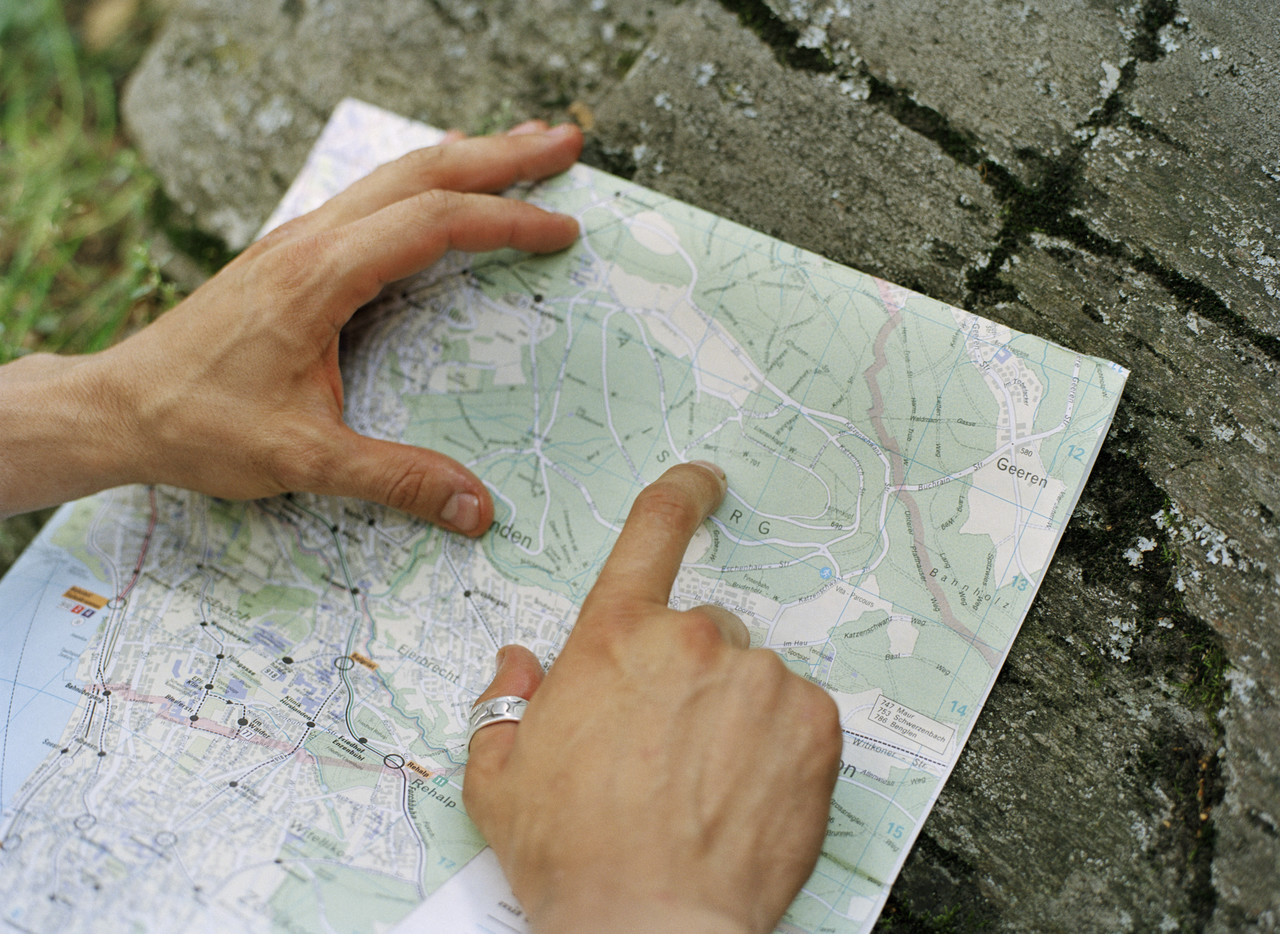
What is it about city life that makes it more stressful? The immediate things that come to mind are noise, pollution, and pace of life. But if the focus in this research was on social stress, how is that different in an urban environment? Certainly, crowding is one factor. Other possibilities are more diverse populations, more activities to choose from, and perhaps more roles to play. Each of these has the potential to increase the number and complexity of interactions with other people on a daily basis.

In rural areas or small towns, people may tend to see the same faces every day, have fewer choices to make about interactions, and have more personal space around them. Their potential for negative social stress is less.

Know yourself

The important thing to remember is that we all have different requirements from our environments. Some of us would be utterly bored with living in the country; others cringe at the thought of living in a city. Figuring out what suits you best sometimes takes trial and error. When I was younger, I lived in New York City for 6 months and developed the worse case of insomnia I’ve ever had. I came to the conclusion that the unremitting noise and stimulation hour after hour, day after day, was too much for me. Yet, if I spend too much time at a quiet beach retreat, I’m ready to go back to “real life” after a week or so.

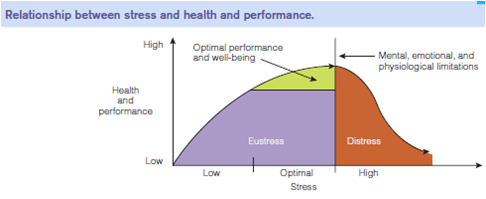
This relates to something called the Yerkes-Dodson principle which shows the relationship between arousal and performance. It’s what is also called finding your “optimal level of stimulation”:

The line where stress increases to the point where performance (or quality of life) declines may be farther to the right or left, depending on each person’s capacity for stimulation.

Make space for yourself

Even if you thrive on the stimulation of city life, it’s important to protect yourself from the cumulative effects of urban stressors. For some, this might mean taking regular breaks from the city by getting away to a more rural, peaceful environment. If that’s not possible, then creating an oasis at home can help. Maybe that’s a certain space in your home that is calm and soothing. Maybe it is a space in your mind that’s created by a daily practice of meditation. It could also be achieved by finding or creating a smaller community for yourself within the larger community, people with whom you feel protected, safe, and comfortable. Whatever form it takes, the goal is to have a “place” where the stimulation is dialed down for a while.

What is your oasis? Leave me a comment to tell me how you create that space.