Wisdom by way of Picasso and Elizabeth Bennet

Our greatest thinkers, artists, innovators and scholars have in common a curiosity that persists throughout life. They are open to new ideas and never stop learning. As Pablo Picasso said, “I am always doing that which I cannot do, in order that I may learn how to do it.”

All dimensions of wellness “act and interact” in ways that impact quality of life. Growth in the intellectual dimension helps us pro-actively solve problems, widens our understanding of the world and its people, and gives us a sense of control over events. Intellectual well-being is a key factor in maintaining resilience in the face of stress because it enables us to think critically, to see opposing points of view and to trust ourselves to make good decisions.IMG_0416

Recent findings from the Benefits of Lifelong Learning project show that non-job related adult education increases self-confidence and well-being, leads to greater tolerance of and trust in other people, and broadens social networks. Adult learners become more health-conscious, start doing more volunteer work in their communities, and show increased motivation to further their studies. Learning begets learning, or as daVinci noted, “Learning never exhausts the mind.”

Earlier this week, I attended a funeral where a young man eulogized his grandfather by sharing with us some of his wisdom. The older man was intensely proud of his grandson, yet he often said to him (with a smile), “Remember – you’re always a freshman.” Not only was he saying, “Don’t get cocky,” he also meant that we’ve always got something to learn, we’ll always be new to something. Or as John Wooden put it, “It’s what you learn after you know it all that counts.”

There’s often a sigh of relief at graduations – whether high school, college or grad school – that formal education is finished, at least for a while. But after some time passes, many of us miss those days in school, and not just because of the lifestyle. We miss being challenged, stimulated, exposed to new ideas, that buzz we get when we feel ourselves growing. Unfortunately modern life often distracts us from further intellectual pursuits – we get caught up in earning a living, raising a family, keeping up with the latest technology, and think that we don’t have the time or money or energy to take a class, learn a language or practice a musical instrument.

Fear sometimes holds people back too. Deciding to learn something new first requires us to admit that there’s something we don’t know. That’s more difficult for some of us than we’d like to admit. We don’t really want to be “a freshman” again. What if we fail? What if we’re not good at something? Can our fragile egos take the risk?

Fortunately, there are ways to dip a toe in the water of intellectual growth if signing up for that degree program or those cello lessons is too big a step right now:

  • Read a book for fun. Yes, fun. It might be non-fiction on a topic that interests you; or try fiction in a genre different than your usual taste.
  • Attend a seminar or lecture. Local newspapers are usually full of listings for free events, at least in big metropolitan areas.
  • Write. A private journal or a blog such as this one will stimulate critical thinking and send you out looking for information and ideas.
  • Play old-fashioned board games or card games. Many of these challenge you to think strategically.
  • Watch a TED talk. They have thousands of short lectures that offer “ideas worth spreading.”
  • Stay up to date with events in the world, but don’t just accept what you see and read. Question it, look for the opposite view.

There’s a scene in “Pride and Prejudice” where Mr. Darcy tells Elizabeth Bennet that he doesn’t have the talent for easily conversing that some people do. Elizabeth counters by saying that she doesn’t play piano as well as some women, but she always took that to be her own fault for not practicing enough. Ultimately we are each responsible for our own growth and development, aren’t we?

How Do You Play?

Is it purposeless, spontaneous, an antidote to boredom or loneliness? Does it involve risk, excitement, pleasure or freedom? If so, you play like a child — and that’s good news.

Childhood play has recently become a target of our attempts to help kids be more physically active, but children themselves have a very different idea of what constitutes play. And their perspective could help us help ourselves as well as them.

IMGIn a child’s view, playing has no goal. It is the ultimate in present moment awareness – there is no desired end result – it is an end in itself. That’s one of the take-aways from a new study conducted at the University of Montreal. Other important findings are that risk-taking is pleasurable for children, helping them learn how to cope with life’s unpredictability; that play doesn’t necessarily have to be active; and that they feel ambiguous about scheduled play activities. For both kids and adults, this is a reminder that the social and emotional benefits of play are every bit as important as the physical benefits.

According to Stuart Brown of the National Institute of Play, being playful helps us be more adaptable, leads to trust and benefits brain development. He has studied the rough-and-tumble play of animals, as well as babies’ early play with their mothers. Play is driven by curiosity about the world and each other, and social play is often the glue that holds us together. Brown says that “The opposite of play isn’t work — it’s depression.”

Play can help us be more creative. John Cleese recommends using humor to enhance creativity, because it makes us more playful and relaxed. Brown says that play is a mediator between the brain and the hand. He has observed that design students who can’t creatively solve problems haven’t worked with their hands enough, doing things like playing and tinkering.

In order to “infuse” your life with more play, Brown recommends spending time with children, surrounding yourself with playful people, and looking back at your “play history“. What kinds of play did you enjoy as a child? Can you make an emotional connection between your childhood play and your life now? What is the story you tell about playing?

When I was a child, much of my play was unstructured. I grew up in a big family, and there was always someone around to play with. Because I didn’t have any brothers, our play often involved dress-up and make-believe rather than physical play. We had a music box that played the wedding march, and we would take turns putting on a bridal “veil” and playing wedding. We would take our large collection of “Little Golden” books and make paths around our bedroom with them, or build a fort or tent with a blanket thrown over a clothesline or picnic table. I also enjoyed solitary activities like reading, paint-by-number and crocheting. Our physical needs were satisfied with bike riding and occasional games of softball with the boys next door.

I’m still a fan of make-believe in my preference for dramas and fiction, and my dislike of reality TV. My exercise most often comes in the form of activities I do by myself (running, biking) rather than “team” sports, since I had little of that during childhood. But I try to keep myself open to ways of playing that I’m less comfortable with — partner yoga with my husband expanded my ability to trust; snorkeling and stand-up paddle boarding have helped me enjoy playing in the water; taking more opportunities to laugh and be less serious about life has helped me relax.image

Play is whatever feels like fun and freedom to you: sports, games, puzzles, playing with a pet, laughing at a movie, acting in a play. Play is what makes you feel like your child self again. As George Bernard Shaw said, “We don’t stop playing because we grow old; we grow old because we stop playing.”

How to find home in the clutter

It’s time to shake things up a bit. Get the dust out of the corners, check for cracks in the foundation and clear the clutter. Fall – the time of new clothes, new schools, new jobs – is the perfect time for spring cleaning – not just in your home, but maybe in your life.

imageTransitions into summer and winter feel almost seamless to me, but moving into spring or fall is always more significant. Wardrobes change, colors change, and the association with the start of the school year never fades, no matter how long I’ve been out of school. That trepidation I felt as a child is reflected in the feelings that start after Labor Day – time to get serious about work, start new projects, and stop spending dreamy afternoons in the sun. Start asking, “What serves me well, what doesn’t?”

The idea of spring cleaning (or fall, in this case) has roots in various religious and cultural traditions, often connected to the start of the New Year. The Iranian word for the practice translates as “shaking the house”, and what better image is there for the clearing of clutter, both literal and figurative?

Two weeks ago, I happened to be in California when an earthquake actually did “shake the house”. But we don’t need something quite that dramatic to spur us to take a look at what needs a revamp. Unfortunately, we often view the clutter in our lives with a lot of negative self-judgment, which sometimes just causes us to procrastinate more. By encouraging yourself, rather than focusing on shame, you leave the personalizing behind, accept where you are now, and begin to think creatively about it.

Carolyn Koehnline, a therapist who helps people with clutter, recommends “clearing clutter with compassion.” A lot of times, the physical things we need to lose, as well as the relationships we need to change, are so loaded with emotion that we just get stuck. Koehnline recommends some writing prompts that help get you past the stuck point:

Finish the sentences:

If I keep it…..”

“If I let it go….”

Or make lists:

It is time to let go of….”

“It is time to keep….”

“It is time to make space for….”

Not only do these writing exercises help us visualize possible scenarios, they also solidify our intentions, making action more likely. Notice that the list-making is constructed in the present tense – instead of wishfully saying I will do this in the future, I create a world where I am doing this right now.

In a Slate magazine piece, J. Bryan Lowder also recommends reassessing all of the “passive systems” in your environment that enable clutter. Is there something about the way things are designed or placed in your home or office that encourages accumulation and confusion? What habits do you have that support disorder? Can you change your relationship with your space and your stuff?

Sarah Susanka, architect and author of the best-selling book, The Not So Big House, followed that up a few years ago with a book called The Not So Big Life: Making Room for What Really Matters. It is a workbook for examining our relationship to time, space, work, and possessions. She says that often our desire for more stuff is really a way of covering up what our hearts are actually longing for – a life that is a true reflection of who we are.

When I moved a few months ago, I had to face my clutter head-on and make tough decisions about what it was time to let go of. In many ways, I am still in that process of creating a life that reflects who I am. But I remind myself that home isn’t the building we live in, the furniture we sit on or the things we own. As Sarah Susanka says, “Home is a way of being in one’s life.”

How to take a time-in

My breath slowed as I rolled out my mat and sat down to await the start of yoga class. I looked around at the mostly-young group of people there for the 5 pm class. Had they left work early? Do they have flexible hours? Do they work part-time? Were they going back to work later?

As I silently congratulated all of us on taking time out of the day to do something good for ourselves, I realized that it wasn’t really a “time out” – it was very much a “time in”. It might even have been the most time I’d really spent “in” and engaged all day.

What is “time in”? It’s not just time spent looking inward, though that could be a part of it. It’s time being fully present, and in the moment. It’s time when our brains get a rest from the over stimulating environment that we’re exposed to most of the day. It’s time when we pay attention to our senses, stop multitasking, and regain focus and concentration.

Spending time in meditation, for instance, leads to a restful, yet awake, state where we have more alpha wave activity in the brain. This brings greater mental clarity, fosters creativity and enhances memory. Research shows that regular meditators can stay on task longer and are less distracted even when they are in a multitasking situation.

Less formal meditative experiences happen in yoga, where the sequence of postures commands focused attention, or in exercise such as running, when the sounds of the breath or footfalls become a focal point. Such activities have a beneficial effect on the brain, making us alert to what’s happening in the moment, and sometimes opening a window to better directions or opportunities.

I’m continually surprised by the way that an idea will just pop into my head when I’m in a yoga class or out for a run. Even when I’ve been blocked creatively about something for days, allowing some mental space from it and taking “time in” almost always helps. That must be why companies such as Google, Nike, Ben & Jerry’s and Zappo’s have on-site meditation classes or nap rooms for their employees. Resting the brain can have surprisingly productive results (like new ice cream flavors!)

Being able to bring intense focus and concentration to a project is a necessary element of what is called a “flow” experience in positive psychology. Flow is “a joyful state” that we experience when “we are actively involved in trying to reach a goal, or an activity that is challenging but well suited to our skills”. During “flow”, we lose track of time and self-consciousness. People who are “high-flow” generally demonstrate better performance, commitment to goals, and greater long-term happiness. Without the motivation or ability to focus, however, high-flow activities seem too hard. We choose the easier low-flow activities (like watching TV) that might provide immediate gratification but don’t really lead to long-term satisfaction. That’s why it is so important to well-being that we strengthen the capacity to focus through “time in” pursuits.

Instead of saying we don’t have time to meditate or exercise, we should be saying there’s no time to waste before starting. Shawn Achor, author of The Happiness Advantage, says that “Our daily decisions and habits have a huge impact upon both our levels of happiness and success.” Maybe today’s decision to spend “time in” will be the start of a recurring pattern for you – one with a far-reaching effect on your fulfillment in life.

Taking the slow road on Earth Day

Okay, I know it’s a bit of an oxymoron — driving on Earth Day. But if we assume the drive is necessary, can it be a mindful celebration of nature?

Driving into the city, I have a choice: Take the busy highway and then the congested main street, or make the journey on the slower parkway that meanders along the water, but gets me to the same destination. Today the road less traveled is clearly the better choice.

It’s mid-afternoon with a light rain falling. The road twists and turns, following nature’s path, not mine. Suddenly I am fully awake to my experience. This is not the time for rote driving; rather, the road grabs my attention and demands that I give it its due.

Thich Nhat Hanh says that any time we use an instrument or a machine, we change. We become something else that is a blend of self and machine. He suggests reciting this verse before driving, to make the experience more mindful:

Before starting the car,

I know where I’m going.

The car and I are one.

If the car goes fast, I go fast.

imageI settle into a steady rhythm as I respond to the organic curves in the road. There are stretches where I can go faster, but being forced to take my time around the curves makes keeping a slower, steady pace more fluid. On the main roads, I would have been speeding up just to stop. Here on the parkway, pauses are fewer, the motion is smoother, and I feel calmer as I drive.

I notice places in the creek where trees have fallen and boulders have piled up, chaotic spots that are reminders of wild winter weather. At the same time, Spring is announcing itself with a full-on burst of color. The bright yellow-green of new growth and the intense magenta of redbud trees flash around every turn. I realize what a gift it is to have this way of coming home.

Thoreau wrote that, “There are moments when all anxiety and stated toil are becalmed in the infinite leisure and repose of nature.” During the thirty minutes I’ve spent on the parkway, it’s been impossible to think about work or worries for very long. Nature has taken over my attention, if only for a little while.

Celebrating Earth Day by driving might not be what environmentalists had in mind when they inaugurated the occasion back in 1970. But before we can care for the environment, we have to notice it, and a mindful Earth Day drive has a way of stirring close observation and appreciation for all that surrounds us.


Wobbling toward trust

Bob Dylan sang, “Trust yourself …If you need somebody you can trust, trust yourself.” Somehow I think he must have known just how much many of us need to hear that.

Reckless personWhen I wobble in tree pose, or can’t bring myself into a headstand in yoga, it’s not just equilibrium or core strength holding me back – it’s lack of trust in my ability to do it. When the anxiety over my recent move took hold of me, it wasn’t because anything was going wrong — it was my failure to trust myself and my strength. When I worry about one of my kids doing something new, it’s not so much about them, but about me not trusting that I taught them well.

According to Psychology Today, not trusting ourselves often evolves out of being hurt by someone or something we trusted. We become afraid to trust anyone again, and we start to question our judgment. From there, faith in our selves begins to dwindle. So how do we rebuild trust in our own abilities, capacities and judgment?

The magazine offers this simple somatic exercise as a first step to restoring trust in yourself:

“Sit or lie down so that you are comfortable and in a safe place.
Now, how can you make it even more comfortable? Get a blanket, a pillow… whatever will make you feel relaxed and content.
Once you are settled, ask yourself: “How do I know this is comfortable?” This might appear to be a silly question, and perhaps even confusing. However, it is an important one in increasing your skills of building trust.
Continue to explore what sensation you feel that you recognize as comfort. For example, you might think, “I do not feel any pain,” “I breath easily,” or “I feel relaxed.”
You might be anticipating that this feeling won’t last, which is true. We can’t control or grasp on to this pleasurable feeling. It’s only important that you are in the present moment right now, not drifting into thoughts of the future or the past. Thinking of the future can create anxiety; thinking of the past can create depression.
Remain aware of any sounds, the temperature, the light, and your physical sensations. Can you let yourself simply enjoy the moment?
You can practice this exercise for as long as you prefer and as time allows you. Just keep checking in with your level of comfort. What feelings indicate that you are comfortable? With time, you may start to trust your feelings again.”

When we were babies, we learned to trust when our needs for food, safety, warmth and love were satisfied. This exercise takes us back to those basics. If I believe that this warm, comfy feeling I’m experiencing right now is real, then I can have faith that it will come again and I will be able to recognize it.

Great Ocean Road_23.1The other thing worth noting about this exercise is that it is very much focused on present-moment awareness. If we think about trust as the flip side of fear, then the inability to trust is all about fear of what the next moment, or the one after, might bring. By staying focused on the present, we only have to trust what we are experiencing in this moment.

Life is full of surprises, dangers, joys, hurts, disappointment, elation, boredom, passion. In order to have the good with the bad, we need to worry less about what’s around the corner and focus more on everything that is absolutely right, right now. As Thich Nhat Hanh suggests, instead of asking, “What’s wrong?”, we should learn to ask, “What’s not wrong?”

What needs changing?

No one ate many sweets at my New Year’s Day party. Yoga class was packed yesterday. Gyms are full. In other words, a normal January.

Statistics are dismal, though, when it comes to people maintaining their new exercise routines, keeping pounds off, adopting new habits. By the end of the month, most of us will be back to our old, comfortable ways.

That may be because we’re not seeing the forest for the trees. Having a view of the big picture can help us figure out which tree is going to fall today, or which aspect of health lends itself most to changing. Much as you might not want to hear it, maybe exercising more isn’t the thing that’s going to make the biggest difference for you right now.

Michelle Singletary, who writes a personal finance column for the Washington Post, gets it. She wrote a column last week about how better financial health is inextricably connected to physical health, social support and gratitude. She makes the point that health care costs can eat up retirement savings — so isn’t it a good idea to stay as healthy as possible before you reach that point? Are your relationships with family and friends weak or broken? Those are the people you might need if you fall on hard times, so Singletary says it makes sense to keep the ties strong.

In other words, all the dimensions of health — physical, social, spiritual, intellectual, emotional, occupational — help hold the structure of self together, and are equally important if we are going to reach an optimal state of well-being. So while you might want to lose a few pounds in the new year, is your physical health really the dimension where you are most in need of change?

I think of the dimensions of health like a Trivial Pursuit game piece. Each different colored piece of the pie has to be filled in before you can win the game. The same is true for overall wellness. So if you’re already strong with the piece that signifies physical wellness (even if you would like to lose that extra 5 pounds), but you’re struggling to obtain the piece for spiritual wellness, doesn’t it make more sense to focus your efforts in that area?

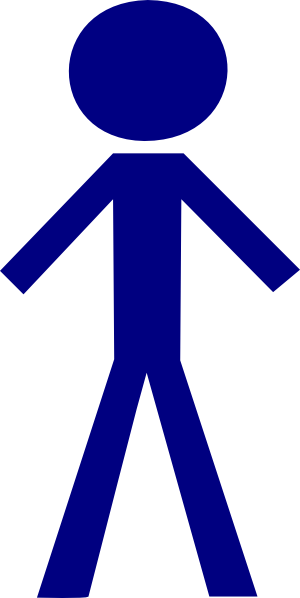
stick figureIn my stress management class, I sometimes use an activity from a text by Olpin and Hesson to assess balance in the different dimensions. Students get index cards and are asked to draw pictures of their bodies. The head represents the intellectual dimension; the trunk is the spiritual dimension; the arms are social and emotional, respectively; the legs are physical and occupational. If they feel balanced and healthy in a dimension, that body part is drawn so that it is in proportion to the rest of the body. If they feel that they overdo in some dimension, that body part will be outsize. And if there is an aspect of health that is lacking, the body part will look small compared to the rest.

If you do this exercise, are you wobbling from the imbalance? Is one leg shorter than the other? Is your head too big from overthinking everything? Let that be your guide to better new year’s resolutions. Sometimes making a change that no one else can immediately see is the missing piece. As Plutarch said, “What we achieve inwardly will change outer reality.”

Intentional living

Many yoga teachers suggest setting an intention at the beginning of a practice. It helps ground you in the moment and keeps you focused on why you are there. But an intention is not the same thing as a goal. Philip Merrill wrote about the difference in Yoga Journal: “It is not oriented toward a future outcome. Instead, it is a path or practice that is focused on how you are “being” in the present moment…You set your intentions based on understanding what matters most to you and make a commitment to align your worldly actions with your inner values.”

Life has been busy and stressful for me lately. Luckily, most of the stress is the good kind: getting ready for an upcoming vacation, planning a move. But as much as I want and look forward to those events, they have upended my life a bit, and made me anxious at times. So two weeks ago I began to set intentions as I woke up each morning. Working with an intention has helped keep the stress at bay and provide clarity about what is important.

Some of my daily intentions have been:

Joy. Waking in the morning and setting a simple intention of being joyful that day has been very powerful for me. So many times our days are spent dealing with problems and mistakes, and things that go wrong. We lose the feeling of innate joy that we are born with. Setting an intention of joy helps me laugh with people, find humor in bad situations, and stay focused on the overall happiness of my life even on a bad day.

Organization. While this sounds more like a goal than an intention, my purpose was very immediate on the day I woke and this word came to mind. I think at that moment it was about having an organized mind as much as an organized life; about acting in an organized way rather than jumping from task to task, and worry to worry.

Equanimity. Like organization, the intention of equanimity is about how I react to what’s going on in my life. It’s easy when we’re under stress to overreact, to catastrophize, to overlook the solutions or silver linings. Setting an intention to foster equanimity in my life helps me recognize that while I cannot control what happens, I can control how I react to what happens. It’s my choice of reaction that will lead to either suffering or happiness.

Kindness. It seems to me that kindness is deeply connected to mindfulness. It’s hard to act kindly without being present to what is happening around me and noticing what others are experiencing. Practicing kindness and compassion gets us out of the mind and into the heart. We forget our own problems for a while to focus on someone else. It’s a win-win for all.

Setting an intention for each day helps guide my actions. The Chopra Center quotes from the Hindu Upanishads to explain the connection between intentions and actions:

“You are what your deepest desire is.
As your desire is, so is your intention. 
As your intention is, so is your will.
As your will is, so is your deed.
As your deed is, so is your destiny.”IMG_0648

When we set intentions, we direct our will in such a way that all our actions take the course we have chosen. If my intention is kindness, and I choose to act kindly, then I have set myself on that path for the day. It becomes my destiny.

Winston Churchill said that, “It is a mistake to look too far ahead. Only one link of the chain of destiny can be handled at a time.” In that sense, setting a new intention each day keeps us present-focused, touching just the one link that will lead to the next.

People on the margins

Another mass shooting, this time in my home, Washington DC., has generated another round of shock, sorrow and seeking of answers. The issues are complex, and we will never know what was in the mind of a shooter who is now dead. But one aspect to consider is the problem of people who are socially isolated.

I’ve written in this space before about the work of Nicholas Christakis and others, who analyze social networks and the interconnections of people to see what influence we have on  each other. They have come up with some surprising findings about just how much we can impact other people in our network, whether we know them personally or not.Hand Reaching

Today, Nicholas and Erika Christakis have a thoughtful op-Ed in The Washington Post about the position of the loners on the periphery of our social networks, and how the loneliness and/or isolation of those people can have a negative effect on all of us, whether they turn to violence or not. Read it, and reach out.


Time flies, but it’s a lovely ride

Every time I have to wash and dry my hair, I think, “This again, already?” Each week when we put out the trash, I ask, “How can it be Friday again, so soon?” Paying the phone bill always makes me think, “How can a month have passed so quickly?” And whenever I celebrate a birthday, I wonder, “Where did the year go?”

Mundane tasks and rituals can be comforting because they provide order to our days and a sense that some things do not change, but they can also be disturbing because they remind us that life seems to be inexorably speeding past, with nothing to slow it down. The fear that time is slipping away, combined with the tediousness of some of our days is enough to bring anyone down.

But, as James Taylor reminds us:

“The secret of life is enjoying the passage of time

Any fool can do it

There ain’t nothing to it….

It’s just a lovely ride.”

Maybe the secret to enjoying the passage of time is to bring more mindfulness to the chores and more awareness to the celebrations. Can I up my level of engagement? Paying closer attention might imbue activities with more of the pleasure that James Taylor sings about so beautifully.

For instance, my first act upon waking is to start making coffee. But I usually do it by rote, not stopping to appreciate the smell of the coffee or the clarity of the water going into the pot. Though my attention snaps back when I take my first sip, my challenge is to bring awareness to the entire process. “I have measured out my life with coffee spoons,” wrote T.S. Eliot. If this is literally true of my life, shouldn’t I at least smell the coffee?

Jon Kabat-Zinn says that, “If we are to grasp the reality of our life while we have it, we will need to wake up to our moments. Otherwise, whole days, even a whole life, could slip past unnoticed.” In his book, Wherever You Go, There You Are, he has a wonderful entry called “Cleaning the stove while listening to Bobby McFerrin,” about using the process of cleaning the stove as a mindfulness practice, and the accompanying music as a way to engage the whole body in the task. It is a good lesson for me to remember when I reluctantly approach the job of drying my hair – can I engage both my mind and body while doing it, can I be more fully aware of the transition from wet to dry?

So maybe you’re saying “Sure, I zone out when I’m doing boring jobs, but I always pay attention when it’s something important like lunch with my mom, or playing a game with my kids.” Really? Kabat-Zinn suggests that one way to wake up “is to look at other people and ask yourself if you are really seeing them or just your thoughts about them. Sometimes our thoughts act like dream glasses…Without knowing it, we are coloring everything, putting our spin on it all.” Am I fully IMG2present at the birthday party, soaking it in with all my senses, or just going through the motions of enjoyment while planning the story I will tell about it later?

As I write this, it strikes me that everyday mindfulness can’t help but be connected to a sense of gratitude. How can I smell the coffee beans or acknowledge the clean water that goes into making the coffee without being grateful that I have both those things available to me? How can I pay my bills every month without gratitude that I have the money to pay them? How can I observe my birthday, and those of others, without giving thanks that we’re all here together to celebrate? Yes, time flies, but the ride is lovely even when it’s fast.