What it means to be happy humans

Today I attended a discussion on the question, “Are we losing our humanity?” It was a wide-ranging conversation on what it means to be human, how the study of humanities serves us, and what it means to put the humanities into practice in daily life.

One of the many topics that came up was reading, and the importance of reading in helping us develop as human beings. One of the panelists commented that “reading is the vehicle for getting us into narrative,” and that narratives (stories) teach us about human behavior, which can be the basis for discussions about society.

This reminded me of something that my children’s elementary school principal used to say: “Reading is the way in, writing is the way out.” Although she never specified in and out of what, I have some ideas on it in the context of what I heard today: Reading is the way in to your mind, to your inner self, to a deeper understanding of life. Writing (and other forms of expression, especially speaking) is the way out to the world, out to society, out of yourself and into your community.

So to “do” humanities involves engagement in the world. But that’s another area that troubled some of today’s panelists – what is true engagement, true connection, in today’s world? Technology allows us to “talk” all the time, but does it help us listen, truly listen, to others? Certainly we’ve seen that the decline of listening has made us less tolerant of others’ opinions, and less likely to change our own.

Part of that issue is the shrinking of people’s attention spans. We communicate in ever more truncated “language”, we engage in shorter and shorter bursts of activity, and our brains are changing accordingly. Many of us would be hard-pressed to sit and listen to someone for any length of time. In order to be fully engaged as citizens of the world and members of our communities do we need to reverse that trend? Should we be re-training our brains to be able to pay attention and focus for longer periods? There was talk today of the “slow reading” movement – literally an attempt to get people to “move away from the computer” for a while and sit with a book, reading slowly and carefully, even re-reading favorite texts.

Modern life has been made easier by technology and by many of the societal changes that have occurred; but I don’t think that people are really much happier than they were two or three generations ago. Martin Seligman and others who study happiness have developed a three-part model of what happiness is. It includes positive emotion (the kind that comes from having pleasurable experiences), engagement (being in the “flow”, fully absorbed by some activity), and meaning. Tweeting and texting and multi-tasking might provide moments of pleasure, but I doubt that they can generate that feeling of flow that comes with full engagement, let alone supply meaning to our lives.

Engagement and meaning are more likely to be found in reading a book that touches something in your soul; listening to music that moves you; seeing a piece of art or a play that provokes ideas or controversy; writing a letter or a journal; or learning something new. The ways that we assimilate those experiences and make them a part of us opens the door for a deeper connection with others and something larger than ourselves. That’s what makes us happy.

So maybe the question is, are the humanities the key to more happiness in life?

Looking in the mirror

“What did I receive today? What did I give today? What troubles did I cause others today?” These are the questions that form the core of the Japanese meditation practice called Naikan. It is not about keeping score; rather, it is a way of putting life in perspective and acknowledging our interdependence.

The word “Naikan” can be translated as “inside looking”. The practice was developed by Yoshimoto Ishin in Japan as an accessible method of structured self-reflection. In the U.S., the ToDo Institute offers programs in Naikan and other methods of purposeful living. They refer to the practice of Naikan as being like a “shift from a zoom lens to a wide-angle lens”.

So what did I receive today?

  • A good cup of coffee made for me by my husband
  • An invitation from my friend for dinner
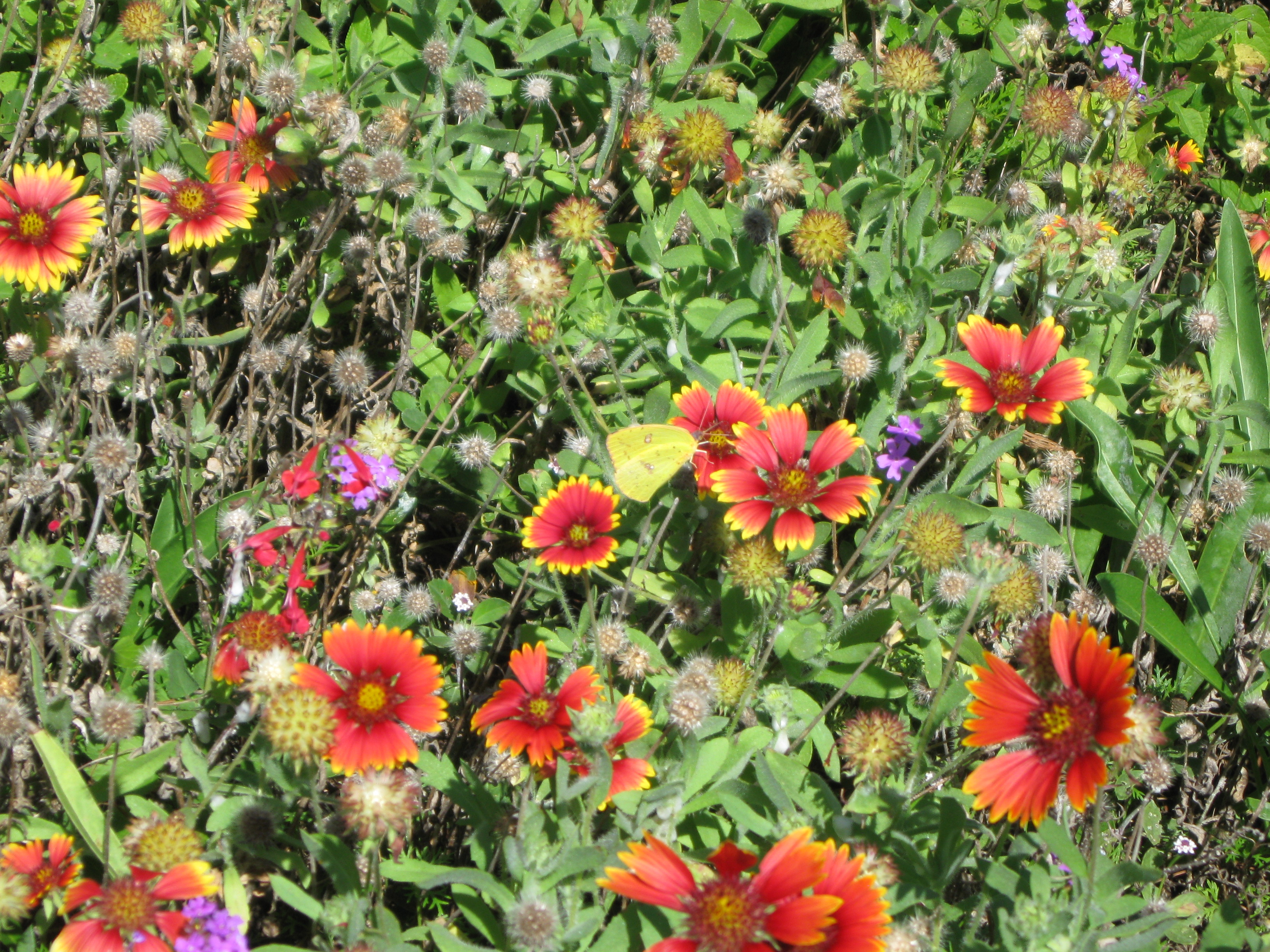
  • Pleasure from the butterflies attracted to our yard by the bush my husband planted
  • I wore a robe that was given to me by my mother
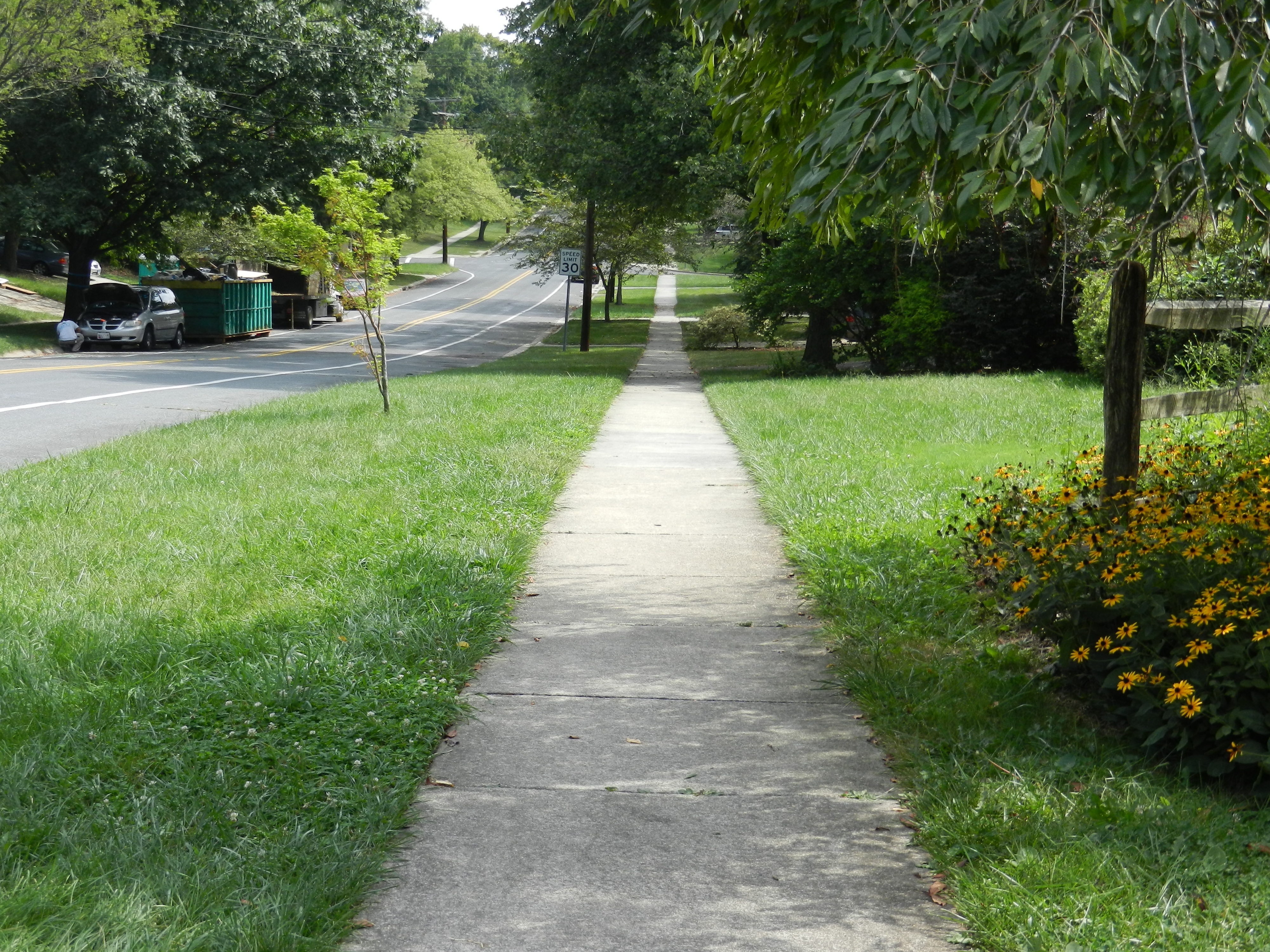
  • A walk on safe sidewalks and streets in my neighborhood built by my county government

What did I give today?

  • I bought groceries and made dinner for my family
  • I invited my neighbor to walk with me
  • I listened to the chatty person who kept me from my work
  • I collected things I no longer need so I can give them to charity

What troubles did I cause others today?

  • I kept the light on when my husband was trying to sleep
  • I hurried my son when he was talking to me so that I could read the newspaper
  • I was impatient with people in the store parking lot

Practicing Naikan reflection can help alleviate stress too. By stopping to appreciate the things other people do for us, we acknowledge that they have a choice, and we can’t just expect that they will do what we want. That helps us let go of rigid ideas of the way things are “supposed” to be. At the same time, by reflecting on the trouble we might be causing others, we become aware of the ripple effect of our actions and the possibility that they might be the source of some of the conflict in our lives.

Asking the questions can be revealing. Did my impatience impact how someone else’s day went? Am I failing to appreciate someone who is doing a lot for me? What would others say that I gave them?

Taking the time to examine my day, even down to the tiniest interactions, takes me out of the “I’m the center of the universe” mindset and reminds me that every day I depend on others to do their jobs, to make me smile and to challenge me to be my best self. President Obama’s recent comment, “You didn’t build that,” was taken out of context and criticized by many of his opponents. But what I think he meant to say was, “You didn’t build that alone.” Our success, good fortune, and wellbeing are not just a result of our own choices, actions and temperament; they are built on the cumulative choices and actions of people who came before us and who work and live alongside us.

As Albert Schweitzer once said, “Just as the wave cannot exist for itself, but is ever a part of the heaving surface of the ocean, so must I never live my life for itself, but always in the experience which is going on around me.”

Be kind

“Be kind, for everyone you know is fighting a harder battle,” says the Plato quote that is on the plate displayed in my kitchen. “Be kind…be kind…be kind…” Why is it so hard to keep that mantra in my head?

For instance, I’m always baffled by how quickly after finishing a yoga class I can sometimes be not nice to someone! Whether it’s swearing at another driver, or snapping at a store clerk, it seems that my mellow mood evaporates as soon as I walk out the door. Why is that?

Like compassion, kindness is easier when the recipient is someone we love, or someone vulnerable, or someone clearly suffering through no fault of his own. It is much more difficult to practice when the other person is a stranger, or someone unlikeable, or someone who has clearly done something wrong. Being kind in that situation requires a degree of mindfulness and intention that needs to be cultivated purposefully in most of us.

Emotions like anger or impatience are always preceded by a thought, if only for a split second. That’s the moment when we have a choice of how to respond to a situation. Too often, we get trapped by our notions of how things should be, and our “choice” of response is harsh and unkind. Strangely, though, we don’t usually feel better after yelling at someone, but we do have feelings of well-being after acting kindly.

Olpin and Hesson have developed a framework of “levels of responding.” At one end of the spectrum are attachment, rightness, judgment, blaming, resistance and complaining – responses that are usually not effective and result in negative emotions. At the other end are observation (noticing without judgment), discovery (seeking to learn and understand), acceptance and gratitude – responses that are more effective and result in positive emotions. Studies conducted by Sonja Lyubomirsky  and others also show that people who practiced a variety of random acts of kindness experienced an increase in happiness.

It’s so easy to make every situation personal. Why did she do that to me? Why did that person cut me off? Why is he so mean to me? It might not have anything to do with me. It might be accidental, it might be that the person is having a bad day; it might be that the person is in pain. When we stop judging, stop personalizing, and start trying to understand, it becomes a lot easier to respond with kindness, or at least with acceptance.

Kahlil Gibran wrote, “I have learned silence from the talkative, toleration from the intolerant, and kindness from the unkind; yet strange, I am ungrateful to those teachers.” Plato’s reminder in my kitchen makes me realize that kindness is not something to master, but something to practice. Luckily, I meet someone every day who gives me the chance to do just that.

Something to teach, something to learn

Today I learned that my new yoga teacher is about to be a high school senior. I knew she was young, but not that young. She had just led us through a vinyasa flow class that was challenging, yet gentle; energetic, yet calming. Everyone thought it was great.

I am amazed by the grace and composure of this 17-year-old. When I think back to myself at that age, I can’t imagine even doing what she does, let alone doing it so well.

What makes a good teacher? Passion, confidence, knowledge? Along with those attributes, I believe that a good teacher cares deeply about her students, demonstrates it, and has the wisdom to know that there is as much to learn from them as there is to teach to them.

We benefit most as students when we let go of any expectations we have about what our teacher should be. Age, sex and size don’t define a talented yoga teacher, just as degrees and credentials don’t define talent in a college professor. Losing the words “should”, “ought”, and “must” from our vocabulary opens the door to invaluable experiences, and prevents a lot of the stress that comes from the belief that situations have to evolve in a certain way. Opening that door prepares us to engage, learn and make the most of what life, and our teachers, offer.

Certainly I used to be more rigid than I am today. From my children, I learned to be patient and adaptable. From my older relatives, I learned about dignity. From my friends, I learned to be compassionate and understanding. From my neighbors, I learned about community. From difficult people, I learned to forgive and let go.

Perhaps the most self-discovery comes when the lines between teacher and student blur, and we realize that there is something to be learned from everyone we meet. Every interaction is an opportunity to uncover something we already knew, but weren’t seeing. I only hope that I am able to touch other people the way my new yoga teacher touches me.

In the zone

Comfort zone, time zone, twilight zone, euro zone, green zone, in the zone? As we traverse in and out of various kinds of zones, how can we keep as balanced and true to ourselves as possible?

I just came back from a trip to three different countries in 11 days. While this trip sets no kind of record for whirlwind travel, it still demanded an expenditure of energy in both mind and body to find some kind of equilibrium each day. Stepping into another country takes me to the borders of my comfort zone, at least at first. Then I add crossing time zones, and life definitely takes on a twilight zone feel!

While the body can be helped by following good travel advice like refraining from caffeine and alcohol, drinking plenty of water, and exposing oneself to sunlight every day, how do we handle the mental stress?

I love having new experiences, seeing unfamiliar places, learning new things – but such growth doesn’t happen in my comfort zone. So I had to think about how best to navigate the challenges of meeting a lot of new people, learning my way around strange cities and communicating in places where I don’t speak the language.

On my trip, I happened to be reading Search Inside Yourself, a new book by Chade-Meng Tan about the mindfulness-based emotional intelligence curriculum he started at Google. In the book, Meng describes the emotional competencies that (according to Daniel Goleman) make up self-awareness: emotional awareness, accurate self-assessment and self-confidence.

Meng, who describes himself as a shy person, discussed how he prepared for a speech to a large audience by using these competencies of self-awareness. He made his ego “small enough that my ‘self’ did not matter,” and big enough that he “felt perfectly comfortable speaking alongside” the luminaries at the event. He also kept in mind his strengths and limitations so that he could focus “on adding value where [he] could contribute most.”

I realized that by bringing mindfulness and self-awareness to my experiences on my trip, I was better able to deal with the challenges and turn them into positive events. I’m not the bravest or most out-going person in the world, but by staying present and paying attention to people and situations, I was able to increase my self-confidence and to use my strengths to my advantage. For instance, as a spouse at a dinner with people in an industry in which I do not work, sometimes I might feel inadequate or not “high-powered” enough. But by focusing on my strengths in my own field of stress management, and being mindfully engaged with each person I met, I found that I had plenty to contribute to conversations.

In a similar way, as I navigated streets and neighborhoods, I relied on my strong sense of direction, my curiosity and my desire to see everything to give me the confidence to explore on my own. But I tried to stay emotionally aware so that I would know when I needed a break in the “comfort” zone of my hotel room.

The British writer Lawrence Durrell once said, “Travel can be one of the most rewarding forms of introspection.” In that spirit, I’m still tapping into Search Inside Yourself at home now. I plan to use some of the book’s tools, such as journaling and body scanning, to build even greater self-awareness. After all, we never know when the next trip outside our comfort zone will happen.

Words: Handle with care

Wandering around the Library of Congress last week, my eyes gravitated to a quote high on the wall. It said, “Words are also actions, and actions are a kind of words.”   At the time, I didn’t know who had said it (Ralph Waldo Emerson), but it stuck in my head for days.

As I was growing up, I often heard adults say, “Actions speak louder than words.” Emerson seems to be saying that words and actions are equal, that while our actions speak for us, our words have the capacity to sting or caress as surely as if we were using our hands.

This couldn’t be truer than it is today. In this age of digital communication, people tend to throw words around carelessly. With email and texting, we don’t have to worry about wasting paper or ink; we don’t have to take the time to put a letter in an envelope, stamp it and mail it in order to send someone a message. So we don’t think as carefully about the things we say. Words have become a cheap commodity, often chosen without a lot of thought as to their meaning or effect.

If we stop and think about how much of our stress is coming from interactions with other people, we can see that a lot of it is a result of the blunt force of these mindless communications. Emails and texts deprive us of tone of voice, facial expression and body language, so their messages are often misinterpreted. Sometimes offense is taken when none was intended. Speaking face to face is not always better; often people speak at each other rather than to each other. We wait for our turn to speak, rather than listening so that we can respond with understanding.

Headlines are made when celebrities are forced to close their Twitter accounts or politicians are driven from office due to ill-advised words. For the rest of us, the results of miscommunication can be just as painful and devastating: someone doesn’t speak to you anymore, relationships are strained, or business is lost.

How can we practice communicating more clearly, more carefully and more compassionately?

  • Do take the time to be sure that saying something serves a useful purpose. Soren Gordhamer makes the point that sometimes our comments (on-line or in person) are just a form of one-upmanship: “When we are caught in what we may call the judging mind, we continually look for people and actions to criticize. Instead of a critique that seeks to help, we do so to build up our own sense of superiority.”
  • Do pay attention to what others are saying non-verbally, with eye contact, body language and even silences.
  • Do listen reflectively to other people. Repeat or rephrase what they have said to you to be sure you understand it.
  • Don’t communicate difficult messages (like breaking up with someone) via email or text. Give the other person the respect of a face-to-face meeting.
  • Don’t hit the “send” button so quickly, especially if your message is complicated or unwelcome. Wait 10 minutes and read it again to be sure it conveys what you really want the other person to hear.

How would it feel to be on the receiving end of your words? Should that be our standard for better communication? As the Buddha said, “Better than a thousand hollow words, is one word that brings peace.”


Share the love – far and wide

[Updated from the original 2012 post].

“Shower the People” is a James Taylor song that one of my yoga teachers used to play in class. Every time I hear it, I’m moved by its simple message – shower the people you love with love. The song’s refrain is perfect for Valentine’s Day.

“Just shower the people you love with love”

This imagery is so beautiful. Imagine love falling all over you like a warm rain shower, soaking it up, taking in as much as you need.

“Show them the way that you feel”

Sometimes we hide our feelings because we are afraid to put them into words; or forget to express our feelings when we get comfortable in relationships. Don’t be afraid to show how much someone means to you.

“Things are gonna work out fine if you only will”

What is there to lose? Probably not as much as there is to gain. Someone might be wishing to hear from you, so reach out.

“Shower the people you love with love”

JT includes father and mother, sister and brother, here. Love is a big umbrella that covers all those family and friends you care about. Let them hear it from you.Lake Tahoe, Eagle Falls (35)

“Show them the way that you feel”

Some people need to hear the words, “I love you”; others crave the gestures – hugs, kisses, attention. What does your loved one need in order to feel cared for?

“Things are gonna be much better if you only will”

The beautiful thing about love is that it never runs out. The more you give to other people, the more you will get in return. So let’s spread it beyond the people already in our orbits – and shower everyone you meet with love today.

Happy Valentine’s Day!

You look, but do you see?

Do you ever feel as if you must be invisible? You know the feeling you get when you sit down in a restaurant, and then four different servers walk past you five different times without acknowledging you’re there. Or when you’re walking down the street and you see someone approaching whom you’ve met before – and then they don’t meet your eye and continue walking past you.

Feeling ignored or left out is an awful feeling. Even if we have a strong sense of self, we start to wonder what’s wrong with us. It doesn’t matter if we’re slighted by a friend or snubbed by a total stranger – it still hurts.

Last week I read about a study that demonstrated just how much we look to other people, even strangers, for acceptance. Researchers at Purdue University randomly selected people walking on the campus. A research assistant walked by each of them, and did one of three things: made eye contact, made eye contact and smiled, or just looked in their general direction without eye contact. Each person was then immediately asked by another researcher how connected they felt to other people. Those who did not get any eye contact felt more disconnected from others than did either group who got eye contact.

The reality is that no one wants to feel excluded. We all have a need to be part of a community of some kind. A stranger not making eye contact may only lead to a momentary feeling of disconnection, but what about situations where it happens over and over again with groups we want to be a part of?

It turns out that for children who are left out, that feeling can lead to them being less active. In a study by Jacob Barkley of Kent State University, children played a virtual ball game with each other. Some children got the ball fairly often and others very few times. Then they all went to play in a real gym. The children who had been excluded in the online game ended up being less physically active in the gym. They tended to choose sedentary activities such as drawing or reading alone more of the time.

Previous studies have already shown that being ostracized leads people to eat more. We also know that people who are lonely tend to have weaker immune systems. Now we see that children won’t be as active if they feel excluded. Clearly as humans we are healthiest when we are part of a group, and feel supported and loved by that group.

So why do we ignore each other? Does the message from childhood, “Don’t talk to strangers!” sink in so deeply that we are unable to reach out to others? Are we too afraid of rejection to take a risk?

Flip it around and think about how good it feels when you’re out somewhere, and someone admires what you are wearing. Or imagine that you’re at a social event where you don’t know anyone, and someone comes up and engages you in conversation – don’t you breathe a sigh of relief that you’re no longer standing there looking awkward? Doesn’t it feel good when you walk in a room, and someone greets you by name?

Everyone wants to be noticed, to be appreciated, even by strangers. We all need someone who says, either with words or actions, “I see you.” Can you make an effort to be that person?  As William Butler Yeats once said, “There are no strangers here; only friends you haven’t yet met.”

What do you have to say?

There are times when writing is a struggle as I search for ideas and the right words to convey them.  Other times, when I have a compelling story I want to tell, the words just flow and the entire process seems so easy. Having a chance to tell our stories can be incredibly cathartic, even if we don’t share them with anyone else.

I thought of this when I read a story by Chris Richards in the Washington Post this week about a program to help veterans of the wars in Iraq and Afghanistan write songs. The veterans work with professional songwriters in a workshop setting. They tell their stories, pulling together images and memories of their experiences, and the songwriters create a melody and work it into a song. The veterans find the experience to be very healing, giving them an outlet for expression that is hard to find anywhere else.

About 20 years ago, the writer Maxine Hong Kingston started a similar project in California for Vietnam War veterans (see her book, The Fifth Book of Peace). Theirs was strictly a writing workshop, not music, but the purpose was the same – giving the vets an opportunity to tell their stories, in a safe place, without judgment. Kingston began the process as a way of working out a loss of her own, and together with the veterans, found some peace along the way.

Some people keep diaries throughout their lives. Many of us had them as teenagers – an outlet for our angst, emotional ups and downs, and rants against our parents. But a journal devoted to a specific topic or purpose can be a helpful tool in dealing with stress, whether it’s everyday stress or the more intense stress caused by wartime experiences.

James Pennebaker, a professor at the University of Texas, is a leading researcher and proponent of the idea of “writing to heal”. He believes that expressing our emotions makes us healthier and helps prevent many of the chronic diseases that befall so many people in modern society. For a lot of people, writing is the best (maybe the only) way that they can do that. Dr. Pennebaker has written a book about this process (Writing to Heal: A guided journal for recovering from trauma and emotional upheaval) and conducts workshops (one will be held at the Duke Integrative Medicine Center in March).

Gratitude journals are another, somewhat more indirect, way to help relieve stress. I’ve written before about the research showing that people who regularly remind themselves of what they are grateful for tend to be more satisfied with their lives and to experience less stress. Gratitude journals have also been used with veterans and others who experience Post-traumatic Stress Disorder, with promising results.

Whether or not you have had a traumatic experience, writing can still benefit you. In this age of truncated communications like email, Twitter and Facebook, it can be quite satisfying to sit down and express your thoughts and feelings without anyone cutting you off or limiting your characters. A journal can be a place to try out ideas, explore emotions and practice that difficult conversation you need to have with someone. Often, writing can be as mood-lightening as talking with a close friend. I suspect this is the reason why the memoir has become such a popular genre in recent years. Everyone has a story to tell, and wants to tell it if given an opportunity. But we are not very good at remembering emotions accurately after time has gone by, so it’s important to write down how you feel now. Start telling your story  – your audience can be as wide as the Internet or as small as a little notebook sitting by your bed.

Time Zapper

When people are asked about stressors in their lives, one of the most common answers is not having enough time. Yet, we don’t always acknowledge that we can be our own worst enemies when it comes to creating time crunches for ourselves.

Sometimes time pressures result from genuinely having too much to do. But often they come from either inability to set boundaries for our time, or frequently, from our own unproductive work habits. Probably nothing has had a bigger effect on procrastination and low productivity at work than email, whether it’s our habit of reflexively checking it every five minutes or our expectation that it will be read immediately.

Although we see commercials on TV of people seamlessly and instantaneously completing international business deals with a click of the smart phone, in reality many business and personal transactions take place only after a long string of emails back and forth. The question is, is that the best way to get things done?

Chris Anderson, curator of the TED conference, addressed this topic in last Sunday’s Washington Post. He believes that email volume is getting out of hand in part because email is “easier to create than to respond to”. Someone sends you an email, crosses that off their to-do list, and leaves you with the harder job of formulating an answer. Worst, Anderson says, are the emails with open-ended questions, such as “What are your thoughts?”

Because people have come to expect rapid responses to emails, the recipient is then stuck with deciding whether to drop other (probably more important) work to come up with an adequate answer to that open-ended question, or to leave it in the inbox for a while and let the email pile up.

As long as 20 years ago, some early tech pioneers had already given up email and gone back to using the telephone as a primary tool of communication. Sherry Turkle of MIT may have coined the term “email bankruptcy” after her research showed that people wanted to wipe out all the email in their inboxes. Since then, there have been regular news stories about people who have done just that – deleted all their unanswered emails, and started over with a clean slate.

Stephen Covey, in his books on time management, recommends dividing tasks into a matrix:

  1. Urgent & Important;
  2. Important but Not Urgent;
  3. Urgent but Not Important; and
  4. Not Urgent or Important.

He believes that most time should be spent working in quadrant 2 (important, but not urgent), doing things like planning, relationship building and personal development. The problem might be when you think you are relationship building by sending someone an email, when you’re actually creating a quadrant 3 (urgent, but not important) task for them by expecting them to respond!

With that in mind, Anderson and others at TED have come up with the Email Charter, which is basically a list of principles to abide by when sending email. All the principles are designed to “encourage senders to reduce the time, effort and stress required of responders.” They include points such as “no open-ended questions” and use of the acronym, “NNTR”, which stands for “No need to respond”.

Some other things we might ask ourselves:

  • Is email the best form of communication for this message? Will I be better understood if I call or talk face to face instead?
  • How often do I really need to check my emails? Would once an hour be appropriate? How about every two hours, or three times a day? Figure out what is best for you and try to make it a habit.
  • If you cannot resist checking the email, consider downloading software that will block it for you. Programs such as SelfControl can block email servers and Facebook for a set amount of time, and not let you use them until the timer runs out.
  • Can you declare an email vacation once a week, or once a month? Plan a day without checking or responding to emails. You’d be surprised how much time you have for things like family, friends, reading a book or going for a walk.

Ultimately, we need to figure out if the things that are least important in our lives are getting the most attention. Sherry Turkle has said, “Sometimes we’re too busy communicating to listen to each other.” Can we break the cycle?