Meet the beautiful people

So I’ll confess – I’m kind of addicted to Doctor Radio on Sirius XM. The satellite radio show from the NYU medical center features programs dedicated to different medical specialties, with opportunities for calling in and talking to medical experts. But there are two programs that I don’t listen to – the plastic surgery show, and often the dermatology show – because they make me start obsessing too much about my appearance.

Screenshot 2015-11-19Recently, however, I did listen to a dermatology program because the topic was about beauty and our perception of it. One of the guests had done research using before and after photos of facial rejuvenation patients, to see if people rated the faces differently on a list of perceived personality traits. Basically, the question was, what do others think your face says about you? That discussion led to talk of other research showing that people who exhibit positive traits, such as honesty and helpfulness, are perceived as better looking. People who are smiling are perceived as more attractive than people who have neutral expressions.

It’s not news that our expressions and behaviors affect people’s perceptions and judgments. But have you thought about them as what makes you beautiful to someone else? One of the themes of the show was about investment in beauty, not by having plastic surgery or buying cosmetics, but by thinking about what’s shining out of us. Do you smile? Are you kind? Do you look people in the eye? Are you healthy and rested and compassionate?

After listening to the program, I started thinking about some of the truly beautiful people I know, and what makes them beautiful. There’s my sister-in-law, who is unfailingly encouraging and hopeful, with a wonderful, infectious laugh. There’s the friend I met at yoga class a few years ago, who chatted with and befriended literally every person who walked through the doors of the yoga studio. There’s my son’s childhood friend, who never wavered from being kind, even in adolescence when most kids are jerks at least some of the time. There’s my sister’s husband, who will help anyone with anything, at any time; whenever he comes to visit, he fixes something in my house or brings me something he thinks I need. There’s my painter, who had a casual conversation with my neighbor months ago about something that wasn’t working in her apartment; last week, when he came back, he brought her something to fix it.

These are just a few examples of people who are beautiful because of the positive traits they exhibit on a daily basis: kindness, friendliness, helpfulness, integrity and honesty.

A few weeks ago, I met a woman while I was working who was very beautiful, physically. She had lovely skin, beautiful hair and stylish clothes; I couldn’t help admiring her. But then I heard her ask a co-worker to do something that clearly wasn’t the co-worker’s job. The “beautiful” Spain-Barcelona (9)woman was exercising the power she had due to her position in the office hierarchy. My admiration for her was immediately diminished because of her behavior.

My dictionary defines beauty as “The quality that gives pleasure to the mind or senses and is associated with such properties as harmony of form or color, excellence of artistry, truthfulness, and originality.” While people who possess physical beauty may give pleasure to the senses, the people I know with true beauty give pleasure to my mind. They have a harmony of spirit, and values, that transcends anything on the exterior. People often talk of inner beauty, but I would argue that it can’t exist alone; anyone with inner beauty has a beautiful outer light that shines on everyone they meet.
Choosing between this and that

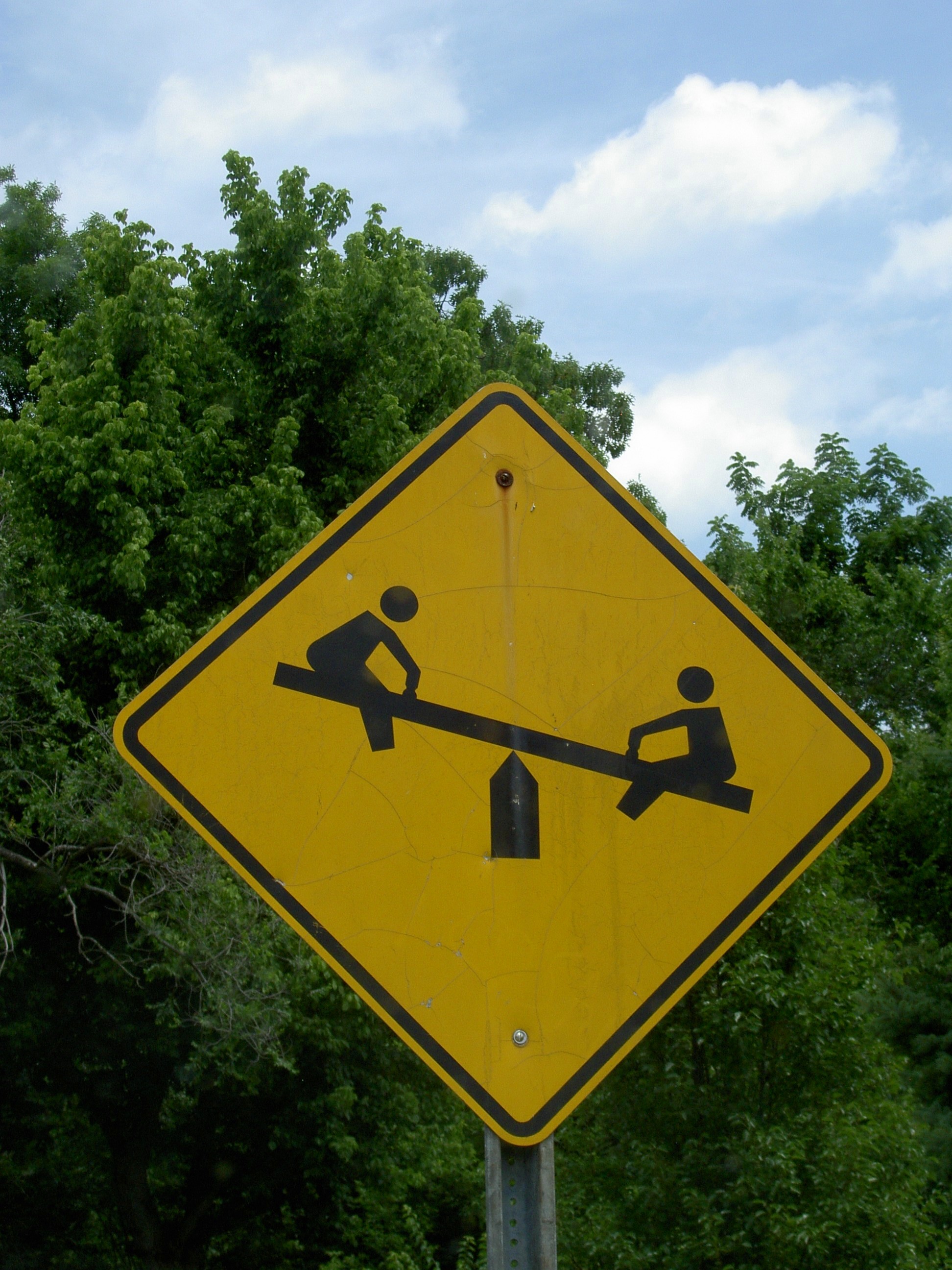
Did you ever balance on a see-saw when you were a child? There was always the challenge of working with the other person to find that perfect point where you were hovering in a horizontal line for a second or two, before one of you fell, a victim of weight and gravity.

The word seesaw may have come from the French words ci-ça, which mean this and that, or perhaps from the back and forth action of an actual saw. The imagery of the seesaw feels appropriate for a lot of the choices we face as we look for emotional balance, especially in how to respond to what life throws at us. We swing back and forth between options: On this side, we have pessimism; on that side, optimism. On this side, we have anger; on that side, equanimity. On this side, we have judgment and denial; on that side, acceptance. This, that, this, that.seesaw_balance

How do you choose the appropriate response in any given situation? Yesterday when I was talking about changing negative self-talk into positive self-talk to reduce stress, a listener challenged me on the concept of always looking for the silver lining. She was right to do so, because optimism isn’t always the correct response, especially if it keeps you from seeing a situation with clarity. There are certain instances where it’s better to be pessimistic because it keeps you cautious. For instance, you don’t want your airline pilot to be too much of an optimist!

Martin Seligman, in his book “Learned Optimism”, writes that optimism should be a flexible, situational choice. “You can choose to use optimism when you judge that less depression, more achievement, or better health is the issue. But you can also choose not to use it, when you judge that clear sight or owning up is called for.” He goes on to say that just because those of us who are not born optimists can learn how to be more optimistic, doesn’t mean that we lose our values or good judgment. It just means that we now have a tool we can choose to use when it is to our benefit.

Responses aren’t always either-or. If I choose not to respond in anger, that doesn’t mean I opt for complete passivity either. If we keep in mind the back and forth motion of a saw, we see there is a range of potential responses. We often find equilibrium in the middle, at the fulcrum point of the seesaw. The key is to give ourselves time to make the choice. It’s that pause, that “take-a-breath” moment that’s the hardest part for me. Instead of reacting with anger, can I ask a question that gives me a better understanding of the situation? If I discover something that I didn’t know, will that little bit of extra information keep me from making a snap judgment and help me respond thoughtfully instead of reacting harshly?

Learning to choose between responses takes time and practice. Herbert Benson and Eileen Stuart recommend this sequence:

  • Stop
  • Breathe: Release physical tension
  • Reflect: What are your automatic thoughts, irrational beliefs, or distorted thinking styles? Ask yourself these questions:
  • Is it really true?
  • Am I jumping to conclusions?
  • Is it to my advantage to think this way?
  • Am I catastrophizing?
  • Is there another way to look at the situation?
  • Can I handle it?

Thoughts, feelings and behaviors all influence each other, in a feedback loop. By questioning habitual thought patterns, we can subtly shift how we feel, and eventually, how we act. Think of it as the way you might shift weight on your end of the seesaw, to keep it balanced or to let it fall. It’s your choice.

Now what?

What do you with what you know, what you’ve learned, the gifts you have? Is having it all enough for you, or does meaning only accrue when you act on what you have? In “The Illuminations” by Andrew O’Hagan, one character says to another, “People who read books aren’t reading them properly if they stop with the books. You’ve got to go out eventually and test it all against reality.”

Several days ago, I went to a yoga workshop billed as “Yoga: The Advanced Practices”. Now that title might make you think that I’m someone who can do a headstand with ease, or twist my leg around neck, or any number of other challenging yoga postures, but nothing could be farther from the truth. And, in fact, the workshop’s “advanced practices” weren’t about asana (physical postures) at all. They were about the real “meat” of yoga — pranayama (breathwork) and meditation. We spent only about 40 minutes of the three hours doing asana.

Why do the other practices matter so much more? As our teacher, Greg, said, they provide the answer to the question, “Now what?” As in, “I’ve mastered a handstand. Now what?” Or, “I’ll never master a handstand. Now what?” Breath and meditation give you the space, the way, to take the yoga off the mat and into the world. As you grow in emotional awareness and focus, they help you be the person who can give back to the community, who can be the better spouse, the better friend, the better parent.

The very next day after the yoga workshop happened to be the Jewish holiday of Rosh Hashanah. As I was reading through the prayerbook, I came across this meditation: “Why be concerned with meaning? Why not be content with satisfaction of desires and needs? The vital drives of food, sex and power…are as characteristic of animals as they are of us. Being human is a characteristic of a being who faces the question: After satisfaction, what?

Now what?

The world we see reflects who we are. Sometimes we need to correct our course or re-affirm our best qualities and intentions so that they are manifested in that reflection. Any kind of meditation helps us do that, as does the meditative practice of affirmative writing, part of the “Writing to Heal” program. Affirmative writing can crystallize values and create a vision for one’s life; it helps us identify our gifts and be grateful for them; and it can be a guide to living a life where you flourish and grow.

So take paper and pen, find somewhere to sit quietly, and answer these questions in writing (resist the urge to self-edit):

  1. What are your gifts? You best qualities, what you offer to others?
  2. What gift do you feel is ready to emerge, evolve or resurface?
  3. How have you denied or hidden any gift in the past?
  4. How is your life and others impacted when you withhold your gift?
  5. How might your life and others be impacted if you offered your gift?
  6. What might living with this gift look like and feel like?
  7. What support from others do you need to develop your gift?
  8. What does your gift need from you?

Naming your gifts, and thinking about how others are impacted when you offer them, is a powerful way to answer the question, “Now what?” When I did this exercise, and I responded to question 6, how would living this gift look and feel, the words I wrote were, “spacious, exciting, vibrant.”

An authentic life is an examined life. Living with questions like these can sometimes make us uncomfortable. But eventually, if we want the answer to “now what?” we’ve got to go out and test the answers against reality.

How to forgive, even if you can’t forget

Is it possible to forgive and forget? While a few lucky people seem able to embrace the idea as part of their “live and let live” philosophy, most of us have a tendency to hold on to hurt. For us the question becomes how to transform the experience enough to allow forgiveness.

Forgiving and forgetting have been on my mind since reading two different books dealing with love and war. In “The Buried Giant” by Kazuo Ishiguro, the Saxons and the Britons have been at peace with each other since the time of King Arthur – but the price of the peace has been a near-total erasure of their memories of the past. A spell was cast upon them, so they live almost entirely in the present, with only occasional fragments of memory appearing out of the mist. They have blessedly forgotten the massacres of their families during the war, but they have also nearly forgotten that they had children at all. To awake “the buried giant” means that memory will be restored and people will renew their quest for revenge.

The second book dealing with forgiveness and memory was “Half of a Yellow Sun” by Chimamanda Ngozi Adichie. The story involves two sisters who have had a falling-out because of an infidelity, and are barely speaking to each other. But when the Biafran war breaks out, they are driven together for support amid the chaos, uncertainty and death around them. The wronged sister says to her sibling, “There are some things that are so unforgivable that they make other things easily forgivable.” The larger wrongs have helped her put her personal pain in perspective so that she can forgive her sister.

Psychologist Charlotte VanOyen Witvliet says that the act of forgiving doesn’t mean we literally forget what happened. Instead, “Forgiveness involves remembering graciously. The forgiver remembers the true though painful parts, but without the embellishment of angry adjectives and adverbs that stir up contempt.” Remembering graciously may mean re-telling the story of the painful event. If we strip the story of the angry words, what are we left with?

The message of “The Buried Giant” was that remembering graciously is impossible, that reconciliation is not an option, whereas “Half of a Yellow Sun” held it out as a possibility. In writing about reconciliation, Thich Nhat Hanh says that you must “begin to see that your enemy is suffering,” and while we sometimes “need indignation in order to act…the world does not lack people willing to throw themselves into action. What we need are people who are capable of loving…”IMG_2325

Forgiveness holds significant benefits for the person who extends it. When we let go of the angry narrative and negative emotions, blood pressure drops, the immune system gets a boost and we have fewer circulating stress hormones. Forgiveness heals us from the emotional pain that attaches itself to the constant replaying of a painful event. If you can stop the loop and retell the story, you don’t need to have your memory wiped clean in order to come to terms with the pain of the past. But that doesn’t mean forgiveness is easy either.

WebMD has some useful strategies for cultivating forgiveness, including practicing gratitude, using meditation and breathing to quell anger, and cognitive reframing (retelling the story). But they also make it clear that the first step in forgiveness is giving up the desire for revenge, and sometimes that is as far as someone can go. If one is able to move on from there, emotional forgiveness involves replacing emotions like anger, hatred, resentment and bitterness with empathy, compassion and love. Forgiveness becomes something that we have to commit to and maintain on a daily basis, much like sobriety.

Ultimately, emotional forgiveness means that you can begin to “see” the story of the person who hurt you. To do that it’s useful to remember one of my favorite quotes from Plato: “Be kind, for everyone you meet is fighting a harder battle.”

5 Books to Read This Summer

Nothing gave me so much contentment in childhood as curling up somewhere with a good book and losing myself for a while. And if one good book was a pleasure, then summer reading – book after book after book – was a feast.

In that spirit, I made a list of the best books I’ve read this past year – a feast of summer reading for you:

(In no particular order)

All the Light We Cannot See by Anthony Doerr – Will we ever run out of stories to tell about World War II? The sheer number of books and films in this genre speaks to the importance of telling a story from multiple perspectives, whether in fiction or real life. Doerr’s novel is a great addition to the shelf. Beginning in the 1930s and continuing to the present day, it tells the story, in parallel narratives, of a French girl and a German boy. Both of them damaged in some way, and struggling to survive the war, they touch, and even save, each other’s lives in improbable ways, over space and time. It is only rarely a happy read, but is amazingly touching, poignant and captivating.

The Good Lord Bird by James McBride – This piece of historical fiction by the author of The Color of Water is a new twist on the tale of abolitionist John Brown and his ill-fated raid on Harper’s Ferry. The fictional “Onion”, a boy Brown plucked from slavery, narrates the story many years later. Onion is at first a reluctant traveling companion to the God-fearing, Bible-preaching Brown, but he comes to love him, and his observations of the foolhardy, yet brave, abolitionist are sharp, yet funny and warm. It took me a while to get absorbed in this book, but I was glad I stuck with it.photo

Americanah by Chimamanda Ngozi Adichie — This best-selling novel is both a love story and an immigrant story. Nigerians Ifemulu and Obinze are soulmates, but after Ifemulu leaves for school in America, they are separated for years. Not able to join her, Obinze goes to England on a visitor’s visa and stays after it expires. Both of them struggle to adapt to the new cultures in which they find themselves; perhaps the best part of this book are Ifemulu’s observations on Americans and American life, as seen by an outsider. [The author also has an interesting TED talk about the danger of telling a story from only a single perspective.]

Close Your Eyes, Hold Hands by Chris Bohjalian – Bohjalian is the only male writer I know who can write believably in a woman’s voice. This time he does it from the perspective of a teenage girl, one who becomes a runaway after a devastating nuclear accident in which both her parents are implicated. We feel her struggles with whom to trust, what choices to make and how to come to terms with all she has lost. Bohjalian is not a “feel-good” writer – there is always loss in his novels – but he tells a compelling story.

Behind the Beautiful Forevers: Life, Death and Hope in a Mumbai Undercity by Katherine Boo – This is the non-fiction entry on my list, but it reads like a novel.  Boo takes us into life in a Mumbai slum situated right beside the international airport. Juxtaposing the clean and glittery approach to Mumbai that visitors see, with the grim and gritty life of those scratching out a living at its edge in Annawadi, she tells the stories of Abdul, Asha and other residents trying to get ahead, or at least get by. Winner of the National Book Award, this is a story told with great humanity even as it deals with seemingly hopeless situations.

The poet Kyle Dargan has said that, “..being a poet means I notice stuff for a living. To write is to first see or hear some element of the world and then attempt to render it with language.” The books on my list do indeed have poetry in them, and their writers are masters of noticing, rendering and presenting us with the gift of story.

Enjoy!

Tell me your story

Walking a mile in someone else’s shoes isn’t easy. A mile might seem awfully long if the shoes are too big, too small, not your style, or have holes in them. But the ability to slip into the shoes, the skin, or the story of another person is how we practice empathy and become better communicators.

In a program on clinical empathy at Duke University, oncologists are taught to “Never respond to a feeling with a fact.”  When people are in distress, their ability to listen (and hear what is being said) is compromised. They just want their emotions – fear, sadness, confusion, anger – to be acknowledged. Ideally, the person on the other side of the conversation is adept at recognizing emotions and responding appropriately.

Howard Wainer has written that, “It is absolutely crucial to try to determine what information the receiver needs to hear and not let that be overwhelmed by other things that you may want to tell her…the core of effective communication is empathy.” One Duke-trained doctor asks himself before such encounters, “What is needed here?” The answer is not always facts or solutions.

photoOn my computer monitor, I have a sticky note that says FAVE. It’s left over from a communication workshop I took. The acronym stands for “First Acknowledge, Validate, Empathize”. This is especially helpful to practice when you have a difficult or emotionally charged conversation to handle. Even if you don’t agree with someone, it’s important to listen first and acknowledge what you have heard by paraphrasing or repeating back the speaker’s words. Then validate that their feelings are grounded in a solid premise, that they are entitled to have them. Finally, empathize, let the person know that you can identify with those feelings, either because you have felt them yourself, or you imagine you could.

We all know how frustrating it can be to call a customer service number for product support. But even those interactions, where customers and agents inherently have conflicting needs, can often be improved by the use of empathy work. Researchers who studied employees at a telephone call center found that three types of skills – attentive, affective and cognitive – made the difference. The attentive skills were focused on active listening: repeating back, acknowledging, asking for more information and summarizing what was said. The affective skills dealt with being able to recognize customers’ feelings and identifying with them. The cognitive steps came last – taking the customer’s perspective, trying to provide help, and offering options. The most important part of the interaction was the attentive, being able to listen well enough to know what was needed. Sometimes people don’t want to hear, “I’m sorry”, they just want you to solve the problem. Other times, the apology is very much necessary. Attentiveness is key – “what is needed here?”IMG_2325

Have you ever heard, “You just don’t understand!” from someone you love? It hurts, because relationships matter and understanding is their foundation. Essentially, what each of us really wants is to have our story matter, to be heard, to be understood, to have someone else feel what we feel. Novelist Sue Monk Kidd has written, “Empathy is the most mysterious transaction that the human soul can have, and it’s accessible to all of us, but we have to give ourselves the opportunity to identify, to plunge ourselves in a story where we see the world from the bottom up or through another’s eyes or heart.”

Taking the plunge is the challenge for us. Diving into someone’s story, looking out through their eyes, walking in their shoes. Asking, “What is needed here?”

Stranger danger

Empathy – the ability to understand and share the feelings of someone else – doesn’t come naturally to everyone in every situation. While we might flinch if we see someone get slapped – our mirror neurons reacting as if we had been hit – that’s not the same as feeling what they feel. And it turns out that true empathy might even be repressed if the person who is affected is a stranger to us.

A new study out of McGill University demonstrates that the social stress of being around strangers restricts our ability to feel and express empathy for them. Participants were subjected to a painful experience (plunging their arms into ice water) alone, with a friend or with a stranger. The level of pain reported was the same when people were alone or with strangers, but increased when the experience was shared with a friend. Empathizing with the friend’s pain actually increased the amount of pain the participants felt, but they did not have the same reaction when the person across from them was a stranger.

We know that empathy has benefits for society. The Greater Good Science Center lists studies showing that people with empathy are more likely to help others and to be heroic; empathy reduces prejudice, racism and bullying; it increases intimacy in relationships; and it helps managers to foster happier workplaces.New York (2)

At Psychology Today, Guy Winch writes that to build empathy, we have to direct our mind “to a place it does not go of its own accord” —  the other person’s perspective. We have to mindfully “paint the landscape” of that person’s situation in detail, so that we can feel what it’s like to walk in their shoes, look through their eyes. That takes intention and plenty of practice.

The Dalai Lama has said, “On the basis of [shared humanity], you then can learn how to empathize with others beyond your boundaries.” In the McGill study, it took surprisingly little for participants to overcome the boundary of social stress. When the participants spent just 15 minutes playing a video game (Rock Band) together before the experiment, they were able to feel and express empathy for each other during the cold water plunge. Those 15 minutes of shared experience turned strangers into friends, or at least made them familiar enough to lower stress.

Diplomatic efforts and peace talks between countries and factions are often an effort to build familiarity and empathy between people. Sometimes they are successful, like the Camp David Accords, but often they are not. Maybe we need to start smaller and sooner to building familiarity, trust and empathy in order to avoid the kinds of conflict that are so prevalent in the world today.

Jeff Brantley has a practice called “Look deeply at another” that helps alleviate feelings of separation and isolation from others. It starts with mindful breathing, and then selecting an image of someone to focus on. The next steps are:

See the person as if for the first time. Drop all the old stories about him or her. Notice as many details as you can.

Imagine this person moving through the stages of life, as a child, adolescent, adult, in old age, and at death.

See in this person the same wishes and fears everyone has. See the desire for love, safety and peace.

End by releasing the image and noticing your own thoughts and feelings without judgment.IMG_2320

If we look for common values and recognize that most of us want the same basic things from life, we can strengthen our capacity for empathy. Even if we start with something as simple as playing a game together, or saying hello in an elevator, we’re on the right path. As Martin Luther King, Jr. said, “Faith is taking the first step even when you don’t see the whole staircase.”


No mud, no Christmas tree?

It’s the week before Christmas, and somehow it seems appropriate that I’m reading “No Mud, No Lotus” at the same time that I’m going around giving presentations to people on holiday stress management! In the book, Thich Nhat Hahn says that, “One of the most difficult things for us to accept is that there is no realm where there’s only happiness and there’s no suffering.” When it comes to holidays, sometimes we set our expectations for only one or the other, not realizing that happiness and suffering must co-exist.

IMG_1262Suffering can run the gamut from everyday stressors like traffic and annoying co-workers, to physical pain and poor health, to anxiety and depression, to the overwhelming grief that accompanies losing a loved one. But it is the “mud” of suffering that makes happiness real and meaningful. At the holidays, if we “get stuck in the mud of life”, wallowing in our pain, we risk turning into Scrooges. Yet if we are too starry-eyed about the ideal holiday, we feel slammed when something turns out differently. How do we find a middle ground and feel comfortable being there?

Here are 5 ways to improve your holiday — body, mind and spirit:

Start by acknowledging the bad along with the good. Thich Nhat Hahn writes, “We have to learn how to embrace and cradle our own suffering and the suffering of the world, with a lot of tenderness.” One of the best tools for doing this is to keep a little notebook near your bed, and use it to write each morning or evening. Write about what you are grateful for, or write about something that causes stress or pain in your life. Be present with the emotions that arise. You will probably gain insight and perspective from the process of telling your story.

Make sure your days are values-driven. How long has it been since you considered what is most important to you in life? Is it family, money, work, service to others? Whatever your core values are, how does your holiday time align with them? Are you spending time each day on the things that are the most meaningful to you? If you plan your day with your values in mind, you will end each day feeling better.

Practice mindful breathing. All suffering manifests in the body somewhere, but by reuniting mind with body, we can relax that tension. Thich Nhat Hanh says, “The great news is that oneness of body and mind can be realized just by one in-breath.” When we focus on the movement of the breath, in and out, our minds are released for a while from their monkey-like tendency to jump from thought to thought.

Communicate. Sometimes relationships get strained around the holidays because of conflicting traditions, past grievances, or differing expectations. We often assume things about other people, their motives, their likes and dislikes. Try approaching a difficult situation with love rather than fear. People may surprise you.

Keep yourself healthy. Sleep long, eat well, and move often to use up stress hormones and negative energy. From No Mud, No Lotus: “…if we don’t have the time and the willingness to take care of ourselves, how can we offer any genuine care to the people we love?” Just as we are instructed on airplanes to put on our own oxygen masks first, before helping others, we need to do the same in everyday life. Only by starting with self-care are we wholly able to care for others.

“If you know how to make good use of the mud, you can grow beautiful lotuses.” How has your holiday grown out of you and your experiences? Perhaps you can see its reflection in the clear water that runs after the mud washes away.

Have you been lucky? Pass it on.

If luck is believing you’re lucky, as Tennessee Williams said, then I have had a lot of luck in my life. I have always felt fortunate, lucky, blessed, satisfied with the hand I’ve been dealt. This past week, with the celebration of both Thanksgiving and my birthday, offered time to reflect on those opportunities.

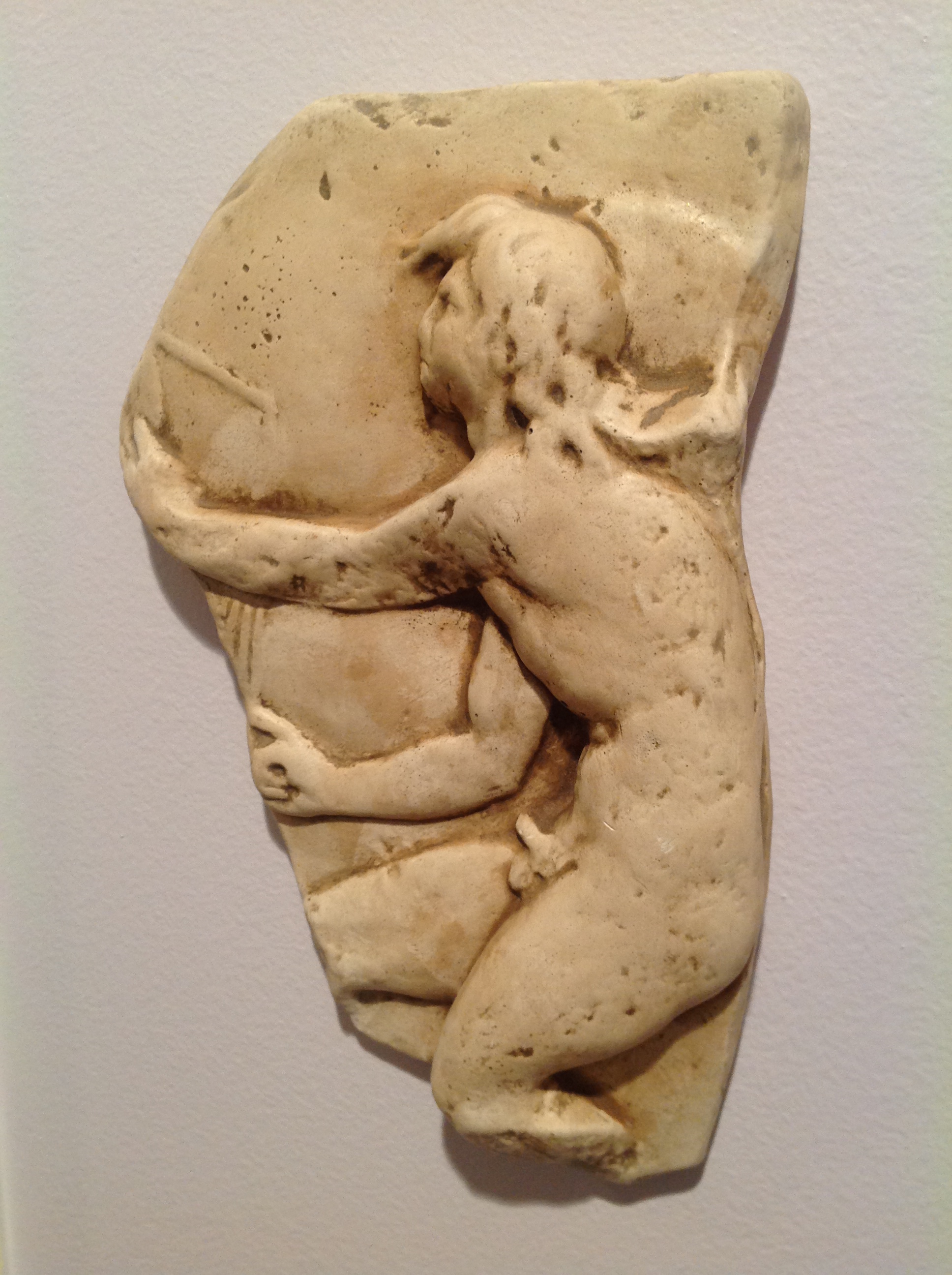
In Trogir, Croatia, there is an ancient bas relief picturing the Greek god Kairos, or Kaerus, the god of luck, opportunity and favorable moments. He is usually pictured holding scales, or a razor, symbolizing the fleeting nature of opportunity, occasions that can appear and disappear in an instant. It is during Kairos time that opportunities must be seized. In fact, the god is also shown with a tuft of hair sticking out – which you must quickly grasp to take advantage of the lucky moment, or see it be lost forever.

KairosThe Greeks had two words for time: chronos, which meant chronological or sequential time; and Kairos, which was a more indeterminate time, a time lapse, the time in between other times, the time in which everything happened. Sometimes it takes courage to look away from chronos, the circadian routine of our lives, to see an opportunity and grab it. It’s not part of the plan, so we hesitate and sometimes lose it. But paying attention, and welcoming serendipity, prepares us for the lucky moment. And then…carpe diem!

Some “Kairos” moments in my life have been truly fleeting, such as the chance meeting with my husband. Other opportune moments have come in the form of a random job offer that led my career in a new direction, the unlikely friendship that lasted years, and a moment that allowed me to say “I’m sorry” to someone I hurt. I count myself lucky to have the happy marriage, the satisfying work, the close friendship, but at the same time, I have to be careful not to cling too hard to those blessings. I grabbed the tuft of hair, but now that I have it, my grip can loosen. Soren Gordhamer says that “when we are spacious with the good…we have gratitude. We appreciate a given moment without needing to control or hold it indefinitely. We relate…with openness instead of greed.”

Perhaps feeling spacious about the good we have can translate into a lucky moment for someone else. A chance encounter might turn someone’s life around; a kind word might change the course of a person’s day. Instead of considering only the lucky moments that have benefited me, how have I participated in lucky moments for someone else?

Opportunity never grows old, so Kairos is always portrayed as young and beautiful. If Kairos is a time out of chronological time, then it is ageless, and always available to us. Growing older doesn’t mean that all opportunity has passed us by, only that new and different opportunities are waiting on the horizon. Maybe more of them will be about reaching out to others so that they can more easily grab a lucky moment. The times we are giving back, or holding out a hand, can be as favorable to us as to those who receive them.

Hand ReachingThe month of December is full of occasions for giving and receiving, but these events often become bogged down in stress and anxiety. Instead of giving in to those feelings, take a breath, and consider your lucky moments. How can you pass them on?


Look up. Reach out.

A student of mine once used the phrase, “the world inside my phone”, to describe the allure of technology. Like gravity, it attracts us with its promise of stimulation, information, affirmation and control. Inside the phone, we can adjust what we see, who we friend, how things look, how we respond, and most importantly, how the world views us. It can be as compulsive as a very powerful drug.

There’s a subway station in Washington where big crowds are often waiting for trains late in the evening. Sometimes when I’m there I just want to shout, “Look up!” because it seems that the majority of people, whether they are alone or with others, are staring down at their phones, lost in that world.Smartphone

I’m probably showing my age, but it troubles me to see this. One reason is physical safety – inattention on a crowded subway platform could lead to accidents, injury or becoming a victim of crime. But there’s also the issue of simple human interaction. Everyone laments those who ignore the actual people they’re with in favor of the device. What about the fact of our decreasing tolerance for interacting with anyone outside of our preferred group, whatever that might be?

Marc J. Dunkelman writes about this trend in his new book, The Vanishing Neighbor. He sees us losing relationships with those in our communities that he refers to as the “middle ring” – people who aren’t as close and familiar to us as family and friends, but are perhaps more than just acquaintances. In other words, people like our neighbors. We keep our inner ring close, and we pay attention to the distant outer ring via social media, but we often neglect the people living right next door, because we don’t have to acknowledge them or depend on them anymore. We can buy almost anything on-line, we can stare at our phones instead of making eye contact as we pass someone on the street, flip through our texts as we stand next to a co-worker in the elevator, maybe we don’t even order from a real person in a restaurant. We can keep all our interactions limited to people we deem to be like us. There’s an app that lets us decide where to shop based on politics. Another app steers us away from “sketchy” people and places. It’s all about control.

But there’s something lost by giving up the richness and randomness, and yes, even the danger, of everyday encounters: The chat with the neighbor in the street, saying hello to someone in an elevator, even arguing with the person who doesn’t agree with you. Of course it’s more comfortable to surround ourselves with the safe and familiar, the good and the beautiful. But just as Georges Braque said that “art is meant to disturb,” life should force us to question, to confront, to improve, to grow, to see inequity and injustice and be motivated to change it, to see suffering and hurt and want to end it. If we stay in the world inside our phones, what are we not seeing?

IMG_0385Maybe it’s because I just finished reading Dave Eggers novel, The Circle, that this digital immersion scares me. Eggers’ fictional Circle is a company that combines all social media, and more, under one roof. It’s as if Facebook, Twitter, Instagram, Google, and virtually every app were integrated and controlled by one organization. As the main character becomes more caught up in her job at the Circle, she ultimately sacrifices her family, her old friends, her privacy and her solitude because she so desperately wants to be a part of this far-reaching entity.


Our reality probably won’t mimic this fiction, but there are enough similarities already to give us pause. Before we become the tools of our tools (to paraphrase Thoreau), let’s not forget how to use the powerful apps we were born with. What do you see? What do you hear? What do you smell? What do you feel? Step outside the circle. Be surprised.