Half full or half empty

Perspective. It’s what makes the difference between coping well with misfortune, or falling apart. It determines whether we’re happy with what we have, or always wanting something more. It can turn an event into a huge stressor or a minor bump in the road.

In the aftermath of Hurricane Sandy, perspective is everything.

The hurricane barely affected me – a cancelled flight and a messy yard. But the devastation and loss elsewhere is on a scale that is almost overwhelming. Yet, even some of the hardest hit people are able to put their situations in perspective, like the man I saw quoted in the newspaper who had no power and was waiting in a gas line, but was grateful that he didn’t lose anything more; or the people who lost their homes and all their possessions, but were happy they didn’t lose their lives or their families.

It’s the meaning we give to events that makes them more or less stressful to us. Our ability to reframe a situation, to view it more positively, is affected by our personality type, by overall wellness, and often, by something called “hardiness”.

The term hardiness, and the idea of a “hardy” personality, came out of research done back in the 1980s with the breakup of the Bell Telephone companies. Dr. Salvatore Maddi did a long-term study of telephone company employees to find out how they dealt with the stress of job loss or change. What he found was that hardiness was a determinant of how resilient people were in the face of stress, whether they were able not just to survive, but to thrive.

The people he designated as “hardy” had three important beliefs that helped them during adversity: an attitude of commitment that drove them to be involved in events rather than isolated; an attitude of control, which helped them work to influence the outcome of events, instead of passively accepting them; and an attitude of challenge which motivated them to look at the unexpected changes as an opportunity to learn.

So when we see neighbors helping each other after the storm, we are witnessing a form of commitment. When we see people taking out their own chain saws and cutting up downed trees, opening up fire hydrants for water, or walking miles to work, we see them taking control of the outcome. And when we see people hoisting water up to an 8th story window by ropes, cooking dinner on their outdoor grills, or huddling around a satellite TV truck to pick up a WiFi signal, we see that they are accepting the challenge of the situation and learning new ways to get the things they need.

We can’t forget, however, that some of the hardest-hit people did not come into this situation with a great deal of resilience or wellness. They were barely surviving as it was, because of economic uncertainty, poor health, or both. For them, and for people who suffered the most devastating losses, their emotional and physical reserves will be exhausted quickly. I’m gratified by how quickly power is being restored in some areas, but there are other places, and many people, who will need our help for a very long time.

The American Psychological Association has some guidelines on their web site for dealing with traumatic stress, such as after a disaster. Many of them come from the research on hardiness and resilience. The American Red Cross, in addition to providing for physical needs, also provides emotional assistance to people affected by the disaster. Please consider making a donation to them.

Well, we all need someone we can lean on, And if you want it, well, you can lean on me.”   (Keith Richards, Let It Bleed)
An antidote to TMI

Do you know anyone who wants a more complicated life? Probably not. In spite of all our time-saving gadgets, and the ease of getting information, most people I talk to crave more simplicity in their lives.

We have at least two major magazines, over a thousand books, and almost 60 million search-engine hits that promise to help us simplify. We have smart-phone apps that promise to make it easy to find your friends, share your photos, keep track of calories and exercise better. Our new cars make it easier and safer to back up, change lanes and keep track of service. So why do we still feel so overwhelmed?

Some people think it has to do with information overload, multi-tasking and a sense of false urgency created by 24/7 access to news, email and texts. A recent Northwestern University study, however, showed that people felt “empowered and enthusiastic” about having so many sources of information at their fingertips. So what gives?

Maybe there are times when we want and need a lot of information, and having it makes us feel better. But there are also occasions when we really don’t want to know every detail, and we just want an easy way to make a decision. Each person is different in the amount and complexity of information they want, and when they want it.

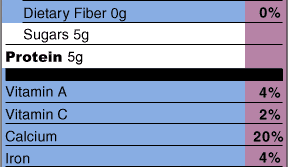
A good example is food nutrition labeling. For some it is incredibly empowering to know the number of calories, and the specific percentages of each nutrient, in an item of food. For many, though, nutrition labels are confusing and don’t help them make better choices. Research on some restaurant labeling laws, in places such as New York City, has shown that most people do not change their ordering behavior even when calories are posted.

A lot of talk in prevention circles has been around “making the healthy choice the easy choice”. Bon Appetit Management, a food service company serving many colleges, may have just come one step closer to that goal. It is piloting its own “well-being” score that aims to cut through all the confusion around food labeling, and just make it simpler to tell the difference between one option and another on a menu.  It’s a simple arrow, with more or less green, depending on how healthy the item is.

Maybe sometimes all we want is a simple thumbs up or thumbs down. We can only hold limited information in our working memories at any given time. After that, our ability to integrate ideas and to reason well declines. Trying to juggle too much at one time taxes our brains and makes performance suffer. Maybe for some college students, this new food score will be an opportunity to give their brains a rest, at least at mealtime.

There will always be many important occasions when we need to know everything, when we need to sift through reams of information before making a decision. Sometimes, though, we can choose to give up the micro-management of the choice, and rely on a trusted source or our own instincts. Knowing the difference might take trial and error, but at least we’ll be taking baby steps toward that simpler life.

Life’s illusions

Oscar Wilde wrote, “Man is least himself when he talks in his own person. Give him a mask, and he will tell you the truth.” Are we really unable to be authentic when others can see who we are?

The word “authentic” is frequently associated with performance. The actress Annette Bening has said that “the actor is a perfect metaphor to get at that theme of ‘how do we find our authentic selves?’” She says that we all “perform ourselves…as a way of searching” for our voice.

What does it mean to be authentic? For a person, it is to be genuine, trustworthy and reliable; in other words, true to one’s self. But we see all the time the difficulty that people have in being true to their own character. From the presidential campaign to the creation of a Facebook page, many of us are constantly striving to create ourselves, or the illusion of our selves. What is real? What is false? If we don’t know ourselves, how can those around us know? How can they trust us?

Everyone is looking for real and “authentic” experiences. We look for them when we travel to a new place; when we buy products (“Coke. It’s the Real Thing”); and when we watch reality television (“Real Housewives”); yet it seems that the more we plug something as real, the less real it becomes.

In existentialism, authenticity is thought to be the extent to which a person is faithful to his or her own spirit or personality. Even in the face of external pressures, an authentic person maintains his own integrity. If a person is not living authentically, life will lose meaning, and there is the possibility of succumbing to boredom, anxiety and hopelessness. It’s the same thing as not living your values – and it often becomes a source of inner conflict and stress.

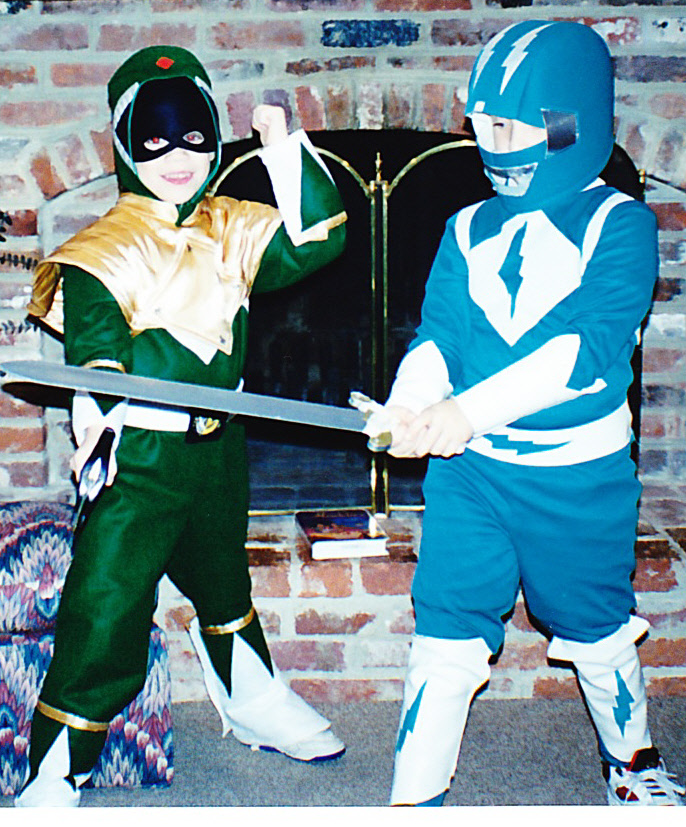
Children put on masks at Halloween, in part to try out different roles, to become something they dream to be. In adolescence, they try to solidify who they are; in fact, Erik Erikson said that the major task of adolescence is developing self-identity. But just because we supposedly know who we are as adults doesn’t mean that we always feel comfortable showing it to the world. The desire to be accepted, to attain professional success, or to avoid pain often forces us to wear masks.

The problem with wearing a mask is that it is uncomfortable over the long term, even suffocating. I think most of us want very much to be authentic, to be comfortable in our own skin and to be with others who are. We can all think of people in our lives with whom we are most at ease; and sometimes we are lucky enough to meet new people who make us feel that way too. Chances are that those people are living authentically – they are open, interested, and non-judgmental. You meet them at a party or a meeting, and go home with a glow from talking to them.

Can we each let go of our fear a little, and make more of our encounters authentic? Alanis Morissette has said that she felt liberated after she realized “that secrecy is actually to the detriment of my own peace of mind and self, and that I could still sustain my belief in privacy and be authentic and transparent at the same time.”

Masks are fun on Halloween and Mardi Gras, allowing us to be something we’re not. Enjoy the freedom of being just who you are the rest of the year.

So maybe life is a journey

It’s amusing while driving on a long trip to read people’s vanity license plates and wonder about their messages. A couple of months ago, somewhere in the Carolinas, I saw this on a car:

NOTDONE

The message has stayed on my mind ever since. I think it’s because it can be either very straightforward or deeply profound in its meaning. I speculated that it might relate to food or cooking – maybe a chef or a baker drives the car. But it also occurred to me that the driver is saying, “I’m not done” with life, that he has some sort of “bucket list” of things to do, and isn’t finished with it yet. That’s what keeps me pondering it.

When are we finished? When have we done everything we want to do, or think we should do? These kinds of questions can dog our daily life – the never-ending “to-do” list – as well as our overall feelings about achieving goals, making a difference, being satisfied with life. A young person struggling with what to do next told me recently that it surprised her when other people admired her for being so successful in her work. She didn’t feel successful; she felt as if she still had so much to do to get where she wanted to be. In her friends’ eyes, though, she looks like a success right now.

What is success? We equate it with fame and fortune, reaching some sort of end point, accomplishing something big or difficult. In my thesaurus, however, the first synonym for the word success is fulfillment, which to me implies that it is possible to be successful, while still being “not done”, if you feel fulfilled by what you do. The flip side is that someone could have all the money and fame in the world and still not be successful if a sense of fulfillment isn’t there.

Yoga teaches us to practice detachment from results. Detachment doesn’t mean a lack of feeling or emotion, rather a letting go of the outcome of events. As Kate Holcombe explains it, “…detachment means that you strive toward your goal, but if things don’t go the way you want them to, your sense of Self is not shattered…This has the effect of keeping you in the present moment of your action or practice rather than being distracted by thinking about the outcome.” In other words, focus on the satisfaction that your life and work offer right now, while still acknowledging that work remains to be done.

Another instructive lesson comes from Soren Gordhamer in his book, Wisdom 2.0. He relates the story of a martial arts student who goes to a master to learn everything he can. The student wants to work as hard as he can to achieve mastery as quickly as possible; but every time he says he’ll work harder in order to finish his studies sooner, the master says that it will take even longer. When the student asks why, the master tells him, “’With one eye focused on your destination, there is only one eye left with which to find the way.’”

I went to a time management workshop once where were advised to write our goals in the present tense, rather than the future. So a goal like “I will become a writer,” became “I am a writer,” and “I will exercise every day” became “I exercise every day.” It was a way of visualizing ourselves where we wanted to be. But it’s also a way of staying present-focused, of realizing that the person I want to be is here inside me right now, and that the steps I’m taking now are what will bring fulfillment.

So we may forever be “not done”, but by keeping both eyes on the path, with an occasional glance at the destination, we may find that the journey is quite successful.

What it means to be happy humans

Today I attended a discussion on the question, “Are we losing our humanity?” It was a wide-ranging conversation on what it means to be human, how the study of humanities serves us, and what it means to put the humanities into practice in daily life.

One of the many topics that came up was reading, and the importance of reading in helping us develop as human beings. One of the panelists commented that “reading is the vehicle for getting us into narrative,” and that narratives (stories) teach us about human behavior, which can be the basis for discussions about society.

This reminded me of something that my children’s elementary school principal used to say: “Reading is the way in, writing is the way out.” Although she never specified in and out of what, I have some ideas on it in the context of what I heard today: Reading is the way in to your mind, to your inner self, to a deeper understanding of life. Writing (and other forms of expression, especially speaking) is the way out to the world, out to society, out of yourself and into your community.

So to “do” humanities involves engagement in the world. But that’s another area that troubled some of today’s panelists – what is true engagement, true connection, in today’s world? Technology allows us to “talk” all the time, but does it help us listen, truly listen, to others? Certainly we’ve seen that the decline of listening has made us less tolerant of others’ opinions, and less likely to change our own.

Part of that issue is the shrinking of people’s attention spans. We communicate in ever more truncated “language”, we engage in shorter and shorter bursts of activity, and our brains are changing accordingly. Many of us would be hard-pressed to sit and listen to someone for any length of time. In order to be fully engaged as citizens of the world and members of our communities do we need to reverse that trend? Should we be re-training our brains to be able to pay attention and focus for longer periods? There was talk today of the “slow reading” movement – literally an attempt to get people to “move away from the computer” for a while and sit with a book, reading slowly and carefully, even re-reading favorite texts.

Modern life has been made easier by technology and by many of the societal changes that have occurred; but I don’t think that people are really much happier than they were two or three generations ago. Martin Seligman and others who study happiness have developed a three-part model of what happiness is. It includes positive emotion (the kind that comes from having pleasurable experiences), engagement (being in the “flow”, fully absorbed by some activity), and meaning. Tweeting and texting and multi-tasking might provide moments of pleasure, but I doubt that they can generate that feeling of flow that comes with full engagement, let alone supply meaning to our lives.

Engagement and meaning are more likely to be found in reading a book that touches something in your soul; listening to music that moves you; seeing a piece of art or a play that provokes ideas or controversy; writing a letter or a journal; or learning something new. The ways that we assimilate those experiences and make them a part of us opens the door for a deeper connection with others and something larger than ourselves. That’s what makes us happy.

So maybe the question is, are the humanities the key to more happiness in life?

Looking in the mirror

“What did I receive today? What did I give today? What troubles did I cause others today?” These are the questions that form the core of the Japanese meditation practice called Naikan. It is not about keeping score; rather, it is a way of putting life in perspective and acknowledging our interdependence.

The word “Naikan” can be translated as “inside looking”. The practice was developed by Yoshimoto Ishin in Japan as an accessible method of structured self-reflection. In the U.S., the ToDo Institute offers programs in Naikan and other methods of purposeful living. They refer to the practice of Naikan as being like a “shift from a zoom lens to a wide-angle lens”.

So what did I receive today?

  • A good cup of coffee made for me by my husband
  • An invitation from my friend for dinner
  • Pleasure from the butterflies attracted to our yard by the bush my husband planted
  • I wore a robe that was given to me by my mother
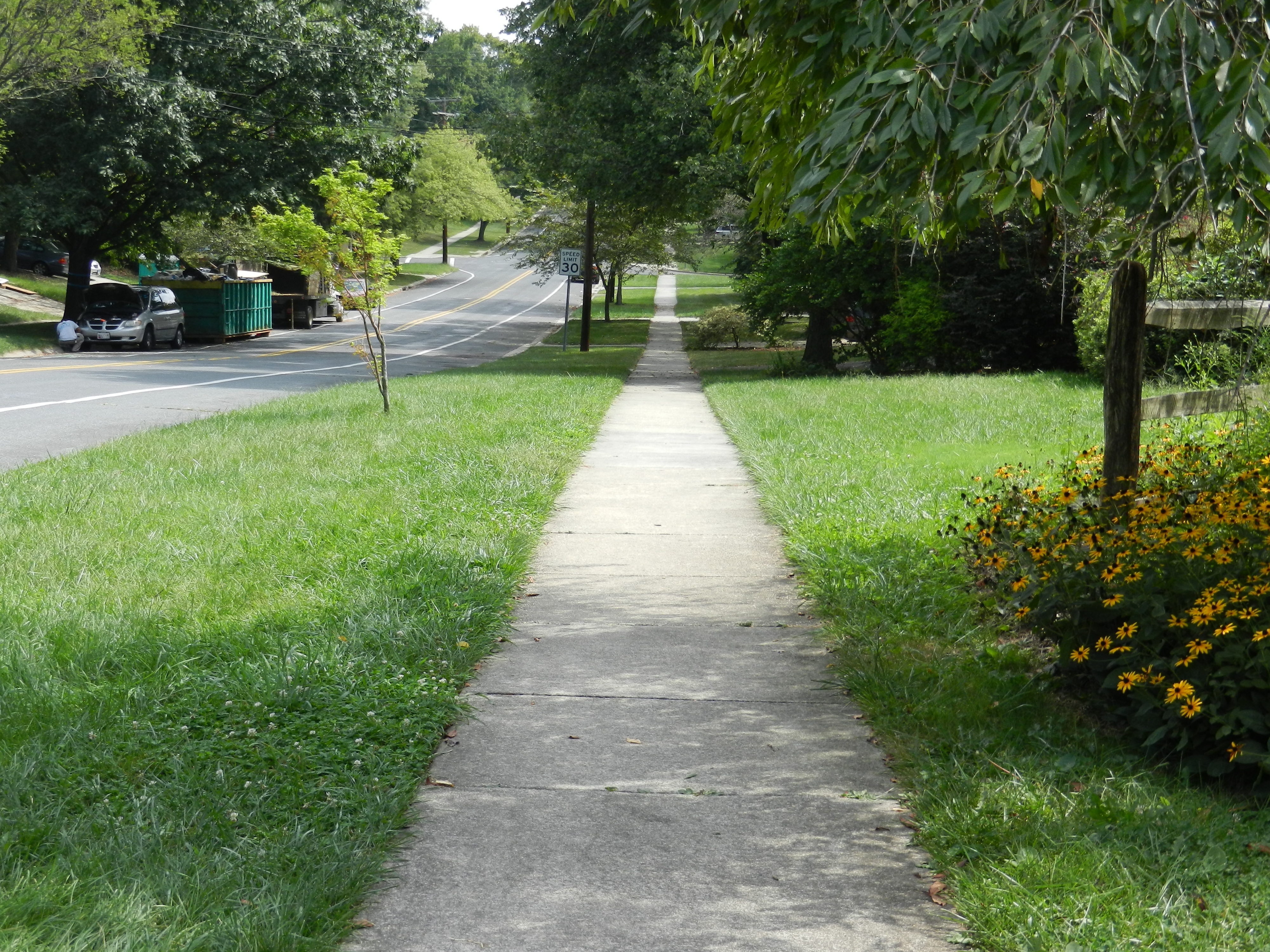
  • A walk on safe sidewalks and streets in my neighborhood built by my county government

What did I give today?

  • I bought groceries and made dinner for my family
  • I invited my neighbor to walk with me
  • I listened to the chatty person who kept me from my work
  • I collected things I no longer need so I can give them to charity

What troubles did I cause others today?

  • I kept the light on when my husband was trying to sleep
  • I hurried my son when he was talking to me so that I could read the newspaper
  • I was impatient with people in the store parking lot

Practicing Naikan reflection can help alleviate stress too. By stopping to appreciate the things other people do for us, we acknowledge that they have a choice, and we can’t just expect that they will do what we want. That helps us let go of rigid ideas of the way things are “supposed” to be. At the same time, by reflecting on the trouble we might be causing others, we become aware of the ripple effect of our actions and the possibility that they might be the source of some of the conflict in our lives.

Asking the questions can be revealing. Did my impatience impact how someone else’s day went? Am I failing to appreciate someone who is doing a lot for me? What would others say that I gave them?

Taking the time to examine my day, even down to the tiniest interactions, takes me out of the “I’m the center of the universe” mindset and reminds me that every day I depend on others to do their jobs, to make me smile and to challenge me to be my best self. President Obama’s recent comment, “You didn’t build that,” was taken out of context and criticized by many of his opponents. But what I think he meant to say was, “You didn’t build that alone.” Our success, good fortune, and wellbeing are not just a result of our own choices, actions and temperament; they are built on the cumulative choices and actions of people who came before us and who work and live alongside us.

As Albert Schweitzer once said, “Just as the wave cannot exist for itself, but is ever a part of the heaving surface of the ocean, so must I never live my life for itself, but always in the experience which is going on around me.”

Waste in abundance

How much food will you throw away today? Will you even notice it?

The Natural Resources Defense Council, in a new report, estimates that we throw away 40% of our food supply in America every year. Food is wasted at every step in the supply chain, starting at the farm and ending in our kitchens and trash cans. Food now represents the biggest part of the solid waste in our landfills.

Last night, I was congratulating myself on the nice meal I made from ingredients I happened to have on hand – some leftover tomato, farro and onions from my pantry, basil from my garden, and a chunk of Parmigiano that I bought a couple of weeks ago. No waste!

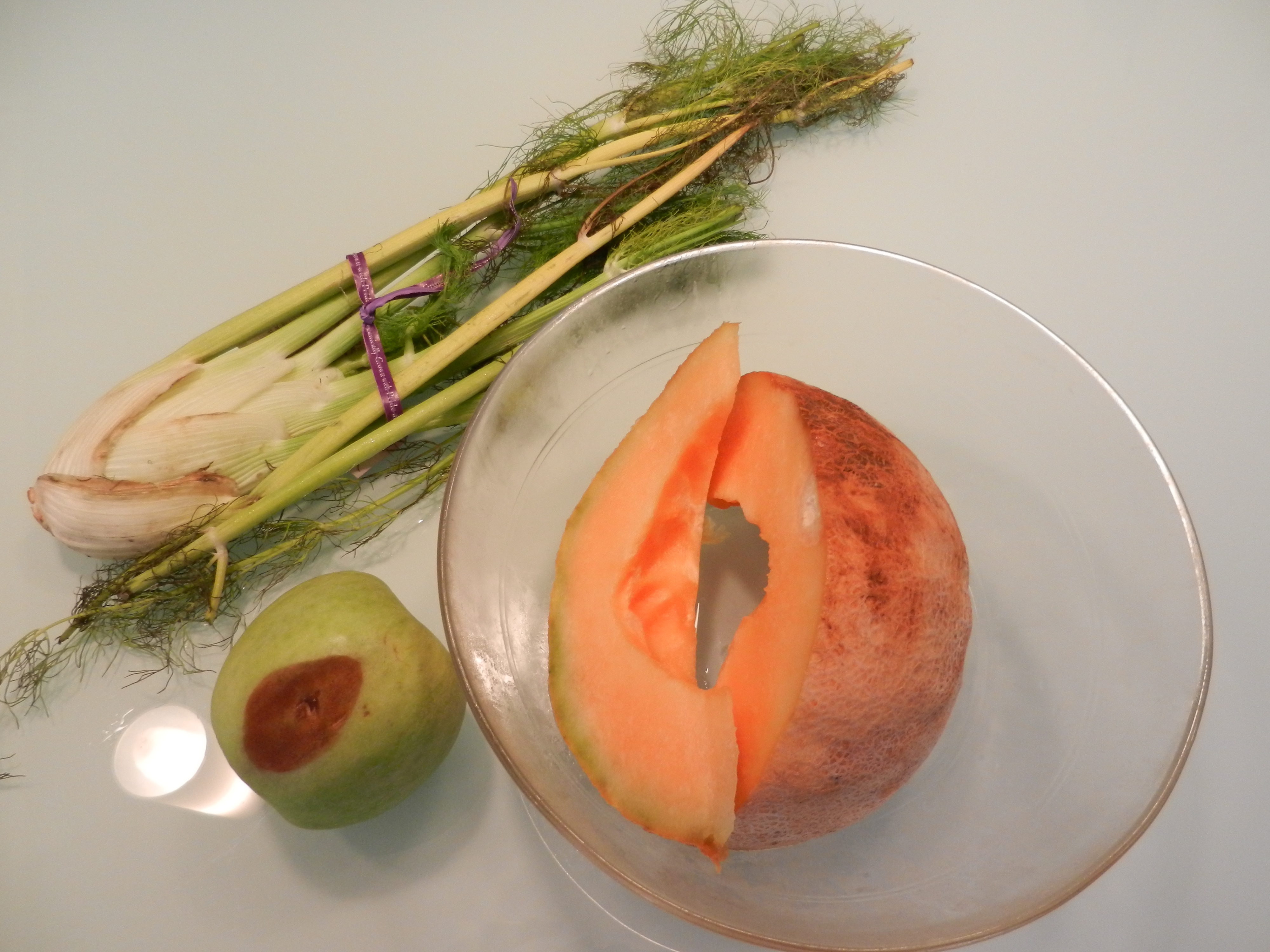
But today I took stock of the food in my refrigerator that I will have to throw away. There is the cantaloupe I bought because my son has recently discovered he likes it – but then he didn’t eat it. There’s the fennel I bought because I needed some of the fronds for a recipe – but I didn’t have a use for the rest of it. There’s the apple someone bought and no one ate – because the summer fruits like peaches and berries are so much better!

As it turns out, fresh produce is the worst food group for waste.

When we personally throw away food, we may only think about the money that we wasted on it. But in reality, the waste is much broader. The NRDC is concerned with the other resources wasted, such as the water and energy to grow and transport it and the pollution caused by its production. They calculate that just a 15% reduction in waste could feed 25 million people a year.

While the issue of food waste is a big one that will require big solutions by government, the agriculture industry, food manufacturers, retailers and restaurants, there are steps that we as individuals can take to reduce our waste.

  • Don’t buy more food than you realistically will eat. People have a tendency to load up their shopping carts because of the bargains offered at warehouse stores, the relatively low cost of food in the U.S., and the convenience of shopping less frequently. But we may have to re-think our ways of shopping to reduce our waste.
  • Don’t bite off more than you can chew. As portion sizes have increased in recent years, so has food waste (a 50% increase since the 1970s). Ordering smaller restaurant portions or taking home the leftovers will reduce waste there. Then don’t forget to eat the leftovers so they don’t end up in the trash at home!
  • Consider composting if you have a yard. At my house, all of our fruit and vegetable scraps go into our compost bin (along with leaves and grass). Although our county frowns on this because they say the food attracts animals, it is not a problem as long as you don’t put any animal products in the compost. We benefit by reducing our trash volume, and by having rich compost to add to our garden.
  • Get involved with a gleaning group. To glean means going in after a crop has been harvested and gathering the small amounts of fruit or vegetables that remain. Farmers will often invite charitable groups to come in for gleaning after the profitable part of the harvest is over. The produce is then donated to groups that feed the needy.
  • The next time you look in the refrigerator and say “There’s nothing to eat”, challenge yourself to make a meal using what you have on hand, instead of going out to buy more that might just be thrown away.

Finally, eat with mindfulness and appreciation. Thich Nhat Hanh has written, “When we sit down to dinner and look at our plate filled with fragrant and appetizing food, we can nourish our awareness of the bitter pain of people who suffer from hunger…Doing so will help us maintain mindfulness of our good fortune, and perhaps one day we will find ways to do something to help change the system of injustice that exists in the world.”

Be kind

“Be kind, for everyone you know is fighting a harder battle,” says the Plato quote that is on the plate displayed in my kitchen. “Be kind…be kind…be kind…” Why is it so hard to keep that mantra in my head?

For instance, I’m always baffled by how quickly after finishing a yoga class I can sometimes be not nice to someone! Whether it’s swearing at another driver, or snapping at a store clerk, it seems that my mellow mood evaporates as soon as I walk out the door. Why is that?

Like compassion, kindness is easier when the recipient is someone we love, or someone vulnerable, or someone clearly suffering through no fault of his own. It is much more difficult to practice when the other person is a stranger, or someone unlikeable, or someone who has clearly done something wrong. Being kind in that situation requires a degree of mindfulness and intention that needs to be cultivated purposefully in most of us.

Emotions like anger or impatience are always preceded by a thought, if only for a split second. That’s the moment when we have a choice of how to respond to a situation. Too often, we get trapped by our notions of how things should be, and our “choice” of response is harsh and unkind. Strangely, though, we don’t usually feel better after yelling at someone, but we do have feelings of well-being after acting kindly.

Olpin and Hesson have developed a framework of “levels of responding.” At one end of the spectrum are attachment, rightness, judgment, blaming, resistance and complaining – responses that are usually not effective and result in negative emotions. At the other end are observation (noticing without judgment), discovery (seeking to learn and understand), acceptance and gratitude – responses that are more effective and result in positive emotions. Studies conducted by Sonja Lyubomirsky  and others also show that people who practiced a variety of random acts of kindness experienced an increase in happiness.

It’s so easy to make every situation personal. Why did she do that to me? Why did that person cut me off? Why is he so mean to me? It might not have anything to do with me. It might be accidental, it might be that the person is having a bad day; it might be that the person is in pain. When we stop judging, stop personalizing, and start trying to understand, it becomes a lot easier to respond with kindness, or at least with acceptance.

Kahlil Gibran wrote, “I have learned silence from the talkative, toleration from the intolerant, and kindness from the unkind; yet strange, I am ungrateful to those teachers.” Plato’s reminder in my kitchen makes me realize that kindness is not something to master, but something to practice. Luckily, I meet someone every day who gives me the chance to do just that.

Stories we tell

Every family has stories – usually a mix of the good, the bad and the ugly. Some stories are told over and over, and others get hidden away like skeletons in the closet. But all the stories shape us and our life stories.

Sometimes I stare at the old photos of my great-grandparents, or my dad with his army buddies, and try to figure out who they were. Were their lives mostly hard work and disappointment, or did they experience joy and possibility? How does the answer to that question explain who I am? Did I just inherit my blue eyes and brown hair from them, or does their legacy also include patterns of behavior and ways of looking at the world?

Carl Jung wrote that, “The more intensively the family has stamped its character upon the child, the more it will tend to feel and see its earlier miniature world again in the bigger world of adult life.” In other words, our perspective can be profoundly shaped by our early experience.

People in my family have been farmers, miners, autoworkers, soldiers, teachers and cooks. One was a blacksmith, one a postmaster, and another a mayor. One person has a library named for him, while others lived and died in anonymity. Their stories include poverty, abandonment, infidelity and suicide, as well as pioneering spirit, public service, loyalty and courage.

While I want to embrace many of the values I inherited from them, such as a strong work ethic and sense of responsibility, I sometimes find myself stuck with some of the others, such as a tendency to think small and play it safe – characteristics that probably result from generations who always had to struggle. Can we change our lives enough as adults to establish a broader legacy for our own children? Is it possible to get past the negative self-talk, the family dysfunction, and the habitual patterns of behavior to grow into a more satisfying life while still building on the positive aspects of the past?

Just tuning in and becoming aware of our thoughts and feelings, then being able to label them, are good first steps. In their book Emotional Intelligence 2.0, Travis Bradberry and Jean Greaves define emotional intelligence as “your ability to recognize and understand emotions in yourself and others, and your ability to use this awareness to manage your behavior and relationships.”

Understanding emotions and managing behavior require us to pay attention to them. Sometimes we are so caught up in daily life that we act and react without thought. Keeping a journal (or writing a blog) can help focus the attention on what we are doing and feeling.  Formally practicing mindfulness can also help develop the ability to slow down and pay more attention to our emotional lives. A mindfulness practice can be as simple as sitting quietly and observing the breath for a little while each day. In his book, Peace is Every Step, Thich Nhat Hanh writes about mindfulness that it “enables us to be in touch with life, which is wonderful in the present moment.”

So perhaps that is the legacy I can give my children: a consciousness of my actions, a smile shared in joy, an awareness of how awesome life is right now. If I can do that for myself, and for them, what stories will they tell?


My simple season

When my kids were small, they had a Little Golden Book called My Book of the Seasons. This book had an appealing way of using alliteration and repetition to bring to life the change of seasons. For each season, the book described traditional, iconic imagery, such as pumpkins and snowflakes, and then asked, “Can you see it, can you hear it, can you smell it?” It was wonderful to read out loud.

I think of the book fairly frequently, especially now when I am enjoying the  transition from late spring to early summer. At the beach for Memorial Day weekend, I have had my first local peaches and strawberries of the year. I’ve been basking in the warm sun on the sand. I’ve been taking in the aromas of the plants, as well as the smells of backyard barbeques. I’ve been listening to the birds calling to each other and the children splashing in the waves. Yes, I can feel it, I can smell it and I can taste it. Summer is here!

There’s something incredibly elemental about using the senses to experience the change of seasons. And while a lot of change can be unsettling to people, there is something comforting in the cycle of the seasons, and in knowing that these simple pleasures of summer (or any other season) will be available year after year.

This is also the easiest time of year to simplify and improve how we eat. John Schlimm, the author of a couple of vegan cookbooks, described his style of cooking recently on a radio program. One of his criteria is that all the ingredients he uses have to be available in any neighborhood supermarket, even in the smallest towns. The point is, we don’t need exotic ingredients to make a wonderful-tasting, healthy meal. And with summer here, the farmers’ markets are open, the fruits are ripening, the tomatoes are full of flavor, and there is an abundance of choices. Mmmm…I can see it, I can smell it, I can taste it….

Summer offers itself to us as a lesson in simplicity. It’s not just that the food is fresher and more basic. Our pace slows as we take school breaks and work vacations.  We don’t need to wear heavy clothes so our bodies feel lighter and easier. We can be more in touch with nature because it’s so easy to step outside. All that is required of us is to pay attention and make the choice to enjoy the simple pleasures without asking for more.

Jon Kabat-Zinn talks about voluntary simplicity as “seeing less  so I can see more, doing less so I can do more, acquiring less so that I can have more”. I see the truth of his words today when I feel so incredibly rich because of the simplest things I have – good, fresh food, beautiful surroundings, warm air, blue skies, and loving people.  

People often talk about simplifying their lives. But what they don’t realize is that there’s no “doing” involved in it. It’s all right in front of us already. Like Dorothy in “The Wizard of Oz”, who realized that she could go home any time she wanted, all we have to do is say, “I can see it, I can hear it, I can feel it…”