Change: always hard, never too late, start now

The good news this week came from a study showing that if you stop smoking by age 40, you get back all the years of life that you had lost by smoking. Even if you stop smoking after 40, some of your longevity deficit is made up.

The bad news is that it is still just as hard as ever to quit smoking.

We can hear and believe all of the benefits of eating healthy, exercising, getting a new job or ending a relationship, and still find ourselves unable to make the changes we need. Sometimes change is too frightening, and sometimes it’s just overwhelming; either way, we stay stuck where we are. Changes on the outside come more easily – we might change the color of our hair, the way we dress, or the car we drive on a whim. But making changes to our habits of mind, belief and behavior is so much harder.

So we swat away the thoughts about changing, as if they were gnats buzzing around our heads. “It’s too late for me”, “I’m too busy right now”, “Maybe I’ll think about it tomorrow, or next week, or next month.”

You know what? The time to change is now, and it always has been.  The promise of a longer, healthier, happier life might seem like a distant dream, but what about the certainty that the action you take today is your first, necessary step? You cannot be different in the future if you never start. Henry David Thoreau wrote, “You must live in the present, launch yourself on every wave, find your eternity in each moment.” Close your eyes, visualize launching yourself on that wave, and start believing that you can change.IMG_0851

I attended an amazing concert a few nights ago, called “Sing the Truth,” featuring singers Dianne Reeves, Angelique Kidjo and Lizz Wright. They sang songs of empowerment, freedom, truth and love, by great female artists. Their rendition of “Both Sides Now” brought me to tears. At one point, Kidjo spoke to the audience about peace and freedom in the world, reminding us that it is up to each of us to do one small thing every day to make the world a better place for each other. In that moment, I know that everyone believed that possible.sing the truth

That’s how change will come – little by little, with one small choice each day. That’s how change happens for us as individuals, and for the world we live in. So whether it’s the choice to skip one cigarette today, or the choice to be kind today to someone you dislike, or the choice to speak out today about injustice you’ve ignored, look to today. Today is when we change.


Being grateful for January

By the time I was 18, I really hated winter. I spent my last cold season in my home state of Michigan just grumbling about how much I didn’t want to be there. Then I left for good.

Even now that I live in the Mid-Atlantic region, winter is my least-favorite season. By the time January arrives, I know it’s going to be cold for three more months, I’m already sick of my winter clothes, and don’t even get me started about all the kale I see on restaurant menus! (I’m sorry, I just don’t like it.)

But this year, I’m resolved not to be the winter grinch, so I searched for the silver lining and came up with ten things to like about January:

  1. The world didn’t end on 12/21/12. The misinterpretation of the Mayan prediction was not true, and I am grateful to be alive in January 2013. (That “2012” movie was pretty fun, though.)
  2. Inaugurations. Every four years, we have a reason to continue celebrating in January. In Washington, where I live, a party spirit pervades the air this week.IMG_0740
  3. The start of the new semester in my teaching job. I look forward to meeting my new group of students and feeling like I have a clean slate with them.
  4. Eating comfort food is okay. Even the healthy eating columns are full of recipes for stews, soups and pasta. We can enjoy the warmth and savoriness of heavier food and find it richly satisfying.Comfort food_109
  5. Catching up on books and movies. With outdoor activities curtailed, and holiday craziness winding down, it’s a good time to curl up with a novel, or have a marathon viewing of Pride & Prejudice.
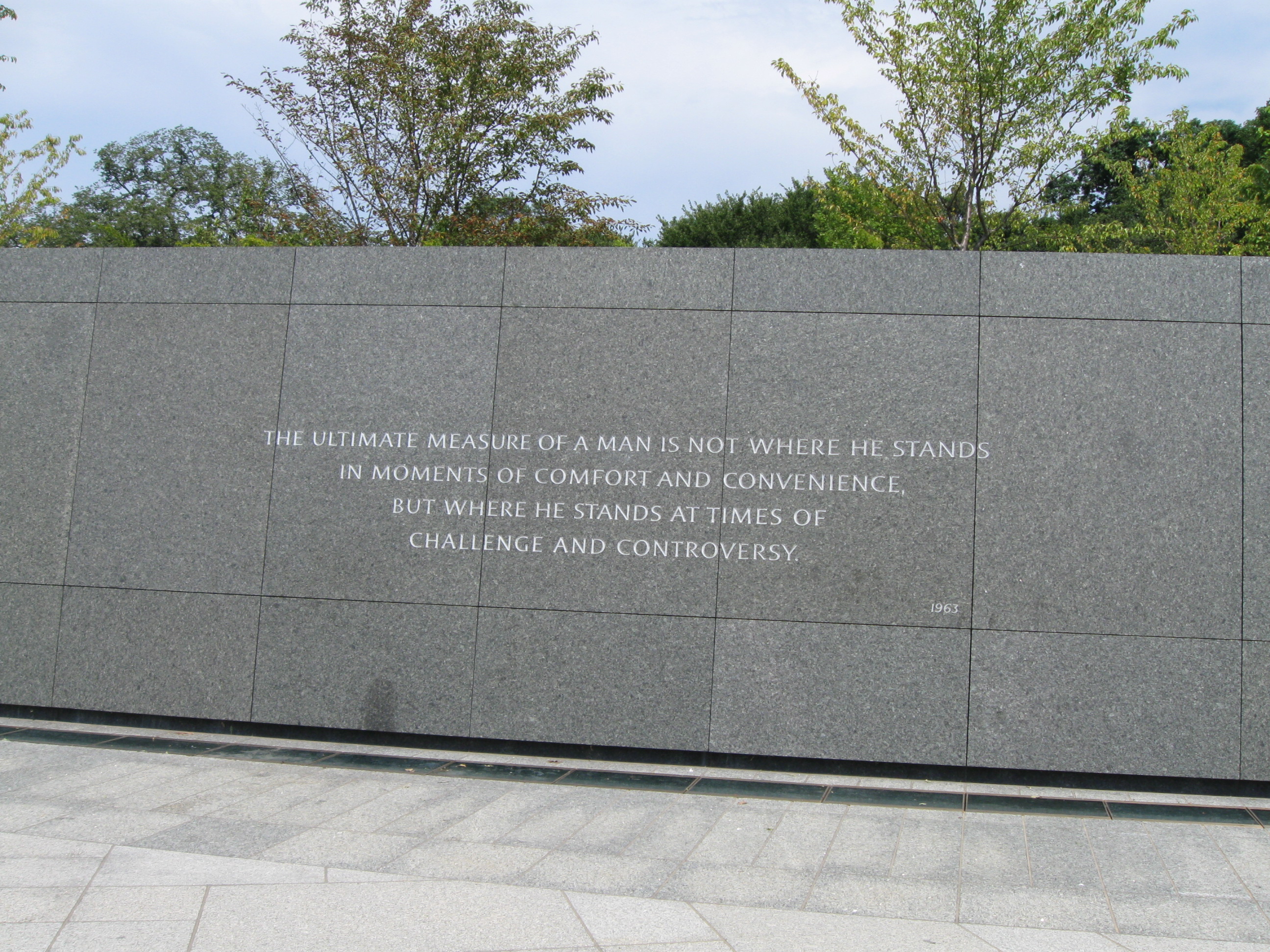
  6. Martin Luther King, Jr. Day. More than just another day off, this is a day to try to give back and be of service to the community.IMG_2315
  7. Starting my new calendar. I still like to keep a paper engagement calendar where I write with ink or pencil. I love the feel of cracking open the new book each year and starting to enter birthdays and appointments.
  8. There’s no one at the beach. January is great time to walk along the shore and have the entire beach all to yourself. Just bundle up!OLYMPUS DIGITAL CAMERA
  9. The days are getting longer. Yes, the mornings are still pretty dark, but we’ve crossed over the hump of the shortest day and the light will increase bit by bit from now until June.
  10. Snow days. There’s no guarantee of snow days where I live. Sometimes two years can go by without one, but that makes it all the more special to wake up to that awesome quiet that comes with a huge snowstorm. I may not like winter, but I enjoy the way all my neighbors talk and laugh while shoveling snow together. There’s a great feeling of camraderie and community at those times.IMG_1052

The month of January is named for the Roman god, Janus, who had two faces. That way, he could look back to the year just finished, and forward to the year just beginning. “Janus” is actually the Latin word for arch, which makes the month of January a kind of doorway for us. Knowing that, I can begin to appreciate how we need to pass through January if we are going to reach the balmier days of spring.

Practicing life

What’s the difference between practice and performance? Between practicing something and just doing it? If there is a difference, is it important?

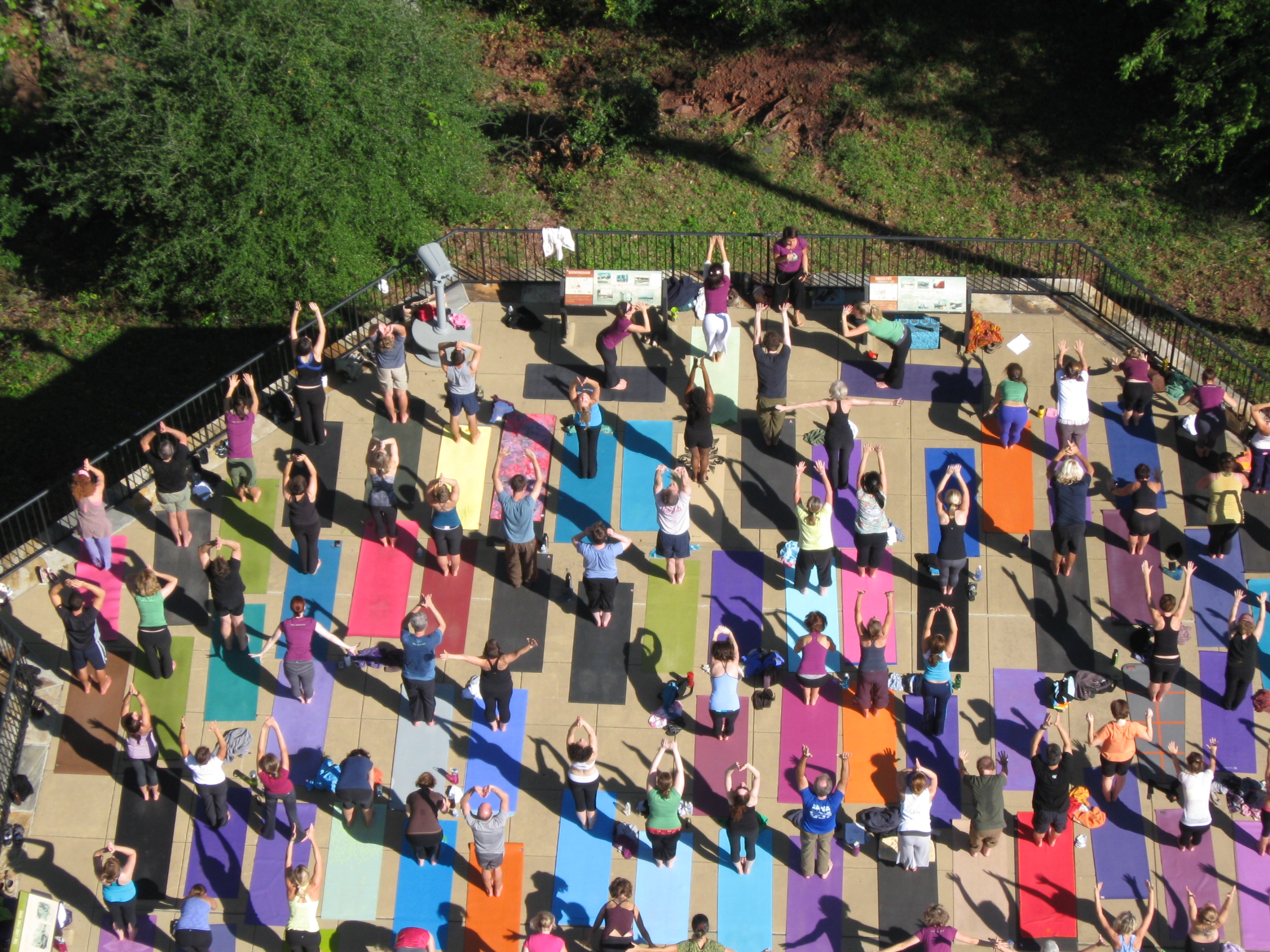
Last night I was reflecting on the fact that I have been regularly practicing yoga for six years. That’s longer than I’ve done almost anything in my life, with the exception of marriage and mothering. We never say we’re “practicing marriage” or “practicing parenting”, yet in the language of yoga, we always refer to what we do as a “practice”, no matter how long we’ve been doing it.IMG_2347

If you look up the definition of practice, it can mean repeating something in order to gain proficiency or skill, such as practicing music or sports; or it can mean the “regular and customary” performance of some operation or occupation, such as the practice of medicine or law. It can also mean “the action or process of performing or doing something”, which is how I think it applies to yoga.

The definition may vary, but there is a commonality between practicing music, practicing yoga and practicing medicine. That’s the humbling recognition that there is always something more to be learned – some nuance of sound to create, some deeper place to reach, some new discovery to make. By using the word “practice” we fully engage in the process of the activity while knowing that the outcome this time might be different than the last time.

The question really is why we don’t refer to other things we do in life as practices. Almost nothing that we do stays static over time. Marriages have to grow and evolve or they won’t last. Parenting is an on-going process of trial and error, figuring out what works, learning to accept the children you’re given, learning to let them go. If there’s any task in life that requires practice, parenting is it!IMG_0775

We can only do our best in any particular moment, with the resources we happen to have at that time. There are days when everything aligns and we feel a little more accomplished at the things we do; on other days, energy might be low or time short, and we scale back and expect less of ourselves. Either way it’s okay. Without the lows, we couldn’t have the highs.

By staying present with the process, rather than the outcome, we might be more likely to have the experience of “flow”, which is now thought to be very much connected to happiness. Mihály Csíkszentmihályi, a Hungarian psychologist, coined that term to describe those moments when we so forget ourselves in some activity that there’s a sense of effortlessness, and we become able to use our skills optimally. It’s what athletes refer to as “being in the zone”, but it can happen in any kind of activity.

Lance P. Hickey, writing in the Huffington Post, said about flow, “you must see the activity as voluntary, enjoyable…it must require skill and be challenging (but not too challenging) with clear goals towards success. You should feel as though you have control and receive immediate feedback with room for growth.”

I never want to run out of room to grow. Today I found out that “practicing” is the number one answer people give when asked how they learned to do something. If that’s the case, I guess I still have a lot of practicing to look forward to.

What was your first social network? (Hint: Not Facebook)

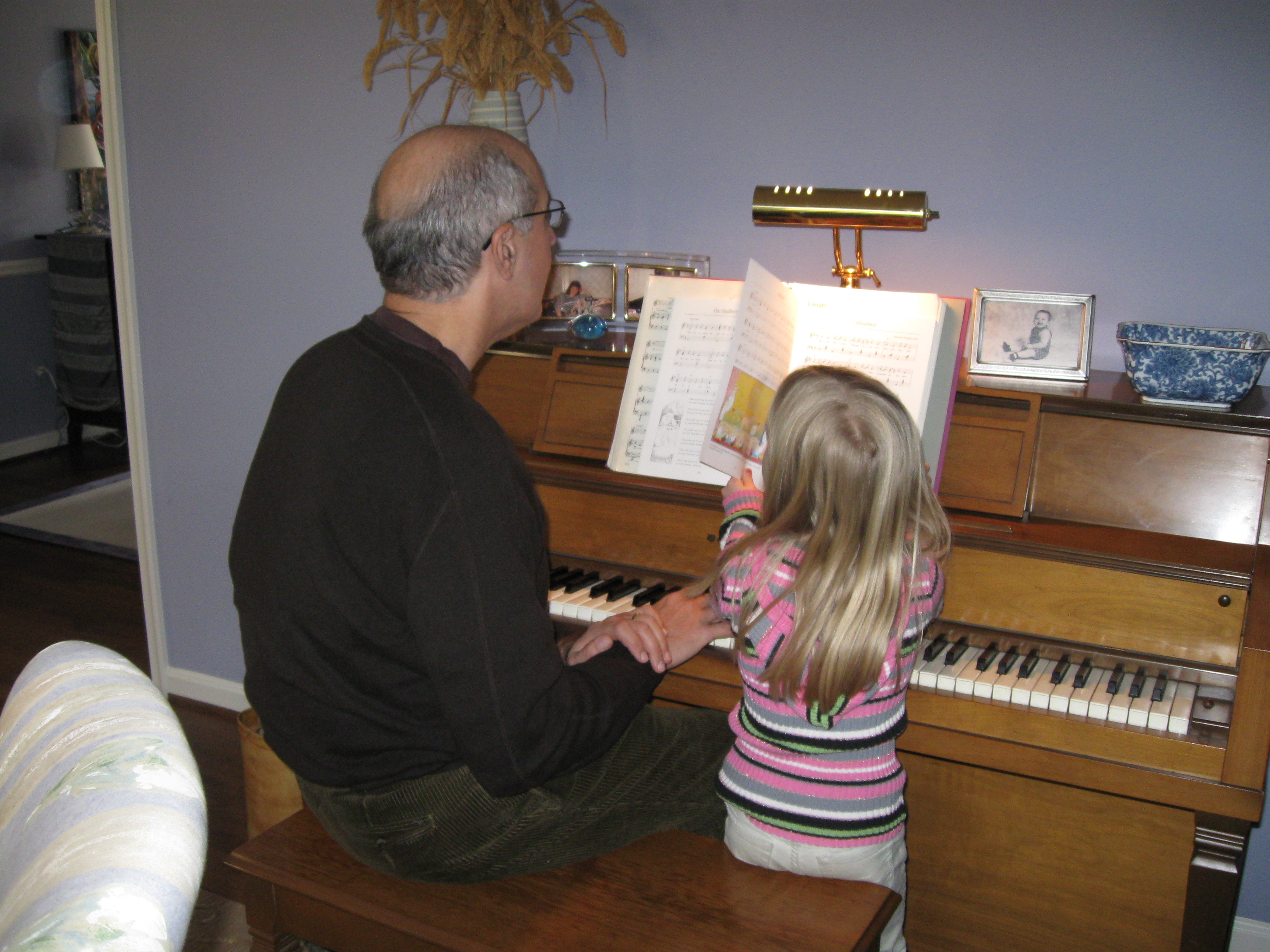
A baby in the arms of her father – with her mom looking on – is forming her first and most important social network. Her network expands day by day, babybecoming more complex, as she is introduced to siblings, babysitters, aunts, uncles, and cousins. Soon, she starts forming networks separate from the family – friends, neighbors, teachers and coaches. Eventually she has networks that encompass jobs, community and the entire digital world.

Traditional social networks give us several kinds of support.  Tangible support includes things like money, a place to live or help with chores; informational support includes advice and instruction; emotional support covers love, trust, a listening ear, a shoulder to cry on. When we’re young, we rely on our parents for all three kinds of support; but as we mature, we look to other people in our network to provide some or most of these things, and we learn not to rely on any one person for everything.

Social connection is vitally important for health and well-being, but “connect” may be one of the most overused words of the last decade. We connect on Facebook, Linked In,Twitter and blogs; we connect with old friends, strangers, and people around the world; we connect at home, at work, on the subway and as we walk. But in our rush to connect with everyone, all the time, everywhere we go, do we make it all seem too facile? Do we forget the effort that goes into forging strong and lasting bonds?

It’s easy to click the “Like” button, but not so easy to engage with people day after day, through good times and bad, in the face of disagreements and hurts. It’s easy to send a text or an email, but it takes time to pick up the phone or meet in person to iron out differences. As our digital networks expand, are our in-person networks contracting?

The family network – our first – in many ways bears the brunt of our relational laziness. Maybe it’s because we don’t have the same fear of losing the people in that network. We learned early that we could rely on them, so we don’t worry about paying attention to them and cultivating the relationships. We take them for granted. Worse, we don’t mend the little tears and breaks in the fabric of the relationships, because we don’t think we need to.

OLYMPUS DIGITAL CAMERAIn the past two weeks, I’ve been both to a family funeral and on a family vacation. Each one reminded me that families are messy and complicated organisms! At the funeral, a sister stood on one side of the room not speaking to her siblings. No one even knows for sure why she’s not speaking to them. On every family vacation, I see how hard it is for everyone not to slip back into their habitual roles: good child, bad child; provocateur, peacemaker; the bossy one, the passive one. No wonder we want to be with our “easier” social networks instead!

The novelist Doug Coupland has written, “People are pretty forgiving when it comes to other people’s families. The only family that ever horrifies you is your own.” The truth is, though, that unless you have a truly terrible family, they are the people who will be there for you over the long haul, the ones you’ll be able to call in the middle of the night with a crisis, and the ones you’ll want to share your successes with. Sometimes you feel like you can’t live with them, but it’s almost always better than living without them.

My intention for the new year? To pay attention to my family, to give and forgive, to listen more patiently, to judge less often and to share more meaningfully.